“Do not overrate what you have received, nor envy others. He who envies others does not achieve peace.” ~ Buddha

Let’s say that you and your close friend try out or compete for the same thing. It could be making the team, getting either a promotion or an award, or winning the lottery. You learn that your friend makes the team, got the promotion, or won the prize. You did not. How do you feel?
First, if you are an adult, you’re happy for your friend. If you’re a teenager (or you need to read The Untethered Soul), you may get out the voodoo doll and some pins, or begin some plot against your former friend.
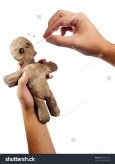 We may begin to feel something else. It’s an emotion that we don’t want to feel, but it’s there. It’s a twinge we feel on the inside that is directly related to our disappointment and that other person. We feel envy. We do! It’s normal, and it’s okay as long as we don’t act-out on that negative emotion. I’ve never received recognition or a promotion (that others also wanted) without someone letting me know of their displeasure.
One time, I asked this guy, “Did you want me to turn it down so you can have it? I know you think you deserved or wanted it more than I did. Don’t you feel just a little petty right now?” I have been on the losing end enough times to recognize his emotion. Myself and I have had talks about that. I don’t like feeling envious. It makes me feel worse. Envy is not unusual. I often admit to the feeling.
So, if this is normal, why is it considered another breach of all that is good and holy within us? The reason is simple: this is not a good thing about our human nature. We know that envy is normal, and that it will pass, but it’s also dangerous. Loving friendships have ended. Businesses have suffered. Shame and embarrassment have been coopted by envy because the accompanying behavior make us feel worse. Envy is part of us, a dark corner of who and what we are. We must acknowledge that part of our dark side.
There is a shallow envy that is part of daily life. When I see men of my age with huge locks of thick, beautiful hair (usually gray), I feel mild envy. I admit it. I want what they have. That guy did nothing to deserve to have more than his share of hair follicles so late in life. I did nothing to promote my loss of the same. I’m almost proud of my envy. It’s true. I own up to it. I get it: envy is the desire for others’ traits, status, abilities, or situation.
In Summa Theologiae, Thomas Aquinas said, “Envy, according to the aspect of its object is contrary to charity, whence the soul derives its spiritual life… Charity rejoices in our neighbor’s good, while envy grieves over it.” Why do we do this? Because other people are so much luckier, smarter, more attractive, and better than we are. Lucky bastards.
 But there’s good news. If you go to Hell, your punishment awaits: you’ll be put in freezing water. I looked it up. Think about that. Hell, fire and all that; and you and I are hanging out at the ice bar. Now, it’s their turn to be envious, right?
I don’t know why, but envy is associated with the dog and the color green. Oh, right, the green-eyed monster. Not so fast. I use envy and jealousy as two different words that apply to different kinds of situations.
Envy and jealousy are not the same emotions. Envy, as unpleasant as it can be, usually doesn’t contain a sense of betrayal and outrage. Jealousy needn’t contain a sense of inferiority. The difference is in the numbers.
Envy is a two-person situation, jealousy is a three-person situation. Envy is a reaction to lacking something. Jealousy is a reaction to the threat of losing something or someone. Of course, when we feel jealous, we often feel envious as well.

The opposite of envy is supposed to be charity. I think the more accurate word is love. Some experts say kindness. I say love, not because love will prevent envy, but because our love will help us overcome that part of our dark, selfish selves and we’ll find peace and happiness sooner. Love is the primary emotion. Envy and jealousy are both subordinate to fear, which is also primary. Both fall under the heading of wasted time and emotions since neither accomplish anything.
But, as long we are normal humans, we must deal with our feelings and emotions. It’s all about how we feel. The actions we choose to follow our emotions are up to us. Can we at least balance some light with our dark side?
Envy is real and normal. So is jealousy.
We generally see them as bad, weakness of the spirit, and damaging to life and our relationships. Consider both to be among life’s gaps.
Mind those gaps and look both ways. We need to see our own human darkness and weaknesses and deal with them.
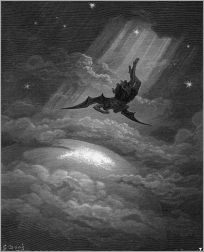


 As a noun or verb; it means a very strong sexual desire, or a passionate desire for something. The synonym list is downright erotic: sexual desire, sexual appetite, sexual longing, ardor, desire, passion, libido, sex drive, sexuality, biological urge, lechery, lasciviousness, concupiscence, horniness, the hots, randiness, greed, desire, craving, covetousness, eagerness, avidity, cupidity, longing, yearning, hunger, thirst, appetite, hankering desire, be consumed with desire for, find sexually attractive, crave, covet, ache for, burn for, have the hots for, fancy, have a thing about or for, and drool over. (Whew) The key word in all of that is desire. This is not an act, it is merely a basic human want, or as George Carlin put it, “You gotta wanna.”
 “It’s what’s in your mind that counts. Your intentions. Wanna is a sin all by itself….it was a sin for you to wanna feel up Ellen, it was a sin for you to plan to feel up Ellen, it was a sin for you to figure out a place to feel up Ellen, it was a sin for you to take Ellen to the place for you to feel her up, it was a sin to try to feel her up, and it was a sin to feel her up. There was six sins in one!” George Carlin, Class Clown, 1972.
 I wanna. Before you tar and feather me for being a dirty old man (normal), know that I was raised Irish-Catholic, just like Carlin was. Human sexual desire for other humans is normal, good, healthy, and leads to some of the best moments in our lives, not to mention procreation of the species. A vigorous libido is a good thing to have. But, not everyone agrees with me. Most obviously, many Roman Catholics, and certainly not their leadership. I quote from a piece by Sam Guzman, republished in The Catholic Gentleman.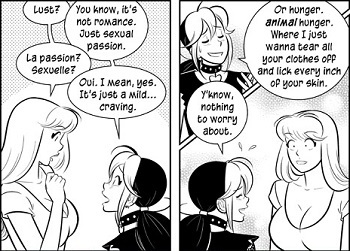


 But this memoir – the thinking, remembering, musing, pulling out old photos, doing ancestry research, looking for old friends and finding some, but reading obits of others — it’s so different because it is about me and people who’ve affected my life. Learning and writing about myself every day is interesting for a guy who disliked writing about himself.
 “Sing with me, sing for the years, sing for the tears.”
 Let’s make a pencil drawing.
 As we draw, we feel things: love, anger, spiritual things, and the passions of life. As we experience our feelings, our work of art changes. Those emotions travel to our hands to control the pencil that is drawing our life.
 With 10 days of Nano remaining, I’m rolling along with my memoir. Finding memories and searching for lost feelings. It has helped me to keep writing in a searchable chronological order, so that as I recall things I want to add; I can find the right place to write (draw?) those memories.
 “One should either be a work of art, or wear a work of art.” ~ Oscar Wilde





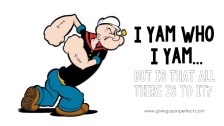






 Is it all that important to be a thin, white, dark-haired, strong, male member of this country? We seem to think so. I hope that continues to change.
 I am retired. All the shit/crap that I put up with for all those years of school (nuns-groan), yes, sir and no, sir; kissing up to very few idiot bosses (most were great), scrimping and saving and working – it was all worth it. As my wife would say, “Rave on, dog shit!” And so I do. Every day is a weekend and I can do what I want (with her permission—I’m old, not stupid) whenever.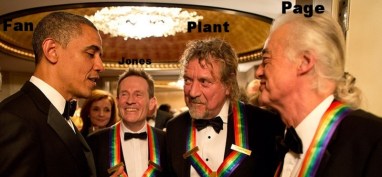

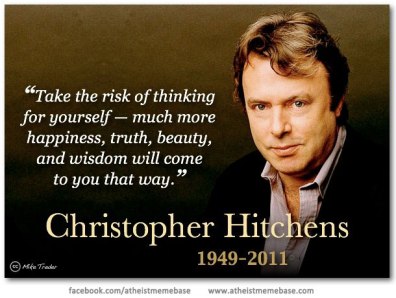
 As I listened to an interview with Christopher Hitchens, I was surprised by something he said. I’ll get back to that in a minute. Frist, I want to talk about the genesis of the question and my answer.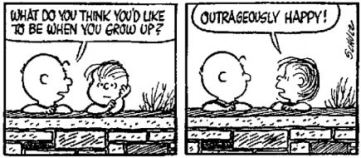
 A satisfaction tax would make a lot more sense. It seems like things may satisfy us, but we decide to be, or not to be happy. How would we measure and estimate a tax on feeling good?
 Our Literary Journey