
This one’s mine. Other than talking about the illogical wrath of a deity, or when humorously speaking of enduring the anger of someone else, we don’t use this word. We prefer rage, resentment, fierce anger, vengeance, or a few other synonym-like words (pissed off). I will use the word anger because wrath is archaic. We get angry, not wrathful. I also dislike typing the silent “w,” and a rath is something else.
I could easily write a book about my own anger. If I included the whole enchilada of human nature, it would probably expand to three fat volumes, and be boring. Anger is an emotion. One foolishly considered bad or sinful. While it’s neither, it is dangerous. Anger is a legitimate and real emotion that we may each experience differently. Some people seem to be incredibly patient and tolerant, seemingly never experiencing anger. Others seem explosive, and are sent to (drum roll) Anger Management classes to learn how to behave. I like to call it Charm School.
 An old friend of mine had to do that with his work later in life. We grew up together, and as I recall, my friend was exceptionally demonstrative when angry. It didn’t take much before he felt slighted, irritated, or offended. When we were teenagers, I either ignored him or put distance between us until he calmed down. Even later in life, I was still surprised that he could come unglued about things that I considered little more than a trivial nuisance. However, I also had my share of temper tantrums throughout life.
For most of my life, I had a sexist view of anger. I thought men experienced anger more frequently than women, and that acting out our anger was not only what men did, but it was semi-acceptable. I’ve since learned that my view was wrong (read this).
The point of view I had learned was that all other male emotions were unacceptable, and any emotional display was a sign of weakness. What this wrong opinion did for me was to allow me to exhibit angry behaviors regardless of what emotion I may have been feeling. I later learned that I not only had to get in touch with my emotions, I had to start identifying them: fear, shame, sadness, disgust, anxiety, guilt, and many more. I don’t blame society or culture. I take responsibility for my behavior, as should we all.
Another problem with anger is the difficulty of properly identifying it in either ourselves or others. Depression, anxiety, fear, and other emotions may manifest themselves, both inside and out, through behavior that could be considered anger. It’s confusing and figuring this out may take the help of a friend or counselor.
People lash out for a variety of reasons, and it may have little or nothing to do with being angry. I’ll leave it to the experts to follow this rabbit trail, but I suggest we try to pick out the different emotions we feel and deal with them for what they are. I posted about jealousy on Tuesday. Certainly, we feel some anger when we’re jealous. We need to recognize when more than one emotional thing is happening to us at a time. When I was beginning to work on this for myself, I would try to reflect on my feeling and not be pinging off the walls so much.
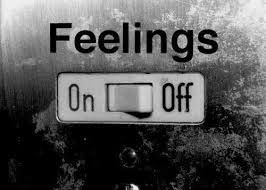
Then, a close family member accused me of being an “emotionless automoton” who had no feelings and didn’t care about others. I love the memes of a light switch for turning emotions on and off. She was confusing my trying to remain calm with lack of emotion. No such luck.
Politics, religion, sports, and money are four topics that can lead to anger during many seemingly innocuous discussions. If we have not experienced the feelings ourselves, we have certainly seen them acted out by others.
 We are social (sociable or not) beings walking around in bodies transporting minds packed with emotional potential. We’re not Vulcans, like Mr. Spock (played by Leonard Nimoy) in the Star Trek series. Spock was of a mixed human-Vulcan heritage race that had mostly conquered his emotions and made them subject to his control. We are simply humans.
Ironically, the death of Spock occurs in the movie The Wrath of Khan, and some think that it’s the best scene in the movie. Forgive my digression; I’m a long time Star Trek, Spock, and Leonard Nimoy fan.
This concludes my series on The Seven Deadly Sins, or Morality. I plan a summation for next Tuesday’s post that may explain my take on this from a broader perspective.
Have a wonderful weekend.
Look both ways and mind the gaps – every day.

 We may begin to feel something else. It’s an emotion that we don’t want to feel, but it’s there. It’s a twinge we feel on the inside that is directly related to our disappointment and that other person. We feel envy. We do! It’s normal, and it’s okay as long as we don’t act-out on that negative emotion. I’ve never received recognition or a promotion (that others also wanted) without someone letting me know of their displeasure.
 But there’s good news. If you go to Hell, your punishment awaits: you’ll be put in freezing water. I looked it up. Think about that. Hell, fire and all that; and you and I are hanging out at the ice bar. Now, it’s their turn to be envious, right?

 In the Summa Theologiae, Thomas Aquinas said, “Gluttony denotes, not any desire of eating and drinking, but an inordinate desire… leaving the order of reason, wherein the good of moral virtue consists.” Inordinate? I only know this limit after I am well past it.
 The opposite of gluttony is abstinence. Once again, from one extreme to the other. Abstaining from food can be a diagnosable eating disorder. We know how much, and of what things we should eat and drink. We must eat, but not too much; we must sleep, but not too much; we must drink. But there’s no such thing as too much fun.


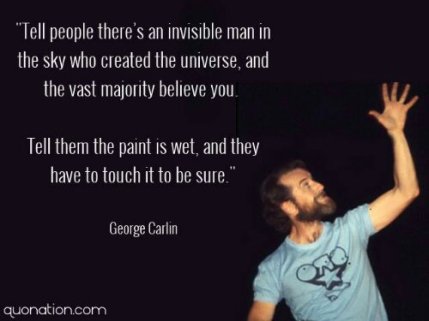
 As a noun or verb; it means a very strong sexual desire, or a passionate desire for something. The synonym list is downright erotic: sexual desire, sexual appetite, sexual longing, ardor, desire, passion, libido, sex drive, sexuality, biological urge, lechery, lasciviousness, concupiscence, horniness, the hots, randiness, greed, desire, craving, covetousness, eagerness, avidity, cupidity, longing, yearning, hunger, thirst, appetite, hankering desire, be consumed with desire for, find sexually attractive, crave, covet, ache for, burn for, have the hots for, fancy, have a thing about or for, and drool over. (Whew) The key word in all of that is desire. This is not an act, it is merely a basic human want, or as George Carlin put it, “You gotta wanna.”
 “It’s what’s in your mind that counts. Your intentions. Wanna is a sin all by itself….it was a sin for you to wanna feel up Ellen, it was a sin for you to plan to feel up Ellen, it was a sin for you to figure out a place to feel up Ellen, it was a sin for you to take Ellen to the place for you to feel her up, it was a sin to try to feel her up, and it was a sin to feel her up. There was six sins in one!” George Carlin, Class Clown, 1972.
 I wanna. Before you tar and feather me for being a dirty old man (normal), know that I was raised Irish-Catholic, just like Carlin was. Human sexual desire for other humans is normal, good, healthy, and leads to some of the best moments in our lives, not to mention procreation of the species. A vigorous libido is a good thing to have. But, not everyone agrees with me. Most obviously, many Roman Catholics, and certainly not their leadership. I quote from a piece by Sam Guzman, republished in The Catholic Gentleman.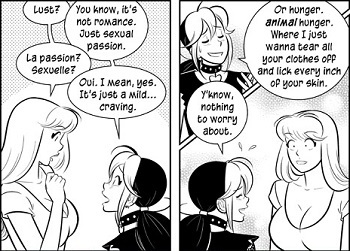


 It is what it is. However, I wonder if our opinion on this matters more than the real answer. It’s like believing in a god – it either exists or it doesn’t. Our believing or doubting anything changes nothing about reality (placeboes or magic notwithstanding). Our opinion on this affects how we see the world, other people – and most importantly, how we see ourselves. Me, is the one thing in the universe that I have some control over—maybe.
 The premise of Straw Dogs is that humans are animals like any other animal. Both Christianity and Humanism see humans as capable of controlling things much more than Gray and others seem to think we do. This is a philosophical book that challenges many basic assumptions about what it means to be human. While I don’t agree with some of what Gray presents, I admit that he makes astonishing points that lead me to question which of us is correct. Regarding several of his positions, I think he’s nuts. But I find many of his other arguments compelling. Reading John Gray made me think, wonder, and contemplate – not the meaning of life, but its nature.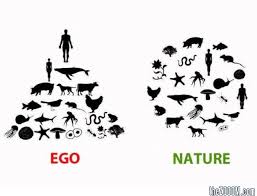

 Since this is my first December and holiday season as an admitted atheist, it seems fitting to discuss Christmas from my nonbeliever perspective.
 I’ll continue to celebrate the season much as I always have: eating and drinking too much while overdosing on football. It’s a fun cultural and secular holiday with many features that benefit life, whether one believes in any god or not.
 If it busts someone’s chops that atheists enjoy the holidays, that’s a bummer. We intend no harm by joining the festivities. I suggest those humbugs pass a law that says one must be Christian to enjoy the holidays. Until then, you’ll find me hangin’ ’round the mistletoe.
 The third-time little Stevie acted like I would have. From the get-go, he raised holy hell before ever leaving home. Alas, young Stephen was over-powered and for a third time, the Prince of The Inquisition drove the needle through the boy’s ear drum. Over 40 years later, King wrote of the incident, “In fact, I think that in some deep valley of my head that last scream is still echoing.”
 Note to my grandchildren: There are things I’ll not tell you, but I may confirm or deny what you ask. There are things I will tell you only if you ask. There are things I will defer until I think you’re old/mature enough. But I will not intentionally deceive you without just cause. Sometimes, I’ll defer to your parents, other times, I will not. I’ve earned the privilege to be either cooperative or difficult. ~ Love, Opa
 However, I am willing to work with my feelings of hopelessness. I’m not referring to the charming but hopeless romantic, or being merely incompetent (Bill’s hopeless). And I’m not talking about sadness, fear, or denial. I’m talking about the feeling that can cause despair (being without hope). Back in the day, ‘twas that conclusion I expressed when I’d say OMGIF! (Oh my God, I’m fucked).
 I read this good article about hopelessness in the



 Our Literary Journey