Mother’s Happiness

I know little of what my parents thought about any deep subject such as a philosophy of life or their world view. I managed no more than hints or rare tidbits. Regarding my father, I remember too much of the bad and little of the good. The opposite is true of my mother.

I remember more in Mom’s case, and most of it good. The few bad memories were usually not her doing. Mom may have had her share of bad days, but I can’t remember one that was her fault.

My clearest memories are the pleasant ones about our overall relationship. We were close. Not in the best of friends sense you may hear some parents brag about. Mom was my parent – not my friend.

As a teenager or young adult, I would have railed against being called a “momma’s boy.” I now look back on our relationship with pride.

My mother protected me, mostly from Dad, but also from a few other things. Oddly, not from bullies. If I developed an early skill in dealing with them, it was avoidance. Later in life, my approach was more direct. Conversely, she liked telling people how she often broke blood vessels in her hands spanking me. I don’t recall any of that.

She and I argued our share. I was a momma’s boy – not a good or obedient boy. There were times when I was disappointed in her for not coming to my aid. Looking back, I now realize how right she was.

When she did help me, she did it her way. She helped me in a manner that permitted me the dignity of learning difficult lessons the hard way – which was apparently my preference. When she felt like I needed to learn a painful lesson, she gave me the space I needed. I now realize how difficult that must have been for her. My mother’s love for me, and mine for her were never in question.

When Dad’s health was declining and she felt like she needed to help him, she postponed action on the lump in her breast. After his death, she moved on to her own health care. Everything she did during the period of that treatment, she did with the occasional assistance of her sister. My sister and I lived too far away to be of much help.

While Mom was a long-term breast cancer survivor, the invasive disease brought on her death only after she decided to end most of the treatment.

But years before that, the spot on her lung had been removed and she was recuperating in the hospital the day my flight from Texas arrived in Pennsylvania. Walking down the hospital hallway, the sounds and smells were unique. I would know where I was had I been awakened blind.

As I walked down the hall following the directions I’d been given, I knew I would take the next right into another hall, then right again into her room. I anticipated walking in and finding her groggy and sore from the surgery. I envisioned her smiling up at me, weak and tired. I turned the corner.

The window at the end of that hall looked down on the hospital’s parking lot. Its sill of hard tile was about a foot deep. My recovering mother could easily sit there and gaze down to the parking lot, watching for me.

When she heard my voice, she turned her head and saw me walking toward her. The day after surgery, my 70-something mother jumped off the sill and started running toward me. Mom drove her five-foot-tall frame hard against me, wrapped her arms firmly around me, and then pulled my face down and kissed me.

After I suggested that she get back into bed, we walked to her room and she slid back onto the sheets and pillow. Mom was excited and chatty. She was always happy to see me. But on that day, her response was overwhelming. The doctors and nurses kept Mom alive. All I had to do was walk down the hall at the right time. I became the star of her show. I will always remember how happy she was to see me that day. I’m glad I could help.

Happy Mother’s Day to moms everywhere.
Look both ways and mind the gaps.
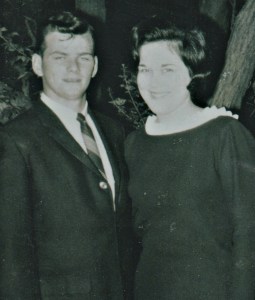
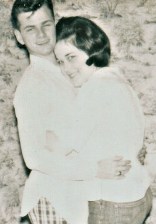
Y – Yolonda, To Our Life (NaPoWriMo #28)

Yesterday was Yolonda’s birthday. I wrote this poem for her, to her, and about us. Lordy, we were so young the day we married; a long time ago on a planet far, far away.


Age 19


To Our Life
by Bill Reynolds

You’re at the core of my life, the blood of my love.
Together for years, we performed so many acts
With so many roles we’ve held as a pair, line upon line,
We’ve both been there, one with the other,
searching for truth.

Unknowing what another play might’ve been,
We know what this was; and now we see what it is
Like pearls on a string, between two people in love
Our years remain, foundations of that same love,
And discovery of truth.

We built this world, one moment at a time.
Moments we recall; and some too long forgotten,
Our time together, creations of a living world,
The past is our present, our present the future.
And pacing our life, acting on truth.

Burdens of life did task our endurance
As humanity’s frailty tested our love.
All while building great passion and strength,
Nothing in the future can bring change to our past.
Stumbling on stones, finding more truth.

Love is not work, not a great task
While true work of the universe, it just might be,
Not as a choice we make, nor a feeling we have,
Love is just that, love is simply love.
Love never dies, nor shall this truth.

Happy Birthday, My Love; blessings to you,
A toast to your life, how happy you’ve made me
By being my wife. I’m glad I found ya.
We all love you., my dearest Yolonda.
A love discovered is finding a truth.

Road Trip Ready


Live long, love well, seek truth and happiness. Keep looking both ways, and mind the dangers lurking in the gaps.

W – Wilkes-Barre’s Deer (NaPoWriMo #27)

The deer statue has been resting on the Luzerne County Courthouse lawn, in Wilkes-Barre (pronounced berry), PA, since 1909. However, it was first placed in the city’s central area, where the old courthouse was, in 1866. That was a year after President Lincoln was assassinated, the Civil War ended, and Walt Whitman wrote the poem, Oh Captain, My Captain (all in 1865).

I wrote this poem from the persona of the deer, who never seems to complain. Since home cameras and photography became popular, people have been taking pictures of friends and family sitting on the deer. The photo I used is of my mother holding me on the deer, circa. 1947. Thanks to Sue for tweaking it to look mo’ betta here.


***

I Knew You When…
by Bill Reynolds

Oh, deer me! As you can see,
my time here’s been so long.
The Civil War was in the past,
all memories aren’t quite gone.

One year after Whitman wrote
his poem of woe, his poem of hope,
I came to this city, I thought quite pretty.

On Public Square, I stood so proud,
for twenty-four years, I knew that crowd.

In nineteen-oh-nine, to a new home I moved,
to guard this lawn where I now stand.
O’er a hundred years, as I’ve now proved.

Six generations I’ve watched them grow,
grands both ways I got to know.

Been standing here without a sound,
through floods and droughts upon this ground,
storms and disasters all around.

I’ve felt your touch and bore your weight,
There’s more to come, so here I’ll wait.
Bring your camera and your smile,
for here I’ll be yet quite a while.

I was here, you all should know
the day yer granddad stood so near.
I’m sure we’ve met, but before I go,
It’s me they call the Court House Deer.

***

Remember the past, look to the future, live in the present.
Mind the gaps and be well.

Battling Bastards III (Ben Steele)

Reading or writing about events like Bataan, we often focus on man’s inhumanity to man – that dark side of our nature, which we often shun until memoir time. Throughout known history, our capacity for cruelty is well-documented. Genocide (killing to eliminate a group, race, ethnicity, religion, or language) is too common. While respecting victims of atrocities, I want to focus on survival, with one survivor in mind.

Ben enjoying it.

When survivors tell their story, they become windows to history, guiding and motivating our chant of never again. From their dark stories, we learn to prevent future atrocities. On the bright side, survival stories are inspirational. What others endure, survive, and subsequently achieve are symbolic of human resilience: that remarkable human physical and spiritual asset.

I discovered Benjamin Charles Steele long before I met him, as I was feeding my curiosity about Bataan by reading books. I only read five. “Only,” because so many books and articles have been written about the Death March, many by survivors or their families.


One of those books, Tears in the Darkness by Michael and Elizabeth Norman, focuses on Ben’s story. While the Normans included much more within the pages of their ten-year project, they trace Ben’s life experiences, particularly during the war years. I recommend it.


My signed copy

Born in 1917, Ben Steele grew up on his parent’s Montana ranch. The family lost the ranch during the Depression Years, when he was about 15. Ben continued to work as a ranch hand, which interrupted his education several times before he finally graduated from high school in 1939. The following year, Ben joined the Army Air Corps. Eighteen months later he was a prisoner of war (POW) in the Philippines.

Ben may have developed a passing interest in art when had delivered art supplies. But, he had little exposure, and no formal training. Ben received his formal art degrees after the war.

For much of his early POW time, Ben was ill (Beriberi, dysentery, pneumonia, blood poisoning, and malaria). He worried about adding mental illness to the list, as so many others had. So, he began to draw. Risking severe punishment or death to stay sane, Ben started a self-prescribed therapy to fight off life-threatening melancholy. He had seldom drawn anything during his life.

Feeling guilty about my unused art supplies.

Unknowingly, from his sick-bed in the wretched Bilibid Prison, he was launching a seventy-four-year, successful art and teaching career. This late high school graduate, Army enlistee, and future college professor, was barely hanging on to life. While starving and hardly existing in some of the bleakest living conditions imaginable, Ben used charcoal and sticks to do his first primitive drawings.

“I used to sit there day after day. I thought I’d lose my damn mind. I wanted something to do, so I started drawing with anything I could find to draw with. I’d draw on walls. People around me said, ‘Why don’t you draw the guys? You know, there are no photographs taken of this stuff.’ So, I started drawing stuff around the camp and sketches of people and portraits as close as I could. I wasn’t very skillful.” ~ Ben Steele

Eventually, Ben was moved to mainland Japan where he worked as slave labor in coal mines. The only two of his original drawings to survive the war were done there. The original drawings he did in the Philippines were in the possession of a fellow prisoner, catholic priest, and army chaplain, named Father Duffy. When the ship Duffy was on sank, the drawings ended up at the bottom of the Pacific Ocean. A few years later, as he recovered in a Spokane, Washington, hospital, Ben reproduced his lost drawings from memory (part of his therapy).

When the US dropped an atomic bomb on Hiroshima, Japan, Ben worked 75 miles south. He heard the blast. Soon the war ended. Ben and others were on the road home and toward recovery from the three-and-a-half-year ordeal. Ironically, some survivors eventually fell victim to mental and emotional problems resulting in suicide, death from substance abuse, or other such maladies. However, most survived, and I was fortunate enough to meet some of them.

Once a cowboy….always…

When Ben’s art was displayed in a building on White Sands Missile Range in 2011, I was there for my last Death March. By then I’d read Tears in the Darkness, and other books about Bataan. So, I knew Ben’s story.

When I went to see the art the day before the March, Ben was there. His daughter was escorting him in his wheel chair – he was 93. We shook hands. He signed my book about his art and we talked, mostly about his life as an artist.

I immediately knew I was talking to a Montana cowboy, who happened to have been a POW, college professor, well known artist, an American hero, and a witness to much about life’s realities.

At his core, this happy man who was pleased with life and was the same cowboy who joined the Army Air Corps 71 years earlier.

“Little things that probably bother a lot of people don’t bother me. I figure I’m probably living on a little borrowed time, and I’d better enjoy it!” ~ Ben Steele

Another WWII veteran I knew, Joe P., said virtually the same thing to me last year. Both men died in 2016, in their late 90s after living full and happy lives. Perhaps their life choices were reflected in the last three words I quoted from Ben, “…better enjoy it!”

Life has its ups and downs; reality in art, literature, history, and personal stories enable us to look both ways, to the dark, or to the light. Enjoy life, but mind the gaps.

Faces in the Mirror

What would it be like today, if I could see all the faces that you have reflected? You only reflect me the way I look today, older and very different than when we first saw each other. I don’t recall that day, because it was almost 70 years in the past. Before that, you had reflected many other faces for as many reasons.

Since before I was born, you always had your place in our home, on the west wall of our dining room. There, you were centered on the wall, above the old sideboard buffet, which was also a permanent fixture. As anyone walked past you going to, or returning from, the kitchen; you reflected their profile. Before leaving home, we all stopped and faced you for your final review and blessing as we took one last look. Mom and Dad used you to check the look of their hats reflected in your glass.

Since your total viewing area is only one foot by a yard wide, you never revealed much about us below the neck and shoulders. Yet, you remained our primary, go-to mirror even after several full-length mirrors were installed. I recall the day my brother stood staring at you when he pontificated, “You know, Billy, you’re only as good as you look.” I never agreed with him. Did you? I suspect that how people look is important to you. It’s your purpose.

Every year, on Palm Sunday, someone would change out the palm frond strip hung prominently across the top of your frame, where it would remain for the year. That was sort of the family way of dressing you up for Easter Sunday. It was always the same.

The only time you, or any of those items around you, were moved, it was for painting walls or changes to the floor coverings. But you, the mirror, and below you, the side board, were always restored to your rightful, prominent places. Mom and Dad did not change furniture often, but they never booted you from your space.

How many photographs, cards, messages, and notes were stuffed between the edges of your glass and your frame? What did they say? Were they important?

You are in old pictures from my grandfather’s house (the one my mother grew up in), taken long before my birth, showing you along with two side sconces, both long gone. I never met any of my grandparents, but you did. I’m sure my Mom’s father looked at his reflection in your glass. Maybe her mother, too. I can envision him holding his young daughter up for you to see. Who else saw themselves, and the reflection of others, in your glass?

Beginning in the 1920s or 30s, every member of my family must have looked at you. When did you come into being? Every friend who ever visited our house saw their reflection, and probably that of others, when they looked at you.

You have survived the Great Depression, the FDR, Truman, Eisenhower, and Kennedy years, World War II (and possibly WWI), several rough moves, and whatever untold disasters that occurred during your 44 years in my parents’ home. For the past twenty-five years, you’ve been undamaged by my hauling you from one end of the country to the other.

Your ornate frame has a few nicks and scratches revealing hints that the wood beneath your gilded frame’s lamination is red. The corners of your frame are secured with two wooden dowels each, all attesting to the creativity and craftsmanship of an earlier time, when some master mirror maker worked magic.

While you’re a handsome and distinguished antique, it’s not you the mirror that provides the mystery and intrigue. It is the many thousands of faces that underwent self-examination as you watched, the hundreds of times a tie or hat was straightened with your approval, or when an Easter Bonnet was set to one side, and then given an approving nod.

Oh, mirror on my wall, holding the history of thousands of changing faces within your glass panes, do you remember their smiles and their tears. What do you remember? What secrets do you hold? Will you show me those reflections so that I may see whose lives you’ve shared? I recall with fondness and sometimes sadness, the pictures in my memory of the many times I stood nearby, and watched, as others used you to reflect a special moment in time. Show me their faces today, so that we might name the names.

When you look in a mirror, wonder.
Who else has looked this way? Who will?
Look! But, look both ways, and mind your gap.

The Summer of ’59

Facing the Dark Side

When I was in the sixth grade at my Catholic school, I dreaded being promoted to seventh grade. Sister Mary Scary taught seventh grade. That nasty creature who floated around Saint John’s wearing Rome’s version of a burqa, but used a white frame to emphasize a face that was perpetually angry, who posed as a Catholic nun but was really the Wicked Witch of the West. That daughter of Satan himself, would have complete control of my life from eight to three every weekday, plus an extra hour at church every Sunday and Holy Day of Obligation, when I would be forced to sit, kneel, or stand to watch men and boys dressed in feminine garb prance, kneel, sing, pray, and read in a dead language of which I understood nary ten words.

Saint John's Church and School
Saint John’s Church and School

Mom and Dad were delighted in June of 1958, when I handed them my report card with that depressing word emblazoned on the back cover: “Promoted!” To me, it said, “sentenced to nine months of suffering in Purgatory at the hands of evil.”

I worried all summer. My friend, Jimmy, who was a grade ahead of me reported the horrible carnage that he and others had endured at the hands of Lucifer’s daughter. Whatever the version of depression a 12-year-old boy could encounter, I’m sure I had it. Never, have I wanted a summer to pass more slowly.

My parents always supported authority over me. The nun, teacher, priest, cop, drunk adult, irate neighbor, or neighborhood tattle tale was always right. Ok, occasionally, they really were right. But from my point of view, my parents should have supported me – their son who they claimed to love. I could not discuss my fears about the nun with my parents.

My siblings had the “we survived, but you probably won’t” attitude and said as much. However, my older brother, Danny, did have some advice for me. “Be an altar boy. They like altar boys,” he said. That made sense to me. I would play their game to survive.

Survival

I worried enough about Sister Scary that I managed to get through seventh grade with minimal physical damage and mental distress. I passed academically, and I was home free. This time I was even more pleased than Mom and Dad that I was not held back. I had not shed one tear. I was doing well. My eighth-grade teacher was to be Sister Mary Wonderful, who was also the school Principal. Life was good again.

Toward the end of seventh grade, I was finally approached to join the exalted and glorious ranks of the chosen ones. I was asked if I wanted to be an Altar Boy. All my friends were becoming Altar Boys, and I wanted to be one, too. My brother, Danny, had been one, and it was what good Catholic boys did.

Altar Boys
Altar Boys

I accepted the offer from the Father O’Burts, logically assuming my parents would approve. I started learning the Latin prayers and talking to other boys about the process and the job. I was happy about it. My plan for eighth grade was to be one of the chosen. I even signed up for the school basketball team. I didn’t play well, but I was the tallest boy in my school. I began to look forward to my final year at Saint John’s.

Not So Fast

Then, as the skies darkened again, I had the familiar bad feeling. As September and the start of school approached, there was a shockingly frightful rumor. Sister Wonderful was being transferred, and Sister Mary Scary, the evil antagonist of my short life, was being promoted to school principal and would be moving up to teach eighth grade.

Oh, dear God, No! I was supposed to be done with her. But as every dependable source, including the church bulletin, soon validated, ‘twas da troot. The second coming of the Inquisition had been promoted to Principal of Saint John’s elementary school, and would teach 8th grade to my class. I knew that I could not survive another year. My only solace was knowing that, except for a few favored girls, the rest of my classmates were as upset as I was. The Altar Boy gig became critical.

Say What?

So then, still expecting them to be pleased with the news, I decided to tell my parents that I was to be an Altar Boy. I expected them to be proud, if not overjoyed.

I was happy when I walked into the kitchen and sat down for dinner. She was at the sink behind me. “Mom, guess what? Fadder O’Burts as’t me ta be an altar boy. And I’ma gunna do it, too.”

I turned to look at Mom, smiling and all full-of-myself, at first. Then, severe shock set in when she turned and said, “No yer not!”

Dad looked up and added, “Like Hell, y’are! Yeh kin get dat idea outa yer thick skull right now.”

Dazed, I needed something quick – a prayer, to get sick, perhaps a deadly disease, anything. Desperation was overcoming me.

I was unaware that when Danny had been an Altar Boy, it was not a good experience. The logical consequence, of course, was that I was not permitted to follow, and my parents did not give one inch. Nor did they tell me why I was being denied my only hope to survive nine more months of the Black-veiled Horror. Today, I am glad that I was not part of that Altar Boy thing, but at the time, it was the worst possible news.

Option Two

Quickly, I changed the subject. “Mom, Coughlin is 7th through 12th grade. Can I go there for 8th grade? I’ll be starting there fer 9th grade and high school the next year, anyway.”

She didn’t even look at me. “Now, Billy-boy. Why’d ya do dat? Jist graduate St. John’s then go to high school like your brother and sister did. After I see ya graduate Saint John’s, the Lord can take me. It’ll never happen again.”

“I will graduate from Coughlin High, Mom. And probably college too. So, the Lord can wait.”

With that, the food in Dad’s mouth came spewing out. He was choking and coughing and wheezing and trying not to die while laughing at my confidence. My wonderful summer was ending in embarrassment and darkness. I became angry and depressed again.

Blues Brothers
Blues Brothers

As It Happened

I was right. Eighth grade was worse than seventh for exactly the reasons that I had predicted. Even our basketball team suffered from the curse of the cruel Head Demon. Sister Mary Scary controlled every aspect of student lives – thus influencing their spiritual growth or decline. She and I were in constant struggle to have all of Hell on our side. That nun and I never had one good day. Eventually, we developed a healthy fear of each other as my size and strength worked to discourage many of her thoughts. Sister Scary promoted me to high school and out of Saint John’s. To this day, I’m certain that neither of us wished to deal with the other any longer than necessary. I was neither the first, nor that last, to be moved along to become someone else’s problem.

Age and experience change how we see our world.
Look both ways and mind the gaps.

My Rookie Year


end-of-2016-7

On March 20, 2016, I published my first blog. The person who taught me the basics has a few names, but she blogs here. She encouraged us to take the A-to-Z blog challenge which kicked off about 12 days later. For 26 of the 30 days of April, I wrote and posted blogs six of every seven days. Every day I was trying to learn to use WordPress, pick a theme, and so much more. It was a ‘drinking from the fire hose’ experience, but I learned quickly.

end-of-2016-6

I was also supposed to be dealing with beta reads of my 2015 novel, Crew Dogs. That book has been stored on a cool dry bookshelf since I got my last beta feedback from Tara in August.

Many thanks for the advice and encouragement, especially from fellow Crew Dog, Maddox, who read the book through the eyes of a participant and witness to the time, place, events, and people – thanks to everyone. During the year, if I get to where I can allow the memoir time to steep, I want to rewrite Crew Dogs as an autobiographical novel in first person. The story’s there, but I want to work with the plot to make it more visible and clean up some parts. I’ve picked up so many great hints from Cathy Yardley and I hope to apply her advice.

end-of-2016-5Thanks to Tara for teaching me to blog. I am also grateful to my classmate, friend, fellow writer, and blogger, Sue, for suggesting topics and improvements. Sue’s uplifting and spiritually positive blog, An Artist’s Path, is here.

Thanks also to the many other wonderful people who gave me feedback, comments, and encouragement regarding my blog. It was nice for this rookie to hear, “You’re good at that.”

My problem right now is that I’m still suffering whiplash from writing my memoir. I’ll need many months to get that project out of the ass-wipe stage of an early draft.

I wanna give special thanks to my editor and wife, Yolonda. For over 50 years she has read my dribble, typed more than few papers, and simultaneously corrected my atrocious spelling and borderline grammar. She sees these posts before anyone else and patiently cleans up my mess. The only errors you see are the ones I add after she proof reads.

My limitation last April was that I wouldn’t blog about politics or religion. But by June, I was beginning to talk about atheism. As it turned out, the best liked four of my 89 blog posts addressed that subject. The fifth was about aging. I published the most popular post on September 6th, “Respect, Tolerance, and Silence” (read it here).

end-of-2016-3

Ironically, my first post, “Bloom Later,” (read here) was about memoir. After long consideration, I finally started writing one seven months later. Recently, I’ve published several more posts about that work in semi-progress.

My rooky year was enlightening. I’ve discovered what kind of writing I like to do. In 2017, I want to return to posting twice a week. Finding topic ideas is difficult, so if you have suggestions, let me know.

In January, I’ll return to my Creative Writing group/class. That group may help a bit with topics because Doris, our teacher/facilitator, will provide an essay topic each week. What is interesting about that bunch is our ‘maturity.’ As one of the younger participants, I’m amazed by how skillfully these folks can craft a story and write it well, far into their senior years.

end-of-2016-4When I meet with the SnoValley  Writes writer’s group each Friday, I’m alert for ideas. I have a few stashed somewhere. While they’re not exactly in my lane, they’re not off limits either.

I don’t make New Year’s resolutions, but I have a few goals for 2017. I want to keep learning how to be a better writer.

In addition to my writing groups, I’ll keep blogging. I want to return to writing my memoir, working on it most days. In April, I’d like to do the A-to-Z blog challenge again. In July, I am considering attending the Pacific Northwest Writers Conference in Seattle.

I don’t even wanna think about the fact that I volunteered to be president of my homeowners association for the next two years, but there’s that. Arg!

end-of-2016-2

My wish is for 2017 to bring us each more happiness than we need, gratitude for all the good stuff, and the good health to enjoy life. May we have the strength to deal with the challenges of 2017.

Happy New Year!
Keep your hands on the grips and your eyes on the road, but keep lookin’ both ways and mind the gaps.


Passionate Disbelief: A Testament to Effort

hemmingway-first-draft

It may be just another from there-to-here story, but it is mine.

Officially, I haven’t written in my memoir for about two weeks. Sure, I typed over 50-thousand words for Nano in November, but so what? This isn’t just the telling of any story, it’s the recording of a part of my life. That first whack during Nano (something less than a 1st draft) is like putting primer on the wall before painting or prepping a canvas.

When I tried to make an outline, I ended up with a list of events somewhat out of order. Each time I had a memory or an idea, I quickly added it to the list. I now have a list of 165 items, memories, or events. There are a few duplicates, some ideas aren’t useable, and for some I still have no idea what I was thinking about or why I added it to the list.

I’ve glossed over a few how to write a memoir books. Now I’m slowly reading Your Life as Story by Tristine Rainer. I just finished Writing is My Drink, a memoir by Theo Pauline Nestor. Giving all this thought to autobiographical writing has enlightened me that I prefer non-fiction to fiction. I prefer autobiography to biography, and specifically memoirs. I like history. In fiction, I prefer real life/real world stories to Sci-Fi or fantasy. It’s complicated. I like them all. Anything done well is better than my favorite genre not so well done.

I’m even considering changing last year’s novel to an autobiographical novel, and rewriting it from third to first person. But that’s for later. For now, I want to keep working on this memoir. While I’ve not recently written much in it, I have been working on it. Organizing both it and meh-self has taken a bit of time.

About 80% of my writing is rewriting, and if you know how Nano goes (thou shalt not edit), that effort will require mooch-o rework. It’ll keep me off the streets, out of the bars, and out of most trouble for a while. I enjoy rewriting, editing, correcting, and improving my own work more than writing the first draft. Maybe that’s cuz I don’t have to create (think) and spell simultaneously.

Writers get it.
Writers get it.

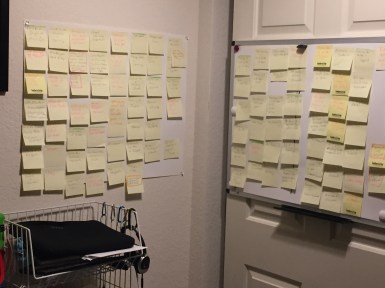
I’ll be right here, in my 11×11 spare room. This is my work-space, set up with folding tables that I can take down to turn it back into a bedroom when we have visitors. While I sometimes find other locations to write, I prefer this one. I got all meh stuff around me. And look at these post-it notes behind me. Each one has one or more of the topics contained in my memoir. Those written in pink or orange highlighter are yet to be written. It’s how I’m organizing the thing until I learn Scribner.

A memoir of post it notes

Below is my view from the chair at my computer. The sock monkey on top is the kind that rolls around and laughs, in case I need a lift, or someone walks in here and asks me what I’m doing. A couple of windows to my right provide an uninspiring view of my neighbor’s rooftop. But I want to know when it’s raining — pluviophile, remember?

The view from my writing nest

Here is a little snippet from my memoir. I was 17, would soon graduate from high school, and was Air Force bound in a few months. Shirley was my sister and Danny’s meh big brudder.

As a senior in high school, my guide and advisor regarding entrance into the military was Shirley’s husband, Jack M. This hard-core, active-duty, career Marine gave me all the advice he could – more than I could assimilate. Jack was a highly decorated First Sergeant (Sergeant Major to be) and a veteran of both WWII and Korea. He would later complete two tours in Viet Nam, and he would resent being denied a third.

Sergeant Major M. was a true warrior. He was the guy you want on your side in a fight, but not necessarily the man you wanted in any situation requiring sensitivity, grace, or political correctness. Despite this, Jack was a boisterous and friendly Italian-American from Ohio who seemed to be liked by everyone.

Jack and Shirley were both Catholics, but were married by a Justice of the Peace because Jack was divorced. Eventually they were married into to the good graces of the Church, which seems strange because they never practiced their religion, or if they did, not for long.

One day Jack and I were browsing through a hardware store so he could tell me what to buy and what was good stuff. This was back when hardware stores had everything or knew where to get it.

Jack pointed at some hunting knives in a case, “Yer gunna want a good knife. Your own. Not too long, but you want good balance, feel, and steel that won’t break on bone. In the Marine Corps, everyone has a knife.”

I looked at him, “Jack, do you think I should join the Marine Corps and not the Air Force? It’s not too late to change.”

“Oh Jesus, no. First off, yer Mom would hate me, if not kill me. But I gotta tell ya, Billy. Yer Air Force material. The Marine Corps don’t work out fer kids like you. Shit, the Marine Corps is not for you.”

Jack was right. The Corps had not worked out well for Danny. Why would it for me?

Jack picked up a knife and pointed it at me. “But, this knife here looks like a good one. It’s Solingen steel and I can tell ya, the Krauts make good stuff like this. Feel it and see how it fits ya. How’s the balance?”

Jack bought the knife as a gift for me. It had a straight, one-inch wide, thick steel blade. The handle was black plastic inlaid with a red and white diamond symbol, and a black metal sheath. I soon realized that Marines have many more good uses for knives than Airmen do.

Note: My Air Force career spanned over 45 years; 22 active duty, the rest civilian. In my last job before retirement, I worked on Eglin Air Force Base for a Marine Corps Colonel. I enjoyed telling him this story.

Only you can tell your story.
Just mind the gaps and look both ways.

Nano Rebel – Dream On

2016 Nano ends at midnight next Wednesday. I’m passing 48 of the 50K goal today, so I’ll meet the challenge this weekend. However, as anyone who writes knows, there is much more for me to do.

musing2

For the past four weeks, my life has been like this: up between 5 and 8 AM, plan to write, but read the news, read and answer emails, look at my memoir and plan some more. But I only write a little. Look at Facebook and write some snarky comments there, read some blogs, go for a walk while listening to music for about an hour; return, eat, stretch, talk to wife, and finally begin to write.

Following an hour of writing; take a break, eat more, get coffee, then back to writing. After pushing out about a thousand words, take a long break and do more useful and constructive things like doing dishes, replacing light bulbs, talking to neighbors, and reading. I write more in the late afternoon and evening with interruptions for football, NCIS, or Blue Bloods. It seems to have worked because I’ve averaged almost 2,000 words each day.

musing1But this memoir – the thinking, remembering, musing, pulling out old photos, doing ancestry research, looking for old friends and finding some, but reading obits of others — it’s so different because it is about me and people who’ve affected my life. Learning and writing about myself every day is interesting for a guy who disliked writing about himself.

Writing fewer words on this blog so you can listen to the song and see the lyrics that say it for me: Dream On, by Aerosmith.


Indeed:

Half my life
Is books, written pages
Live and learn from fools and
From sages
You know it’s true, oh
All these feelings come back to you….

musing3“Sing with me, sing for the years, sing for the tears.”

We dream on, love on, live on;
but look both ways and mind the gaps.


Nano Rebel – Almost Half Way

memoir-into3I love this memoir or autobiography thingy. Like so much of writing, it’s a pain in the ass and a fantastic experience. This has been a busy week for me, as in doing other things besides writing. Of course, bless their hearts, nothing is harder than dealing with the idiots and morons. But dang! We had an election that shook me to my core – more than politics or other elections have in my lifetime.

Boring PresentationOn Wednesday, I went to a meeting that took too long and annoyed me – don’t they all?

I’ve managed to stay on pace to meet my Nano word count goal, but this week was not as productive as last week. I’m finding that I need to do a lot of research, too much thinking, and much trying to remember details of events I stopped caring about long ago.

Friday morning, I attended a write-in with the SnoValley group. After getting only four sentences written in the first hour, I gave up on a productive morning. Despite repeated comments from Alex that he would not talk politics, I returned from a break to a hot and heavy discussion relating to the political events of the week. Since I’ve been trying to contain my anger, it was not long before I was in rant mode. More wasted time venting, and less productive time writing.

I had one other event on that day, thus Friday was my lowest word count day since Nano launched. I was told that the Friday group wrote more during Nano. ‘twas not so on Veteran’s Day.

Another adventure this week was attending a session on memoir sponsored by the Pacific Northwest Writers Association (PNWA) It was facilitated by Theo Pauline Nestor, a memoirist and author of Writing is My Drink. The class was a productive learning experience for me and I wanted more. It was too short, even though it went a little overtime. From what I learned in that class, I decided to write an Intro to my memoir. Here’s part of it.

Introduction to Passionate Disbelief (Partial)

memoir-into2

To believe, or not to believe? Is that the question? Is it better to suffer with my beliefs as I am told? What good does any of it do? Do I stand behind my beliefs, unpopular or not? Would I be a martyr to my causes and die for my beliefs? Is it possible for me to decide for myself what to believe? If I am to believe anything, do I have the right to demand evidence or proof first?

What do I believe? How did I come to my beliefs? Do we have a complete free will to decide what we believe, or are we programmed? Do genetics play a role? How much does my culture and past life determine what I believe today?

I dislike being asked why. It makes me think and I’m too lazy for thinking.

And yet.

Why? is the best question there is. As children, we ask why repeatedly. As parents, we provide answers to our children, eventually saying, “Cuz I’m (Mom, Dad, your boss), that’s why.” Sometimes we answer why with whatever, just because, it is what it is, why not, the bible tells me so, and my personal favorites, who cares, and I don’t know.

When I was that quality assurance guy, I liked using five whys to determine root causes to problems. It is simply asking why repeatedly for five times, as any three-year old might.

Can I have both an open mind and firm convictions? Is it possible for me tell you why I believe (or don’t) something without trying to convince you that I’m right and you’re wrong? We can both be wrong, but can we both be right?

So many questions. So few answers. Terry Tempest Williams has agreed that her writing is in response to questions (cited in an interview with Scott London on The Politics of Place). She went on to mention Rainer Maria Rilke, who described how questions move us.

“Be patient toward all that is unsolved in your heart and try to love the questions themselves, like locked rooms and like books that are now written in a very foreign tongue. Do not now seek the answers, which cannot be given you because you would not be able to live them. And the point is, to live everything. Live the questions now. Perhaps you will then gradually, without noticing it, live along some distant day into the answer.” (From Letters to a Young Poet, 1929)

Exploring my spiritual past is like reverse engineering, or tracing the specific coding that, to some degree, contributed to my conclusions years later. For many questions, I may have followed Rilke and lived into the answer.

memoir-into5Wonder why? Carefully look both ways and mind the gap.