Poetry: A Strain of Madness

The pathetic bitch just lay before my eyes,
we each blamed the other for her horrible lines.
I had once dreamed of her as a flawless beauty,
but her loveliness was soon all too fleeting.
Everything about her soon disgusted me.

She beamed as I hacked away and mutilated her.
Such beatings were horrible, she no longer was fair,
not lovely as once I’d imagined. She was my obsession,
she had to be better, no – I demanded perfection.
I swore at her, insulted her, I’d not let her rest.

Her excruciating pain was caused by my emasculation,
as I twisted her limbs, she bled and cried out my damnation.
I never shed tears. I was her god, her creator; I owned her.
Angered I was, by what she’d become in my hands.
No longer did she sing her sweet angelic song.

Her nightmare was my blind fury. As her cruel and ruthless master,
I swore obscenities and pointed out her flaws; her heart was shattered.
I pondered her shredding – me killing her. Where could I hide?
Should I kill us both? Maybe that was it; murder-suicide.
Thus ending our miserable suffering, both would just die.

Without me, she would not exist. Mutilation continued;
I hacked off pieces, yet that suffering twaddle endured.
I attached new members, only to rip them away as crap;
I ignored her cries for mercy as I tossed her limbs as scrap,
replacing them with her rip-torn skin; still oozing blood.

Was her beauty hidden or gone? I ripped at her face.
She was mine to mold, to satiate my perverted desires.
Everything, from her disfigured hair flowing down
to her awkward stumbling feet, was to gratify me.
Her suffering would end with my metered pleasure.

I deemed us inhuman. A mere dullard of life, all that she was.
Her reasons for existing were meeting my ruthless demands.
She failed. Each day I emptied myself into her, more beatings.
Her tolerance for my impatience stroked her pleasurable feelings,
her loving and caring endurance infuriated me all the more.

I was disgusted. All that time. All the work. All our suffering.
Yet, lain before me that pathetic little twat blamed me.
Exhausted, I thought this would be the end for us both.
Barely breathing, her heart murmuring along with mine,
our time together had neared its end, soon it was done.

One final scream! And then; calmly I stared, feeling a bit proud.
My anguish gone, I muttered the sounds of her words aloud
just as she set them before me. Slowly, she began to change.
That poisonous little worm became my lovely butterfly.
She smiled at me. Then she pouted, both sensuous and shy.

We reached out to each other one final time.
Soon, she would be with eternity, but somehow still mine.
I wept as my pleasure mixed with regret and my sorrow.
After setting her release for after sunrise, tomorrow,
I abandoned my poor little poem to whatever might follow.

Bill Reynolds, 9/4/2017

Know the gaps and mind them well. Look both ways, or deal with hell

But he who, having no touch of the Muses’ madness in his soul, comes to the door and thinks that he will get into the temple of art – he, I say, and his poetry are not admitted; the sane man disappears and is nowhere when he enters into rivalry with the madman. ~ Plato, Phaedrus

Hence poetry implies either a happy gift of nature or a strain of madness. Aristotle, Poetics

Love the art, poor as it may be, which thou hast learned, and be content with it, making thyself neither the master nor the servant of any man. ~ Marcus Aurelius, Meditations, Book Four


The Paradox of Love – Joan and John

This is my second post in a series about the paradox of love. It is a little different in that it’s about a man I’ve met, and a couple in love. I’ve included two of his poems.

Let’s answer this question: What is the best hoped-for outcome of any relationship?

Even Grimm’s Fairy Tales don’t finish with the “and they lived happily ever after” fantasy. The best we can hope for is, until death do us part. Barring the end of the movie The Notebook, murder-suicide pacts, or certain accidents; someone gets left. And we are often made miserable by our loss, about being left without someone we love, or about how that happened.

I don’t know John Gorow well. We attend the same writer’s group. John’s an old timer in the group; I’m new. He agreed to allow me to publish the story he related to me, and the poems he wrote. It is a remarkable and inspirational story. His poems are wonderful.

Joan and John Gorow met in 1969, when both were recovering from divorce. Prior to their marriage in 1972, Joan told John that she had been diagnosed with Multiple Sclerosis (MS). According to John, Joan’s health setbacks did not begin for about 28 years. Since 2000, her MS was a problem. Then came breast cancer. While treatment led to a full recovery, a Parkinson’s diagnosis soon followed, in addition to her worsening MS.

For approximately 15 years, John was Joan’s constant companion and full-time caregiver. As Joan’s health continued to deteriorate, the burden on John increased. In response to that challenge, John wrote the following beautiful, heart-wrenching poem.

***
CAREGIVER
by John Gorow

Time moves on
Inconvenient impairments become life altering
Legs don’t do what she wants
Hands have difficulty holding things

Normal chores are no longer normal
Cooking becomes dangerous
Washing dishes is impossible
Clothes can’t be carried to the washer while using a walker
The vacuum can’t be pushed
Self-worth begins to fade.

The one who has been cared for must now give care
She has cooked for me
It is my turn to cook for her
She washed our clothes
I will do the washing
She kept our home clean
I will try my best

It is assumed we all can dress ourselves
That is no longer true
Showering on her own can’t be done
No more going to the bathroom by herself

Memory slips – confusion arrives
What day is it?
Where are we?
I need patience
We talk, and then we laugh – I cry on the inside

Kids tell me to get help
I finally do – one day a week
Who is it harder on – her or me?
I get some freedom – she does not.

Caregiving is tough
Better than the alternative
I want her as she was
It will not happen
But then again, I do have her

(October 17, 2013)

***

Seven months ago, on October 22, 2016, John no longer had Joan with him. Since then, John has suffered and struggled with his pain. He wrote the following poem to directly address grief in response to the prompt: what brought you to your knees? In the fifth stanza, he directly addresses the paradox of love, vis-à-vis his grief.

***

GRIEF
by John Gorow

Who are you, grief?
Why do you pester me?
You have dropped me to my knees.

I knew I would have to deal with you,
But is it forever?
You keep lingering in my life.

I think you may be gone,
Then you grab me once again.
My laughs turn into tears.

Others have told me about you,
But you don’t behave the same with all.
I can’t determine when you will rise again.

What a paradox.
I have tried to hate you,
But without love you wouldn’t be here.

I know we will take the rest of my journey together,
So I must accept you.
That acceptance will be slow.

You should know
I will no longer dread the tears you bring me,
You will need to accept that.

You can stay with me,
But I will slowly rise from my knees.
I will move forward, but not forget.

(May 18, 2017)

***

I want to close this post with the same line John ended his email to me. It’s a beautiful one-line poem of five words.

“I miss her very much.”

***

As we look both ways and mind the gaps,
let’s not forget that some of us are suffering.
Let us love and support each other, and at all times, let us cherish those we love –
paradox or not.


From Pleasure, Pain

This is the first in a series of blog posts about what I see as the paradox of love. This essay is my answer to the prompt, what has brought you to your knees? I’m not sure where I’ll go with this. Maybe you can help. Ask me questions, or prompt me in some direction. Please keep in mind, this is merely my take. Feel free to provide yours.

Nothing begins, nothing ends,
that is not paid for with moan;
for we are born in other’s pain,
and perish in our own.
~ Francis Thompson

Twenty years ago, I started using the phrase it’s all about how we feel. Normally, I’d caveat such a mantra by claiming it only applied to people without mental health issues. In this case, I think the words apply universally. How do you feel?

Love is the highest standard we have for caring about others. In literature, movies, music, religion, and in our daily lives; our obsession with love is obvious. It’s poorly defined, extensively written about, and grammatically misused; but love is everywhere in the English language. We want to love and to be loved. It’s our ultimate pleasure. How sweet love is.

I embrace love, but I fear pain. Pain can take over my body. Excruciating physical pain has brought me to my knees. It’s absurd that such pain may be helpful as it travels my nervous system from its source to my brain. Pain is abnormal. Even though we all experience pain, it’s not supposed to be there unless something is wrong. Pain is a symptom more useful to doctors than to me.

As bad as physical pain is, emotional pain is more devastating. In extreme cases, mental grief often leads to thoughts of suicide. In physical pain I might say, I want to die; but, I never intended that. I only wanted the pain to stop. On the other hand, people in emotional agony can be dangerous.

Our vulnerability to emotional pain is greatest when we love someone. When we love another person, we grant that person more power over us than any god or demon. Still, we choose to love. Not just willingly, but aggressively with passion and desire. Why? It’s like we can’t live without it. If anyone does live without love, we consider that sad and dysfunctional.

Love has brought me to my knees in two ways. First, the wondrous and joyful pleasure of experiencing love has led me to my knees with happiness. Be it romantic love, love of parents, love of children, grandchildren, or friends; the wonderful state of love takes away the dark and gives light.

Second, love has dropped me in pain, in fear, in a depressingly dark, hateful passion. Love betrayed leaves behind lifelong scars too deep to ever completely heal. The end of a romance, the betrayal of a friendship, the dismissal of a parent we love, the suffering or death of a child; each of these may, and perhaps should, put me on my knees. Such pain and agony from the dark side of love makes me question the value of life.

There may be recovery or even pleasure at the end of the tunnel. Time may mend love betrayed. Still, our human nature forces us to look back into that dark tunnel, into that abyss of pain and suffering. We remember. Do we dare to ever again risk pain by making ourselves vulnerable? Do we face the agony of finding ourselves desperately miserable because we loved?

Why do we do it? Would you, could you, live without love?

That’s a paradox of love. We know the risks, the vulnerability, and the potential to suffer. And yet, we still seek out love and take the risk. How do you feel now?

Even when we look both ways and mind each gap, we will experience pain in life.

“The truth is, everyone is going to hurt you.
You just got to find the ones worth suffering for.”
― Bob Marley (20 years after his death, which means he never said it. True, nonetheless.)

The youtube poem below is worth hearing/reading, and I think the Love Hurts song by Nazareth is worth a listen.


U – Universal Pain and Suffering (NaPoWriMo #25)

I don’t think there is a rule, but I’ve read that poems should be about specific things. The universe isn’t specific. So how do I write about it and be specific? I decided to key on a quote from Aristotle: “The universe exists for, and shines through, the particular.” My attempt was to twist that concept into living in the present.


***

Suffering Universal
By Bill Reynolds

What means the vast universe?
From the largest to the smallest,
It’s the every and the all, interspersed.
There’s more, and we’re on the call list.

Where thoughts drift among the unknowable
It’s all there. Is our significance so minute?
Dare we, as we might; is it so uncontrollable?
Or shall we focus on the more acute?

A far-off star explodes. Planets vanish.
Did you hear it? Did you see it?
Stars in the sky, but maybe not.
We see the light. Is it still a vantage?

Death. Suffering. Pain. Sadness.
Broken bodies. Broken hearts.
Do you hear them? Do you see them?
It’s all there. Should we care?

Are my feet on earth? Can my senses touch reality?
The universe is there, but also here.
Not for its own sake, but for each of us.
Let’s focus on the small, while aware of it all.

I engage with my personal
Real world life as it truly can be.
Let me be in the universal here and now.

Until more of the changes happen,
Until the stars no longer shine,
Until we know it all,
Until we hear the universe breathe.

***

Right here; right now, bloom where you’re planted.
But, look both ways and mind the gaps.

*

NaPoWriMo #16 (No AtoZ on Sunday)

This poem is about underground coal miners – people who did, or do, very dangerous work. My father and grandfathers were three. This is also about life in our home when Dad still worked in the mines.

During my early teens, the mining business shut down in northeastern Pennsylvania. This was due to the Knox Mine Disaster in the late 1950s and the easy, cheaper, and cleaner use of oil to heat homes. Today, most coal mined in the USA is exported, but the industry continues to decline. Only 30% of electrical power in America is produced by coal.

Old coal mine entrance. A dark abyss.

Nearer My Hell to Thee
By Bill Reynolds

Before leaving the daylight, and going into the pits,
They look deep into the ground, to the soul of the abyss.
The blackest of blacks, the darkest of darks, and danger,
The dank abyss peers back as men descend into nature.

Far below ground, the mine was there lurking, waiting;
That dangerous, disgusting damnation of sound,
For some small wages, they go into that hole far underground.

Deadly it was and deadly it is, they never know when…
Many wives cried at the loss of their men,
Who died in the gut of the deplorable depths.

It was frightening work miners chose, those jobs that killed.
Black hard hats on heads, mining lamps on to cut the dark,
But still never safe. In denial or not, it was dangerous work.

Blackjack and Brass Knuckles same as my father had.

Father was, and so were both grandfathers, miners all.
Walking home through muddy fields and dark alleys,
Dangerous on pay days; all cash in their pockets,
With blackjacks and knuckles, maybe a gun.

He’d push open the gate, then let it slam with a thud.
Dad would stomp up the stairs and in the back door,
It was always the back way after a day’s work.

Covered with coal dust,
The sweat of the labor, and the stink of the mines;
Smoking his Camels, always coughing and coughing.
But he was my Dad, and it was always like this.

I remember Dad much blacker.

Everything filthy, his clothing all rotting,
Black on his skin, and in his gray hair,
He didn’t know about the black in his lungs,
the deadly back dust was glued on hard, but not to his soul.

White at his eyes and over his lips,
he’d set down his lunch pail. No hugs, no kisses,
just “hiya,” and not much of a welcome.

His coat and his cap, and his boots all come off.
Trounced upstairs to the bath, footsteps pounding the way,
Transformation, about to take place.

In cold water each day, he washed coal dirt away,
From his face and his hair, his neck and his chest,
From his waist to his feet, but not from the rest.

Nothing could wash the coal miner away.

Not the water, the union, the beer, or smokes.
Not on the inside, from his throat nor deep in his lungs.
Black dust in his body and in with his blood.

In a coal mine.

It was always the same, until the disaster.
Miners to work, to suffer and die.
Returning to homes, dirty but to homes they came.

Then one day, the depression set in.
The mines all shut down, proud miners, no work.
One day it all ended and everything changed.

Miners laid off, the mines were all closed.
Oil was king, and nobody noticed.
No more abyss, just a new kind of dark.

If you not yet sufficiently depressed, watch this.

Mind the gaps and look both ways.

Elegy Poem for Mom

An elegy is a mournful poem. I wrote this elegy regarding the loss of my mother, more than 25 years after her death. The elegy is one of the oldest poetic forms. It’s identified by what it says, not how it says it.  The Greek word elegeia means song of mourning, and is often included in classical Greek tragedies.

Missing Mom

The day Mom died, I stood there and cried.
To the surface my guilt came out of my eyes,
Beside her deathbed, letting go of our life.
Her suffering had ended, and I was alone.

No person is perfect, no human unsoiled.
Enshrined mother’s love, was sunshine to me,
‘twas the essence of my childhood memory,
My loss just the same, never again she will be.

She’d lived a rough life, through to the end,
But she loved me as only the mother to son,
That unconditional love, will never be done.
Only her death could end our last day.

Alone. Just alone.

Her voice and her scent, ecstasy to me.
So much I still miss them. I can still see.
“Hiya,” she’d say, to even the worst.
As kind as she was, so how she asked me to be.

Mom we still miss you, your face and your smile,
The sound of your voice, the look in your eyes.
Never again, will you be for us to see.
The loss that brings a sadness, one forever I’ll feel.

Mind such gaps, look both ways, and remember love.

The Summer of ’59

Facing the Dark Side

When I was in the sixth grade at my Catholic school, I dreaded being promoted to seventh grade. Sister Mary Scary taught seventh grade. That nasty creature who floated around Saint John’s wearing Rome’s version of a burqa, but used a white frame to emphasize a face that was perpetually angry, who posed as a Catholic nun but was really the Wicked Witch of the West. That daughter of Satan himself, would have complete control of my life from eight to three every weekday, plus an extra hour at church every Sunday and Holy Day of Obligation, when I would be forced to sit, kneel, or stand to watch men and boys dressed in feminine garb prance, kneel, sing, pray, and read in a dead language of which I understood nary ten words.

Saint John's Church and School
Saint John’s Church and School

Mom and Dad were delighted in June of 1958, when I handed them my report card with that depressing word emblazoned on the back cover: “Promoted!” To me, it said, “sentenced to nine months of suffering in Purgatory at the hands of evil.”

I worried all summer. My friend, Jimmy, who was a grade ahead of me reported the horrible carnage that he and others had endured at the hands of Lucifer’s daughter. Whatever the version of depression a 12-year-old boy could encounter, I’m sure I had it. Never, have I wanted a summer to pass more slowly.

My parents always supported authority over me. The nun, teacher, priest, cop, drunk adult, irate neighbor, or neighborhood tattle tale was always right. Ok, occasionally, they really were right. But from my point of view, my parents should have supported me – their son who they claimed to love. I could not discuss my fears about the nun with my parents.

My siblings had the “we survived, but you probably won’t” attitude and said as much. However, my older brother, Danny, did have some advice for me. “Be an altar boy. They like altar boys,” he said. That made sense to me. I would play their game to survive.

Survival

I worried enough about Sister Scary that I managed to get through seventh grade with minimal physical damage and mental distress. I passed academically, and I was home free. This time I was even more pleased than Mom and Dad that I was not held back. I had not shed one tear. I was doing well. My eighth-grade teacher was to be Sister Mary Wonderful, who was also the school Principal. Life was good again.

Toward the end of seventh grade, I was finally approached to join the exalted and glorious ranks of the chosen ones. I was asked if I wanted to be an Altar Boy. All my friends were becoming Altar Boys, and I wanted to be one, too. My brother, Danny, had been one, and it was what good Catholic boys did.

Altar Boys
Altar Boys

I accepted the offer from the Father O’Burts, logically assuming my parents would approve. I started learning the Latin prayers and talking to other boys about the process and the job. I was happy about it. My plan for eighth grade was to be one of the chosen. I even signed up for the school basketball team. I didn’t play well, but I was the tallest boy in my school. I began to look forward to my final year at Saint John’s.

Not So Fast

Then, as the skies darkened again, I had the familiar bad feeling. As September and the start of school approached, there was a shockingly frightful rumor. Sister Wonderful was being transferred, and Sister Mary Scary, the evil antagonist of my short life, was being promoted to school principal and would be moving up to teach eighth grade.

Oh, dear God, No! I was supposed to be done with her. But as every dependable source, including the church bulletin, soon validated, ‘twas da troot. The second coming of the Inquisition had been promoted to Principal of Saint John’s elementary school, and would teach 8th grade to my class. I knew that I could not survive another year. My only solace was knowing that, except for a few favored girls, the rest of my classmates were as upset as I was. The Altar Boy gig became critical.

Say What?

So then, still expecting them to be pleased with the news, I decided to tell my parents that I was to be an Altar Boy. I expected them to be proud, if not overjoyed.

I was happy when I walked into the kitchen and sat down for dinner. She was at the sink behind me. “Mom, guess what? Fadder O’Burts as’t me ta be an altar boy. And I’ma gunna do it, too.”

I turned to look at Mom, smiling and all full-of-myself, at first. Then, severe shock set in when she turned and said, “No yer not!”

Dad looked up and added, “Like Hell, y’are! Yeh kin get dat idea outa yer thick skull right now.”

Dazed, I needed something quick – a prayer, to get sick, perhaps a deadly disease, anything. Desperation was overcoming me.

I was unaware that when Danny had been an Altar Boy, it was not a good experience. The logical consequence, of course, was that I was not permitted to follow, and my parents did not give one inch. Nor did they tell me why I was being denied my only hope to survive nine more months of the Black-veiled Horror. Today, I am glad that I was not part of that Altar Boy thing, but at the time, it was the worst possible news.

Option Two

Quickly, I changed the subject. “Mom, Coughlin is 7th through 12th grade. Can I go there for 8th grade? I’ll be starting there fer 9th grade and high school the next year, anyway.”

She didn’t even look at me. “Now, Billy-boy. Why’d ya do dat? Jist graduate St. John’s then go to high school like your brother and sister did. After I see ya graduate Saint John’s, the Lord can take me. It’ll never happen again.”

“I will graduate from Coughlin High, Mom. And probably college too. So, the Lord can wait.”

With that, the food in Dad’s mouth came spewing out. He was choking and coughing and wheezing and trying not to die while laughing at my confidence. My wonderful summer was ending in embarrassment and darkness. I became angry and depressed again.

Blues Brothers
Blues Brothers

As It Happened

I was right. Eighth grade was worse than seventh for exactly the reasons that I had predicted. Even our basketball team suffered from the curse of the cruel Head Demon. Sister Mary Scary controlled every aspect of student lives – thus influencing their spiritual growth or decline. She and I were in constant struggle to have all of Hell on our side. That nun and I never had one good day. Eventually, we developed a healthy fear of each other as my size and strength worked to discourage many of her thoughts. Sister Scary promoted me to high school and out of Saint John’s. To this day, I’m certain that neither of us wished to deal with the other any longer than necessary. I was neither the first, nor that last, to be moved along to become someone else’s problem.

Age and experience change how we see our world.
Look both ways and mind the gaps.

The Battling Bastards

Poem
We’re the battling bastards of Bataan;
No mama, no papa, no Uncle Sam.
No aunts, no uncles, no cousins, no nieces,
No pills, no planes, no artillery pieces.
And nobody gives a damn.
Nobody gives a damn.
~ by Frank Hewlett ,1942

One Survivor’s Story

I was fortunate enough to meet Professor Ben Steele on the day before I completed my fourth Bataan Death March Memorial Marathon: 26.2 miles through a portion of the Chihuahua Desert located in Southeast New Mexico. On 26 March 2011, Ben signed my book of the drawings he had made as a prisoner of war (POW), following the fall of Bataan and Corregidor in 1942. I shook Ben’s hand and we talked about his art.

Three Parts of the Story

This is one of three blog posts about our two journeys that converged when I met this heroic Montana cowboy and historic American icon. The first post is about the war, which the US entered immediately following Japanese attack at Pearl Harbor. The second attack, which followed within hours of the first, was the invasion of the Philippines by Japanese military forces. It happened about four years prior to my birth, but Ben was there.

Prisoner's of War - Bataan Death March
Prisoner’s of War – Bataan Death March

Next Tuesday, a second post will be about my experiences with the Bataan Memorial Marathon, an annual event that takes place at White Sands Missile Range, near Las Cruces, NM. It’ll cover that part of my experience as a 65-year-old runner, in way over his head, leading up to my meeting with Ben, then age 93.

If you’re a marathoner/runner/endurance walker, or even a wannabe, registration signups for this annual patriotic event close on March 5th. The marathon will be on Sunday, March 19th starting early in the cold of the high desert military post, located just east of the breathtaking Organ Mountains. For the link to the web page and instructions, click here. You need be in good physical condition, but not all are. This thing is a rigorous challenge for the average person, and the “casualty rate” is high. The good news is that 85% of the participants walk it – as I did four times.

One survivor would turn 100 this year.

The third post will be about the man I met and his experience. He and others were survivors of the Bataan Death March, and long-term confinement into slave labor. He was a POW survivor, an artist, and a Professor of Art at Eastern Montana College: Benjamin Charles Steele.

The Death March

As we should know, on December 7, 1941, Japanese military forces attacked the USA by dealing a devastating blow to our forces at Pearl Harbor, Hawaii. Few know that ten hours later, the Japanese attacked the Philippines. The Philippines Campaign (Filipino: Labanan sa Pilipinas), or the Battle of the Philippines, raged from 8 December 1941 to the fall of Bataan on 9 April (105 days), and the following surrender of the island of Corregidor on 8 May 1942.

The Japanese military conquest of the Philippines may have been the worst military defeat in United States history. 23,000 US military personnel, and another 100,000 Filipino soldiers, were killed or captured.

Death March route. Train portion was more nightmare.

Bataan is a peninsula on the southwest end of the large Philippine island of Luzon. As the battles raged on, General MacArthur’s forces retreated to Bataan and the small island of Corregidor. Due (in part) to the breakdown of supplies and logistics (in my opinion), the Americans and Filipinos began to lose strength. Following the decision to surrender, the Japanese were overwhelmed with POWs. A torturous and deadly forced march of 65 miles by approximately 75,000 sick, injured, and defeated Filipino and American troops to prison camps ensued. The march took about eight days.

While the exact death toll on the march is uncertain, credible sources report that casualties prior to reaching their destinations were from 5,000 to 18,000 Filipino deaths, and 500 to 650 American deaths. Marchers reported severe physical abuse and wanton killings. The Bataan Death March was later judged by an Allied military commission to be a Japanese war crime.

On January 27, 1944, the U.S. government informed the American public about the march, when it released sworn statements of military officers who had escaped.

My first assignment following Air Force basic training in 1964 was to Dyess Air Force Base, Texas. Over 30 years later, I lived for three years in Albany, Texas. It was not until years later, when I started reading and learning more about the Death March that I learned about Lieutenant Colonel William E. Dyess. Dyess Air Base was named after him, and he was from Albany, Texas (population ~ 2,000).

Dyess was a Death March survivor, and one of the few officers who escaped the Japanese POW camps in the Philippines. Following his return, Colonel Ed Dyess wrote extensively about the March and the prison camps prior to his death in an airplane crash in late 1943.

The drawings you see in the following video are Ben Steele’s. The survivors pictured in wheelchairs are at the starting line of the marathon.

Never Ending Wars

Japan formally signed to surrender on September 2, 1945, ending World War II. After 14 years of war, “nearly three million Japanese were dead, many more wounded or seriously ill, and the country lay in ruins,” most Japanese (not to mention those who had suffered at their hands during the war) saw the end of hostilities as a blessing. The USSR and China suffered the greatest loss of life during WWII – in the tens of millions, mostly civilians, who were killed due to brutal war crimes.

There is no shortage of stories about man’s inhumanity to man, particularly in time of war. The Bataan Death March, and the subsequent treatment of prisoners, was one example. Knowing these realities, meeting those who experienced them, and listening to or reading their stories should serve to teach us the truth of what General Douglas MacArthur said, “In war there is no substitute for victory.”

Life is good and it can be better. But, pay attention.
Look both ways and mind the gaps.
It will not happen again unless we allow it.

Morality, Sin, and I over E (I/E)

Disclosure: I’m of the there are no gods variety of atheist. Consequently, there’s no sin. Since we can’t have one without the other, sin is a word I use only because the majority use the word, even if they’re agnostic. But, there is some general agreement about what is or isn’t moral behavior.


morality-1

The past few weeks, I’ve posted about the seven deadly, and predominantly Christian, sins of greed, pride, lust, anger, gluttony, envy, and sloth. I also provided a brief contrast with an opposite word. My approach was based on the source of our behavior, our human mind and emotions. Each of the seven begins with an emotion that may later be manifest in behavior – we act based on how we feel.

Writers have a phrase: show me, don’t tell me. In movies, the words and actions of the actors are used to portray thoughts and feelings. In my opinion, we cannot choose each emotion. Happiness is a little different. We can be happy people and still experience dark-side emotions. Furthermore, we can usually choose our behavior. Some comments have implied that we’re in total control over emotions, and then control our actions, as well. While I don’t share that opinion, my behavior is based upon my emotional state has led to more apologies from me than I care to admit – slow learner.

As a society, a nation, or arguably, within a religion, we subjectively decide what’s moral. It changes over time, and we routinely disagree about what’s unacceptable (political-type disagreements). While we don’t always agree, often we do.

In the title equation, I = intellect, and E = emotion. When we experience emotions, we follow that feeling with behavior. To the degree that we can, ideally, we choose the behavior we morally and intellectually we want to display. For example, if someone elicits our anger, jealousy, or some other feeling from our complex emotional spectrum, we then pick our next move. I over E implies that we select our words or actions based on our intellect (good judgment, wisdom), rather than the emotion we feel. It’s not easy to behave contrary to how we feel. Nor is it always necessary. Going with our emotions (following our heart) is very often our best and most sincere option. We love with not only our personal emotions, but often those of others. How others tug at our emotions makes life magical. Life is wondrous, but not simple.

The common thread that I’ve stitched through each of the seven is that emotions are not sins. Feelings are legitimate. Be they good or bad feelings, it’s our behavior that determines anything about moral standards. And it doesn’t make a tinker’s-dam if one believes in a god, gods, or none. Each of the seven have opposite virtues. Every good person has a dark side. Every saint has a past; every sinner a future.

Humans are very much part of nature. We are where we belong. Our greatest need is for each other. Our greatest challenge is in dealing with each other.

Our lives are full of stepping stones to make life better and with stumbling blocks that bring us incredible amounts of pain and suffering – and valuable lessons.

morality-2

Let’s be accepting and understanding of ourselves and others to the degree that we’re able. We are not static beings. We’re who and what we are, but we have opportunities and futures. We come into this world as we are – a combination of physical and mental paradoxes and mysteries. A lot happens between the average birth and death. This includes running the bases of virtuous and bad behavior, and the personal experience of staring into the abyss that is us.

Look both ways, and mind the gap.

Morality Series: Wrath (Anger)

wrath-1

This one’s mine. Other than talking about the illogical wrath of a deity, or when humorously speaking of enduring the anger of someone else, we don’t use this word. We prefer rage, resentment, fierce anger, vengeance, or a few other synonym-like words (pissed off). I will use the word anger because wrath is archaic. We get angry, not wrathful. I also dislike typing the silent “w,” and a rath is something else.

I could easily write a book about my own anger. If I included the whole enchilada of human nature, it would probably expand to three fat volumes, and be boring. Anger is an emotion. One foolishly considered bad or sinful. While it’s neither, it is dangerous. Anger is a legitimate and real emotion that we may each experience differently. Some people seem to be incredibly patient and tolerant, seemingly never experiencing anger. Others seem explosive, and are sent to (drum roll) Anger Management classes to learn how to behave. I like to call it Charm School.

art-memoir-analogy2An old friend of mine had to do that with his work later in life. We grew up together, and as I recall, my friend was exceptionally demonstrative when angry. It didn’t take much before he felt slighted, irritated, or offended. When we were teenagers, I either ignored him or put distance between us until he calmed down. Even later in life, I was still surprised that he could come unglued about things that I considered little more than a trivial nuisance. However, I also had my share of temper tantrums throughout life.
For most of my life, I had a sexist view of anger. I thought men experienced anger more frequently than women, and that acting out our anger was not only what men did, but it was semi-acceptable. I’ve since learned that my view was wrong (read this).

The point of view I had learned was that all other male emotions were unacceptable, and any emotional display was a sign of weakness. What this wrong opinion did for me was to allow me to exhibit angry behaviors regardless of what emotion I may have been feeling. I later learned that I not only had to get in touch with my emotions, I had to start identifying them: fear, shame, sadness, disgust, anxiety, guilt, and many more. I don’t blame society or culture. I take responsibility for my behavior, as should we all.

Another problem with anger is the difficulty of properly identifying it in either ourselves or others. Depression, anxiety, fear, and other emotions may manifest themselves, both inside and out, through behavior that could be considered anger. It’s confusing and figuring this out may take the help of a friend or counselor.

People lash out for a variety of reasons, and it may have little or nothing to do with being angry. I’ll leave it to the experts to follow this rabbit trail, but I suggest we try to pick out the different emotions we feel and deal with them for what they are. I posted about jealousy on Tuesday. Certainly, we feel some anger when we’re jealous. We need to recognize when more than one emotional thing is happening to us at a time. When I was beginning to work on this for myself, I would try to reflect on my feeling and not be pinging off the walls so much.

wrath-3

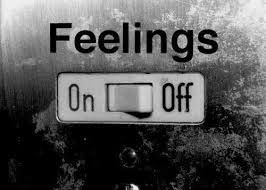
Then, a close family member accused me of being an “emotionless automoton” who had no feelings and didn’t care about others. I love the memes of a light switch for turning emotions on and off. She was confusing my trying to remain calm with lack of emotion. No such luck.

Politics, religion, sports, and money are four topics that can lead to anger during many seemingly innocuous discussions. If we have not experienced the feelings ourselves, we have certainly seen them acted out by others.

wrath-4We are social (sociable or not) beings walking around in bodies transporting minds packed with emotional potential. We’re not Vulcans, like Mr. Spock (played by Leonard Nimoy) in the Star Trek series. Spock was of a mixed human-Vulcan heritage race that had mostly conquered his emotions and made them subject to his control. We are simply humans.

Ironically, the death of Spock occurs in the movie The Wrath of Khan, and some think that it’s the best scene in the movie. Forgive my digression; I’m a long time Star Trek, Spock, and Leonard Nimoy fan.

This concludes my series on The Seven Deadly Sins, or Morality. I plan a summation for next Tuesday’s post that may explain my take on this from a broader perspective.

Have a wonderful weekend.
Look both ways and mind the gaps – every day.