The Battling Bastards

Poem
We’re the battling bastards of Bataan;
No mama, no papa, no Uncle Sam.
No aunts, no uncles, no cousins, no nieces,
No pills, no planes, no artillery pieces.
And nobody gives a damn.
Nobody gives a damn.
~ by Frank Hewlett ,1942

One Survivor’s Story

I was fortunate enough to meet Professor Ben Steele on the day before I completed my fourth Bataan Death March Memorial Marathon: 26.2 miles through a portion of the Chihuahua Desert located in Southeast New Mexico. On 26 March 2011, Ben signed my book of the drawings he had made as a prisoner of war (POW), following the fall of Bataan and Corregidor in 1942. I shook Ben’s hand and we talked about his art.

Three Parts of the Story

This is one of three blog posts about our two journeys that converged when I met this heroic Montana cowboy and historic American icon. The first post is about the war, which the US entered immediately following Japanese attack at Pearl Harbor. The second attack, which followed within hours of the first, was the invasion of the Philippines by Japanese military forces. It happened about four years prior to my birth, but Ben was there.

Prisoner's of War - Bataan Death March
Prisoner’s of War – Bataan Death March

Next Tuesday, a second post will be about my experiences with the Bataan Memorial Marathon, an annual event that takes place at White Sands Missile Range, near Las Cruces, NM. It’ll cover that part of my experience as a 65-year-old runner, in way over his head, leading up to my meeting with Ben, then age 93.

If you’re a marathoner/runner/endurance walker, or even a wannabe, registration signups for this annual patriotic event close on March 5th. The marathon will be on Sunday, March 19th starting early in the cold of the high desert military post, located just east of the breathtaking Organ Mountains. For the link to the web page and instructions, click here. You need be in good physical condition, but not all are. This thing is a rigorous challenge for the average person, and the “casualty rate” is high. The good news is that 85% of the participants walk it – as I did four times.

One survivor would turn 100 this year.

The third post will be about the man I met and his experience. He and others were survivors of the Bataan Death March, and long-term confinement into slave labor. He was a POW survivor, an artist, and a Professor of Art at Eastern Montana College: Benjamin Charles Steele.

The Death March

As we should know, on December 7, 1941, Japanese military forces attacked the USA by dealing a devastating blow to our forces at Pearl Harbor, Hawaii. Few know that ten hours later, the Japanese attacked the Philippines. The Philippines Campaign (Filipino: Labanan sa Pilipinas), or the Battle of the Philippines, raged from 8 December 1941 to the fall of Bataan on 9 April (105 days), and the following surrender of the island of Corregidor on 8 May 1942.

The Japanese military conquest of the Philippines may have been the worst military defeat in United States history. 23,000 US military personnel, and another 100,000 Filipino soldiers, were killed or captured.

Death March route. Train portion was more nightmare.

Bataan is a peninsula on the southwest end of the large Philippine island of Luzon. As the battles raged on, General MacArthur’s forces retreated to Bataan and the small island of Corregidor. Due (in part) to the breakdown of supplies and logistics (in my opinion), the Americans and Filipinos began to lose strength. Following the decision to surrender, the Japanese were overwhelmed with POWs. A torturous and deadly forced march of 65 miles by approximately 75,000 sick, injured, and defeated Filipino and American troops to prison camps ensued. The march took about eight days.

While the exact death toll on the march is uncertain, credible sources report that casualties prior to reaching their destinations were from 5,000 to 18,000 Filipino deaths, and 500 to 650 American deaths. Marchers reported severe physical abuse and wanton killings. The Bataan Death March was later judged by an Allied military commission to be a Japanese war crime.

On January 27, 1944, the U.S. government informed the American public about the march, when it released sworn statements of military officers who had escaped.

My first assignment following Air Force basic training in 1964 was to Dyess Air Force Base, Texas. Over 30 years later, I lived for three years in Albany, Texas. It was not until years later, when I started reading and learning more about the Death March that I learned about Lieutenant Colonel William E. Dyess. Dyess Air Base was named after him, and he was from Albany, Texas (population ~ 2,000).

Dyess was a Death March survivor, and one of the few officers who escaped the Japanese POW camps in the Philippines. Following his return, Colonel Ed Dyess wrote extensively about the March and the prison camps prior to his death in an airplane crash in late 1943.

The drawings you see in the following video are Ben Steele’s. The survivors pictured in wheelchairs are at the starting line of the marathon.

Never Ending Wars

Japan formally signed to surrender on September 2, 1945, ending World War II. After 14 years of war, “nearly three million Japanese were dead, many more wounded or seriously ill, and the country lay in ruins,” most Japanese (not to mention those who had suffered at their hands during the war) saw the end of hostilities as a blessing. The USSR and China suffered the greatest loss of life during WWII – in the tens of millions, mostly civilians, who were killed due to brutal war crimes.

There is no shortage of stories about man’s inhumanity to man, particularly in time of war. The Bataan Death March, and the subsequent treatment of prisoners, was one example. Knowing these realities, meeting those who experienced them, and listening to or reading their stories should serve to teach us the truth of what General Douglas MacArthur said, “In war there is no substitute for victory.”

Life is good and it can be better. But, pay attention.
Look both ways and mind the gaps.
It will not happen again unless we allow it.

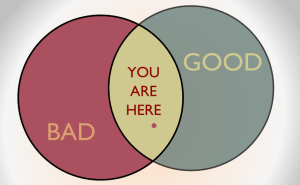
Morality, Sin, and I over E (I/E)

Disclosure: I’m of the there are no gods variety of atheist. Consequently, there’s no sin. Since we can’t have one without the other, sin is a word I use only because the majority use the word, even if they’re agnostic. But, there is some general agreement about what is or isn’t moral behavior.


morality-1

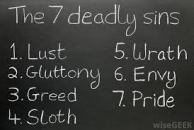
The past few weeks, I’ve posted about the seven deadly, and predominantly Christian, sins of greed, pride, lust, anger, gluttony, envy, and sloth. I also provided a brief contrast with an opposite word. My approach was based on the source of our behavior, our human mind and emotions. Each of the seven begins with an emotion that may later be manifest in behavior – we act based on how we feel.

Writers have a phrase: show me, don’t tell me. In movies, the words and actions of the actors are used to portray thoughts and feelings. In my opinion, we cannot choose each emotion. Happiness is a little different. We can be happy people and still experience dark-side emotions. Furthermore, we can usually choose our behavior. Some comments have implied that we’re in total control over emotions, and then control our actions, as well. While I don’t share that opinion, my behavior is based upon my emotional state has led to more apologies from me than I care to admit – slow learner.

As a society, a nation, or arguably, within a religion, we subjectively decide what’s moral. It changes over time, and we routinely disagree about what’s unacceptable (political-type disagreements). While we don’t always agree, often we do.

In the title equation, I = intellect, and E = emotion. When we experience emotions, we follow that feeling with behavior. To the degree that we can, ideally, we choose the behavior we morally and intellectually we want to display. For example, if someone elicits our anger, jealousy, or some other feeling from our complex emotional spectrum, we then pick our next move. I over E implies that we select our words or actions based on our intellect (good judgment, wisdom), rather than the emotion we feel. It’s not easy to behave contrary to how we feel. Nor is it always necessary. Going with our emotions (following our heart) is very often our best and most sincere option. We love with not only our personal emotions, but often those of others. How others tug at our emotions makes life magical. Life is wondrous, but not simple.

The common thread that I’ve stitched through each of the seven is that emotions are not sins. Feelings are legitimate. Be they good or bad feelings, it’s our behavior that determines anything about moral standards. And it doesn’t make a tinker’s-dam if one believes in a god, gods, or none. Each of the seven have opposite virtues. Every good person has a dark side. Every saint has a past; every sinner a future.

Humans are very much part of nature. We are where we belong. Our greatest need is for each other. Our greatest challenge is in dealing with each other.

Our lives are full of stepping stones to make life better and with stumbling blocks that bring us incredible amounts of pain and suffering – and valuable lessons.

morality-2

Let’s be accepting and understanding of ourselves and others to the degree that we’re able. We are not static beings. We’re who and what we are, but we have opportunities and futures. We come into this world as we are – a combination of physical and mental paradoxes and mysteries. A lot happens between the average birth and death. This includes running the bases of virtuous and bad behavior, and the personal experience of staring into the abyss that is us.

Look both ways, and mind the gap.

Morality Series: Wrath (Anger)

wrath-1

This one’s mine. Other than talking about the illogical wrath of a deity, or when humorously speaking of enduring the anger of someone else, we don’t use this word. We prefer rage, resentment, fierce anger, vengeance, or a few other synonym-like words (pissed off). I will use the word anger because wrath is archaic. We get angry, not wrathful. I also dislike typing the silent “w,” and a rath is something else.

I could easily write a book about my own anger. If I included the whole enchilada of human nature, it would probably expand to three fat volumes, and be boring. Anger is an emotion. One foolishly considered bad or sinful. While it’s neither, it is dangerous. Anger is a legitimate and real emotion that we may each experience differently. Some people seem to be incredibly patient and tolerant, seemingly never experiencing anger. Others seem explosive, and are sent to (drum roll) Anger Management classes to learn how to behave. I like to call it Charm School.

art-memoir-analogy2An old friend of mine had to do that with his work later in life. We grew up together, and as I recall, my friend was exceptionally demonstrative when angry. It didn’t take much before he felt slighted, irritated, or offended. When we were teenagers, I either ignored him or put distance between us until he calmed down. Even later in life, I was still surprised that he could come unglued about things that I considered little more than a trivial nuisance. However, I also had my share of temper tantrums throughout life.
For most of my life, I had a sexist view of anger. I thought men experienced anger more frequently than women, and that acting out our anger was not only what men did, but it was semi-acceptable. I’ve since learned that my view was wrong (read this).

The point of view I had learned was that all other male emotions were unacceptable, and any emotional display was a sign of weakness. What this wrong opinion did for me was to allow me to exhibit angry behaviors regardless of what emotion I may have been feeling. I later learned that I not only had to get in touch with my emotions, I had to start identifying them: fear, shame, sadness, disgust, anxiety, guilt, and many more. I don’t blame society or culture. I take responsibility for my behavior, as should we all.

Another problem with anger is the difficulty of properly identifying it in either ourselves or others. Depression, anxiety, fear, and other emotions may manifest themselves, both inside and out, through behavior that could be considered anger. It’s confusing and figuring this out may take the help of a friend or counselor.

People lash out for a variety of reasons, and it may have little or nothing to do with being angry. I’ll leave it to the experts to follow this rabbit trail, but I suggest we try to pick out the different emotions we feel and deal with them for what they are. I posted about jealousy on Tuesday. Certainly, we feel some anger when we’re jealous. We need to recognize when more than one emotional thing is happening to us at a time. When I was beginning to work on this for myself, I would try to reflect on my feeling and not be pinging off the walls so much.

wrath-3

Then, a close family member accused me of being an “emotionless automoton” who had no feelings and didn’t care about others. I love the memes of a light switch for turning emotions on and off. She was confusing my trying to remain calm with lack of emotion. No such luck.

Politics, religion, sports, and money are four topics that can lead to anger during many seemingly innocuous discussions. If we have not experienced the feelings ourselves, we have certainly seen them acted out by others.

wrath-4We are social (sociable or not) beings walking around in bodies transporting minds packed with emotional potential. We’re not Vulcans, like Mr. Spock (played by Leonard Nimoy) in the Star Trek series. Spock was of a mixed human-Vulcan heritage race that had mostly conquered his emotions and made them subject to his control. We are simply humans.

Ironically, the death of Spock occurs in the movie The Wrath of Khan, and some think that it’s the best scene in the movie. Forgive my digression; I’m a long time Star Trek, Spock, and Leonard Nimoy fan.

This concludes my series on The Seven Deadly Sins, or Morality. I plan a summation for next Tuesday’s post that may explain my take on this from a broader perspective.

Have a wonderful weekend.
Look both ways and mind the gaps – every day.

Morality Series: Glutony

I seldom eat the whole pizza any more, at least not in the same evening. My wife may have one slice, but not always. Still, why do some religious folks insist that if, per chance, the wife wants none, I’ll go to Hell?

glutony-3

Am I gluttonous? I eat more than that guy, but less than that one, and maybe about the same as the other dude. When does eating and drinking become one of the deadly or capital offenses? Where do we cross the line that assures our trip to the inferno?

I’m not going to argue that overeating is good for us. We all know it’s not. But the reason is biological, not spiritual. Besides, I do it more than I care to admit. I don’t think I am alone in my gastronomic fault. In fact, for an American, I’m probably about average.

glutony-1In the Summa Theologiae, Thomas Aquinas said, “Gluttony denotes, not any desire of eating and drinking, but an inordinate desire… leaving the order of reason, wherein the good of moral virtue consists.” Inordinate? I only know this limit after I am well past it.

Devils, Demons, and Witchcraft says those who commit the sin of gluttony are punished in Hell by being forced to eat rats, toads, and snakes. Are they cooked or raw? Do we get hot sauce? Since these are eaten by people around the world every day, I feel so not threatened.

I posted about Epicurus back in the Spring, so I want to invoke him here. His name and philosophy has been incorrectly associated with glutinous behavior for centuries. I had it a bit wrong. Further, we’ve also bogarted his name to be associated with fine dining.

The word epicure is linked to indulging the appetite, but that is not the teaching of the man to whom we owe the word. That ancient Greek philosopher taught of simple pleasures, friendship, and a secluded life. He believed in the pursuit of pleasure (as do I), but pleasure for him equated with tranquility and freedom from pain (Dude! Try this plant.) – happiness.

Cannabis
Cannabis

Detractors of Epicurus misrepresented his notions of pleasure to material and sensual gratification. When epicure entered the lingo about 500 years ago, his philosophy had been trivialized. Epicure or epicurean became synonymous with “hedonist.” Way back, he showed a lot of wisdom.

“Let no one be slow to seek wisdom when he is young nor weary in the search of it when he has grown old. For no age is too early or too late for the health of the soul. And to say that the season for studying philosophy has not yet come, or that it is past and gone, is like saying that the season for happiness is not yet or that it is now no more. Therefore, both old and young alike ought to seek wisdom, the former in order that, as age comes over him, he may be young in good things because of the grace of what has been, and the latter in order that, while he is young, he may at the same time be old, because he has no fear of the things which are to come. So we must exercise ourselves in the things which bring happiness, since, if that be present, we have everything, and, if that be absent, all our actions are directed towards attaining it.” —Epicurus, Letter to Menoeceus

His philosophy combines a form of materialism with ethics that emphasizes moderation of desires and cultivation of friendships. His world view was optimistic, stressing a philosophy of not fearing death or the supernatural. It can teach us how to find happiness in almost any situation – without moaning after we’ve eaten the whole thing.

glutony-4The opposite of gluttony is abstinence. Once again, from one extreme to the other. Abstaining from food can be a diagnosable eating disorder. We know how much, and of what things we should eat and drink. We must eat, but not too much; we must sleep, but not too much; we must drink. But there’s no such thing as too much fun.
“Moderation in all things, especially moderation.” ~ Ralph Waldo Emerson

Eating is an essential part of life.
Eat well, be happy, and enjoy all that life offers.
If we mind the gaps and look both ways, we’ll be fine.

Series on Morality: Introduction

“…people have inside them something that could bring them to ruin…This basic truth of life has been denied by both believers and unbelievers in every age. Yet anyone who has tried to help others with their problems knows that we all share a common struggle against self-destructive tendencies. Hidden in the human heart are marvelous capacities for good and dreadful possibilities of evil.” ~ Stumbling Blocks or Stepping Stones, Benedict J. Groeschel

7-sins-intro-3Steven stirred the pot when he responded to my previous post on the basic nature of humans with, “One word: Greed.” Reader comments followed with discussions about greed in terms of human nature. Sue V. weighed-in by suggesting that I compose a series of posts on the seven deadly sins alongside their antitheses, the seven virtues. I like that idea. I plan to write a series within the human nature theme reflecting on the human condition, using Sue’s suggestion as a method to breakout specific topics into manageable sized chunks.

I want my posts to be thought-provoking (we think about it), simple (easy to read and understand), and brief (1,000 words or less). If we can read it in five-to-ten minutes, comprehend it, and have an opinion; I’ve achieved those goals. I’m pleased when readers enjoy my dribble. I’m not trying to persuade or educate anyone, but only to explain my take on the topics.

7-sins-intro-4After reading them, maybe you’ll ponder your opinion vis–à–vis either mine or someone’s comment, and share your views. I also want my posts to have a free-thinker flavor; secular, but with an inclusive bent, if that’s possible. I’m not opposed to religious comments. I think secular.

Morality (or immorality) is the series theme. It’s a better word than sin, vice, virtue, or others that I see as rooted in religious belief. Sin is a theist concept; morality seems more secular, at least to the degree that it’s subjective. I’ll borrow from the topics commonly known as sins. Words like vice and virtue are okay, but they add value judgment before discussion.

7-sins-introMoral and immoral may do the same thing, but I see them as opinions that are formed after discussion. Topics are natural, but often seen as immoral under certain conditions. For example, lust seems normal and humans could be extinct without it, but it’s on the list of sins. I’m not sure how or why chastity applies to anything other than medieval devices of questionable utility. How we see our basic nature and religion both affect how we’ll see the seven sins or vices.

I’ll follow Sue’s suggestion to include both sides of the moral coin. Like Pride and Humility (the yin and yang). I’ll begin with Greed on Friday. We can ride that pony until one of us falters. Then, I’ll choose another pair. I plan two posts per week.

I’m open to your suggestions for topics. After I get all boned up on each topic, I’ll post my remarks. Then, I’ll hang them out for your target practice.

The seven sins I found (with their opposites) are: pride (humility), greed (liberality), lust (chastity), envy (kindness), gluttony (abstinence), wrath (patience), and sloth (diligence). The Catholic Catechism lists virtues as prudence, justice, temperance, courage, faith, hope, and charity. The Bushido Code has seven or eight virtues of a Samurai warrior, four of which are generosity, forgiveness, compassion, and altruism.

7-sins-intro-2

While we’re not all the same, we each have our bright and dark sides.
They are difficult to explain in our personal nature,
but they’re there. Mind those gaps and look both ways.

How Important is Trust?

“Relax, Stevie, this won’t hurt.”

Early in his memoir, On Writing, and in his life, Stephen King described an experience with a doctor and his mother. King had an ear infection, so Mom took him to the doctor, who said the cure won’t hurt. The lying taker of the Hippocratic Oath (do no harm) busted King’s ear drum with a needle. Then it happened again, and again the child believed the doctor that it wouldn’t hurt. It did. A lot. Both times.

trust-7The third-time little Stevie acted like I would have. From the get-go, he raised holy hell before ever leaving home. Alas, young Stephen was over-powered and for a third time, the Prince of The Inquisition drove the needle through the boy’s ear drum. Over 40 years later, King wrote of the incident, “In fact, I think that in some deep valley of my head that last scream is still echoing.”
My daughter had a similar (one time) experience with a dentist. Unlike King’s mom, I let the dentist know how we felt about such lies. He apologized, so I let him live.

In God We Trust has been the official motto of the USA since 1956. The motto doesn’t identify any specific god and is singular; thus, it’s safe to assume that it refers to the God of Abraham. But, the phrase is still generic enough to apply to anyone who believes in a deity that:

  1. created the world,
  2. rules over the universe,
  3. and is omnipotent, omniscient, benevolent, and omnipresent.

trust-9

Yay, God! Congress said we trust you. Who wouldn’t trust all that? But the concept of trust does not begin and end with any god. Our trust is a belief in the reliability, truth, ability, or strength of someone or something in our real-life world. It begins to develop before we have any concept of a god.

We’re social animals. Our trusting nature begins forming at birth, along with a conflicting mistrust. We are taught to trust (or not) by others. I agree with Erik Erikson that our first few years of life are crucial to what follows. Erikson theorized that during those first years, we are uncertain about the world around us. We look to our primary caregivers for stability and consistency. If the care is good, we develop a trust that we may carry to other relationships. We feel secure. How this goes leads to either hope or fear (or both?).

trust-5

Of course, if you’re reading this, you have the experience to know the outcome. We learn that trust and love make us vulnerable. Those we trust and those we love can cause us the greatest pain. We keep learning about trust, discernment, and that nasty (not-so-politically-correct) word: judgment. I’ve walked the halls of the school of life for seven decades and I’m still learning. I want to trust. Even more, I want good discernment skills. I’m skeptical, but only as precaution to disappointment, pain, loss, and suffering. Learning that I was mistaken to trust someone sucks. Lesson learned, but better to learn it allegorically.

Much of what we learn about trust and mistrust, we learn through stories, such as the Aesop’s Fable, The Boy Who Cried Wolf. The intended moral lesson of which is, if we lie enough, we may not be believed; even when we tell the truth (hence, trust lost). My daughter (yep, the ‘dentist lied’ one) recently found herself explaining why she misled her eleven-year-old son about Santa Claus.

Julie wouldn’t lie to him. But she knew that someday she’d be busted on the Kris Kringle myth, right? Wolf! Like most parents, she seldom lies, if at all, but how’s that trust thing working here? I told her we all go through that because our social tradition overwhelms us, so we play the Santa deception game until it’s time to fess-up. Everyone seems to be saying that the fat man in the red suit is real, who are we to say that it’s a big lie, but a cute tradition?

trust-8Note to my grandchildren: There are things I’ll not tell you, but I may confirm or deny what you ask. There are things I will tell you only if you ask. There are things I will defer until I think you’re old/mature enough. But I will not intentionally deceive you without just cause. Sometimes, I’ll defer to your parents, other times, I will not. I’ve earned the privilege to be either cooperative or difficult. ~ Love, Opa
When someone teaches us, we usually trust that it’s what they believe, and that it’s correct. We assume that people who teach us (teachers, parents, family, ministers, others in authority) are experts and know the truth, or at least what they are talking about. Initially, we seldom anticipate deception, which would be intentional. But it happens. When it does, we learn from it.

“The truth is, everyone is going to hurt you. You just got to find the ones worth suffering for.” ~ Bob Marley

The US has passed laws and made rules regarding truth in advertising, news reporting, responding to law enforcement, and testifying in court or before congress. At least one president was impeached for lying. At least one admired celebrity was jailed for lying. If we need laws and government rules to protect us from the constant lies and deceptions, especially since we almost expect to be lied to in many cases, why even be concerned about trust?

The answer seems to be that from birth, we need to trust. We also need a balance of hope and fear, or of acceptance and skepticism. We are here to learn, but we should be both questioning and wondering. We should be curious and wanting to learn and to know. We should want the truth, like it or not. And that truth should be supported by ample evidence or proof. We must understand the good and bad (dark) sides of human nature. We should all be students of the human condition.

From Bob Marley’s song, Three Little Birds:

Singing’ don’t worry ’bout a thing
‘Cause every little thing gonna be alright
Singing’ don’t worry (don’t worry) ’bout a thing
‘Cause every little thing gonna be alright

Learn to trust. Demand evidence and proof.
Be skeptical when deception appears present.
Look both ways and mind the gaps.

It’s Hopeless – That’s Good

hopelessness2

One of my favorite movie lines is, “What if this is as good as it gets?” Watch the movie trailer here.

This scene takes place in a shrink’s office after Melvin Udall’s (Jack Nicholson) doctor tells him that he needs an appointment. The doctor is pleased that Udall maybe taking responsibility and he acknowledges Udall’s difficulty with that. Have you ever asked yourself, is this as good as it gets?

Let’s answer this empowering question with, “It is what it is.” But, it’s more than that, and it applies to life.

Sometimes, feelings of sadness or depression blow through me like gusts of wind through the branches of trees. These visiting emotions last just long enough, and are disturbing enough, to let me know they visited. Then, just as quickly, they’re gone. I feel normal again. I know the feelings aren’t far away and they will return. When they come back, I have no way to expel them. These feelings have their own will; one I don’t control. When they return, I hope they don’t stay long.

I fancy myself a happy person, although I find happiness in my own way. Life is about how we feel. I love life and living – being me. I accept reality, which gets a bad rap for being negative. Life is what it is, which is mostly good for me. I know it’s good from my experience with when it was bad. I don’t like feeling desperate, but I feel hopeless at times. It’s not the same as depressed.

I’m hopeful about many of the things over which I have no control. When I fly, I hope the airplane doesn’t crash. When I drive through the I-90 tunnels toward Seattle, I hope there’s not an earthquake. Fear could prevent me from doing either. Planes crash and earthquakes happen. In The Road Less Traveled, Scott Peck talks about denial keeping us from dying of freight. I’m not sure about that, but it might help me get to Austin. It’s not denial – shit happens.

hopelessness3However, I am willing to work with my feelings of hopelessness. I’m not referring to the charming but hopeless romantic, or being merely incompetent (Bill’s hopeless). And I’m not talking about sadness, fear, or denial. I’m talking about the feeling that can cause despair (being without hope). Back in the day, ‘twas that conclusion I expressed when I’d say OMGIF! (Oh my God, I’m fucked).

Some things are hopeless. While my online dictionary defines hopelessness as causing despair; being desperate, wretched, demoralized, or impossible; I prefer a simpler hopelessness: feeling the loss of hope. And hope is “a longing for a future condition over which you have no agency (control, influence, or power); it means you are essentially powerless.” (Derrick Jensen)

I recall an audio tape where the narrator asked, “What is the best hoped-for outcome of any relationship?” My answer is best expressed in the movie The Notebook. What I like most about that movie is Noah, who never gives up on his love for Allie despite their apparent hopeless situation. Spoiler alert: they don’t live happily ever after (which is my point). But they do have a great life.

Think of the Buddhist issue with desire as the cause of all of our problems. Is a desire not something hoped for? Two related Buddhist sayings are: “Hope and fear chase each other’s tails,” and “When you give up on hope, you turn away from fear.”

Time for some philosophical music….

Is it all dust in the wind? Are we? Metaphorically, perhaps so; in reality, we will be. The song talks about the impermanence of passing time, the endlessness of earth and water, and the certainty of death, whereby our only immortality is by returning to earth and water.

Embracing hopelessness is not the same as giving up. It’s a form of acceptance. It is time for us to do what we can. It is time for our action. It helps us to live more in the present moment. We rely less on tomorrow being a better day. I’ve been accused of being negative when I defended reality. Others may want to live in fantasy, to deny reality to the point of making things worse (i.e., not seeking medical assistance), but that feeds denial and makes things worse. Accepting things as they really are, even when hopeless, gives us a better life.

hopelessness1I read this good article about hopelessness in the Orion Magazine called “Beyond Hope,by Derrick Jensen. He talks about hopelessness as a general topic, but specifically applies environmentalism as an example. Hopelessness does not deprive us of that final act of defiance.

As we accept the reality of hopelessness,
we need to look both ways and mind the gaps.

DEATH

The inevitable & unavoidable conclusion to life.

During late October many cultures begin preparing for the first days of November. They remember the dead, acknowledge the end of harvest, and prepare for the dark days of winter. It begins with Halloween, then All Souls’ or All Saints’ Day, The Day of the Dead, and Samhain. Many believe it’s the time of year when we’re closest to the other world and death itself. The Fairy Tree story that ends this blog tells a wee bit more.

death6

It’s our only certainty—we die. Beliefs about what follows the end of human life range from nothing to Paradise and 72 virgins or reincarnation. Let’s not forget the whole Dante’s Inferno thing. Our beliefs about an after life affect our choices while living.

While no one has told of their experience following permanent death (we have near death accounts), there are stories with bits of information. Little of it is dependable or useful. Theories abound, but the database of the deceased is void of demonstrable facts. Only the dead know, and they’re not talking.

Efforts to resist death seem logical, but are eventually fruitless. While many consider death a condition leading to afterlife, most people (not all) avoid dying as long as possible. An exception is when living prolongs a life of hopeless suffering. Others choose death through martyrdom. We disagree about our right to die (whole other blog) and we normally work hard to keep living.

death4In the United States, more than two-million people die each year. The CDC reports the top four causes as heart disease, cancer, respiratory disease, and accidents. I say, smoking, smoking, smoking, and driving plus illicit drugs because they are the major producers or triggers of those four “causes.” The root cause of most preventable premature deaths in the USA is smoking (so quit).
It can be difficult to determine the difference between a still living or recently deceased person. Without more information, we can only define death as an absence of life. Our legal descriptions require a physician to certify the time and cause of death. While absence of all brain activity normally defines death, court cases fog the legal definition. When there are uncertainties, we gain information through autopsy.

death3

While we’re fascinated with death, many of us avoid serious discussion of it and find it morbidly unpleasant. The death of friends, loved ones, and people we hold in high esteem represent the ultimate, painful loss. Our own death signals loss and aloneness, which is sometimes comforted by religious beliefs.

death2

Yet, we sing of death, we write about death, and we (should) discuss it. We often honor death’s inevitability with both art and science.

Since first hearing it, I’ve liked Ralph Stanley’s (died, June 2016) rendition of the song, Oh, Death, which is a plea with the Grim Reaper for another year of life. It was made famous in the movie O Brother, Where Art Thou? Hear a short version by clicking here.

From a list of ten poems about death, I selected two by famous poets. All ten can be found here.

“Death” by Rainer Maria Rilke (died 1926)

Before us great Death stands
Our fate held close within his quiet hands.
When with proud joy we lift Life’s red wine
To drink deep of the mystic shining cup
And ecstasy through all our being leaps—
Death bows his head and weeps.

From Queen Mab, by Percy Bysshe Shelley (became famous after his death in 1822)

How wonderful is Death,
Death, and his brother Sleep!
One, pale as yonder waning moon
With lips of lurid blue;
The other, rosy as the morn
When throned on ocean’s wave
It blushes o’er the world;
Yet both so passing wonderful!

death1Life is the time made precious by our inevitable death. May we fully enjoy the many pleasures and loves discovered and experienced while living. And may we all “…lift Life’s red wine to drink deep of the mystic shining cup…” because death is next for each of us.

Life is uncertain, look both ways.

I Want My Tribe

Tribe: On Homecoming and Belonging by Sebastian Junger

“War feels better than peace.”

tribe1That’s what it says. Not that war is better. It feels better. To put comments like that into context and perspective, you should read the book.

Tribe put me in touch with a part of myself that wants something which I haven’t had in long time–the feeling of belonging to a tribe. When I had it, it was temporary. I’ve lost my tribe, and I feel the void.

I don’t want to think we have a dystopian or apocalyptic world. But I realize that conflict and evil are pervasive in human nature. Also, all nature holds danger, evil threats, and risks to our survival. It has always been so and there is little sign of relief.

Junger’s book is supposed to be about Post Traumatic Stress Syndrome (PTSD) and American combat veterans returning to our normal and civilized society. It is about that, but there’s more to it. While vets are the focused subjects of the book, they are examples he uses to make an ultimate point about human nature and American society. I suspect that is why the book is so popular.


tribe3

Maybe we are not what we think we are. Are we as peace-loving as we claim to be? We’ve certainly done much to create a peaceful society in America and other countries around the world, with varying degrees of success–mostly minor or the opposite of what we intended to do.

tribe7

My favorite sentence in the book is just two words: “And yet.” (p. 109)

We crave peace, comfort, safety, pleasure, privacy, and independence. And yet, when we look at the history of human behavior under dangerous and stressful situations, something strange often happens to us. We are healthier and apparently (oddly?) happier—less depressed, when under stress. It should be the opposite, right?

I’ll not say more about the phenomenon because I don’t want to play spoiler. I want you to read the book. But, don’t use my library. There are now 184+ waits to read it. The word is out.

This book spoke to me. It’s my inner voice. Maybe I’m in denial. While I’m not overtly competitive and I’m so-so on some sports (I prefer playing to watching); I enjoy tension, drama, and mystery more than I like to admit. I have a love-hate relationship with fear and stress. I want them, and I don’t. WTF?

And yet.

tribe2

That voice is saying something. I know what it’s telling me. I know exactly what Junger is talking about—and I agree.

I avoid trouble. I want peace and love in the world. But I am a realist (in my mind, anyway). I enjoy conflict. While I’m unlikely to start trouble, when it’s forced on me, I’m in.

tribe5I despise fighting. I don’t enjoy pain or suffering, especially my own. But when I fight, I don’t want to stop. Something is deep inside me crying for more. Where’s my tribe?

When conflict is forced on me, I feel a change (a charge?) in my being–I feel strangely better. Got a tribe to protect and feed? I’m your man.

Consider the tribe concept in dealing with a crisis. We are all fighting for survival. We need each other. Your struggle is my struggle. We can share everything and overcome adversity for the good the tribe.

My personal paradox is that I’m an introvert and I enjoy my alone time. I value my privacy and a good night’s sleep as much as anyone. But I find the concept of a tribe fascinating, intriguing, and alluring—the challenge. The fight! Combat!

tribe10

Our survival didn’t just happen. When you consider natural human strength, we’re easy prey in the animal kingdom. While we’re most vulnerable alone and we need protection, there’s something comforting and rewarding about the danger out there and what the tribe does for us.

Read the book.

When you find your tribe,
join them and cherish them. But, look both ways.

Bonus Post – Look Both Ways

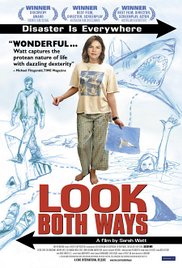
I just finished watching Look Both Ways, a 2005 Australian independent movie. I watched it because I had one of those idea moments today.

As I was walking on a sidewalk next to a busy street, I approached a minor street to cross. I glanced left, but was not yet crossing when a car came from behind me and turned right, quickly passing directly in front of me. She was driving a little too fast, did not signal, and may not have seen me. I checked to my left again for traffic and safely crossed the street.

Before I reached the opposite side, I realized that I had not looked to my right to ensure no cars were coming from that side. I recalled being told repeatedly, as a child of five or six, to look both ways before crossing the street. While the threatening traffic was on my left, I should have looked right.

I’m also in the process of reading How to Write Short, a book by Roy Peter Clark. Dr. Clark’s book has me thinking about how effective we can be with few words. Thus, I had one of those rare moments when an idea comes to me.

Look both ways1Look both ways can serve as my metaphorical phrase for living life—staying alive and healthy. I can see it as considering all sides of an issue (pro and con), hearing people out who may think different than I, discerning dangers of life, being careful, remembering lessons from our childhood, trying different things and new places. Can you add to my list?
Here is my advice: look both ways.

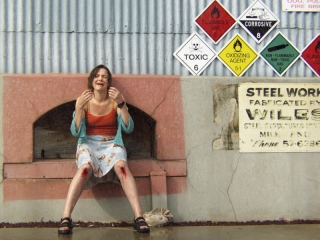
There are about a half-dozen books with the title Look Both Ways. I only found the one movie and I’m glad that I watched it. I enjoy that kind of flick. If you like artsy, emotional, love-story-ish movies with lots of music and relevant singing in the background, give it a go, mate. I had to get my ear tuned to the Aussie English, but I managed. I found it for two bucks on Amazon, but you might find it for free on YouTube. Warning: tear jerker. See the official trailer here.

Look both ways3

There is no vegemite in the movie, but she does say, “Are you giving me the flick?” That must be Australian for Are we breaking up or Are you dumping me?

Furthermore, starting this Tuesday, each blog I post on Our Rainy Journey will end with some comment about “look both ways,” at least until I tire of it. And, yes, there is rain in the movie—they get wet.

Look both ways4