Why do we have x-words, if they sound like they start with z? I’ve discovered the word formerly used to denote a Vietnamese sum of money. The xu(pronounced soo, as in moo, you, or too) is one-hundredth of a dong. Can you see where I went with this? Enjoy!
***
A Xu for You by Bill Reynolds
I found a lucky Xu
I wanna give it to you.
Ninety-nine more, you kin get a dong.
What’s wrong? Duncha wanna a dong?
With yer dong, ya can get along.
That’s right. You can have a long dong.
A long dong with a song, all…
For a measly, simple xu.
So, wacha gunna do?
First a xu, then a dong.
With yer dong, get a gong.
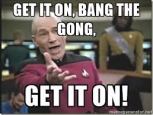
Bang a gong with yer dong!
So, let’s sing the song,
Let’s bang the gong
You got a dong, so…
Let’s get it on.
***
Look both ways, then sing the song and bang the gong.
Let’s get it on, but mind the gap in yer dong when you sing the song.
I sort of got the idea for this from another A to Z blogger, Sandra of What Sandra Thinks, specifically her Bitchfest 2017, where she adds “special touches of sarcasm, darkness and foul language.” Since I find her humor refreshing, I decided to take a similar, but more serious, path.
Vexations create a state of being annoyed or frustrated. I confess that during my life I’ve been guilty of many of the things I find vexing. My greatest frustration may be my own human condition. We have many words devoted to being pissed off. I am not the only one.
***
Vexatious Me by Bill Reynolds
With all the natural evil that be,
I am most troubled by
The moral evils that I see
Placed peeps on peeps. I’m vexed and…
Affronted by unfair stereotyping,
Aggravated by sense of entitlement,
Angered by any amount of animal abuse.
Annoyed by the foolishness of youth,
Bugged by too much welfare abuse,
Bent out of shape by all the bullies,
Disgruntled by job discriminations.
Displeased with wasting time, including mine.
Embittered by lost love.
Enraged by abuse toward women.
Exasperated by flawed governance.
Frustrated by incompetence, especially mine,
Furious over child abuse, anywhere, any time.
Indignant over unjust justice.
Infuriated by big black lies, also
Irked by little white ones.
Irritated by misunderstandings and
Miffed by gossip for fun and pleasure.
Offended by those too sensitive,
Outraged by starving children.
Peeved by human weaknesses, yet
Piqued by those better than I.
Pissed off when treated unfairly, and
Riled by my own pride.
Worried that nothing will change.
***
I failed to mention other drivers (texters, Beemer drivers, and Mercedes too), the wealthy, other people’s kids and dogs, and the folks who work at the driving license places in virtually every state. Also, virtually anyone who disagrees with me about nearly anything at all. And then there are people who are more vexatious than I.
Relax and go with the flow. We’re only human,
but let’s look both ways to enjoy the view.
Mind the gaps my friends, lest you get too twisted.
I’ve never met a lion, Except in the zoo. Never seen a lion, It’s in the photos that I do. Never touched a lion, Only in my dreams. I never loved a lion, But in my heart, it seems Lions are my friends, The ones I never knew.
***
Look both ways, mind the gaps, and love the animals.
First as a child, then as a boy
No shy child as many would ploy.
Silence in me is part of my nature.
Spoken words etch not my portraiture.
My teen years of silence, not taken a joke,
Was the indication of a challenge to bear.
More words to share, growing older I spoke.
Mostly not words they wanted to hear.
Others wanted to know why ‘twas I
Who made less noise than they did cry.
My smile never inquired just why,
“Of all talkin’, ya never was tired?”
Small talk they called it, noise without brains.
Not shy, in silence, I’m quietly plotting
Demise and disposal of whatever remains.
Now older, and less quiet I’ll be,
I listens and sez the damnedest of things.
Have it your way, but please try to see,
I can make stop those annoying rings.
Contemplate me
as you pass through yer day.
Most of the time,
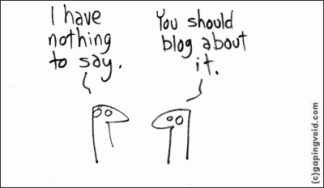
I simply have nothing to say.
Listen quietly when you can,
mind unheard gaps,
and look both ways.
Click on the photo to watch a funny scene from a the movie, The Quiet Man.
Scene from movie, The Quiet Man, staring John Wayne and Maureen O’Hara
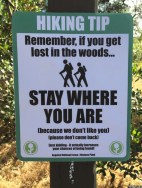
Years ago, I packed in over several nights, with a backpacking group near Truckee, CA, north of Donner Pass. We were at approximately 7,000 feet elevation in the Sierra Mountains between Sacramento, CA and Reno, NV. It was a very exciting trip.
A year afterward, I planned to repeat as a day-hike in with a friend. After he backed out, I decided to go it alone. I ended up going later than I should, and was unprepared for what I encountered. For my foolishness, I paid the price with months of back damage and pain. I can almost laugh about it now – almost. It was also exciting, but in a very different way.
Onomatopoeia is the formation of a word from a sound associated with what is named, such as cuckoo or sizzle. It is also used for rhetorical effect, as in this poem.
Never Again
by Bill Reynolds
High Sierra beauty.
No food. No drink. No sense!
What plan? Quick in, then back out. Whoosh. Like the wind. Time passed
Boink. Suddenly, it’s late.
Dusk. ARGH! Gotta get out.
Before dark. Oh no: It’s feckin’ dark!
No moon, no map. Had a lighter. Zip.
Oh, shit. Muddled.
Not one essential, much less ten.
No flashlight! Groan. Why?
Thinking? Stoopid. Grrrr to self. Clatter climb rocks. Get out. Fast. It’s Dark.
Thump. Crunch. I fell, no moon. Ark! Did I say, “It’s dark?” Crunch. Footsteps. Are they mine?
Can’t see. Bonk. Oof! Pain.
F-word, again. No better.
I keep swearing, like it’s gunna help. Bam. Step in hole. Crunch. Knocked out breath.
Shocked. Confused. Must see but cannot. Crackle, smack. Branch to my face. Blood. Ooze. Buzz. Bugs? Crunch. Twisted ankle. Scrape, bang, boom, bash. ACK! More pain.
Bonk. Fall on face. Dark. Hurt. Walk.
Pain. Bam. Oof! Again. What’d I step in?
Another hole. Whack, crunch.
Damn holes. Hiss. Oh god. A snake?
Hear something? More crackle.
What’s that? A clatter?
Get out. Fast. Don’t run. Too dark.
Bear? Mountain Lion?
Kill me? Eat me? Yikes. I’m so screwed.
Hoot. Owl. Danger.
Skunk. Whew. It stinks.
Careful. Out fast. Whiz? Crap!
I’m Cold. And wet. In pain.
Must pee. Yikes. Unzip.
Done. Relief. Don’t fall in it. Re-zip.
Ouch more. Get out. Don’t fall. Boink. Thud. Head pain.
Scrunch, twist, whack.
Repeat. Fear. Repeat. Dumb me.
How far? How long? Lost?
Alone. Clatter. Alone?
What was I Thinking?
Break free. Find car! Keys?
Oh no. No keys. Groan. Swear.
Hidden key. Found it. Brrrrr. Shaking. I am very cold.
Tall grass. Kerplunk. Dropped key.
Damnit, can’t see. Cold. Pain.
Sore knees, search the ground.
Feel in dirt, no gloves. I found it. Clatter to feet.
Hold tight. Screech. I scratched car, then swear.
Bang. Slam door. Varoom.
Start engine. Get out. Cuckoo. Oof over bumps. Drive. Find my brain.
Good trip. Nice day. Never again!
Bring a flashlight.
You can’t look either way, nor mind the gaps, if you can’t see.
A limerick consists of five lines. Lines one, two, and five have 3 beats each and rhyme. Lines three and four have 2 beats and rhyme. Referred to as light verse (or vers de société) by Lewis Turco, limericks tend to be light, humorous, and often bawdy or dirty.
***
The first “poem” I recall hearing was a bawdy limerick my father told me. I don’t recall my age. I heard it once and never forgot. It was a shocker, although Dad often used such language around me.
There was a young lady from Freeling
Who had a funny feeling
She laid on her back
And tickled her crack
And pissed all over the ceiling
***
I wrote this one in class about a Creative Writing teacher.
There once was a lady from North Bend
In teaching us to write, she had no end
She had a great thought
We fit and we fought
Until our writing was well penned
Well, the class thought it was funny.
***
Some wee dribble of self-pique from the old flapdoodle.
There was an old-fart named Bill
Who was also a bit of a pill
Until he met her
The rest is a blur
And now he conforms to her will
It’s all about me, ya know.
***
Many of us follow this lass. So, a bit of a gentile and friendly jab. Click on her name to link to her blog.
There once was a blogger named joey
And she loved to tell us her story
She speaks of the mister
Like he is her sister
Instead of her very first quarry
Do ya think I’ll hear about that one?
***
I had to take shot at someone, or male pride, in general.
There once was a man from south Brooklyn
Who thought his self too good lookin’
It happened one day
His thing wouldn’t play
Now he’s no master Al Pushkin
Dirty is funny, right?
***
Mind the gaps on top of it all Look both ways: eye on the ball But watch for the fart That is really a shart And you’ll have no reason to bawl
(Sorry. I couldn’t help myself. I wrote them all, except the first one, and I assume full responsibility for the content of my limericks.)
Who knew? A form a poetry I can closely relate to. Disclosure: I enjoyed writing this. I went a little overboard with the vernacular — worked for me.
No real person, living or not, is depicted in this piece (except pics) — it’s a joke. A rotter is a cruel, stingy, or unkind person.
Ain’t Seen the Like
Yer ugly and a stupid lout.
I heerd ya drink da bath water,
Af’n yer old lady warshed da diapers out.
But, cha’ ain’t never gettin’ old; yer too rotter.
Yee’d have one redeeming feature,
If’n ye was dead, bu’cher sorry-ass ain’t.
Too bad, so sad, yer a hor’bile slimy creature.
Nah sir, lil’ fart, bu-chew never make’n saint.
Yer jis’ so feckin’ rotten, yer feets be a stinkin’
Yer mudder too asham’ ta le’cha go out.
If’n Ah wuz yer pappy, I’d be a-thinkin’ ‘bout given yer nasty ass a good clout.
So I bin-a-tinkin, ‘bout nex weekind,
And yer putrid discustin’ slothy fate,
If’n ya steel wanna, an’ she’s still-a-willin’
Yer free ta take meh daughter on a date.
***
See the humor in life, lighten up, and look both ways.
Mind the gaps on country roads.
Nonsense verse need not make much sense. This poem almost does, but not quite – maybe it’s organized nonsense. Each word begins with the letter G in six, three-line stanzas, and a closing line. The poem is alliteration on steroids.
Ginko is a tree. A goy is a non-Jew or gentile. Grendel is a monster/antagonist in Beowulf. Gewgaw means showy but worthless. Glozing is making excuses. Ganja is pot, and a grumphy is a pig. Gecking is showing contempt, or screwing over. A gazabos is a person or a guy.
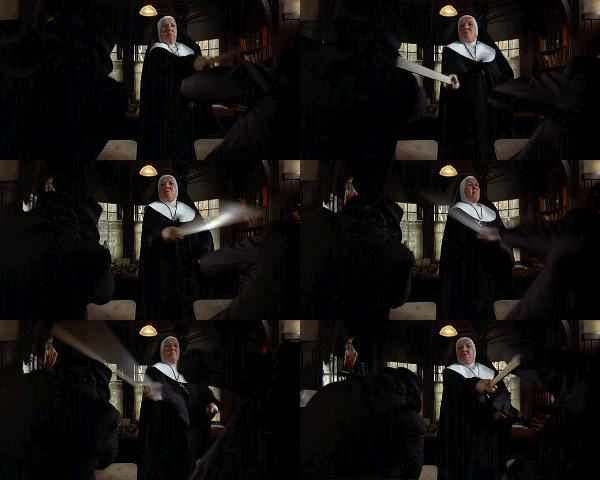
When I was in the sixth grade at my Catholic school, I dreaded being promoted to seventh grade. Sister Mary Scary taught seventh grade. That nasty creature who floated around Saint John’s wearing Rome’s version of a burqa, but used a white frame to emphasize a face that was perpetually angry, who posed as a Catholic nun but was really the Wicked Witch of the West. That daughter of Satan himself, would have complete control of my life from eight to three every weekday, plus an extra hour at church every Sunday and Holy Day of Obligation, when I would be forced to sit, kneel, or stand to watch men and boys dressed in feminine garb prance, kneel, sing, pray, and read in a dead language of which I understood nary ten words.
Saint John’s Church and School
Mom and Dad were delighted in June of 1958, when I handed them my report card with that depressing word emblazoned on the back cover: “Promoted!” To me, it said, “sentenced to nine months of suffering in Purgatory at the hands of evil.”
I worried all summer. My friend, Jimmy, who was a grade ahead of me reported the horrible carnage that he and others had endured at the hands of Lucifer’s daughter. Whatever the version of depression a 12-year-old boy could encounter, I’m sure I had it. Never, have I wanted a summer to pass more slowly.
My parents always supported authority over me. The nun, teacher, priest, cop, drunk adult, irate neighbor, or neighborhood tattle tale was always right. Ok, occasionally, they really were right. But from my point of view, my parents should have supported me – their son who they claimed to love. I could not discuss my fears about the nun with my parents.
My siblings had the “we survived, but you probably won’t” attitude and said as much. However, my older brother, Danny, did have some advice for me. “Be an altar boy. They like altar boys,” he said. That made sense to me. I would play their game to survive.
Survival
I worried enough about Sister Scary that I managed to get through seventh grade with minimal physical damage and mental distress. I passed academically, and I was home free. This time I was even more pleased than Mom and Dad that I was not held back. I had not shed one tear. I was doing well. My eighth-grade teacher was to be Sister Mary Wonderful, who was also the school Principal. Life was good again.
Toward the end of seventh grade, I was finally approached to join the exalted and glorious ranks of the chosen ones. I was asked if I wanted to be an Altar Boy. All my friends were becoming Altar Boys, and I wanted to be one, too. My brother, Danny, had been one, and it was what good Catholic boys did.
Altar Boys
I accepted the offer from the Father O’Burts, logically assuming my parents would approve. I started learning the Latin prayers and talking to other boys about the process and the job. I was happy about it. My plan for eighth grade was to be one of the chosen. I even signed up for the school basketball team. I didn’t play well, but I was the tallest boy in my school. I began to look forward to my final year at Saint John’s.
Not So Fast
Then, as the skies darkened again, I had the familiar bad feeling. As September and the start of school approached, there was a shockingly frightful rumor. Sister Wonderful was being transferred, and Sister Mary Scary, the evil antagonist of my short life, was being promoted to school principal and would be moving up to teach eighth grade.
Oh, dear God, No! I was supposed to be done with her. But as every dependable source, including the church bulletin, soon validated, ‘twas da troot. The second coming of the Inquisition had been promoted to Principal of Saint John’s elementary school, and would teach 8th grade to my class. I knew that I could not survive another year. My only solace was knowing that, except for a few favored girls, the rest of my classmates were as upset as I was. The Altar Boy gig became critical.
Say What?
So then, still expecting them to be pleased with the news, I decided to tell my parents that I was to be an Altar Boy. I expected them to be proud, if not overjoyed.
I was happy when I walked into the kitchen and sat down for dinner. She was at the sink behind me. “Mom, guess what? Fadder O’Burts as’t me ta be an altar boy. And I’ma gunna do it, too.”
I turned to look at Mom, smiling and all full-of-myself, at first. Then, severe shock set in when she turned and said, “No yer not!”
Dad looked up and added, “Like Hell, y’are! Yeh kin get dat idea outa yer thick skull right now.”
Dazed, I needed something quick – a prayer, to get sick, perhaps a deadly disease, anything. Desperation was overcoming me.
I was unaware that when Danny had been an Altar Boy, it was not a good experience. The logical consequence, of course, was that I was not permitted to follow, and my parents did not give one inch. Nor did they tell me why I was being denied my only hope to survive nine more months of the Black-veiled Horror. Today, I am glad that I was not part of that Altar Boy thing, but at the time, it was the worst possible news.
Option Two
Quickly, I changed the subject. “Mom, Coughlin is 7th through 12th grade. Can I go there for 8th grade? I’ll be starting there fer 9th grade and high school the next year, anyway.”
She didn’t even look at me. “Now, Billy-boy. Why’d ya do dat? Jist graduate St. John’s then go to high school like your brother and sister did. After I see ya graduate Saint John’s, the Lord can take me. It’ll never happen again.”
“I will graduate from Coughlin High, Mom. And probably college too. So, the Lord can wait.”
With that, the food in Dad’s mouth came spewing out. He was choking and coughing and wheezing and trying not to die while laughing at my confidence. My wonderful summer was ending in embarrassment and darkness. I became angry and depressed again.
Blues Brothers
As It Happened
I was right. Eighth grade was worse than seventh for exactly the reasons that I had predicted. Even our basketball team suffered from the curse of the cruel Head Demon. Sister Mary Scary controlled every aspect of student lives – thus influencing their spiritual growth or decline. She and I were in constant struggle to have all of Hell on our side. That nun and I never had one good day. Eventually, we developed a healthy fear of each other as my size and strength worked to discourage many of her thoughts. Sister Scary promoted me to high school and out of Saint John’s. To this day, I’m certain that neither of us wished to deal with the other any longer than necessary. I was neither the first, nor that last, to be moved along to become someone else’s problem.
Age and experience change how we see our world.
Look both ways and mind the gaps.
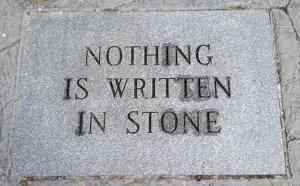
“The literal mind does not understand the ironic mind, and sees it always as a source of danger.” ~ Christopher Hitchens
Once we perceive something and it gets into our brains, the confusion begins. We communicate by employing methods or techniques to stimulate the senses of others, intentionally or not. Face-to-face, we can bring out all the best guns. Teachers employ every conceivable technology to get students to learn by seeing, hearing, touching, smelling, and tasting.
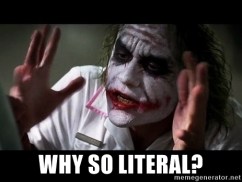
I doubt that our individual minds are exclusively either literal or ironic. I suspect that some of us have trouble communicating, especially on the receiving end, because we lean one way or the other. When the ironic mind works with the literal, caution and precision must be applied. The reverse seems to be less of a problem.
I recall a conversation with my daughter about a man who, in my opinion, was an irresponsible pet owner. I forget the details of his transgression toward the pets, but I used a rather common and innocuous phrase regarding what she told me: “He should be shot.” Julie became upset with me (he may have been a boyfriend at the time). It was quite a while before I knew the reason. Apparently, she took what I said literally. Even after our discussing and my explaining the idiom, she never quite seemed to grant me a full pardon for promoting the demise of her friend. While this may appear extreme, it’s not uncommon.
Another example involves a writing quote I like from Steve Almond.
“All readers come to fiction as willing accomplices to your lies. Such is the basic goodwill contract made the moment we pick up a work of fiction.” ~ Steve Almond
When I posed this quote to another writer, she asked, “Is that how you see it?” I confessed agreement before I realized the problem with the noun lies. What makes this even more interesting is that at the time, I was writing historical fiction (an oddity in its own) and my friend was wrestling with a memoir (a quest for truth). Her efforts were focused on discovering the truth while mine were based on developing an untrue story in a true, but flexible, setting.
Fiction is only a lie when it is not presented as such. While neither of us set out to deceive anyone (truth is not in every memoir), her goal was fact with interest. Mine was interest with a false story based upon fact. My friend’s literal mind-set related to her concern with the accuracy of her project. Mine was based more on fiction, which is not the truth, thus figuratively can be called lies.
I enjoy the humor of sarcasm and irony. Without awareness of the intended humor, harm is frequent. Furthermore, if someone does not share another’s sense of humor regarding irony, even more so, sarcasm; the exact opposite of the intended communication is inevitable. Damage control using a follow-on explanation never seems to completely mend the fence, “I can’t believe you thought that was funny.” My personal sense of humor gets me into that sort of bind on a regular basis.
A humorous book I enjoyed was Lamb: The Gospel According to Biff by Christopher Moore. The book is full of tongue-in-cheek humor, innuendo, sarcasm, and other forms of witty humor. It even has an angel who is so literal as to be the best heavenly straight man I can imagine.
I (somewhat proudly) wear the label snarkastic to fit my fondness for being both snarky and sarcastic. But, I’ve learned that how I communicate makes a difference. In writing, I am advocate for a sarcasm font (we need one). In person, I exaggerate facial expressions, gestures, and voice inflection so that I can give others the opportunity to get it right. I don’t enjoy the struggle of trying to explain my humor to someone who I know will never get it, but I try. And, I’m watchful for things not turning out as planned after I shoot off my mouth.
Sometimes I don’t get it either. Like when I say something and someone bursts out laughing and yells, “Bill, I love your sense of humor.” I smile and nod, then lean to the person next to me and ask, “What did I say that was so funny?” Literally?
We live in an ironic world.
Love, laugh, get wet, look both ways,
and mind the gap.


 Vexatious Me




 Never Again
 Tall grass. Kerplunk. Dropped key.
 A limerick consists of five lines. Lines one, two, and five have 3 beats each and rhyme. Lines three and four have 2 beats and rhyme. Referred to as light verse (or

 I had to take shot at someone, or male pride, in general.
 ‘bout given yer nasty ass a good clout.
 Green Grasshopper


 A humorous book I enjoyed was Lamb: The Gospel According to Biff by Christopher Moore. The book is full of tongue-in-cheek humor, innuendo, sarcasm, and other forms of witty humor. It even has an angel who is so literal as to be the best heavenly straight man I can imagine.
 Sometimes I don’t get it either. Like when I say something and someone bursts out laughing and yells, “Bill, I love your sense of humor.” I smile and nod, then lean to the person next to me and ask, “What did I say that was so funny?” Literally?
 Our Literary Journey