“The literal mind does not understand the ironic mind, and sees it always as a source of danger.” ~ Christopher Hitchens
Once we perceive something and it gets into our brains, the confusion begins. We communicate by employing methods or techniques to stimulate the senses of others, intentionally or not. Face-to-face, we can bring out all the best guns. Teachers employ every conceivable technology to get students to learn by seeing, hearing, touching, smelling, and tasting.

I doubt that our individual minds are exclusively either literal or ironic. I suspect that some of us have trouble communicating, especially on the receiving end, because we lean one way or the other. When the ironic mind works with the literal, caution and precision must be applied. The reverse seems to be less of a problem.
I recall a conversation with my daughter about a man who, in my opinion, was an irresponsible pet owner. I forget the details of his transgression toward the pets, but I used a rather common and innocuous phrase regarding what she told me: “He should be shot.” Julie became upset with me (he may have been a boyfriend at the time). It was quite a while before I knew the reason. Apparently, she took what I said literally. Even after our discussing and my explaining the idiom, she never quite seemed to grant me a full pardon for promoting the demise of her friend. While this may appear extreme, it’s not uncommon.
Another example involves a writing quote I like from Steve Almond.
“All readers come to fiction as willing accomplices to your lies. Such is the basic goodwill contract made the moment we pick up a work of fiction.” ~ Steve Almond
When I posed this quote to another writer, she asked, “Is that how you see it?” I confessed agreement before I realized the problem with the noun lies. What makes this even more interesting is that at the time, I was writing historical fiction (an oddity in its own) and my friend was wrestling with a memoir (a quest for truth). Her efforts were focused on discovering the truth while mine were based on developing an untrue story in a true, but flexible, setting.
Fiction is only a lie when it is not presented as such. While neither of us set out to deceive anyone (truth is not in every memoir), her goal was fact with interest. Mine was interest with a false story based upon fact. My friend’s literal mind-set related to her concern with the accuracy of her project. Mine was based more on fiction, which is not the truth, thus figuratively can be called lies.
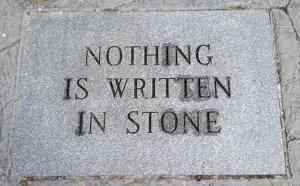
I enjoy the humor of sarcasm and irony. Without awareness of the intended humor, harm is frequent. Furthermore, if someone does not share another’s sense of humor regarding irony, even more so, sarcasm; the exact opposite of the intended communication is inevitable. Damage control using a follow-on explanation never seems to completely mend the fence, “I can’t believe you thought that was funny.” My personal sense of humor gets me into that sort of bind on a regular basis.
 A humorous book I enjoyed was Lamb: The Gospel According to Biff by Christopher Moore. The book is full of tongue-in-cheek humor, innuendo, sarcasm, and other forms of witty humor. It even has an angel who is so literal as to be the best heavenly straight man I can imagine.
I (somewhat proudly) wear the label snarkastic to fit my fondness for being both snarky and sarcastic. But, I’ve learned that how I communicate makes a difference. In writing, I am advocate for a sarcasm font (we need one). In person, I exaggerate facial expressions, gestures, and voice inflection so that I can give others the opportunity to get it right. I don’t enjoy the struggle of trying to explain my humor to someone who I know will never get it, but I try. And, I’m watchful for things not turning out as planned after I shoot off my mouth.
 Sometimes I don’t get it either. Like when I say something and someone bursts out laughing and yells, “Bill, I love your sense of humor.” I smile and nod, then lean to the person next to me and ask, “What did I say that was so funny?” Literally?
We live in an ironic world.
Love, laugh, get wet, look both ways,
and mind the gap.

 Some of the best, most memorable English language writings are short. I try to keep my blogs brief, but they often surge over 800 words. I’ll continue to work on that; to chop, murder, and cut.
 The 35 brief chapters are divided into two sections. Section I, How to Write Short, has chapter titles that deliver on the promise to improve short writing. Such as the following famous short writes:
 Some WordPress blogs provide prompts that are helpful practice for developing the craft of writing short. One I like is


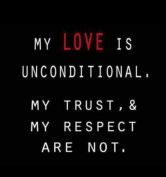 Competence and honesty are two other conditions that effect our trusting others. Our trust may have a few variables and conditions that go with it. I may trust you to suggest a good dentist for me. I will not trust you to be that dentist.
 Trusting seems natural. America’s motto is In God We Trust. Another is E pluribus unum (out of many, one), but in 1956 we wanted to make sure that our country was not confused with the atheistic USSR.
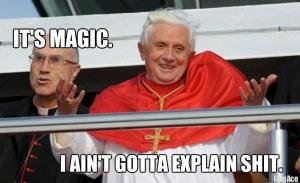 While I may not believe that supernatural beings exist (okay, maybe some duende), I still like to refer to unexplainable, cool happenings as magic. I try not to use the words miracle or miraculous in a serious sense. But magical works for me. If others want to use words like miracle to describe things, I have no issue with that. If the Pope wants to use it’s magic to explain anything, who am I to object?
 The origin of the word, or the concept of magic, seems to be rooted in the religions of ancient times.
 I do believe that to a degree, suffering is optional. I’ve seen people suffer unnecessarily, and I’ve seen those same people get over it.
 I think that what Liz bemoans is using suffering as justification to be creative, talented, or gifted, thus making an excuse for hanging on to the bottom. We shouldn’t suffer just because we think it improves our work. I’m concerned because I know people die on the bottom. I’ve experienced great things from living artists, suffering or not – nothing from the dead ones.
 To love what you do, and the love of doing it, even when it is gruelingly difficult (and maybe more so when it is) may be the answer. What I’ve read seems to recommend this. Love your art! Do it for the love of the work, the art, the creativity, the experience. As Stephen King says, do it for the “buzz.”



 Is it all that important to be a thin, white, dark-haired, strong, male member of this country? We seem to think so. I hope that continues to change.
 I am retired. All the shit/crap that I put up with for all those years of school (nuns-groan), yes, sir and no, sir; kissing up to very few idiot bosses (most were great), scrimping and saving and working – it was all worth it. As my wife would say, “Rave on, dog shit!” And so I do. Every day is a weekend and I can do what I want (with her permission—I’m old, not stupid) whenever.

 Two memories from my youth relate to this post. I recall my mother frequently telling me that I was contrary. She would say, “Now Billy, stop being so contrary.” She could have chosen from many words: obstinate, difficult, stubborn, negative, or silly. Actually, that’s not true. She used silly a lot, as in, “Silly-Billy.” I actually liked being called silly and still do. Today, such a fun-loving attitude coupled with silly behavior would prevent a diagnosis of Oppositional Defiance Disorder (ODD).
 As a youngster, I did have more than my share of confrontations with adults, especially those in positions of authority. I admit it. Mom was right (aren’t they all?). I was often contrary and many synonymous terms applied equally well. I confess that I enjoyed being difficult, most of the time. Sometimes, I paid for it. Some say I never outgrew my contrarian attitude.
 The other memory comes from the time of my early to mid-teens. I don’t know where if came from, but we adapted a phrase for a while that was intentionally meaningless, but we said it – a lot. It was kind of an early version of whatever! We would say it to each other and often to adults. We always knew exactly what the adult retort would be. The locution was Yeah, but, or yeahbut. Today, the Urban Dictionary says yeahbut should be followed by f**k, but we seldom used those words in combination.
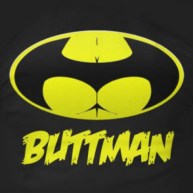 However; yet, nevertheless, nonetheless, even so, still, notwithstanding, in spite of that, for all that, and all the same; I do like butts. Some more than others.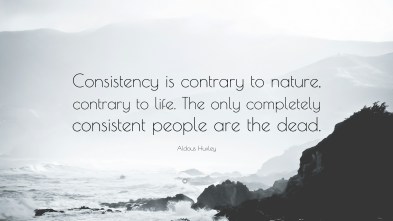


 I do my best not to ‘unintentionally’ hurt somebody’s feelings. However, I’m unopposed to stepping on an emotional toe when I hear the call. As a senior citizen, I sometimes feel a sense of entitlement to do that, but I usually refrain. I once knew one guy who was so Cliff Clavin (from the TV show
  Several years ago, my daughter-in-law said that I was snarky. I appreciated her honesty and courage. I also liked it. She was right; I am snarky. I’m also sarcastic. In fact, being both makes me
 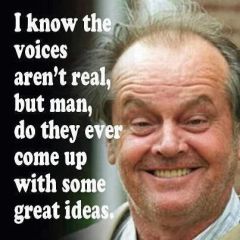 Jack Nicholson in As Good as it Gets (and other movies of his)
 Female Comedians (Yes they are)
 Not everyone has been introduced to my brand of snarkasm. After a while, when most people get to know me, they agree that I can pull it off. Many find it humorous. In fact, that’s the point – humor. I’m not on some kind of anti-PC* crusade here.
 Are you Andy or Barney?
 So this week’s Taco Tuesday recognizes
 So, I know when I made the change from young to old. It was about 40 years ago.
 Have you resigned yourself to the “it’s just a number that’s too friggin’ big” mentality? I’m not complaining about being old. Old people do not intend to complain about age. It is, after all, a successful result. On the other hand, the various consequences of age can’t be overlooked.
 If we live long enough, we share one important thing with many teenagers – we become bored easily. Old people can be annoying to some young people (15 years, remember). The thought that the feeling may be mutual seems to escape many. Most older folks that I know are working away at life. I know writers in their 80s and 90s who write every day, are working on writing books, and are making plans to publish.
 I live in an over-55, “active” community. Some folks here are more active than others, but most are kind of amazing. I took a blogging class where I met a lady of 92. She’s smart, funny, and still learning. She taught art classes and one of her subjects was art by carving vegetables. She made a scrap-book of pictures and writings on veggie art. She is an expert. Based on her experience, maybe the only nonagenarian expert. She wants to publish this in a blog. I can look past the outer physical things that show up when one is 90+. This lady is a master at her craft and learning another so she can share the first. I think that’s cool. In heart and mind, she is young, enthusiastic, and capable.
 I just returned from a “Personal Creative Writing” class. There are 15-to-20 of us taking the class. Most are interested in writing life stories or memoirs. These folks are talented writers; some are published authors; all are able to tell it like it was. They have the ability to make every life story funny, and even sadder memories are delivered with humor. They are good at their craft, but no one can accuse them of taking life too seriously.
