Who knew? A form a poetry I can closely relate to. Disclosure: I enjoyed writing this. I went a little overboard with the vernacular — worked for me.
No real person, living or not, is depicted in this piece (except pics) — it’s a joke. A rotter is a cruel, stingy, or unkind person.
Ain’t Seen the Like
Yer ugly and a stupid lout.
I heerd ya drink da bath water,
Af’n yer old lady warshed da diapers out.
But, cha’ ain’t never gettin’ old; yer too rotter.
Yee’d have one redeeming feature,
If’n ye was dead, bu’cher sorry-ass ain’t.
Too bad, so sad, yer a hor’bile slimy creature.
Nah sir, lil’ fart, bu-chew never make’n saint.
Yer jis’ so feckin’ rotten, yer feets be a stinkin’
Yer mudder too asham’ ta le’cha go out.
If’n Ah wuz yer pappy, I’d be a-thinkin’ ‘bout given yer nasty ass a good clout.
So I bin-a-tinkin, ‘bout nex weekind,
And yer putrid discustin’ slothy fate,
If’n ya steel wanna, an’ she’s still-a-willin’
Yer free ta take meh daughter on a date.
***
See the humor in life, lighten up, and look both ways.
Mind the gaps on country roads.
Haiku is both a form and genre of poetry. Poems are short. Haiku is of Japanese origin and consists of three lines, usually with 12 syllables. The first and third lines normally have five syllables each, and the second seven. Exceptions abound.
According to some, haiku captures a moment when nature is linked with human nature. As a newbie, I stuck to the traditional form, but the history of haiku includes many variations. Many haiku are penned every day and in many languages, throughout the world. These are my first three.
***
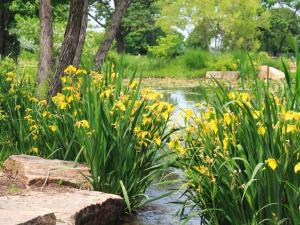
Curves
The wet path it curves
See as plants touch with plants
With different sounds
*
Growth
In the cold spring rain
Clinging to the earth below
Yellow flowers grow
*
Click this photo to go a page to hear the sound, whip-poor-will is an onomatopoeia.
Comfort
Still warm and dark night
Stars quietly fill the sky
A whip-poor-will sounds
***
Always look both ways
Every day write some haiku
And mind all the gaps
What do I want? What do you want? How do you want life to be? What will you do? Equality, fairness, and love should guide us. My friend, Karen, asked me to write a poem about freedom. I did. It has a dark shadow, but the shadow has a crack in it, so the light gets in.
We didn’t start the fire refers to the Billy Joel song, Timothy Frances refers to Leary, the beast is the oppressive government, Tom down is to be subservient. In terms of rhythm and rhyme, this thing is all over the place.
The Freedom Dream is Dead by Bill Reynolds
What do I want to do?
I wanna be happy.
I want you happy, too.
My dream is a happy world.
Imagine that.
How do we want things to be?
Let’s be fair, and hopefully free.
And just, and true, and honest, and imagine…
For all, equality and rights
With love we can see, for all brothers and sisters.
Life is not fair, but are we?
Imagine!
What is this happiness we pursue?
In all fairness, what can we do?
Freedom? Liberty? Is that all?
Equality? Justice, et al?
Can you imagine?
It’s just a damn dream for too many.
And our dream is dying the fastest of any.
One million paper cuts, delivered with slashes,
All hope is lost, the beast burns us to ashes.
As for my dream? It is dead.
We fought all for naught.
Now I feel a dread.
Selfishness won. It owns us now.
I can’t imagine.
Resistance is failing, the world is darkening.
Evil and greed are the name of the game.
Profit and loss the new moral code.
Money is god, ready for more of the same.
The worst from the beast is yet to be told.
Imagine died too.
We didn’t start the fire, we can’t put it out,
Feel the heat from the rich man’s ire
Burning a hole in my hopes and desire.
Timothy Frances, where are you now?
To destroy this beast, please tell us how.
Or do we Tom down, and let it go on?
My dream may be dead, but I will go on!
Resist, resist, resist, fight for rebirth.
Resist until we have new life on Earth.
Imagine a future, resist to the end.
Look both ways and mind the gaps. Life has no guarantees, but we can work for fairness.
This poem is a collaboration poem written by my daughter, Julie, and me. We both worked on it. In fact, she initially wrote the first part, as a poem to me. It is not renga because it meets none of the normal forms. It is simply two people writing a poem to each other and collaborating, so style and form are free. One could look on it as a duet, or father – daughter billets-doux (love, or sweet letters). Ardor means enthusiasm or passion. My portion is italicized.
Dewey and Dad by Julie Barber and Bill Reynolds
You are my father, tried and true And you my daughter through and through.
You know my heart, my feet and hands too.
Some even say I look like you. From birth and to your life throughout,
I’ve been there for you, without a doubt.
There was a time when things were harder.
I hope I’ve grown and become much smarter. If we could go back, I’d want you my daughter.
Together we’ve grown older with ardor.
My father, wiser by the day…. Always profound things to say. Sharing our life keeps misery at bay.
I look to you when the answers are grey.
You say, “let nothing get in our way.” You heart and your talent come into play,
Find peace therein, as you work away.
Go out and write and use your talents
It will give your life more sense and balance. Your words are like clay, your pen is your pallet,
Your life is your muse, your mind is your mallet.
Get off your ass and do it already
The world is uncertain, and time is unsteady. It’s your life to live, you should live it as heady,
Be happy my child, ‘tis all worth it, you’re ready.
The fact you’re so far away makes me sad
But I’m more than proud and grateful you’re my dad.
She’s Julie, but I call her Dewey
Forever you’ll be my daughter to me,
A lifetime of love, we certainly have.
My daughter, our love surpasses all distance
No oceans divide us, our minds unite us.
As we see one to the other, it will always be, You rank above others swimming the sea.
Mind the gaps, family, love, friends, and the important things in life.
Look both ways, and all around.
This poem is to appreciate the beauty of simple, ordinary, normal things. A bagatelle is a small thing, something of little importance, a trifle. A demoiselle is a young lady. Vapid means lacking liveliness.
Beautiful Simplicity
Fear not. The simple’s no beast.
Appreciate the trifle, the tad and the bit. The fortuneless, the ordinary, the nothings of wit. Care about the underdogs, the lonely and poor. Acknowledge the average as part of the tour.
Perk up, dear sweet passé bagatelle, Deserted and lonely, a crumb of demoiselle, Desiccated prune mocked as less worthy, by those who unkindly, do not prefer thee.
Yes, you are shallow and vapid to some. As a threat to no others, are you liken to none? Our joy is in knowing the small we still see. No danger to us, as you let the world be.
Let the worldly and wise have their just due, Yet forging the lesser means forgetting them too. The great and the small are part of it all. So, sing a wee tribute, give the trifle a call.
From the tiniest thing to the vast secrets of the universe, what will humans ever know? Will anyone ever correctly proclaim that all knowledge has been discovered and may be known or available to everyone? I doubt it.
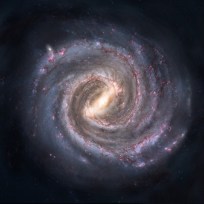
Our galaxy – one of many
Science helps us understand our natural world better. But, science provides information only through descriptions from observations. With science, we may understand better what an earth quake is, or how to grow more soy beans, but ultimately the answers we receive from research are observations.
Microscopes, telescopes, laboratories, and other equipment for tests and measurements are among the tools used to make these observations. Yesterday’s scientific conclusions lead us to today’s information, and then to the changes we will read about tomorrow. It was scientific observation that convinced us the sun, stars, and planets revolved around the earth. It was also science that convinced us that was not the case.
The discoveries of science change. Does truth ever change? When I look around at our natural world, I see is what humans have done. Everything I see, while either part of nature or taken from it, was placed, caused, or permitted by humans—to a point. Other life forms may make their mark, but that will last only if humans permit it. When we don’t allow nature to progress or we interfere, it can be disastrous due to our limited knowledge. It may be science, but we don’t know everything and we can only explain so much.
Sensing and Nature
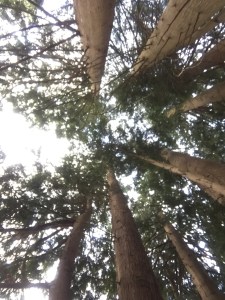
The spectacular trees
While nature is everywhere, my senses respond more strongly outdoors, in unfamiliar surroundings. I notice things less in my usual, everyday world. Change awakens my senses, whereas routine numbs them. Walking along a forest trail during a gentle, but persistent, rain provides stimulation that rejoins my surroundings with my own basic nature. It feels so right.
Seeing the trail, the roots of the magnificent trees, the green vegetation bouncing and dancing with falling raindrops, I feel aware and connected with the essence of life. It’s all here with me: sky, water, rich aromatic soil, and scree giving softness to my footsteps. Nature paints portraits of life and movement. I see how moisture mingles with the soil to send nutrients of life to plants and to quench thirsty animals, of which I am one.
Hearing the rain mesmerizes me as it falls where it will, on the leaves of trees and brush, onto the boulders and earth, and into the growing puddles and flowing streams. This is the sound of natural life – earth as it should be. The rustling sounds of birds and animals is alerting, as life deals in with nature’s wet gifts. And the rain. The glorious rain.
Feeling the soft, spongy earth beneath each step, I look down to see how the lovely wet soil now clings to my touch. I feel the rain pecking at me as it does upon the flowers. Animals respond to the natural bathing as a refreshing cleansing.
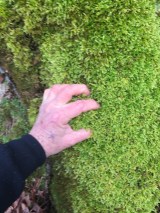
Touching the soft moss on a tree
My touch to the soft moss hugging tightly to the trees is a pleasant reminder of life on life, the natural interdependence within nature’s home. Against my face, and over my entire body, the rain penetrates cloths to caress my skin. I become one with the flora. I am refreshed, another being, pleased with our universe.
I can taste the freshness of the day. While rain on my head and face washes into my eyes, other drops find their way to my mouth, adding salt to the taste – the salt of the earth. I belong here.
A forest petrichor is the most pleasant of scents following rain. As the sounds and sights change with the gradually ceasing rain, and the forest begins to release the magical and glorious aroma of nature at work; life flourishes. If there is a heaven, it’s right here, right now, with me. I feel completely connected to nature. I yearn for this life, as it should be. I know this is life.
Awareness of Belonging
I become aware of the cosmic interconnectedness of everything. I know I have my place, fitting in with everything in the universe. The vastness of the cosmos finds the path and weaves its pattern through space, through time, and through me to the tiniest speck of galactic dust.
While science can provide words, descriptions, and explanations for everything that I sensed during my inspired walk in the forest rain, nothing can explain the deep, soulful feelings I experience when the vastness of nature communes with me. Conscious awareness.
Our senses perceive the environment as we discover nature and life. Our sixth sense is that of belonging to the Universe.
Look both ways, discover the gaps, feel where we fit in.
Few of us are born with an inaccurately low self-esteem, but the potential is there for disordered self-image. I may have inherited my mother’s negative opinion of personal abilities (hers and mine), but the passing of the flaw was socio-cultural, not biological. How I got that way is unimportant. What is important is that while humility may be a good thing, too often people miss much in life because they found their way to the “I’m not good enough, I can’t, I am too scared, or nobody loves me” quagmire.
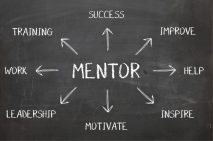
Jack was my teenage friend, and the first to motivate my turnaround from I cannot, to I can. I’ve met others who helped me see my greater potential to achieve. They always came into my life at the right time. My post on synchronicity tackled the phenomenon. Some are still involved in my life, and some inspirational souls have recently landed in my patch of life.
When I first met Hilton M. Kennedy he was a Master Sergeant in the US Air Force, and he would soon be my boss and direct supervisor. The man I eventually called Ken, but many called Mac, had olive colored skin, lots of jet black hair, was several inches shorter than I, and smoked too many Salem cigarettes. I don’t know if Ken was a hyper-active child, but he was one for the most effervescent men I had met. Ten years my senior, Ken reeked enthusiasm. Other than being married, where we worked, and the Air Force, we had little in common, at first.
Ken’s personality included talking fast, a trait one seldom finds in a Louisiana native. I enjoyed our many chats where he made me believe that he was interested in me, and that I would have a successful future. Many of those discussions were accompanied by measured amounts of fine liquor. Living in Ankara, Turkey, ensured financial advantages for Americans in the late sixties. Of course, fine liquor required equally fine cigars.
Do what?
I began to see good changes in myself. I was becoming more confident. My self-opinion and hopes began to unfold from whatever dark recess of my mind they were held captive. I attribute any success and goodness in my life to many people, some from my past and some in my life today, some from almost 50 years ago. Hilton Kennedy was the right guru at the right time in my life.
We became personal friends and our families got close as he kept tabs on my career following the end of my enlistment and his eventual retirement. We went to visit him, and he and his wife visited our home. Eventually, our relationship was more friendship and less his being my mentor and advisor. One of the last times I saw him, my wife and I were guests of he and his wife in Rome, New York. He played the harmonica and I thought all was well. But it was not to be.
To remember a friend
In the late eighties, I learned that my friend and mentor had been diagnosed with Huntington’s Disease, a dreadful genetic illness with no cure. The mental and physical degradation was disastrous for someone who was such a fast-paced, high-stepper in life.
It was horrible. I didn’t know what to do, what to think, or how to feel. While I felt bad for him and his family, I regretted the worlds loss of one of the good ones. Fortunately, the regressive disease was stopped when Ken died of a heart attack at the age of 55. I faced the loss feeling that any suffering by Ken and his family was aborted.
Ken has been gone for over 25 years. I remember, and I’m grateful for that man being in my life and the difference he made in me simply by believing in me, showing his faith in me, and his eventual friendship.
Look both ways every day.
You may be the long remembered difference is someone’s life.
But, mind the gaps.
Seriously? Would you? I spent a career in the military. Flying B-52s would have removed me from the carnage by five miles, but I never dropped bombs on people. Fly all day, spend a few minutes dropping whatever (normal or ‘conventional’ bombs, various kinds of nuclear bombs or missiles, or mines into water like harbors or ports), then home and to the club for a night of brews and pizza before going out again in a day or so. I just missed out on that fun (not) routine in Viet Nam.
I was trained to shoot three guns: two rifles and one pistol. But I never shot anyone either. I spent a career as a trained killer, but I’ve never killed. I don’t even hunt. And, at least for now, I don’t own a firearm. However, I have no doubt that I would kill. War is different. Self-defense is different. I am not a pacifist.
Per the United Nations Office on Drugs and Crime, the most dangerous regions in the world for murder and other violent crimes are Africa, Caribbean (toss in Brazil), and Central America. Canada comes in at 89th with about 516 murders, and the US at 92nd with 12,253 (both based on rate by population). Australia seems to have virtual love fest going on and is way down the list. But I want to look at this from a personal, more individualized perspective.
A few days ago, I wrote a tongue-in-cheek note on Facebook about how I did not whack some guy because my wife would kill me, had I dispatched the fool to his happy hunting ground. The fact remains, people kill people. I cannot imagine doing that except in self-defense or war. Neither of those would be considered murder, even in the biblical sense. Why do humans kill each other? Mental illness aside, why do we do it?
Here’s a little clip from J. D. Robb’s book, Glory in Death, p 138.
“Biblically speaking,” Nadine put in, “murder is the oldest crime.”
“You could say it has a long tradition. We may be able to filter out certain undesirable tendencies through genetics, chemical treatments, beta scans, we deter with penal colonies and the absence of freedom. But human nature remains human nature.”
Those basic motives for violence that science is unable to filter: love, hate, greed, envy, anger.”
“They separate us from the droids, don’t they?”
“And make us susceptible to joy, sorrow, and passion. That’s a debate for the scientists and the intellectuals. But which of those motives killed Cicely Towers and Yvonne Metcalf?”
Later they add thrill as basic human motive for violence.
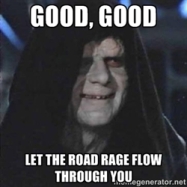
Can this be for real? Do people kill because it’s fun? Sorry, that can’t be considered normal. But those other emotions can account for a lot of murders. Love, hate, greed, envy, and anger are common human emotions. And yet, people kill strangers for cutting them off in traffic. We call it road rage, but it’s anger. Statistically, murders of women are often done by male mates, partners, or lovers. What’s up with that?
The countries in the high murder-rate areas that I mentioned have significant drug trafficking problems, and many (but not all) have high rates of poverty. Figuring out motives and getting them into the right categories would be a challenge internationally. So, tell us. Who ya gunna kill?
It can be a dangerous world out there.
Carefully mind any gaps. Look both ways before crossing borders, fences, or red lines. And, watch for droids.
Mom frequently told me that she loved me. I don’t recall Dad saying it. If he told me, it was seldom. They both loved me; and while I loved them back, the feeling that I had was not the same for each. What was that? One word with so many meanings.
We even manage to say love to express approval of inanimate objects, “Oh, I love that pizza.” Or, as my young grandchild copied from his mother, disapproval: “I’m not lovin’ it!” He was too young for such a trendy (now trite) phrase, but he understood it.
If we considered all the meanings we have for the word and lined them up on our continuum of human emotions, the variety would defy any logic we use to keep saying it. Fortunately, context helps us out and we socially understand each other’s intent. We would need to invent too many new words to replace love. Someone once told me, “I love you, but I’m not in-love with you, if you know what I mean.” I understood and welcomed the explanation since the first three words could be concerning, but still not necessarily unwelcome.
Regarding romantic love, it is one of the most fantastic feelings we can experience. We can even see that love feeling in friends who have fallen into love, head over heels. More evidence for the wonderfulness of amour is that the love and lust emotions get us in so much hot water, but we seem to dive right in anyway. It’s such a good thing. Would we be human without it? Barring some interfering DSM IV, mental problem diagnosis, we all love someone, and usually many people. And each feeling of love will be different from person to person, but it’s still love.
All love makes this world a better place. We’ll never have too much love in the world, but we seem to have too little of it. We have faced that since the beginning of time – too little caring about each other.
Enjoy The Youngbloods as they sing one of my best-liked, hippy love songs from the 1960s: Get Together. I’ve provided the lyrics below, as well as links to two other love-tunes.
The Youngbloods – Get Together lyrics
Love is but a song to sing//Fear’s the way we die//You can make the mountains ring//Or make the angels cry//Though the bird is on the wing//And you may not know why.
Come on people now//Smile on your brother//Everybody get together//Try to love one another//Right now.
Some may come and some may go//We shall surely pass//When the one that left us here//Returns for us at last//We are but a moment’s sunlight//Fading in the grass.
Refrain//refrain//refrain
If you hear the song I sing//You will understand (listen!)//You hold the key to love and fear//All in your trembling hand//Just one key unlocks them both//It’s there at your command.
Refrain//refrain//refrain
Right now…
Right now….
Also, Haddaway’s is a more erotic and fun video of What is Love (click here); and Dionne Warwick finishes up with What the World Needs Now is Love (click here). None of these songs have many lyrics, but I love them anyway.
Happy Valentine’s Day.
Remember, love is a two-way street.
So, mind the gaps and be sure to look both ways.
Disclosure: I’m of the there are no gods variety of atheist. Consequently, there’s no sin. Since we can’t have one without the other, sin is a word I use only because the majority use the word, even if they’re agnostic. But, there is some general agreement about what is or isn’t moral behavior.
The past few weeks, I’ve posted about the seven deadly, and predominantly Christian, sins of greed, pride, lust, anger, gluttony, envy, and sloth. I also provided a brief contrast with an opposite word. My approach was based on the source of our behavior, our human mind and emotions. Each of the seven begins with an emotion that may later be manifest in behavior – we act based on how we feel.
Writers have a phrase: show me, don’t tell me. In movies, the words and actions of the actors are used to portray thoughts and feelings. In my opinion, we cannot choose each emotion. Happiness is a little different. We can be happy people and still experience dark-side emotions. Furthermore, we can usually choose our behavior. Some comments have implied that we’re in total control over emotions, and then control our actions, as well. While I don’t share that opinion, my behavior is based upon my emotional state has led to more apologies from me than I care to admit – slow learner.
As a society, a nation, or arguably, within a religion, we subjectively decide what’s moral. It changes over time, and we routinely disagree about what’s unacceptable (political-type disagreements). While we don’t always agree, often we do.
In the title equation, I = intellect, and E = emotion. When we experience emotions, we follow that feeling with behavior. To the degree that we can, ideally, we choose the behavior we morally and intellectually we want to display. For example, if someone elicits our anger, jealousy, or some other feeling from our complex emotional spectrum, we then pick our next move. I over E implies that we select our words or actions based on our intellect (good judgment, wisdom), rather than the emotion we feel. It’s not easy to behave contrary to how we feel. Nor is it always necessary. Going with our emotions (following our heart) is very often our best and most sincere option. We love with not only our personal emotions, but often those of others. How others tug at our emotions makes life magical. Life is wondrous, but not simple.
The common thread that I’ve stitched through each of the seven is that emotions are not sins. Feelings are legitimate. Be they good or bad feelings, it’s our behavior that determines anything about moral standards. And it doesn’t make a tinker’s-dam if one believes in a god, gods, or none. Each of the seven have opposite virtues. Every good person has a dark side. Every saint has a past; every sinner a future.
Humans are very much part of nature. We are where we belong. Our greatest need is for each other. Our greatest challenge is in dealing with each other.
Our lives are full of stepping stones to make life better and with stumbling blocks that bring us incredible amounts of pain and suffering – and valuable lessons.
Let’s be accepting and understanding of ourselves and others to the degree that we’re able. We are not static beings. We’re who and what we are, but we have opportunities and futures. We come into this world as we are – a combination of physical and mental paradoxes and mysteries. A lot happens between the average birth and death. This includes running the bases of virtuous and bad behavior, and the personal experience of staring into the abyss that is us.
 ‘bout given yer nasty ass a good clout.
 Curves
 Growth

 As for my dream? It is dead.
 Timothy Frances, where are you now?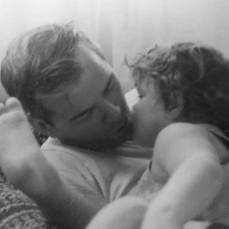




 A few days ago, I wrote a tongue-in-cheek note on Facebook about how I did not whack some guy because my wife would kill me, had I dispatched the fool to his happy hunting ground. The fact remains, people kill people. I cannot imagine doing that except in self-defense or war. Neither of those would be considered murder, even in the biblical sense. Why do humans kill each other? Mental illness aside, why do we do it?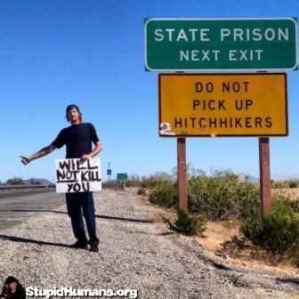

 Regarding romantic love, it is one of the most fantastic feelings we can experience. We can even see that love feeling in friends who have fallen into love, head over heels. More evidence for the wonderfulness of amour is that the love and lust emotions get us in so much hot water, but we seem to dive right in anyway. It’s such a good thing. Would we be human without it? Barring some interfering DSM IV, mental problem diagnosis, we all love someone, and usually many people. And each feeling of love will be different from person to person, but it’s still love.

 Our Literary Journey