2016 Nano ends at midnight next Wednesday. I’m passing 48 of the 50K goal today, so I’ll meet the challenge this weekend. However, as anyone who writes knows, there is much more for me to do.
For the past four weeks, my life has been like this: up between 5 and 8 AM, plan to write, but read the news, read and answer emails, look at my memoir and plan some more. But I only write a little. Look at Facebook and write some snarky comments there, read some blogs, go for a walk while listening to music for about an hour; return, eat, stretch, talk to wife, and finally begin to write.
Following an hour of writing; take a break, eat more, get coffee, then back to writing. After pushing out about a thousand words, take a long break and do more useful and constructive things like doing dishes, replacing light bulbs, talking to neighbors, and reading. I write more in the late afternoon and evening with interruptions for football, NCIS, or Blue Bloods. It seems to have worked because I’ve averaged almost 2,000 words each day.
But this memoir – the thinking, remembering, musing, pulling out old photos, doing ancestry research, looking for old friends and finding some, but reading obits of others — it’s so different because it is about me and people who’ve affected my life. Learning and writing about myself every day is interesting for a guy who disliked writing about himself.
Writing fewer words on this blog so you can listen to the song and see the lyrics that say it for me: Dream On, by Aerosmith.
Indeed:
Half my life
Is books, written pages
Live and learn from fools and
From sages
You know it’s true, oh
All these feelings come back to you….
“Sing with me, sing for the years, sing for the tears.”
We dream on, love on, live on;
but look both ways and mind the gaps.
As we create this drawing, our personal art, we move the pencil across the page. As it leaves lines and other marks on the page, let’s say those marks are in the past – our past. We are creating the art, but we drew the lines and made the marks, past tense.
We can see the pencil point. The tip is touching on the page. We may look directly at it, or not. That small point of contact with the paper represents our present time — now. It’s in that brief instant of time where we live. We may look at the past marks, or we may focus on the pencil on the page. We may move it in any direction, going fast or slow, applying firm of soft pressure. We may even lift the pencil from the page and move it to a different location.
As we move the pencil, the point joins with other lines on the page. Our present reaches into our past. As our vision unfolds, we make plans for where the pencil will go next, how we’ll maneuver it, how we apply pressure to it, how we will lift it off, and return it to, the page. As our drawing takes form, the page fills with marks and lines.
The blank part of the page is the future. We think about and plan our next moves, or we allow our hand to be guided by external forces, moving us into our personal future.
We keep looking to see the entirety of the drawing. We consider the past lines in light of our future plans. We make decisions to move lines in the present to be tangent with, or to intersect lines of the past. Thus, we create a new future that mingles with, and eventually becomes, our past.
We erase. We change it. We keep looking at our whole life as art. As we move in closer and back away to change our perspective, we begin to see the big picture of our life.
As we draw, we feel things: love, anger, spiritual things, and the passions of life. As we experience our feelings, our work of art changes. Those emotions travel to our hands to control the pencil that is drawing our life.
We learn as we draw. What worked? What didn’t? Where did we succeed and what were our failures?
As we fill the page with marks and lines, there are more lines and less white space. We are running out of places to make our marks. We don’t know how many more lines and marks that we can put on the page.
Our drawing, our art, our life. It’s on the page, or is it?
Mind the gap.
With 10 days of Nano remaining, I’m rolling along with my memoir. Finding memories and searching for lost feelings. It has helped me to keep writing in a searchable chronological order, so that as I recall things I want to add; I can find the right place to write (draw?) those memories.
Now, with over 34,000 words, I can tell that I may have to run this stuff past some involved eyes before I consider asking anyone to read it for feedback. Along with trying to write over 1,500 words a day, I’m reading Writing is My Drink, by Theo Pauline Nestor, and Your Life as Story by Tristine Rainer.
Have you ever tried to write your life story as a fairy tale? I have. Try it sometime.
“One should either be a work of art, or wear a work of art.” ~ Oscar Wilde
In the first five days of NaNoWriMo, I’ve written 11,000 words toward the goal of 50,000 before midnight of November 30th. Since my personal goal was 2K words a day, I’m ahead. I have picked up on several things about my writing.
I am not isolated. My wife comes and talks to me routinely, and I go talk to her. I have vacuumed the house, gone to meetings, and done shopping. I answer phone calls (not doing surveys or talking to telemarketers, and I voted early), and I go for walks.
I have time available to write. Being retired, I could write all day and night. But I can take time for a football game, and maybe some NCIS or Blue Bloods. I read about what I am supposed to be doing: writing memoir. I talk to people, often about things having nothing to do with writing.
I think my weakest writing skill is the art, the creative parts, the telling of the story. I blame my experience with technical writing for part of that. But for this memoir, I continue to work on my skills to show and tell from my POV at the time. Can I be both protagonist and antagonist?
If I read a sentence that I wrote last week, I will change it. It will be better, but the challenge is to write, not to re-write and edit. This slows me down, but it looks like I can semi-comfortably write a maximum of about 3-thousand words a day. I did 2,800 twice last week.
I made an outline, a spreadsheet, and a memory list. The list has turned out to be the most valuable. I never look at the outline or spreadsheet. My only problem with the memory list is that I write in chronological order and the list random.
Here are examples from my list:
Working to pull out coal stove and put in gas hot water heater and gas stove for cooking.
Looking up at Dad realizing I was looking at a drunk man who didn’t care. I had eerie feeling that he resented me. I was not seeing my father.
Helen Hxxxxn (Whitey) BB gun. Tomatoes.
Peggy Rxxb and the Rxxb family.
Carol Mxxar and Joe Mxxxxen
Dog named Rusty and my treatment of the dog
Age 5 birthday party
Danny
Raised by both bio parents…first in fam….Linda was second, but hers divorced (he left) right after Linda graduated high school
Mom’s relationship with my half-bro, Danny, and my view of it.
Write. Just write you must.
I will be writing this memoir for a long time to come. I’ll win the Nano challenge and complete this memoir, but not anywhere near at the same time.
I miss writing this blog, but I choose not to do both.
If you ever consider writing memoir, I suggest it. For me, it’s not about the book, it’s about me. I still have a lot to write and things to decide. Do I want to write about something or make it available for others to read? Those dark “things” about me? I work at keeping the words and stories on my intended spiritual track, but in my mind, everything relates – particularly during my formative years.
The following excerpts from my memoir are from two more dramatic events, both relate to a nun who taught me. Context is that I had just learned that the same nun who taught 7th grade will be teaching 8th next year, then we jump to what I was worried about.
Blues Brothers movie, my fav part
….“Mom, Coughlin is 7 to 12th. Can I go to 8th grade there? I’ll go next year anyway.”
“Now, Billy-boy. Why wud ya? Jist graduate St. John’s. After I see ya graduate, God can take me. It’ll never happen again.”
“I’ll graduate Coughlin, Mom.”
8th grade was worse than 7th. Even Father Burns was afraid of Sister Mary Siena, and for good reason. She was the tyrant of the school.
Gerry Dxxxxe sat behind me. As I was turned around explaining something of extreme importance to Gerry I heard, “Mister Rxxxxs, what is the answer?”
“The answer to what, Sister?”
“Young man, you better know the answer to the question I just asked the class.”
After I suggested that she asked one of them, the anger-crazed dark shadow in black habit grabbed her instrument of torture and death. As she stormed down the aisle heading at me, in her hand was the yard long wooden pointer. It was round, about the circumference of my thumb. She yelled for me to standup and turn around.
As it turns out, blows to the flesh behind the knees with such a pointer are not soon forgotten….
At times, how I saw it.
Life is interesting,
look both ways and mind the gaps.
“Look, Garrett, I’m closer to the end than to the beginning. So, some of this stuff, I just don’t have it in me to care anymore…It’s the rest of it, the posturing, the little digs, the wasting my time….” ~ Police Commissioner Frank Reagan; from the TV show Blue Bloods, Season 6, Episode 9, “Hold Outs.”
I can relate. I often say, “I don’t care.” But I do; in an odd, almost cavalier way. Normally, when I think I can help someone or fix something, I give my time and effort to the issue. I now care less about many of the things that were high on my list when I worked at my paying job. I haven’t lost my motivation; I now own it.
Opinions others have of me have lost much of their importance. Nowadays, I care more about issues that were of little interest during my past. Conversely, my “that’s bull shit” list is longer than ever. I worked, if you can call it that, for about 50 years. Now retired, my perspective on what’s important is changed.
Since age 18, excluding my time as an undergrad, I had one six-month period of unemployment. Even then, I treated my job search and being Mr. Mom, as two jobs. I enjoyed them both. The pay was horrendous, but the benefits were good.
I learned about myself during that time, simply by being me. That was the early 90s, the decade that I like to call my figure it out for myself years. Looking back, I now recognize that I was depressed and confused. I worried about things like money, a job, and my kids. I was more overwhelmed than I like to admit. I paid my dues. But now?
You know you want it, right?
I wear blue jeans, shorts, or sweat pants. It’s like every day is casual Friday, but it’s really another Saturday. I’ve not worn khakis more than twice in 18 months. I haven’t worn a tie, suit, or sports jacket either.
I care about style, as long as it’s casual. While I still think wearing argyle socks with sandals is a sin for which any man should burn for eternity, there’s something to be said for not caring what others (like me) think, even in the choice of clothing styles. I toy with the idea of wearing a kilt cuz wife says I have great legs. Some opinions will always count.
It shouldn’t matter what most other people think. I’ve read that what they think of me is not my business. But it often does matter. If I ask you what you think, feel, or believe, you should want me to care about your answer. If I do, it’s fair enough.
If I like your idea, I may accept it, implement it, or otherwise go with it. When someone says, “You should do a blog on that,” it gets my attention. I often write with inspiration like that from someone else.
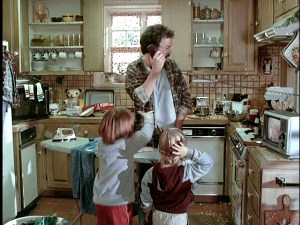
I’m a grandparent. A parent called to complain about a grandchild. I listened, but said nothing. I allowed my child to rant and get it out. My wife wasn’t home, so I was on my own for the call and the associated drama. These are my monkeys in my family circus, after all.
Then I hear, “You haven’t said anything, Dad. What do you think?”
I take a deep breath and wonder if I should respond (the answer here is no).
Raising my kids, I made the same mistakes. But now, I have a different perspective. I answer with a quetion, “Are you sure you want to know?”
My ranting offspring responds, “Yes.” The tension builds. While I knew that this wouldn’t end well that day, I also knew it would eventually pass, and it did. I blurted out my answer as the Frank Reagan of my family.
“It doesn’t matter. What you’re so upset about is no big deal. There are more important issues in your child’s life. This is minor and kind of expected. As children, we’ve all had problems like this. We get over it and so will he. Allow him the dignity of experiencing and learning about life on life’s terms, not your conditions. I suggest you calm down and wait.”
Dial tone.
Blue Bloods writers would handle this scene at the family dinner table with everyone drinking wine.
I’m a here and now kind of guy. While I firmly believe in living in the present, I acknowledge that each life has a future and that’s the direction we live it. Today’s crisis is tomorrow’s funny dinner chat or neighborhood gossip.
Life goes on, and everyone should enjoy every possible breathtaking minute. What other people think is probably unimportant, and may be dangerous. So learning when to have had enough, to be tired of the BS, and to move on; to no longer give a shit, is good.
“But Mikey’s father, champion of all pint drinkers, is like my uncle Pa Keating, he doesn’t give a fiddler’s fart what the world says and that’s the way I’d like to be myself” ~ From Angela’s Ashes, by Frank McCourt
So, care as you must. Live in your world and in your time. Figure out what’s important to you and to people close to you. Make choices, change your mind, look back and look forward. That makes perfect sense to me, I hope it does to you, too.
Meh takes a big swig of the foamy grog and grunts, “I don’t give a feck.”
Live life forward, understand it backwards,
mind the gap, and look both ways.
“The literal mind does not understand the ironic mind, and sees it always as a source of danger.” ~ Christopher Hitchens
Once we perceive something and it gets into our brains, the confusion begins. We communicate by employing methods or techniques to stimulate the senses of others, intentionally or not. Face-to-face, we can bring out all the best guns. Teachers employ every conceivable technology to get students to learn by seeing, hearing, touching, smelling, and tasting.
I doubt that our individual minds are exclusively either literal or ironic. I suspect that some of us have trouble communicating, especially on the receiving end, because we lean one way or the other. When the ironic mind works with the literal, caution and precision must be applied. The reverse seems to be less of a problem.
I recall a conversation with my daughter about a man who, in my opinion, was an irresponsible pet owner. I forget the details of his transgression toward the pets, but I used a rather common and innocuous phrase regarding what she told me: “He should be shot.” Julie became upset with me (he may have been a boyfriend at the time). It was quite a while before I knew the reason. Apparently, she took what I said literally. Even after our discussing and my explaining the idiom, she never quite seemed to grant me a full pardon for promoting the demise of her friend. While this may appear extreme, it’s not uncommon.
Another example involves a writing quote I like from Steve Almond.
“All readers come to fiction as willing accomplices to your lies. Such is the basic goodwill contract made the moment we pick up a work of fiction.” ~ Steve Almond
When I posed this quote to another writer, she asked, “Is that how you see it?” I confessed agreement before I realized the problem with the noun lies. What makes this even more interesting is that at the time, I was writing historical fiction (an oddity in its own) and my friend was wrestling with a memoir (a quest for truth). Her efforts were focused on discovering the truth while mine were based on developing an untrue story in a true, but flexible, setting.
Fiction is only a lie when it is not presented as such. While neither of us set out to deceive anyone (truth is not in every memoir), her goal was fact with interest. Mine was interest with a false story based upon fact. My friend’s literal mind-set related to her concern with the accuracy of her project. Mine was based more on fiction, which is not the truth, thus figuratively can be called lies.
I enjoy the humor of sarcasm and irony. Without awareness of the intended humor, harm is frequent. Furthermore, if someone does not share another’s sense of humor regarding irony, even more so, sarcasm; the exact opposite of the intended communication is inevitable. Damage control using a follow-on explanation never seems to completely mend the fence, “I can’t believe you thought that was funny.” My personal sense of humor gets me into that sort of bind on a regular basis.
A humorous book I enjoyed was Lamb: The Gospel According to Biff by Christopher Moore. The book is full of tongue-in-cheek humor, innuendo, sarcasm, and other forms of witty humor. It even has an angel who is so literal as to be the best heavenly straight man I can imagine.
I (somewhat proudly) wear the label snarkastic to fit my fondness for being both snarky and sarcastic. But, I’ve learned that how I communicate makes a difference. In writing, I am advocate for a sarcasm font (we need one). In person, I exaggerate facial expressions, gestures, and voice inflection so that I can give others the opportunity to get it right. I don’t enjoy the struggle of trying to explain my humor to someone who I know will never get it, but I try. And, I’m watchful for things not turning out as planned after I shoot off my mouth.
Sometimes I don’t get it either. Like when I say something and someone bursts out laughing and yells, “Bill, I love your sense of humor.” I smile and nod, then lean to the person next to me and ask, “What did I say that was so funny?” Literally?
We live in an ironic world.
Love, laugh, get wet, look both ways,
and mind the gap.
Why should anyone want to answer this question? I was asked, then immediately told no answer was expected. It’s not a rhetorical question.
When others ask my name, that’s easy enough. What do I do? Also simple. What are you? begins to get more personal. Who are you? Who am I? In terms of what? Our relationship? Am I your friend, enemy, son, father, or husband? I’m the son of, the father of, the grandfather of; but is that who I am?
I’ve always been willing to allow my pastimes to wrap with my identity. For example: I am a runner, artist, writer, dreamer, reader, etc. I’ve been less willing to do that with my profession. I know people who took their livelihood as an identity, only to feel lost when they could no longer perform at their vocation. I no longer run. When I was forced to stop, I was mildly depressed for two weeks. After that, I was fine.
Do I need all the answers?
Apparently, some folks think going public as an atheist raised my IQ, my awareness, and my general knowledge—all by some large measure. Other atheists and believers alike seem convinced that I now must provide answers and solutions, understand deep metaphysical mysteries, and know myself better than ever. It changed nothing about me—certainly not who I am.
Admitting atheist does not inflict anyone with knowing the source of the universe–certainly not me. Of this I am certain: if there is a god, I am not him, her, or it. On that, we must all agree. There is scientific evidence to show that my intelligence is now less than it was in the past. Admittedly, I know more trivia and I should have greater wisdom than when I was younger. My answer to life, the universe, and everything is: 42. (You get bonus points if you know why.)
I am two things. I’m the biological result of generations of genetic selection. The other thing I am is what I’ve become (maybe you’re becoming) as a result of the past 70 years of life, social and physical interactions, and learning. I have no idea why I’m male, bald, mildly pudgy (okay, the beer), or have blue or green eyes (depends who you ask). I’m also one of y’all. We’re exactly the same, yet completely different. And we both know it. But that’s not who I am.
Who do I think I am?
As a writer of stories with human characters, I know more about my characters (everything) than I do about any other person. I understand them better than I get myself. I’m their god. I give them life, and sometimes death. I give them pain and pleasure. I know what they’ll do tomorrow. I know what happens when they enter those secret places where they don’t tell others what happened–I know their secret thoughts.
Last night, before going to sleep, my wife asked, “Are you going to walk in the morning?” I said, “I don’t know.” I walk virtually every morning. Today, I did not. My characters are much more dependable.
Some answers are simple
I am who I always was, and who I will be. I’m the sum of the past. I am part of you, as you are of me. I know who I am at this moment. Right here and now, I am who and what I am. If any deeper, more esoteric, philosophical, theological, sociological, or scientific answer is required, then my answer shall remain forever insufficient.
I don’t know everything about me, but I know enough. We’re gunna have to live with that.
To you, you are who you say you are, what you believe, and what you do. To me, you are who I say you are—it’s my opinion–subject to error and change.
But, is “who am I?” the critical question? I think the most important question is: who are we? How do we define us? We may add layer upon layer of humanity, and layer upon layer of nature, then layer upon layer of the universe. We are still in this together and we need each other.
As me dear departed Irish fadder often ass’d meh, “Whoda hell d’yeh tink ye’re?” Since that usually precipitated me being in a jam…“Exit stage left!”
Here I go again—trying to write a short blog on a topic suited for a book. I’ve taught classes on forgiveness, so I gained some insight. But that doesn’t mean I’m better than others at forgiving–I’m not. Two short stories for you, one related to the other.
First, as I was listening to a minister talk to his congregation about topics to teach in adult classes, he rattled off some that he thought his flock might struggle with. A few hands went up with each topic, until he mentioned forgiveness. I looked around to see two-thirds of them requesting instruction on forgiveness.
I taught the series of classes. To those people, this was the topic most of them wanted to deal with. I suspect that it was the most important.
Then, as I was teaching and near the conclusion of that class, one man asked, “Do I need to forgive Madalyn Murray O’Hair?”
I looked at him as I ran snarkastic comments through my mind, working on being kind to those who might have missed the point.
I said, “She was an atheist who died a tragic death about ten years ago. Why would you need to forgive her? Did she harm you?”
He said, “She took prayer out of our schools.”
If standing and glaring while trying to maintain composure sends a message to the rest of the class, that’s what I did. I scratched me head, hoping to end this soon. Insulting and vulgarities seemed inappropriate to the church venue.
I responded, “Well, I feel certain that Madalyn could not care less. She never had power to remove prayer from public schools, but the Supreme Court did. However, that case was not hers. Official, sponsored prayer had been voted to be unconstitutional two years before her case was decided. Hers involved her son and forced bible reading. Do you want to make a list of the Justices who decided that case so you can work on forgiving them? You don’t need to forgive her. But I think you should know exactly what it is that you are not forgiving her for.”
I don’t know what he was after, or if I was as condescending as I felt. Maybe he was wanting to discuss people that we might all have trouble forgiving. Hitler was and is still available, if we want to include the dead.
When I’ve harmed others and I feel remorse, I’d like to be forgiven. I realize such forgiveness is not a dismissal of my behavior. For that, I’ll always be responsible. When I’m forgiven, the personal relationship may be open to reconciliation. While it’s forever changed, the relationship may be worth saving. If so, the burden is mine.
When I’ve been harmed, I don’t need the person who wronged me to want forgiveness. They need not apologize, although that helps considerably. I do need to know exactly what they did that requires forgiving. I’ve learned that forgiveness has no easy on-off switch. I must want to forgive; then I must begin the process of forgiving.
Forgiveness may take considerable time. But forgiving gives me a personal freedom and comfort that I enjoy, not to mention it frees my mind for other uses. Forgiving doesn’t mean that the transgression wasn’t serious or damaging. If it happens again, discernment trumps forgiveness. I want to forgive because it’s good for me. Any benefit to the transgressor is supplementary to my own.
I am not preaching forgiveness. I’m advocating happiness. We don’t need to forgive everyone or everything. In the link here, are several articles on the mental health advantages of forgiveness. They also warn about some issues with forgiveness. There may be advantages to not forgiving in cases of sexual abuse, since anger and a demand for justice seem to empower victims. I’ll add victims of spousal abuse for similar reasons. There may be other situations where forgiveness needs to wait.
Finally, there must always be justice. We strive for life to be fair. When Pope JPII went to forgive the man who shot him in an assassination attempt, they hugged and the Pope made is forgiveness known. Then, the Pope left, leaving the man to complete his prison sentence.
The power of forgiveness rests with, and benefits most, the person wronged or harmed. Forgiving does not mean it was ok. If we can get on with our lives and rise above harmful difficulties, we can find relief and maybe happiness.
May we all find the strength and wisdom to move toward forgiveness when and where it’s wise and we’re able.
Pain is inevitable. Suffering is optional. Look both ways.
A few weeks back, the headline was about Olympic athletes being robbed in Rio de Janeiro, Brazil. After a few days, it turned out that they were gold medal contenders for the what were you thinking? event. One US swimmer won the liar-liar, pants-on-fire trophy across the world. I wonder how much trust will be restored after all the damage control that followed.
We know what trust is. We trust others. They don’t earn it. Either we give it, or we don’t. We also trust in portions or on a sliding scale. Some get more than others. We also know that trust depends on a lot of things. Past behavior is a big one.
When will Charlie Brown learn that Lucy will pull the football back at the last second? She does it every year (link).
About the same time that some of our athletes were not being robbed at gun point in Rio, I was in a discussion about trust. I thought I had trust figured out. I learned some things (I usually do when I shut up and listen).
I’ve never thought about the fact that we need to trust. Carrying that need a bit further, we also need to not trust. It would be great if we had this perfectly figured out. Often, people we trust teach us valuable but painful lessons on who not to trust, and when. As it is with love, when we trust we become vulnerable.
I once asked a work-mate why he left money on the table when he did not put a small percentage of salary into a retirement account, which our employer matched (free money). He didn’t need the money. His answer was, “I don’t trust them.” I was dumbfounded by his answer and I changed the subject. He paid for his lack of trust.
Competence and honesty are two other conditions that effect our trusting others. Our trust may have a few variables and conditions that go with it. I may trust you to suggest a good dentist for me. I will not trust you to be that dentist.
When my cardiologist showed up to place stents into my coronary arteries, I trusted him more when he told me how many he had done. I liked the guy, but that had nothing to with his competence. His experience did.
So, in addition to the things I mentioned earlier, we may trust others in differing degrees. That degree may increase in proportion to competence and experience. Generally, we don’t trust people who we think are dishonest.
When I discuss trust and judgment, I use the word discernment. Our ability to discern improves over time, often with a trail of painful lessons because we trusted people we shouldn’t have. When Ronald Reagan used the oxymoron “Trust but verify,” he was really saying “do not trust them.”
Erik Erikson theorized that trust is learned during the first couple of years of life. Regardless of how accurate that is, it seems logical and emphasizes the importance of trust in our lives from early on.
What I think is important regarding trust is not how much we have in others. We usually have some, even in total strangers. What is important is that we learn to use reliable judgment, based on experience to discern how to trust.
In her TED talk, What We Don’t Understand About Trust, Onora O’Neill says it much better than I can. Click here to watch it.
Trusting seems natural. America’s motto is In God We Trust. Another is E pluribus unum (out of many, one), but in 1956 we wanted to make sure that our country was not confused with the atheistic USSR.
In America, it seems that we want to trust more as we deal with each other every day. Are we worthy of the trust of others? Who do we trust?
I was asked a good question. This is my response, which is based on my religious views and my personal version of atheism. I cannot speak for any other atheists. The person asking was sincerely curious.
I don’t like the word atheist, but I know none better. So, I’ll roll with it. We have varying concepts and definitions of what an atheist is and what one believes or should think. That’s why I’m writing this explanation. Those differences aren’t going to change soon.
I was asked because I had linked to a song in last week’s blog on questions. The song was Spirit in The Sky by Norman Greenbaum. (Linked again here.) It’s tied to my answer to “What happens after we die?” (Answer: I don’t know.)
I enjoy spiritual music and I’ve liked this song since first hearing it in the 70s. It’s uplifting and has a lot of hand-clapping and singing about what happens following human death. All of that is good, based on the song. However, there’s a condition.
The lyrics say I “gotta have” a friend to intervene for me if I plan to make a deal with the spirit in the sky.
Prepare yourself you know it’s a must Gotta have a friend in Jesus So you know that when you die
He’s gonna recommend you
To the spirit in the sky
Never been a sinner I never sinned I got a friend in Jesus So you know that when I die
He’s gonna set me up with
The spirit in the sky
My friend asked, “How does being a friend of Jesus resonate with an atheist?”
Resonate means “to attach particular meaning or importance for someone, or to affect or appeal to someone in a personal or emotional way.”
I can’t say that Jesus or an afterlife resonate with me. My personal belief is that when we’re dead, we are simply dead and gone. There are no fires, no trials, no judgements, no hooking up again with the old bod – it’s simply over. If there is more to it, as with my answer to the question, I’ll have to wait to find out. I’m in no rush to learn the answer.
To be clear: I am an atheist, Norm Greenbaum is a Jew, Jesus (actually Yeshua) was also a Jew.
Now, consider these three points of view.
Atheists do not believe in any gods. Any belief in a historical Jesus is personal. And for an atheist, that is only a belief that the man existed. Any opinion or judgement of that man is also a personal opinion.
Most observant Jews (that I know of) do not believe that Jesus was the messiah, or is God. Yet, one of them wrote and sang this song – Norm Greenbaum.
Christians seem to believe Jesus was the messiah prophesied in scripture for the Jews. They also seem to believe that Jesus was, or is, the Son of God. Thus, as the second person of a holy trinity, also God. But, this is about me, not Christianity.
Notice anything? I never said that Jesus never existed. I never said he was not a nice guy, or a great religious prophet and leader, or a Jewish Rabbi. Simply not believing that someone is a god isn’t as negative as some folks may think.
It is what it is
Jesus also allegedly said and did a lot of cool things that I, and many other atheists, do agree with. Whether Jesus existed or not, I’m not, and never have been, anti-Jesus just because I don’t think he or anyone else is a god.
Richard Dawkins wearing my shirt
Besides, if Richard Dawkins supports Jesus’s philosophy (contrary to what many Christians may think), I certainly feel comfortable plugging songs that may include the name of Jesus.
I’ll not dismiss music simply because it uses his name, is religious in nature, or invokes any other god. I may for other reasons.
Here is another great Jesus song I like: ‘Jesus is Just Alright,’ covered most famously by the Doobie Brothers in the early 70s. It’s not much for lyrics, but was an upbeat hit.
I neither hate nor love Jesus. I accept that he probably lived about 2,000 years ago and he may have been one of the world’s first hippies (something I like). If so, I also think he is long dead.
May we unite in love and friendship. Let’s end dividing into tribes and against each other. Would Jesus want us to join our humanity together with peace and love in our hearts? May we acknowledge what we need from, and share with, each other. And, let each of us also be true to ourselves.
I’ve read some good essays on this subject. In this one, I attempted to present from a viewpoint of addressing someone who may be considering open declaration of no belief in gods, nor support of any religion, especially if they currently practice, or belong to, a religion. This is my first of several. I wrote one similar blog in June. You can see it here.
So you want tell people that you’re an atheist?
Select all applicable answers
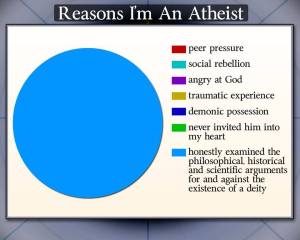
If you think you might want to be known as an atheist, you should know this. Perhaps your idea is that all it takes is to not believe in any god. That’s true on the inside and in your mind, not so on the outside where you’ll have to deal with other people. You may think that your beliefs are private, and not anyone else’s business. You may think that no one cares. Maybe you have the incredibly naïve opinion that no one will judge you. Maybe you foresee other atheists waiting in the shadows to welcome you with open arms. Some are. They’re not in the shadows. There are groups which you may join, but first this.
In your naiveté, you may believe that your only life change will be that you’ll stop pretending and covering up. Thus, finally being truthful about what you do, or do not, believe. Maybe you think that you’ll continue to be the same moral, loyal, loving friend, family member, and citizen that you have always been. Of course you will, but not in everyone’s eyes. And, I’ll bet you did not know this: there is a test and there’s a penalty. A test for all, and a penalty for most.
The Never Ending test.
You have to pass a test to be an Atheist. Did you know that? And the damn test never ends – you take it repeatedly. The questions may be the same, or they may keep changing. Every answer you give will be wrong. You’ll be forced to keep explaining and justifying your wrong answers. You may be criticized by your family and friends for not choosing the correct answers. Knowledge will not help. If you try to use science, you will be told that you know nothing of science. You’ll be given a grade of F for trying to use it to explain your position. If you dare to use logic or philosophy: F. History? F! God forbid that you use religion/scripture/dogma: F-minus.
Are you willing to pay the price?
If you come out as an Atheist, you will be penalized (test results notwithstanding)– up to and including the death penalty (unlikely, but possible). At some level, you may be ostracized. It may be by people close to you, some group that you belong to, or perhaps at your job.
You can forget about being POTUS. Almost anyone can be president regardless of race, sex, number of marriages/affairs, baldness (or silly hair), borderline mental health condition, or creed. But, no creed at all? No cred! If you don’t believe in a god, you will not be elected. Religions with much lower percentage of population numbers, such as Muslim, Hindu or Buddhist have a better chance. But they are not atheists. (Okay, maybe some Buddhist sects are.)
If you live in the Americas, most of Europe or Asia, and are of Christian or Jewish background, you’ll probably not be killed. But, if you live in many countries, some fundamentalist religious groups, or the government, may decide to enforce the laws of god according scripture (yes, they do say that) and your ass will be dispatched into the fires of Hell. It happens. Even in Hebrew/Old Testament scripture, apostates must be gone. Few people continue to follow that old law of god, thank god.
An alternative for some.
For some people who don’t believe in any gods, they admit atheism, but they stop there. They refuse to take any test. They either don’t care about consequences or aren’t affected by them. They realize that no answer will ever be sufficient for most concerned believers.
The quiet, timid, in the shadows non-believer is a personal choice for many. But so is not ever fighting for or defending your rights and the rights of others. Many believers may wish you’d be quiet. Some may enjoy the fray and attempt to stump-the-chump. While a few others may be legitimately curious or some combination of all three.
Be honest and wise.
May you make wise, informed, and well-considered decisions. May you find the patience and grace to face the challenges of life with aplomb. May each day bring you joy, and may you spread that joy with love around the earth.
Note: A blog post on the test is under construction.

 But this memoir – the thinking, remembering, musing, pulling out old photos, doing ancestry research, looking for old friends and finding some, but reading obits of others — it’s so different because it is about me and people who’ve affected my life. Learning and writing about myself every day is interesting for a guy who disliked writing about himself.
 “Sing with me, sing for the years, sing for the tears.”
 Let’s make a pencil drawing.
 As we draw, we feel things: love, anger, spiritual things, and the passions of life. As we experience our feelings, our work of art changes. Those emotions travel to our hands to control the pencil that is drawing our life.
 With 10 days of Nano remaining, I’m rolling along with my memoir. Finding memories and searching for lost feelings. It has helped me to keep writing in a searchable chronological order, so that as I recall things I want to add; I can find the right place to write (draw?) those memories.
 “One should either be a work of art, or wear a work of art.” ~ Oscar Wilde




 Then I hear, “You haven’t said anything, Dad. What do you think?”
 I’m a here and now kind of guy. While I firmly believe in living in the present, I acknowledge that each life has a future and that’s the direction we live it. Today’s crisis is tomorrow’s funny dinner chat or neighborhood gossip.
 A humorous book I enjoyed was Lamb: The Gospel According to Biff by Christopher Moore. The book is full of tongue-in-cheek humor, innuendo, sarcasm, and other forms of witty humor. It even has an angel who is so literal as to be the best heavenly straight man I can imagine.
 Sometimes I don’t get it either. Like when I say something and someone bursts out laughing and yells, “Bill, I love your sense of humor.” I smile and nod, then lean to the person next to me and ask, “What did I say that was so funny?” Literally?


 Then, as I was teaching and near the conclusion of that class, one man asked, “Do I need to forgive Madalyn Murray O’Hair?”


 Competence and honesty are two other conditions that effect our trusting others. Our trust may have a few variables and conditions that go with it. I may trust you to suggest a good dentist for me. I will not trust you to be that dentist.
 Trusting seems natural. America’s motto is In God We Trust. Another is E pluribus unum (out of many, one), but in 1956 we wanted to make sure that our country was not confused with the atheistic USSR.



 You have to pass a test to be an Atheist. Did you know that? And the damn test never ends – you take it repeatedly. The questions may be the same, or they may keep changing. Every answer you give will be wrong. You’ll be forced to keep explaining and justifying your wrong answers. You may be criticized by your family and friends for not choosing the correct answers. Knowledge will not help. If you try to use science, you will be told that you know nothing of science. You’ll be given a grade of F for trying to use it to explain your position. If you dare to use logic or philosophy: F. History? F! God forbid that you use religion/scripture/dogma: F-minus.

 Our Literary Journey