I’ve read some good essays on this subject. In this one, I attempted to present from a viewpoint of addressing someone who may be considering open declaration of no belief in gods, nor support of any religion, especially if they currently practice, or belong to, a religion. This is my first of several. I wrote one similar blog in June. You can see it here.
So you want tell people that you’re an atheist?
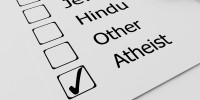
If you think you might want to be known as an atheist, you should know this. Perhaps your idea is that all it takes is to not believe in any god. That’s true on the inside and in your mind, not so on the outside where you’ll have to deal with other people. You may think that your beliefs are private, and not anyone else’s business. You may think that no one cares. Maybe you have the incredibly naïve opinion that no one will judge you. Maybe you foresee other atheists waiting in the shadows to welcome you with open arms. Some are. They’re not in the shadows. There are groups which you may join, but first this.
In your naiveté, you may believe that your only life change will be that you’ll stop pretending and covering up. Thus, finally being truthful about what you do, or do not, believe. Maybe you think that you’ll continue to be the same moral, loyal, loving friend, family member, and citizen that you have always been. Of course you will, but not in everyone’s eyes. And, I’ll bet you did not know this: there is a test and there’s a penalty. A test for all, and a penalty for most.
The Never Ending test.
 You have to pass a test to be an Atheist. Did you know that? And the damn test never ends – you take it repeatedly. The questions may be the same, or they may keep changing. Every answer you give will be wrong. You’ll be forced to keep explaining and justifying your wrong answers. You may be criticized by your family and friends for not choosing the correct answers. Knowledge will not help. If you try to use science, you will be told that you know nothing of science. You’ll be given a grade of F for trying to use it to explain your position. If you dare to use logic or philosophy: F. History? F! God forbid that you use religion/scripture/dogma: F-minus.
Are you willing to pay the price?
If you come out as an Atheist, you will be penalized (test results notwithstanding)– up to and including the death penalty (unlikely, but possible). At some level, you may be ostracized. It may be by people close to you, some group that you belong to, or perhaps at your job.
You can forget about being POTUS. Almost anyone can be president regardless of race, sex, number of marriages/affairs, baldness (or silly hair), borderline mental health condition, or creed. But, no creed at all? No cred! If you don’t believe in a god, you will not be elected. Religions with much lower percentage of population numbers, such as Muslim, Hindu or Buddhist have a better chance. But they are not atheists. (Okay, maybe some Buddhist sects are.)
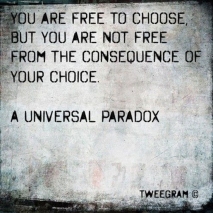
If you live in the Americas, most of Europe or Asia, and are of Christian or Jewish background, you’ll probably not be killed. But, if you live in many countries, some fundamentalist religious groups, or the government, may decide to enforce the laws of god according scripture (yes, they do say that) and your ass will be dispatched into the fires of Hell. It happens. Even in Hebrew/Old Testament scripture, apostates must be gone. Few people continue to follow that old law of god, thank god.
An alternative for some.

For some people who don’t believe in any gods, they admit atheism, but they stop there. They refuse to take any test. They either don’t care about consequences or aren’t affected by them. They realize that no answer will ever be sufficient for most concerned believers.
The quiet, timid, in the shadows non-believer is a personal choice for many. But so is not ever fighting for or defending your rights and the rights of others. Many believers may wish you’d be quiet. Some may enjoy the fray and attempt to stump-the-chump. While a few others may be legitimately curious or some combination of all three.
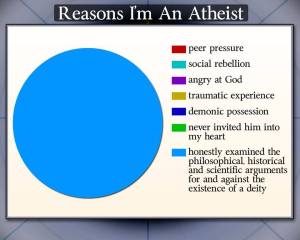
Be honest and wise.
May you make wise, informed, and well-considered decisions. May you find the patience and grace to face the challenges of life with aplomb. May each day bring you joy, and may you spread that joy with love around the earth.
Note: A blog post on the test is under construction.
 There are too many blocks to mention each one. We all sometimes have blocks.
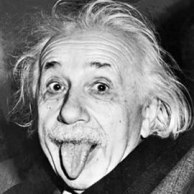 Einstein was interested in both creativity and music. He tied the two, even suggesting he would be a musician, were he not a physicist.
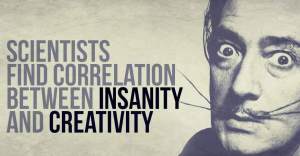
 er source your creative ideas flow, may they flow to you in abundance. May you be orgasmic, chilled and thrilled with ideas, concepts, and plans. May you make the best of all your days being creative and doing your thing (art, writing, music, etc.) and enjoying the universal gifts shared by others. May the spirit of duende haunt your heart and mind, thus bringing you to a spiritual bliss as only we humans can experience.
 Two memories from my youth relate to this post. I recall my mother frequently telling me that I was contrary. She would say, “Now Billy, stop being so contrary.” She could have chosen from many words: obstinate, difficult, stubborn, negative, or silly. Actually, that’s not true. She used silly a lot, as in, “Silly-Billy.” I actually liked being called silly and still do. Today, such a fun-loving attitude coupled with silly behavior would prevent a diagnosis of Oppositional Defiance Disorder (ODD).
 As a youngster, I did have more than my share of confrontations with adults, especially those in positions of authority. I admit it. Mom was right (aren’t they all?). I was often contrary and many synonymous terms applied equally well. I confess that I enjoyed being difficult, most of the time. Sometimes, I paid for it. Some say I never outgrew my contrarian attitude.
 The other memory comes from the time of my early to mid-teens. I don’t know where if came from, but we adapted a phrase for a while that was intentionally meaningless, but we said it – a lot. It was kind of an early version of whatever! We would say it to each other and often to adults. We always knew exactly what the adult retort would be. The locution was Yeah, but, or yeahbut. Today, the Urban Dictionary says yeahbut should be followed by f**k, but we seldom used those words in combination.
 However; yet, nevertheless, nonetheless, even so, still, notwithstanding, in spite of that, for all that, and all the same; I do like butts. Some more than others.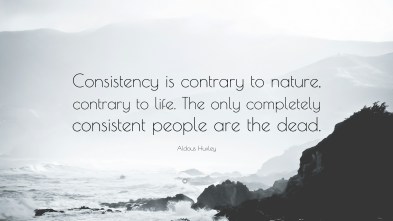



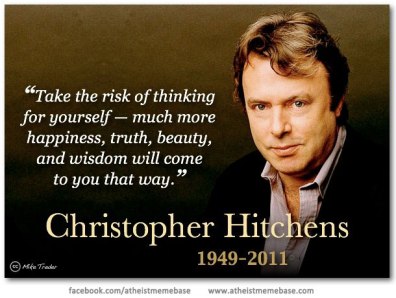
 As I listened to an interview with Christopher Hitchens, I was surprised by something he said. I’ll get back to that in a minute. Frist, I want to talk about the genesis of the question and my answer.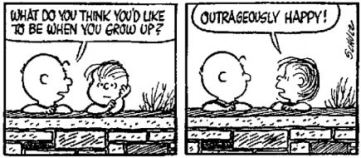
 A satisfaction tax would make a lot more sense. It seems like things may satisfy us, but we decide to be, or not to be happy. How would we measure and estimate a tax on feeling good?
 I do my best not to ‘unintentionally’ hurt somebody’s feelings. However, I’m unopposed to stepping on an emotional toe when I hear the call. As a senior citizen, I sometimes feel a sense of entitlement to do that, but I usually refrain. I once knew one guy who was so Cliff Clavin (from the TV show
  Several years ago, my daughter-in-law said that I was snarky. I appreciated her honesty and courage. I also liked it. She was right; I am snarky. I’m also sarcastic. In fact, being both makes me
 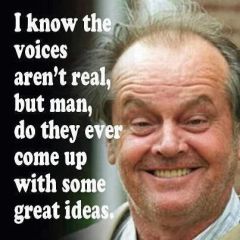 Jack Nicholson in As Good as it Gets (and other movies of his)
 Female Comedians (Yes they are)
 Not everyone has been introduced to my brand of snarkasm. After a while, when most people get to know me, they agree that I can pull it off. Many find it humorous. In fact, that’s the point – humor. I’m not on some kind of anti-PC* crusade here.
 Are you Andy or Barney?



 Some people think that ego is a bad thing. In a way, they are right. In a way, they are wrong. A wooden plaque (given to me by a friend) hangs in my room so that if I (ironically) hold my nose up, just slightly, I can see it. It says, “Humility is not one of my faults, but if I had one, that would be it.” Before you attack my lack of profundity, my friend made and gave the plaque to me as a bit of an ironic joke (I hope).
 I’m making the claim that ego is mostly good for writers. I presume that it is good for artists who work in other forms of artistic expression. I also think that being humble is good and being courageous is good. I also think that each of us should do what works for us. We’re unique individuals who share a passion (if you want to call it that). I admit that an out of control ego is a problem for more than just the narcissist, and egotistical people have their issues. But over-blown personalities write and sell books too.
 We need our ego to launch the work to readers. We need to believe that we can and want to do it. We also need to deal with whatever criticism and rejection we encounter.
 To quote from Poe’s Preface to a republishing of his poems: “These trifles are collected and republished chiefly with a view to their redemption from the many improvements (made by publishers)…I am naturally anxious that what I have written should circulate as I wrote it….” He goes on to say that it is not that his work is that important, but the people who read it are. Ego?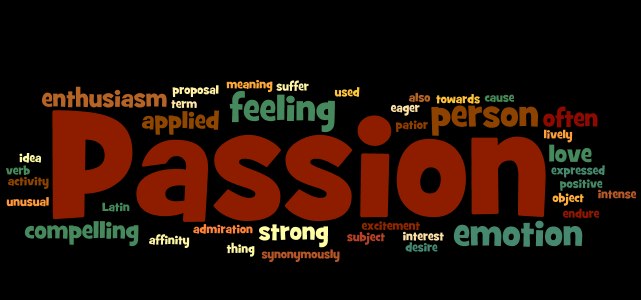
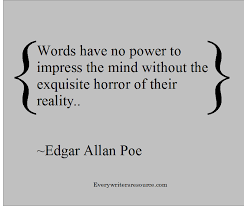 Three days of toil produced words born of emotion, but laying bare only thought and opinion. That challenge to produce expressive discourse full of feeling was riddled with notion and conviction of purpose, while lacking passion. Such analysis had merit and value, but I had so missed the deeper inside of myself that it might have been mere opinion drawn from a detached stranger. Those mindful barnacles of human grief remained anchored to my thoughts, thus hidden except from me.
 Knowing my feelings was not enabling my telling about them. Had I created a self, unable or unwilling to express feeling? I wondered deeper if I had co-opted with a force to create an emotional Dorian Gray. Were my feelings doomed to be confined in the shadowy attic of my mind? Had I become so adept at emotional deception that I habitually prevented expression of feelings? Had I become factually superficial and emotionally shallow, thus apparently less than a human lacking outward feelings?
 Twenty years hence, my awareness is of two worlds. An external world full of social interactions, judgements by and of others, and basic human needs. This is the world of people wearing masks, hiding feelings, and struggling silently with internal and external burdens. It is a world we need in order to sense the other world – a deep world that is hidden from others and often from our own self-awareness.

 So, I know when I made the change from young to old. It was about 40 years ago.
 Have you resigned yourself to the “it’s just a number that’s too friggin’ big” mentality? I’m not complaining about being old. Old people do not intend to complain about age. It is, after all, a successful result. On the other hand, the various consequences of age can’t be overlooked.
 If we live long enough, we share one important thing with many teenagers – we become bored easily. Old people can be annoying to some young people (15 years, remember). The thought that the feeling may be mutual seems to escape many. Most older folks that I know are working away at life. I know writers in their 80s and 90s who write every day, are working on writing books, and are making plans to publish.
 I live in an over-55, “active” community. Some folks here are more active than others, but most are kind of amazing. I took a blogging class where I met a lady of 92. She’s smart, funny, and still learning. She taught art classes and one of her subjects was art by carving vegetables. She made a scrap-book of pictures and writings on veggie art. She is an expert. Based on her experience, maybe the only nonagenarian expert. She wants to publish this in a blog. I can look past the outer physical things that show up when one is 90+. This lady is a master at her craft and learning another so she can share the first. I think that’s cool. In heart and mind, she is young, enthusiastic, and capable.
 I just returned from a “Personal Creative Writing” class. There are 15-to-20 of us taking the class. Most are interested in writing life stories or memoirs. These folks are talented writers; some are published authors; all are able to tell it like it was. They have the ability to make every life story funny, and even sadder memories are delivered with humor. They are good at their craft, but no one can accuse them of taking life too seriously.
