This poem is a collaboration poem written by my daughter, Julie, and me. We both worked on it. In fact, she initially wrote the first part, as a poem to me. It is not renga because it meets none of the normal forms. It is simply two people writing a poem to each other and collaborating, so style and form are free. One could look on it as a duet, or father – daughter billets-doux (love, or sweet letters). Ardor means enthusiasm or passion. My portion is italicized.
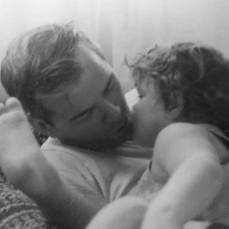
Dewey and Dad by Julie Barber and Bill Reynolds
You are my father, tried and true And you my daughter through and through.
You know my heart, my feet and hands too.
Some even say I look like you. From birth and to your life throughout,
I’ve been there for you, without a doubt.
There was a time when things were harder.
I hope I’ve grown and become much smarter. If we could go back, I’d want you my daughter.
Together we’ve grown older with ardor.
My father, wiser by the day…. Always profound things to say. Sharing our life keeps misery at bay.
I look to you when the answers are grey.
You say, “let nothing get in our way.” You heart and your talent come into play,
Find peace therein, as you work away.
Go out and write and use your talents
It will give your life more sense and balance. Your words are like clay, your pen is your pallet,
Your life is your muse, your mind is your mallet.
Get off your ass and do it already
The world is uncertain, and time is unsteady. It’s your life to live, you should live it as heady,
Be happy my child, ‘tis all worth it, you’re ready.
The fact you’re so far away makes me sad
But I’m more than proud and grateful you’re my dad.
She’s Julie, but I call her Dewey
Forever you’ll be my daughter to me,
A lifetime of love, we certainly have.
My daughter, our love surpasses all distance
No oceans divide us, our minds unite us.
As we see one to the other, it will always be, You rank above others swimming the sea.
Mind the gaps, family, love, friends, and the important things in life.
Look both ways, and all around.
From the tiniest thing to the vast secrets of the universe, what will humans ever know? Will anyone ever correctly proclaim that all knowledge has been discovered and may be known or available to everyone? I doubt it.
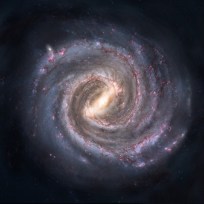
Our galaxy – one of many
Science helps us understand our natural world better. But, science provides information only through descriptions from observations. With science, we may understand better what an earth quake is, or how to grow more soy beans, but ultimately the answers we receive from research are observations.
Microscopes, telescopes, laboratories, and other equipment for tests and measurements are among the tools used to make these observations. Yesterday’s scientific conclusions lead us to today’s information, and then to the changes we will read about tomorrow. It was scientific observation that convinced us the sun, stars, and planets revolved around the earth. It was also science that convinced us that was not the case.
The discoveries of science change. Does truth ever change? When I look around at our natural world, I see is what humans have done. Everything I see, while either part of nature or taken from it, was placed, caused, or permitted by humans—to a point. Other life forms may make their mark, but that will last only if humans permit it. When we don’t allow nature to progress or we interfere, it can be disastrous due to our limited knowledge. It may be science, but we don’t know everything and we can only explain so much.
Sensing and Nature
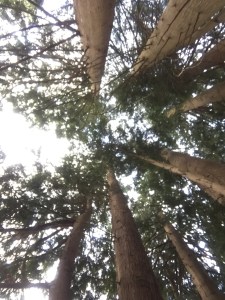
The spectacular trees
While nature is everywhere, my senses respond more strongly outdoors, in unfamiliar surroundings. I notice things less in my usual, everyday world. Change awakens my senses, whereas routine numbs them. Walking along a forest trail during a gentle, but persistent, rain provides stimulation that rejoins my surroundings with my own basic nature. It feels so right.
Seeing the trail, the roots of the magnificent trees, the green vegetation bouncing and dancing with falling raindrops, I feel aware and connected with the essence of life. It’s all here with me: sky, water, rich aromatic soil, and scree giving softness to my footsteps. Nature paints portraits of life and movement. I see how moisture mingles with the soil to send nutrients of life to plants and to quench thirsty animals, of which I am one.
Hearing the rain mesmerizes me as it falls where it will, on the leaves of trees and brush, onto the boulders and earth, and into the growing puddles and flowing streams. This is the sound of natural life – earth as it should be. The rustling sounds of birds and animals is alerting, as life deals in with nature’s wet gifts. And the rain. The glorious rain.
Feeling the soft, spongy earth beneath each step, I look down to see how the lovely wet soil now clings to my touch. I feel the rain pecking at me as it does upon the flowers. Animals respond to the natural bathing as a refreshing cleansing.
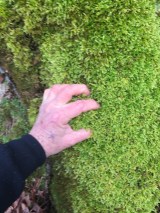
Touching the soft moss on a tree
My touch to the soft moss hugging tightly to the trees is a pleasant reminder of life on life, the natural interdependence within nature’s home. Against my face, and over my entire body, the rain penetrates cloths to caress my skin. I become one with the flora. I am refreshed, another being, pleased with our universe.
I can taste the freshness of the day. While rain on my head and face washes into my eyes, other drops find their way to my mouth, adding salt to the taste – the salt of the earth. I belong here.
A forest petrichor is the most pleasant of scents following rain. As the sounds and sights change with the gradually ceasing rain, and the forest begins to release the magical and glorious aroma of nature at work; life flourishes. If there is a heaven, it’s right here, right now, with me. I feel completely connected to nature. I yearn for this life, as it should be. I know this is life.
Awareness of Belonging
I become aware of the cosmic interconnectedness of everything. I know I have my place, fitting in with everything in the universe. The vastness of the cosmos finds the path and weaves its pattern through space, through time, and through me to the tiniest speck of galactic dust.
While science can provide words, descriptions, and explanations for everything that I sensed during my inspired walk in the forest rain, nothing can explain the deep, soulful feelings I experience when the vastness of nature communes with me. Conscious awareness.
Our senses perceive the environment as we discover nature and life. Our sixth sense is that of belonging to the Universe.
Look both ways, discover the gaps, feel where we fit in.
This is based on my experience with the Bataan Death March Marathon. It is the second of three posts on this subject. To read the first, click here. The next post in this series will focus on Ben Steele, Bataan Death March survivor, Montana cowboy, and artist.
Why Do This?
The doctor looked at me, with my wife listening, “You can get all the cardio you need walking. If you were on active duty, I would profile you so you could not run. I suggest you stop marathons, and consider not running at all. You will not have a heart attack. With this problem, you will likely be dead before you hit the ground.”
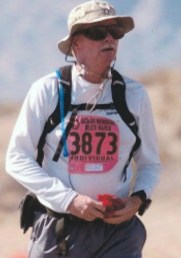
Before that, between ages 59 and 65, I’d completed 15 marathons. Four of those, I walked. Each took me about nine hours to finish, in the Chihuahua Desert, north of El Paso, Texas. Training for such endurance events is hard. Participating is fun, but demanding. I discovered the Bataan Death March Memorial Marathon when l was searching for an off-road, full marathon for walkers. About 85% of this “March” participants walk it.
In early March of 2008, we flew from San Antonio to El Paso, rented a car, and drove 45 miles north to the US Army post at White Sands Missile Range in southeast New Mexico. I checked in at registration, looked around the base, then drove 17 miles to Las Cruses for the night.
Well before dawn the next day, my wife took me back to White Sands and stayed with me as a hoard of 5,000 marchers and runners, plus many friends, and event staff descended on the large outdoor breakfast area, next to the starting-line assembly corral.
The Emotional Start
Sunrise and the start are at about 0600 hours. Everyone arrives long before dawn. After we parked, drank coffee, juice, and I scarfed up whatever I could eat, marathon ritual requires queuing up at one of the numerous port-a-potty toilets. I watched as some male participants strolled over to the golf course to give it a watering, I would have too, but they were run off by staff. It was dark, their backs were to us, it made the loo lines shorter, and the area had little grass. I didn’t see the problem, but dropped the idea.
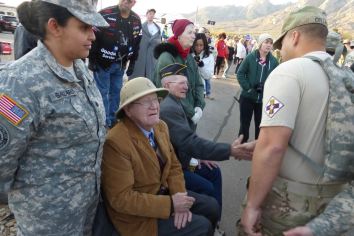
Greeting Survivors at Start
The opening ceremony at sunrise was the most patriotic and emotionally stirring that I ever witnessed. I was in the starting corral by that time, and being surrounded by my tribe added to my feeling of being part of something special. After few short speeches, accolades, and expressions of gratitude; a low altitude, noisy flyover of fighter jets from Holloman Air Force Base marked the final countdown to the starting gun. The crowd got quieter as the excitement and tension grew.
Greeting Survivors at Start
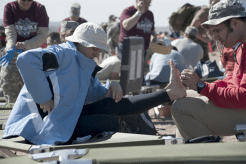
We were startled by a loud, unexpected blast when the starting gun was a thunderous, awakening, cannon blast. This was an Army post, so of course. As we slowly worked our way through another narrow gate and into the crowded final corral, a marching band of kilted drummers and bagpipers led the parade of 5,000 hopefuls through the 15 feet wide, by 50 feet long, starting area. Lining the sides of the narrow start area, the Bataan Death March survivors, most sitting, old and frail former POWs shook hands and spoke with as many participants as possible. Since the Bataan Death March is 75 years old now, few, if any, actual survivors remain.
The Pipes and Drums Lead the Way
We heard a distinctive beep as each marcher walked over the starting strip. That sound is an electronic signal from a timing chip attached to a shoelace. I noticed a barefoot participant, who tied it to his ankle. I would see him two more times; once, struggling in agony just past the 10-mile marker. I notified the next staff member I saw. The next time he was riding on the back of a golf cart on his way to a medical tent. Since then, footwear has been required. The military is good at making rules for common sense. I’ve seen barefoot marathoners before, but they ran on paved roads. This was a rough desert environment.
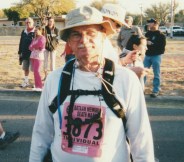
Those wishing to run fast were out of the corral immediately after the band. Last to start were the “heavy” military and civilian groups, with each person carrying a 35-pound backpack, plus water and other consumables for the course of the day. The pack must weigh at least 35 pounds at the start and finish.
A Killer Experience
More Death March survivors were stationed along the route. The idea was for marchers to meet the survivors, shake hands, talk briefly, and then move on.
Meeting Death March Survivors
It normally goes like this as I take his outstretched hand, “Howdy, Sir. My name is Bill Reynolds. Thank you for serving our country and winning the war.”
Then, he might say, “Hello, Bill. My name is John Richards. Thank you for marching to honor me, my friends, and what we did.”
I always wanted to stand and talk longer, but others were lining up behind me.
Marathon Smoke Breaks?
While this is no race for a best time, top finishers within each category receive awards. Only a small percentage of participants run all 26.2 miles, and none of them run their fastest marathon. This event is a patriotic history lesson, a physical and mental challenge, an amazing sight to see, and a motivating experience. Most of the course is on Jeep trails more suitable for tanks. The ubiquitous sand mixed with irritating gravel and scree finds its way into all shoes and boots. Gaiters helped a little.
18 Miles Done
The six-mile, 1,200-foot climb to the half-way point, 13.1-miles into the march, is on Mineral Hill at 5,397 feet. It’s notorious for ending many a marcher’s day. By that time, dehydration, bloody blisters, twisted ankles, sun burns, human exhaustion, and all manner of mental and physical maladies are screaming at marchers to give it up and ride the golf cart to the finish line, which about 15% must do, if they’re not taken away in one of the many ambulances that continually haul off the more seriously ill and injured. Even the young and fit fall prey to this challenge when they fail to pace themselves, especially if they neglected training.
I had read about the infamous Sand Pits, which we descend into just after completing 20 miles. These arroyos are 15 to 20-foot deep ditches, lined and filled with several feet of washed-in, soft sand that made walking even more demanding.
Sand filled arroyo
These pits alone are a challenge to walk through, but after enduring six hours of arduous walking, it’s agony. The subfreezing morning high-desert temperatures were long-past, yielding to the sun and its rising mid-day heat, making those arroyos The Pits of Misery, indeed. I used my hiking poles as I felt my exhausted, 61-year-old aching body, painful feet, and stabbing blisters demand that I end this insanity.
Warriors
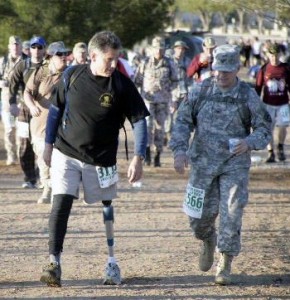
Many other marchers were combat veterans and wounded warriors, some who had been seriously injured. Seeing men and women with all sorts of physical and mental war injuries, many wearing various kinds of prostheses, some blind and being assisted by guides, but all doing what I was doing; I was emotionally moved, and I hushed the objecting voices in my head. I may have had more than 30 years on most of those folks, but I did not have to carry a spare leg in my backpack, in case my prosthesis broke or malfunctioned. I didn’t need a guide because I had been blinded by an IED in a foreign country.
Comrades
After 21 miles, my emotional state totally changed. I became weepy, extremely happy, and excited simultaneously. I felt honored and privileged to be where I was, doing what I was doing, and being with the people I was with. I felt guilty for complaining internally about my plight. Then, considering that the Death March survivors I had met faced 65 miles as POWs, starved, thirsty, beaten, and guarded by an enemy solder more than willing to kill them, I found the strength to put my burden behind me and finish this.
The Longest Three
Then, 23 miles in, the last big medical tent appeared as I managed to climb the hill out of the sand pits. The base was in sight. The finish line would be there. The final three-mile hike was on a long, flat, dusty, dirt road. It was hot, dry, and slow going. Eight hours had passed since the starting cannon was fired. I was walking on near-zero energy, constantly glancing up hoping to see some sign of the finish line, but I was only able to see the same view, with the now onerous Organ Mountains to the right.
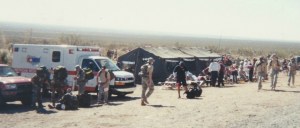
Medical tents were busy
As I was dragging my old ass along, a young lady in full army combat uniform greeted me with encouraging words as she passed. I was thinking that her 35-pound pack must be more than 25% of her total body weight. Most of my pain numbed, but with every step I knew I had blisters.
Blister Treatment at Aid Station
After my first Death March, I discovered that I had the biggest blisters I’d ever seen on the bottom and top of both feet, four black toe nails (one would fall off), and sore heels. I was exhausted.
Going Home; I Shall Return
Over the following years, my motivation continued to grow as I learned more about the events of 1942, and the perils of the men and women who surrendered on Bataan and Corregidor. I’ve read on-line accounts and at least five books about the experiences of the survivors. I became an amateur expert of sorts, drawn to something that had occurred several years prior to my birth, but affected my life in ways that I still cannot explain, 75 years later.
Nine hours Later
The next day, at the El Paso airport, Death March Marathon participants are quickly spotted in two ways. First, while active duty military are in Battle Dress Uniforms (BDU), many others wear the distinctive tee-shirt given to each participant. The second give away is the distinctive Death March limp. In my case, it was both.
Overcoming the challenges and obstacles of life is difficult, not impossible.
In the process, always look both ways and mind the gaps.
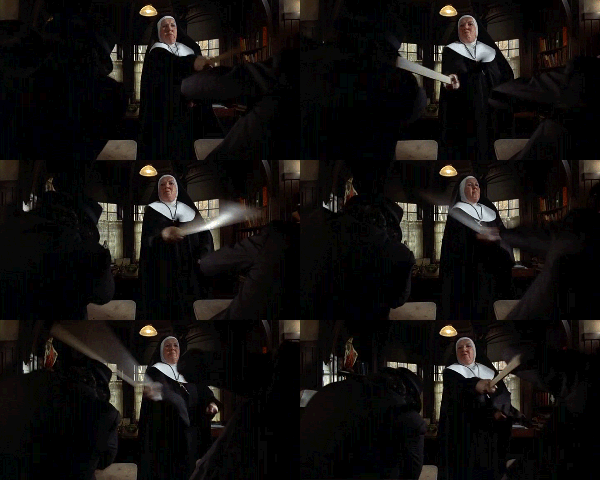
When I was in the sixth grade at my Catholic school, I dreaded being promoted to seventh grade. Sister Mary Scary taught seventh grade. That nasty creature who floated around Saint John’s wearing Rome’s version of a burqa, but used a white frame to emphasize a face that was perpetually angry, who posed as a Catholic nun but was really the Wicked Witch of the West. That daughter of Satan himself, would have complete control of my life from eight to three every weekday, plus an extra hour at church every Sunday and Holy Day of Obligation, when I would be forced to sit, kneel, or stand to watch men and boys dressed in feminine garb prance, kneel, sing, pray, and read in a dead language of which I understood nary ten words.
Saint John’s Church and School
Mom and Dad were delighted in June of 1958, when I handed them my report card with that depressing word emblazoned on the back cover: “Promoted!” To me, it said, “sentenced to nine months of suffering in Purgatory at the hands of evil.”
I worried all summer. My friend, Jimmy, who was a grade ahead of me reported the horrible carnage that he and others had endured at the hands of Lucifer’s daughter. Whatever the version of depression a 12-year-old boy could encounter, I’m sure I had it. Never, have I wanted a summer to pass more slowly.
My parents always supported authority over me. The nun, teacher, priest, cop, drunk adult, irate neighbor, or neighborhood tattle tale was always right. Ok, occasionally, they really were right. But from my point of view, my parents should have supported me – their son who they claimed to love. I could not discuss my fears about the nun with my parents.
My siblings had the “we survived, but you probably won’t” attitude and said as much. However, my older brother, Danny, did have some advice for me. “Be an altar boy. They like altar boys,” he said. That made sense to me. I would play their game to survive.
Survival
I worried enough about Sister Scary that I managed to get through seventh grade with minimal physical damage and mental distress. I passed academically, and I was home free. This time I was even more pleased than Mom and Dad that I was not held back. I had not shed one tear. I was doing well. My eighth-grade teacher was to be Sister Mary Wonderful, who was also the school Principal. Life was good again.
Toward the end of seventh grade, I was finally approached to join the exalted and glorious ranks of the chosen ones. I was asked if I wanted to be an Altar Boy. All my friends were becoming Altar Boys, and I wanted to be one, too. My brother, Danny, had been one, and it was what good Catholic boys did.
Altar Boys
I accepted the offer from the Father O’Burts, logically assuming my parents would approve. I started learning the Latin prayers and talking to other boys about the process and the job. I was happy about it. My plan for eighth grade was to be one of the chosen. I even signed up for the school basketball team. I didn’t play well, but I was the tallest boy in my school. I began to look forward to my final year at Saint John’s.
Not So Fast
Then, as the skies darkened again, I had the familiar bad feeling. As September and the start of school approached, there was a shockingly frightful rumor. Sister Wonderful was being transferred, and Sister Mary Scary, the evil antagonist of my short life, was being promoted to school principal and would be moving up to teach eighth grade.
Oh, dear God, No! I was supposed to be done with her. But as every dependable source, including the church bulletin, soon validated, ‘twas da troot. The second coming of the Inquisition had been promoted to Principal of Saint John’s elementary school, and would teach 8th grade to my class. I knew that I could not survive another year. My only solace was knowing that, except for a few favored girls, the rest of my classmates were as upset as I was. The Altar Boy gig became critical.
Say What?
So then, still expecting them to be pleased with the news, I decided to tell my parents that I was to be an Altar Boy. I expected them to be proud, if not overjoyed.
I was happy when I walked into the kitchen and sat down for dinner. She was at the sink behind me. “Mom, guess what? Fadder O’Burts as’t me ta be an altar boy. And I’ma gunna do it, too.”
I turned to look at Mom, smiling and all full-of-myself, at first. Then, severe shock set in when she turned and said, “No yer not!”
Dad looked up and added, “Like Hell, y’are! Yeh kin get dat idea outa yer thick skull right now.”
Dazed, I needed something quick – a prayer, to get sick, perhaps a deadly disease, anything. Desperation was overcoming me.
I was unaware that when Danny had been an Altar Boy, it was not a good experience. The logical consequence, of course, was that I was not permitted to follow, and my parents did not give one inch. Nor did they tell me why I was being denied my only hope to survive nine more months of the Black-veiled Horror. Today, I am glad that I was not part of that Altar Boy thing, but at the time, it was the worst possible news.
Option Two
Quickly, I changed the subject. “Mom, Coughlin is 7th through 12th grade. Can I go there for 8th grade? I’ll be starting there fer 9th grade and high school the next year, anyway.”
She didn’t even look at me. “Now, Billy-boy. Why’d ya do dat? Jist graduate St. John’s then go to high school like your brother and sister did. After I see ya graduate Saint John’s, the Lord can take me. It’ll never happen again.”
“I will graduate from Coughlin High, Mom. And probably college too. So, the Lord can wait.”
With that, the food in Dad’s mouth came spewing out. He was choking and coughing and wheezing and trying not to die while laughing at my confidence. My wonderful summer was ending in embarrassment and darkness. I became angry and depressed again.
Blues Brothers
As It Happened
I was right. Eighth grade was worse than seventh for exactly the reasons that I had predicted. Even our basketball team suffered from the curse of the cruel Head Demon. Sister Mary Scary controlled every aspect of student lives – thus influencing their spiritual growth or decline. She and I were in constant struggle to have all of Hell on our side. That nun and I never had one good day. Eventually, we developed a healthy fear of each other as my size and strength worked to discourage many of her thoughts. Sister Scary promoted me to high school and out of Saint John’s. To this day, I’m certain that neither of us wished to deal with the other any longer than necessary. I was neither the first, nor that last, to be moved along to become someone else’s problem.
Age and experience change how we see our world.
Look both ways and mind the gaps.
Few of us are born with an inaccurately low self-esteem, but the potential is there for disordered self-image. I may have inherited my mother’s negative opinion of personal abilities (hers and mine), but the passing of the flaw was socio-cultural, not biological. How I got that way is unimportant. What is important is that while humility may be a good thing, too often people miss much in life because they found their way to the “I’m not good enough, I can’t, I am too scared, or nobody loves me” quagmire.
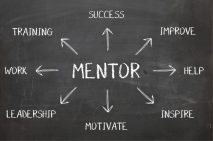
Jack was my teenage friend, and the first to motivate my turnaround from I cannot, to I can. I’ve met others who helped me see my greater potential to achieve. They always came into my life at the right time. My post on synchronicity tackled the phenomenon. Some are still involved in my life, and some inspirational souls have recently landed in my patch of life.
When I first met Hilton M. Kennedy he was a Master Sergeant in the US Air Force, and he would soon be my boss and direct supervisor. The man I eventually called Ken, but many called Mac, had olive colored skin, lots of jet black hair, was several inches shorter than I, and smoked too many Salem cigarettes. I don’t know if Ken was a hyper-active child, but he was one for the most effervescent men I had met. Ten years my senior, Ken reeked enthusiasm. Other than being married, where we worked, and the Air Force, we had little in common, at first.
Ken’s personality included talking fast, a trait one seldom finds in a Louisiana native. I enjoyed our many chats where he made me believe that he was interested in me, and that I would have a successful future. Many of those discussions were accompanied by measured amounts of fine liquor. Living in Ankara, Turkey, ensured financial advantages for Americans in the late sixties. Of course, fine liquor required equally fine cigars.
Do what?
I began to see good changes in myself. I was becoming more confident. My self-opinion and hopes began to unfold from whatever dark recess of my mind they were held captive. I attribute any success and goodness in my life to many people, some from my past and some in my life today, some from almost 50 years ago. Hilton Kennedy was the right guru at the right time in my life.
We became personal friends and our families got close as he kept tabs on my career following the end of my enlistment and his eventual retirement. We went to visit him, and he and his wife visited our home. Eventually, our relationship was more friendship and less his being my mentor and advisor. One of the last times I saw him, my wife and I were guests of he and his wife in Rome, New York. He played the harmonica and I thought all was well. But it was not to be.
To remember a friend
In the late eighties, I learned that my friend and mentor had been diagnosed with Huntington’s Disease, a dreadful genetic illness with no cure. The mental and physical degradation was disastrous for someone who was such a fast-paced, high-stepper in life.
It was horrible. I didn’t know what to do, what to think, or how to feel. While I felt bad for him and his family, I regretted the worlds loss of one of the good ones. Fortunately, the regressive disease was stopped when Ken died of a heart attack at the age of 55. I faced the loss feeling that any suffering by Ken and his family was aborted.
Ken has been gone for over 25 years. I remember, and I’m grateful for that man being in my life and the difference he made in me simply by believing in me, showing his faith in me, and his eventual friendship.
Look both ways every day.
You may be the long remembered difference is someone’s life.
But, mind the gaps.
Seriously? Would you? I spent a career in the military. Flying B-52s would have removed me from the carnage by five miles, but I never dropped bombs on people. Fly all day, spend a few minutes dropping whatever (normal or ‘conventional’ bombs, various kinds of nuclear bombs or missiles, or mines into water like harbors or ports), then home and to the club for a night of brews and pizza before going out again in a day or so. I just missed out on that fun (not) routine in Viet Nam.
I was trained to shoot three guns: two rifles and one pistol. But I never shot anyone either. I spent a career as a trained killer, but I’ve never killed. I don’t even hunt. And, at least for now, I don’t own a firearm. However, I have no doubt that I would kill. War is different. Self-defense is different. I am not a pacifist.
Per the United Nations Office on Drugs and Crime, the most dangerous regions in the world for murder and other violent crimes are Africa, Caribbean (toss in Brazil), and Central America. Canada comes in at 89th with about 516 murders, and the US at 92nd with 12,253 (both based on rate by population). Australia seems to have virtual love fest going on and is way down the list. But I want to look at this from a personal, more individualized perspective.
A few days ago, I wrote a tongue-in-cheek note on Facebook about how I did not whack some guy because my wife would kill me, had I dispatched the fool to his happy hunting ground. The fact remains, people kill people. I cannot imagine doing that except in self-defense or war. Neither of those would be considered murder, even in the biblical sense. Why do humans kill each other? Mental illness aside, why do we do it?
Here’s a little clip from J. D. Robb’s book, Glory in Death, p 138.
“Biblically speaking,” Nadine put in, “murder is the oldest crime.”
“You could say it has a long tradition. We may be able to filter out certain undesirable tendencies through genetics, chemical treatments, beta scans, we deter with penal colonies and the absence of freedom. But human nature remains human nature.”
Those basic motives for violence that science is unable to filter: love, hate, greed, envy, anger.”
“They separate us from the droids, don’t they?”
“And make us susceptible to joy, sorrow, and passion. That’s a debate for the scientists and the intellectuals. But which of those motives killed Cicely Towers and Yvonne Metcalf?”
Later they add thrill as basic human motive for violence.
Can this be for real? Do people kill because it’s fun? Sorry, that can’t be considered normal. But those other emotions can account for a lot of murders. Love, hate, greed, envy, and anger are common human emotions. And yet, people kill strangers for cutting them off in traffic. We call it road rage, but it’s anger. Statistically, murders of women are often done by male mates, partners, or lovers. What’s up with that?
The countries in the high murder-rate areas that I mentioned have significant drug trafficking problems, and many (but not all) have high rates of poverty. Figuring out motives and getting them into the right categories would be a challenge internationally. So, tell us. Who ya gunna kill?
It can be a dangerous world out there.
Carefully mind any gaps. Look both ways before crossing borders, fences, or red lines. And, watch for droids.
Let’s face it. While poems are to express a feeling or an idea in a certain style, we don’t always understand them. I love poetry. I try to write it. I admit that it can be more complicated than we prefer, and perhaps more than this Old Texas Aggie’s gray matter can process.
Sometimes, as with music, it just sounds so damn good, even though I have no clue about the subject or purpose of the piece. Poetry sounds especially wonderful when read by the right, good voice. It works for me, even with my uncertainties about understanding the art.
I like the synonyms for poetry, chiefly versification, metrical composition, balladry, and the archaic (and perhaps politically incorrect) poesy. Occasionally, I run across a fine piece of balladry that I not only enjoy and understand, but I also relate to with some internal passion — Hell Yes!
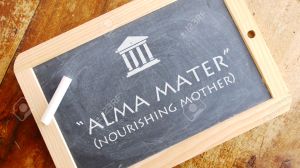
I love irony in life, in writing, in humor, and in verse. It strokes my silly ego to find others who give a pass to the literal minds of the world, and share my ironic reality. Last week I was handed a poem that was published in Stanford Magazine (Jan/Feb 2017), written by Mary Poindexter McLaughlin, titled: Alma Mater.
For me, this poem glorifies the wonderful simplicity of ordinary lives, and it resonates in me the value of things like freedom and love and family and friends. All of which wear the tag: priceless!
ALMA MATER
My apologies for using a link, but the publisher is unable to grant permission for me to republish at this time. Please click here to read the short poem from the Stanford Magazine page.
Because this is from the magazine of a prestigious American University (Stanford, I did not go there, but she did), I think Mary is referring to her alma mater. But, she could also mean any parent, friend, or muse who we believe had greater material expectations of us. It reminds me of that meme, “How do you measure success?”
Here are four lines of my own poetic dribble. I have been massaging this clunker for a while, there is more, but it’s nowhere near finished. I wonder if it conveys the right emotion.
Always, you’ve been here with me,
As children, we survived my foolish resistance.
While we ponder our thoughts, I sense yours in me,
As we bind together, into one two-sided life.
If you wanna write some, there are on-line poetry challenges, such as NaPoWriMo during April (sign ups begin 1 March 2017). You will be challenged to write a poem each day. I do the A-to-Z blog challenge during that month, so not sure that I could keep up. Maybe.
…. Great love. (In tribute to Pat Conroy)
Poetry or prose, mind the gaps and look both ways.
Mom frequently told me that she loved me. I don’t recall Dad saying it. If he told me, it was seldom. They both loved me; and while I loved them back, the feeling that I had was not the same for each. What was that? One word with so many meanings.
We even manage to say love to express approval of inanimate objects, “Oh, I love that pizza.” Or, as my young grandchild copied from his mother, disapproval: “I’m not lovin’ it!” He was too young for such a trendy (now trite) phrase, but he understood it.
If we considered all the meanings we have for the word and lined them up on our continuum of human emotions, the variety would defy any logic we use to keep saying it. Fortunately, context helps us out and we socially understand each other’s intent. We would need to invent too many new words to replace love. Someone once told me, “I love you, but I’m not in-love with you, if you know what I mean.” I understood and welcomed the explanation since the first three words could be concerning, but still not necessarily unwelcome.
Regarding romantic love, it is one of the most fantastic feelings we can experience. We can even see that love feeling in friends who have fallen into love, head over heels. More evidence for the wonderfulness of amour is that the love and lust emotions get us in so much hot water, but we seem to dive right in anyway. It’s such a good thing. Would we be human without it? Barring some interfering DSM IV, mental problem diagnosis, we all love someone, and usually many people. And each feeling of love will be different from person to person, but it’s still love.
All love makes this world a better place. We’ll never have too much love in the world, but we seem to have too little of it. We have faced that since the beginning of time – too little caring about each other.
Enjoy The Youngbloods as they sing one of my best-liked, hippy love songs from the 1960s: Get Together. I’ve provided the lyrics below, as well as links to two other love-tunes.
The Youngbloods – Get Together lyrics
Love is but a song to sing//Fear’s the way we die//You can make the mountains ring//Or make the angels cry//Though the bird is on the wing//And you may not know why.
Come on people now//Smile on your brother//Everybody get together//Try to love one another//Right now.
Some may come and some may go//We shall surely pass//When the one that left us here//Returns for us at last//We are but a moment’s sunlight//Fading in the grass.
Refrain//refrain//refrain
If you hear the song I sing//You will understand (listen!)//You hold the key to love and fear//All in your trembling hand//Just one key unlocks them both//It’s there at your command.
Refrain//refrain//refrain
Right now…
Right now….
Also, Haddaway’s is a more erotic and fun video of What is Love (click here); and Dionne Warwick finishes up with What the World Needs Now is Love (click here). None of these songs have many lyrics, but I love them anyway.
Happy Valentine’s Day.
Remember, love is a two-way street.
So, mind the gaps and be sure to look both ways.
Disclosure: I’m of the there are no gods variety of atheist. Consequently, there’s no sin. Since we can’t have one without the other, sin is a word I use only because the majority use the word, even if they’re agnostic. But, there is some general agreement about what is or isn’t moral behavior.
The past few weeks, I’ve posted about the seven deadly, and predominantly Christian, sins of greed, pride, lust, anger, gluttony, envy, and sloth. I also provided a brief contrast with an opposite word. My approach was based on the source of our behavior, our human mind and emotions. Each of the seven begins with an emotion that may later be manifest in behavior – we act based on how we feel.
Writers have a phrase: show me, don’t tell me. In movies, the words and actions of the actors are used to portray thoughts and feelings. In my opinion, we cannot choose each emotion. Happiness is a little different. We can be happy people and still experience dark-side emotions. Furthermore, we can usually choose our behavior. Some comments have implied that we’re in total control over emotions, and then control our actions, as well. While I don’t share that opinion, my behavior is based upon my emotional state has led to more apologies from me than I care to admit – slow learner.
As a society, a nation, or arguably, within a religion, we subjectively decide what’s moral. It changes over time, and we routinely disagree about what’s unacceptable (political-type disagreements). While we don’t always agree, often we do.
In the title equation, I = intellect, and E = emotion. When we experience emotions, we follow that feeling with behavior. To the degree that we can, ideally, we choose the behavior we morally and intellectually we want to display. For example, if someone elicits our anger, jealousy, or some other feeling from our complex emotional spectrum, we then pick our next move. I over E implies that we select our words or actions based on our intellect (good judgment, wisdom), rather than the emotion we feel. It’s not easy to behave contrary to how we feel. Nor is it always necessary. Going with our emotions (following our heart) is very often our best and most sincere option. We love with not only our personal emotions, but often those of others. How others tug at our emotions makes life magical. Life is wondrous, but not simple.
The common thread that I’ve stitched through each of the seven is that emotions are not sins. Feelings are legitimate. Be they good or bad feelings, it’s our behavior that determines anything about moral standards. And it doesn’t make a tinker’s-dam if one believes in a god, gods, or none. Each of the seven have opposite virtues. Every good person has a dark side. Every saint has a past; every sinner a future.
Humans are very much part of nature. We are where we belong. Our greatest need is for each other. Our greatest challenge is in dealing with each other.
Our lives are full of stepping stones to make life better and with stumbling blocks that bring us incredible amounts of pain and suffering – and valuable lessons.
Let’s be accepting and understanding of ourselves and others to the degree that we’re able. We are not static beings. We’re who and what we are, but we have opportunities and futures. We come into this world as we are – a combination of physical and mental paradoxes and mysteries. A lot happens between the average birth and death. This includes running the bases of virtuous and bad behavior, and the personal experience of staring into the abyss that is us.
This one’s mine. Other than talking about the illogical wrath of a deity, or when humorously speaking of enduring the anger of someone else, we don’t use this word. We prefer rage, resentment, fierce anger, vengeance, or a few other synonym-like words (pissed off). I will use the word anger because wrath is archaic. We get angry, not wrathful. I also dislike typing the silent “w,” and a rath is something else.
I could easily write a book about my own anger. If I included the whole enchilada of human nature, it would probably expand to three fat volumes, and be boring. Anger is an emotion. One foolishly considered bad or sinful. While it’s neither, it is dangerous. Anger is a legitimate and real emotion that we may each experience differently. Some people seem to be incredibly patient and tolerant, seemingly never experiencing anger. Others seem explosive, and are sent to (drum roll) Anger Management classes to learn how to behave. I like to call it Charm School.
An old friend of mine had to do that with his work later in life. We grew up together, and as I recall, my friend was exceptionally demonstrative when angry. It didn’t take much before he felt slighted, irritated, or offended. When we were teenagers, I either ignored him or put distance between us until he calmed down. Even later in life, I was still surprised that he could come unglued about things that I considered little more than a trivial nuisance. However, I also had my share of temper tantrums throughout life.
For most of my life, I had a sexist view of anger. I thought men experienced anger more frequently than women, and that acting out our anger was not only what men did, but it was semi-acceptable. I’ve since learned that my view was wrong (read this).
The point of view I had learned was that all other male emotions were unacceptable, and any emotional display was a sign of weakness. What this wrong opinion did for me was to allow me to exhibit angry behaviors regardless of what emotion I may have been feeling. I later learned that I not only had to get in touch with my emotions, I had to start identifying them: fear, shame, sadness, disgust, anxiety, guilt, and many more. I don’t blame society or culture. I take responsibility for my behavior, as should we all.
Another problem with anger is the difficulty of properly identifying it in either ourselves or others. Depression, anxiety, fear, and other emotions may manifest themselves, both inside and out, through behavior that could be considered anger. It’s confusing and figuring this out may take the help of a friend or counselor.
People lash out for a variety of reasons, and it may have little or nothing to do with being angry. I’ll leave it to the experts to follow this rabbit trail, but I suggest we try to pick out the different emotions we feel and deal with them for what they are. I posted about jealousy on Tuesday. Certainly, we feel some anger when we’re jealous. We need to recognize when more than one emotional thing is happening to us at a time. When I was beginning to work on this for myself, I would try to reflect on my feeling and not be pinging off the walls so much.
Then, a close family member accused me of being an “emotionless automoton” who had no feelings and didn’t care about others. I love the memes of a light switch for turning emotions on and off. She was confusing my trying to remain calm with lack of emotion. No such luck.
Politics, religion, sports, and money are four topics that can lead to anger during many seemingly innocuous discussions. If we have not experienced the feelings ourselves, we have certainly seen them acted out by others.
We are social (sociable or not) beings walking around in bodies transporting minds packed with emotional potential. We’re not Vulcans, like Mr. Spock (played by Leonard Nimoy) in the Star Trek series. Spock was of a mixed human-Vulcan heritage race that had mostly conquered his emotions and made them subject to his control. We are simply humans.
Ironically, the death of Spock occurs in the movie The Wrath of Khan, and some think that it’s the best scene in the movie. Forgive my digression; I’m a long time Star Trek, Spock, and Leonard Nimoy fan.
This concludes my series on The Seven Deadly Sins, or Morality. I plan a summation for next Tuesday’s post that may explain my take on this from a broader perspective.
Have a wonderful weekend.
Look both ways and mind the gaps – every day.









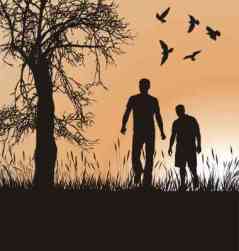

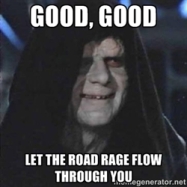 A few days ago, I wrote a tongue-in-cheek note on Facebook about how I did not whack some guy because my wife would kill me, had I dispatched the fool to his happy hunting ground. The fact remains, people kill people. I cannot imagine doing that except in self-defense or war. Neither of those would be considered murder, even in the biblical sense. Why do humans kill each other? Mental illness aside, why do we do it?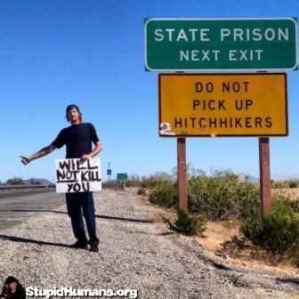


 If you wanna write some, there are on-line poetry challenges, such as NaPoWriMo during April (sign ups begin 1 March 2017). You will be challenged to write a poem each day. I do the A-to-Z blog challenge during that month, so not sure that I could keep up. Maybe.
 Regarding romantic love, it is one of the most fantastic feelings we can experience. We can even see that love feeling in friends who have fallen into love, head over heels. More evidence for the wonderfulness of amour is that the love and lust emotions get us in so much hot water, but we seem to dive right in anyway. It’s such a good thing. Would we be human without it? Barring some interfering DSM IV, mental problem diagnosis, we all love someone, and usually many people. And each feeling of love will be different from person to person, but it’s still love.

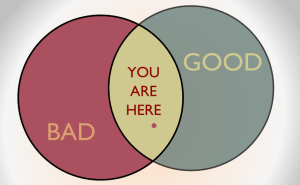

 An old friend of mine had to do that with his work later in life. We grew up together, and as I recall, my friend was exceptionally demonstrative when angry. It didn’t take much before he felt slighted, irritated, or offended. When we were teenagers, I either ignored him or put distance between us until he calmed down. Even later in life, I was still surprised that he could come unglued about things that I considered little more than a trivial nuisance. However, I also had my share of temper tantrums throughout life.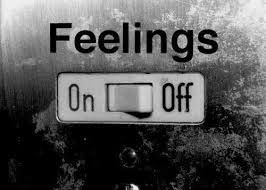
 We are social (sociable or not) beings walking around in bodies transporting minds packed with emotional potential. We’re not Vulcans, like Mr. Spock (
 Our Literary Journey