1 — An idealized place of great or idyllic magnificence and beauty
2 — Xanadu, China or Shangdu, the summer capital of Kublai Khan’s Yuan empire
3 — “Kubla Khan”, a poem by Samuel Taylor Coleridge, which popularized the name Xanadu for Shangdu
I’m posting two things here. First is the youtube song by Olivia Newton John. I like this tune. It is uplifting and exciting — very positive. The second is a poem that I like, but which has an earthier focus, written by Anthony (Ax).
Songs from the Dark Side of Xanadu
By Antony
Across the sacred river before the sea
A forest dense and dark, sparsely lit by sun and moon
Fragments filter through as beams that cut like lasers
Touch upon the ground where creatures scurry and avoid
Hide they try from demon eyes that snatch on prey Where all that move within the light become victims of the night
Snails and slugs beneath the moss find peace
Rodents of every kind twitch and stitch inside hollowed trees
Snakes slither up to coil branches, as they lay, become one
Four legged beasts tremble, buried deep below the ground
Misty darkness hovers, a rolling fog, black as the devils heart
Devouring every ounce of life that roams about
In a world where dark rules over light
A speckled glow, orangey-red with a tail of glitter trails
It floats among the sleeping flowers spreading magic dust
To kiss its sorrowed petals awake
Colors of reds, yellows and greens scream as violets and blue begin to beam
The leaves in trees rustle with a glee as the sun rises high Canopies open to view heavens gate as sparkles ignite
running with streams and rivers might
Faeries come by the plenty singing songs from the dark side of Xanadu
Paving the way for an entrance of two blessed unicorns
White as freshly fallen snow, soft as cotton spun by cherubs humming along
Their horns straight and true that point to a life of peace and harmony
A millennium ends for this sullen brittle land
To life it grows with the breath of salvations heart
Sparrows flying, eagles soaring, blackbirds harking heavy metal blues
Deer in the meadow, wolves howling on the hill
Butterflies and Dragonflies dance on the waves of the wind Ogni cosa ha cagione To say in life…
Everything has an underlying reason
“It can be difficult to define Wisdom, but people generally recognize it when they encounter it. Psychologists pretty much agree it involves an integration of knowledge, experience, and deep understanding that incorporates tolerance for the uncertainties of life as well as its ups and downs. There’s an awareness of how things play out over time, and it confers a sense of balance.
Wise people generally share an optimism that life’s problems can be solved and experience a certain amount of calm in facing difficult decisions. Intelligence—if only anyone could figure out exactly what it is—may be necessary for wisdom, but it definitely isn’t sufficient; an ability to see the big picture, a sense of proportion, and considerable introspection also contribute to its development.”
In my lifetime I’ve been called a wise-guy, wise-ass, and a wise-you-name-it. I don’t recall denying any of it. But until I lost a significant amount of hair, gained a lot of scars (and weight), and dealt with a good bit of life’s experiences, no one has used the words wise or wisdom (without suffix) regarding me. So, as I was running through the w’s (women, walking, wine, wild, Wilde, and why) in search of an ‘a-to-z challenge’ blog topic, my wife says, “How about wisdom? You should know about that.” (Her birthday is tomorrow.)
To me, the word wisdom has much in common with the word quality. Both are generally positive; we recognize them (or their absence) when we see or encounter either. But, precise definition for both eludes us. We are willing to take on as much quality and wisdom as possible, but with one condition. We want to know the cost. What price must we pay for quality? Can we afford it? What price must we pay for wisdom? Are we willing to pay the price?
As a college student, I would walk into the Seven-Eleven store and eyeball the beer coolers. I looked only at price per six-pack. Texas Pride was 86-cents for six cans. I still can’t believe I managed to drink that horse piss, but price mattered more on my tight budget. I ignored quality. Little did I know then that years later I would gladly pay eight-to-twelve times as much for top-quality, locally brewed, craft beer. My taste and budget have both matured in quality.
I had a conversation with a friend who was a wonderful, doting, and loving mother to her children. As I listened to her rant-on one day concerning some problem that her son was having, I asked her this question. “You love your son. Why do insist on preventing him from learning life’s lessons simply because they are painful? Be there for him. Protect him from serious harm. But allow him the dignity of learning his own lessons.” Before she got over her hurt feelings about what I had said, she backed off (he owes me). Hard for her, good for him.
Our wisdom sponge is dry at birth. It may be the only thing that is. As we age, that sponge soaks up more wisdom with each life lesson. It seems to me that the more painful the lesson, the better we learn it. I’m not sure that I accept the proposition that there is much intelligence in wisdom. We only need to be smart enough to learn from our best life-long teacher – experience. But I do think that the quality of our intelligence improves as we gain wisdom.
We are wiser when older because we have been schooled in life longer.
Viewpoint is another way of saying point of view (POV). In the general world, point of view relates to how someone views and interprets a situation. “In my opinion” can mean “from my viewpoint.” Numerous variables can go into analyzing each person’s view of any situation. To understand another’s point of view, we need to get inside their head to an impossible degree. We may think we know someone, especially in this day of social media glut, but do we?
For the novelist, POV is essential for writing the story. Fiction writers have the god-like ability to know exactly what is in the head of their characters. They create each character. This is true whether or not they share that information with a reader. Non-fiction writers are like the rest of us with human limitations knowing only what our senses (especially seeing and hearing) tell us. So, how do fiction authors tell us about characters? The questions for them, or us (depending on your point of view—sorry), are: how much do they tell us and how do they do it? The answer to one question limits the other. The same may apply to memoir.
To determine how the story gets told, the writer considers (and the reader notices) the following.
1. Who speaks? Here are six options:
An omniscient narrator has unlimited knowledge. They can enter the mind of any character in the story, and may pass judgment.
An omniscient narrator may be ‘limited.’ They are objective and have knowledge from one character.
An objective author can provide a camera-eye view. They may relate measured descriptions, actions and dialogue, and provide limited narrative summary. But this speaker provides no interior character views.
Third person limited speaks with knowledge of one person. This is a common viewpoint, and may be intimate or objective.
A second person speaker provides direct address, talks to self, and is the author addressing the reader.
The first person/narrator has two options and is considered less objective (and less reliable) than third person limited. Option one is a subjective narrator, intimately involved with the story. Option two is an observer narrator who tells someone else’s story.
2. To whom are they speaking? And, who is listening?
3. On what occasion? What event created the situation?
4. From what distance is the story or event being told? Is the telling near to foreground events or removed? This is important and beyond this blog’s scope. Here are two good blogs on distance.
Understanding POV is fundamental to fiction writers. But, even experienced, published authors talk about it, write about it, and teach it emphatically. A story cannot be told without a point of view, regardless of how you look at it.
How each of us views utopia is probably similar in the broader sense, but we may differ as we each conceive of the details. Utopia is a real place. It’s a small town in the Texas Hill Country. I’ve been there several times when I used to ride my motorcycle in that area northwest of San Antonio. The Bandera, Texas, region is popular with riders from all over. The Hill Country is beautiful, but Texas is anything but a utopian society (although you may find anything there). The utopia that I’m writing about is not a place, it’s an idea.
When I lived in Oklahoma, I had a friend who would say “ideal” when she intended “idea.” In the case of a utopia, it works because utopia is both. But whose ideal idea is it? You can view the wiki of utopia here.
The nature of utopia requires that I skirt my plan to avoid politics and religion. I think we know two things about utopia. It is theoretically a social possibility, and it is impossible because our human nature will not permit it. In the sense of the natural world or the effects of nature, it is not possible unless (until?) we achieve much greater strides in science and technology. But I need to take two shots across the bow of my two avoided topics.
In the world of politics, the dark side of human nature emerges. Of course, it is always the others or the other side. Real world peace would be required long before we could begin to approach anything like utopia. It requires an egalitarian (equal) society and that is contrary to most politics I’ve ever seen. When I think politics, I see far more potential for dystopia and war.
Religion? While a great deal of good is done in the name of a deity and the respective religions, that good fades to virtually nothing when balanced against the historical inequality and current turmoil that seems to move more toward dystopia — more war.
I asked alcoholic and drug-addicted Texas prison parolees the following three questions while teaching secular recovery classes. I came up with these to help them find a world view that went farther than the tips of their fingers. My personal answers are utopian.
1. What do you want?
2. How do you want things to be?
3. If you could change anything about the future, what would that be?
The confusion and struggle so many of us face in answering these questions is an interesting testimony to our nature. But we each have our personal utopia within our answers.
I turn to music to finish off my thoughts on utopia (three songs), and one old favorite to give time to my dystopian friends.
Rainbow Connection by Kermit the Frog:
What a Wonderful World by Louis Armstrong
Imagine by John Lennon
Dystopia — The Sound of Silence by Simon and Garfunkel
The other night, as we sat discussing writing projects and their duration, the subject of time came up. There were three of us, representing roughly three generations. The more we talked about time and how each of us currently sees it in terms of the future, the more I realized how differently each one of us viewed it. Time does not change. We do, and thus our view of time changes with age.
I claim to be a right here, right now kinda guy. I live in the present moment. As I contemplate writing a memoir, this seems to cause me an ‘angst’ problem in that I wanna, and I don’t wanna. (I also struggle with writing about myself, but that’s not the issue.) I like History. It could’ve been considered my second minor at A&M. My manuscript is historical-fiction with too much history and not enough fiction. This morning I was asked if I would write a time-travel book (I’m noticing that Vickie has a knack for asking me thought-provoking questions). I didn’t have a ready answer, but after a lot of discussion and thought, my answer is ‘nope.’
After doing a bit of reading, I’m no longer positive that I know what ‘this moment’ in time is, or if it exists. My metaphysical (woo-woo) friends get excited about this fascinating subject. When they do, I look at my watch and note, “It is one-forty, PM.” But they’re right. It’s really an interesting topic. Physicists and philosophers are all over it. Check out all the wiki and academic research (here and here), it goes on-and-on. But, I want to address time in terms of normal people; ya-know, like a truck-driver, retired cop, and Sociology grad-student walked into a bar to discuss it.
The grad student is a young female (they live longer) and has tons of time and a bright future. She is planning her entire future. The truck driver is a middle-age, overweight, heavy smoker and drinker. He doesn’t think about it much, but needs to change his life style in order to have more time. The retired cop has been there and done that. He feels like he’s been lucky and may be on “borrowed time.” Each can see past and future time differently, but they are now in the same place doing the same thing. The biggest difference is age.
It’s not so much that all of us can’t plan to write our novel with five sequels. It’s how we see the time that it will take to do that, not to mention the patience and persistence that will be required.
Two of my favorite songs about time are below. The first is Jim Croce’s Time in a Bottle. The video is with his wife, Ingrid, and their son, A.J. This song was recorded just before Jim’s untimely death and later released posthumously.
The second is a rendition of the Byrds’ Turn, Turn, Turn, which has a biblical, Ecclesiastes basis.
Finally, the last video is a George Carlin skit on time. It is about 11 minutes long, so if you’re not a Carlin fan, skip it. If you are, enjoy.
Life is simple. We are born, we live, then we die. Nature isn’t simple. Human nature is neither simple nor consistent. We are emotional creatures. Have you ever heard “I over E,” meaning intellect over emotion? I’ve also been told, “lead with your heart,” “go with your gut,” “trust your intuition.” Has anyone ever told you “get over it (Eagle’s song notwithstanding)” or to “cheer up?”
This is about our relationship with sadness. I am not talking about clinical depression or that which is caused by chronic physical pain. This is about things that make us sad. To pull the fence in a little tighter, I’m also not talking about those things in our lives that cause us to feel sad. Such events as the loss of a pet or loved one, denial for promotion, or failing at something important do us make us sad. I’m talking about self-inflicted sad things that we choose to bring on ourselves consciously and deliberately–for pleasure. It’s a paradox, but it’s one of those things about human nature that I love.
Stephen King has made a successful career out of scaring the hell out of many of us. We (not all) like to be frightened. Scary movies are fun. They are not for everyone, but a lot of people love them. Why? Is it the same with sad books, movies, songs, or plays? We keep going back for more.
I don’t think I am going out on a limb by saying that we like sad songs. They make us feel good. It’s true and you know it. I love dark, sad poetry, sad movies, books, and songs. But few who know me would say I am sad. This has been going on with people as long as we have had any form of entertainment. For evidence of my claim, I offer one research report and one report on an Ohio State University professor.
My focus here is music. A friend loved the song Dance Me to The End of Love by Leonard Cohen. That is until she learned that the inspiration of the song was in fact the Holocaust. It is a lovely and beautiful song, but that sadness changed the song for her. The song is not sad by itself, but because the inspiration was so tragic, her opinion of the song changes from love to sadness.
When we listen to sad songs, we like them. Country & Western music is replete with sad songs. In the opinion of many, including Elvis, the saddest song ever was I’m So Lonesome I Could Cry by Hank Williams (1949). I want to warn you, when I hear this song it plays in my head for hours afterward (this is BJ Thomas).
Another I like is Unchained Melody by the Righteous Brothers (1965). Actually, the song is much older than that. It is one of the most recorded songs of the 20th century. The song’s publishing manager reports over 1,500 recordings have been made by more than 670 artists in multiple languages. In 1936, Bing Crosby turned it down.
My third choice, I Will Remember You by Sarah McLachlan (1996), is in close running with about a hundred others.
For sad movies, I have listed only five. It could be hundreds.
Love Story (1970)
Ghost (1990)
The Green Mile (1999)
Titanic (1997)
P.S. I love you (2007)
We all have our favorites. That is my final bit of evidence. We wouldn’t enjoy sad songs, movies, books, plays, and art if they made us feel bad. What are your favorites in sad music, movies, plays, books, or art?
In a scene from my childhood, I watched through our living room window as kids my age played in a rainstorm. They were laughing and having a wonderful time getting soaked. The streets and gutters were awash. One boy sat down in a flooded gutter as the water pushed against him and splashed hard around his body. I felt envy. Not because they were having fun without me, but because they were playing in the rain. I was home with my mother, and she told me that I couldn’t go out because I would get soaked and catch my “death-of-cold.” I have since learned and admit more about myself, and about colds.
The word ‘pluvial’ refers to rain or something characterized by abundant rain. The suffix ‘phile’ denotes fondness. Consequently, a pluviophile is one who finds joy and peace of mind on rainy days. I was taught that rainy days were sad, as in the Carpenters song lyric; “Rainy days and Mondays always get me down.” I was to believe nice days were sunny, cloudless, and warm. I’ve never felt that way. Sunny and pleasant days have their place, but few are enough. Later in life, I admitted to liking cloudy, rainy days. I now identify as a pluviophile. These days, I’m often asked why, after more than twenty years in California, Texas, and Florida; I recently moved to the Pacific Northwest. I ask, “Do you know what a pluviophile is?” Like it should be news to me, I’ve repeatedly been told “it rains a lot there.” I reply with a smile, “Yes, it does.”
“Rain is grace; rain is the sky descending to the earth; without rain, there would be no life.” ~ John Updike, Self-Consciousness: Memoirs
My involvement with rain changes with its many forms. Scientific names apply based on how it comes about. But, I am talking about how the rain itself varies from torrential downpour to a gentle drizzle. Duration, wind, thunder, lightning, air temperature, and other factors contribute to our experiencing rain. There are times of rain just falling, and times with thunder and lightning. There is morning rain, afternoon rain, and rain at night. Each is emotionally and physically encountered differently. It can be seen and heard while keeping dry, thus precluding feeling the rain. Only outdoors can we dance in the rain. If I don’t perceive rain with senses—I just get wet. Our world changes when it rains. We need it, just as we do sunshine. To me life smells, feels, looks, and sounds more alive in the rain. In the city, rural areas, and in the forest, everything improves. When I am with the rain, I heal and recover. It’s a spiritual exposure difficult to explain. I’m not especially spiritual, but in rain I sense life — nature.
I recently delayed my daily walk when rain was forecast. After waiting for the rain to start, I donned shorts and tee. I was off in good spirits, expecting to be, and was, soaked. After an hour, I was back home. I sat on a dry and covered bench, removed my soaked shoes and socks, slapped water from my dripping baseball cap, and chuckled. I was thinking how others might consider me deranged. But, this is why I’m here.
Nighttime rain is different—good, but different. There’s more drama on rainy nights. When I have a challenging day, I like to experience night rain by imagining the character of Mike Hammer from a Mickey Spillane crime novel. I picture me on a dark, moonless night; standing under a lamp post illuminating my silhouette. With muffled, distant thunder following flashes of light, rain sparkles from the beams of the light post. I wear the characteristic trench coat with raised collar and a gray fedora, tilted forward and cocked right. The front brim bent slightly downward with water flowing off. The sound of falling rain is all around. I hear it splash into puddles and onto sidewalks. With water moving everywhere, I forget the day’s problems and the annoying people. But mystery is afoot. Like it or not, Mike Hammer is involved. And of course, there is a woman. As Hammer, in the writing of Spillane, I mumble, “In the flora and fauna of the Bowery, she was a lot of flora and quite a bit of fauna. She looked like she belonged in a field of Wyoming wildflowers instead of wandering through the human backwash of the avenue.” In the night rain, I can do this. Rain brings magic and drama.
I’ve passed through forest after a rain. My senses were filled with sights, sounds, and the aroma of nature. There I can see and feel it because everything is wet. For me, awareness of water is experiencing the essence of living.
Let’s take life, rain or shine, one day at a time. It’s about how we feel. We’re not alone in our emotional response to rain. In the Pacific Northwest, we love the outdoors, rain or shine. Too much shine and we miss the rain. After some rain, we’re ready to let a little sunshine in. “In every life a little rain must fall….” Of course, and why not?
“The richness of the rain made me feel safe and protected; I have always considered the rain to be healing—a blanket—the comfort of a friend. Without at least some rain in any given day, or at least a cloud or two on the horizon, I feel overwhelmed by the information of sunlight and yearn for the vital, muffling gift of falling water.” ~ Douglas Coupland, Life After God
Originally, I planned to list a few of my favorite quotes. Then, I decided to ask my wife and three adult children for theirs – from music, movies, or literature. But any quotes or sayings were fine. After they got going, it turned into quite a game for them.
Yolonda, my wife of 50 years (we married at age 2), is a native Texan and has her ‘druthers.’
“Here’s a quarter, call someone who cares.” ~ Song by Travis Tritt
“Goodness gracious, great balls of fire.” ~ Song by Jerry Lee Lewis
“Love will keep us alive.” ~ Song by the Eagles
“Life’s a dance you learn as you go, sometimes you lead, sometimes you follow.” ~ Song by John Michael Montgomery
“I’m Texas born and Texas bred, and when I die, I’ll be Texas dead.” And, “You can take the girl out of Texas, but you can’t take the Texas out of the girl.” ~ Texas sayin’s
Billy on right, (w/Phish bassist Mike Gordon), our oldest child is in his mid-40s, a very nice, loving, big-man. He’s always been an avid reader, a talented writer, a movie aficionado, and a hard-core Phish-head. Add bicyclist, father, hubby, friend, musician, and deep-thinker.
“San Francisco in the middle sixties was a special time and place to be a part of it. Maybe it meant something. Maybe not, in the long run…but no explanation, no mix of words or music or memories can touch that sense of knowing that you were there and alive in that corner of the time and the world. Whatever it meant…” ~ Hunter S. Thompson
“You’re either on the bus…or off the bus.” ~ Ken Kesey
“Dreams come true; without that possibility nature would not incite us to have them.” ~ John Updike
“We do survive every moment, after all, except the last one.” ~ John Updike
“I love you, Butternuts.” ~ From the movie Half Baked. (horse’s name was Buttercup)
“Wherever you go, there you are.” ~ Book, Wherever You Go, There You Are: Mindfulness Meditation in Everyday Life by Jon Kabat-Zinn
“Whatever you do take care of your shoes.” ~ Lyrics from Phish song, Cavern
“Set the gearshift to the high gear of your soul…you’ve got to run like an antelope out of control.” ~ Lyrics from Phish song, Run Like an Antelope“
Steven is our middle-child, now in his early 40s. He’s another good guy. An avid sports fanatic (Spurs and Cowboys) and mountain biker. Add hubby, step-father extraordinaire, house music DJ (Steve Balance), friend, and all-around cool-dude (maybe pragmatic and analytical). He initially said that he had no fav quotes, but when he and his sista’ got to texting, there they were.
“I am Groot.” ~ Repeated by Groot, a sentient alien character embodied in the shape of a tree and member of Marvel’s superhero team ‘Guardians of the Galaxy.’ Due to its frequent appearance in the 2014 film adaptation of the comic book series, the quote quickly gained recognition among the fans of the film, similar to the fan art surrounding the phrase Hodor, which is the only phrase uttered by the character in HBO’s medieval fantasy TV series Game of Thrones.
“Turn out the lights, the party’s over” ~ Willie Nelson Song made more famous on Monday Night Football by Don Meredith.
“That’s what I love about these High School girls, man. I get older, they stay the same age.” ~ David Wooderson in Dazed and Confused. (Billy also liked this one)
“Would I ever leave this company? Look, I’m all about loyalty. In fact, I feel like part of what I’m being paid for here is my loyalty. But if there were somewhere else that valued loyalty more highly…. I’m going wherever they value loyalty the most.” ~ Dwight Schrute in TV show, The Office
“Got a joint man? …. Be a lot cooler if you did.” David Wooderson in Dazed and Confused.
I’m not superstitious, I’m only a little stitious.” ~ Michael Scott
Our beautiful ‘baby’ is Julie. She can recite every line from the movie Grease (oddly did not quote it), is an artist, a thirty-something, 21st Century hippie, a mom and step-mother. I think she is a wonderful writer and, like her mom, a Grammar-Nazi. She lives in the middle of nowhere with her hubby, son, occasionally a step-son, or two lovely elves, too many cats, horses, and sometimes (because he likes to chase the horses) a dog.
“Tell me about the f***ing golf shoes.” ~ Hunter S. Thompson, from movie Fear and Loathing in Las Vegas
“Be gentle with yourself. You are a child of the universe, no less than the trees and the stars. In the noisy confusion of life, keep peace in your soul.” ~ Max Ehrmann
“Why fit in when you were born to stand out?” ~ Dr. Seuss
“Woman are like tea bags; we don’t know our true strength until we’re in hot water.” ~ Eleanor Roosevelt
“So, Jesus is a superhero like Superman, or Batman, right?” ~ Julie’s 10-year-old son, CA, at age four.
Soon, he’d wake up, but he would not remember. He’d not recall where he’d been, what he’d done, how he got home, or anything that happened. He felt fear—the familiar fear of the blackout. He should know. He’d been there only a few hours earlier. Everyone else would know. Hell yes! They’d remember. When he blacked out like this, he couldn’t recall events from the night before. Even when people would tell him and show him proof, he could recall none of it. He woke up sick – partly due to the effects of the alcohol, but mostly because of the fear, the inevitable embarrassment, and the disgust he felt toward himself. It happened many times before. Slowly, as his eyes opened, he turned his head to see if she was there in the bed. She was not. He would face that guilt soon enough.
After waiting up past two that morning, Mary had little sleep. His drinking had taken its toll on her, as it had on every part of their lives. Everyone who knew him was affected in one way or another by his drinking and dangerous behavior. She worried constantly. He was groggy, but could hear that she was on the phone and had been for a while. She was sobbing and crying. She felt trapped. He felt guilt and shame. She was talking to someone who cared about him. It was never going to get better. It had been getting progressively worse for years. What would happen next? She heard him up and moving, so she quickly ended her call. She tried to prepare for the next emotional event.
No one wants to look that bad. Sam was disheveled, pale, red-eyed, much older than his 43 years, and generally unhealthy. He also smelled awful. He reeked of stale alcohol, smoke, urine, and vomit—the scene was sad and disgusting. This was a miserable couple. After years of marriage, the only things these two people now-shared were an old love, a constant desperation, and the children. Their mutual love was hidden deep, possibly buried, maybe dead. They both wondered how this was going to end. For Mary, it wouldn’t be soon enough. She forced herself to look at him. He saw that she’d been crying a long time. Tears were still on her face; new ones arising. He poured coffee and tried to look straight at her, like everything was fine.
“I am so sorry, Baby. I don’t know what happened.” Mary’s disgusted stare sent a cold, piercing chill through him, “God dammit, Sam! Do you remember anything? How can you keep doing this? I’ve no idea where you were, who you were with, or what you did—and you don’t either. I am sure you woke the kids. This has to stop, one way or another.” He’d heard it all before.
“I am so sorry, Mary. I promise it’ll not happen again. All I have to do is not drink. I can do it. I will start back with AA again. It’ll be ok.” She looked at him for a few seconds and then put her face into her folded arms on the table. After a few minutes, she looked up again and said, “Look, you obviously can’t stop. If you could, you would’ve. You can’t or you won’t. Either way, the outcome’s the same. You’re gunna die, or go to prison, or to some institution. You’ve been to rehab. Sam, you’re an embarrassment to your family, to me, to your kids…shit! How you keep getting jobs after being fired so often—I have no idea, but this can’t go on. Sam, you need to move out of the house and stay out.”
She’d said similar things before, but this time he knew she meant it. He knew she was right—he’d lost control. The doctor told them both; if Sam didn’t stop drinking, his liver couldn’t take the damage. He would die. And that process would be ugly and an unpleasant death. His desperation was overwhelming. He felt hopelessness. The promises of AA hadn’t worked. His reputation was that of a town drunk. He had apologized many times to many people. But he knew that while he was always sincere; he would fail and it would all happen again. He sat and thought for a while. The doctor’s words were in his head repeating like a dreaded song. He couldn’t get them to stop.
Sam felt weak and useless. He was thinking of his relationships: his parents, his wife and children, his few remaining friends. It was only a matter of time before he would get fired again. He could make promises and provide written guarantees; sometimes he could stop drinking for days or weeks. One time, he was dry for over a month. But he always found a way back to his only true love: alcohol.
After about an hour he picked up the phone and called his mother. He knew by her tone that it was she who Mary had been talking with when he woke up. He asked to talk with his father, but that relationship had become so strained that his father would no longer speak to him.
He heard the garage door close as Mary drove off with the kids. He was to pack and leave that afternoon. His suitcase was on the bed and he was going through draws and packing when he saw the gun. He picked it up to pack it. Mary always hated it. Sam looked at it for a minute. He was crying as he loaded it.
The neighbors heard the shot, but it seemed that no one was home. When EMS arrived, it was over. Sam was dead. His body was taken directly to the funeral home. Mary was hysterical, but she still tried to comfort the children. As she sat there trying to figure out what happened, she recalled what Sam had said earlier that morning, “I promise. It won’t happen again.”
I consider myself a realist. Don’t we all? I recall a comment someone made to me a number of years ago. She considered herself to be a spiritually positive person. She read and followed all the right spiritual gurus, in her option. As we were talking, I used the word reality. She told me that was negative. Really? I haven’t quite figured out why I saw conflict between her negative view of reality; and her positive, optimistic thinking, but she didn’t see an inconsistency at all. I didn’t understand then and don’t now. In fact, if she considers herself to be a positive person, but sees reality as negative, I must conclude that she’s not only a pessimist, but she is in denial about it. She may have been Pollyannaish. Believing in a positive outcome and things will work out for the best in the end is fine. But even being absurdly optimistic is not the same as seeing reality as negative.
According to Bill Bryson, the terms optimistic and pessimistic “should be used to describe a general outlook rather than a specific view….” Some people have changed the ending of old tales to “and they lived happily ever after.” Is that more optimistic or positive than “…happily for their remaining years.”? Both are positive outcomes. One has a realistic limit, but it is still good. Having positive thoughts is good and often leads to improved results, but better words (still leaning on Bryson) might be hopeful or confident. They’re optimistic, but fit better with the specific situation and the level of consequence for most daily encounters.
I like to think of myself as a realistic-optimist. (If a presidential candidate can be a democratic-socialist, then there is precedent for my claim.) But I have interesting discussions with people who would say that I am negative or pessimistic because I foresee less than desirable outcomes if reality is not respected. Most of us seem to have good days and bad. Assuming that they will all be good henceforth is denial of reality. We will continue to have natural and man-made disasters. That is reality. Making preparations for emergencies so that we can have the best possible outcome is optimism. Doing nothing is denial that often leads to further disaster.
I believe that a balanced outlook is the key to a healthy life and a healthy world. We need not assume the worst, but blocking out, or ignoring, the inevitable is not being optimistic. It is being foolish.
 Xanadu may refer to:

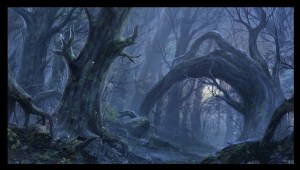 Across the sacred river before the sea
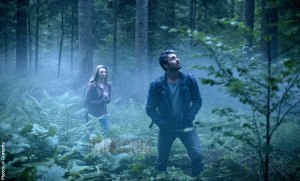 Where all that move within the light become victims of the night
 Canopies open to view heavens gate as sparkles ignite
 In my lifetime I’ve been called a wise-guy, wise-ass, and a wise-you-name-it. I don’t recall denying any of it. But until I lost a significant amount of hair, gained a lot of scars (and weight), and dealt with a good bit of life’s experiences, no one has used the words wise or wisdom (without suffix) regarding me. So, as I was running through the w’s (women, walking, wine, wild, Wilde, and why) in search of an ‘a-to-z challenge’ blog topic, my wife says, “How about wisdom? You should know about that.” (Her birthday is tomorrow.)
 To me, the word wisdom has much in common with the word quality. Both are generally positive; we recognize them (or their absence) when we see or encounter either. But, precise definition for both eludes us. We are willing to take on as much quality and wisdom as possible, but with one condition. We want to know the cost. What price must we pay for quality? Can we afford it? What price must we pay for wisdom? Are we willing to pay the price?
 As a college student, I would walk into the Seven-Eleven store and eyeball the beer coolers. I looked only at price per six-pack. Texas Pride was 86-cents for six cans. I still can’t believe I managed to drink that horse piss, but price mattered more on my tight budget. I ignored quality. Little did I know then that years later I would gladly pay eight-to-twelve times as much for top-quality, locally brewed, craft beer. My taste and budget have both matured in quality.
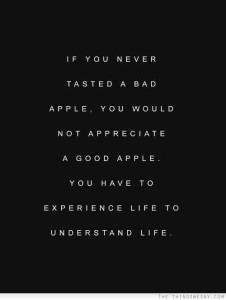 I had a conversation with a friend who was a wonderful, doting, and loving mother to her children. As I listened to her rant-on one day concerning some problem that her son was having, I asked her this question. “You love your son. Why do insist on preventing him from learning life’s lessons simply because they are painful? Be there for him. Protect him from serious harm. But allow him the dignity of learning his own lessons.” Before she got over her hurt feelings about what I had said, she backed off (he owes me). Hard for her, good for him.
 We are wiser when older because we have been schooled in life longer.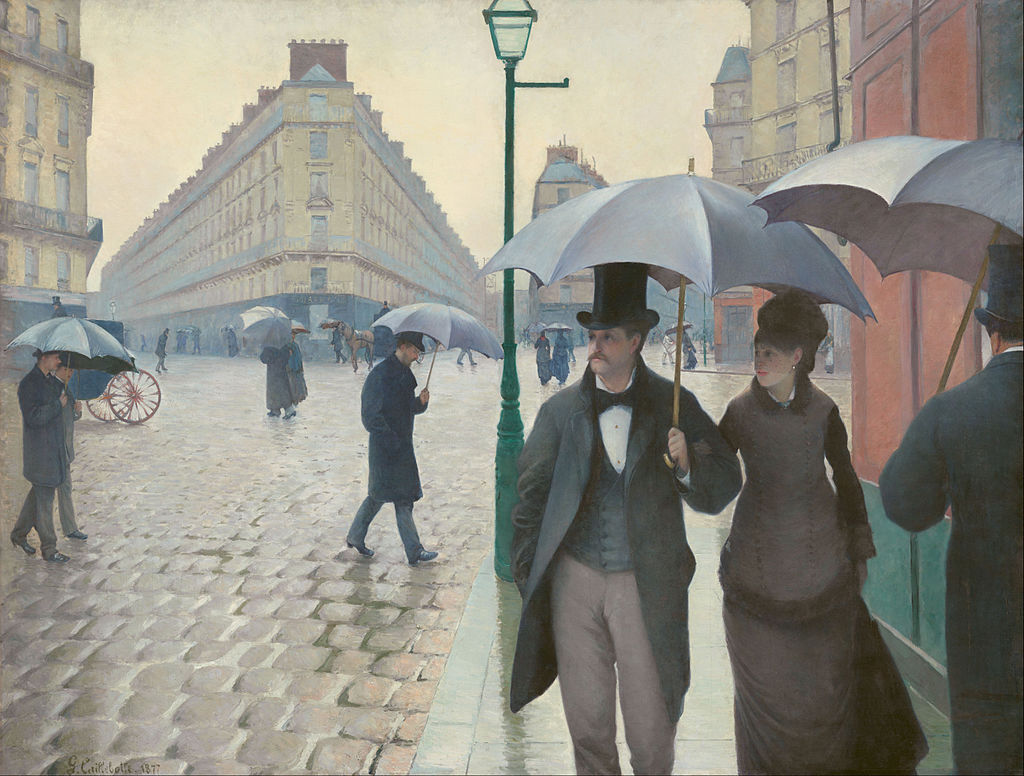
 For the novelist, POV is essential for writing the story. Fiction writers have the god-like ability to know exactly what is in the head of their characters. They create each character. This is true whether or not they share that information with a reader. Non-fiction writers are like the rest of us with human limitations knowing only what our senses (especially seeing and hearing) tell us. So, how do fiction authors tell us about characters? The questions for them, or us (depending on your point of view—sorry), are: how much do they tell us and how do they do it? The answer to one question limits the other. The same may apply to memoir.
 This is important and beyond this blog’s scope. Here are two good blogs on distance.
 How each of us views utopia is probably similar in the broader sense, but we may differ as we each conceive of the details.
  In the world of politics, the dark side of human nature emerges. Of course, it is always the others or the other side. Real world peace would be required long before we could begin to approach anything like utopia. It requires an egalitarian (equal) society and that is contrary to most politics I’ve ever seen. When I think politics, I see far more potential for dystopia and war.
 Religion? While a great deal of good is done in the name of a deity and the respective religions, that good fades to virtually nothing when balanced against the historical inequality and current turmoil that seems to move more toward dystopia — more war.
 I asked alcoholic and drug-addicted Texas prison parolees the following three questions while teaching secular recovery classes. I came up with these to help them find a world view that went farther than the tips of their fingers. My personal answers are utopian.
 The confusion and struggle so many of us face in answering these questions is an interesting testimony to our nature. But we each have our personal utopia within our answers.
 The other night, as we sat discussing writing projects and their duration, the subject of time came up. There were three of us, representing roughly three generations. The more we talked about time and how each of us currently sees it in terms of the future, the more I realized how differently each one of us viewed it. Time does not change. We do, and thus our view of time changes with age.
 I claim to be a right here, right now kinda guy. I live in the present moment. As I contemplate writing a memoir, this seems to cause me an ‘angst’ problem in that I wanna, and I don’t wanna. (I also struggle with writing about myself, but that’s not the issue.) I like History. It could’ve been considered my second minor at A&M. My manuscript is historical-fiction with too much history and not enough fiction. This morning I was asked if I would write a time-travel book (I’m noticing that Vickie has a knack for asking me thought-provoking questions). I didn’t have a ready answer, but after a lot of discussion and thought, my answer is ‘nope.’
 After doing a bit of reading, I’m no longer positive that I know what ‘this moment’ in time is, or if it exists. My metaphysical (woo-woo) friends get excited about this fascinating subject. When they do, I look at my watch and note, “It is one-forty, PM.” But they’re right. It’s really an interesting topic. Physicists and philosophers are all over it. Check out all the wiki and academic research (

 Stephen King has made a successful career out of scaring the hell out of many of us. We (not all) like to be frightened. Scary movies are fun. They are not for everyone, but a lot of people love them. Why? Is it the same with sad books, movies, songs, or plays? We keep going back for more.
 My focus here is music. A friend loved the song Dance Me to The End of Love by Leonard Cohen. That is until she learned that the inspiration of the song was in fact the Holocaust. It is a lovely and beautiful song, but that sadness changed the song for her. The song is not sad by itself, but because the inspiration was so tragic, her opinion of the song changes from love to sadness.
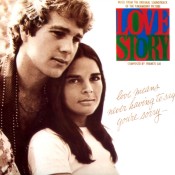 For sad movies, I have listed only five. It could be hundreds.
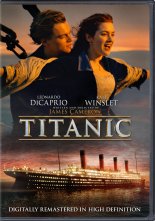 Love Story (1970)
 In a scene from my childhood, I watched through our living room window as kids my age played in a rainstorm. They were laughing and having a wonderful time getting soaked. The streets and gutters were awash. One boy sat down in a flooded gutter as the water pushed against him and splashed hard around his body. I felt envy. Not because they were having fun without me, but because they were playing in the rain. I was home with my mother, and she told me that I couldn’t go out because I would get soaked and catch my “death-of-cold.” I have since learned and admit more about myself, and about colds.
 The word ‘pluvial’ refers to rain or something characterized by abundant rain. The suffix ‘phile’ denotes fondness. Consequently, a pluviophile is one who finds joy and peace of mind on rainy days. I was taught that rainy days were sad, as in the Carpenters song lyric; “Rainy days and Mondays always get me down.” I was to believe nice days were sunny, cloudless, and warm. I’ve never felt that way. Sunny and pleasant days have their place, but few are enough. Later in life, I admitted to liking cloudy, rainy days. I now identify as a pluviophile. These days, I’m often asked why, after more than twenty years in California, Texas, and Florida; I recently moved to the Pacific Northwest. I ask, “Do you know what a pluviophile is?” Like it should be news to me, I’ve repeatedly been told “it rains a lot there.” I reply with a smile, “Yes, it does.”
 My involvement with rain changes with its many forms. Scientific names apply based on how it comes about. But, I am talking about how the rain itself varies from torrential downpour to a gentle drizzle. Duration, wind, thunder, lightning, air temperature, and other factors contribute to our experiencing rain. There are times of rain just falling, and times with thunder and lightning. There is morning rain, afternoon rain, and rain at night. Each is emotionally and physically encountered differently. It can be seen and heard while keeping dry, thus precluding feeling the rain. Only outdoors can we dance in the rain. If I don’t perceive rain with senses—I just get wet. Our world changes when it rains. We need it, just as we do sunshine. To me life smells, feels, looks, and sounds more alive in the rain. In the city, rural areas, and in the forest, everything improves. When I am with the rain, I heal and recover. It’s a spiritual exposure difficult to explain. I’m not especially spiritual, but in rain I sense life — nature.
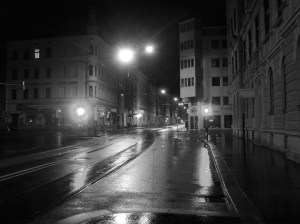 I recently delayed my daily walk when rain was forecast. After waiting for the rain to start, I donned shorts and tee. I was off in good spirits, expecting to be, and was, soaked. After an hour, I was back home. I sat on a dry and covered bench, removed my soaked shoes and socks, slapped water from my dripping baseball cap, and chuckled. I was thinking how others might consider me deranged. But, this is why I’m here.
 tilted forward and cocked right. The front brim bent slightly downward with water flowing off. The sound of falling rain is all around. I hear it splash into puddles and onto sidewalks. With water moving everywhere, I forget the day’s problems and the annoying people. But mystery is afoot. Like it or not, Mike Hammer is involved. And of course, there is a woman. As Hammer, in the writing of Spillane, I mumble, “In the flora and fauna of the Bowery, she was a lot of flora and quite a bit of fauna. She looked like she belonged in a field of Wyoming wildflowers instead of wandering through the human backwash of the avenue.” In the night rain, I can do this. Rain brings magic and drama.
 Let’s take life, rain or shine, one day at a time. It’s about how we feel. We’re not alone in our emotional response to rain. In the Pacific Northwest, we love the outdoors, rain or shine. Too much shine and we miss the rain. After some rain, we’re ready to let a little sunshine in. “In every life a little rain must fall….” Of course, and why not?
 Yolonda, my wife of 50 years (we married at age 2), is a native Texan and has her ‘druthers.’
 Billy on right, (w/Phish bassist Mike Gordon), our oldest child is in his mid-40s, a very nice, loving, big-man. He’s always been an avid reader, a talented writer, a movie aficionado, and a hard-core Phish-head. Add bicyclist, father, hubby, friend, musician, and deep-thinker.
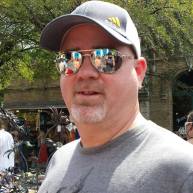 Steven is our middle-child, now in his early 40s. He’s another good guy. An avid sports fanatic (Spurs and Cowboys) and mountain biker. Add hubby, step-father extraordinaire, house music DJ (Steve Balance), friend, and all-around cool-dude (maybe pragmatic and analytical). He initially said that he had no fav quotes, but when he and his sista’ got to texting, there they were.
 Our beautiful ‘baby’ is Julie. She can recite every line from the movie Grease (oddly did not quote it), is an artist, a thirty-something, 21st Century hippie, a mom and step-mother. I think she is a wonderful writer and, like her mom, a Grammar-Nazi. She lives in the middle of nowhere with her hubby, son, occasionally a step-son, or two lovely elves, too many cats, horses, and sometimes (because he likes to chase the horses) a dog.
 Soon, he’d wake up, but he would not remember. He’d not recall where he’d been, what he’d done, how he got home, or anything that happened. He felt fear—the familiar fear of the blackout. He should know. He’d been there only a few hours earlier. Everyone else would know. Hell yes! They’d remember. When he blacked out like this, he couldn’t recall events from the night before. Even when people would tell him and show him proof, he could recall none of it. He woke up sick – partly due to the effects of the alcohol, but mostly because of the fear, the inevitable embarrassment, and the disgust he felt toward himself. It happened many times before. Slowly, as his eyes opened, he turned his head to see if she was there in the bed. She was not. He would face that guilt soon enough.
 No one wants to look that bad. Sam was disheveled, pale, red-eyed, much older than his 43 years, and generally unhealthy. He also smelled awful. He reeked of stale alcohol, smoke, urine, and vomit—the scene was sad and disgusting. This was a miserable couple. After years of marriage, the only things these two people now-shared were an old love, a constant desperation, and the children. Their mutual love was hidden deep, possibly buried, maybe dead. They both wondered how this was going to end. For Mary, it wouldn’t be soon enough. She forced herself to look at him. He saw that she’d been crying a long time. Tears were still on her face; new ones arising. He poured coffee and tried to look straight at her, like everything was fine.
 “I am so sorry, Mary. I promise it’ll not happen again. All I have to do is not drink. I can do it. I will start back with AA again. It’ll be ok.” She looked at him for a few seconds and then put her face into her folded arms on the table. After a few minutes, she looked up again and said, “Look, you obviously can’t stop. If you could, you would’ve. You can’t or you won’t. Either way, the outcome’s the same. You’re gunna die, or go to prison, or to some institution. You’ve been to rehab. Sam, you’re an embarrassment to your family, to me, to your kids…shit! How you keep getting jobs after being fired so often—I have no idea, but this can’t go on. Sam, you need to move out of the house and stay out.”
 After about an hour he picked up the phone and called his mother. He knew by her tone that it was she who Mary had been talking with when he woke up. He asked to talk with his father, but that relationship had become so strained that his father would no longer speak to him.
 I consider myself a realist. Don’t we all? I recall a comment someone made to me a number of years ago. She considered herself to be a spiritually positive person. She read and followed all the right spiritual gurus, in her option. As we were talking, I used the word reality. She told me that was negative. Really? I haven’t quite figured out why I saw conflict between her negative view of reality; and her positive, optimistic thinking, but she didn’t see an inconsistency at all. I didn’t understand then and don’t now. In fact, if she considers herself to be a positive person, but sees reality as negative, I must conclude that she’s not only a pessimist, but she is in denial about it. She may have been Pollyannaish. Believing in a positive outcome and things will work out for the best in the end is fine. But even being absurdly optimistic is not the same as seeing reality as negative.
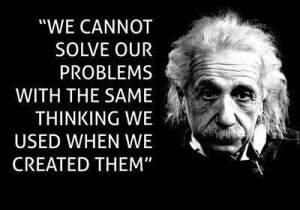 I like to think of myself as a realistic-optimist. (If a presidential candidate can be a democratic-socialist, then there is precedent for my claim.) But I have interesting discussions with people who would say that I am negative or pessimistic because I foresee less than desirable outcomes if reality is not respected. Most of us seem to have good days and bad. Assuming that they will all be good henceforth is denial of reality. We will continue to have natural and man-made disasters. That is reality. Making preparations for emergencies so that we can have the best possible outcome is optimism. Doing nothing is denial that often leads to further disaster.
 I believe that a balanced outlook is the key to a healthy life and a healthy world. We need not assume the worst, but blocking out, or ignoring, the inevitable is not being optimistic. It is being foolish.
 Our Literary Journey