How Important is Trust?

“Relax, Stevie, this won’t hurt.”

Early in his memoir, On Writing, and in his life, Stephen King described an experience with a doctor and his mother. King had an ear infection, so Mom took him to the doctor, who said the cure won’t hurt. The lying taker of the Hippocratic Oath (do no harm) busted King’s ear drum with a needle. Then it happened again, and again the child believed the doctor that it wouldn’t hurt. It did. A lot. Both times.

trust-7The third-time little Stevie acted like I would have. From the get-go, he raised holy hell before ever leaving home. Alas, young Stephen was over-powered and for a third time, the Prince of The Inquisition drove the needle through the boy’s ear drum. Over 40 years later, King wrote of the incident, “In fact, I think that in some deep valley of my head that last scream is still echoing.”
My daughter had a similar (one time) experience with a dentist. Unlike King’s mom, I let the dentist know how we felt about such lies. He apologized, so I let him live.

In God We Trust has been the official motto of the USA since 1956. The motto doesn’t identify any specific god and is singular; thus, it’s safe to assume that it refers to the God of Abraham. But, the phrase is still generic enough to apply to anyone who believes in a deity that:

  1. created the world,
  2. rules over the universe,
  3. and is omnipotent, omniscient, benevolent, and omnipresent.

trust-9

Yay, God! Congress said we trust you. Who wouldn’t trust all that? But the concept of trust does not begin and end with any god. Our trust is a belief in the reliability, truth, ability, or strength of someone or something in our real-life world. It begins to develop before we have any concept of a god.

We’re social animals. Our trusting nature begins forming at birth, along with a conflicting mistrust. We are taught to trust (or not) by others. I agree with Erik Erikson that our first few years of life are crucial to what follows. Erikson theorized that during those first years, we are uncertain about the world around us. We look to our primary caregivers for stability and consistency. If the care is good, we develop a trust that we may carry to other relationships. We feel secure. How this goes leads to either hope or fear (or both?).

trust-5

Of course, if you’re reading this, you have the experience to know the outcome. We learn that trust and love make us vulnerable. Those we trust and those we love can cause us the greatest pain. We keep learning about trust, discernment, and that nasty (not-so-politically-correct) word: judgment. I’ve walked the halls of the school of life for seven decades and I’m still learning. I want to trust. Even more, I want good discernment skills. I’m skeptical, but only as precaution to disappointment, pain, loss, and suffering. Learning that I was mistaken to trust someone sucks. Lesson learned, but better to learn it allegorically.

Much of what we learn about trust and mistrust, we learn through stories, such as the Aesop’s Fable, The Boy Who Cried Wolf. The intended moral lesson of which is, if we lie enough, we may not be believed; even when we tell the truth (hence, trust lost). My daughter (yep, the ‘dentist lied’ one) recently found herself explaining why she misled her eleven-year-old son about Santa Claus.

Julie wouldn’t lie to him. But she knew that someday she’d be busted on the Kris Kringle myth, right? Wolf! Like most parents, she seldom lies, if at all, but how’s that trust thing working here? I told her we all go through that because our social tradition overwhelms us, so we play the Santa deception game until it’s time to fess-up. Everyone seems to be saying that the fat man in the red suit is real, who are we to say that it’s a big lie, but a cute tradition?

trust-8Note to my grandchildren: There are things I’ll not tell you, but I may confirm or deny what you ask. There are things I will tell you only if you ask. There are things I will defer until I think you’re old/mature enough. But I will not intentionally deceive you without just cause. Sometimes, I’ll defer to your parents, other times, I will not. I’ve earned the privilege to be either cooperative or difficult. ~ Love, Opa
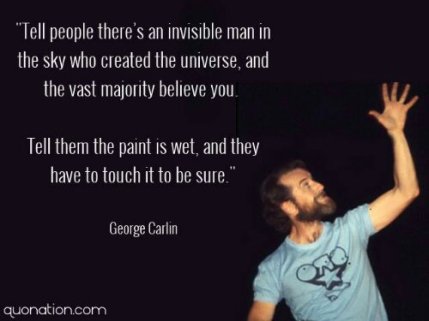
When someone teaches us, we usually trust that it’s what they believe, and that it’s correct. We assume that people who teach us (teachers, parents, family, ministers, others in authority) are experts and know the truth, or at least what they are talking about. Initially, we seldom anticipate deception, which would be intentional. But it happens. When it does, we learn from it.

“The truth is, everyone is going to hurt you. You just got to find the ones worth suffering for.” ~ Bob Marley

The US has passed laws and made rules regarding truth in advertising, news reporting, responding to law enforcement, and testifying in court or before congress. At least one president was impeached for lying. At least one admired celebrity was jailed for lying. If we need laws and government rules to protect us from the constant lies and deceptions, especially since we almost expect to be lied to in many cases, why even be concerned about trust?

The answer seems to be that from birth, we need to trust. We also need a balance of hope and fear, or of acceptance and skepticism. We are here to learn, but we should be both questioning and wondering. We should be curious and wanting to learn and to know. We should want the truth, like it or not. And that truth should be supported by ample evidence or proof. We must understand the good and bad (dark) sides of human nature. We should all be students of the human condition.

From Bob Marley’s song, Three Little Birds:

Singing’ don’t worry ’bout a thing
‘Cause every little thing gonna be alright
Singing’ don’t worry (don’t worry) ’bout a thing
‘Cause every little thing gonna be alright

Learn to trust. Demand evidence and proof.
Be skeptical when deception appears present.
Look both ways and mind the gaps.

It’s Hopeless – That’s Good

hopelessness2

One of my favorite movie lines is, “What if this is as good as it gets?” Watch the movie trailer here.

This scene takes place in a shrink’s office after Melvin Udall’s (Jack Nicholson) doctor tells him that he needs an appointment. The doctor is pleased that Udall maybe taking responsibility and he acknowledges Udall’s difficulty with that. Have you ever asked yourself, is this as good as it gets?

Let’s answer this empowering question with, “It is what it is.” But, it’s more than that, and it applies to life.

Sometimes, feelings of sadness or depression blow through me like gusts of wind through the branches of trees. These visiting emotions last just long enough, and are disturbing enough, to let me know they visited. Then, just as quickly, they’re gone. I feel normal again. I know the feelings aren’t far away and they will return. When they come back, I have no way to expel them. These feelings have their own will; one I don’t control. When they return, I hope they don’t stay long.

I fancy myself a happy person, although I find happiness in my own way. Life is about how we feel. I love life and living – being me. I accept reality, which gets a bad rap for being negative. Life is what it is, which is mostly good for me. I know it’s good from my experience with when it was bad. I don’t like feeling desperate, but I feel hopeless at times. It’s not the same as depressed.

I’m hopeful about many of the things over which I have no control. When I fly, I hope the airplane doesn’t crash. When I drive through the I-90 tunnels toward Seattle, I hope there’s not an earthquake. Fear could prevent me from doing either. Planes crash and earthquakes happen. In The Road Less Traveled, Scott Peck talks about denial keeping us from dying of freight. I’m not sure about that, but it might help me get to Austin. It’s not denial – shit happens.

hopelessness3However, I am willing to work with my feelings of hopelessness. I’m not referring to the charming but hopeless romantic, or being merely incompetent (Bill’s hopeless). And I’m not talking about sadness, fear, or denial. I’m talking about the feeling that can cause despair (being without hope). Back in the day, ‘twas that conclusion I expressed when I’d say OMGIF! (Oh my God, I’m fucked).

Some things are hopeless. While my online dictionary defines hopelessness as causing despair; being desperate, wretched, demoralized, or impossible; I prefer a simpler hopelessness: feeling the loss of hope. And hope is “a longing for a future condition over which you have no agency (control, influence, or power); it means you are essentially powerless.” (Derrick Jensen)

I recall an audio tape where the narrator asked, “What is the best hoped-for outcome of any relationship?” My answer is best expressed in the movie The Notebook. What I like most about that movie is Noah, who never gives up on his love for Allie despite their apparent hopeless situation. Spoiler alert: they don’t live happily ever after (which is my point). But they do have a great life.

Think of the Buddhist issue with desire as the cause of all of our problems. Is a desire not something hoped for? Two related Buddhist sayings are: “Hope and fear chase each other’s tails,” and “When you give up on hope, you turn away from fear.”

Time for some philosophical music….

Is it all dust in the wind? Are we? Metaphorically, perhaps so; in reality, we will be. The song talks about the impermanence of passing time, the endlessness of earth and water, and the certainty of death, whereby our only immortality is by returning to earth and water.

Embracing hopelessness is not the same as giving up. It’s a form of acceptance. It is time for us to do what we can. It is time for our action. It helps us to live more in the present moment. We rely less on tomorrow being a better day. I’ve been accused of being negative when I defended reality. Others may want to live in fantasy, to deny reality to the point of making things worse (i.e., not seeking medical assistance), but that feeds denial and makes things worse. Accepting things as they really are, even when hopeless, gives us a better life.

hopelessness1I read this good article about hopelessness in the Orion Magazine called “Beyond Hope,by Derrick Jensen. He talks about hopelessness as a general topic, but specifically applies environmentalism as an example. Hopelessness does not deprive us of that final act of defiance.

As we accept the reality of hopelessness,
we need to look both ways and mind the gaps.

Nano Rebel – Dream On

2016 Nano ends at midnight next Wednesday. I’m passing 48 of the 50K goal today, so I’ll meet the challenge this weekend. However, as anyone who writes knows, there is much more for me to do.

musing2

For the past four weeks, my life has been like this: up between 5 and 8 AM, plan to write, but read the news, read and answer emails, look at my memoir and plan some more. But I only write a little. Look at Facebook and write some snarky comments there, read some blogs, go for a walk while listening to music for about an hour; return, eat, stretch, talk to wife, and finally begin to write.

Following an hour of writing; take a break, eat more, get coffee, then back to writing. After pushing out about a thousand words, take a long break and do more useful and constructive things like doing dishes, replacing light bulbs, talking to neighbors, and reading. I write more in the late afternoon and evening with interruptions for football, NCIS, or Blue Bloods. It seems to have worked because I’ve averaged almost 2,000 words each day.

musing1But this memoir – the thinking, remembering, musing, pulling out old photos, doing ancestry research, looking for old friends and finding some, but reading obits of others — it’s so different because it is about me and people who’ve affected my life. Learning and writing about myself every day is interesting for a guy who disliked writing about himself.

Writing fewer words on this blog so you can listen to the song and see the lyrics that say it for me: Dream On, by Aerosmith.


Indeed:

Half my life
Is books, written pages
Live and learn from fools and
From sages
You know it’s true, oh
All these feelings come back to you….

musing3“Sing with me, sing for the years, sing for the tears.”

We dream on, love on, live on;
but look both ways and mind the gaps.


Nano Rebel – The Big Picture

My Analogy

art-memoir-analogy3Let’s make a pencil drawing.

As we create this drawing, our personal art, we move the pencil across the page. As it leaves lines and other marks on the page, let’s say those marks are in the past – our past. We are creating the art, but we drew the lines and made the marks, past tense.

We can see the pencil point. The tip is touching on the page. We may look directly at it, or not. That small point of contact with the paper represents our present time — now. It’s in that brief instant of time where we live. We may look at the past marks, or we may focus on the pencil on the page. We may move it in any direction, going fast or slow, applying firm of soft pressure. We may even lift the pencil from the page and move it to a different location.

art-memoir-analogy1

As we move the pencil, the point joins with other lines on the page. Our present reaches into our past. As our vision unfolds, we make plans for where the pencil will go next, how we’ll maneuver it, how we apply pressure to it, how we will lift it off, and return it to, the page. As our drawing takes form, the page fills with marks and lines.

The blank part of the page is the future. We think about and plan our next moves, or we allow our hand to be guided by external forces, moving us into our personal future.

We keep looking to see the entirety of the drawing. We consider the past lines in light of our future plans. We make decisions to move lines in the present to be tangent with, or to intersect lines of the past. Thus, we create a new future that mingles with, and eventually becomes, our past.

We erase. We change it. We keep looking at our whole life as art. As we move in closer and back away to change our perspective, we begin to see the big picture of our life.

art-memoir-analogy2As we draw, we feel things: love, anger, spiritual things, and the passions of life. As we experience our feelings, our work of art changes. Those emotions travel to our hands to control the pencil that is drawing our life.

We learn as we draw. What worked? What didn’t? Where did we succeed and what were our failures?

As we fill the page with marks and lines, there are more lines and less white space. We are running out of places to make our marks. We don’t know how many more lines and marks that we can put on the page.

Our drawing, our art, our life. It’s on the page, or is it?

Mind the gap.

art-memoir-analogy4With 10 days of Nano remaining, I’m rolling along with my memoir. Finding memories and searching for lost feelings. It has helped me to keep writing in a searchable chronological order, so that as I recall things I want to add; I can find the right place to write (draw?) those memories.

Now, with over 34,000 words, I can tell that I may have to run this stuff past some involved eyes before I consider asking anyone to read it for feedback. Along with trying to write over 1,500 words a day, I’m reading Writing is My Drink, by Theo Pauline Nestor, and Your Life as Story by Tristine Rainer.

Have you ever tried to write your life story as a fairy tale? I have. Try it sometime.

art-memoir-analogy-5“One should either be a work of art, or wear a work of art.” ~ Oscar Wilde

To see your life story, look both ways.

Nano Rebel – Almost Half Way

memoir-into3I love this memoir or autobiography thingy. Like so much of writing, it’s a pain in the ass and a fantastic experience. This has been a busy week for me, as in doing other things besides writing. Of course, bless their hearts, nothing is harder than dealing with the idiots and morons. But dang! We had an election that shook me to my core – more than politics or other elections have in my lifetime.

Boring PresentationOn Wednesday, I went to a meeting that took too long and annoyed me – don’t they all?

I’ve managed to stay on pace to meet my Nano word count goal, but this week was not as productive as last week. I’m finding that I need to do a lot of research, too much thinking, and much trying to remember details of events I stopped caring about long ago.

Friday morning, I attended a write-in with the SnoValley group. After getting only four sentences written in the first hour, I gave up on a productive morning. Despite repeated comments from Alex that he would not talk politics, I returned from a break to a hot and heavy discussion relating to the political events of the week. Since I’ve been trying to contain my anger, it was not long before I was in rant mode. More wasted time venting, and less productive time writing.

I had one other event on that day, thus Friday was my lowest word count day since Nano launched. I was told that the Friday group wrote more during Nano. ‘twas not so on Veteran’s Day.

Another adventure this week was attending a session on memoir sponsored by the Pacific Northwest Writers Association (PNWA) It was facilitated by Theo Pauline Nestor, a memoirist and author of Writing is My Drink. The class was a productive learning experience for me and I wanted more. It was too short, even though it went a little overtime. From what I learned in that class, I decided to write an Intro to my memoir. Here’s part of it.

Introduction to Passionate Disbelief (Partial)

memoir-into2

To believe, or not to believe? Is that the question? Is it better to suffer with my beliefs as I am told? What good does any of it do? Do I stand behind my beliefs, unpopular or not? Would I be a martyr to my causes and die for my beliefs? Is it possible for me to decide for myself what to believe? If I am to believe anything, do I have the right to demand evidence or proof first?

What do I believe? How did I come to my beliefs? Do we have a complete free will to decide what we believe, or are we programmed? Do genetics play a role? How much does my culture and past life determine what I believe today?

I dislike being asked why. It makes me think and I’m too lazy for thinking.

And yet.

Why? is the best question there is. As children, we ask why repeatedly. As parents, we provide answers to our children, eventually saying, “Cuz I’m (Mom, Dad, your boss), that’s why.” Sometimes we answer why with whatever, just because, it is what it is, why not, the bible tells me so, and my personal favorites, who cares, and I don’t know.

When I was that quality assurance guy, I liked using five whys to determine root causes to problems. It is simply asking why repeatedly for five times, as any three-year old might.

Can I have both an open mind and firm convictions? Is it possible for me tell you why I believe (or don’t) something without trying to convince you that I’m right and you’re wrong? We can both be wrong, but can we both be right?

So many questions. So few answers. Terry Tempest Williams has agreed that her writing is in response to questions (cited in an interview with Scott London on The Politics of Place). She went on to mention Rainer Maria Rilke, who described how questions move us.

“Be patient toward all that is unsolved in your heart and try to love the questions themselves, like locked rooms and like books that are now written in a very foreign tongue. Do not now seek the answers, which cannot be given you because you would not be able to live them. And the point is, to live everything. Live the questions now. Perhaps you will then gradually, without noticing it, live along some distant day into the answer.” (From Letters to a Young Poet, 1929)

Exploring my spiritual past is like reverse engineering, or tracing the specific coding that, to some degree, contributed to my conclusions years later. For many questions, I may have followed Rilke and lived into the answer.

memoir-into5Wonder why? Carefully look both ways and mind the gap.

NaNo Rebel – One Week Done

Telling my story
Telling my story

In the first five days of NaNoWriMo, I’ve written 11,000 words toward the goal of 50,000 before midnight of November 30th. Since my personal goal was 2K words a day, I’m ahead. I have picked up on several things about my writing.

  • I am not isolated. My wife comes and talks to me routinely, and I go talk to her. I have vacuumed the house, gone to meetings, and done shopping. I answer phone calls (not doing surveys or talking to telemarketers, and I voted early), and I go for walks.
  • I have time available to write. Being retired, I could write all day and night. But I can take time for a football game, and maybe some NCIS or Blue Bloods. I read about what I am supposed to be doing: writing memoir. I talk to people, often about things having nothing to do with writing.
  • I think my weakest writing skill is the art, the creative parts, the telling of the story. I blame my experience with technical writing for part of that. But for this memoir, I continue to work on my skills to show and tell from my POV at the time. Can I be both protagonist and antagonist?
  • If I read a sentence that I wrote last week, I will change it. It will be better, but the challenge is to write, not to re-write and edit. This slows me down, but it looks like I can semi-comfortably write a maximum of about 3-thousand words a day. I did 2,800 twice last week.
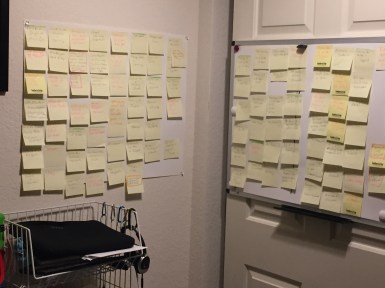
  • I made an outline, a spreadsheet, and a memory list. The list has turned out to be the most valuable. I never look at the outline or spreadsheet. My only problem with the memory list is that I write in chronological order and the list random.

img_0833-1

  • Here are examples from my list:
    1. Working to pull out coal stove and put in gas hot water heater and gas stove for cooking.
    2. Looking up at Dad realizing I was looking at a drunk man who didn’t care. I had eerie feeling that he resented me. I was not seeing my father.
    3. Helen Hxxxxn (Whitey) BB gun. Tomatoes.
    4. Peggy Rxxb and the Rxxb family.
    5. Carol Mxxar and Joe Mxxxxen
    6. Dog named Rusty and my treatment of the dog
    7. Age 5 birthday party
    8. Danny
    9. Raised by both bio parents…first in fam….Linda was second, but hers divorced (he left) right after Linda graduated high school
    10. Mom’s relationship with my half-bro, Danny, and my view of it.
Write. Just write you must.

I will be writing this memoir for a long time to come. I’ll win the Nano challenge and complete this memoir, but not anywhere near at the same time.

I miss writing this blog, but I choose not to do both.

If you ever consider writing memoir, I suggest it. For me, it’s not about the book, it’s about me. I still have a lot to write and things to decide. Do I want to write about something or make it available for others to read? Those dark “things” about me? I work at keeping the words and stories on my intended spiritual track, but in my mind, everything relates – particularly during my formative years.

The following excerpts from my memoir are from two more dramatic events, both relate to a nun who taught me. Context is that I had just learned that the same nun who taught 7th grade will be teaching 8th next year, then we jump to what I was worried about.

Blues Brothers movie, my fav part

….“Mom, Coughlin is 7 to 12th. Can I go to 8th grade there? I’ll go next year anyway.”

“Now, Billy-boy. Why wud ya? Jist graduate St. John’s. After I see ya graduate, God can take me. It’ll never happen again.”

“I’ll graduate Coughlin, Mom.”

8th grade was worse than 7th. Even Father Burns was afraid of Sister Mary Siena, and for good reason. She was the tyrant of the school.

Gerry Dxxxxe sat behind me. As I was turned around explaining something of extreme importance to Gerry I heard, “Mister Rxxxxs, what is the answer?”

“The answer to what, Sister?”

“Young man, you better know the answer to the question I just asked the class.”

After I suggested that she asked one of them, the anger-crazed dark shadow in black habit grabbed her instrument of torture and death. As she stormed down the aisle heading at me, in her hand was the yard long wooden pointer. It was round, about the circumference of my thumb. She yelled for me to standup and turn around.

As it turns out, blows to the flesh behind the knees with such a pointer are not soon forgotten….

At times, how I saw it.

Life is interesting,
look both ways and mind the gaps.

NaNoWriMo, NaMeWriMo, or NaPoWriMo?

Next Tuesday, 1 November 2016, begins another 30-day challenge to write 50-thousand words toward the authorship of a book. The challenge is called National Novel Writing Month (NaNoWriMo, or just Nano).

nanowrimo1Since 1999, Nano has grown in popularity and is now international. Novels are fiction, but participants sometimes write in other genres. I wrote a historical novel my first year. Others have written memoirs (National Memoir Writing, NaMeWriMo?) or other non-fiction, and poetry (National Poetry, NaPoWriMo? It’s in April.).

Nano is difficult. Last year was my first large scale fiction project. I learned how challenging it is. The math works out so that I need to average about 1,700 words a day to “win” the 50k-word challenge on November 30th. There are no days off.

Because Nano gets more difficult as weeks pass, and life has a way of interfering with writing, I want to produce over 2,000 words a day for the first week or two. Getting ahead in the word count is recommended, and I know why. This is no writing sprint; it’s a marathon. After about ten days, I’ll be looking in the mirror asking, “WTF were you thinking?” But I did it in 2015, and I will in 2016.

nanowrimo2

Online support, other writers, and attending motivating write-ins, make this challenge doable. Following the helpful suggestions in No Plot, No Problem, such as keeping my inner editor at bay, I’ll manage to keep writing.

Last year, I struggled with being new to fiction writing and not having a plan. Creating the story as I wrote was difficult. Writing to develop characters, scenes, and plot was work, but fun under pressure.

This year, I have an outline and I’m a slightly more seasoned writer. My introduction to blogging was during the A-to-Z Blog Challenge in April. Nano is like A-to-Z in that it’s a learning through immersion experience. It will be challenging again this year because I’ll write in a nonfiction genre new to me.

I’ve decided to write a memoir for the 2016 Nano. I’ve never written one. Technically, that qualifies me as a Nano Rebel. I don’t feel rebellious because there is ample precedent for memoir and I still need the same number of words. Since I have been kicking my biographical tin-can down the road for years, I’ve decided it’s time.

nanowrimo5

I was raised in a religious environment, but I’ve concluded that atheism is correct. I plan to document that spiritual journey. The memoir will be spiritually thematic and family oriented, but not suitable for young children. I’ll write about specific periods and events in my life when religion or spiritual issues were more prominent, or should have been.

I’ve been researching people, places, and events to reconstruct those times. I’ll be busy with this until December. Only then will I set my inner editor free to deal with the 50K-word first draft, pile of tangled dribble I will have created.nanowrimo4

I’ve been posting on this blog twice per week. During November, I’ll post once per week to provide a brief summary of my Nano experience, and information relevant to my project. Adding news of any other participants that I find interesting would be fun — so do tell.

I’ve been reading about writing memoir. It is different, of course. But since I did this Nano gig one time, I know that I’ll have little time to work on this blog.

nanowrimo3If you have any interest in NanoWriMo, the web page is http://nanowrimo.org. Join us.

If you are jumping into the Nano challenge also, I’d like to know.

Have fun. I hope to be able to hold my head up enough to resume blogging on the twice a week rhythm again in December.

As Natalie Goldberg says in Writing Down the Bones, “In the center of chaos, make one definitive act. Just write. Say yes, stay alive, be awake. Just write. Just write. Just write.”

Look both ways and mind the gap.

“There are no gods”


no-god2

One definition of the word believe is to “accept something as true.” Synonyms include credit and trust. A second definition is to “hold something as an opinion, to suppose, or assume.” Synonyms for that definition include reckon, figure, and guess.

In her book Writing Down the Bones, the chapter Make Statements and Answer Questions, author Natalie Goldberg advises, “So even though life is not always so clear, it is good to express yourself in clear, affirmative statements.” I leave no doubt and no wiggle room with my clear declaration (albeit, not stated affirmatively). I’m not assuming, guessing, reckoning, or supposing. Maybe you’ve heard the phrase, what part of no don’t you understand?

That’s how I choose to say it: “…no gods.” My reasoning is that saying I don’t believe in a god or gods is insufficient and could be misleading. I don’t need weak qualifiers to protect my position—nor do I need to prove it to anyone.

no-god4

I am not simply accepting anything as true or false. I am not supposing or assuming anything. I am stating my position as a fact. While some may use some esoteric scale (like the above) to argue that I must wear the label of gnostic atheist, as opposed to agnostic atheist, I disagree. I have one position that determines my point of view on many other things such as there are no ghosts, no devils, no angels, no unicorns, pigs cannot fly, and Mrs. O’Leary’s cow cannot jump over the moon, but may have caused the Great Chicago Fire.

I enjoy Halloween and ghost stories around a camp fire as much as I ever did. It’s unnecessary to believe in spirit-world entities to enjoy being frightened by them. Reality, however, should be frightening in some circumstances.

no-god5Picture this. You’re sitting quietly in a random crowd of 100 people in the United States. Suddenly one person jumps up and yells loudly for all to clearly hear, “There is a god!” Let us now assume that said person had a good, but personal, reason for this announcement. None of the other 99 know it. What happens next?

Perhaps 40 or 50 people will say, “Amen.” Even more will likely applaud. Everything is fine and the feeling of the crowd is positive. Right? People have every right to their beliefs. In a random group of the remaining 99, not everyone will have the same beliefs. But there would be no grumbling, no accusations, no death threats, and not one person of the other 99 will stand and say, “Prove it.”

Add one person to that crowd – me. What if I stand up first and announce loud and clear, “There are no gods.” Keep in mind that of the thousands of gods humans have believed-in and worshipped over thousands of years, at least 70 people in the crowd agree with me, with one exception – the god they happen to believe in. Despite this, what likely happens next?

no-god1

Even when people know of my atheism, if I make that statement, I’ll be challenged to prove it. They see no oddity in asking me to disprove something more than 70% of the people claim to believe, but are equally unable to prove. Even some agnostics and atheists would challenge me by asking if I know it for a fact.

I had the opportunity to spend time with my grandchildren this past summer. A friend wondered what I might say if one of them asked me if I believed in god. At the time, I wasn’t sure how I would answer. While it never came up, should it now, my answer is “No.” If a discussion or Q&A ensues, I would manage as honestly as I could. I am not afraid to use the words, I don’t know.

So, by stating that there are no gods, I’m establishing my position. I’m not a person who believes in god. I am not agnostic. While I have interest and curiosity about all religious beliefs, It’s not my intent to change anyone’s mind, unless I’m asked. But belief in god or not, I think religion is harmful. I am not trying to ruffle any feathers or destroy any fantasies. I agree with Ms. Goldberg and I’m thus making a clear statement – there are no gods. I’m keeping it simple.no-god3

Confidence and assuredness are good things, but we should consider all options.
Look both ways and mind the gap.

Changing Priorities

“Here’s to When I Gave a Feck”

Tom Selleck
Tom Selleck

“Look, Garrett, I’m closer to the end than to the beginning. So, some of this stuff, I just don’t have it in me to care anymore…It’s the rest of it, the posturing, the little digs, the wasting my time….” ~ Police Commissioner Frank Reagan; from the TV show Blue Bloods, Season 6, Episode 9, “Hold Outs.”


I can relate. I often say, “I don’t care.” But I do; in an odd, almost cavalier way. Normally, when I think I can help someone or fix something, I give my time and effort to the issue. I now care less about many of the things that were high on my list when I worked at my paying job. I haven’t lost my motivation; I now own it.

Opinions others have of me have lost much of their importance. Nowadays, I care more about issues that were of little interest during my past. Conversely, my “that’s bull shit” list is longer than ever. I worked, if you can call it that, for about 50 years. Now retired, my perspective on what’s important is changed.

Since age 18, excluding my time as an undergrad, I had one six-month period of unemployment. Even then, I treated my job search and being Mr. Mom, as two jobs. I enjoyed them both. The pay was horrendous, but the benefits were good.

I learned about myself during that time, simply by being me. That was the early 90s, the decade that I like to call my figure it out for myself years. Looking back, I now recognize that I was depressed and confused. I worried about things like money, a job, and my kids. I was more overwhelmed than I like to admit. I paid my dues. But now?

You know you want it, right?

I wear blue jeans, shorts, or sweat pants. It’s like every day is casual Friday, but it’s really another Saturday. I’ve not worn khakis more than twice in 18 months. I haven’t worn a tie, suit, or sports jacket either.

I care about style, as long as it’s casual. While I still think wearing argyle socks with sandals is a sin for which any man should burn for eternity, there’s something to be said for not caring what others (like me) think, even in the choice of clothing styles. I toy with the idea of wearing a kilt cuz wife says I have great legs. Some opinions will always count.

It shouldn’t matter what most other people think. I’ve read that what they think of me is not my business. But it often does matter. If I ask you what you think, feel, or believe, you should want me to care about your answer. If I do, it’s fair enough.

If I like your idea, I may accept it, implement it, or otherwise go with it. When someone says, “You should do a blog on that,” it gets my attention. I often write with inspiration like that from someone else.

I’m a grandparent. A parent called to complain about a grandchild. I listened, but said nothing. I allowed my child to rant and get it out. My wife wasn’t home, so I was on my own for the call and the associated drama. These are my monkeys in my family circus, after all.

i-dont-care5Then I hear, “You haven’t said anything, Dad. What do you think?”

I take a deep breath and wonder if I should respond (the answer here is no).

Raising my kids, I made the same mistakes. But now, I have a different perspective. I answer with a quetion, “Are you sure you want to know?”

My ranting offspring responds, “Yes.” The tension builds. While I knew that this wouldn’t end well that day, I also knew it would eventually pass, and it did. I blurted out my answer as the Frank Reagan of my family.

“It doesn’t matter. What you’re so upset about is no big deal. There are more important issues in your child’s life. This is minor and kind of expected. As children, we’ve all had problems like this. We get over it and so will he. Allow him the dignity of experiencing and learning about life on life’s terms, not your conditions. I suggest you calm down and wait.”

Dial tone.

Blue Bloods writers would handle this scene at the family dinner table with everyone drinking wine.

snarkasm12I’m a here and now kind of guy. While I firmly believe in living in the present, I acknowledge that each life has a future and that’s the direction we live it. Today’s crisis is tomorrow’s funny dinner chat or neighborhood gossip.

Life goes on, and everyone should enjoy every possible breathtaking minute. What other people think is probably unimportant, and may be dangerous. So learning when to have had enough, to be tired of the BS, and to move on; to no longer give a shit, is good.

“But Mikey’s father, champion of all pint drinkers, is like my uncle Pa Keating, he doesn’t give a fiddler’s fart what the world says and that’s the way I’d like to be myself” ~ From Angela’s Ashes, by Frank McCourt

So, care as you must. Live in your world and in your time. Figure out what’s important to you and to people close to you. Make choices, change your mind, look back and look forward. That makes perfect sense to me, I hope it does to you, too.

Meh takes a big swig of the foamy grog and grunts, “I don’t give a feck.”

Live life forward, understand it backwards,
mind the gap, and look both ways.

There is a Time

I first wrote this blog several weeks ago. Then, I gave it up and decided not to post it. However, something happened to change my mind – so here it is.

right-to-die2When would you like to die?

I choose never. I also would like to remain mentally and physically healthy during that time. I want the never die answer to apply to all people I love, like, care about, and anyone who I don’t want to leave me. It’s settled – no more death, no more suffering before death in lonely misery and pain. No more loss, being left, or watching someone wither away with cancer. Problem solved in less than 80 words. Praise be.

This is an issue of rights. I’m one of many who think our right to die is as basic as any natural human right. We can’t choose when and how we die. No one can help anyone else decide that.

Any of us could be accidentally killed at any time. Otherwise, and more likely, the people we pay to keep us alive will find that, eventually, nothing they can do will prevent the inevitable.

right-to-die3

I assume that for most (not all) of my family, my death would be something of a big deal. Like birth, it’s a one-time thing. Unlike birth and life, death has no end. But it does have a process called dying, and that seems to be the larger concern we share regarding the topic. It is the getting from life to death that we worry about. I am going to tell you about two deaths.

When I first met Dixie about four years ago, she was a fairly spry and cantankerous 98-year-old lady. I attended Dixie’s 99th birthday party. I watched as she introduced each arriving guest to each of the 15 or so other persons in the room, correctly by name and relationship. Then, she would tell a little story about each new arrival. Dixie stood, and moved around the room, in short heels through all of this for two hours. I was amazed. Her 100th birthday party was a memorial service. Dixie died in her home of a heart attack or similar cardiac event about six months later. If we could all be Dixie, I would not be writing this.

I met Joe less than two years ago, when I moved into the same apartment building. Last April, I attended his 96th birthday party. While not quite up to Dixie’s condition, Joe seemed fine to me. He was able to get around well with a walker. He drove and took care of virtually all his personal issues. Joe was very independent. I’ve been told that he informed others (not me) that he was concerned, and if his health failed too much, he would commit suicide.

After returning from a trip to the emergency room a few weeks ago, sometime during the night, Joe stepped into his bath tub and used a pistol to end his life. He was alone at the time and left no note and no explanation. I was shocked. But as I learned more, I’ve come to understand his motivation.

right-to-die1I live in state where physician assisted suicide and death with dignity are legal. However, getting a prescription is not easy and a patient must be terminal within six months. There is more to this. I don’t believe that we have the right to force people like Joe into this position. But we do.

In most of America, it’s illegal for us to receive any assistance in bringing about this inevitable event. Suicide is illegal in some states.

Jose H. Gomez, Roman Catholic Archbishop of Los Angeles, CA, has written about the right to die: “There is no such thing.” Many religious people will not grant anyone the right to end their own life (believers or not). The circumstances don’t matter: age, pain, suffering, loss of all hope of recovery, or loss of any dignity. Only “natural” death is permissible. If that’s what people want for themselves, good for them. But for others who wish to die, evil and cruel laws are unacceptable.

I fully understand the difficulty of this issue. Click here to read a good article on the right to die with a fantastic video, both of which are much more balanced than my opinion. Another eye-opener is an excellent TED talk on dying that I have watched several times. Click here to view it.

right-to-die4I’m sure that we’re technically and legally smart enough to figure this out so that people like Joe, or others with painful terminal illness can be granted the relief that a god who cared would grant them. But that is only going to be possible as we become more secular and religion is separated from law.

For each of us, there is a time to be born and a time to live. Always look both ways because there is also a time to die.