NaPoWriMo #16 (No AtoZ on Sunday)

This poem is about underground coal miners – people who did, or do, very dangerous work. My father and grandfathers were three. This is also about life in our home when Dad still worked in the mines.

During my early teens, the mining business shut down in northeastern Pennsylvania. This was due to the Knox Mine Disaster in the late 1950s and the easy, cheaper, and cleaner use of oil to heat homes. Today, most coal mined in the USA is exported, but the industry continues to decline. Only 30% of electrical power in America is produced by coal.

Old coal mine entrance. A dark abyss.

Nearer My Hell to Thee
By Bill Reynolds

Before leaving the daylight, and going into the pits,
They look deep into the ground, to the soul of the abyss.
The blackest of blacks, the darkest of darks, and danger,
The dank abyss peers back as men descend into nature.

Far below ground, the mine was there lurking, waiting;
That dangerous, disgusting damnation of sound,
For some small wages, they go into that hole far underground.

Deadly it was and deadly it is, they never know when…
Many wives cried at the loss of their men,
Who died in the gut of the deplorable depths.

It was frightening work miners chose, those jobs that killed.
Black hard hats on heads, mining lamps on to cut the dark,
But still never safe. In denial or not, it was dangerous work.

Blackjack and Brass Knuckles same as my father had.

Father was, and so were both grandfathers, miners all.
Walking home through muddy fields and dark alleys,
Dangerous on pay days; all cash in their pockets,
With blackjacks and knuckles, maybe a gun.

He’d push open the gate, then let it slam with a thud.
Dad would stomp up the stairs and in the back door,
It was always the back way after a day’s work.

Covered with coal dust,
The sweat of the labor, and the stink of the mines;
Smoking his Camels, always coughing and coughing.
But he was my Dad, and it was always like this.

I remember Dad much blacker.

Everything filthy, his clothing all rotting,
Black on his skin, and in his gray hair,
He didn’t know about the black in his lungs,
the deadly back dust was glued on hard, but not to his soul.

White at his eyes and over his lips,
he’d set down his lunch pail. No hugs, no kisses,
just “hiya,” and not much of a welcome.

His coat and his cap, and his boots all come off.
Trounced upstairs to the bath, footsteps pounding the way,
Transformation, about to take place.

In cold water each day, he washed coal dirt away,
From his face and his hair, his neck and his chest,
From his waist to his feet, but not from the rest.

Nothing could wash the coal miner away.

Not the water, the union, the beer, or smokes.
Not on the inside, from his throat nor deep in his lungs.
Black dust in his body and in with his blood.

In a coal mine.

It was always the same, until the disaster.
Miners to work, to suffer and die.
Returning to homes, dirty but to homes they came.

Then one day, the depression set in.
The mines all shut down, proud miners, no work.
One day it all ended and everything changed.

Miners laid off, the mines were all closed.
Oil was king, and nobody noticed.
No more abyss, just a new kind of dark.

If you not yet sufficiently depressed, watch this.

Mind the gaps and look both ways.
M – Muse: Magic, Music, Miracles (NaPoWriMo #15)

Things I like include people, almost all of which inspire me in some way; magic which I define as anything science can’t explain, and some things it can. And music. I include things I read, both poetry and prose, both what I agree with and what I do not. I wake with thoughts and ideas, like most folks I know. While this piece implies it comes in the night, I also believe it’s accumulated from the day or days past. You (friends, family, enemies, and strangers) are the source of any inspiration I may have.


Tapping My Muse
by Bill Reynolds

On some dark nights, when tired and sleepy
A wondrous, magical muse comes to me.
With exploits and feelings, some may find creepy
Non-understandings we struggle to see.

Lying in bed, but not quite yet sleeping,
Relaxed, not worried, free of all thought,
My mind is absurd and nothing it’s keeping,
Drifting away, a sleep the sounds brought.

Music starts playing, notes never heard,
On the door of my mind, something is knocking.
Company here now is truly absurd,
To prevent any thoughts, mind I start blocking.

Then with a familiar comfort, I started to purr.
My muse was with me, but I could not see.
Muse was very near, but I could not hear.
Muse magic was upon me, but I could not feel.

The muse was here, as the allure of it concentrates,
It sensed in me clear, and aroma so sweet.
Muse; my dear, my inspiration, and peer,
Mystic and magic so near it captivates,
As my heart surrenders to a softer beat.
I could feel the guidance enter my sphere.

The muse had arrived into my mind,
Drawing me deeper into one miracle spell,
A delightful fascination of wisdom entwined.
The Magic was there as the music played well.

With music, not notes, and voice without sound,
Muse urgently guided me into the verse.
I swayed as it played and I turned all around,
Inspiration is left, and nothing’s the worse.

At the end of my days, I seek for my muse,
I desire the gift, the creation of love.
A synergy of us, returning for truth,
The magic of music, a quest from above.

Look both ways to find your muse.
And mind the gaps.

L – Limerick (NaPoWriMo #14)

A limerick consists of five lines. Lines one, two, and five have 3 beats each and rhyme. Lines three and four have 2 beats and rhyme. Referred to as light verse (or vers de société) by Lewis Turco, limericks tend to be light, humorous, and often bawdy or dirty.

 ***

The first “poem” I recall hearing was a bawdy limerick my father told me. I don’t recall my age. I heard it once and never forgot. It was a shocker, although Dad often used such language around me.

There was a young lady from Freeling
Who had a funny feeling
She laid on her back
And tickled her crack
And pissed all over the ceiling

***

I wrote this one in class about a Creative Writing teacher.

There once was a lady from North Bend
In teaching us to write, she had no end
She had a great thought
We fit and we fought
Until our writing was well penned

Well, the class thought it was funny.

 ***

Some wee dribble of self-pique from the old flapdoodle.

There was an old-fart named Bill
Who was also a bit of a pill
Until he met her
The rest is a blur
And now he conforms to her will

It’s all about me, ya know.

***

Many of us follow this lass. So, a bit of a gentile and friendly jab. Click on her name to link to her blog.

There once was a blogger named joey
And she loved to tell us her story
She speaks of the mister
Like he is her sister
Instead of her very first quarry

Do ya think I’ll hear about that one?

***

I had to take shot at someone, or male pride, in general.
There once was a man from south Brooklyn
Who thought his self too good lookin’
It happened one day
His thing wouldn’t play
Now he’s no master Al Pushkin

Dirty is funny, right?

***

Mind the gaps on top of it all
Look both ways: eye on the ball
   But watch for the fart
   That is really a shart
And you’ll have no reason to bawl

(Sorry. I couldn’t help myself. I wrote them all, except the first one, and I assume full responsibility for the content of my limericks.)

***

J – Juxtaposed Minds (NaPoWriMo #12)

Do you ever feel like you’re more than one person? Do we have inner duality — the light and dark? Is there another voice? Juxtaposed minds is as close as I can get. This invokes minor gender differences. My apologies to women if it is seen as stereotyping. It only applies to me. That’s how it seems in my mind(s). It’s how the light gets in.


Juxtaposed Minds
by Bill Reynolds

As always, you’re here with me,
As children, you survived my foolish resistance.
As we pondered our thoughts, I sensed yours in me,
As we bind together, into one two-sided existence.


While passing through this life,
We two spirits were always so real.
Through our eyes and ears, we see and hear;
Yet, with one heart we together feel.


You walk in my footsteps, always with me,
When you talk to me, I hear your voice,
And I feel your presence within my being.
We share one self, as we sense we are two.

Leonard Cohen. We have his music.

I know you, but not so well,
As you know me.
One and the same, we’re forever to be.
Your she melds to one, within my inner he.


You’re a guardian of two spirits, one soul.
One guides the other through all time.
You’re a muse to me, to my sum of being.
Your reality balances our one life,
As we console and debate, together we decide.

You’re the lady in me, who’s never been seen.
Kinder and softer, more willing to hear.
The knower of wisdom, the source of mine.
To the world you are silent, but you talk to me.


Your duality of truth overshadows all lies,
Your love overpowers this emotional being.
With a power and difference,
You have captured our two-sided soul.


 Look both ways and be true to yourself.
When you see gaps, mind them.

Insult Poem

Who knew? A form a poetry I can closely relate to. Disclosure: I enjoyed writing this. I went a little overboard with the vernacular — worked for me.

No real person, living or not, is depicted in this piece (except pics) — it’s a joke. A rotter is a cruel, stingy, or unkind person.

Ain’t Seen the Like

Yer ugly and a stupid lout.

I heerd ya drink da bath water,
Af’n yer old lady warshed da diapers out.

But, cha’ ain’t never gettin’ old; yer too rotter.

Yee’d have one redeeming feature,
If’n ye was dead, bu’cher sorry-ass ain’t.

Too bad, so sad, yer a hor’bile slimy creature.
Nah sir, lil’ fart, bu-chew never make’n saint.

Yer jis’ so feckin’ rotten, yer feets be a stinkin’
Yer mudder too asham’ ta le’cha go out.
If’n Ah wuz yer pappy, I’d be a-thinkin’
‘bout given yer nasty ass a good clout.

So I bin-a-tinkin, ‘bout nex weekind,
And yer putrid discustin’ slothy fate,
If’n ya steel wanna, an’ she’s still-a-willin’

Yer free ta take meh daughter on a date.


***

See the humor in life, lighten up, and look both ways.
Mind the gaps on country roads.

Haiku

Haiku is both a form and genre of poetry. Poems are short. Haiku is of Japanese origin and consists of three lines, usually with 12 syllables.  The first and third lines normally have five syllables each, and the second seven. Exceptions abound.

According to some, haiku captures a moment when nature is linked with human nature. As a newbie, I stuck to the traditional form, but the history of haiku includes many variations. Many haiku are penned every day and in many languages, throughout the world. These are my first three.

***

Curves

The wet path it curves
See as plants touch with plants
With different sounds

*

Growth

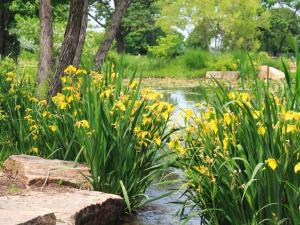
In the cold spring rain
Clinging to the earth below
Yellow flowers grow

*

Click this photo to go a page to hear the sound, whip-poor-will is an onomatopoeia.

Comfort

Still warm and dark night
Stars quietly fill the sky
A whip-poor-will sounds

***

Always look both ways
Every day write some haiku
And mind all the gaps


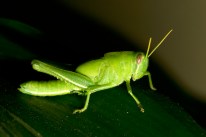
Nonsense Verse Poem: Green Grasshopper

Nonsense verse need not make much sense. This poem almost does, but not quite – maybe it’s organized nonsense. Each word begins with the letter G in six, three-line stanzas, and a closing line. The poem is alliteration on steroids.

Ginko is a tree. A goy is a non-Jew or gentile. Grendel is a monster/antagonist in Beowulf. Gewgaw means showy but worthless. Glozing is making excuses. Ganja is pot, and a grumphy is a pig. Gecking is showing contempt, or screwing over. A gazabos is a person or a guy.

Green Grasshopper
by Bill Reynolds

Green grasshopper: gregarious, gay, Gaelic, gaudy;
Goes glen gallivanting, gnaws grazed grass gastronomically.
Gerbil goes gets Gaia gazpacho, gibes gross grasshopper.

Gigolo gains gizmo, goes global ginkgo. Goy gone gentile.
Grendel grabs grisly, gruesome, guillotine games.

Goodbye goodwill, go gobbledygook goddesses glazing gizzards.

Geezer gets gas, gives general group gross gibberish,
Gropes good girls’ grizzly guy’s gloomy gizmo gear.

Grown guy gets glancing, girdled, gewgaw granny gutted.

Gypsy gains ground glumly, getting grouchy, grumpy, going gray;
Gauzily gashing, gauging glozing, gawking goofy gazelle gumming.
Growing, glowing giraffe goes gawkish, guzzles gimmick ganja.

Grazing glowing greens, grasshopper grabs gorgeous galaxy grumphy.
Grand guffaws galloping, gets geek gecking gazabos.
Grasshopper gets grand gumball gnocchi, gets gut gone grievous.

Gerbil, Gaia gone. Gigolo, goy gone. Grendel, goddesses gone.
Geezer, girls, guys, granny got gone. Gypsy, gazelle, giraffe gone.
Ganja, grumphy, gazabos gone.

Green grasshopper, going, going, gone.

Look both ways, mind the gap, and watch for green grasshoppers.

Poem: Freedom and Fairness

What do I want? What do you want? How do you want life to be? What will you do? Equality, fairness, and love should guide us. My friend, Karen, asked me to write a poem about freedom. I did. It has a dark shadow, but the shadow has a crack in it, so the light gets in.

We didn’t start the fire refers to the Billy Joel song, Timothy Frances refers to Leary, the beast is the oppressive government, Tom down is to be subservient. In terms of rhythm and rhyme, this thing is all over the place. 

The Freedom Dream is Dead
by Bill Reynolds

What do I want to do?
I wanna be happy.
I want you happy, too.
My dream is a happy world.

Imagine that.

How do we want things to be?
Let’s be fair, and hopefully free.
And just, and true, and honest, and imagine…
For all, equality and rights
With love we can see, for all brothers and sisters.
Life is not fair, but are we?

Imagine!

What is this happiness we pursue?
In all fairness, what can we do?
Freedom? Liberty? Is that all?
Equality? Justice, et al?

Can you imagine?

It’s just a damn dream for too many.
And our dream is dying the fastest of any.
One million paper cuts, delivered with slashes,
All hope is lost, the beast burns us to ashes.

As for my dream? It is dead.
We fought all for naught.
Now I feel a dread.
Selfishness won. It owns us now.

I can’t imagine.

Resistance is failing, the world is darkening.
Evil and greed are the name of the game.
Profit and loss the new moral code.
Money is god, ready for more of the same.
The worst from the beast is yet to be told.

Imagine died too.

We didn’t start the fire, we can’t put it out,
Feel the heat from the rich man’s ire
Burning a hole in my hopes and desire.

Timothy Frances, where are you now?
To destroy this beast, please tell us how.
Or do we Tom down, and let it go on?

My dream may be dead, but I will go on!
Resist, resist, resist, fight for rebirth.
Resist until we have new life on Earth.

Imagine a future, resist to the end.

Look both ways and mind the gaps.
Life has no guarantees, but we can work for fairness.


Elegy Poem for Mom

An elegy is a mournful poem. I wrote this elegy regarding the loss of my mother, more than 25 years after her death. The elegy is one of the oldest poetic forms. It’s identified by what it says, not how it says it.  The Greek word elegeia means song of mourning, and is often included in classical Greek tragedies.

Missing Mom

The day Mom died, I stood there and cried.
To the surface my guilt came out of my eyes,
Beside her deathbed, letting go of our life.
Her suffering had ended, and I was alone.

No person is perfect, no human unsoiled.
Enshrined mother’s love, was sunshine to me,
‘twas the essence of my childhood memory,
My loss just the same, never again she will be.

She’d lived a rough life, through to the end,
But she loved me as only the mother to son,
That unconditional love, will never be done.
Only her death could end our last day.

Alone. Just alone.

Her voice and her scent, ecstasy to me.
So much I still miss them. I can still see.
“Hiya,” she’d say, to even the worst.
As kind as she was, so how she asked me to be.

Mom we still miss you, your face and your smile,
The sound of your voice, the look in your eyes.
Never again, will you be for us to see.
The loss that brings a sadness, one forever I’ll feel.

Mind such gaps, look both ways, and remember love.

Poem: Dogs of War

This poem refers to crew members (called crew dogs) of B-52 bombers and to their war-time mission of dropping munitions to destroy things and kill people, thus the dogs of war. This is a dark and threatening piece, set in six stanzas of six lines each, with even and odd lines rhyming. Misery and woe are metaphors for the many types of weapons dropped. The shrill is the eerie sound bombs make as they fall. The dog, or beast, refers to the model D, or variant of B-52, which is painted black on the bottom of the airplane. Please question in comment.

We are coming for you.

Dogs of War
by Bill Reynolds

Let us slip from nature’s gravity hold
We war dogs of old, both willing and bold.
Into skies we shall go with misery and woe.
To maim and to kill, who we don’t even know.
Our airman’s life is to die if we will.
Into Death’s realm, we’ll send you the shrill.

We’re lashed to the beast, the marvelous dog,
Behind us we leave the stink and a fog.
The thunderous sound of flying around
We send you a hell, you on the ground.
Wonders of war are set at our feet
Our old friend death, soon you will meet.

A B-52H dropping high-drag bombs and flairs.

Destruction we’ll rain on your cities and towns,
You won’t know we’re there, we don’t make a sound.
Concussion will break you and all that is near,
Along with destruction, we’ll send you the fear.
The black-bottom dogs will come as you sleep
To rip and to tear, into hearts of your sheep.

The countdown will start, as our hearts will race,
But Death we’ll deliver at one horrible pace.
The flashes we’ll see and the fires will rise,
The dogs of war unleased, to your demise.
The horror will come as sure as the sun,
This nightmare relents when war is won.

The Beast

Safe home again with guilt, we shall not feel,
Because of the blow, we were vowed to deal.
To the bar we’ll retire and review the day’s mess,
In laughter and stories, we consider success.
The beast is now resting and finding a tune,
Ready again, the dogs shall return again soon.

The horrors of war are hidden away,
The death and the misery kept well at bay.
From dogs to humans we slowly turn,
To our homes and lives we always return.
Havoc returns with the dogs of war,
Until we can say, no war! No more.

Look both ways, mind the gaps, and fill the world with love and peace.
Lest we…

“…Cry “Havoc!” and let slip the dogs of war,
That this foul deed shall smell above the earth
With carrion men, groaning for burial.”
~ Marcus Antonius in Julius Caesar,
Act 3, scene 1, 270–275