“A gentleman is one who never hurts anyone’s feelings unintentionally.” ~ Oscar Wilde
Snarkastic and Proud

I like that quote by Oscar Wilde. Over the years, I’ve noticed that it gets more difficult not to cause hurt feelings with what I say. Today, if I say anything about sex (as in gender), someone’s religion or political opinions, nationality (though most of us really don’t know), hair (or lack thereof), you name it; somebody gets offended.
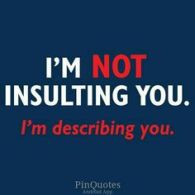 I do my best not to ‘unintentionally’ hurt somebody’s feelings. However, I’m unopposed to stepping on an emotional toe when I hear the call. As a senior citizen, I sometimes feel a sense of entitlement to do that, but I usually refrain. I once knew one guy who was so Cliff Clavin (from the TV show Cheers) that I started calling him Cliff. He never figured out why.
 Several years ago, my daughter-in-law said that I was snarky. I appreciated her honesty and courage. I also liked it. She was right; I am snarky. I’m also sarcastic. In fact, being both makes me snarkastic. I enjoy humor, but sometimes I don’t get it. I really enjoy ironic, skin-ripping, hard cutting, sarcastic snarkiness. Here’s a few short lists to help understand what I’m talking about.
Movies and actors
Robert Duvall and Michael Caine in Secondhand Lions (loved it)
Duvall in Apocalypse Now (“I love the smell of napalm in the morning”)
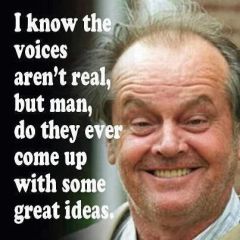 Jack Nicholson in As Good as it Gets (and other movies of his)
Many children’s animated flicks (i.e., Rafiki the baboon and Timon the meerkat in Lion King)
Male Comedians (Pick virtually any)
George Carlin, Bill Murray, Ron White, David Cross, Daniel Tosh
This is not a guy thing. Woman are wonderful at snarkasm. Some folks may say funnier. Watching a witty lady catch some Neanderthal off-guard is a treat. Snarkasm crosses all race, creed, gender, and economic status barriers. My current favorite snarkastic ladies include the following (and so many more).
 Female Comedians (Yes they are)
Amy Schumer, Tina Fey, Ellen DeGeneres, Joan Rivers (good grief, the queen), Chelsea Handler, Melissa McCarthy (brought me to tears in St. Vincent, The Heat [w/Sandra Bullock], and Identity Thief).
Writers
Oscar Wilde and Mark Twain
Cartoons/Comics
Now you know
 Not everyone has been introduced to my brand of snarkasm. After a while, when most people get to know me, they agree that I can pull it off. Many find it humorous. In fact, that’s the point – humor. I’m not on some kind of anti-PC* crusade here.
I recall watching Archie Bunker in the 70s and laughing so hard that I was sure I was going to wet my pants. Since then, I’ve often referred my father as a mix of George Burns and Archie – all three funny, snarkasticly-gifted guys.
So HELL YEAH! I’m a proud, snarkastic old fart. Deal with it, Junior.

Because I like you so much, here’s some good advice if a cop pulls you over today. Try any of these.
 Are you Andy or Barney?
I thought you had to be in good physical condition to be a police officer.
You’re not gunna check the trunk, are you?
And then when the officer says (cuz you been tippin’ a few), “Your eyes look red. Have you been drinking?” You should respond with, “Your eyes look glazed. Have you been eating doughnuts?”
So snark-up before it’s too late. Have fun!
*politically correct


 To be fair, when I was in a leadership position with a 12-step program, I told members that they either worked the program, or they did not. It was up to them. However, them telling me that the program was not working when they were not ‘doing’ anything but attending meetings indicated other issues. I was taught, and I have always believed that we each have a right to our own program. If that program is not working, something should change. Recovery is too complicated to go into all of that detail in one blog.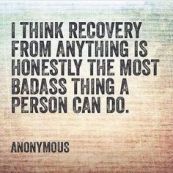


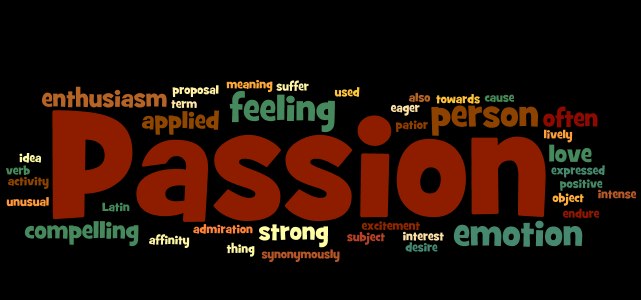
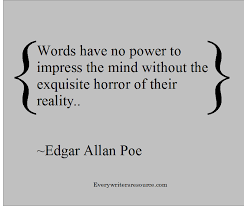 Three days of toil produced words born of emotion, but laying bare only thought and opinion. That challenge to produce expressive discourse full of feeling was riddled with notion and conviction of purpose, while lacking passion. Such analysis had merit and value, but I had so missed the deeper inside of myself that it might have been mere opinion drawn from a detached stranger. Those mindful barnacles of human grief remained anchored to my thoughts, thus hidden except from me.
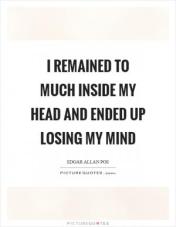 Knowing my feelings was not enabling my telling about them. Had I created a self, unable or unwilling to express feeling? I wondered deeper if I had co-opted with a force to create an emotional Dorian Gray. Were my feelings doomed to be confined in the shadowy attic of my mind? Had I become so adept at emotional deception that I habitually prevented expression of feelings? Had I become factually superficial and emotionally shallow, thus apparently less than a human lacking outward feelings?
 Twenty years hence, my awareness is of two worlds. An external world full of social interactions, judgements by and of others, and basic human needs. This is the world of people wearing masks, hiding feelings, and struggling silently with internal and external burdens. It is a world we need in order to sense the other world – a deep world that is hidden from others and often from our own self-awareness.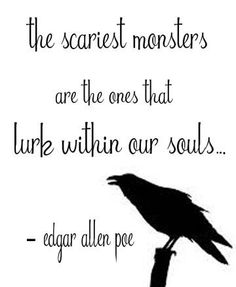

 So, I know when I made the change from young to old. It was about 40 years ago.
 Have you resigned yourself to the “it’s just a number that’s too friggin’ big” mentality? I’m not complaining about being old. Old people do not intend to complain about age. It is, after all, a successful result. On the other hand, the various consequences of age can’t be overlooked.
 If we live long enough, we share one important thing with many teenagers – we become bored easily. Old people can be annoying to some young people (15 years, remember). The thought that the feeling may be mutual seems to escape many. Most older folks that I know are working away at life. I know writers in their 80s and 90s who write every day, are working on writing books, and are making plans to publish.
 I live in an over-55, “active” community. Some folks here are more active than others, but most are kind of amazing. I took a blogging class where I met a lady of 92. She’s smart, funny, and still learning. She taught art classes and one of her subjects was art by carving vegetables. She made a scrap-book of pictures and writings on veggie art. She is an expert. Based on her experience, maybe the only nonagenarian expert. She wants to publish this in a blog. I can look past the outer physical things that show up when one is 90+. This lady is a master at her craft and learning another so she can share the first. I think that’s cool. In heart and mind, she is young, enthusiastic, and capable.
 I just returned from a “Personal Creative Writing” class. There are 15-to-20 of us taking the class. Most are interested in writing life stories or memoirs. These folks are talented writers; some are published authors; all are able to tell it like it was. They have the ability to make every life story funny, and even sadder memories are delivered with humor. They are good at their craft, but no one can accuse them of taking life too seriously.
 There are four brothers. They struggle to get along with each other, due to more than a little sibling rivalry. Three of them like to cause trouble. These three are selfish and annoying to humans and gods alike. They like to hide things from the sun, whose name is Sol. The three are very jealous of Sol. They think that they exist purely to keep Sol from comforting the earth and its inhabitants with his warming rays of light. Sol despises the three troublemakers, and openly favors the fourth brother. Sol knows how the earth, plants, animals, insects, and most people respond to his warm presence when the three annoying brothers are resting.
 Boreas is the north wind. While he can be out causing problems at any time of the year, his favorite season is winter. He is cold, icy, and wild. Boreas has a reputation for causing trouble and making a mess. He is a bully known for pushing the other three brothers around, especially Notus.
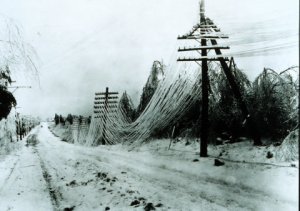 He is sometimes careless. Boreas sneaks under him and freezes his rain, sometimes just as it falls, causing havoc on the earth. At other times the north wind pushes back, causing violent destructive storms. This embarrasses Notus, but Boreas thinks it is funny. To confuse his brothers, especially the irritating Boreas, Notus sometimes spreads fog over the land and sea.
 Eurus, the east wind, is foolish and lazy. He seldom does anything, preferring the amusement of watching the conflicts arise between his brothers. When he is bored, he teams up with Boreas to create problems and confusion. Together they make a north and east wind, known as a Nor’easter. Eurus watches from the comfort of his room and laughs at the chaos he creates with his brother. He is the most evil of the three problem winds.
 Zephyr enjoys seeing humans smile as he touches them, blowing into their faces, caressing their bodies, and messing up their hair. Often, after his brothers make a mess, Zephyr works to clean things up. He sweeps the sky clean of clouds so that Sol can warm the people, melt the frozen ice and snow, and dry the soil. Plants can grow, people can honor the sun, and animals can forage among the plants. Life goes on.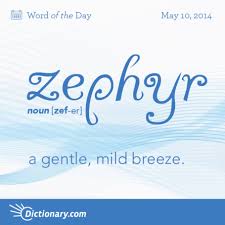

 In my lifetime I’ve been called a wise-guy, wise-ass, and a wise-you-name-it. I don’t recall denying any of it. But until I lost a significant amount of hair, gained a lot of scars (and weight), and dealt with a good bit of life’s experiences, no one has used the words wise or wisdom (without suffix) regarding me. So, as I was running through the w’s (women, walking, wine, wild, Wilde, and why) in search of an ‘a-to-z challenge’ blog topic, my wife says, “How about wisdom? You should know about that.” (Her birthday is tomorrow.)
 To me, the word wisdom has much in common with the word quality. Both are generally positive; we recognize them (or their absence) when we see or encounter either. But, precise definition for both eludes us. We are willing to take on as much quality and wisdom as possible, but with one condition. We want to know the cost. What price must we pay for quality? Can we afford it? What price must we pay for wisdom? Are we willing to pay the price?
 As a college student, I would walk into the Seven-Eleven store and eyeball the beer coolers. I looked only at price per six-pack. Texas Pride was 86-cents for six cans. I still can’t believe I managed to drink that horse piss, but price mattered more on my tight budget. I ignored quality. Little did I know then that years later I would gladly pay eight-to-twelve times as much for top-quality, locally brewed, craft beer. My taste and budget have both matured in quality.
 I had a conversation with a friend who was a wonderful, doting, and loving mother to her children. As I listened to her rant-on one day concerning some problem that her son was having, I asked her this question. “You love your son. Why do insist on preventing him from learning life’s lessons simply because they are painful? Be there for him. Protect him from serious harm. But allow him the dignity of learning his own lessons.” Before she got over her hurt feelings about what I had said, she backed off (he owes me). Hard for her, good for him.
 We are wiser when older because we have been schooled in life longer.
 How each of us views utopia is probably similar in the broader sense, but we may differ as we each conceive of the details.
  In the world of politics, the dark side of human nature emerges. Of course, it is always the others or the other side. Real world peace would be required long before we could begin to approach anything like utopia. It requires an egalitarian (equal) society and that is contrary to most politics I’ve ever seen. When I think politics, I see far more potential for dystopia and war.
 Religion? While a great deal of good is done in the name of a deity and the respective religions, that good fades to virtually nothing when balanced against the historical inequality and current turmoil that seems to move more toward dystopia — more war.
 I asked alcoholic and drug-addicted Texas prison parolees the following three questions while teaching secular recovery classes. I came up with these to help them find a world view that went farther than the tips of their fingers. My personal answers are utopian.
 The confusion and struggle so many of us face in answering these questions is an interesting testimony to our nature. But we each have our personal utopia within our answers.
 The other night, as we sat discussing writing projects and their duration, the subject of time came up. There were three of us, representing roughly three generations. The more we talked about time and how each of us currently sees it in terms of the future, the more I realized how differently each one of us viewed it. Time does not change. We do, and thus our view of time changes with age.
 I claim to be a right here, right now kinda guy. I live in the present moment. As I contemplate writing a memoir, this seems to cause me an ‘angst’ problem in that I wanna, and I don’t wanna. (I also struggle with writing about myself, but that’s not the issue.) I like History. It could’ve been considered my second minor at A&M. My manuscript is historical-fiction with too much history and not enough fiction. This morning I was asked if I would write a time-travel book (I’m noticing that Vickie has a knack for asking me thought-provoking questions). I didn’t have a ready answer, but after a lot of discussion and thought, my answer is ‘nope.’
 After doing a bit of reading, I’m no longer positive that I know what ‘this moment’ in time is, or if it exists. My metaphysical (woo-woo) friends get excited about this fascinating subject. When they do, I look at my watch and note, “It is one-forty, PM.” But they’re right. It’s really an interesting topic. Physicists and philosophers are all over it. Check out all the wiki and academic research (

 Stephen King has made a successful career out of scaring the hell out of many of us. We (not all) like to be frightened. Scary movies are fun. They are not for everyone, but a lot of people love them. Why? Is it the same with sad books, movies, songs, or plays? We keep going back for more.
 My focus here is music. A friend loved the song Dance Me to The End of Love by Leonard Cohen. That is until she learned that the inspiration of the song was in fact the Holocaust. It is a lovely and beautiful song, but that sadness changed the song for her. The song is not sad by itself, but because the inspiration was so tragic, her opinion of the song changes from love to sadness.
 For sad movies, I have listed only five. It could be hundreds.
 Love Story (1970)
 Yolonda, my wife of 50 years (we married at age 2), is a native Texan and has her ‘druthers.’
 Billy on right, (w/Phish bassist Mike Gordon), our oldest child is in his mid-40s, a very nice, loving, big-man. He’s always been an avid reader, a talented writer, a movie aficionado, and a hard-core Phish-head. Add bicyclist, father, hubby, friend, musician, and deep-thinker.
 Steven is our middle-child, now in his early 40s. He’s another good guy. An avid sports fanatic (Spurs and Cowboys) and mountain biker. Add hubby, step-father extraordinaire, house music DJ (Steve Balance), friend, and all-around cool-dude (maybe pragmatic and analytical). He initially said that he had no fav quotes, but when he and his sista’ got to texting, there they were.
 Our beautiful ‘baby’ is Julie. She can recite every line from the movie Grease (oddly did not quote it), is an artist, a thirty-something, 21st Century hippie, a mom and step-mother. I think she is a wonderful writer and, like her mom, a Grammar-Nazi. She lives in the middle of nowhere with her hubby, son, occasionally a step-son, or two lovely elves, too many cats, horses, and sometimes (because he likes to chase the horses) a dog.
 Our Literary Journey