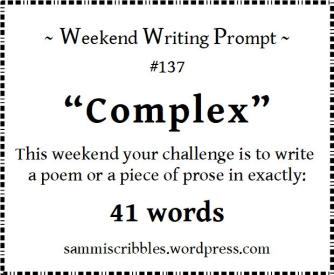
To say
Our relationship is complex
seems simply trite,
that’s what I like about it.
Thoughts matter. What “I wish”
matters too. We don’t
have to explain it, not that we could.
Even WE, (or is it US?)
don’t understand it.
Look both ways and try to see all points of view. But mind the gaps.
I’ve written that the best thing about August is September. Not this year. September brought several personally stressful events into my normally complacent private world. October was a month for healing and action. Gradually, recovery unfolded as those things apparently changed to my favor thanks to the efforts of a few loving people.
I did not win the lottery, but I began to relax. November was the best of the three months—not exactly perfect, but the worries from two months earlier seemed controlled. I’ll take it.
Thanksgiving Day is the traditional time our immediate family gathers. It is our time. Indeed, we had a house full, but I put in my notice for next year. We’re too old for that shit. It was fun and we are all grateful for how things have turned out so far. But there are people out there trying to make a living fixin’ turkey, giblet gravy, cranberry whatever, and all that stuff. I should help.
This poem was written about me writing a poem each day by a friend from my writers’ group. After Ann, who I like to call Barbara Ann (not her real name – long story: Ba ba ba ba Barbara Ann and the Beach Boys), read it during one of our poetry sessions. I requested, and she gave me, permission to post it here.
One Poem A Day? By Ann Bordelon
“A poem a day?” That’s quite a task! I say that’s wa-a-a-a-ay too much to ask. One a week might be realistic, But one a day is too optimistic. They don’t have to rhyme, you say, But still, one every single day? There aren’t that many words in my brain, I’ll run out in a month, what a strain. Please tell me that this is a sort of a joke And the reality is that you misspoke. Instead of “one poem a day” you meant, “One poem a week is what we should invent.”
Thanks, Ann. Wonderful poem. I’m honored.
I don’t know if I could cut back to less than one poem a day, much less to one a week. On this coming New Year’s Eve, I will complete my mission of composing at least one poem each day during 2019. After that, who knows?
The titles/topics of the daily poems I wrote during November were:
Dying Dignity
Ineffable
First Reading
Finding Treasure
Poets are Dying
Editing
Don’t Bite Me
Natural Brutality
Liminal
Some Cussing Required
Precious and Rare Days
To PC or not to PC, a Question
Thoughts
Imagined Solutions
Muse Berries
Draconian
Up Your Rolex
My Colorado Morning
Extraordinary Knowing
Lie to Me
Dear Deer
The Gap is Gray
I Hear You Died
The Final Week
My Twilight Swim
Ignorance is not Bliss
Expectations
Cowboys 2.0
Body Gremlins
Morphology
As we enter the last month of the year, I look both ways—to future months
as I wonder what’s next with a curious fantasy about the advent
of a new time and age. I think about past months
with more satisfaction than I’m entitled.
I shall mind the gaps in my life, one day at a time.
In this pen are words
which form poems
and prose
which makes me feel good
which coaxes me to
pick up this pen
which connects with
the fingers on my hand,
thence my wrist and arm,
which then winds to my
brain and mind,
which connect deep down
within me, and it knows.
Somehow, something goes
clear to my toes.
I don’t love
(or even like)
everyone or everything
and I never will.
Which reminds me,
I love you.
And this pen, too.
***
Look both ways in the moving alley of creative neurosensory discovery.
Mind the gaps. They’re there for you and for us.
I recall, eons ago, when I was neither adult nor child,
during a phase of life known as adolescence
or numerically, being a teenager.
I also recall later being
a male adult parent to three, at one point—
all three almost simultaneously fitting
the technical teenager definition.
We all age up, but teeny boppers, as was once
a more affectionate term, stay the same.
Someone is always oddly 13, 15, 17, or some
age of that hormonally unbalanced
and the musically misguided post-pubescence.
I recall that back then, I was often bored unless
in the midst of violent volcanic eruptions,
and even then, given time, I found them dreary.
Almost everything of interest
involved getting into trouble, things which
I confess to doing with reckless abandon.
Now I look around and see grandchildren,
mostly in some phase of teenage-ism,
some exhibiting familiar behavior, some not.
I see parents, once teens themselves, distraught
over viewing in their progeny reflections of
their former life, a past they seldom
confess or want to remember.
I have no solutions and few suggestions for
those raising difficult teen personalities, like me,
like them, maybe like my parents in the
years of the Great Depression or
WWI or II. But I smile slightly
and I sympathize greatly.
Two things in life are not for sissies:
raising teenagers and getting old. That,
having done both, I can swear to. But,
in the long run, they are worth it.
May we all live long, prosper,
and remember. “Tomorrow, and
Tomorrow, and So Forth.”
Look both ways as life transitions. Be mindful of the gaps in denial.
I prefer to write Sammi’s weekend prompt on Sunday. When I looked at it on Friday, I wrote a poem. It just happened: oops, a poem. I decided this weekend’s prompt could be for each day of the weekend, including Friday. My three on replace:
Going Home Again (Friday)
I’ve tried to go back home,
to the place where
I was born.
It was the right place,
but I was not the him who
I was when I left.
I was unable to replace me,
and you weren’t who
you once were.
No longer was I one of you,
not of the same tribe,
only a memory.
Once you leave, it’s done.
You can never go home again,
we can’t go back in time.
What was is finished,
only the whisper of memory
holds us in the past.
***
Irreplaceable Love (Saturday)
If you lose someone you love
you can’t replace them
nor the love you felt.
Each love is unique. It may
change or flat-out die,
but most love remains in us.
We can’t feel so much love
that we wear it out,
like an old pair of shoes.
The love we feel is at least
for as long as one shall live,
I hope all my love lasts forever.
Be it a pet or a person, family
or friend, music or memory,
no love can replace a true love.
***
Relief Strategy (Sunday)
Planning battles, reserves
are replacements,
part of the relief strategy for
casualties and the weary.
In basketball they are the bench,
In football, second string,
baseball has relief pitchers from
the bull pen that replace starters.
My Dad referred to men
as being on relief. Years later,
I learned he meant welfare,
not to replace.
Then there is that personal relief we crave
during difficult or painful times, like in
the Jerry Clower story about coon huntin’—
I been coon huntin’ and lemme tell ya,
it’s just that funny.
***
Look both ways in them Mississippi swamps.
Mind the gaps for Lynx.
*
Jerry Clower’s most famous story was his coon huntin’ story about the time he and his friends went hunting that evolved into an entanglement… if Jerry don’t make you laugh, you need relief. If you got the time, he’s irreplaceable.
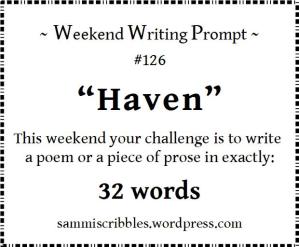
With no refuge, unrequited love
without heavenly haven,
without healing, without beginning
or end. When a kiss is not a kiss,
when one love is lost in lonely
pain, unable to mend.
***
how can we ever be happy alone in this depressing darkness void of all meaningful life enduring these threats from a determined death never knowing how or when, it will all end?
***
Look both ways, the yin and the yang.
Mind the gap hiding good news and bad.
Jimmy and me, and his sister June,
all about the same age
of seven or eight were standing
in the alley behind my house.
On that day I did not know
that in seven or eight more years,
me and June would share the experience
of lost virginity, the one and only day
she did not spurn my teenage romantic advances.
We three friends were all shirtless and discussing
whatever pre-pubescent children talked about
in the 1950s, when the shrill voice of their aunt
Dorothy demanded June not remain shirtless.
June did not get a satisfactory answer to her ‘why?’
(did we ever?), only that girls don’t do topless.
I looked June over, brown hair to barefoot toes
and could see no reason but forced socialization
of such things was commonplace and
in some circles probably still is.
Jimmy and his aunt died years ago. June is
a great-grandmother and we don’t keep in touch.
That’s too bad. I wonder what June remembers.
Look both ways before removing your shirt in the alley behind my house.
Mind the gaps, not the nipples, and aunt Dorothy, too.
For a little while longer
I will annoy you with my
banal sarcasm, seasoned
with a pinch of wit.
For a little while longer
I will stare into your eyes—
making you uncomfortable.
I may annoy your sensitivity
With wise cracks or politically
incorrect observations of truth,
but only for a little while longer.
Until I stop, I will stake my claim
to a share of our relationship.
I may touch you, hug, or even kiss you
for a little while longer, and for as long
as I can. For a little while longer,
maybe forever, I will continue
to love you.
Of the forever possibilities, we’re all ignorant. Look both ways here and now. Do it now, say it now, mindfully minimize the gaps.
A first funeral for me was in our church. I was too young and didn’t know him. But I cried—it was so sad. Others did too. My family all asked me why I cried. A man I didn’t know had died. They took me to his funeral, and I cried because I felt so sad. Why did they ask me why? It was a funeral. I saw others cry. But I felt sad for his friends and family, and for him. My family seemed to be telling me that I should not cry or feel sad. They were telling me how I should feel.
It was my first taste of ultimate reality and sadness at a level I had not yet known. Six decades later I still recall their questions and the implication that I should not be sad because some man had died. And since I did not know him, I should not care about his death.
They knew him. But none of my family cried. I was confused by their lack of sadness. How could they not feel it? I didn’t wonder then why we went to the funeral, but I do now.
I should not feel emotion or act out my feelings if I do. I did not understand why others didn’t feel as I did. Too young, but already being told not to feel too deeply—to not be a sensitive man boy (later a man). Stoicism was and is associated with strength and manliness. Strong silence.
Years later I attended an emotional funeral for two young children of a workmate (auto accident). Later, another workmate criticised the people who cried at that funeral. I wonder more about former than the latter. How could he not cry and why criticize those who did?
Now, I am sometimes spoken of as a sensitive man by some; as one who reflects sensitivity back upon people. They say so because they read my writings. Not because of how I behave.
But not always. I suffer fools poorly and bullies with quite limited tolerance. I am sensitive to violence toward others, but I can do what it takes to be just and fair.
I cannot ask why they tried to teach me not to cry, or not to feel, or to be not sensitive about those who died. And they cannot answer. I doubt any would understand why. I went to their funerals and I cried because they had died and I loved them.
I cried when each of them died. Nobody asked me why. But I still hid my tears. I cried when I was alone. They had taught me well, but they never changed me. Show them only the face they wish to see. Be the strong, stoic, liar.
I remain an emotional little boy society calls sensitive (or weak or worse). They, in their curiously socialized hearts and minds will never understand me—nor will I, them.
Why cry? Must you ask?
Look both ways and deeply into the abyss of human emotions.
Mind the gaps but be consistent. Be yourself.
Growing up, it was foreign land—
to me, yet, it was favored by all,
a magic kingdom of food and warmth,
a homework headquarters.
It had a coal stove for heat and
cooking. Mom (sometimes Dad) did laundry
there with a wringer machine filled and emptied by hose,
when new to the tribe, I was bathed in that sink,
perhaps after laundry and dishes were done.
Later in life it was (and still is) wife’s land.
Maybe it’s sexist, but barefoot in
the kitchen was her idea.
Actually, it was all her house
where we all lived. At home,
it was where the core of many lives
transpired—in the kitchen.
Meetings, parties, family dinners,
games and puzzles, some business.
It was our mother-ship’s headquarters.
When between jobs, I was given
the helm of house to navigate;
cooking, cleaning, laundry,
paying bills, and giving some homework
help. Dropping off, picking up,
taking to kid’s thingies. For a dad,
I believe I made a passable mom.
But the jury remains out.
Now those kids are gone
to their own kitchens,
it’s still the same in our lovely
(if mostly empty) nest. It’s her kitchen,
somewhere in the middle of
Texas. I don’t really
cook but would like to. I am the
dish washer, maybe replaced now
by a newer and quieter, a younger one
with fingerprint proof silver skin.
No man has ever been murdered
while doing the dishes. Perhaps I
should be worried and observant,
or apply for the position of official
dishwasher loader and unloader.
It’s not my kitchen and it never will be.
Perhaps the laundry room?
Household poet laureate is a good job,
I eat well, and the beer is cold.
Look both ways, near and far.
There will always be gaps, in love and lust,
but in the kitchen, it’s Mom we trust.


 Our Literary Journey