Be a Stranger to Death: Know his Work

A first funeral for me was in our church. I was too young and didn’t know him. But I cried—it was so sad. Others did too. My family all asked me why I cried. A man I didn’t know had died. They took me to his funeral, and I cried because I felt so sad. Why did they ask me why? It was a funeral. I saw others cry. But I felt sad for his friends and family, and for him. My family seemed to be telling me that I should not cry or feel sad. They were telling me how I should feel.

It was my first taste of ultimate reality and sadness at a level I had not yet known. Six decades later I still recall their questions and the implication that I should not be sad because some man had died. And since I did not know him, I should not care about his death.

They knew him. But none of my family cried. I was confused by their lack of sadness. How could they not feel it? I didn’t wonder then why we went to the funeral, but I do now.

I should not feel emotion or act out my feelings if I do. I did not understand why others didn’t feel as I did. Too young, but already being told not to feel too deeply—to not be a sensitive man boy (later a man). Stoicism was and is associated with strength and manliness. Strong silence.

Years later I attended an emotional funeral for two young children of a workmate (auto accident). Later, another workmate criticised the people who cried at that funeral. I wonder more about former than the latter. How could he not cry and why criticize those who did?

Now, I am sometimes spoken of as a sensitive man by some; as one who reflects sensitivity back upon people. They say so because they read my writings. Not because of how I behave.

But not always. I suffer fools poorly and bullies with quite limited tolerance. I am sensitive to violence toward others, but I can do what it takes to be just and fair.

I cannot ask why they tried to teach me not to cry, or not to feel, or to be not sensitive about those who died. And they cannot answer. I doubt any would understand why. I went to their funerals and I cried because they had died and I loved them.

I cried when each of them died. Nobody asked me why. But I still hid my tears. I cried when I was alone. They had taught me well, but they never changed me. Show them only the face they wish to see. Be the strong, stoic, liar.

I remain an emotional little boy society calls sensitive (or weak or worse). They, in their curiously socialized hearts and minds will never understand me—nor will I, them.

Why cry? Must you ask?

Look both ways and deeply into the abyss of human emotions.
Mind the gaps but be consistent. Be yourself.

Poetry: Kitchen Visits

Growing up, it was foreign land—
to me, yet, it was favored by all,
a magic kingdom of food and warmth,
a homework headquarters.

It had a coal stove for heat and
cooking. Mom (sometimes Dad) did laundry
there with a wringer machine filled and emptied by hose,
when new to the tribe, I was bathed in that sink,
perhaps after laundry and dishes were done.

Later in life it was (and still is) wife’s land.
Maybe it’s sexist, but barefoot in
the kitchen was her idea.
Actually, it was all her house
where we all lived. At home,
it was where the core of many lives
transpired—in the kitchen.
Meetings, parties, family dinners,
games and puzzles, some business.
It was our mother-ship’s headquarters.

When between jobs, I was given
the helm of house to navigate;
cooking, cleaning, laundry,
paying bills, and giving some homework
help. Dropping off, picking up,
taking to kid’s thingies. For a dad,
I believe I made a passable mom.

But the jury remains out.
Now those kids are gone
to their own kitchens,
it’s still the same in our lovely
(if mostly empty) nest. It’s her kitchen,
somewhere in the middle of
Texas. I don’t really
cook but would like to. I am the
dish washer, maybe replaced now
by a newer and quieter, a younger one
with fingerprint proof silver skin.

No man has ever been murdered
while doing the dishes.
Perhaps I
should be worried and observant,
or apply for the position of official
dishwasher loader and unloader.

It’s not my kitchen and it never will be.
Perhaps the laundry room?
Household poet laureate is a good job,
I eat well, and the beer is cold.

Look both ways, near and far.
There will always be gaps, in love and lust,
but in the kitchen, it’s Mom we trust.

Poetry: Green River

Like when Dick Clark used to ask the American Bandstanders,
What did you like about that song?
It’s music, Dick—don’t over analyze it
—and it is rock at that.

When Fogerty sings Green River

and I hear it

and I feel it

and yes—it takes me back,

not to a place or to a person, but to
a feeling. A condition of my

soul, walking a lonely road at night
barefoot girls dancing, it
seemed so right, the moon
at night.

On the inside a feeling makes me
want to want more,
inside me
a then that defies the reality of a now,
I dance cuz I feel, I sing cuz
I am going back to Green River.

I feel who I am—like
a slightly cracked shell over a sweet feeling that
was my Green River.

I remember things I love,
the sights, the sounds,
the smells and the tastes.

Now I love how it feels
when old John and Cody
take me home to a feeling—

to my Green River.

Look both ways along the river of time. Mind the gaps, bullfrogs hide there.

Poetry: Sammi’s Weekend Writing Prompt #113 – Enthral(l)

An acrostic poem using the preferred US spelling to begin each line.

Enraptured by his vision of her beauty
Naughty and naked, how he wanted her
Taken with thoughts of ecstatic adventure
He stood bewitched, erect and stone hard
Riveted by rapturous delight, beguiled by her
Alluring charm; hypnotized and transfixed,
Lured into lust, he lost as her spell of
Love enslaved his soul and passion.

It’s not always possible to look both ways.
The gaps can be enticing.

https://sammiscribbles.wordpress.com/2019/07/06/weekend-writing-prompt-113-enthral/


Monthly Poetry Report – May Poems

I write two kinds of poems. The daily poems are first drafts. The others I try to improve and I post some on this site.

Ideas for poems (and for everything else) pass quickly, and my notes are usually insufficient to reconstruct ideas or inspiration. When I try to use notes, I either loose the true, deeper concept of the poem, or I can’t decipher what I wrote. Thus, I often write out a more complete, but still unfinished and unpolished, work before it flies off like a lost sock.

At the start of May, I was burned out after April’s effort and I struggled to recoup my writing rhythm. I did no Limericks this month as I had hoped, but I’ve not given up.

There once was a lady from Texas…

Here are the titles for May’s 31 daily poems.

  1. No Pass Given
  2. They Are People Too
  3. Effort
  4. Now
  5. Goodbye, John
  6. May
  7. Little Blue Circle
  8. Walk in Circles
  9. Off-key Birds
  10. The Charge of Thoughts
  11. The Birds Meet
  12. Thanks, Moms
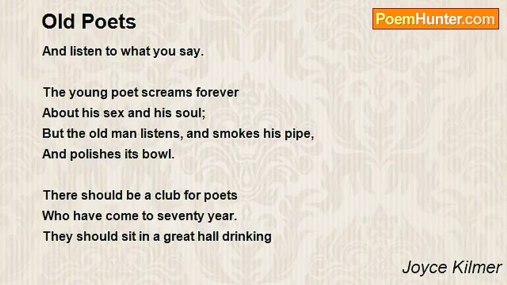
  13. Drunk Poets
  14. Library Thoughts
  15. By Saturday
  16. House Guests
  17. Dawn of Promise
  18. Why is it Like This?
  19. After Midnight
  20. Retired Too
  21. Yes, I Drink
  22. Too Much Nothing
  23. Channeling Chinaski
  24. Euphemistic Bull Shit
  25. Man Up
  26. Little Mocker
  27. Monday Morning
  28. And…Um, but: whatever
  29. Ain’t It Funny
  30. A Rare Cat
  31. Waiting

Have a wonderful and inspired June.

Bill

Looking back to May and forward to June is looking both ways.
Mind the gaps, the deep ones can be dangerous
and the shallows hide interesting secrets.
Live, love, and dance; I’ll join you.

Poetry: Fixing Things

broken
dirty
people who want to feel better

puzzles and problems

edit to make it better
fix by ignoring edits
aligning painting adjusting
solving brightening or darkening
and resolving

healing and being healed

fixed or broken

repeat

© Bill Reynolds 5/30/2019

Look both ways and mind the gaps.
If it ain’t broke, don’t fix it unless it’s poetry.
Always fix a poem.

********

Poetry: Poem’s Point of View (NaPoWriMo) Day Seventeen

Today, I’m challenged to write a poem that presents a scene from an unusual point of view.

***

He will not leave me alone. All that touching and feeling me, he tweaks me mercilessly,
and (too often) makes me look like barfed up SpaghettiOs.
It’s embarrassing.
He thinks I am his and that he knows all about me.
He doesn’t.
I know teenagers who know more about me than that old fart.
Others simply see my words or hear my meter while he sees me as his personal art (bitch).
He puts his name on me – how rude is that? He doesn’t get it.

He talks about me (us—there are others) endlessly, influencing his friends
to fool around with me.
Sometimes he gets violent with paper and pen and pushes me around
because he thinks his mental malady will be short-lived. How rude!

He knows so little. He has been writing poetry for fifty-three (long) years.
BFD, right?
When he was young with a hard cock, he ignored me. Thoughts?!
That’s all I got from him. He liked us, but he was ashamed
because I didn’t do much to make him look strong and tough and mean.
I think he is an imposter and so does he.

I am all he does—all he thinks about. He explores me in every embarrassing way,
he sniffs me, touches me, he reads bawdy stories. He acts like I am some sort of trophy bride. And oh, my fucking god!
The limericks! The men who write them must be burning in hell.
I know for a fact that he’d rather a crusty, edgy limerick over a sweet love song poem.

Sometimes he writes me and then loses me.
Rather than be upset, he writes another me.
It’s as though I matter, but I also don’t. Which is it?
What the fuck?
He will never win a damn thing.
He wants to put us in a book and claim us as his own.
Such possessiveness! It’s unacceptable.
We are our own persons, who just happen to be poems.
If we belong to anyone, it is the poetic universe,
but he’ll never understand that.

There are reasons he was as he was,
and more reasons why he is as he is,
but none of that has anything to do with us,
the poems, the words, the lines and rhymes of Our verse.

When he looks at me it is like he is seeing a ghost, a shapeless cloud figure,
wavering without beginning or end,
just flowing shapes in many forms of endless words,
of unknown visions and interpretations.

Oh crap, he is picking up that god damn pointed, sharp pencil.
Soon he will be poking and scratching, adding and removing, or changing—endless changes.

In my next life, I want to be prose. Just a little time on his laptop, maybe one printing and we’re done. At least he knows prose and has been doing it since way back.
This rookie old fart poet will be the end of it all.

©Bill Reynolds, 4/17/2019

Look at all things both ways, male and female, creator and created, toucher and touched, kisser and kissed, poet and poem. Mind the gaps which harbor resentment of the art.

Poetry: Why am I Me? (NaPoWriMo) Day Eleven

My poetry challenge today is to write a poem of origin. Where am I from geographically, emotionally, physically, and spiritually. And having come from there, where am I now?

It’s not really a home, but it’s where I am from,
a place and a people from whom I’ve come,
other places they called home were not theirs.
Were they as proud as I, of who they were?

My look, perhaps a taste or a talent; a religion
or a language, this tribe of people like me.
Am I good enough? Were they? My foibles,
both pride and shame cloud my reality,
I don’t know what to feel about who or what I am,
or that I am at all, or who or what they were.
Why does it matter now? Is it because
knowing you is knowing me?

Why should I care? Am I a conduit of genes, maybe
I pass on life, survival, perhaps some weakness?
Who am I? Why am I? Why now? What do I want?
Taste, beauty, mindful intelligence, with durability
all passed from them to me, then to continuous family.

Why am I and what did you want? Life until death?
What is it that I don’t know? Not just life, but
thoughts. What did you think? What did you cling to?
Did your strength or weakness pass to me?
We’re from there, and there, and other places.

The you I’ve never met, secrets you’ve never told,
burdens never experienced, fears not shared,
friends, enemies, jealousies, hatreds that
may have traveled, but then died with you.
So much of what I am flowed from you to me.
Maybe I simply pass on, or maybe I just do.

©Bill Reynolds, 4/11/2019

Careful as you peer into the gaps of history but look both ways.


Poetry: Time Will Allow (NaPoWriMo) Day Five

Today’s challenge: write a poem incorporating the villanelle form, lines taken from another text (poem), and/or phrases that oppose each other in some way.

I selected two lines from the Rubáiyát of Omar Khayyám (trans. Richard Le Gallienne). I think I wrote sufficiently opposing lines. I tried to do all three.

Time Will Allow

Heed not tomorrow, heed not yesterday
Our life is our blood, flowing here and now
O fools, that after some tomorrow stray!

Darkness does not age, even in the day
Drink and love much as our time will allow
Heed not tomorrow, heed not yesterday

Yesterday was here, but now goes away
Let us drink our love, ‘neath a shady bough
O fools, that after some tomorrow stray!

We kissed our wine, but now it’s gone away
Love is our wilderness, paradise is now
Heed not tomorrow, heed not yesterday

We are the fruit of gods, sent here to stay
Return again here to me tomorrow
O fools, that after some tomorrow stray!

Love us forever, together we pray
Wine and we between, let me show you how
O fools, that after some tomorrow stray!
Heed not tomorrow, heed not yesterday.

©Bill Reynolds, 4/5/2019

Look both ways but live for today. Mind the gaps between the gator’s teeth.