I’m not sure what I expected from How to Write Short by Roy Peter Clark. But it was better than that. I make all the writing errors, especially using too many words. So, while I was looking for what might improve my writing, I learned much more about our craft. Writing short applies to all writing, but the focus of the book is intentionally writing well using fewer words.
Some of the best, most memorable English language writings are short. I try to keep my blogs brief, but they often surge over 800 words. I’ll continue to work on that; to chop, murder, and cut.
This book was great. For one thing, it’s a readable, friendly style to my liking. If you’re a writer, journalist, poet, or ad hack, this is a good book you. You can plow through it quickly.
The 35 brief chapters are divided into two sections. Section I, How to Write Short, has chapter titles that deliver on the promise to improve short writing. Such as the following famous short writes:
“These are the times that try men’s souls.”
“The reports of my death are greatly exaggerated.”
“A feeling is an idea with roots.”
Or, from the top of my blog page, Into every life rain must fall (from “Into each life some rain must fall” ~ Longfellow)
Dr. Clark provides motivation and reasons for short writing.
To enshrine (monuments)
To amuse (jokes, snarky comments)
To explain (instructions)
To narrate (microfiction, live blogs)
To alert and inform (text messages, news blurbs)
To remember (notes, lists)
To inspire (proverbs, quotations, prayers)
To sell (adverts, resumes, bumper stickers)
To converse (Blog comments, Q&A, social nets)
The second section consists of 13 chapters where he tells how to write short with a purpose.
Even if you’re only mildly curious about writing short, I recommend this book.
Some WordPress blogs provide prompts that are helpful practice for developing the craft of writing short. One I like is one liner Wednesdays. Can you can suggest others?
Who would not like to get the point across in fewer words? Okay, some, but few.
A few weeks back, the headline was about Olympic athletes being robbed in Rio de Janeiro, Brazil. After a few days, it turned out that they were gold medal contenders for the what were you thinking? event. One US swimmer won the liar-liar, pants-on-fire trophy across the world. I wonder how much trust will be restored after all the damage control that followed.
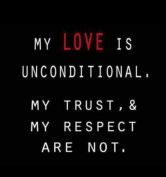
We know what trust is. We trust others. They don’t earn it. Either we give it, or we don’t. We also trust in portions or on a sliding scale. Some get more than others. We also know that trust depends on a lot of things. Past behavior is a big one.
When will Charlie Brown learn that Lucy will pull the football back at the last second? She does it every year (link).
About the same time that some of our athletes were not being robbed at gun point in Rio, I was in a discussion about trust. I thought I had trust figured out. I learned some things (I usually do when I shut up and listen).
I’ve never thought about the fact that we need to trust. Carrying that need a bit further, we also need to not trust. It would be great if we had this perfectly figured out. Often, people we trust teach us valuable but painful lessons on who not to trust, and when. As it is with love, when we trust we become vulnerable.
I once asked a work-mate why he left money on the table when he did not put a small percentage of salary into a retirement account, which our employer matched (free money). He didn’t need the money. His answer was, “I don’t trust them.” I was dumbfounded by his answer and I changed the subject. He paid for his lack of trust.
Competence and honesty are two other conditions that effect our trusting others. Our trust may have a few variables and conditions that go with it. I may trust you to suggest a good dentist for me. I will not trust you to be that dentist.
When my cardiologist showed up to place stents into my coronary arteries, I trusted him more when he told me how many he had done. I liked the guy, but that had nothing to with his competence. His experience did.
So, in addition to the things I mentioned earlier, we may trust others in differing degrees. That degree may increase in proportion to competence and experience. Generally, we don’t trust people who we think are dishonest.
When I discuss trust and judgment, I use the word discernment. Our ability to discern improves over time, often with a trail of painful lessons because we trusted people we shouldn’t have. When Ronald Reagan used the oxymoron “Trust but verify,” he was really saying “do not trust them.”
Erik Erikson theorized that trust is learned during the first couple of years of life. Regardless of how accurate that is, it seems logical and emphasizes the importance of trust in our lives from early on.
What I think is important regarding trust is not how much we have in others. We usually have some, even in total strangers. What is important is that we learn to use reliable judgment, based on experience to discern how to trust.
In her TED talk, What We Don’t Understand About Trust, Onora O’Neill says it much better than I can. Click here to watch it.
Trusting seems natural. America’s motto is In God We Trust. Another is E pluribus unum (out of many, one), but in 1956 we wanted to make sure that our country was not confused with the atheistic USSR.
In America, it seems that we want to trust more as we deal with each other every day. Are we worthy of the trust of others? Who do we trust?
I like the word magic. I like magical things. I like to use it to explain things I don’t understand. I like to say it – magic. I enjoy the way it sounds and how it feels when I say it. I like words ending with the hard K sound. Duck, truck, shmuck, fu**…; you get the idea. Back in the day, when something was unexplainable, we used to say it was PFM (pure fu**ing magic). I still use that initialism.
While I may not believe that supernatural beings exist (okay, maybe some duende), I still like to refer to unexplainable, cool happenings as magic. I try not to use the words miracle or miraculous in a serious sense. But magical works for me. If others want to use words like miracle to describe things, I have no issue with that. If the Pope wants to use it’s magic to explain anything, who am I to object?
Rally cap (inside out, upside down)
I avoid serious superstition, but I’m not opposed to having fun with it. I’m a baseball fan. Consequently, I also enjoy words like jinx, luck (bad or good), the rally cap behavior, and the movie Field of Dreams is a favorite.
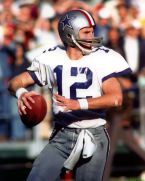
The Hail Mary pass by Roger the Dodger.
And has not American football brought new meaning to the Hail Mary? A heavenly pass to win the game (apparently attributable to the mother of Jesus) – thus, a miraculous win. It could have just been a PFM pass. But no. We had to bring somebody’s mom into it.
One definition of magic is the use of things to exploit supernatural forces in the universe with the power to influence earthly events.
Our belief in magic has been around since the earliest humans. It continues to have important spiritual, religious, and medicinal purposes.
Magic can also be used to mean wonderful or exciting, which is my preferred usage.
The origin of the word, or the concept of magic, seems to be rooted in the religions of ancient times.
Witches allegedly performed magic, and we know how that worked out for many of them in years past. I am no more opposed to witchcraft than I am to magic tricks – just saying. I don’t need wiccans raining fire down on me.
All of that definition and historical stuff is too much for my contemporary old brain. We change the definitions and uses of words all the time. When I say magic, I don’t mean any of that religious stuff, nor do I think it is spiritual (okay, maybe just a nudge, for fun). It’s just my way of saying that “I don’t know why. It just is.”
I’ve written about the magic of art, the magic of relationships, the magical beauty of nature, the magical feelings we have, and many other uses of the word. I must like it. And regardless of anyone else’s religious, spiritual, or superstitious beliefs; I can use the word magic as much as I want. Right?
Penn Jillette
I like musicians and magicians. I’m not sure which one I enjoy more, but watching magic is more interesting whereas music is more about how I feel. I may need music, maybe not so much magic. I enjoy the same song many more times than I would the same magic trick.
I don’t think I can name a magician who believes that his or her magic has a religious basis. There may be some, but I am not talking about shamanism. I know of one magician who is also, conveniently, a musician. But he would deny any spiritual connection to his performances.
Penn Jillette is an entertainer. He is a magician, musician, juggler, comedian, actor, and a best-selling author. He is also an atheist. Penn detests any misleading deception regarding the essence of his magic. He clearly states that what he does are essentially tricks to fool people. He is known for openly divulging how entertainer magicians do their tricks.
Here is clip of Penn and Teller magic.
May the magic in life produce wonder, awe, and gratitude in your heart. May you find your own personal brand of magic in people, nature, art, music, and love. Then you can spread your joyful fairy dust around the world to magically make it a better place for all.
Click here to watch Pilot perform It’s Magic. Lordy, those boys were young. Since this is no wonder of lyrical magic, no need to watch it all to get the point.
Finally, a little Doris Day magic for you—just click here.
I don’t think I suffer more than average. When I find the enthusiasm to write about myself, I’ll include those painful and dark times from my past, along with the many good ones. I will be unable to link any of it to my creativity because I see no connection.
I do believe that to a degree, suffering is optional. I’ve seen people suffer unnecessarily, and I’ve seen those same people get over it.
In my blog tagline, I intend rain as a metaphor for my dark side, but it could also be for pain, suffering, or difficulty in life. The reaching for the sky is either embracing our human dark side or recovering from painful times. Such painful times often come with lessons making them valuable.
Until I read Big Magic, I gave little thought to suffering’s association with creativity, talent, and giftedness. I thought Elizabeth Gilbert’s treatment of the topic was a bit condescending (maybe it’s not). Perhaps it’s me, but telling alcoholics (or drug addicts) to get over it has limited success. On the other hand, many alcoholics told me that the painful consequences handed them by life at the bottom was motivation to recover.
I think that what Liz bemoans is using suffering as justification to be creative, talented, or gifted, thus making an excuse for hanging on to the bottom. We shouldn’t suffer just because we think it improves our work. I’m concerned because I know people die on the bottom. I’ve experienced great things from living artists, suffering or not – nothing from the dead ones.
I don’t take the relationship between our creativity and suffering too seriously, but I am less apt to dismiss it as some others may do. Conversely, I believe talented people do not need to suffer to be talented or creative. I am a happy guy who loves dark poetry, stories, and the dark side of human nature. Following my review of a memoir recently, I told the author “This is a sad story. Your job is to make me cry.” I’m advocating emotional writing, not suffering, hers or mine.
I avoid pain and consider that normal. Just ask my nurses when I’m having surgery — higher is better. And don’t even talk to me about my dental appointments.
While researching this topic, I discovered that I’m not the only person who finds this subject interesting. The available resources on the topic are sufficient for a doctoral dissertation, followed by two books.
I found this link to a blog (here) and a video of a talk (here), both involving Sharon Salzberg. Both are pretty good and not too long (the video excerpt relates to happiness and creativity).
And who does not love this song by Don McLean? It certainly relates to suffering and art.
I also found a site (here) with a collection of information on this and associated topics. It links with other sites and pages for developing creativity and personal growth. Be sure to check it out if you’re interested in any challenges to a creative life.
“Creative artists are fifth in the top 10 professions with high rates of depressive illness. But does depression attract them to the job? Or does the job make them depressed?” “…the reality for the sufferer is that depression is so debilitating it’s impossible to create anything at all.” ~ Helienne Lindvall
To love what you do, and the love of doing it, even when it is gruelingly difficult (and maybe more so when it is) may be the answer. What I’ve read seems to recommend this. Love your art! Do it for the love of the work, the art, the creativity, the experience. As Stephen King says, do it for the “buzz.”
The concept of a reciprocal relationship with our art was also introduced to me in Big Magic. Doing the art because we love it and love the act of doing it, despite the challenges is one thing. The idea that our art can love us back took me some pondering. Liz Gilbert says “why not?” I’m on board with her. Why not? Maybe not always and forever (although our art will likely outlive us), but at least sometimes.
Gilbert balks at calling our work of art our ‘baby,’ but this seems totally normal to me and many others. We don’t equate art to human babies. But it does vocalize the love we may have for our hard work, often more than nine months worth.
From “Steal Like an Artist” by Austin Kleon
In Steal Like an Artist, Austin Kleon provides two excellent graphic depictions. One describes the challenges and difficult process of creating from an idea. The other depicts that love relationship we have with our creations.
From “Steal Like an Artist” by Austin Kleon
May you be lucky in your love with people and with your work. As Austin says, “Do good work and share it with people.”
Have a wonderful weekend and be happily creative to your heart’s content.
Forty years ago tomorrow, I was the father of two boys: one age five, the other was two (two years later we added a daughter to the pride). Tomorrow would be my 30th birthday.
I was the navigator on a B-52 bomber crew. I recall that as I was taking a shower about fifty yards (roughly 45 meters) from a nuclear armed airplane cocked and ready to go blow the crap of somebody, I was quietly lamenting my age.
B-52D Navigator’s Position
I would no longer be in my twenties. I thought that I was not young and never would be again. I was knocking on the door of middle age, or so I thought. I was feeling down because I was turning the dreaded big three-zero. “Don’t trust anyone over thirty” was the phrase. I still don’t really know what that means. I just knew it was bad.
A Young B-52 Crew Dog
Our society convinced me that I was getting old and that I should be sad about it. In four days, that five-year-old I mentioned turns 45. He and his 42-years young brother really are middle aged, and their baby sister is knocking on that door. I was not old, but I was depressed thinking that I was. Thanks to our shallow, f***ed-up, foolish American culture that values all the wrong stuff in people, my thinking was foolish (and not only about age).
Is it all that important to be a thin, white, dark-haired, strong, male member of this country? We seem to think so. I hope that continues to change.
We have to pass laws to keep people from discriminating against older people, and the age in the law is 40. WTF? Forty is not old. Again, forty is not old! At most, it’s lower-middle aged.
And if you plan to call this foul-mouthed, hard-drinking, Fightin’ Texas Aggie, Irish-Welshman elderly; you best be certain that you can kick his ass. Because this one is standing straight-up and walking your way (in silence) to demonstrate that old is not elderly!
But, I will indeed become a septuagenarian at midnight tonight. In the game of life, I will be at ‘Level 8.’ I’ve literally been there, done that, and have the scars to prove it (which I wear proudly). I am on a first-name basis with my cardiologists, and if my peripheral vascular surgeon would do a better job, I would be running three miles a day, instead of walking. I ride a Honda Forza motor scooter because my 800-pound, 2007 Yamaha Royal Star Tour Deluxe touring motorcycle got too heavy to pick up (last year). But I still ride on two wheels. I’ve retired from the jobs that pay, but I work every day. I’m a writer and do volunteer work. My only boss is the one I’ve been married to for 50 years.
I like people and I want them to like me. But I also don’t give a flying f**k what anyone else thinks of me or my opinions, politics, religion (or lack thereof), foul language, or beer breath. I do not, and never will, wear socks with sandals. I remain a teenager of the 60s.
I am retired. All the shit/crap that I put up with for all those years of school (nuns-groan), yes, sir and no, sir; kissing up to very few idiot bosses (most were great), scrimping and saving and working – it was all worth it. As my wife would say, “Rave on, dog shit!” And so I do. Every day is a weekend and I can do what I want (with her permission—I’m old, not stupid) whenever.
I want to be happy and I am. My last meal will truly be a good pizza (my wife makes the best) and a fine stout brew. When the time comes, I want to walk into Dr. G’s office and say, “Time to shut it down, Doc. It’s been a great ride and I’ve loved it all. Let’s talk about the final git-er-done.” But that day is some ways off. Getting old is not dangerous, driving on our roads is.
Get ready big eight-zero ‘cuz here I come. ~ Me
I toast the good health of my birth year (1946) peers: Cher, Barry Gibb, George and Laura Bush, Bill Clinton, Donald Trump, Linda Ronstadt, Sally Field, Ed O’Neill, Reggie Jackson, Daryl Hall, Jimmy Buffett, Dolly Parton, Tommy Lee Jones, Al Green, Loni Anderson, Cheech Marin, and others. We’re still kickin’ the can down the road.
May you have love that never ends, much money, and many friends.
Health be yours, whatever you do and may the universe bless you and yours. Rock on, my friends.
I’ll publish my promised blog on creativity this next Friday. I am also tinkering with one on recovering from middle age (men only, I am unqualified for the experiences of the softer, better looking, and smarter sex) because I have been there and done that too.
Two memories from my youth relate to this post. I recall my mother frequently telling me that I was contrary. She would say, “Now Billy, stop being so contrary.” She could have chosen from many words: obstinate, difficult, stubborn, negative, or silly. Actually, that’s not true. She used silly a lot, as in, “Silly-Billy.” I actually liked being called silly and still do. Today, such a fun-loving attitude coupled with silly behavior would prevent a diagnosis of Oppositional Defiance Disorder (ODD).
As a youngster, I did have more than my share of confrontations with adults, especially those in positions of authority. I admit it. Mom was right (aren’t they all?). I was often contrary and many synonymous terms applied equally well. I confess that I enjoyed being difficult, most of the time. Sometimes, I paid for it. Some say I never outgrew my contrarian attitude.
The other memory comes from the time of my early to mid-teens. I don’t know where if came from, but we adapted a phrase for a while that was intentionally meaningless, but we said it – a lot. It was kind of an early version of whatever! We would say it to each other and often to adults. We always knew exactly what the adult retort would be. The locution was Yeah, but, or yeahbut. Today, the Urban Dictionary says yeahbut should be followed by f**k, but we seldom used those words in combination.
Most often, but is used as a conjunction to introduce something contrasting with what has already been mentioned. Adults insisted on asking, “But what?” We knew we were pushing buttons when we looked them straight in the eye and answered, “Yeahbut.” Silly kids, right? I confess to deliberately irritating adults given any opportunity.
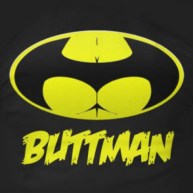
However; yet, nevertheless, nonetheless, even so, still, notwithstanding, in spite of that, for all that, and all the same; I do like butts. Some more than others.
But this is about me being a but man. As I said, but is usually used as a conjunction. It is also used as a preposition (anyone but him), an adverb (to name but a few), or a noun (no buts, you’re buying). Add a t and it becomes slang for a body part. But is a useful word.
It is also a word that I overuse. In my writing and speaking, I am rightfully criticized for saying but too often. Twenty-one times out of 350 words so far in this post. But, it is the subject, after all (22). When I edit, I look for the buts and remove or change as many as I can. But not in this post. At the beginning of a sentence, that is most often when it is there, it changes nothing in terms of meaning. My use is not always as a contrasting conjunction. But there’s more.
I am a quiet, introverted man by nature. I’m not very shy. The larger and less familiar the group, the quieter I will be. I am happy to let anyone banter endlessly about virtually any topic with no sound from me. I listen closely and analytically (Usually – some might say I don’t listen at all). At some point I might say it. In one-on-one conversations; especially the heated, no attributions kind we have with trusted friends, I will eventually say something. My comments in such environs are often preceded with facial expressions and perhaps a raised eye-brow or two. Then out it comes.
“Yeah, but….” (or just but). Sometimes I fancy it up with things like however, on the other hand, consider this, did you know, or maybe so, but…. I can also be passive aggressive with things I learnt from the younger folk like whatever, ya think?, really?, or my personal favorite: No shit? I like to add Sherlock to that last one, but only when it wouldn’t be offensive (accidentally).
A couple of weeks past, I got to listen to my middle child (now 42) recite a verbal rampage on his view of politics and life, with all the arm waving and facial expressions to have gone viral, had I recorded and posted it.
I really enjoyed listening, even though I couldn’t get a word in until he finished. It was an enjoyable banter, indeed. To be fair, I could see myself. When he finished, I smiled at him and said, “Wow!” and tried not to roll my eyes. I decided that if I said ‘yeahbut’ I would have turned the page to the next chapter of his ranting objections to life in this real world. Sometimes, we just need to sit on our butts and keep our buts to ourselves. Yeahbut moments should be carefully chosen.
“A gentleman is one who never hurts anyone’s feelings unintentionally.” ~ Oscar Wilde
Snarkastic and Proud
I like that quote by Oscar Wilde. Over the years, I’ve noticed that it gets more difficult not to cause hurt feelings with what I say. Today, if I say anything about sex (as in gender), someone’s religion or political opinions, nationality (though most of us really don’t know), hair (or lack thereof), you name it; somebody gets offended.
I do my best not to ‘unintentionally’ hurt somebody’s feelings. However, I’m unopposed to stepping on an emotional toe when I hear the call. As a senior citizen, I sometimes feel a sense of entitlement to do that, but I usually refrain. I once knew one guy who was so Cliff Clavin (from the TV show Cheers) that I started calling him Cliff. He never figured out why.
Several years ago, my daughter-in-law said that I was snarky. I appreciated her honesty and courage. I also liked it. She was right; I am snarky. I’m also sarcastic. In fact, being both makes me snarkastic. I enjoy humor, but sometimes I don’t get it. I really enjoy ironic, skin-ripping, hard cutting, sarcastic snarkiness. Here’s a few short lists to help understand what I’m talking about.
Duvall in Apocalypse Now(“I love the smell of napalm in the morning”)
Jack Nicholson in As Good as it Gets (and other movies of his)
Many children’s animated flicks (i.e., Rafiki the baboon and Timon the meerkat in Lion King)
Male Comedians (Pick virtually any)
George Carlin, Bill Murray, Ron White, David Cross, Daniel Tosh
This is not a guy thing. Woman are wonderful at snarkasm. Some folks may say funnier. Watching a witty lady catch some Neanderthal off-guard is a treat. Snarkasm crosses all race, creed, gender, and economic status barriers. My current favorite snarkastic ladies include the following (and so many more).
Female Comedians (Yes they are)
Amy Schumer, Tina Fey, Ellen DeGeneres, Joan Rivers (good grief, the queen), Chelsea Handler, Melissa McCarthy (brought me to tears in St. Vincent, The Heat [w/Sandra Bullock], and Identity Thief).
Not everyone has been introduced to my brand of snarkasm. After a while, when most people get to know me, they agree that I can pull it off. Many find it humorous. In fact, that’s the point – humor. I’m not on some kind of anti-PC* crusade here.
I recall watching Archie Bunker in the 70s and laughing so hard that I was sure I was going to wet my pants. Since then, I’ve often referred my father as a mix of George Burns and Archie – all three funny, snarkasticly-gifted guys.
So HELL YEAH! I’m a proud, snarkastic old fart. Deal with it, Junior.
Because I like you so much, here’s some good advice if a cop pulls you over today. Try any of these.
Are you Andy or Barney?
I thought you had to be in good physical condition to be a police officer.
You’re not gunna check the trunk, are you?
And then when the officer says (cuz you been tippin’ a few), “Your eyes look red. Have you been drinking?” You should respond with, “Your eyes look glazed. Have you been eating doughnuts?”
I grew up around beer. We had several breweries in town. One (Stegmaier Brewing Company) is still in business but is owned by a competitor of many years (The Lion Brewery). My parents drank beer since before I was born, and I was sucking suds long before I was of legal age. I still drink beer. When people see me with the occasional glass of wine, they ask if I am feeling well.
Here’s to a long life and a happy one.
A quick death and an easy one.
A good girl and an honest one.
A cold pint and another one.
No blog of mine on beer would be complete without the wonderful pub song by Tom T. Hall, I Like Beer.
So this week’s Taco Tuesday recognizes Seattle Beer Week, which is actually 11 days long. It is a huge beer celebration in terms of both participation and geography. The Pacific Northwest has more breweries and beers than I can imagine.
When we drink, we get drunk.
When we get drunk, we fall asleep.
When we fall asleep, we commit no sin.
When we commit no sin, we go to heaven.
So, let’s all get drunk, and go to heaven!
–Old Irish toast
Walking down the beer isle in my grocery store I experience sensory overload, and that is just a wee sample of the plethora of brews one may imbibe in these parts. Beer week brings together retail establishments, all kinds and sizes of brewers, and beer aficionados of all levels. This thing runs from the cities of Tacoma and Kent south of Sea-Tac Airport to the city of Lynnwood north of Seattle. It runs from Puget Sound to the west then past Lake Washington to Bellevue on the east side.
Here’s to cheating, stealing, fighting, and drinking.
If you cheat, may you cheat death.
If you steal, may you steal a woman’s heart.
If you fight, may you fight for a brother.
And if you drink, may you drink with me.
The links below are blogs related to Seattle Beer Week, and a few others I thought you might enjoy.
I included a clip from the Washington Beer Festival that was last month, simply because it looks like fun to me.
Of all my favorite things to do,
the utmost is to have a brew.
My love grows for my foamy friend,
with each thirst-quenching elbow bend.
Beer’s so frothy, smooth and cold–
It’s paradise–pure liquid gold.
Yes, beer means many things to me…
That’s all for now, I gotta pee!
How old are you? Please don’t give me that woo-woo crap about it being ‘just a number.’ If you are old, it matters. “What is old,” you ask? It’s 15 years older than the person judging old. At 20, it’s 35; 50 thinks it is 65. I think old is 85, but I know a few of 80-year-olds who say it might be 80.
I thought I was old on my 30th birthday. I used to hear “don’t trust anyone over 30.” The guy who invented that phrase is now 79 – just saying. We haven’t been able to trust him for almost 50 years. I’m sure that he didn’t trust me even when I was 25.
So, I know when I made the change from young to old. It was about 40 years ago.
Have you resigned yourself to the “it’s just a number that’s too friggin’ big” mentality? I’m not complaining about being old. Old people do not intend to complain about age. It is, after all, a successful result. On the other hand, the various consequences of age can’t be overlooked.
How Old is Old Enough?
If we live long enough, we share one important thing with many teenagers – we become bored easily. Old people can be annoying to some young people (15 years, remember). The thought that the feeling may be mutual seems to escape many. Most older folks that I know are working away at life. I know writers in their 80s and 90s who write every day, are working on writing books, and are making plans to publish.
I retired a little late at 68. A 40-something friend who knew my plans said to me, “I want to be where you are some day.” I replied, “Good! Quit smoking and drive safe. Drink some, have lots of sex, and save every dollar you can.”
Of course, he wanted to know if I thought having sex contributed to a long life. I said, “No, it doesn’t. But if you don’t last, you won’t be sorry about that part.” I told him that he only needed enough money in retirement, but no one knows how much that is. There’s no penalty for having too much, but there is for not having enough.
Now What?
I live in an over-55, “active” community. Some folks here are more active than others, but most are kind of amazing. I took a blogging class where I met a lady of 92. She’s smart, funny, and still learning. She taught art classes and one of her subjects was art by carving vegetables. She made a scrap-book of pictures and writings on veggie art. She is an expert. Based on her experience, maybe the only nonagenarian expert. She wants to publish this in a blog. I can look past the outer physical things that show up when one is 90+. This lady is a master at her craft and learning another so she can share the first. I think that’s cool. In heart and mind, she is young, enthusiastic, and capable.
I just returned from a “Personal Creative Writing” class. There are 15-to-20 of us taking the class. Most are interested in writing life stories or memoirs. These folks are talented writers; some are published authors; all are able to tell it like it was. They have the ability to make every life story funny, and even sadder memories are delivered with humor. They are good at their craft, but no one can accuse them of taking life too seriously.
I changed my mind. Age is just a number. Attitude matters and it matters at any age or any number. What matters to you?
Prayer of an Anonymous Abbess:
Lord, thou knowest better than myself that I am growing older and will soon be old. Keep me from becoming too talkative, and especially from the unfortunate habit of thinking that I must say something on every subject and at every opportunity.
Release me from the idea that I must straighten out other peoples’ affairs. With my immense treasure of experience and wisdom, it seems a pity not to let everybody partake of it. But thou knowest, Lord, that in the end I will need a few friends.
Keep me from the recital of endless details; give me wings to get to the point.
Grant me the patience to listen to the complaints of others; help me to endure them with charity. But seal my lips on my own aches and pains — they increase with the increasing years and my inclination to recount them is also increasing.
I will not ask thee for improved memory, only for a little more humility and less self-assurance when my own memory doesn’t agree with that of others. Teach me the glorious lesson that occasionally I may be wrong.
Keep me reasonably gentle. I do not have the ambition to become a saint – it is so hard to live with some of them — but a harsh old person is one of the devil’s masterpieces.
Make me sympathetic without being sentimental, helpful but not bossy. Let me discover merits where I had not expected them, and talents in people whom I had not thought to possess any. And, Lord, give me the grace to tell them so. Amen” ~ Margot Benary-Isbert
“It can be difficult to define Wisdom, but people generally recognize it when they encounter it. Psychologists pretty much agree it involves an integration of knowledge, experience, and deep understanding that incorporates tolerance for the uncertainties of life as well as its ups and downs. There’s an awareness of how things play out over time, and it confers a sense of balance.
Wise people generally share an optimism that life’s problems can be solved and experience a certain amount of calm in facing difficult decisions. Intelligence—if only anyone could figure out exactly what it is—may be necessary for wisdom, but it definitely isn’t sufficient; an ability to see the big picture, a sense of proportion, and considerable introspection also contribute to its development.”
In my lifetime I’ve been called a wise-guy, wise-ass, and a wise-you-name-it. I don’t recall denying any of it. But until I lost a significant amount of hair, gained a lot of scars (and weight), and dealt with a good bit of life’s experiences, no one has used the words wise or wisdom (without suffix) regarding me. So, as I was running through the w’s (women, walking, wine, wild, Wilde, and why) in search of an ‘a-to-z challenge’ blog topic, my wife says, “How about wisdom? You should know about that.” (Her birthday is tomorrow.)
To me, the word wisdom has much in common with the word quality. Both are generally positive; we recognize them (or their absence) when we see or encounter either. But, precise definition for both eludes us. We are willing to take on as much quality and wisdom as possible, but with one condition. We want to know the cost. What price must we pay for quality? Can we afford it? What price must we pay for wisdom? Are we willing to pay the price?
As a college student, I would walk into the Seven-Eleven store and eyeball the beer coolers. I looked only at price per six-pack. Texas Pride was 86-cents for six cans. I still can’t believe I managed to drink that horse piss, but price mattered more on my tight budget. I ignored quality. Little did I know then that years later I would gladly pay eight-to-twelve times as much for top-quality, locally brewed, craft beer. My taste and budget have both matured in quality.
I had a conversation with a friend who was a wonderful, doting, and loving mother to her children. As I listened to her rant-on one day concerning some problem that her son was having, I asked her this question. “You love your son. Why do insist on preventing him from learning life’s lessons simply because they are painful? Be there for him. Protect him from serious harm. But allow him the dignity of learning his own lessons.” Before she got over her hurt feelings about what I had said, she backed off (he owes me). Hard for her, good for him.
Our wisdom sponge is dry at birth. It may be the only thing that is. As we age, that sponge soaks up more wisdom with each life lesson. It seems to me that the more painful the lesson, the better we learn it. I’m not sure that I accept the proposition that there is much intelligence in wisdom. We only need to be smart enough to learn from our best life-long teacher – experience. But I do think that the quality of our intelligence improves as we gain wisdom.
We are wiser when older because we have been schooled in life longer.

 Some of the best, most memorable English language writings are short. I try to keep my blogs brief, but they often surge over 800 words. I’ll continue to work on that; to chop, murder, and cut.
 The 35 brief chapters are divided into two sections. Section I, How to Write Short, has chapter titles that deliver on the promise to improve short writing. Such as the following famous short writes: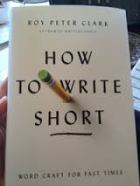
 Some WordPress blogs provide prompts that are helpful practice for developing the craft of writing short. One I like is one liner Wednesdays. Can you can suggest others?


 Competence and honesty are two other conditions that effect our trusting others. Our trust may have a few variables and conditions that go with it. I may trust you to suggest a good dentist for me. I will not trust you to be that dentist.
 Trusting seems natural. America’s motto is In God We Trust. Another is E pluribus unum (out of many, one), but in 1956 we wanted to make sure that our country was not confused with the atheistic USSR.
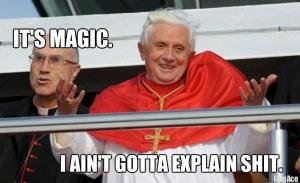 While I may not believe that supernatural beings exist (okay, maybe some duende), I still like to refer to unexplainable, cool happenings as magic. I try not to use the words miracle or miraculous in a serious sense. But magical works for me. If others want to use words like miracle to describe things, I have no issue with that. If the Pope wants to use it’s magic to explain anything, who am I to object?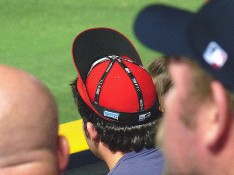
 The origin of the word, or the concept of magic, seems to be rooted in the religions of ancient times.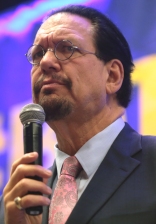
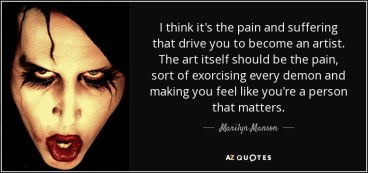
 I do believe that to a degree, suffering is optional. I’ve seen people suffer unnecessarily, and I’ve seen those same people get over it.
 I think that what Liz bemoans is using suffering as justification to be creative, talented, or gifted, thus making an excuse for hanging on to the bottom. We shouldn’t suffer just because we think it improves our work. I’m concerned because I know people die on the bottom. I’ve experienced great things from living artists, suffering or not – nothing from the dead ones.
 To love what you do, and the love of doing it, even when it is gruelingly difficult (and maybe more so when it is) may be the answer. What I’ve read seems to recommend this. Love your art! Do it for the love of the work, the art, the creativity, the experience. As Stephen King says, do it for the “buzz.”



 Is it all that important to be a thin, white, dark-haired, strong, male member of this country? We seem to think so. I hope that continues to change.
 I am retired. All the shit/crap that I put up with for all those years of school (nuns-groan), yes, sir and no, sir; kissing up to very few idiot bosses (most were great), scrimping and saving and working – it was all worth it. As my wife would say, “Rave on, dog shit!” And so I do. Every day is a weekend and I can do what I want (with her permission—I’m old, not stupid) whenever.

 Two memories from my youth relate to this post. I recall my mother frequently telling me that I was contrary. She would say, “Now Billy, stop being so contrary.” She could have chosen from many words: obstinate, difficult, stubborn, negative, or silly. Actually, that’s not true. She used silly a lot, as in, “Silly-Billy.” I actually liked being called silly and still do. Today, such a fun-loving attitude coupled with silly behavior would prevent a diagnosis of Oppositional Defiance Disorder (ODD).
 As a youngster, I did have more than my share of confrontations with adults, especially those in positions of authority. I admit it. Mom was right (aren’t they all?). I was often contrary and many synonymous terms applied equally well. I confess that I enjoyed being difficult, most of the time. Sometimes, I paid for it. Some say I never outgrew my contrarian attitude.
 The other memory comes from the time of my early to mid-teens. I don’t know where if came from, but we adapted a phrase for a while that was intentionally meaningless, but we said it – a lot. It was kind of an early version of whatever! We would say it to each other and often to adults. We always knew exactly what the adult retort would be. The locution was Yeah, but, or yeahbut. Today, the Urban Dictionary says yeahbut should be followed by f**k, but we seldom used those words in combination.
 However; yet, nevertheless, nonetheless, even so, still, notwithstanding, in spite of that, for all that, and all the same; I do like butts. Some more than others.


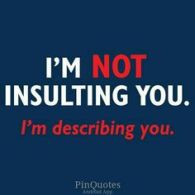 I do my best not to ‘unintentionally’ hurt somebody’s feelings. However, I’m unopposed to stepping on an emotional toe when I hear the call. As a senior citizen, I sometimes feel a sense of entitlement to do that, but I usually refrain. I once knew one guy who was so Cliff Clavin (from the TV show
  Several years ago, my daughter-in-law said that I was snarky. I appreciated her honesty and courage. I also liked it. She was right; I am snarky. I’m also sarcastic. In fact, being both makes me
 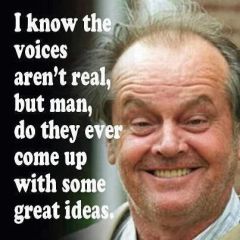 Jack Nicholson in As Good as it Gets (and other movies of his)
 Female Comedians (Yes they are)
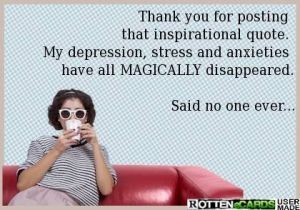 Not everyone has been introduced to my brand of snarkasm. After a while, when most people get to know me, they agree that I can pull it off. Many find it humorous. In fact, that’s the point – humor. I’m not on some kind of anti-PC* crusade here.
 Are you Andy or Barney?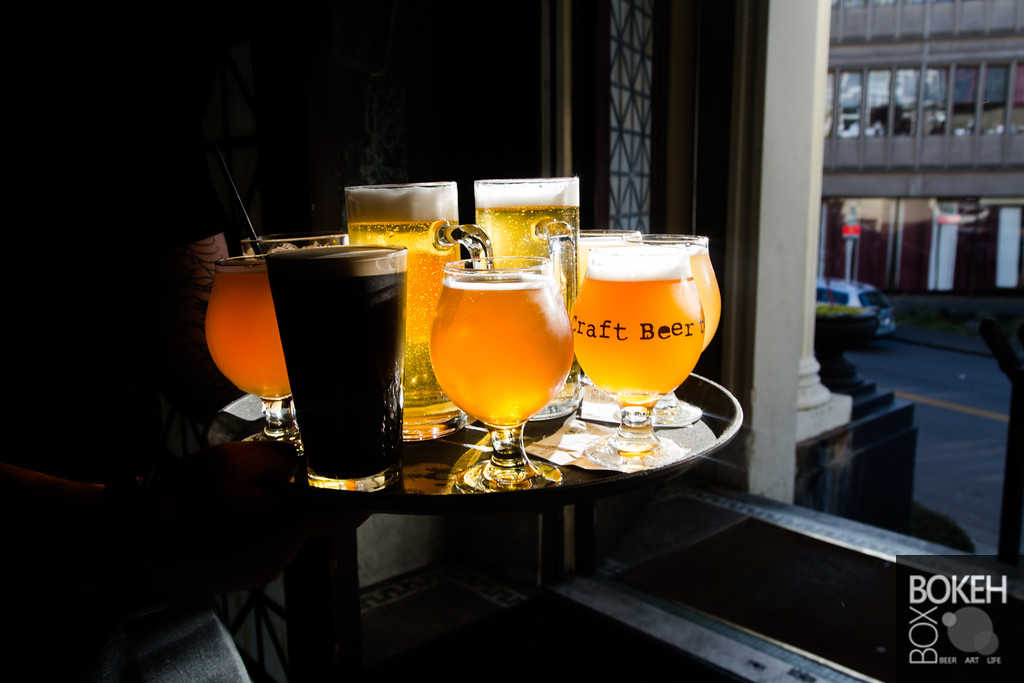
 So this week’s Taco Tuesday recognizes
 So, I know when I made the change from young to old. It was about 40 years ago.
 Have you resigned yourself to the “it’s just a number that’s too friggin’ big” mentality? I’m not complaining about being old. Old people do not intend to complain about age. It is, after all, a successful result. On the other hand, the various consequences of age can’t be overlooked.
 If we live long enough, we share one important thing with many teenagers – we become bored easily. Old people can be annoying to some young people (15 years, remember). The thought that the feeling may be mutual seems to escape many. Most older folks that I know are working away at life. I know writers in their 80s and 90s who write every day, are working on writing books, and are making plans to publish.
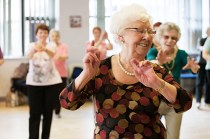 I live in an over-55, “active” community. Some folks here are more active than others, but most are kind of amazing. I took a blogging class where I met a lady of 92. She’s smart, funny, and still learning. She taught art classes and one of her subjects was art by carving vegetables. She made a scrap-book of pictures and writings on veggie art. She is an expert. Based on her experience, maybe the only nonagenarian expert. She wants to publish this in a blog. I can look past the outer physical things that show up when one is 90+. This lady is a master at her craft and learning another so she can share the first. I think that’s cool. In heart and mind, she is young, enthusiastic, and capable.
 I just returned from a “Personal Creative Writing” class. There are 15-to-20 of us taking the class. Most are interested in writing life stories or memoirs. These folks are talented writers; some are published authors; all are able to tell it like it was. They have the ability to make every life story funny, and even sadder memories are delivered with humor. They are good at their craft, but no one can accuse them of taking life too seriously.
 In my lifetime I’ve been called a wise-guy, wise-ass, and a wise-you-name-it. I don’t recall denying any of it. But until I lost a significant amount of hair, gained a lot of scars (and weight), and dealt with a good bit of life’s experiences, no one has used the words wise or wisdom (without suffix) regarding me. So, as I was running through the w’s (women, walking, wine, wild, Wilde, and why) in search of an ‘a-to-z challenge’ blog topic, my wife says, “How about wisdom? You should know about that.” (Her birthday is tomorrow.)
 To me, the word wisdom has much in common with the word quality. Both are generally positive; we recognize them (or their absence) when we see or encounter either. But, precise definition for both eludes us. We are willing to take on as much quality and wisdom as possible, but with one condition. We want to know the cost. What price must we pay for quality? Can we afford it? What price must we pay for wisdom? Are we willing to pay the price?
 As a college student, I would walk into the Seven-Eleven store and eyeball the beer coolers. I looked only at price per six-pack. Texas Pride was 86-cents for six cans. I still can’t believe I managed to drink that horse piss, but price mattered more on my tight budget. I ignored quality. Little did I know then that years later I would gladly pay eight-to-twelve times as much for top-quality, locally brewed, craft beer. My taste and budget have both matured in quality.
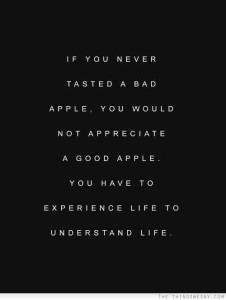 I had a conversation with a friend who was a wonderful, doting, and loving mother to her children. As I listened to her rant-on one day concerning some problem that her son was having, I asked her this question. “You love your son. Why do insist on preventing him from learning life’s lessons simply because they are painful? Be there for him. Protect him from serious harm. But allow him the dignity of learning his own lessons.” Before she got over her hurt feelings about what I had said, she backed off (he owes me). Hard for her, good for him.
 We are wiser when older because we have been schooled in life longer.
 Our Literary Journey