
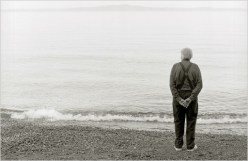
 Ten years ago, I lost one of my best friends from my childhood. Today, I received a phone call telling me that I have now lost the other. A few weeks ago I was tasked with a writing assignment to provide an essay on what I long for. You can see it blogged under “Nostalgia and Longing.” Reading my blog, you can glimpse my view of humanity and the world. Seldom do I live at any time but the present moment.
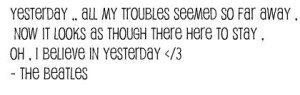 But today, I want to think about the past. Not in a regretful way, but in an “I remember” way that might allow my brain to be the tool of a child’s mind again.
I want to remember friends and our time together when we did things without much regard for the good or the bad. There was no judgment or guilt. The important part that I recall is that we did those things together. That is what a childhood friendship is all about; an unconditional acceptance of us as is. Blood brothers we were – literally.
 I know that I cannot go back to that time, and I’m not sure that I would want to. But I want to have those memories until I have no memories. I would like to again feel the freedom, the special bond, and the unquestioned certainty that we would all live forever. I want to think about my future and talk about how much better it will all be. I want free and unlimited amounts of candy and ice cream. We didn’t have that, but when we took over, well, you know, right? I want to know that next year, I will be allowed to stay out after it gets dark, to drive a car (legally), to date girls (with everyone knowing).
Today, I want to cry over the loss of my friends and I want to smile in their memory. I want to think about their faults that I never saw or didn’t care about, as they dismissed mine. Indeed, I miss Jimmy and I miss Jack, but the one is miss most is Billy the Kid — me.
What do I remember most? In our late teens Jack made his belief and faith in me clear. Few people had faith in me when I was a teenager, and I don’t blame them. More than my parents, more than any teacher or any other person, he believed I could do what even I doubted.

I subsequently believed him and that was a significant turning point in my life.
I slightly changed the lyrics of Yesterday When I was Young to reflect how I feel today — Melancholy
The game of life I played with arrogance and pride
And every flame I lit too quickly, quickly died,
The friends I made all seemed somehow to die away
And only I am left on stage to end the play.
Yesterday when I was young
 Xanadu may refer to:

 Across the sacred river before the sea
 Where all that move within the light become victims of the night
 Canopies open to view heavens gate as sparkles ignite
 In my lifetime I’ve been called a wise-guy, wise-ass, and a wise-you-name-it. I don’t recall denying any of it. But until I lost a significant amount of hair, gained a lot of scars (and weight), and dealt with a good bit of life’s experiences, no one has used the words wise or wisdom (without suffix) regarding me. So, as I was running through the w’s (women, walking, wine, wild, Wilde, and why) in search of an ‘a-to-z challenge’ blog topic, my wife says, “How about wisdom? You should know about that.” (Her birthday is tomorrow.)
 To me, the word wisdom has much in common with the word quality. Both are generally positive; we recognize them (or their absence) when we see or encounter either. But, precise definition for both eludes us. We are willing to take on as much quality and wisdom as possible, but with one condition. We want to know the cost. What price must we pay for quality? Can we afford it? What price must we pay for wisdom? Are we willing to pay the price?
 As a college student, I would walk into the Seven-Eleven store and eyeball the beer coolers. I looked only at price per six-pack. Texas Pride was 86-cents for six cans. I still can’t believe I managed to drink that horse piss, but price mattered more on my tight budget. I ignored quality. Little did I know then that years later I would gladly pay eight-to-twelve times as much for top-quality, locally brewed, craft beer. My taste and budget have both matured in quality.
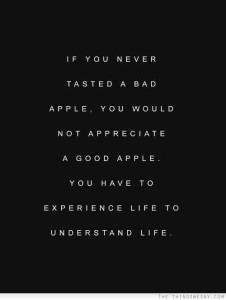 I had a conversation with a friend who was a wonderful, doting, and loving mother to her children. As I listened to her rant-on one day concerning some problem that her son was having, I asked her this question. “You love your son. Why do insist on preventing him from learning life’s lessons simply because they are painful? Be there for him. Protect him from serious harm. But allow him the dignity of learning his own lessons.” Before she got over her hurt feelings about what I had said, she backed off (he owes me). Hard for her, good for him.
 We are wiser when older because we have been schooled in life longer.
 How each of us views utopia is probably similar in the broader sense, but we may differ as we each conceive of the details.
  In the world of politics, the dark side of human nature emerges. Of course, it is always the others or the other side. Real world peace would be required long before we could begin to approach anything like utopia. It requires an egalitarian (equal) society and that is contrary to most politics I’ve ever seen. When I think politics, I see far more potential for dystopia and war.
 Religion? While a great deal of good is done in the name of a deity and the respective religions, that good fades to virtually nothing when balanced against the historical inequality and current turmoil that seems to move more toward dystopia — more war.
 I asked alcoholic and drug-addicted Texas prison parolees the following three questions while teaching secular recovery classes. I came up with these to help them find a world view that went farther than the tips of their fingers. My personal answers are utopian.
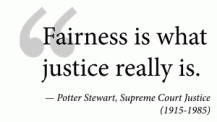 The confusion and struggle so many of us face in answering these questions is an interesting testimony to our nature. But we each have our personal utopia within our answers.
 The other night, as we sat discussing writing projects and their duration, the subject of time came up. There were three of us, representing roughly three generations. The more we talked about time and how each of us currently sees it in terms of the future, the more I realized how differently each one of us viewed it. Time does not change. We do, and thus our view of time changes with age.
 I claim to be a right here, right now kinda guy. I live in the present moment. As I contemplate writing a memoir, this seems to cause me an ‘angst’ problem in that I wanna, and I don’t wanna. (I also struggle with writing about myself, but that’s not the issue.) I like History. It could’ve been considered my second minor at A&M. My manuscript is historical-fiction with too much history and not enough fiction. This morning I was asked if I would write a time-travel book (I’m noticing that Vickie has a knack for asking me thought-provoking questions). I didn’t have a ready answer, but after a lot of discussion and thought, my answer is ‘nope.’
 After doing a bit of reading, I’m no longer positive that I know what ‘this moment’ in time is, or if it exists. My metaphysical (woo-woo) friends get excited about this fascinating subject. When they do, I look at my watch and note, “It is one-forty, PM.” But they’re right. It’s really an interesting topic. Physicists and philosophers are all over it. Check out all the wiki and academic research (

 Stephen King has made a successful career out of scaring the hell out of many of us. We (not all) like to be frightened. Scary movies are fun. They are not for everyone, but a lot of people love them. Why? Is it the same with sad books, movies, songs, or plays? We keep going back for more.
 My focus here is music. A friend loved the song Dance Me to The End of Love by Leonard Cohen. That is until she learned that the inspiration of the song was in fact the Holocaust. It is a lovely and beautiful song, but that sadness changed the song for her. The song is not sad by itself, but because the inspiration was so tragic, her opinion of the song changes from love to sadness.
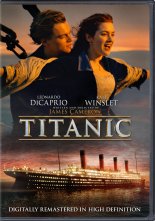
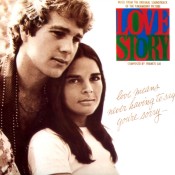 For sad movies, I have listed only five. It could be hundreds.
 Love Story (1970)
 Yolonda, my wife of 50 years (we married at age 2), is a native Texan and has her ‘druthers.’
 Billy on right, (w/Phish bassist Mike Gordon), our oldest child is in his mid-40s, a very nice, loving, big-man. He’s always been an avid reader, a talented writer, a movie aficionado, and a hard-core Phish-head. Add bicyclist, father, hubby, friend, musician, and deep-thinker.
 Steven is our middle-child, now in his early 40s. He’s another good guy. An avid sports fanatic (Spurs and Cowboys) and mountain biker. Add hubby, step-father extraordinaire, house music DJ (Steve Balance), friend, and all-around cool-dude (maybe pragmatic and analytical). He initially said that he had no fav quotes, but when he and his sista’ got to texting, there they were.
 Our beautiful ‘baby’ is Julie. She can recite every line from the movie Grease (oddly did not quote it), is an artist, a thirty-something, 21st Century hippie, a mom and step-mother. I think she is a wonderful writer and, like her mom, a Grammar-Nazi. She lives in the middle of nowhere with her hubby, son, occasionally a step-son, or two lovely elves, too many cats, horses, and sometimes (because he likes to chase the horses) a dog.
 Soon, he’d wake up, but he would not remember. He’d not recall where he’d been, what he’d done, how he got home, or anything that happened. He felt fear—the familiar fear of the blackout. He should know. He’d been there only a few hours earlier. Everyone else would know. Hell yes! They’d remember. When he blacked out like this, he couldn’t recall events from the night before. Even when people would tell him and show him proof, he could recall none of it. He woke up sick – partly due to the effects of the alcohol, but mostly because of the fear, the inevitable embarrassment, and the disgust he felt toward himself. It happened many times before. Slowly, as his eyes opened, he turned his head to see if she was there in the bed. She was not. He would face that guilt soon enough.
 No one wants to look that bad. Sam was disheveled, pale, red-eyed, much older than his 43 years, and generally unhealthy. He also smelled awful. He reeked of stale alcohol, smoke, urine, and vomit—the scene was sad and disgusting. This was a miserable couple. After years of marriage, the only things these two people now-shared were an old love, a constant desperation, and the children. Their mutual love was hidden deep, possibly buried, maybe dead. They both wondered how this was going to end. For Mary, it wouldn’t be soon enough. She forced herself to look at him. He saw that she’d been crying a long time. Tears were still on her face; new ones arising. He poured coffee and tried to look straight at her, like everything was fine.
 “I am so sorry, Mary. I promise it’ll not happen again. All I have to do is not drink. I can do it. I will start back with AA again. It’ll be ok.” She looked at him for a few seconds and then put her face into her folded arms on the table. After a few minutes, she looked up again and said, “Look, you obviously can’t stop. If you could, you would’ve. You can’t or you won’t. Either way, the outcome’s the same. You’re gunna die, or go to prison, or to some institution. You’ve been to rehab. Sam, you’re an embarrassment to your family, to me, to your kids…shit! How you keep getting jobs after being fired so often—I have no idea, but this can’t go on. Sam, you need to move out of the house and stay out.”
 After about an hour he picked up the phone and called his mother. He knew by her tone that it was she who Mary had been talking with when he woke up. He asked to talk with his father, but that relationship had become so strained that his father would no longer speak to him.
 I consider myself a realist. Don’t we all? I recall a comment someone made to me a number of years ago. She considered herself to be a spiritually positive person. She read and followed all the right spiritual gurus, in her option. As we were talking, I used the word reality. She told me that was negative. Really? I haven’t quite figured out why I saw conflict between her negative view of reality; and her positive, optimistic thinking, but she didn’t see an inconsistency at all. I didn’t understand then and don’t now. In fact, if she considers herself to be a positive person, but sees reality as negative, I must conclude that she’s not only a pessimist, but she is in denial about it. She may have been Pollyannaish. Believing in a positive outcome and things will work out for the best in the end is fine. But even being absurdly optimistic is not the same as seeing reality as negative.
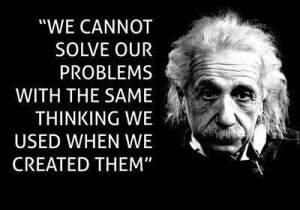 I like to think of myself as a realistic-optimist. (If a presidential candidate can be a democratic-socialist, then there is precedent for my claim.) But I have interesting discussions with people who would say that I am negative or pessimistic because I foresee less than desirable outcomes if reality is not respected. Most of us seem to have good days and bad. Assuming that they will all be good henceforth is denial of reality. We will continue to have natural and man-made disasters. That is reality. Making preparations for emergencies so that we can have the best possible outcome is optimism. Doing nothing is denial that often leads to further disaster.
 I believe that a balanced outlook is the key to a healthy life and a healthy world. We need not assume the worst, but blocking out, or ignoring, the inevitable is not being optimistic. It is being foolish.
 My wife doesn’t like one (or more) of my favorite songs: Night Moves by Bob Seger and the Silver Bullet Band. I thought it was our differing tastes in music (she’s country, I’m rock and roll), but one day our son pointed out why. It’s a ‘guy’ song. I also realized that we each look back in time with different memories. Never mind that she really does not enjoy the raspy-voiced shouting of old Bob. The song, written and recorded by Seger in 1976, is a coming of age tale about adolescent love and an adult memory of it. It strikes memories of my times in the early sixties.
 During the 1970s I graduated from college (many thought impossible), I re-entered the Air Force as an officer, I completed flight training, all my children were born, and I turned thirty (I thought that impossible and I sadly became untrustworthy— relates to the famous “don’t trust anyone over 30” adage of Jack Weinberg, activist of the 1960s, now 76). I usually listen to the music of the 70s. While I enjoy those songs for their own value, the music also often brings with it memories and feelings that can only be called nostalgia. Sometimes, it makes me feel profoundly sad. I’m not sure why, but I suppose it has to do with something that will never be again.
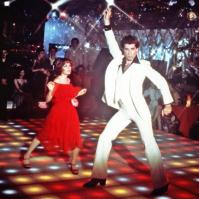 It was the decade of great music, great movies, and great TV. The politics were interesting. How often do we get to see a president resign? I am working on a historical-fiction novel, set in the 1970s. We had Star Wars, ABBA, and the Beatles break-up. Elvis died. Everything was either brown or orange including the shag pile carpeting (ok, add yucky gold). We had platform shoes, Charlies Angels, Mork and Mindy, metal drinking cups, portable hair dryers, Holly Hobbie, Lava Lamps, and the most outlandish fashions ever for America and England. Who could ask for more? We typed on typewriters, went to Tupperware parties, and air conditioning was a welcome luxury. And who did not have an 8-track?
 Our Literary Journey