 I’ve been trying to figure out how to review Elizabeth Gilbert’s book. Developing a plan for a contrary opinion of Big Magic is like trying to figure out how to swim upstream against hordes of powerful whales and others going against me. The book has an 89% four/five-star approval on Amazon. The high praise of editorial reviews includes: #1 Globe best seller, the Washington Post, Cosmopolitan, Huffington Post, Daily Beast, Harper’s Bazaar, Christian Science Monitor, New York Times, Associated Press, Yahoo, Seattle Times, USA Today, Vanity Fair, O Magazine, San Antonio Express News, and a few of my friends.
Ms. Gilbert is a ‘rock star’ author who has had big success (Eat, Pray, Love). I have no right, nor the credentials, to discredit her or her writing in any way. Nor do I want to. In fact, if you are a person whose creativity suffers due to your personal fear, this may be a good book for you. It is an easy read with no back matter such as extensive endnotes or research to distract you. The language is very simple and you’ll not need to look-up anything. She makes it all very clear and elementary, which I like.
If you are interested in marketing, check this out. This book is, in my opinion (and that of several others), a marvel of marketing – this baby was sold! Before I expose my dark side, I want to say a few more positive things about this book. For whatever reason, I’m glad that I read Big Magic and I may even read it again.
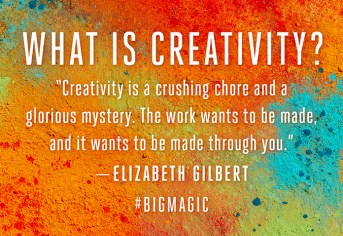
For a while, I thought that I would like to forget it and move on with my life. I tried, but Big Magic won’t let me. I finished it weeks ago. Now, it refuses to go away. Why? Well, Big Magic was recommended by fellow writers, friends, and (like Elizabeth) creative people. I’m certain that my friends and Elizabeth each have hundreds of ideas, inspirations, and creative moments to my one. I think that is fine. Big Magic notwithstanding, I can only do one thing at a time.
Originally, my only purpose in writing a review was to get Ms. Gilbert and her damn book out of my thoughts so that I can do whatever I want without thinking more about it. But this is personal. Like many others, I am interested in creativity and often wonder why I have an issue with mine. Books like this usually apply to the author’s life experiences and Gilbert’s is no exception.
Like many (or most) people, I’ve struggled with creativity in that ideas don’t seem to just come to me. But they do come. Sometimes I seem to have them. At other times, they are handed to me by other human beings. When I was still working at my 8-to-5 day-job, I liked what I call ‘idea men’ (women too, but in my world there were few females). These folks were very good at concocting thoughts of better ways or solutions to problems. Often, it was good stuff. It was their strength. I enjoyed setting things in motion to accomplish the good ideas of others.
 In trying to figure out how to handle reviewing her book, I’ve decided not to. Instead, I plan to write several blogs on creativity and associated aspects of that human phenomenon, paying special attention to writing, my own issues, and my point of view. I also plan to add other books and input from others to the mix. If you have suggestions or input, please add your comment.
 Two memories from my youth relate to this post. I recall my mother frequently telling me that I was contrary. She would say, “Now Billy, stop being so contrary.” She could have chosen from many words: obstinate, difficult, stubborn, negative, or silly. Actually, that’s not true. She used silly a lot, as in, “Silly-Billy.” I actually liked being called silly and still do. Today, such a fun-loving attitude coupled with silly behavior would prevent a diagnosis of Oppositional Defiance Disorder (ODD).
 As a youngster, I did have more than my share of confrontations with adults, especially those in positions of authority. I admit it. Mom was right (aren’t they all?). I was often contrary and many synonymous terms applied equally well. I confess that I enjoyed being difficult, most of the time. Sometimes, I paid for it. Some say I never outgrew my contrarian attitude.
 The other memory comes from the time of my early to mid-teens. I don’t know where if came from, but we adapted a phrase for a while that was intentionally meaningless, but we said it – a lot. It was kind of an early version of whatever! We would say it to each other and often to adults. We always knew exactly what the adult retort would be. The locution was Yeah, but, or yeahbut. Today, the Urban Dictionary says yeahbut should be followed by f**k, but we seldom used those words in combination.
 However; yet, nevertheless, nonetheless, even so, still, notwithstanding, in spite of that, for all that, and all the same; I do like butts. Some more than others.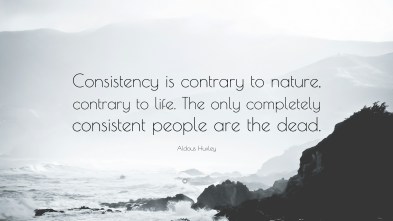

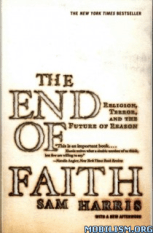 The End of Faith has been reviewed extensively since its first publication, but I need to pipe my opinion. With my gradual understanding and knowledge of Sam Harris, this book came to my attention as an eventuality. I’ve read only one other of his books (Islam and The Future of Tolerance), but I intend to read them all. I like his approach and what is, in my opinion, his open mind regarding universal principles which not everyone (atheist or not) shares. Anyone who thinks that all atheists share the same thoughts, opinions, or principles with each other does not understand them. The thesis of this book is no exception.



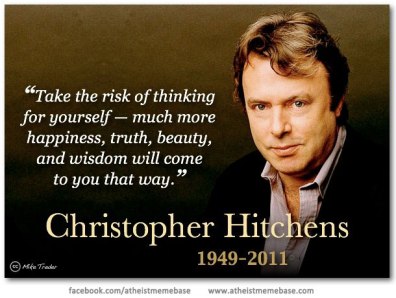
 As I listened to an interview with Christopher Hitchens, I was surprised by something he said. I’ll get back to that in a minute. Frist, I want to talk about the genesis of the question and my answer.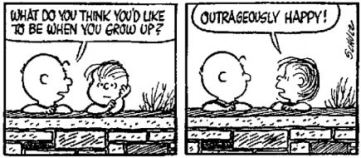
 A satisfaction tax would make a lot more sense. It seems like things may satisfy us, but we decide to be, or not to be happy. How would we measure and estimate a tax on feeling good?

 To be fair, when I was in a leadership position with a 12-step program, I told members that they either worked the program, or they did not. It was up to them. However, them telling me that the program was not working when they were not ‘doing’ anything but attending meetings indicated other issues. I was taught, and I have always believed that we each have a right to our own program. If that program is not working, something should change. Recovery is too complicated to go into all of that detail in one blog.


 Some people think that ego is a bad thing. In a way, they are right. In a way, they are wrong. A wooden plaque (given to me by a friend) hangs in my room so that if I (ironically) hold my nose up, just slightly, I can see it. It says, “Humility is not one of my faults, but if I had one, that would be it.” Before you attack my lack of profundity, my friend made and gave the plaque to me as a bit of an ironic joke (I hope).
 I’m making the claim that ego is mostly good for writers. I presume that it is good for artists who work in other forms of artistic expression. I also think that being humble is good and being courageous is good. I also think that each of us should do what works for us. We’re unique individuals who share a passion (if you want to call it that). I admit that an out of control ego is a problem for more than just the narcissist, and egotistical people have their issues. But over-blown personalities write and sell books too.
 We need our ego to launch the work to readers. We need to believe that we can and want to do it. We also need to deal with whatever criticism and rejection we encounter.
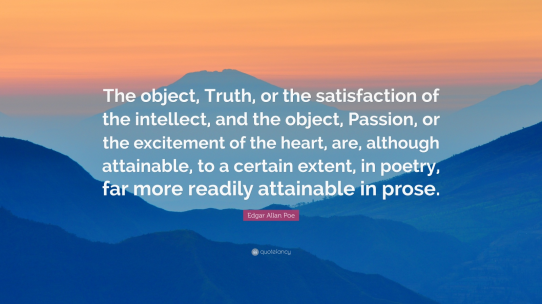
 To quote from Poe’s Preface to a republishing of his poems: “These trifles are collected and republished chiefly with a view to their redemption from the many improvements (made by publishers)…I am naturally anxious that what I have written should circulate as I wrote it….” He goes on to say that it is not that his work is that important, but the people who read it are. Ego?
 Three days of toil produced words born of emotion, but laying bare only thought and opinion. That challenge to produce expressive discourse full of feeling was riddled with notion and conviction of purpose, while lacking passion. Such analysis had merit and value, but I had so missed the deeper inside of myself that it might have been mere opinion drawn from a detached stranger. Those mindful barnacles of human grief remained anchored to my thoughts, thus hidden except from me.
 Knowing my feelings was not enabling my telling about them. Had I created a self, unable or unwilling to express feeling? I wondered deeper if I had co-opted with a force to create an emotional Dorian Gray. Were my feelings doomed to be confined in the shadowy attic of my mind? Had I become so adept at emotional deception that I habitually prevented expression of feelings? Had I become factually superficial and emotionally shallow, thus apparently less than a human lacking outward feelings?
 Twenty years hence, my awareness is of two worlds. An external world full of social interactions, judgements by and of others, and basic human needs. This is the world of people wearing masks, hiding feelings, and struggling silently with internal and external burdens. It is a world we need in order to sense the other world – a deep world that is hidden from others and often from our own self-awareness.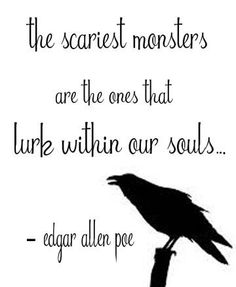
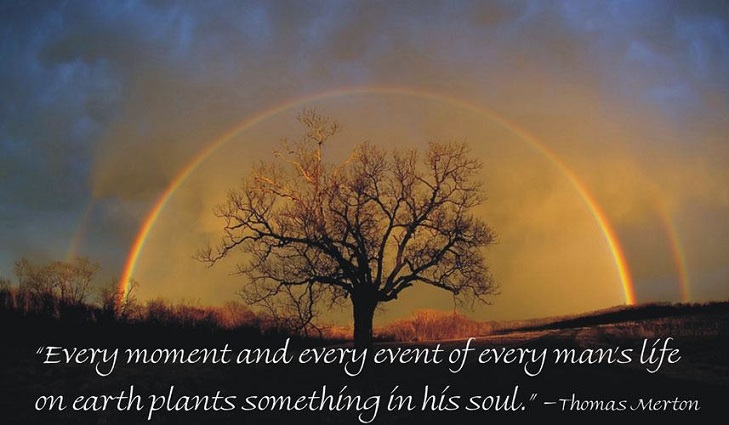

 What impressed me about this man was his complexity, his courage, and what I see as his wisdom. His life journey and the decisions he made will likely prevent him from ever being canonized a saint by the Catholic Church. Yet those foibles are exactly what attracted me to him twenty years ago, and continue to influence my thinking. The man was a real person – a human being who behaved like one. If they did make him a saint, I think he would be among the most human of that group.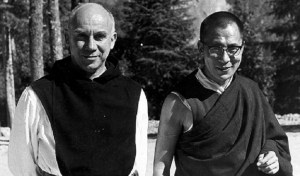

 So, I know when I made the change from young to old. It was about 40 years ago.
 Have you resigned yourself to the “it’s just a number that’s too friggin’ big” mentality? I’m not complaining about being old. Old people do not intend to complain about age. It is, after all, a successful result. On the other hand, the various consequences of age can’t be overlooked.
 If we live long enough, we share one important thing with many teenagers – we become bored easily. Old people can be annoying to some young people (15 years, remember). The thought that the feeling may be mutual seems to escape many. Most older folks that I know are working away at life. I know writers in their 80s and 90s who write every day, are working on writing books, and are making plans to publish.
 I live in an over-55, “active” community. Some folks here are more active than others, but most are kind of amazing. I took a blogging class where I met a lady of 92. She’s smart, funny, and still learning. She taught art classes and one of her subjects was art by carving vegetables. She made a scrap-book of pictures and writings on veggie art. She is an expert. Based on her experience, maybe the only nonagenarian expert. She wants to publish this in a blog. I can look past the outer physical things that show up when one is 90+. This lady is a master at her craft and learning another so she can share the first. I think that’s cool. In heart and mind, she is young, enthusiastic, and capable.
 I just returned from a “Personal Creative Writing” class. There are 15-to-20 of us taking the class. Most are interested in writing life stories or memoirs. These folks are talented writers; some are published authors; all are able to tell it like it was. They have the ability to make every life story funny, and even sadder memories are delivered with humor. They are good at their craft, but no one can accuse them of taking life too seriously.
 Our Literary Journey