NaNo Rebel – One Week Done

Telling my story
Telling my story

In the first five days of NaNoWriMo, I’ve written 11,000 words toward the goal of 50,000 before midnight of November 30th. Since my personal goal was 2K words a day, I’m ahead. I have picked up on several things about my writing.

  • I am not isolated. My wife comes and talks to me routinely, and I go talk to her. I have vacuumed the house, gone to meetings, and done shopping. I answer phone calls (not doing surveys or talking to telemarketers, and I voted early), and I go for walks.
  • I have time available to write. Being retired, I could write all day and night. But I can take time for a football game, and maybe some NCIS or Blue Bloods. I read about what I am supposed to be doing: writing memoir. I talk to people, often about things having nothing to do with writing.
  • I think my weakest writing skill is the art, the creative parts, the telling of the story. I blame my experience with technical writing for part of that. But for this memoir, I continue to work on my skills to show and tell from my POV at the time. Can I be both protagonist and antagonist?
  • If I read a sentence that I wrote last week, I will change it. It will be better, but the challenge is to write, not to re-write and edit. This slows me down, but it looks like I can semi-comfortably write a maximum of about 3-thousand words a day. I did 2,800 twice last week.
  • I made an outline, a spreadsheet, and a memory list. The list has turned out to be the most valuable. I never look at the outline or spreadsheet. My only problem with the memory list is that I write in chronological order and the list random.

img_0833-1

  • Here are examples from my list:
    1. Working to pull out coal stove and put in gas hot water heater and gas stove for cooking.
    2. Looking up at Dad realizing I was looking at a drunk man who didn’t care. I had eerie feeling that he resented me. I was not seeing my father.
    3. Helen Hxxxxn (Whitey) BB gun. Tomatoes.
    4. Peggy Rxxb and the Rxxb family.
    5. Carol Mxxar and Joe Mxxxxen
    6. Dog named Rusty and my treatment of the dog
    7. Age 5 birthday party
    8. Danny
    9. Raised by both bio parents…first in fam….Linda was second, but hers divorced (he left) right after Linda graduated high school
    10. Mom’s relationship with my half-bro, Danny, and my view of it.
Write. Just write you must.

I will be writing this memoir for a long time to come. I’ll win the Nano challenge and complete this memoir, but not anywhere near at the same time.

I miss writing this blog, but I choose not to do both.

If you ever consider writing memoir, I suggest it. For me, it’s not about the book, it’s about me. I still have a lot to write and things to decide. Do I want to write about something or make it available for others to read? Those dark “things” about me? I work at keeping the words and stories on my intended spiritual track, but in my mind, everything relates – particularly during my formative years.

The following excerpts from my memoir are from two more dramatic events, both relate to a nun who taught me. Context is that I had just learned that the same nun who taught 7th grade will be teaching 8th next year, then we jump to what I was worried about.

Blues Brothers movie, my fav part

….“Mom, Coughlin is 7 to 12th. Can I go to 8th grade there? I’ll go next year anyway.”

“Now, Billy-boy. Why wud ya? Jist graduate St. John’s. After I see ya graduate, God can take me. It’ll never happen again.”

“I’ll graduate Coughlin, Mom.”

8th grade was worse than 7th. Even Father Burns was afraid of Sister Mary Siena, and for good reason. She was the tyrant of the school.

Gerry Dxxxxe sat behind me. As I was turned around explaining something of extreme importance to Gerry I heard, “Mister Rxxxxs, what is the answer?”

“The answer to what, Sister?”

“Young man, you better know the answer to the question I just asked the class.”

After I suggested that she asked one of them, the anger-crazed dark shadow in black habit grabbed her instrument of torture and death. As she stormed down the aisle heading at me, in her hand was the yard long wooden pointer. It was round, about the circumference of my thumb. She yelled for me to standup and turn around.

As it turns out, blows to the flesh behind the knees with such a pointer are not soon forgotten….

At times, how I saw it.

Life is interesting,
look both ways and mind the gaps.
NaNoWriMo, NaMeWriMo, or NaPoWriMo?

Next Tuesday, 1 November 2016, begins another 30-day challenge to write 50-thousand words toward the authorship of a book. The challenge is called National Novel Writing Month (NaNoWriMo, or just Nano).

nanowrimo1Since 1999, Nano has grown in popularity and is now international. Novels are fiction, but participants sometimes write in other genres. I wrote a historical novel my first year. Others have written memoirs (National Memoir Writing, NaMeWriMo?) or other non-fiction, and poetry (National Poetry, NaPoWriMo? It’s in April.).

Nano is difficult. Last year was my first large scale fiction project. I learned how challenging it is. The math works out so that I need to average about 1,700 words a day to “win” the 50k-word challenge on November 30th. There are no days off.

Because Nano gets more difficult as weeks pass, and life has a way of interfering with writing, I want to produce over 2,000 words a day for the first week or two. Getting ahead in the word count is recommended, and I know why. This is no writing sprint; it’s a marathon. After about ten days, I’ll be looking in the mirror asking, “WTF were you thinking?” But I did it in 2015, and I will in 2016.

nanowrimo2

Online support, other writers, and attending motivating write-ins, make this challenge doable. Following the helpful suggestions in No Plot, No Problem, such as keeping my inner editor at bay, I’ll manage to keep writing.

Last year, I struggled with being new to fiction writing and not having a plan. Creating the story as I wrote was difficult. Writing to develop characters, scenes, and plot was work, but fun under pressure.

This year, I have an outline and I’m a slightly more seasoned writer. My introduction to blogging was during the A-to-Z Blog Challenge in April. Nano is like A-to-Z in that it’s a learning through immersion experience. It will be challenging again this year because I’ll write in a nonfiction genre new to me.

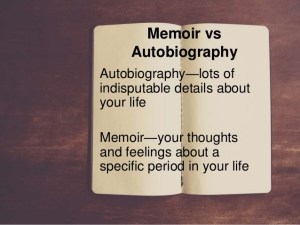
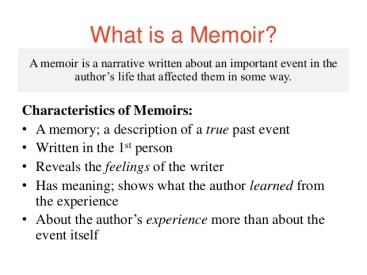
I’ve decided to write a memoir for the 2016 Nano. I’ve never written one. Technically, that qualifies me as a Nano Rebel. I don’t feel rebellious because there is ample precedent for memoir and I still need the same number of words. Since I have been kicking my biographical tin-can down the road for years, I’ve decided it’s time.

nanowrimo5

I was raised in a religious environment, but I’ve concluded that atheism is correct. I plan to document that spiritual journey. The memoir will be spiritually thematic and family oriented, but not suitable for young children. I’ll write about specific periods and events in my life when religion or spiritual issues were more prominent, or should have been.

I’ve been researching people, places, and events to reconstruct those times. I’ll be busy with this until December. Only then will I set my inner editor free to deal with the 50K-word first draft, pile of tangled dribble I will have created.nanowrimo4

I’ve been posting on this blog twice per week. During November, I’ll post once per week to provide a brief summary of my Nano experience, and information relevant to my project. Adding news of any other participants that I find interesting would be fun — so do tell.

I’ve been reading about writing memoir. It is different, of course. But since I did this Nano gig one time, I know that I’ll have little time to work on this blog.

nanowrimo3If you have any interest in NanoWriMo, the web page is http://nanowrimo.org. Join us.

If you are jumping into the Nano challenge also, I’d like to know.

Have fun. I hope to be able to hold my head up enough to resume blogging on the twice a week rhythm again in December.

As Natalie Goldberg says in Writing Down the Bones, “In the center of chaos, make one definitive act. Just write. Say yes, stay alive, be awake. Just write. Just write. Just write.”

Look both ways and mind the gap.

“There are no gods”


no-god2

One definition of the word believe is to “accept something as true.” Synonyms include credit and trust. A second definition is to “hold something as an opinion, to suppose, or assume.” Synonyms for that definition include reckon, figure, and guess.

In her book Writing Down the Bones, the chapter Make Statements and Answer Questions, author Natalie Goldberg advises, “So even though life is not always so clear, it is good to express yourself in clear, affirmative statements.” I leave no doubt and no wiggle room with my clear declaration (albeit, not stated affirmatively). I’m not assuming, guessing, reckoning, or supposing. Maybe you’ve heard the phrase, what part of no don’t you understand?

That’s how I choose to say it: “…no gods.” My reasoning is that saying I don’t believe in a god or gods is insufficient and could be misleading. I don’t need weak qualifiers to protect my position—nor do I need to prove it to anyone.

no-god4

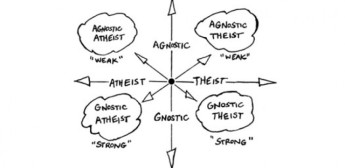
I am not simply accepting anything as true or false. I am not supposing or assuming anything. I am stating my position as a fact. While some may use some esoteric scale (like the above) to argue that I must wear the label of gnostic atheist, as opposed to agnostic atheist, I disagree. I have one position that determines my point of view on many other things such as there are no ghosts, no devils, no angels, no unicorns, pigs cannot fly, and Mrs. O’Leary’s cow cannot jump over the moon, but may have caused the Great Chicago Fire.

I enjoy Halloween and ghost stories around a camp fire as much as I ever did. It’s unnecessary to believe in spirit-world entities to enjoy being frightened by them. Reality, however, should be frightening in some circumstances.

no-god5Picture this. You’re sitting quietly in a random crowd of 100 people in the United States. Suddenly one person jumps up and yells loudly for all to clearly hear, “There is a god!” Let us now assume that said person had a good, but personal, reason for this announcement. None of the other 99 know it. What happens next?
Perhaps 40 or 50 people will say, “Amen.” Even more will likely applaud. Everything is fine and the feeling of the crowd is positive. Right? People have every right to their beliefs. In a random group of the remaining 99, not everyone will have the same beliefs. But there would be no grumbling, no accusations, no death threats, and not one person of the other 99 will stand and say, “Prove it.”

Add one person to that crowd – me. What if I stand up first and announce loud and clear, “There are no gods.” Keep in mind that of the thousands of gods humans have believed-in and worshipped over thousands of years, at least 70 people in the crowd agree with me, with one exception – the god they happen to believe in. Despite this, what likely happens next?

no-god1

Even when people know of my atheism, if I make that statement, I’ll be challenged to prove it. They see no oddity in asking me to disprove something more than 70% of the people claim to believe, but are equally unable to prove. Even some agnostics and atheists would challenge me by asking if I know it for a fact.

I had the opportunity to spend time with my grandchildren this past summer. A friend wondered what I might say if one of them asked me if I believed in god. At the time, I wasn’t sure how I would answer. While it never came up, should it now, my answer is “No.” If a discussion or Q&A ensues, I would manage as honestly as I could. I am not afraid to use the words, I don’t know.

So, by stating that there are no gods, I’m establishing my position. I’m not a person who believes in god. I am not agnostic. While I have interest and curiosity about all religious beliefs, It’s not my intent to change anyone’s mind, unless I’m asked. But belief in god or not, I think religion is harmful. I am not trying to ruffle any feathers or destroy any fantasies. I agree with Ms. Goldberg and I’m thus making a clear statement – there are no gods. I’m keeping it simple.no-god3

Confidence and assuredness are good things, but we should consider all options.
Look both ways and mind the gap.

Changing Priorities

“Here’s to When I Gave a Feck”

Tom Selleck
Tom Selleck

“Look, Garrett, I’m closer to the end than to the beginning. So, some of this stuff, I just don’t have it in me to care anymore…It’s the rest of it, the posturing, the little digs, the wasting my time….” ~ Police Commissioner Frank Reagan; from the TV show Blue Bloods, Season 6, Episode 9, “Hold Outs.”


I can relate. I often say, “I don’t care.” But I do; in an odd, almost cavalier way. Normally, when I think I can help someone or fix something, I give my time and effort to the issue. I now care less about many of the things that were high on my list when I worked at my paying job. I haven’t lost my motivation; I now own it.

Opinions others have of me have lost much of their importance. Nowadays, I care more about issues that were of little interest during my past. Conversely, my “that’s bull shit” list is longer than ever. I worked, if you can call it that, for about 50 years. Now retired, my perspective on what’s important is changed.

Since age 18, excluding my time as an undergrad, I had one six-month period of unemployment. Even then, I treated my job search and being Mr. Mom, as two jobs. I enjoyed them both. The pay was horrendous, but the benefits were good.

I learned about myself during that time, simply by being me. That was the early 90s, the decade that I like to call my figure it out for myself years. Looking back, I now recognize that I was depressed and confused. I worried about things like money, a job, and my kids. I was more overwhelmed than I like to admit. I paid my dues. But now?

You know you want it, right?

I wear blue jeans, shorts, or sweat pants. It’s like every day is casual Friday, but it’s really another Saturday. I’ve not worn khakis more than twice in 18 months. I haven’t worn a tie, suit, or sports jacket either.

I care about style, as long as it’s casual. While I still think wearing argyle socks with sandals is a sin for which any man should burn for eternity, there’s something to be said for not caring what others (like me) think, even in the choice of clothing styles. I toy with the idea of wearing a kilt cuz wife says I have great legs. Some opinions will always count.

It shouldn’t matter what most other people think. I’ve read that what they think of me is not my business. But it often does matter. If I ask you what you think, feel, or believe, you should want me to care about your answer. If I do, it’s fair enough.

If I like your idea, I may accept it, implement it, or otherwise go with it. When someone says, “You should do a blog on that,” it gets my attention. I often write with inspiration like that from someone else.

I’m a grandparent. A parent called to complain about a grandchild. I listened, but said nothing. I allowed my child to rant and get it out. My wife wasn’t home, so I was on my own for the call and the associated drama. These are my monkeys in my family circus, after all.

i-dont-care5Then I hear, “You haven’t said anything, Dad. What do you think?”

I take a deep breath and wonder if I should respond (the answer here is no).

Raising my kids, I made the same mistakes. But now, I have a different perspective. I answer with a quetion, “Are you sure you want to know?”

My ranting offspring responds, “Yes.” The tension builds. While I knew that this wouldn’t end well that day, I also knew it would eventually pass, and it did. I blurted out my answer as the Frank Reagan of my family.

“It doesn’t matter. What you’re so upset about is no big deal. There are more important issues in your child’s life. This is minor and kind of expected. As children, we’ve all had problems like this. We get over it and so will he. Allow him the dignity of experiencing and learning about life on life’s terms, not your conditions. I suggest you calm down and wait.”

Dial tone.

Blue Bloods writers would handle this scene at the family dinner table with everyone drinking wine.

snarkasm12I’m a here and now kind of guy. While I firmly believe in living in the present, I acknowledge that each life has a future and that’s the direction we live it. Today’s crisis is tomorrow’s funny dinner chat or neighborhood gossip.

Life goes on, and everyone should enjoy every possible breathtaking minute. What other people think is probably unimportant, and may be dangerous. So learning when to have had enough, to be tired of the BS, and to move on; to no longer give a shit, is good.

“But Mikey’s father, champion of all pint drinkers, is like my uncle Pa Keating, he doesn’t give a fiddler’s fart what the world says and that’s the way I’d like to be myself” ~ From Angela’s Ashes, by Frank McCourt

So, care as you must. Live in your world and in your time. Figure out what’s important to you and to people close to you. Make choices, change your mind, look back and look forward. That makes perfect sense to me, I hope it does to you, too.

Meh takes a big swig of the foamy grog and grunts, “I don’t give a feck.”

Live life forward, understand it backwards,
mind the gap, and look both ways.

There is a Time

I first wrote this blog several weeks ago. Then, I gave it up and decided not to post it. However, something happened to change my mind – so here it is.

right-to-die2When would you like to die?

I choose never. I also would like to remain mentally and physically healthy during that time. I want the never die answer to apply to all people I love, like, care about, and anyone who I don’t want to leave me. It’s settled – no more death, no more suffering before death in lonely misery and pain. No more loss, being left, or watching someone wither away with cancer. Problem solved in less than 80 words. Praise be.

This is an issue of rights. I’m one of many who think our right to die is as basic as any natural human right. We can’t choose when and how we die. No one can help anyone else decide that.

Any of us could be accidentally killed at any time. Otherwise, and more likely, the people we pay to keep us alive will find that, eventually, nothing they can do will prevent the inevitable.

right-to-die3

I assume that for most (not all) of my family, my death would be something of a big deal. Like birth, it’s a one-time thing. Unlike birth and life, death has no end. But it does have a process called dying, and that seems to be the larger concern we share regarding the topic. It is the getting from life to death that we worry about. I am going to tell you about two deaths.

When I first met Dixie about four years ago, she was a fairly spry and cantankerous 98-year-old lady. I attended Dixie’s 99th birthday party. I watched as she introduced each arriving guest to each of the 15 or so other persons in the room, correctly by name and relationship. Then, she would tell a little story about each new arrival. Dixie stood, and moved around the room, in short heels through all of this for two hours. I was amazed. Her 100th birthday party was a memorial service. Dixie died in her home of a heart attack or similar cardiac event about six months later. If we could all be Dixie, I would not be writing this.

I met Joe less than two years ago, when I moved into the same apartment building. Last April, I attended his 96th birthday party. While not quite up to Dixie’s condition, Joe seemed fine to me. He was able to get around well with a walker. He drove and took care of virtually all his personal issues. Joe was very independent. I’ve been told that he informed others (not me) that he was concerned, and if his health failed too much, he would commit suicide.

After returning from a trip to the emergency room a few weeks ago, sometime during the night, Joe stepped into his bath tub and used a pistol to end his life. He was alone at the time and left no note and no explanation. I was shocked. But as I learned more, I’ve come to understand his motivation.

right-to-die1I live in state where physician assisted suicide and death with dignity are legal. However, getting a prescription is not easy and a patient must be terminal within six months. There is more to this. I don’t believe that we have the right to force people like Joe into this position. But we do.

In most of America, it’s illegal for us to receive any assistance in bringing about this inevitable event. Suicide is illegal in some states.

Jose H. Gomez, Roman Catholic Archbishop of Los Angeles, CA, has written about the right to die: “There is no such thing.” Many religious people will not grant anyone the right to end their own life (believers or not). The circumstances don’t matter: age, pain, suffering, loss of all hope of recovery, or loss of any dignity. Only “natural” death is permissible. If that’s what people want for themselves, good for them. But for others who wish to die, evil and cruel laws are unacceptable.

I fully understand the difficulty of this issue. Click here to read a good article on the right to die with a fantastic video, both of which are much more balanced than my opinion. Another eye-opener is an excellent TED talk on dying that I have watched several times. Click here to view it.

right-to-die4I’m sure that we’re technically and legally smart enough to figure this out so that people like Joe, or others with painful terminal illness can be granted the relief that a god who cared would grant them. But that is only going to be possible as we become more secular and religion is separated from law.
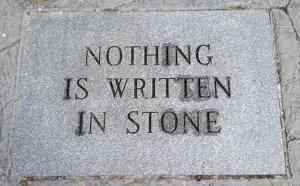
For each of us, there is a time to be born and a time to live. Always look both ways because there is also a time to die.

Literal Thinking; Ironic World

“The literal mind does not understand the ironic mind, and sees it always as a source of danger.” ~ Christopher Hitchens

Once we perceive something and it gets into our brains, the confusion begins. We communicate by employing methods or techniques to stimulate the senses of others, intentionally or not. Face-to-face, we can bring out all the best guns. Teachers employ every conceivable technology to get students to learn by seeing, hearing, touching, smelling, and tasting.

ironic-mind2

I doubt that our individual minds are exclusively either literal or ironic. I suspect that some of us have trouble communicating, especially on the receiving end, because we lean one way or the other. When the ironic mind works with the literal, caution and precision must be applied. The reverse seems to be less of a problem.

I recall a conversation with my daughter about a man who, in my opinion, was an irresponsible pet owner. I forget the details of his transgression toward the pets, but I used a rather common and innocuous phrase regarding what she told me: “He should be shot.” Julie became upset with me (he may have been a boyfriend at the time). It was quite a while before I knew the reason. Apparently, she took what I said literally. Even after our discussing and my explaining the idiom, she never quite seemed to grant me a full pardon for promoting the demise of her friend. While this may appear extreme, it’s not uncommon.

Another example involves a writing quote I like from Steve Almond.

“All readers come to fiction as willing accomplices to your lies. Such is the basic goodwill contract made the moment we pick up a work of fiction.” ~ Steve Almond

When I posed this quote to another writer, she asked, “Is that how you see it?” I confessed agreement before I realized the problem with the noun lies. What makes this even more interesting is that at the time, I was writing historical fiction (an oddity in its own) and my friend was wrestling with a memoir (a quest for truth). Her efforts were focused on discovering the truth while mine were based on developing an untrue story in a true, but flexible, setting.

Fiction is only a lie when it is not presented as such. While neither of us set out to deceive anyone (truth is not in every memoir), her goal was fact with interest. Mine was interest with a false story based upon fact. My friend’s literal mind-set related to her concern with the accuracy of her project. Mine was based more on fiction, which is not the truth, thus figuratively can be called lies.

ironic-mind4

I enjoy the humor of sarcasm and irony. Without awareness of the intended humor, harm is frequent. Furthermore, if someone does not share another’s sense of humor regarding irony, even more so, sarcasm; the exact opposite of the intended communication is inevitable. Damage control using a follow-on explanation never seems to completely mend the fence, “I can’t believe you thought that was funny.” My personal sense of humor gets me into that sort of bind on a regular basis.

ironic-mind3A humorous book I enjoyed was Lamb: The Gospel According to Biff by Christopher Moore. The book is full of tongue-in-cheek humor, innuendo, sarcasm, and other forms of witty humor. It even has an angel who is so literal as to be the best heavenly straight man I can imagine.

I (somewhat proudly) wear the label snarkastic to fit my fondness for being both snarky and sarcastic. But, I’ve learned that how I communicate makes a difference. In writing, I am advocate for a sarcasm font (we need one). In person, I exaggerate facial expressions, gestures, and voice inflection so that I can give others the opportunity to get it right. I don’t enjoy the struggle of trying to explain my humor to someone who I know will never get it, but I try. And, I’m watchful for things not turning out as planned after I shoot off my mouth.

ironic-mind1Sometimes I don’t get it either. Like when I say something and someone bursts out laughing and yells, “Bill, I love your sense of humor.” I smile and nod, then lean to the person next to me and ask, “What did I say that was so funny?” Literally?
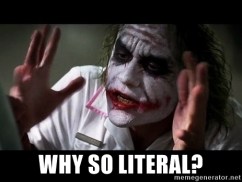
We live in an ironic world.
Love, laugh, get wet, look both ways,
and mind the gap.

Evil’s Not My Problem

Monotheistic believers have no convincing way to deal with this issue. Because it has been around for a long time, it has been written about, answered, explained, taught, or discussed in groups of one kind or another. But it remains a problem that can only be settled one way—ignore it. Ignorance is bliss.

problem-of-evilOr, you might end up where I did, facilitating a classroom discussion of the topic in the Adult Education program at my Catholic church. Preparation for teaching, and then leading the group discussion, led me to an enlightenment. I was not, at the time, spiritually or religiously challenged by the problem of evil, but I learned a lot.
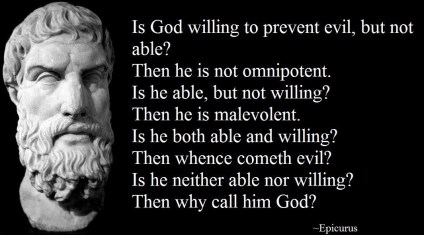
Most of what I learned involved getting deep into a topic that I’d not seriously considered. As I was reading the Bible, especially the Old Testament, I started coming to terms with my own evolving beliefs and conclusions.

I was a believer (or wannabe) at the time. My biggest aha moment was when I realized that I had no qualms pinning evil on god. And, of course, that led to the uh-oh moment. That’s when I realized that god could not be so good after all. That disconnect was not gunna work for me. “Houston, we have a problem.”

problem-of-evil4

If you’re fuzzy on what the problem of evil is about, click here  to link with a youtube that provides a quick-n-dirty review in ten minutes. Pay attention because that guy talks fast and covers a lot of ground.

I’m intrigued when a priest, deacon, nun, or any religious person says, “I can’t understand why God allowed that to happen.” Pick any natural disaster, which some people do not consider evil, or some other moral evil such as mass murder. We have heard it said.

In the case of Islamic terrorism and other nut cases, evil is even done in the name of god, ostensibly with god’s help, followed by a hefty reward from god. (WTF does anybody want with 72 virgins anyway?). I know there are other kinds of murderers, but everyday that religion is used to justify slaughter around the world.

I know, “one man’s terrorist is another man’s freedom fighter.” But, along with most Americans, I consider 9-11 the mass murder of innocents. My point is: there is evil—lots of it, and all kinds of it. If you believe in a god who knows, cares, and can fix it; you should radio Houston Control with your problem.

problem-of-evil3

We mere humans, when not being the perpetrators of some evil, expend energy preparing for and dealing with it in some way. We know it’s coming. So, in that way, it’s logically a problem that is often taken for granted (i.e., shit happens). Even the religious folks mentioned above devote their lives to promoting the goodness of god and fighting evil, albeit usually they focus on moral evil, as defined by them, of course. Other groups do a wonderful job of providing aid to victims, after the fact.

Since there is evil, it must ultimately be permitted by, if not created by, the god one believes exists. Depending on the religion, reconciling this with religious belief takes some doing and may call for a heavy dose of denial. Maybe a little help is in order? Enter the best scape goat ever—Satan. Next best are Adam or Eve. If someone says, “It’s god’s way,” you should be reaching for your bullshit flag because here it comes.i-dont-care4

In some way, religious folks must be working through or around this problem. Last I checked, monotheists aren’t switching to polytheism or finding another way to make it work. Or are they?

Atheists and believers seem to agree; there is evil in abundance. My definition of it is probably broader than many religious folk, but it’s close enough.

Atheists don’t have to determine why evil is permitted. We only need to acknowledge its existence, do what we can to make others aware of it, and prevent it when possible. If not, maybe we can find ways to deal with it when we must, which is more often than I like. I never have to ask why god did, or didn’t, do something. But you have every right to ask me why I don’t do something.problem-of-evil2

There is both good and evil in the world
and too often within us. Look both ways.

Are You an Enigma?

enigma3

I’m comfortable with not understanding everything and everybody. It has little to do with what I want, but more to do with my level of acceptance. I can be curious, and sometimes I’d like to know more. But I’ll never know everything.

Here’s an example. About a year ago I was in a discussion group talking about the US Government, and the government of another country that many of us consider an enemy. One lady said, “All I want is to know the truth.”

I watched her to be sure she was serious. Then asked, “The truth about what?” Following her tongue-tied response, I asked why she thought she could learn the truth. I explained that we had all the information available, filtered by the providing media source. Her problem was, and ours is that we usually form opinions and make decisions without knowing the facts. She said, “Well, that’s interesting.”

enigma2

The first time that I recall anyone calling me an enigma was back in the mid-1980s. I was walking back to my office when one of my staff looked at the contents of my hands he said, “You’re an enigma.” I looked down at my hands, smiled at him, and asked why. “A Snickers candy bar and a Diet Pepsi. That makes no sense.” I hadn’t considered the conflict of the combo. I answered, “It does to me. I like them both. If I was interested in diet, it would be celery sticks and a glass of water.”

If an enigma is a person or thing that is “mysterious, puzzling, or difficult to understand,” may I add “and interesting” without changing the definition? If you are an enigma to me, that means I find you difficult to understand. So what? I may see you as interesting for that same reason. I should accept that is who you are.

If I ask you to explain what I see as a puzzling conflict in your behavior or opinions, and you do, are you still an enigma? Or is it my failure to understand the makes you an enigma?

The enigma phenomenon pronouncement is an outside view. The inside view usually makes perfect sense. Furthermore, if people change behavior or opinion, are they still enigmatic?

I am an enigma to many. Here’s why.

enigma5

I spent over 45 years working in the Department of Defense (military, contractor, and civil service). I graduated from the most conservative (by most measures) public university in the country. I’m an old white guy who lived in Texas most of my life, and most of my long term acquaintances are conservative, republican, and religious. Stereotype me based on that and you’ll get me wrong, as many do.

enigma4

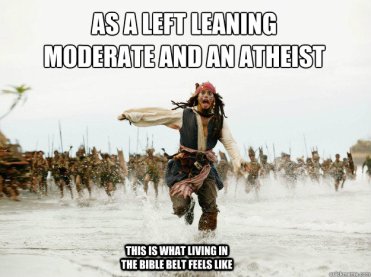
Politically, I’m a left of center moderate democrat. Depending on the issue, I’m often liberal, but I often find myself defending traditional things. I am fairly disciplined, but a good and flexible listener. I am an atheist who spent too many years trying to be that church guy. My past, age, race, education, and former residence belie the real me.

Love and peace are the answers. We should do all we can to avoid wars. After that, I think the limited, partial measures war-like actions of the past were folly. War should be fought to win. Because war is so ugly, that goal is only reasonable after all peaceful measures have failed. Talking war is a murky swamp full of traps. But I think we need to apply logic to our policies so that we can stop being on the losing end.

I’m neutral regarding the term open minded. I prefer a willingness to hear some other points of view, to be accepting of what I can, but to hold to my beliefs until information changes my mind.

I’ve done a lot, seen a lot, and lived a lot; but I can still be perplexed about myself. So, if you’re confused, maybe you should be. My wheels turn slower than they used to, but they’ve not stopped.

enigma

To keep an open mind, look both ways.

Are Atheists and Believers on Equal Moral Ground?

atheist-morality3

Yes. We are. In most cases, for exactly the same reasons. But too many believers are taught that atheists are worse than immoral. They’re taught that atheists are evil. The following quotation was reported as being recently sent by an orthodox priest to his followers (meme found on a WordPress blog).

One priest’s view

“Lots of sicknesses have come out [of] the closet, and unbelief has come out of the closet too. And unbelief is the worst of them all. Better to be an adulterer…. Better to be a killer…. Better to be any of those things, brothers and sisters, than an unbeliever. There is nothing more foul, there is nothing more grotesque, for a human person to do than to embrace atheism”

At least he seems to see us as human, or almost. When I challenged the person who posted this, she tried to explain that he did not mean to say what he obviously said. Unless the man is grooming for a political campaign, I’ll take him at his word.

A governor’s viewRepublican presidential candidate Ohio Governor John Kasich speaks at the 2016 Conservative Political Action Conference (CPAC) at National Harbor

Then there is the reported statement by the Governor of Ohio, and former republican presidential candidate, John Kasich. His reaction to actor Daniel Radcliffe’s (Harry Potter) disclosure as atheist is revealing.

“You know that Daniel Radcliffe has declared himself an atheist? I’m serious. What a weird thing. Why would a guy who has had all that success just, I mean, what the hell is wrong with him?” ~ John Kasich

Read about it by clicking here.

The public’s view

atheist-morality6I recently read about research conducted by two prominent universities, one in Canada and the other in Oregon. Their general finding was that people trust atheists slightly less than rapists.

It’s easy to find more, but you get the point. And people wonder why atheists might object? Seriously?

While I am neither surprised nor angry, when some moron priest with a following says that I am worse than a serial killer, a jihadist bomber; that I am nothing but a grotesque, foul human being, please forgive me for being offended.

I’ll face palm, have a beer, and forgive this Christian for his stupid, insulting remark. Which, no doubt, at least hundreds of followers now believe. The clown who posted this seemed to think that atheists might be offended by it. Do ya think? Are you gunna tell me that people like this make the world a better place? These trolls think they are legitimate, and their followers agree.

Another priest on morality

Well, I have a priest to quote too—a Roman Catholic Parish priest. He told us that we should do the right thing. Not to keep out of hell, not to please god, not to impress anyone, not because the Bible or some bishop or pope told us to, but simply “because it is the right thing.”

This atheist agrees. I think most atheists believe in following, or changing, the laws. Even the ones that should not be laws, but are religious rules forced on everyone (civil disobedience protests notwithstanding).

We may protest, object, file law suits, or ping some governor, but we will usually follow the rules. It is the moral thing to do. This is partly why athesists are underrepresented in prison populations. Statistically, the proportional numbers of believers compared to the number of atheists in prison may be worth considering. I’ll let you look it up.

Nihilism (<—click for wiki)

Many believers confuse atheism with nihilism. They’re not the same. It’s unlikely that a moral nihilist would be a theist. Conversely, few atheists may be nihilists, but they could be. Understanding the difference helps, even if it is confusing. Another consideration for believers, be they doubters or true believers, is to ask themselves these four questions.

If I stopped believing in God tomorrow, would my morals change?
Would I become a criminal?
Would I be more willing to rape or murder?
Would I change so much that I would become a different person?

atheist-morality1

The other day I read a comment by someone who, while quite confused about Christian moral standards and values (and he is one), was even more out of line with his view of atheism. He implied that if I was Russian or Chinese, I might view human life as a “warm bucket of spit.” I’m sure that his opinion is held by too many Americans.

That would be nihilism, which is a philosophy—atheism is not. When someone asks an atheist how life can have meaning without god, they’re often thinking philosophically, and probably of some kind of nihilism.

Those loving Christians

atheist-morality4

I’m trying to figure out why so many Christians work so hard to make atheists look so bad. What do you suppose that is all about? Some lie knowingly (as in bear false witness), some may misunderstand, some may be warning their own group not to look upon nonbelievers or free thinkers as being just like them. Otherwise, the believers might become apostate and walk away from that religious fantasy (and take their money with them).

Atheists want a better world

atheist-morality2Whether someone dislikes the fact that nonbelievers exist, that we work with believers to keep church and state separate, or that their family members may embrace atheism; we will continue to come out. We will continue to speak up. We will continue to deny the existence of any god. And, we will continue to share the moral high ground with most believers and to counter all claims to the contrary.
Believe as you will, be sure to look both ways.

DEATH

The inevitable & unavoidable conclusion to life.

During late October many cultures begin preparing for the first days of November. They remember the dead, acknowledge the end of harvest, and prepare for the dark days of winter. It begins with Halloween, then All Souls’ or All Saints’ Day, The Day of the Dead, and Samhain. Many believe it’s the time of year when we’re closest to the other world and death itself. The Fairy Tree story that ends this blog tells a wee bit more.

death6

It’s our only certainty—we die. Beliefs about what follows the end of human life range from nothing to Paradise and 72 virgins or reincarnation. Let’s not forget the whole Dante’s Inferno thing. Our beliefs about an after life affect our choices while living.

While no one has told of their experience following permanent death (we have near death accounts), there are stories with bits of information. Little of it is dependable or useful. Theories abound, but the database of the deceased is void of demonstrable facts. Only the dead know, and they’re not talking.

Efforts to resist death seem logical, but are eventually fruitless. While many consider death a condition leading to afterlife, most people (not all) avoid dying as long as possible. An exception is when living prolongs a life of hopeless suffering. Others choose death through martyrdom. We disagree about our right to die (whole other blog) and we normally work hard to keep living.

death4In the United States, more than two-million people die each year. The CDC reports the top four causes as heart disease, cancer, respiratory disease, and accidents. I say, smoking, smoking, smoking, and driving plus illicit drugs because they are the major producers or triggers of those four “causes.” The root cause of most preventable premature deaths in the USA is smoking (so quit).
It can be difficult to determine the difference between a still living or recently deceased person. Without more information, we can only define death as an absence of life. Our legal descriptions require a physician to certify the time and cause of death. While absence of all brain activity normally defines death, court cases fog the legal definition. When there are uncertainties, we gain information through autopsy.

death3

While we’re fascinated with death, many of us avoid serious discussion of it and find it morbidly unpleasant. The death of friends, loved ones, and people we hold in high esteem represent the ultimate, painful loss. Our own death signals loss and aloneness, which is sometimes comforted by religious beliefs.

death2

Yet, we sing of death, we write about death, and we (should) discuss it. We often honor death’s inevitability with both art and science.

Since first hearing it, I’ve liked Ralph Stanley’s (died, June 2016) rendition of the song, Oh, Death, which is a plea with the Grim Reaper for another year of life. It was made famous in the movie O Brother, Where Art Thou? Hear a short version by clicking here.

From a list of ten poems about death, I selected two by famous poets. All ten can be found here.

“Death” by Rainer Maria Rilke (died 1926)

Before us great Death stands
Our fate held close within his quiet hands.
When with proud joy we lift Life’s red wine
To drink deep of the mystic shining cup
And ecstasy through all our being leaps—
Death bows his head and weeps.

From Queen Mab, by Percy Bysshe Shelley (became famous after his death in 1822)

How wonderful is Death,
Death, and his brother Sleep!
One, pale as yonder waning moon
With lips of lurid blue;
The other, rosy as the morn
When throned on ocean’s wave
It blushes o’er the world;
Yet both so passing wonderful!

death1Life is the time made precious by our inevitable death. May we fully enjoy the many pleasures and loves discovered and experienced while living. And may we all “…lift Life’s red wine to drink deep of the mystic shining cup…” because death is next for each of us.

Life is uncertain, look both ways.