The deer statue has been resting on the Luzerne County Courthouse lawn, in Wilkes-Barre (pronounced berry), PA, since 1909. However, it was first placed in the city’s central area, where the old courthouse was, in 1866. That was a year after President Lincoln was assassinated, the Civil War ended, and Walt Whitman wrote the poem, Oh Captain, My Captain (all in 1865).
I wrote this poem from the persona of the deer, who never seems to complain. Since home cameras and photography became popular, people have been taking pictures of friends and family sitting on the deer. The photo I used is of my mother holding me on the deer, circa. 1947. Thanks to Sue for tweaking it to look mo’ betta here.
***
I Knew You When… by Bill Reynolds
Oh, deer me! As you can see,
my time here’s been so long.
The Civil War was in the past,
all memories aren’t quite gone.
One year after Whitman wrote
his poem of woe, his poem of hope,
I came to this city, I thought quite pretty.
On Public Square, I stood so proud,
for twenty-four years, I knew that crowd.
In nineteen-oh-nine, to a new home I moved,
to guard this lawn where I now stand.
O’er a hundred years, as I’ve now proved.
Six generations I’ve watched them grow,
grands both ways I got to know.
Been standing here without a sound,
through floods and droughts upon this ground,
storms and disasters all around.
I’ve felt your touch and bore your weight,
There’s more to come, so here I’ll wait.
Bring your camera and your smile,
for here I’ll be yet quite a while.
I was here, you all should know
the day yer granddad stood so near.
I’m sure we’ve met, but before I go,
It’s me they call the Court House Deer.
***
Remember the past, look to the future, live in the present.
Mind the gaps and be well.
Renga is a longer poem alternating three and two line stanzas. Sue and I collaborated on this one. She wrote the haiku and I did the couplets following. She used the 5, 7, 5 syllabus pace and I used 7 for each line. We decided to write this so each couplet is related to the previous haiku, and the entire poem shares a theme. The final stanza completes the poem and the circle. Sue’s blog, An Artist’s Path, is here.
The Poetry of Art By: Bill Reynolds & Sue Viseth
’tis a fickle thing
the words in verse, prose, and rhyme
chosen over time
feel the beat and tap those feet
catch the bop and keep the time
poetry is song
music from the heart and soul
sing it to the world
poet’s voice is here, voice is there
voices writ in blood and bone
no word writ in stone
rather, molded from the clay
poets turn the wheel
words are medium on wheels
the quill a master’s pallet
the artist within
molds the clay and sings the songs
a poem is born
something deeper than the poet
the words take form and art is
share art with the world
come together and create
poets live forever
Look both ways for poets and poetry,
but mind all the gaps.
First as a child, then as a boy
No shy child as many would ploy.
Silence in me is part of my nature.
Spoken words etch not my portraiture.
My teen years of silence, not taken a joke,
Was the indication of a challenge to bear.
More words to share, growing older I spoke.
Mostly not words they wanted to hear.
Others wanted to know why ‘twas I
Who made less noise than they did cry.
My smile never inquired just why,
“Of all talkin’, ya never was tired?”
Small talk they called it, noise without brains.
Not shy, in silence, I’m quietly plotting
Demise and disposal of whatever remains.
Now older, and less quiet I’ll be,
I listens and sez the damnedest of things.
Have it your way, but please try to see,
I can make stop those annoying rings.
Contemplate me
as you pass through yer day.
Most of the time,
I simply have nothing to say.
Listen quietly when you can,
mind unheard gaps,
and look both ways.
Click on the photo to watch a funny scene from a the movie, The Quiet Man.
Scene from movie, The Quiet Man, staring John Wayne and Maureen O’Hara
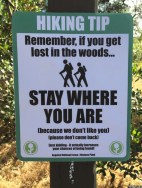
Years ago, I packed in over several nights, with a backpacking group near Truckee, CA, north of Donner Pass. We were at approximately 7,000 feet elevation in the Sierra Mountains between Sacramento, CA and Reno, NV. It was a very exciting trip.
A year afterward, I planned to repeat as a day-hike in with a friend. After he backed out, I decided to go it alone. I ended up going later than I should, and was unprepared for what I encountered. For my foolishness, I paid the price with months of back damage and pain. I can almost laugh about it now – almost. It was also exciting, but in a very different way.
Onomatopoeia is the formation of a word from a sound associated with what is named, such as cuckoo or sizzle. It is also used for rhetorical effect, as in this poem.
Never Again
by Bill Reynolds
High Sierra beauty.
No food. No drink. No sense!
What plan? Quick in, then back out. Whoosh. Like the wind. Time passed
Boink. Suddenly, it’s late.
Dusk. ARGH! Gotta get out.
Before dark. Oh no: It’s feckin’ dark!
No moon, no map. Had a lighter. Zip.
Oh, shit. Muddled.
Not one essential, much less ten.
No flashlight! Groan. Why?
Thinking? Stoopid. Grrrr to self. Clatter climb rocks. Get out. Fast. It’s Dark.
Thump. Crunch. I fell, no moon. Ark! Did I say, “It’s dark?” Crunch. Footsteps. Are they mine?
Can’t see. Bonk. Oof! Pain.
F-word, again. No better.
I keep swearing, like it’s gunna help. Bam. Step in hole. Crunch. Knocked out breath.
Shocked. Confused. Must see but cannot. Crackle, smack. Branch to my face. Blood. Ooze. Buzz. Bugs? Crunch. Twisted ankle. Scrape, bang, boom, bash. ACK! More pain.
Bonk. Fall on face. Dark. Hurt. Walk.
Pain. Bam. Oof! Again. What’d I step in?
Another hole. Whack, crunch.
Damn holes. Hiss. Oh god. A snake?
Hear something? More crackle.
What’s that? A clatter?
Get out. Fast. Don’t run. Too dark.
Bear? Mountain Lion?
Kill me? Eat me? Yikes. I’m so screwed.
Hoot. Owl. Danger.
Skunk. Whew. It stinks.
Careful. Out fast. Whiz? Crap!
I’m Cold. And wet. In pain.
Must pee. Yikes. Unzip.
Done. Relief. Don’t fall in it. Re-zip.
Ouch more. Get out. Don’t fall. Boink. Thud. Head pain.
Scrunch, twist, whack.
Repeat. Fear. Repeat. Dumb me.
How far? How long? Lost?
Alone. Clatter. Alone?
What was I Thinking?
Break free. Find car! Keys?
Oh no. No keys. Groan. Swear.
Hidden key. Found it. Brrrrr. Shaking. I am very cold.
Tall grass. Kerplunk. Dropped key.
Damnit, can’t see. Cold. Pain.
Sore knees, search the ground.
Feel in dirt, no gloves. I found it. Clatter to feet.
Hold tight. Screech. I scratched car, then swear.
Bang. Slam door. Varoom.
Start engine. Get out. Cuckoo. Oof over bumps. Drive. Find my brain.
Good trip. Nice day. Never again!
Bring a flashlight.
You can’t look either way, nor mind the gaps, if you can’t see.
A limerick consists of five lines. Lines one, two, and five have 3 beats each and rhyme. Lines three and four have 2 beats and rhyme. Referred to as light verse (or vers de société) by Lewis Turco, limericks tend to be light, humorous, and often bawdy or dirty.
***
The first “poem” I recall hearing was a bawdy limerick my father told me. I don’t recall my age. I heard it once and never forgot. It was a shocker, although Dad often used such language around me.
There was a young lady from Freeling
Who had a funny feeling
She laid on her back
And tickled her crack
And pissed all over the ceiling
***
I wrote this one in class about a Creative Writing teacher.
There once was a lady from North Bend
In teaching us to write, she had no end
She had a great thought
We fit and we fought
Until our writing was well penned
Well, the class thought it was funny.
***
Some wee dribble of self-pique from the old flapdoodle.
There was an old-fart named Bill
Who was also a bit of a pill
Until he met her
The rest is a blur
And now he conforms to her will
It’s all about me, ya know.
***
Many of us follow this lass. So, a bit of a gentile and friendly jab. Click on her name to link to her blog.
There once was a blogger named joey
And she loved to tell us her story
She speaks of the mister
Like he is her sister
Instead of her very first quarry
Do ya think I’ll hear about that one?
***
I had to take shot at someone, or male pride, in general.
There once was a man from south Brooklyn
Who thought his self too good lookin’
It happened one day
His thing wouldn’t play
Now he’s no master Al Pushkin
Dirty is funny, right?
***
Mind the gaps on top of it all Look both ways: eye on the ball But watch for the fart That is really a shart And you’ll have no reason to bawl
(Sorry. I couldn’t help myself. I wrote them all, except the first one, and I assume full responsibility for the content of my limericks.)
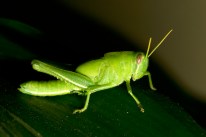
Nonsense verse need not make much sense. This poem almost does, but not quite – maybe it’s organized nonsense. Each word begins with the letter G in six, three-line stanzas, and a closing line. The poem is alliteration on steroids.
Ginko is a tree. A goy is a non-Jew or gentile. Grendel is a monster/antagonist in Beowulf. Gewgaw means showy but worthless. Glozing is making excuses. Ganja is pot, and a grumphy is a pig. Gecking is showing contempt, or screwing over. A gazabos is a person or a guy.
An elegy is a mournful poem. I wrote this elegy regarding the loss of my mother, more than 25 years after her death. The elegy is one of the oldest poetic forms. It’s identified by what it says, not how it says it. The Greek word elegeia means song of mourning, and is often included in classical Greek tragedies.
Missing Mom
The day Mom died, I stood there and cried.
To the surface my guilt came out of my eyes,
Beside her deathbed, letting go of our life.
Her suffering had ended, and I was alone.
No person is perfect, no human unsoiled.
Enshrined mother’s love, was sunshine to me,
‘twas the essence of my childhood memory,
My loss just the same, never again she will be.
She’d lived a rough life, through to the end,
But she loved me as only the mother to son,
That unconditional love, will never be done.
Only her death could end our last day.
Alone. Just alone.
Her voice and her scent, ecstasy to me.
So much I still miss them. I can still see.
“Hiya,” she’d say, to even the worst.
As kind as she was, so how she asked me to be.
Mom we still miss you, your face and your smile,
The sound of your voice, the look in your eyes.
Never again, will you be for us to see.
The loss that brings a sadness, one forever I’ll feel.
Mind such gaps, look both ways, and remember love.
This poem is to appreciate the beauty of simple, ordinary, normal things. A bagatelle is a small thing, something of little importance, a trifle. A demoiselle is a young lady. Vapid means lacking liveliness.
Beautiful Simplicity
Fear not. The simple’s no beast.
Appreciate the trifle, the tad and the bit. The fortuneless, the ordinary, the nothings of wit. Care about the underdogs, the lonely and poor. Acknowledge the average as part of the tour.
Perk up, dear sweet passé bagatelle, Deserted and lonely, a crumb of demoiselle, Desiccated prune mocked as less worthy, by those who unkindly, do not prefer thee.
Yes, you are shallow and vapid to some. As a threat to no others, are you liken to none? Our joy is in knowing the small we still see. No danger to us, as you let the world be.
Let the worldly and wise have their just due, Yet forging the lesser means forgetting them too. The great and the small are part of it all. So, sing a wee tribute, give the trifle a call.
Reading or writing about events like Bataan, we often focus on man’s inhumanity to man – that dark side of our nature, which we often shun until memoir time. Throughout known history, our capacity for cruelty is well-documented. Genocide (killing to eliminate a group, race, ethnicity, religion, or language) is too common. While respecting victims of atrocities, I want to focus on survival, with one survivor in mind.
Ben enjoying it.
When survivors tell their story, they become windows to history, guiding and motivating our chant of never again. From their dark stories, we learn to prevent future atrocities. On the bright side, survival stories are inspirational. What others endure, survive, and subsequently achieve are symbolic of human resilience: that remarkable human physical and spiritual asset.
I discovered Benjamin Charles Steele long before I met him, as I was feeding my curiosity about Bataan by reading books. I only read five. “Only,” because so many books and articles have been written about the Death March, many by survivors or their families.
One of those books, Tears in the Darkness by Michael and Elizabeth Norman, focuses on Ben’s story. While the Normans included much more within the pages of their ten-year project, they trace Ben’s life experiences, particularly during the war years. I recommend it.
My signed copy
Born in 1917, Ben Steele grew up on his parent’s Montana ranch. The family lost the ranch during the Depression Years, when he was about 15. Ben continued to work as a ranch hand, which interrupted his education several times before he finally graduated from high school in 1939. The following year, Ben joined the Army Air Corps. Eighteen months later he was a prisoner of war (POW) in the Philippines.
Ben may have developed a passing interest in art when had delivered art supplies. But, he had little exposure, and no formal training. Ben received his formal art degrees after the war.
For much of his early POW time, Ben was ill (Beriberi, dysentery, pneumonia, blood poisoning, and malaria). He worried about adding mental illness to the list, as so many others had. So, he began to draw. Risking severe punishment or death to stay sane, Ben started a self-prescribed therapy to fight off life-threatening melancholy. He had seldom drawn anything during his life.
Feeling guilty about my unused art supplies.
Unknowingly, from his sick-bed in the wretched Bilibid Prison, he was launching a seventy-four-year, successful art and teaching career. This late high school graduate, Army enlistee, and future college professor, was barely hanging on to life. While starving and hardly existing in some of the bleakest living conditions imaginable, Ben used charcoal and sticks to do his first primitive drawings.
“I used to sit there day after day. I thought I’d lose my damn mind. I wanted something to do, so I started drawing with anything I could find to draw with. I’d draw on walls. People around me said, ‘Why don’t you draw the guys? You know, there are no photographs taken of this stuff.’ So, I started drawing stuff around the camp and sketches of people and portraits as close as I could. I wasn’t very skillful.” ~ Ben Steele
Eventually, Ben was moved to mainland Japan where he worked as slave labor in coal mines. The only two of his original drawings to survive the war were done there. The original drawings he did in the Philippines were in the possession of a fellow prisoner, catholic priest, and army chaplain, named Father Duffy. When the ship Duffy was on sank, the drawings ended up at the bottom of the Pacific Ocean. A few years later, as he recovered in a Spokane, Washington, hospital, Ben reproduced his lost drawings from memory (part of his therapy).
When the US dropped an atomic bomb on Hiroshima, Japan, Ben worked 75 miles south. He heard the blast. Soon the war ended. Ben and others were on the road home and toward recovery from the three-and-a-half-year ordeal. Ironically, some survivors eventually fell victim to mental and emotional problems resulting in suicide, death from substance abuse, or other such maladies. However, most survived, and I was fortunate enough to meet some of them.
Once a cowboy….always…
When Ben’s art was displayed in a building on White Sands Missile Range in 2011, I was there for my last Death March. By then I’d read Tears in the Darkness, and other books about Bataan. So, I knew Ben’s story.
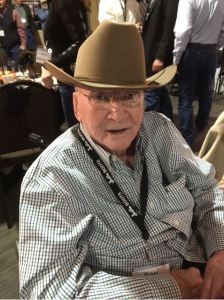
When I went to see the art the day before the March, Ben was there. His daughter was escorting him in his wheel chair – he was 93. We shook hands. He signed my book about his art and we talked, mostly about his life as an artist.
I immediately knew I was talking to a Montana cowboy, who happened to have been a POW, college professor, well known artist, an American hero, and a witness to much about life’s realities.
At his core, this happy man who was pleased with life and was the same cowboy who joined the Army Air Corps 71 years earlier.
“Little things that probably bother a lot of people don’t bother me. I figure I’m probably living on a little borrowed time, and I’d better enjoy it!” ~ Ben Steele
Another WWII veteran I knew, Joe P., said virtually the same thing to me last year. Both men died in 2016, in their late 90s after living full and happy lives. Perhaps their life choices were reflected in the last three words I quoted from Ben, “…better enjoy it!”
Life has its ups and downs; reality in art, literature, history, and personal stories enable us to look both ways, to the dark, or to the light. Enjoy life, but mind the gaps.
What would it be like today, if I could see all the faces that you have reflected? You only reflect me the way I look today, older and very different than when we first saw each other. I don’t recall that day, because it was almost 70 years in the past. Before that, you had reflected many other faces for as many reasons.
Since before I was born, you always had your place in our home, on the west wall of our dining room. There, you were centered on the wall, above the old sideboard buffet, which was also a permanent fixture. As anyone walked past you going to, or returning from, the kitchen; you reflected their profile. Before leaving home, we all stopped and faced you for your final review and blessing as we took one last look. Mom and Dad used you to check the look of their hats reflected in your glass.
Since your total viewing area is only one foot by a yard wide, you never revealed much about us below the neck and shoulders. Yet, you remained our primary, go-to mirror even after several full-length mirrors were installed. I recall the day my brother stood staring at you when he pontificated, “You know, Billy, you’re only as good as you look.” I never agreed with him. Did you? I suspect that how people look is important to you. It’s your purpose.
Every year, on Palm Sunday, someone would change out the palm frond strip hung prominently across the top of your frame, where it would remain for the year. That was sort of the family way of dressing you up for Easter Sunday. It was always the same.
The only time you, or any of those items around you, were moved, it was for painting walls or changes to the floor coverings. But you, the mirror, and below you, the side board, were always restored to your rightful, prominent places. Mom and Dad did not change furniture often, but they never booted you from your space.
How many photographs, cards, messages, and notes were stuffed between the edges of your glass and your frame? What did they say? Were they important?
You are in old pictures from my grandfather’s house (the one my mother grew up in), taken long before my birth, showing you along with two side sconces, both long gone. I never met any of my grandparents, but you did. I’m sure my Mom’s father looked at his reflection in your glass. Maybe her mother, too. I can envision him holding his young daughter up for you to see. Who else saw themselves, and the reflection of others, in your glass?
Beginning in the 1920s or 30s, every member of my family must have looked at you. When did you come into being? Every friend who ever visited our house saw their reflection, and probably that of others, when they looked at you.
You have survived the Great Depression, the FDR, Truman, Eisenhower, and Kennedy years, World War II (and possibly WWI), several rough moves, and whatever untold disasters that occurred during your 44 years in my parents’ home. For the past twenty-five years, you’ve been undamaged by my hauling you from one end of the country to the other.
Your ornate frame has a few nicks and scratches revealing hints that the wood beneath your gilded frame’s lamination is red. The corners of your frame are secured with two wooden dowels each, all attesting to the creativity and craftsmanship of an earlier time, when some master mirror maker worked magic.
While you’re a handsome and distinguished antique, it’s not you the mirror that provides the mystery and intrigue. It is the many thousands of faces that underwent self-examination as you watched, the hundreds of times a tie or hat was straightened with your approval, or when an Easter Bonnet was set to one side, and then given an approving nod.
Oh, mirror on my wall, holding the history of thousands of changing faces within your glass panes, do you remember their smiles and their tears. What do you remember? What secrets do you hold? Will you show me those reflections so that I may see whose lives you’ve shared? I recall with fondness and sometimes sadness, the pictures in my memory of the many times I stood nearby, and watched, as others used you to reflect a special moment in time. Show me their faces today, so that we might name the names.
When you look in a mirror, wonder.
Who else has looked this way? Who will?
Look! But, look both ways, and mind your gap.
 The deer statue has been resting on the Luzerne County Courthouse lawn, in Wilkes-Barre (pronounced berry), PA, since 1909. However, it was first placed in the city’s central area, where the old courthouse was, in 1866. That was a year after President Lincoln was assassinated, the Civil War ended, and Walt Whitman wrote the poem, Oh Captain, My Captain (all in 1865).





 Never Again
 Tall grass. Kerplunk. Dropped key.
 A limerick consists of five lines. Lines one, two, and five have 3 beats each and rhyme. Lines three and four have 2 beats and rhyme. Referred to as light verse (or

 I had to take shot at someone, or male pride, in general.
 Green Grasshopper




 Our Literary Journey