The Paradox of The Writer’s Ego
EGO: “Noun. A person’s sense of self-esteem or self-importance. Synonyms: self-worth, self-respect, self-image, self-confidence.”
 Some people think that ego is a bad thing. In a way, they are right. In a way, they are wrong. A wooden plaque (given to me by a friend) hangs in my room so that if I (ironically) hold my nose up, just slightly, I can see it. It says, “Humility is not one of my faults, but if I had one, that would be it.” Before you attack my lack of profundity, my friend made and gave the plaque to me as a bit of an ironic joke (I hope).
I recall my father using descriptive phrases like “too big for your britches” and “Who the hell do you think you are?” One might think such comments damaging to my ego or creativity and may have hampered my development. My ego survived and my limited creativity seems fine.
In my thinking, ego has little direct effect on creativity regardless of its health or condition. We writers (all artists?) are diverse people. But we are people. All kinds of folks paint great landscapes. George W. Bush paints, and he is better at it than I am. Who knew? The former Prez was hiding an artist all that time.
There are many web sites and books to help us write better. Most of the tidbits I learn from them are helpful. However, I often wonder if Stephen King isn’t right — they are all BS (from somewhere in On Writing). My point is that while we’re all different in many ways, we seem open to writing better.
I spent my entire life preparing to do (and doing) something else. After I gave all that up and retired, I woke up one day and declared that I am a writer. It was not who do I think I am? It was what I am – a writer, because I said so. That is ego. But is it evil or bad? Am I egotistical? I said nothing of quality, and I am a QA professional. I am as good at writing today as I can be. Tomorrow I want to be better. I am also as good as I can be at spelling, and my spelling is horrible. My writing gets better each day, my spelling does not, and my ego is managing.
Most of the be-a-better-writer advice I’ve read says we need to dump our ego to write (or do anything) well. Other things say we should believe in our abilities and work hard at it. Unfortunately, changing who we are is more difficult than changing the tire on the family Ford. I think that if I work hard on this blog and do the research, it should be good enough. My ego tells me that I can do this. I can do it. I can get my point of view across. That is self-confidence – ego.
 I’m making the claim that ego is mostly good for writers. I presume that it is good for artists who work in other forms of artistic expression. I also think that being humble is good and being courageous is good. I also think that each of us should do what works for us. We’re unique individuals who share a passion (if you want to call it that). I admit that an out of control ego is a problem for more than just the narcissist, and egotistical people have their issues. But over-blown personalities write and sell books too.
Narcissism: “Noun. Excessive or erotic interest in oneself. Synonyms: vanity, self-love, self-admiration, self-absorption, self-obsession, conceit, self-centeredness, self-regard, egotism, egoism. In Psychology, it’s an extreme selfishness, with a grandiose view of one’s own talents and a craving for admiration.”
“Egotistical is excessively conceited or absorbed in oneself; self-centered. Synonyms: self-centered, selfish, egocentric, egomaniacal, self-interested, self-seeking, self-absorbed, narcissistic, vain, conceited, self-important; boastful.”
Then there is the paradox. I like to refer to myself as a “wannabe” and I see no reason to reject that. I think my skill and my work improves each time I make changes or corrections. My writing improves every time someone reads it and tells me what they think of it. My ego can, and often does, take a beating. At some point we stop all of that. We are ready for what is the painful process known as “getting it published.”
 We need our ego to launch the work to readers. We need to believe that we can and want to do it. We also need to deal with whatever criticism and rejection we encounter.
Our poor egos. Our old friend stands ready to push emotional pain buttons with every rejection or criticism. It happens. And it happens most often to wannabes. But it’s part of the process, if you want to be published. After enough of this ego pounding us with emotion (can our egos survive all of this?) we may want to stop writing.
 To quote from Poe’s Preface to a republishing of his poems: “These trifles are collected and republished chiefly with a view to their redemption from the many improvements (made by publishers)…I am naturally anxious that what I have written should circulate as I wrote it….” He goes on to say that it is not that his work is that important, but the people who read it are. Ego?
The writer’s ego is a good thing. From day one, it is at the core of our being able to do what we want to do. But ego is not good at dealing with the humbling experience of rejection. I am sure the damage done too often leads to quitting. But, if we quit, do we say, I am not a writer?
If you want to read more on this topic, check out the following.
Insecure Writers Support Group (IWSG). This looks like a good site for all writers, insecure or not. Two other interesting blogs on writer’s ego are here and here.

 What impressed me about this man was his complexity, his courage, and what I see as his wisdom. His life journey and the decisions he made will likely prevent him from ever being canonized a saint by the Catholic Church. Yet those foibles are exactly what attracted me to him twenty years ago, and continue to influence my thinking. The man was a real person – a human being who behaved like one. If they did make him a saint, I think he would be among the most human of that group.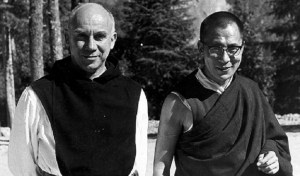
 So, I know when I made the change from young to old. It was about 40 years ago.
 Have you resigned yourself to the “it’s just a number that’s too friggin’ big” mentality? I’m not complaining about being old. Old people do not intend to complain about age. It is, after all, a successful result. On the other hand, the various consequences of age can’t be overlooked.
 If we live long enough, we share one important thing with many teenagers – we become bored easily. Old people can be annoying to some young people (15 years, remember). The thought that the feeling may be mutual seems to escape many. Most older folks that I know are working away at life. I know writers in their 80s and 90s who write every day, are working on writing books, and are making plans to publish.
 I live in an over-55, “active” community. Some folks here are more active than others, but most are kind of amazing. I took a blogging class where I met a lady of 92. She’s smart, funny, and still learning. She taught art classes and one of her subjects was art by carving vegetables. She made a scrap-book of pictures and writings on veggie art. She is an expert. Based on her experience, maybe the only nonagenarian expert. She wants to publish this in a blog. I can look past the outer physical things that show up when one is 90+. This lady is a master at her craft and learning another so she can share the first. I think that’s cool. In heart and mind, she is young, enthusiastic, and capable.
 I just returned from a “Personal Creative Writing” class. There are 15-to-20 of us taking the class. Most are interested in writing life stories or memoirs. These folks are talented writers; some are published authors; all are able to tell it like it was. They have the ability to make every life story funny, and even sadder memories are delivered with humor. They are good at their craft, but no one can accuse them of taking life too seriously.
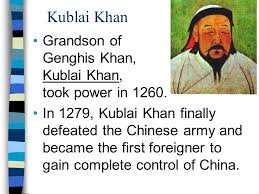
 Xanadu may refer to:
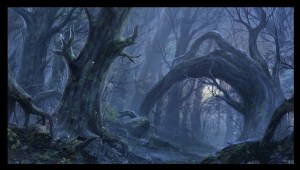 Across the sacred river before the sea
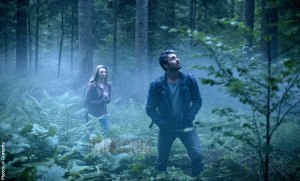 Where all that move within the light become victims of the night
 Canopies open to view heavens gate as sparkles ignite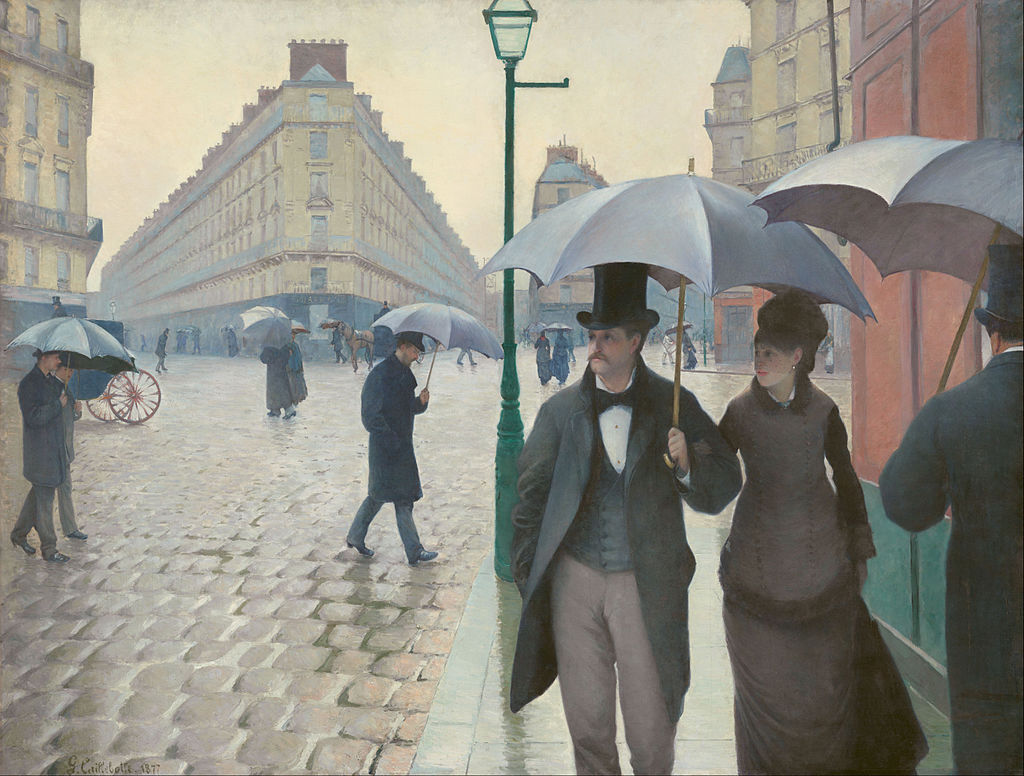
 For the novelist, POV is essential for writing the story. Fiction writers have the god-like ability to know exactly what is in the head of their characters. They create each character. This is true whether or not they share that information with a reader. Non-fiction writers are like the rest of us with human limitations knowing only what our senses (especially seeing and hearing) tell us. So, how do fiction authors tell us about characters? The questions for them, or us (depending on your point of view—sorry), are: how much do they tell us and how do they do it? The answer to one question limits the other. The same may apply to memoir.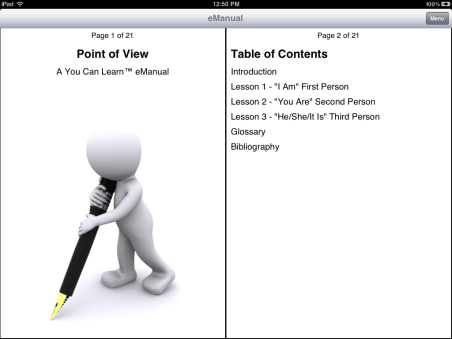
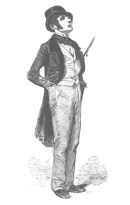 This is important and beyond this blog’s scope. Here are two good blogs on distance.

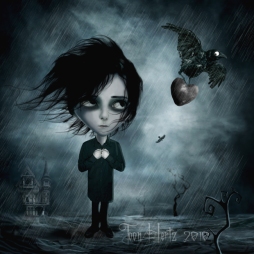 Stephen King has made a successful career out of scaring the hell out of many of us. We (not all) like to be frightened. Scary movies are fun. They are not for everyone, but a lot of people love them. Why? Is it the same with sad books, movies, songs, or plays? We keep going back for more.
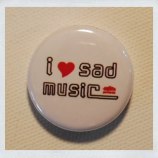 My focus here is music. A friend loved the song Dance Me to The End of Love by Leonard Cohen. That is until she learned that the inspiration of the song was in fact the Holocaust. It is a lovely and beautiful song, but that sadness changed the song for her. The song is not sad by itself, but because the inspiration was so tragic, her opinion of the song changes from love to sadness.
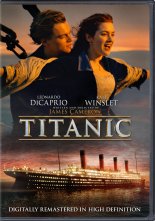
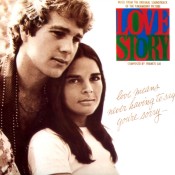 For sad movies, I have listed only five. It could be hundreds.
 Love Story (1970)
 Yolonda, my wife of 50 years (we married at age 2), is a native Texan and has her ‘druthers.’
 Billy on right, (w/Phish bassist Mike Gordon), our oldest child is in his mid-40s, a very nice, loving, big-man. He’s always been an avid reader, a talented writer, a movie aficionado, and a hard-core Phish-head. Add bicyclist, father, hubby, friend, musician, and deep-thinker.
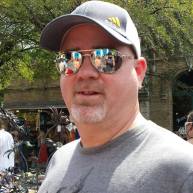 Steven is our middle-child, now in his early 40s. He’s another good guy. An avid sports fanatic (Spurs and Cowboys) and mountain biker. Add hubby, step-father extraordinaire, house music DJ (Steve Balance), friend, and all-around cool-dude (maybe pragmatic and analytical). He initially said that he had no fav quotes, but when he and his sista’ got to texting, there they were.
 Our beautiful ‘baby’ is Julie. She can recite every line from the movie Grease (oddly did not quote it), is an artist, a thirty-something, 21st Century hippie, a mom and step-mother. I think she is a wonderful writer and, like her mom, a Grammar-Nazi. She lives in the middle of nowhere with her hubby, son, occasionally a step-son, or two lovely elves, too many cats, horses, and sometimes (because he likes to chase the horses) a dog.
 Long before I ever entertained the idea that I might want to write
  things that people don’t pay me for (as in my old day job), I read a biography about J.R.R. Tolkien. It impressed me that he and his writer group (the Inklings), which included C.S. Lewis, would gather at a pub (The Eagle and Child) to discuss writing and literature. They would read what they had written to each other and critique each other’s work. I want to be there to watch, to listen, to learn, and to discover. Can you imagine? This happened in the 1930s, 40s and 50s. Lewis and Tolkien were alive and writing during my lifetime.
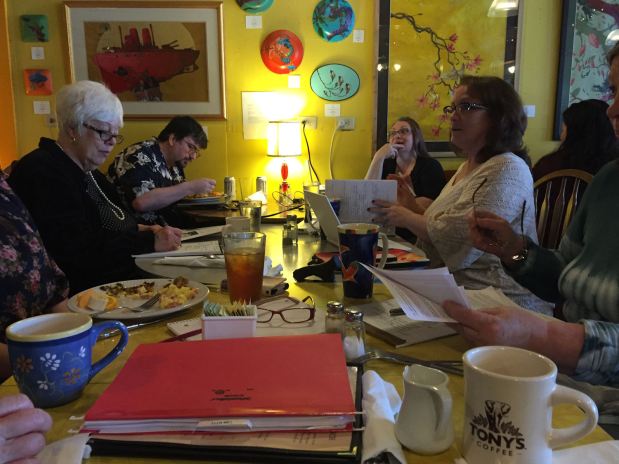 Ironically, unlike the Inklings who were exclusively male, most ‘members’ of the kaffeeklatch group are women. The group was started by one of them (Hi Caz). We drink coffee (or your choice of morning beverage), eat, and talk. Some in attendance have even confessed to getting some writing done. I wouldn’t miss it. If you’re looking for me between nine and noon on Friday mornings, check the Black Dog in Snoqualmie. I am the one with short gray hair, wearing a cap, mostly listening, frequently laughing, and totally confused. Who is to say that the next Tolkien or Lewis is not sitting there, telling me how I need to work on my plot?
 Do you think you are an impostor? Are you what you claim to be? Or do you think that you just have the rest of us fooled? There have been many real impostors throughout history, and many are still running around today. The whole identity theft problem has people pretending to be who they are not at its core. But my topic isn’t about them. Those people forge credentials and know exactly what they are doing. The impostor syndrome, ironically, uses their hoax to identify a problem many successful people deal with. It is also something I think I see in a lot people who do things such as art and writing. I may suffer a bit from it.
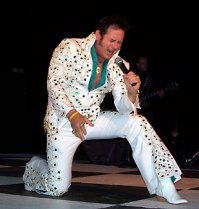 I have been certified to teach high school social studies since I graduated from college back in the dark ages. I have never taught as faculty for even one day. Am I a teacher? I am certified, but to me, unless I actually teach, I am not a teacher. So why is it that the people who do the art, take the classes, make things that are art, will not want to say, “I am an artist.”? I also know people who have not produced a piece of art in years, but will not hesitate to call themselves artists. I have no issue with that. If I can, but chose not to, should I call myself? I think the answer is yes, but it’s up to you.
 Unless there is an identifiable standard or required credential, we should feel free to identify ourselves by what we do, if we so desire. If we are novices or students, we are not disqualified. We’re learning. I understand being humble. But there is a difference in doing art and saying you are not an artist, and doing art and saying it the best art there ever was (but why not?). And certainly, if you are naturally good at something, and you do it, then we do not consider you an imposter.
 This may be the most difficult topic for me, but it’s early in the A-to-Z Challenge. I may find subjects that are greater challenges. Regarding the dark side of human nature, I would simply prefer to accept it and move on. My research of our dark nature has revealed that we humans actually want to deal with it in reality, art, life, drama, poetry, fiction, behavior, and nature. Many of us admit to a duality of human nature, but even more of us reject the dark truths.
 My dark side calls to me. I ask, “What do you want?”
 In addition to Oscar Wilde (The Picture of Dorian Gray), which I’ve read, I shall add the following.
 Our Literary Journey