
When I was a child, my parents frequently took me out for dinner to bars that had a restaurant or kitchen of some sort to serve food. Many of those places are still there, much the same as over 60 years ago. Today, most places that I enjoy seem to be primarily restaurants with attached bars. This is my second review of such an eatery.
The Raging River Café and Club (I’m dropping “club” from the name) is located  in Fall City, Washington. Fall City is about four miles north of I-90 from the Preston exit. The restaurant’s web page has directions. Fall City is about five miles down-river from Snoqualmie Falls. The restaurant is located amongst a line of businesses directly across the street from the Snoqualmie River on Redmond-Fall City Road (highway 202).
Diagonal parking is available on the street, but is only marked on the south (restaurant) side. While parking is available on the other side, it’s a little trickier and can be messy if it rains. Other street parking is available around the corner, but it’s not as convenient. No parking lot is nearby. I have not seen any critiques of parking, but I’m not sure it’s easily solvable or necessary to worry about. I go when they’re not busy, so it’s seldom an issue for me.
 The restaurant entrance is in front and opens directly into the dining area. This can be a nuisance on cold windy or rainy days for customers seated near the door. No reception area or waiting area is available. Hostess seating is unnecessary from my experience because you simply pick your table and sit. You can see all tables from the entrance. However, a few customer reviews have complained about this.
 The atmosphere is friendly; so are the staff. The ambiance is county and laid back–so say the locals. Dress code is anything legal. Turning left upon entry and walking about 40 feet brings you to the bar area. There is a smallish stage area and a little space for dancing (but not enough, really), a u-shaped bar with no more than five stools per side, a few tall-boy bar tables, and a walkway to the pool table room. This is a large room with a pool table surrounded by a few tables. I walked in about 5:00 PM on a Wednesday and it was full of customers who might be called ‘biker-bar clientele.’ A few folks were playing pool and there was room for that. County-rock was the music genre.
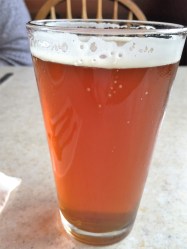 While my server was not very experienced (or old), she impressed me. When she asked for my drink order, I asked about dark beer. She was able to tell me what she had and even referred to notes in her little order book to tell me. She offered up a draught from the Snoqualmie Brewery, which is in Snoqualmie, about five more miles up highway 202, past the falls. I will be going there for a review sometime soon.
I ordered Spring Fever Belgian Style Ale, which was good. It’s an amber 6% ABV, flavorful, seasonal brew that has now been replaced by lighter summer brews. They claim it has a coriander flavor, maybe a little dry and crisp. It is refreshing and the coriander was not specifically noticeable.
The Raging River Café should do a better job with their web page. The menu is only ‘highlights,’ thus incomplete (specials are not listed in the printed menu, but the server will tell you about it, if any is left). The ‘spirits’ tab on the web page is wrong and has been for months. Admittedly, if they keep changing the beer offerings, it becomes too hard to keep correct (not really, but I am being nice). It lists draught Moose Drool (Big Sky Brewing), which they don’t have. I mention this because I told my server about it long ago and it’s still listed.

The dinner special on Wednesdays is pot roast. It’s good, more than enough, and comes with carrots and chunky mashed potatoes. If it were me, I would cut back on the meat and add another veggie or side (blue plate special). It costs about 10 bucks and an average eater will have leftovers boxed up to go. So pot roast for two (four meals total, actually) with a 12-ounce beer and a generous tip comes to about $30-something total. And it’s good — lots of gravy.

We had breakfast here a few weeks ago and it was equally good. But go early. If you’re rafting down the river about ten Sunday morning and go ashore for eggs and bacon with toast (you can), be prepared to wait. They get swamped then. One problem this place has is size and the number of tables (sticking more into the space they have would be bad). They do well at times and struggle to accommodate the crowd.
I have not stayed late enough for the entertainment, but they do have it several nights a week. It is listed on the web page. Children are ok until about nine, then it gets more adult.
I neglected to visit the restroom, but my wife reports that the ladies’ room is clean. I assume the mens’ is also. There are restrooms on the bar side, but I’ve not been in them.
Yelp averages out to 4 ½ of 5 stars. One-star reviews mention slow service and greasy food. Sunday mid-mornings are hard to get in. Those complaints are probably accurate, but are more likely exceptions. Trip advisor rates Raging River as the best of eight restaurants in Fall City, but I’m not sure that there are eight. I will keep going back, even if they have a couple of bad days.
If you live in or visit the Seattle area, you can find some great chow in the city or ride east to the Fall City-Snoqualmie-North Bend area for a fun and casual-dining, honky-tonk experience. In fact, The Snoqualmie Casino is the closest to Seattle (they claim) and is right off I-90 (eastbound) after the Highway 18 exit.
Bon Appetite

 So, I know when I made the change from young to old. It was about 40 years ago.
 Have you resigned yourself to the “it’s just a number that’s too friggin’ big” mentality? I’m not complaining about being old. Old people do not intend to complain about age. It is, after all, a successful result. On the other hand, the various consequences of age can’t be overlooked.
 If we live long enough, we share one important thing with many teenagers – we become bored easily. Old people can be annoying to some young people (15 years, remember). The thought that the feeling may be mutual seems to escape many. Most older folks that I know are working away at life. I know writers in their 80s and 90s who write every day, are working on writing books, and are making plans to publish.
 I live in an over-55, “active” community. Some folks here are more active than others, but most are kind of amazing. I took a blogging class where I met a lady of 92. She’s smart, funny, and still learning. She taught art classes and one of her subjects was art by carving vegetables. She made a scrap-book of pictures and writings on veggie art. She is an expert. Based on her experience, maybe the only nonagenarian expert. She wants to publish this in a blog. I can look past the outer physical things that show up when one is 90+. This lady is a master at her craft and learning another so she can share the first. I think that’s cool. In heart and mind, she is young, enthusiastic, and capable.
 I just returned from a “Personal Creative Writing” class. There are 15-to-20 of us taking the class. Most are interested in writing life stories or memoirs. These folks are talented writers; some are published authors; all are able to tell it like it was. They have the ability to make every life story funny, and even sadder memories are delivered with humor. They are good at their craft, but no one can accuse them of taking life too seriously.
 My first restaurant review is of
  The receptionist area is where the cash register probably was back in the day. The two inside seating areas are separated by two steps (ADA?) with no visible ramp. Some tables are a little close for girthy customers, but it’s manageable. Ambiance is comfortable and ok, but should be a ready for a little rehab soon. Most tables seat four, but can be moved to accommodate larger parties. There are no booths. The acoustics are average and loud voices are easily heard.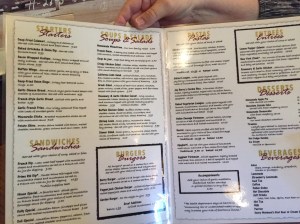

 The server explained some things regarding the pasta and we ordered a Greek salad and Spaghetti Alfredo (they did not have fettuccini). The wait staff was energetic and service was almost too fast. They are a little blunt and straight-up for some customers, but I think it fits the charm and atmosphere of the restaurant. While I’ve had better salads, it was ok. My wife thought the alfredo white sauce was subpar. The waiter boxed up her leftovers. I tried it the next day and found it on par with what comes in a jar from the store.
 Overall
 There are four brothers. They struggle to get along with each other, due to more than a little sibling rivalry. Three of them like to cause trouble. These three are selfish and annoying to humans and gods alike. They like to hide things from the sun, whose name is Sol. The three are very jealous of Sol. They think that they exist purely to keep Sol from comforting the earth and its inhabitants with his warming rays of light. Sol despises the three troublemakers, and openly favors the fourth brother. Sol knows how the earth, plants, animals, insects, and most people respond to his warm presence when the three annoying brothers are resting.
 Boreas is the north wind. While he can be out causing problems at any time of the year, his favorite season is winter. He is cold, icy, and wild. Boreas has a reputation for causing trouble and making a mess. He is a bully known for pushing the other three brothers around, especially Notus.
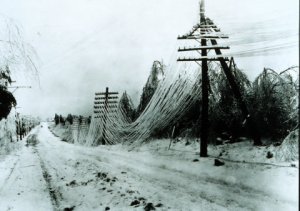 He is sometimes careless. Boreas sneaks under him and freezes his rain, sometimes just as it falls, causing havoc on the earth. At other times the north wind pushes back, causing violent destructive storms. This embarrasses Notus, but Boreas thinks it is funny. To confuse his brothers, especially the irritating Boreas, Notus sometimes spreads fog over the land and sea.
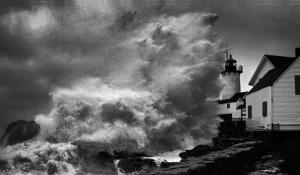 Eurus, the east wind, is foolish and lazy. He seldom does anything, preferring the amusement of watching the conflicts arise between his brothers. When he is bored, he teams up with Boreas to create problems and confusion. Together they make a north and east wind, known as a Nor’easter. Eurus watches from the comfort of his room and laughs at the chaos he creates with his brother. He is the most evil of the three problem winds.
 Zephyr enjoys seeing humans smile as he touches them, blowing into their faces, caressing their bodies, and messing up their hair. Often, after his brothers make a mess, Zephyr works to clean things up. He sweeps the sky clean of clouds so that Sol can warm the people, melt the frozen ice and snow, and dry the soil. Plants can grow, people can honor the sun, and animals can forage among the plants. Life goes on.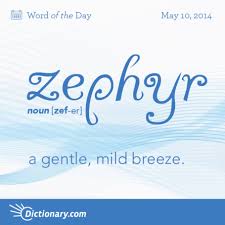

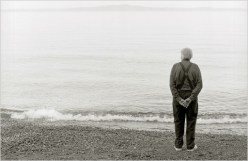 Ten years ago, I lost one of my best friends from my childhood. Today, I received a phone call telling me that I have now lost the other. A few weeks ago I was tasked with a writing assignment to provide an essay on what I long for. You can see it blogged under “Nostalgia and Longing.” Reading my blog, you can glimpse my view of humanity and the world.
  But today, I want to think about the past. Not in a regretful way, but in an “I remember” way that might allow my brain to be the tool of a child’s mind again.
 I know that I cannot go back to that time, and I’m not sure that I would want to. But I want to have those memories until I have no memories. I would like to again feel the freedom, the special bond, and the unquestioned certainty that we would all live forever. I want to think about my future and talk about how much better it will all be. I want free and unlimited amounts of candy and ice cream. We didn’t have that, but when we took over, well, you know, right? I want to know that next year, I will be allowed to stay out after it gets dark, to drive a car (legally), to date girls (with everyone knowing).
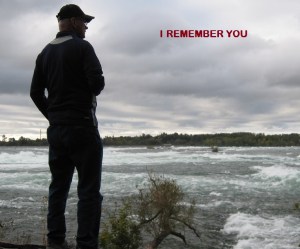
 Xanadu may refer to:

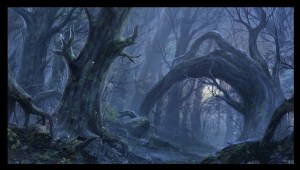 Across the sacred river before the sea
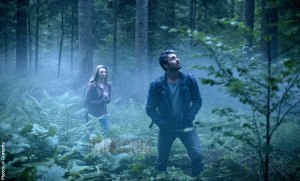 Where all that move within the light become victims of the night
 Canopies open to view heavens gate as sparkles ignite
 In my lifetime I’ve been called a wise-guy, wise-ass, and a wise-you-name-it. I don’t recall denying any of it. But until I lost a significant amount of hair, gained a lot of scars (and weight), and dealt with a good bit of life’s experiences, no one has used the words wise or wisdom (without suffix) regarding me. So, as I was running through the w’s (women, walking, wine, wild, Wilde, and why) in search of an ‘a-to-z challenge’ blog topic, my wife says, “How about wisdom? You should know about that.” (Her birthday is tomorrow.)
 To me, the word wisdom has much in common with the word quality. Both are generally positive; we recognize them (or their absence) when we see or encounter either. But, precise definition for both eludes us. We are willing to take on as much quality and wisdom as possible, but with one condition. We want to know the cost. What price must we pay for quality? Can we afford it? What price must we pay for wisdom? Are we willing to pay the price?
 As a college student, I would walk into the Seven-Eleven store and eyeball the beer coolers. I looked only at price per six-pack. Texas Pride was 86-cents for six cans. I still can’t believe I managed to drink that horse piss, but price mattered more on my tight budget. I ignored quality. Little did I know then that years later I would gladly pay eight-to-twelve times as much for top-quality, locally brewed, craft beer. My taste and budget have both matured in quality.
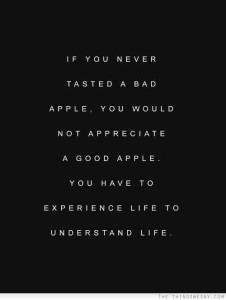 I had a conversation with a friend who was a wonderful, doting, and loving mother to her children. As I listened to her rant-on one day concerning some problem that her son was having, I asked her this question. “You love your son. Why do insist on preventing him from learning life’s lessons simply because they are painful? Be there for him. Protect him from serious harm. But allow him the dignity of learning his own lessons.” Before she got over her hurt feelings about what I had said, she backed off (he owes me). Hard for her, good for him.
 We are wiser when older because we have been schooled in life longer.
 For the novelist, POV is essential for writing the story. Fiction writers have the god-like ability to know exactly what is in the head of their characters. They create each character. This is true whether or not they share that information with a reader. Non-fiction writers are like the rest of us with human limitations knowing only what our senses (especially seeing and hearing) tell us. So, how do fiction authors tell us about characters? The questions for them, or us (depending on your point of view—sorry), are: how much do they tell us and how do they do it? The answer to one question limits the other. The same may apply to memoir.
 This is important and beyond this blog’s scope. Here are two good blogs on distance.
 How each of us views utopia is probably similar in the broader sense, but we may differ as we each conceive of the details.
  In the world of politics, the dark side of human nature emerges. Of course, it is always the others or the other side. Real world peace would be required long before we could begin to approach anything like utopia. It requires an egalitarian (equal) society and that is contrary to most politics I’ve ever seen. When I think politics, I see far more potential for dystopia and war.
 Religion? While a great deal of good is done in the name of a deity and the respective religions, that good fades to virtually nothing when balanced against the historical inequality and current turmoil that seems to move more toward dystopia — more war.
 I asked alcoholic and drug-addicted Texas prison parolees the following three questions while teaching secular recovery classes. I came up with these to help them find a world view that went farther than the tips of their fingers. My personal answers are utopian.
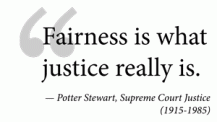 The confusion and struggle so many of us face in answering these questions is an interesting testimony to our nature. But we each have our personal utopia within our answers.
 The other night, as we sat discussing writing projects and their duration, the subject of time came up. There were three of us, representing roughly three generations. The more we talked about time and how each of us currently sees it in terms of the future, the more I realized how differently each one of us viewed it. Time does not change. We do, and thus our view of time changes with age.
 I claim to be a right here, right now kinda guy. I live in the present moment. As I contemplate writing a memoir, this seems to cause me an ‘angst’ problem in that I wanna, and I don’t wanna. (I also struggle with writing about myself, but that’s not the issue.) I like History. It could’ve been considered my second minor at A&M. My manuscript is historical-fiction with too much history and not enough fiction. This morning I was asked if I would write a time-travel book (I’m noticing that Vickie has a knack for asking me thought-provoking questions). I didn’t have a ready answer, but after a lot of discussion and thought, my answer is ‘nope.’
 After doing a bit of reading, I’m no longer positive that I know what ‘this moment’ in time is, or if it exists. My metaphysical (woo-woo) friends get excited about this fascinating subject. When they do, I look at my watch and note, “It is one-forty, PM.” But they’re right. It’s really an interesting topic. Physicists and philosophers are all over it. Check out all the wiki and academic research (
 Our Literary Journey