The Art of Aging

birthday 70 2

Forty years ago tomorrow, I was the father of two boys: one age five, the other was two (two years later we added a daughter to the pride). Tomorrow would be my 30th birthday.

I was the navigator on a B-52 bomber crew. I recall that as I was taking a shower about fifty yards (roughly 45 meters) from a nuclear armed airplane cocked and ready to go blow the crap of somebody, I was quietly lamenting my age.

B-52D Navigator's Position
B-52D Navigator’s Position

I would no longer be in my twenties. I thought that I was not young and never would be again. I was knocking on the door of middle age, or so I thought. I was feeling down because I was turning the dreaded big three-zero. “Don’t trust anyone over thirty” was the phrase. I still don’t really know what that means. I just knew it was bad.

A Young B-52 Crew Dog

Our society convinced me that I was getting old and that I should be sad about it. In four days, that five-year-old I mentioned turns 45. He and his 42-years young brother really are middle aged, and their baby sister is knocking on that door. I was not old, but I was depressed thinking that I was. Thanks to our shallow, f***ed-up, foolish American culture that values all the wrong stuff in people, my thinking was foolish (and not only about age).
birthday 70 1Is it all that important to be a thin, white, dark-haired, strong, male member of this country? We seem to think so. I hope that continues to change.

We have to pass laws to keep people from discriminating against older people, and the age in the law is 40. WTF? Forty is not old. Again, forty is not old! At most, it’s lower-middle aged.

And if you plan to call this foul-mouthed, hard-drinking, Fightin’ Texas Aggie, Irish-Welshman elderly; you best be certain that you can kick his ass. Because this one is standing straight-up and walking your way (in silence) to demonstrate that old is not elderly!

But, I will indeed become a septuagenarian at midnight tonight. In the game of life, I will be at ‘Level 8.’ I’ve literally been there, done that, and have the scars to prove it (which I wear proudly). I am on a first-name basis with my cardiologists, and if my peripheral vascular surgeon would do a better job, I would be running three miles a day, instead of walking. I ride a Honda Forza motor scooter because my 800-pound, 2007 Yamaha Royal Star Tour Deluxe touring motorcycle got too heavy to pick up (last year). But I still ride on two wheels. I’ve retired from the jobs that pay, but I work every day. I’m a writer and do volunteer work. My only boss is the one I’ve been married to for 50 years.

I like people and I want them to like me. But I also don’t give a flying f**k what anyone else thinks of me or my opinions, politics, religion (or lack thereof), foul language, or beer breath. I do not, and never will, wear socks with sandals. I remain a teenager of the 60s.

birthsday 70 6I am retired. All the shit/crap that I put up with for all those years of school (nuns-groan), yes, sir and no, sir; kissing up to very few idiot bosses (most were great), scrimping and saving and working – it was all worth it. As my wife would say, “Rave on, dog shit!” And so I do. Every day is a weekend and I can do what I want (with her permission—I’m old, not stupid) whenever.

I want to be happy and I am. My last meal will truly be a good pizza (my wife makes the best) and a fine stout brew. When the time comes, I want to walk into Dr. G’s office and say, “Time to shut it down, Doc. It’s been a great ride and I’ve loved it all. Let’s talk about the final git-er-done.” But that day is some ways off. Getting old is not dangerous, driving on our roads is.

Get ready big eight-zero ‘cuz here I come. ~ Me
birthday 70 3

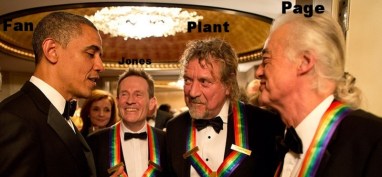
I toast the good health of my birth year (1946) peers: Cher, Barry Gibb, George and Laura Bush, Bill Clinton, Donald Trump, Linda Ronstadt, Sally Field, Ed O’Neill, Reggie Jackson, Daryl Hall, Jimmy Buffett, Dolly Parton, Tommy Lee Jones, Al Green, Loni Anderson, Cheech Marin, and others. We’re still kickin’ the can down the road.

birthday 70 8

May you have love that never ends, much money, and many friends.

Health be yours, whatever you do and may the universe bless you and yours. Rock on, my friends.

I’ll publish my promised blog on creativity this next Friday. I am also tinkering with one on recovering from middle age (men only, I am unqualified for the experiences of the softer, better looking, and smarter sex) because I have been there and done that too.

What do you want?

The first of three questions I think everyone should be able to answer quickly is ‘What do you want?’ I’ve always felt that few of us think about that. We may have short term goals or we may want some things to come our way. But the ultimate answer, while not illusive, is something we seldom ponder. I say this with the opinion that for virtually all of us, the answer is simple, easy, and nearly the same for everyone.

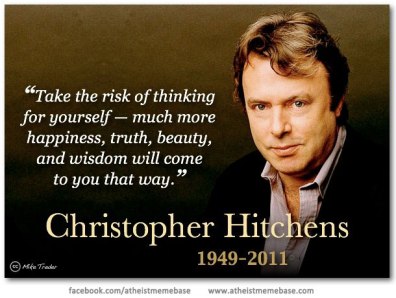
What Do You Want ?As I listened to an interview with Christopher Hitchens, I was surprised by something he said. I’ll get back to that in a minute. Frist, I want to talk about the genesis of the question and my answer.
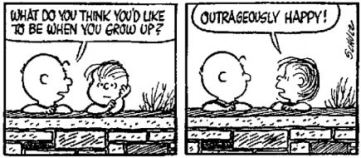
Beginning about 25 years ago, my life began to take some very significant turns. Much significantly changed for me. My life was on track, then it was not. This life transformation continued for years. Much of it was unpleasant, disruptive, sad, and shocking. The unhappier and more miserable I became, the more I thought about what had happened and what all was going wrong. I’ll save the details for a memoir. Suffice to say, shit happened and stuff changed.

This led to a rather spiritually reflective time for me. I read a lot of spiritual books, studied religions (some more lightly than others), and pondered what I thought were important life questions.

I don’t recall when or how I came across the brochure. It was titled Oh Happy Fault! A Confession of Hidden Sin by Vinny Flynn. In the brochure, Flynn confesses that his sin was being unhappy. Silly as it seems, that resonated with me because I realized that I was unhappy, or depressed, or both. Either way, what had been going on inside me (where no one could see) was the same. This led directly to my reading three books and indirectly, discovering one other.

Fully Human, Fully Alive, by Fr. John Powell, SJ
Siddhartha, by Herman Hesse
Man’s Search for Meaning, by Victor Frankl

About the same time, I also read, The Seven Story Mountain, by Thomas Merton.

Question One7

The result of all of this was that I made two decisions. Actually, I made many decisions and continue making them, but early-on I decided that I wanted, or perhaps needed, to be happy. I knew that I was unhappy. So I decided to be happy. More importantly, I decided that my happiness was up to me – that I could do something about it. It took a long time for my happiness to improve, but it did.

Jump ahead about six years. I found myself conducting classes for other very troubled people. They were not exactly unhappy (some were). They didn’t seem to have any focus about anything. In my opinion, they had no world view. One of the questions I would regularly as them was “What do you want?” Their answers sounded like a list of shallow, adolescent ideas about hot cars, money, and hot men or women. The blank stares and silence I got when I asked ‘why’ disguised their answers of ‘who the hell cares?’ With that experience, I have continued asking people the same question for years. “What do you want?”

Question One1

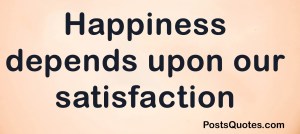
I’ve always thought everyone’s answer should be ‘happiness.’ During the Christopher Hitchens interview, he said that he did not think that he wanted ‘happiness,’ but wanted ‘satisfaction.’ I liked Hitch, but on this answer we would disagree. Maybe he felt that happiness was too much to ask for. Anyway, at least one dictionary indicates the words have synonymous meanings. There is a difference. Even though satisfaction implies having our needs met, happiness involves our state of mind regardless of needs.

Question One5

I’m skeptical of some folks wanting to be happy. Some people seem happy by not being happy, or not wanting anyone to know they’re happy. It’s like if anyone knows, they will set out to ruin my happiness; therefore, I mustn’t appear happy. Maybe they really are just waiting for something bad to happen, or maybe they seriously do not want to be happy. Maybe they think there is a happy tax.

Question One6A satisfaction tax would make a lot more sense. It seems like things may satisfy us, but we decide to be, or not to be happy. How would we measure and estimate a tax on feeling good?

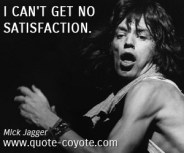
Anyway, I hope you are happy now. I also hope that Hitch is satisfied and Mick Jagger (after all these years) can get some damn satisfaction. I mean, how long does a guy have to wait for that?


Frat Friday (12 Step Programs)

12 step 7

I’ve experienced much of life. Part of that experience included years associated with, learning about, and practicing aspects of a 12-step program. While I wasn’t trying to recover from chemical addiction, I wanted to know if this was a viable option for friends and loved ones. The experience was beneficial.

The aspect of the human condition that allows us to be overcome by addiction or related problems (eating disorders, sex, food, etc.) is an interesting and frightening mystery. Loss of control is one of our shared basic fears.

I attended numerous Al-anon, AA, and NA meetings. I’ve talked to people who support “the program” and some who don’t. I have read about the successes, failures, and marketing deceptions (or just lies) of recovery treatment programs.

I loved this movie.
I loved this movie.

Critics and supporters of these programs abound. While I don’t take a position for or against, there are several pro or con issues that should be pointed out. I want to write this for two reasons.

Disclosure: I have not actively participated in a program of this nature in more than four years. But I did for over 16 years.

First, 12-step programs are generally religiously or godly (“higher power”) based. While many members will take issue with this, many others will not. Furthermore, steps 2, 3, 5, 6, 7, 11, and (to a lesser degree) 12 are based on involving or invoking a god. Meetings within the USA usually  are specifically of a Christian nature and theme. Because Christianity is the predominant religion of America (and much of the world), it brings a clear religious bias to meetings, groups, and fellowships. However, at least initially, groups are generally open and accepting of members who are not Christian. They are supposed to be. However, the discomfort level experienced by non-believers at such meetings is understandable.

Second, I’ve been asked about, and I have wondered about, how non-believers manage a program that is so obviously in opposition to their core beliefs, or non-beliefs. I recently read a blog by a former meth user, Jerome. He got me to thinking about ‘the program’ again, and about this question. His view of NA is rather caustic. Based upon what he told me, he has a point – several, actually. It was not just that it was based on god or religion that was off-putting for him. It seems to me (and he may correct me) that his biggest problem was the negatively obnoxious “this is the only way” attitude of the group leadership he encountered. In my experience, this is one of the unfortunate problems with AA and NA. Less so in Al-anon, but those members are not trying to overcome addiction.

12 step 5To be fair, when I was in a leadership position with a 12-step program, I told members that they either worked the program, or they did not. It was up to them. However, them telling me that the program was not working when they were not ‘doing’ anything but attending meetings indicated other issues. I was taught, and I have always believed that we each have a right to our own program. If that program is not working, something should change. Recovery is too complicated to go into all of that detail in one blog.
I think many aspects of the program provided me with a path to better things in life. Criticising the program for its faults is fair enough, but I prefer not to throw the baby out with the bath water (cliché, but apropos). Twenty years ago, the program helped me to deal with ‘me’ and how I felt mentally, physically, and spiritually.  Eventually, because of my experience with ‘the program’, I decided that life for all of us is really all about how we feel.

12 step3

The following short list of adaptations reflect my program. I think everyone can benefit from this approach, addict or not, believer or not. It reflects what many program people might call Bill’s (me, not Bill W.) ‘experience, strength, and hope.’ In parenthesis, I credit the AA program step I adapted for my personal use.

  1. People die from denial. When we have a problem, we need to admit it. (AA step 1)
  2. Do you know you? You can do your own self-analysis (or get help from a counselor, shrink, or knowledgeable friend). It’s fun and rewarding, but it can be difficult (took me about a year). In past blogs, I’ve written about three questions I came up with while teaching a secular recovery program. I consider them helpful: What do you want? How do you want things to be? If you could change anything about the future, what would that be? There’s a lot more to this ‘self-inventory’ and discovery process. It could be a whole program unto itself, but I think it’s worth doing. (AA step 4)
  3. If you do harm to someone, apologize for it (if you mean it). If you owe a debt, pay it. (AA step 9). Sooner is better, in my opinion.
  4. My favorite is when you are wrong and you realize it, admit it quickly – to yourself and to someone who cares. I don’t know how much drama this removed from my life. I suspect even more of my drama was removed for my friends, family, and work-mates. (AA step 10). I personally don’t advocate apologizing for error, if no harm is done. I have been called arrogant for this. It’s a personal choice. We are all often wrong and that’s okay.12 step6
  5. I think there is something good and symbiotically beneficial in helping others. We should help people where and when we can, and we should be open to receiving help. (AA step 12)
Seriously.
Seriously.


This is a limited list. In many ways, living a healthy and happy life is much more involved than what I have said.

I suggest we each intentionally choose and do our own program in life, live as healthy as possible, keep learning, and laugh until it hurts.

If you are considering a 12-step program for any reason, I see no reason not to give it a try. As they are fond of saying, “We will gladly refund your misery.”


Frat Friday (Book Review)

Islam3 bookThis blog is about a book. If you look at my ‘about’ tab, under Frat Friday, think of topics 1, 2, 3, 9, 11, 12, and 13. While I will not include my personal religious or political opinions today, the book I want to talk about is about religion and politics. It is a lot about hate, causes, and it’s certainly in the news. The religion is Islam. The book is Islam and the Future of Tolerance by Sam Harris and Maajid Nawaz. It is a dialog (not a debate) and only about 120 to 140 pages long. I preferred the audio version with Sam and Maajid reading their parts, but it’s a good read.

Ratings

On Amazon, 315 reviews awarded an average of 4.5 stars with 92% being either 4 or 5 stars. Most of the low critiques are more personal attacks on the authors with little concern for future readers of the book. I read the book and will read it again.

The writers/talkers

Both men are intelligent, experts in their fields, and well-spoken.

Sam Harris
Sam Harris

Harris is a well-known American atheist, philosopher, neuroscientist, and author of several books.

Maajid Nawaz
Maajid Nawaz

Nawaz is a British Muslim and chairman of Quilliam, a counter-extremism think tank. He is a former member of the radical Islamist group Hizb ut-Tahrir, which he left in 2007 when he renounced his Islamist past. He now advocates Secular Islam.

“What is Islamism? Islam is a religion; Islamism is the desire to impose any version of that religion on society. It’s the politicization of my own religion. What is Jihadism? The use of force to spread Islamism.” ~ Maajid Nawaz

“The only conclusion I can draw from everything you’ve just said is that the problem of ideology is far worse than most people suppose.” ~ Sam Harris

The essence and differences

While the two people in the dialogue have vastly different views on religion, they each allow a pass for the other in order to have this discussion. What they do agree upon is that there is a significant problem and threat within the Islamic faith regarding danger from some of the members. I’m not sure that they agree on who is dangerous, or how many, or exactly why.

(Not addressing this conversation, but similar ones.) “The people I really worry about when we have this conversation are feminist Muslims, gay Muslims, ex-Muslims – all vulnerable…in many cases violently assaulted or killed….” ~ Maajid Nawaz

It may take more than one pass through to glean their exact positions. Precision of understanding and clear definition of terms are goals of both men, something Harris works to ensure. They agree that the discussion needs to take place, but efforts are confounded by people on both the fundamentalist right (mostly Muslims) and what Nawaz refers to as the regressive left (or liberals).

“…The general picture is of a white, liberal non-Muslim who equates any criticism of Islamic doctrines with bigotry, ‘Islamophobia,’ or even ‘racism.’…they deny any connection between heartfelt religious beliefs and Muslim violence….de facto organs of Islamist apology – The Guardian, Salon, The Nation, Alternet, and so forth. This has made it very difficult to have public conversations of the sort we are having.” ~ Sam Harris

The biggest problem for America, if not the world

Europe currently faces a much greater problem than America in dealing with Islamists. By comparison with Europe, America has 3.3 million Muslims (1%), while France (9.6%), Belgium (6%), and United Kingdom (4.5%) have Muslims as significantly higher percentages of their total population. What Harris and Nawaz agree on is that attempts to discuss how to solve the problems created by Islamic Extremism are taboo topics.

I think they have a point. While Sam points to the fundamentals of Islam as problematic, understanding of his basic premises regarding religion (and the same can be said of virtually any contemporary, well-known atheist) reveals that he gives no religion a pass – especially no Abrahamic religion.

The context of what is said

“One of the problems with religion is that it creates in-group loyalty and out-group hostility, even when members of one’s own group are behaving like psychopaths.” ~ Sam Harris

The best way to follow what these two men are saying is to know the context of what they are saying supported by their beliefs or philosophy. To do this, it would be helpful to read other books, particularly Harris’s The End of Faith.

They’re both attacked continually and called insulting names and threatened. Both spend a good deal of effort justifying their positions and protecting themselves. Both have done TED talks that are worth viewing to understand their positions.

Sam Harris link to TED.

Maajid Nawaz link to TED.

The video is good up to the Q&A part, but kind of long. Link to Youtube discussion at Harvard University (over an hour).

Frat Friday with Thomas Merton

Disclosure: I do not practice or align myself with any religion. I have in the past, I no longer do. This blog is not about what I do or don’t believe.

I’ve never known when someone would come into my life and make a difference. There have been many, both good and bad. Many have shaped who and what I’ve become. Such influential encounters have happened more times than I can remember. One of those people is the subject of today’s Frat Friday blog.

I’ve never met this man. He was accidently killed in 1968 during my sophomore year in college. At that time, I had never heard of him, and if I had, I would’ve had no interest in him, his life, or his outlook. I discovered Thomas Merton in the late 90s, almost 30 years after his death. I was inspired and intrigued by his autobiography, The Seven Story Mountain, published in 1948. Through his writing, I met the right person at the right time.

As I see the man.
AS I PICTURE HIM – REAL

Thomas Merton was one of the most prolific spiritual writers of the 20th Century, a Cistercian Monk, and a mystic. In 1915, he was born in France of a New Zealander father and American Quaker mother, both artists. His mother died in 1921 and he was raised by her family. Merton wrote and published more than 60 books, mostly on spirituality, social justice, and pacifism. He wrote many essays and reviews. Another 30 (or so) of his works were published posthumously and many other of his writings have been released to the public.

Merton1What impressed me about this man was his complexity, his courage, and what I see as his wisdom. His life journey and the decisions he made will likely prevent him from ever being canonized a saint by the Catholic Church. Yet those foibles are exactly what attracted me to him twenty years ago, and continue to influence my thinking. The man was a real person – a human being who behaved like one. If they did make him a saint, I think he would be among the most human of that group.
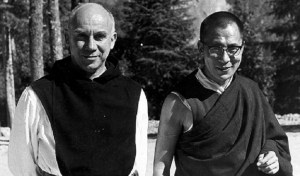

In the early 1940s, Merton went to a Trappist Monastery in Kentucky, knocked on the door, and told whoever answered that he wanted to be one of them. Trappist Monks are strict aesthetics and followers of the Order of Saint Benedict. Merton chose this life and lived it until his death. The Frank Sinatra song, I Did It My Way, comes to mind despite the obedience pledge of Trappists.

Beginning about 1937 during his conversion to Catholicism, Merton was fascinated by what he learned about the eastern religions. From then on, he studied Buddhism, Taoism, Hinduism, Jainism, and Sufism.

Thomas Merton with Dalai Lama
THOMAS MERTON WITH THE DALAI LAMA

His primary interest was in Zen, particularly as it applied to Christianity, from his point of view. Within limits, Merton supported interfaith understanding. He pioneered dialogue with the likes of the Dalai Lama, the Japanese writer D.T. Suzuki, the Thai Buddhist monk Buddhadasa, and the Vietnamese monk Thich Nhat Hanh. Many of Merton’s books on Zen Buddhism and Taoism are still in print.


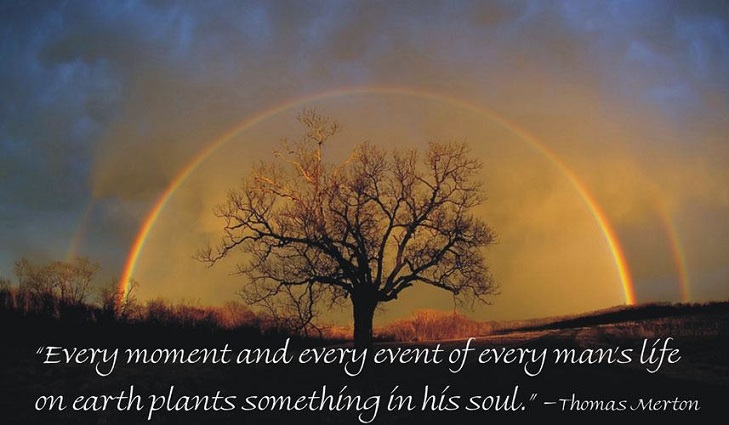
“Art enables us to find ourselves and lose ourselves at the same time.” ~  Thomas Merton, No Man Is an Island

My favorite description of him was by Paul Hendrickson in the Washington Post on December 22, 1998: “Thomas Merton: that bohemian and poet and extreme sensualist, lover of jazz, prolific man, traveler of the new idea. A 20th-century prophet and mystic. Not a theologian so much as a kind of freelance spiritual thinker.”

While I can’t honestly say that Merton makes as much of a difference in my life today, he did at a time when he was the right person with the right thinking. He had prepared for me, fifty years before I needed it. I am not sure exactly what it is that still holds my admiration for and curiosity about him, but I suspect it is how he lived within his human condition.

Human Condition

The human condition is a broad topic that can be pondered and analyzed from many perspectives: religion, philosophy, history, art, literature, sociology, psychology, and biology. As a short blog topic, it’s too broad. My remarks address our weaknesses or fallibility.

“Do what we will; we are never going to be free of mortality, partiality, fallibility, and error.” – Wendell Berry

There are a ton of books that, to one degree or another, address the topic from some of the many possible perspectives. The books that I’ve enjoyed the most, at least at the time in my life when I read them, were….

Stumbling Blocks or Stepping Stones by Benedict J. Groeschel, C.F.R. (spiritual and religious view of Franciscan Friar)

The Gift of Adversity: The Unexpected Benefits of Life’s Difficulties, Setbacks, and Imperfections by Norman E. Rosenthal, M.D. (relatively recent, psychiatrist shares stories from his life as examples)

Man’s Search for Meaning by Victor Frankl (a well-known classic)

At some times in our lives, many of us have admired certain people. We may have put them on pedestals and may even have spoken highly of them. Maybe we married them. Then one day we discover something (or the world discovers) about them that removes the adjective ‘flawless’ from our description. This still happens to me, but seldom. Over the years, my discernment has improved and my skeptical nature often needs more proof. People are human.

Human ConditionI know that we are all fallible. We all make mistakes if we make or do anything. Usually, it’s our parents who provide the first clue. Somehow, we are often gifted as teenagers with the wisdom and insight to identify each and every flaw of our parents and anyone else who we consider an authority. Somehow, we overlook the foibles of our friends. And of course we have none, or too many, or we must hide, or we are perfect, and will never make that mistake, depending upon the day of the week, if anything. Confusing? You bet. Human? Absolutely.

In his book, Fr. Groeschel talks about how the righteous and perfectly-well behaved people who follow all the rules are less compassionate and understanding of others. They share few of the human frailties, as least until their foibles are also revealed.

Rosenthal provides examples from his childhood. In Chapter Three, Crime and Punishment, his teacher, Mrs. Z whacked him on his hand for completing an arithmetic assignment before she had finished explaining it. Also, another third grade incident involved a teacher who misspelled rule(a)r. It is naive to think (as many young do) that adults cannot be wrong. But they are, and it is okay.

The Human ConditionAnd that is the point. Do we judge the content of books by the mistakes in it? Do we judge others based on their circumstances, be it through their own fault or not? What do we expect from our fellow human beings? What do we want from them? Why are we this way?

Not long ago I had a discussion with someone regarding universal health care and insurance. When she balked at the concept, she said, “Well then, every alcoholic on every street corner will have it.” I just sat there, speechless.