The silk soft, black cloak of night rolls
To end our days as it marks time passing on earth.
Night slips over us like a gentle silk shawl,
With the sparkle of stars and the silence of all.
Be comforted when midnight comes,
As it’s the darkest of times.
The death of this day marks a spell.
The birth of tomorrow’s new hope.
Soon the witching hour begins as so
Little good happens, post the final hour.
To some, midnight’s a time of painful suffering,
As with the line between life and death. Find peace and warmth in the face
Of the change – the end of one day.
But for another we live, and then
Feeling recharged we’ll be free to see.
After our true self is off,
Without lie or pretense,
To bargain away the universe,
To have a brand-new day.
We must pass through the portal
Of darkness, and woe.
Thus, awakening of the new.
Look both ways each new day, and mind the gaps at night.
This poem is about underground coal miners – people who did, or do, very dangerous work. My father and grandfathers were three. This is also about life in our home when Dad still worked in the mines.
During my early teens, the mining business shut down in northeastern Pennsylvania. This was due to the Knox Mine Disaster in the late 1950s and the easy, cheaper, and cleaner use of oil to heat homes. Today, most coal mined in the USA is exported, but the industry continues to decline. Only 30% of electrical power in America is produced by coal.
Old coal mine entrance. A dark abyss.
Nearer My Hell to Thee By Bill Reynolds
Before leaving the daylight, and going into the pits,
They look deep into the ground, to the soul of the abyss.
The blackest of blacks, the darkest of darks, and danger,
The dank abyss peers back as men descend into nature.
Far below ground, the mine was there lurking, waiting;
That dangerous, disgusting damnation of sound,
For some small wages, they go into that hole far underground.
Deadly it was and deadly it is, they never know when…
Many wives cried at the loss of their men,
Who died in the gut of the deplorable depths.
It was frightening work miners chose, those jobs that killed.
Black hard hats on heads, mining lamps on to cut the dark,
But still never safe. In denial or not, it was dangerous work.
Blackjack and Brass Knuckles same as my father had.
Father was, and so were both grandfathers, miners all.
Walking home through muddy fields and dark alleys,
Dangerous on pay days; all cash in their pockets,
With blackjacks and knuckles, maybe a gun.
He’d push open the gate, then let it slam with a thud.
Dad would stomp up the stairs and in the back door,
It was always the back way after a day’s work.
Covered with coal dust,
The sweat of the labor, and the stink of the mines;
Smoking his Camels, always coughing and coughing.
But he was my Dad, and it was always like this.
I remember Dad much blacker.
Everything filthy, his clothing all rotting,
Black on his skin, and in his gray hair,
He didn’t know about the black in his lungs,
the deadly back dust was glued on hard, but not to his soul.
White at his eyes and over his lips,
he’d set down his lunch pail. No hugs, no kisses,
just “hiya,” and not much of a welcome.
His coat and his cap, and his boots all come off.
Trounced upstairs to the bath, footsteps pounding the way,
Transformation, about to take place.
In cold water each day, he washed coal dirt away,
From his face and his hair, his neck and his chest,
From his waist to his feet, but not from the rest.
Nothing could wash the coal miner away.
Not the water, the union, the beer, or smokes.
Not on the inside, from his throat nor deep in his lungs.
Black dust in his body and in with his blood.
In a coal mine.
It was always the same, until the disaster.
Miners to work, to suffer and die.
Returning to homes, dirty but to homes they came.
Then one day, the depression set in.
The mines all shut down, proud miners, no work.
One day it all ended and everything changed.
Miners laid off, the mines were all closed.
Oil was king, and nobody noticed.
No more abyss, just a new kind of dark.
If you not yet sufficiently depressed, watch this.
What do I want? What do you want? How do you want life to be? What will you do? Equality, fairness, and love should guide us. My friend, Karen, asked me to write a poem about freedom. I did. It has a dark shadow, but the shadow has a crack in it, so the light gets in.
We didn’t start the fire refers to the Billy Joel song, Timothy Frances refers to Leary, the beast is the oppressive government, Tom down is to be subservient. In terms of rhythm and rhyme, this thing is all over the place.
The Freedom Dream is Dead by Bill Reynolds
What do I want to do?
I wanna be happy.
I want you happy, too.
My dream is a happy world.
Imagine that.
How do we want things to be?
Let’s be fair, and hopefully free.
And just, and true, and honest, and imagine…
For all, equality and rights
With love we can see, for all brothers and sisters.
Life is not fair, but are we?
Imagine!
What is this happiness we pursue?
In all fairness, what can we do?
Freedom? Liberty? Is that all?
Equality? Justice, et al?
Can you imagine?
It’s just a damn dream for too many.
And our dream is dying the fastest of any.
One million paper cuts, delivered with slashes,
All hope is lost, the beast burns us to ashes.
As for my dream? It is dead.
We fought all for naught.
Now I feel a dread.
Selfishness won. It owns us now.
I can’t imagine.
Resistance is failing, the world is darkening.
Evil and greed are the name of the game.
Profit and loss the new moral code.
Money is god, ready for more of the same.
The worst from the beast is yet to be told.
Imagine died too.
We didn’t start the fire, we can’t put it out,
Feel the heat from the rich man’s ire
Burning a hole in my hopes and desire.
Timothy Frances, where are you now?
To destroy this beast, please tell us how.
Or do we Tom down, and let it go on?
My dream may be dead, but I will go on!
Resist, resist, resist, fight for rebirth.
Resist until we have new life on Earth.
Imagine a future, resist to the end.
Look both ways and mind the gaps. Life has no guarantees, but we can work for fairness.
This poem refers to crew members (called crew dogs) of B-52 bombers and to their war-time mission of dropping munitions to destroy things and kill people, thus the dogs of war. This is a dark and threatening piece, set in six stanzas of six lines each, with even and odd lines rhyming. Misery and woe are metaphors for the many types of weapons dropped. The shrill is the eerie sound bombs make as they fall. The dog, or beast, refers to the model D, or variant of B-52, which is painted black on the bottom of the airplane. Please question in comment.
We are coming for you.
Dogs of War by Bill Reynolds
Let us slip from nature’s gravity hold
We war dogs of old, both willing and bold.
Into skies we shall go with misery and woe.
To maim and to kill, who we don’t even know.
Our airman’s life is to die if we will.
Into Death’s realm, we’ll send you the shrill.
We’re lashed to the beast, the marvelous dog,
Behind us we leave the stink and a fog.
The thunderous sound of flying around
We send you a hell, you on the ground.
Wonders of war are set at our feet
Our old friend death, soon you will meet.
A B-52H dropping high-drag bombs and flairs.
Destruction we’ll rain on your cities and towns,
You won’t know we’re there, we don’t make a sound.
Concussion will break you and all that is near,
Along with destruction, we’ll send you the fear.
The black-bottom dogs will come as you sleep
To rip and to tear, into hearts of your sheep.
The countdown will start, as our hearts will race,
But Death we’ll deliver at one horrible pace.
The flashes we’ll see and the fires will rise,
The dogs of war unleased, to your demise.
The horror will come as sure as the sun,
This nightmare relents when war is won.
The Beast
Safe home again with guilt, we shall not feel,
Because of the blow, we were vowed to deal.
To the bar we’ll retire and review the day’s mess,
In laughter and stories, we consider success.
The beast is now resting and finding a tune,
Ready again, the dogs shall return again soon.
The horrors of war are hidden away,
The death and the misery kept well at bay.
From dogs to humans we slowly turn,
To our homes and lives we always return.
Havoc returns with the dogs of war,
Until we can say, no war! No more.
Look both ways, mind the gaps, and fill the world with love and peace.
Lest we…
“…Cry “Havoc!” and let slip the dogs of war,
That this foul deed shall smell above the earth
With carrion men, groaning for burial.”
~ Marcus Antonius in Julius Caesar,
Act 3, scene 1, 270–275
From the tiniest thing to the vast secrets of the universe, what will humans ever know? Will anyone ever correctly proclaim that all knowledge has been discovered and may be known or available to everyone? I doubt it.
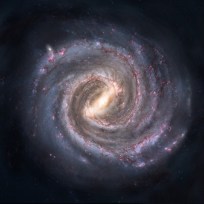
Our galaxy – one of many
Science helps us understand our natural world better. But, science provides information only through descriptions from observations. With science, we may understand better what an earth quake is, or how to grow more soy beans, but ultimately the answers we receive from research are observations.
Microscopes, telescopes, laboratories, and other equipment for tests and measurements are among the tools used to make these observations. Yesterday’s scientific conclusions lead us to today’s information, and then to the changes we will read about tomorrow. It was scientific observation that convinced us the sun, stars, and planets revolved around the earth. It was also science that convinced us that was not the case.
The discoveries of science change. Does truth ever change? When I look around at our natural world, I see is what humans have done. Everything I see, while either part of nature or taken from it, was placed, caused, or permitted by humans—to a point. Other life forms may make their mark, but that will last only if humans permit it. When we don’t allow nature to progress or we interfere, it can be disastrous due to our limited knowledge. It may be science, but we don’t know everything and we can only explain so much.
Sensing and Nature
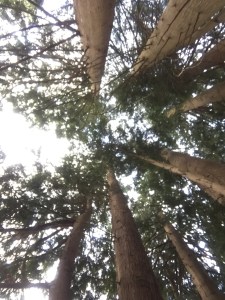
The spectacular trees
While nature is everywhere, my senses respond more strongly outdoors, in unfamiliar surroundings. I notice things less in my usual, everyday world. Change awakens my senses, whereas routine numbs them. Walking along a forest trail during a gentle, but persistent, rain provides stimulation that rejoins my surroundings with my own basic nature. It feels so right.
Seeing the trail, the roots of the magnificent trees, the green vegetation bouncing and dancing with falling raindrops, I feel aware and connected with the essence of life. It’s all here with me: sky, water, rich aromatic soil, and scree giving softness to my footsteps. Nature paints portraits of life and movement. I see how moisture mingles with the soil to send nutrients of life to plants and to quench thirsty animals, of which I am one.
Hearing the rain mesmerizes me as it falls where it will, on the leaves of trees and brush, onto the boulders and earth, and into the growing puddles and flowing streams. This is the sound of natural life – earth as it should be. The rustling sounds of birds and animals is alerting, as life deals in with nature’s wet gifts. And the rain. The glorious rain.
Feeling the soft, spongy earth beneath each step, I look down to see how the lovely wet soil now clings to my touch. I feel the rain pecking at me as it does upon the flowers. Animals respond to the natural bathing as a refreshing cleansing.
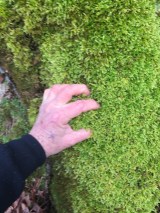
Touching the soft moss on a tree
My touch to the soft moss hugging tightly to the trees is a pleasant reminder of life on life, the natural interdependence within nature’s home. Against my face, and over my entire body, the rain penetrates cloths to caress my skin. I become one with the flora. I am refreshed, another being, pleased with our universe.
I can taste the freshness of the day. While rain on my head and face washes into my eyes, other drops find their way to my mouth, adding salt to the taste – the salt of the earth. I belong here.
A forest petrichor is the most pleasant of scents following rain. As the sounds and sights change with the gradually ceasing rain, and the forest begins to release the magical and glorious aroma of nature at work; life flourishes. If there is a heaven, it’s right here, right now, with me. I feel completely connected to nature. I yearn for this life, as it should be. I know this is life.
Awareness of Belonging
I become aware of the cosmic interconnectedness of everything. I know I have my place, fitting in with everything in the universe. The vastness of the cosmos finds the path and weaves its pattern through space, through time, and through me to the tiniest speck of galactic dust.
While science can provide words, descriptions, and explanations for everything that I sensed during my inspired walk in the forest rain, nothing can explain the deep, soulful feelings I experience when the vastness of nature communes with me. Conscious awareness.
Our senses perceive the environment as we discover nature and life. Our sixth sense is that of belonging to the Universe.
Look both ways, discover the gaps, feel where we fit in.
Reading or writing about events like Bataan, we often focus on man’s inhumanity to man – that dark side of our nature, which we often shun until memoir time. Throughout known history, our capacity for cruelty is well-documented. Genocide (killing to eliminate a group, race, ethnicity, religion, or language) is too common. While respecting victims of atrocities, I want to focus on survival, with one survivor in mind.
Ben enjoying it.
When survivors tell their story, they become windows to history, guiding and motivating our chant of never again. From their dark stories, we learn to prevent future atrocities. On the bright side, survival stories are inspirational. What others endure, survive, and subsequently achieve are symbolic of human resilience: that remarkable human physical and spiritual asset.
I discovered Benjamin Charles Steele long before I met him, as I was feeding my curiosity about Bataan by reading books. I only read five. “Only,” because so many books and articles have been written about the Death March, many by survivors or their families.
One of those books, Tears in the Darkness by Michael and Elizabeth Norman, focuses on Ben’s story. While the Normans included much more within the pages of their ten-year project, they trace Ben’s life experiences, particularly during the war years. I recommend it.
My signed copy
Born in 1917, Ben Steele grew up on his parent’s Montana ranch. The family lost the ranch during the Depression Years, when he was about 15. Ben continued to work as a ranch hand, which interrupted his education several times before he finally graduated from high school in 1939. The following year, Ben joined the Army Air Corps. Eighteen months later he was a prisoner of war (POW) in the Philippines.
Ben may have developed a passing interest in art when had delivered art supplies. But, he had little exposure, and no formal training. Ben received his formal art degrees after the war.
For much of his early POW time, Ben was ill (Beriberi, dysentery, pneumonia, blood poisoning, and malaria). He worried about adding mental illness to the list, as so many others had. So, he began to draw. Risking severe punishment or death to stay sane, Ben started a self-prescribed therapy to fight off life-threatening melancholy. He had seldom drawn anything during his life.
Feeling guilty about my unused art supplies.
Unknowingly, from his sick-bed in the wretched Bilibid Prison, he was launching a seventy-four-year, successful art and teaching career. This late high school graduate, Army enlistee, and future college professor, was barely hanging on to life. While starving and hardly existing in some of the bleakest living conditions imaginable, Ben used charcoal and sticks to do his first primitive drawings.
“I used to sit there day after day. I thought I’d lose my damn mind. I wanted something to do, so I started drawing with anything I could find to draw with. I’d draw on walls. People around me said, ‘Why don’t you draw the guys? You know, there are no photographs taken of this stuff.’ So, I started drawing stuff around the camp and sketches of people and portraits as close as I could. I wasn’t very skillful.” ~ Ben Steele
Eventually, Ben was moved to mainland Japan where he worked as slave labor in coal mines. The only two of his original drawings to survive the war were done there. The original drawings he did in the Philippines were in the possession of a fellow prisoner, catholic priest, and army chaplain, named Father Duffy. When the ship Duffy was on sank, the drawings ended up at the bottom of the Pacific Ocean. A few years later, as he recovered in a Spokane, Washington, hospital, Ben reproduced his lost drawings from memory (part of his therapy).
When the US dropped an atomic bomb on Hiroshima, Japan, Ben worked 75 miles south. He heard the blast. Soon the war ended. Ben and others were on the road home and toward recovery from the three-and-a-half-year ordeal. Ironically, some survivors eventually fell victim to mental and emotional problems resulting in suicide, death from substance abuse, or other such maladies. However, most survived, and I was fortunate enough to meet some of them.
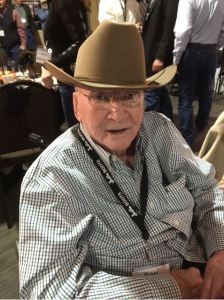
Once a cowboy….always…
When Ben’s art was displayed in a building on White Sands Missile Range in 2011, I was there for my last Death March. By then I’d read Tears in the Darkness, and other books about Bataan. So, I knew Ben’s story.
When I went to see the art the day before the March, Ben was there. His daughter was escorting him in his wheel chair – he was 93. We shook hands. He signed my book about his art and we talked, mostly about his life as an artist.
I immediately knew I was talking to a Montana cowboy, who happened to have been a POW, college professor, well known artist, an American hero, and a witness to much about life’s realities.
At his core, this happy man who was pleased with life and was the same cowboy who joined the Army Air Corps 71 years earlier.
“Little things that probably bother a lot of people don’t bother me. I figure I’m probably living on a little borrowed time, and I’d better enjoy it!” ~ Ben Steele
Another WWII veteran I knew, Joe P., said virtually the same thing to me last year. Both men died in 2016, in their late 90s after living full and happy lives. Perhaps their life choices were reflected in the last three words I quoted from Ben, “…better enjoy it!”
Life has its ups and downs; reality in art, literature, history, and personal stories enable us to look both ways, to the dark, or to the light. Enjoy life, but mind the gaps.
I like words – some more than others, but I enjoy all words. I may not use some words often because we communicate with other people using words. When someone doesn’t know the meaning, or has a misunderstanding, stuff can get weird. I also wouldn’t want to be thought of as being too hoity-toity.
I confess to owning and reading dictionaries while hidden in the closet. Books about troublesome words written by Bill Bryson entertain my curiosity, as has everything else he’s written.
I blame my aunt Lorry for the freaky word-love thing. She’d send me the word of the day from the Washington, D.C. newspaper, along with cutouts of Dennis The Menace cartoons. When I was nine or ten, I didn’t care as much as I do now. Thanks, Lorry.
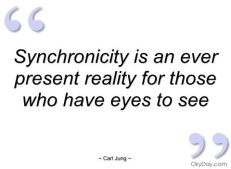
Synchronicity is polite. While I much prefer saying shit happens or it is what it is, those are not accurate definitions or even quite synonymous. My online dictionary says it’s “a simultaneous occurrence of events that appear significantly related but have no discernible causal connection.” We can use the word like that, but it’s an even deeper theory proposed by Carl Jung in the 1920s. One of Jung’s definitions was “the simultaneous occurrence of two meaningfully but not causally connected events.” Over the years, his definition moved around a bit. I suppose his theory clarified with time.
Sue’s excellent blog (An Artist’s Path) on this topic back in April can be seen here. She gives a good personal example similar to the experience of having someone calling you just as you are thinking about them. “That’s weird, I was just thinking about you.” It’s not weird, it’s synchronicity. It happens and always has. Sue tied synchronicity to a conspiracy of the universe. That works for me.
Serendipity is a similar and related word: it refers to events happening by chance in a happy or beneficial way. The key word that we would often use in casual conversation is coincidence. That works okay with serendipity, but not as well with synchronicity because the latter invokes elements of spirituality.
Jung seemed to think there was a relationship to ESP, while others associate synchronicity with deities, universal forces, or some other intelligent spiritual forces or entities.
Remember, there must be no identifiable earthly cause to the event. I don’t assign human events to spiritual entities, but I’m willing to listen to reasonable, albeit unfounded, theories. The two events must also be meaningfully related, or at least appear to be. If there is a cause or reason for something to happen, it also will not fit the definition.
Synchronicity happens often enough so that many of us have experienced several such events. Usually, we charge it to coincidence, then we move on with our lives. But many of us, especially spiritual searchers and people who enjoy unexplained magical events, will focus on the event and may label it synchronicity.
One article I read that discusses both synchronicity and serendipity, posted by Dr. Joe Dispenze, can be found here. I neither agree nor disagree with anything that he said in that piece, but it is longer than what I write.
I’m grateful for the words we have available to define our human experiences and our nature, what we have in common, and how we differ. They enable us to share everything about our brief existence, to understand each other, and to make our lives better.
As things happen in life, we must pay attention,
learn, look both ways, and mind the gaps.
Disclosure: I’m of the there are no gods variety of atheist. Consequently, there’s no sin. Since we can’t have one without the other, sin is a word I use only because the majority use the word, even if they’re agnostic. But, there is some general agreement about what is or isn’t moral behavior.
The past few weeks, I’ve posted about the seven deadly, and predominantly Christian, sins of greed, pride, lust, anger, gluttony, envy, and sloth. I also provided a brief contrast with an opposite word. My approach was based on the source of our behavior, our human mind and emotions. Each of the seven begins with an emotion that may later be manifest in behavior – we act based on how we feel.
Writers have a phrase: show me, don’t tell me. In movies, the words and actions of the actors are used to portray thoughts and feelings. In my opinion, we cannot choose each emotion. Happiness is a little different. We can be happy people and still experience dark-side emotions. Furthermore, we can usually choose our behavior. Some comments have implied that we’re in total control over emotions, and then control our actions, as well. While I don’t share that opinion, my behavior is based upon my emotional state has led to more apologies from me than I care to admit – slow learner.
As a society, a nation, or arguably, within a religion, we subjectively decide what’s moral. It changes over time, and we routinely disagree about what’s unacceptable (political-type disagreements). While we don’t always agree, often we do.
In the title equation, I = intellect, and E = emotion. When we experience emotions, we follow that feeling with behavior. To the degree that we can, ideally, we choose the behavior we morally and intellectually we want to display. For example, if someone elicits our anger, jealousy, or some other feeling from our complex emotional spectrum, we then pick our next move. I over E implies that we select our words or actions based on our intellect (good judgment, wisdom), rather than the emotion we feel. It’s not easy to behave contrary to how we feel. Nor is it always necessary. Going with our emotions (following our heart) is very often our best and most sincere option. We love with not only our personal emotions, but often those of others. How others tug at our emotions makes life magical. Life is wondrous, but not simple.
The common thread that I’ve stitched through each of the seven is that emotions are not sins. Feelings are legitimate. Be they good or bad feelings, it’s our behavior that determines anything about moral standards. And it doesn’t make a tinker’s-dam if one believes in a god, gods, or none. Each of the seven have opposite virtues. Every good person has a dark side. Every saint has a past; every sinner a future.
Humans are very much part of nature. We are where we belong. Our greatest need is for each other. Our greatest challenge is in dealing with each other.
Our lives are full of stepping stones to make life better and with stumbling blocks that bring us incredible amounts of pain and suffering – and valuable lessons.
Let’s be accepting and understanding of ourselves and others to the degree that we’re able. We are not static beings. We’re who and what we are, but we have opportunities and futures. We come into this world as we are – a combination of physical and mental paradoxes and mysteries. A lot happens between the average birth and death. This includes running the bases of virtuous and bad behavior, and the personal experience of staring into the abyss that is us.
This one’s mine. Other than talking about the illogical wrath of a deity, or when humorously speaking of enduring the anger of someone else, we don’t use this word. We prefer rage, resentment, fierce anger, vengeance, or a few other synonym-like words (pissed off). I will use the word anger because wrath is archaic. We get angry, not wrathful. I also dislike typing the silent “w,” and a rath is something else.
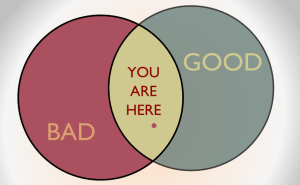
I could easily write a book about my own anger. If I included the whole enchilada of human nature, it would probably expand to three fat volumes, and be boring. Anger is an emotion. One foolishly considered bad or sinful. While it’s neither, it is dangerous. Anger is a legitimate and real emotion that we may each experience differently. Some people seem to be incredibly patient and tolerant, seemingly never experiencing anger. Others seem explosive, and are sent to (drum roll) Anger Management classes to learn how to behave. I like to call it Charm School.
An old friend of mine had to do that with his work later in life. We grew up together, and as I recall, my friend was exceptionally demonstrative when angry. It didn’t take much before he felt slighted, irritated, or offended. When we were teenagers, I either ignored him or put distance between us until he calmed down. Even later in life, I was still surprised that he could come unglued about things that I considered little more than a trivial nuisance. However, I also had my share of temper tantrums throughout life.
For most of my life, I had a sexist view of anger. I thought men experienced anger more frequently than women, and that acting out our anger was not only what men did, but it was semi-acceptable. I’ve since learned that my view was wrong (read this).
The point of view I had learned was that all other male emotions were unacceptable, and any emotional display was a sign of weakness. What this wrong opinion did for me was to allow me to exhibit angry behaviors regardless of what emotion I may have been feeling. I later learned that I not only had to get in touch with my emotions, I had to start identifying them: fear, shame, sadness, disgust, anxiety, guilt, and many more. I don’t blame society or culture. I take responsibility for my behavior, as should we all.
Another problem with anger is the difficulty of properly identifying it in either ourselves or others. Depression, anxiety, fear, and other emotions may manifest themselves, both inside and out, through behavior that could be considered anger. It’s confusing and figuring this out may take the help of a friend or counselor.
People lash out for a variety of reasons, and it may have little or nothing to do with being angry. I’ll leave it to the experts to follow this rabbit trail, but I suggest we try to pick out the different emotions we feel and deal with them for what they are. I posted about jealousy on Tuesday. Certainly, we feel some anger when we’re jealous. We need to recognize when more than one emotional thing is happening to us at a time. When I was beginning to work on this for myself, I would try to reflect on my feeling and not be pinging off the walls so much.
Then, a close family member accused me of being an “emotionless automoton” who had no feelings and didn’t care about others. I love the memes of a light switch for turning emotions on and off. She was confusing my trying to remain calm with lack of emotion. No such luck.
Politics, religion, sports, and money are four topics that can lead to anger during many seemingly innocuous discussions. If we have not experienced the feelings ourselves, we have certainly seen them acted out by others.
We are social (sociable or not) beings walking around in bodies transporting minds packed with emotional potential. We’re not Vulcans, like Mr. Spock (played by Leonard Nimoy) in the Star Trek series. Spock was of a mixed human-Vulcan heritage race that had mostly conquered his emotions and made them subject to his control. We are simply humans.
Ironically, the death of Spock occurs in the movie The Wrath of Khan, and some think that it’s the best scene in the movie. Forgive my digression; I’m a long time Star Trek, Spock, and Leonard Nimoy fan.
This concludes my series on The Seven Deadly Sins, or Morality. I plan a summation for next Tuesday’s post that may explain my take on this from a broader perspective.
Have a wonderful weekend.
Look both ways and mind the gaps – every day.
“Do not overrate what you have received, nor envy others. He who envies others does not achieve peace.” ~ Buddha
Let’s say that you and your close friend try out or compete for the same thing. It could be making the team, getting either a promotion or an award, or winning the lottery. You learn that your friend makes the team, got the promotion, or won the prize. You did not. How do you feel?
First, if you are an adult, you’re happy for your friend. If you’re a teenager (or you need to read The Untethered Soul), you may get out the voodoo doll and some pins, or begin some plot against your former friend.
We may begin to feel something else. It’s an emotion that we don’t want to feel, but it’s there. It’s a twinge we feel on the inside that is directly related to our disappointment and that other person. We feel envy. We do! It’s normal, and it’s okay as long as we don’t act-out on that negative emotion. I’ve never received recognition or a promotion (that others also wanted) without someone letting me know of their displeasure.
One time, I asked this guy, “Did you want me to turn it down so you can have it? I know you think you deserved or wanted it more than I did. Don’t you feel just a little petty right now?” I have been on the losing end enough times to recognize his emotion. Myself and I have had talks about that. I don’t like feeling envious. It makes me feel worse. Envy is not unusual. I often admit to the feeling.
So, if this is normal, why is it considered another breach of all that is good and holy within us? The reason is simple: this is not a good thing about our human nature. We know that envy is normal, and that it will pass, but it’s also dangerous. Loving friendships have ended. Businesses have suffered. Shame and embarrassment have been coopted by envy because the accompanying behavior make us feel worse. Envy is part of us, a dark corner of who and what we are. We must acknowledge that part of our dark side.
There is a shallow envy that is part of daily life. When I see men of my age with huge locks of thick, beautiful hair (usually gray), I feel mild envy. I admit it. I want what they have. That guy did nothing to deserve to have more than his share of hair follicles so late in life. I did nothing to promote my loss of the same. I’m almost proud of my envy. It’s true. I own up to it. I get it: envy is the desire for others’ traits, status, abilities, or situation.
In Summa Theologiae, Thomas Aquinas said, “Envy, according to the aspect of its object is contrary to charity, whence the soul derives its spiritual life… Charity rejoices in our neighbor’s good, while envy grieves over it.” Why do we do this? Because other people are so much luckier, smarter, more attractive, and better than we are. Lucky bastards.
But there’s good news. If you go to Hell, your punishment awaits: you’ll be put in freezing water. I looked it up. Think about that. Hell, fire and all that; and you and I are hanging out at the ice bar. Now, it’s their turn to be envious, right?
I don’t know why, but envy is associated with the dog and the color green. Oh, right, the green-eyed monster. Not so fast. I use envy and jealousy as two different words that apply to different kinds of situations.
Envy and jealousy are not the same emotions. Envy, as unpleasant as it can be, usually doesn’t contain a sense of betrayal and outrage. Jealousy needn’t contain a sense of inferiority. The difference is in the numbers.
Envy is a two-person situation, jealousy is a three-person situation. Envy is a reaction to lacking something. Jealousy is a reaction to the threat of losing something or someone. Of course, when we feel jealous, we often feel envious as well.
The opposite of envy is supposed to be charity. I think the more accurate word is love. Some experts say kindness. I say love, not because love will prevent envy, but because our love will help us overcome that part of our dark, selfish selves and we’ll find peace and happiness sooner. Love is the primary emotion. Envy and jealousy are both subordinate to fear, which is also primary. Both fall under the heading of wasted time and emotions since neither accomplish anything.
But, as long we are normal humans, we must deal with our feelings and emotions. It’s all about how we feel. The actions we choose to follow our emotions are up to us. Can we at least balance some light with our dark side?
Envy is real and normal. So is jealousy.
We generally see them as bad, weakness of the spirit, and damaging to life and our relationships. Consider both to be among life’s gaps.
Mind those gaps and look both ways. We need to see our own human darkness and weaknesses and deal with them.
 Night Comes
 The silk soft, black cloak of night rolls
 Find peace and warmth in the face


 As for my dream? It is dead.
 Timothy Frances, where are you now?






 Sue’s excellent blog (


 An old friend of mine had to do that with his work later in life. We grew up together, and as I recall, my friend was exceptionally demonstrative when angry. It didn’t take much before he felt slighted, irritated, or offended. When we were teenagers, I either ignored him or put distance between us until he calmed down. Even later in life, I was still surprised that he could come unglued about things that I considered little more than a trivial nuisance. However, I also had my share of temper tantrums throughout life.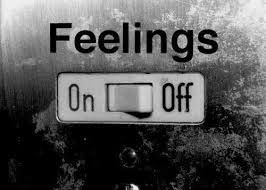
 We are social (sociable or not) beings walking around in bodies transporting minds packed with emotional potential. We’re not Vulcans, like Mr. Spock (
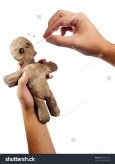 We may begin to feel something else. It’s an emotion that we don’t want to feel, but it’s there. It’s a twinge we feel on the inside that is directly related to our disappointment and that other person. We feel envy. We do! It’s normal, and it’s okay as long as we don’t act-out on that negative emotion. I’ve never received recognition or a promotion (that others also wanted) without someone letting me know of their displeasure.
 But there’s good news. If you go to Hell, your punishment awaits: you’ll be put in freezing water. I looked it up. Think about that. Hell, fire and all that; and you and I are hanging out at the ice bar. Now, it’s their turn to be envious, right?
 Our Literary Journey