“Do not overrate what you have received, nor envy others. He who envies others does not achieve peace.” ~ Buddha

Let’s say that you and your close friend try out or compete for the same thing. It could be making the team, getting either a promotion or an award, or winning the lottery. You learn that your friend makes the team, got the promotion, or won the prize. You did not. How do you feel?
First, if you are an adult, you’re happy for your friend. If you’re a teenager (or you need to read The Untethered Soul), you may get out the voodoo doll and some pins, or begin some plot against your former friend.
 We may begin to feel something else. It’s an emotion that we don’t want to feel, but it’s there. It’s a twinge we feel on the inside that is directly related to our disappointment and that other person. We feel envy. We do! It’s normal, and it’s okay as long as we don’t act-out on that negative emotion. I’ve never received recognition or a promotion (that others also wanted) without someone letting me know of their displeasure.
One time, I asked this guy, “Did you want me to turn it down so you can have it? I know you think you deserved or wanted it more than I did. Don’t you feel just a little petty right now?” I have been on the losing end enough times to recognize his emotion. Myself and I have had talks about that. I don’t like feeling envious. It makes me feel worse. Envy is not unusual. I often admit to the feeling.
So, if this is normal, why is it considered another breach of all that is good and holy within us? The reason is simple: this is not a good thing about our human nature. We know that envy is normal, and that it will pass, but it’s also dangerous. Loving friendships have ended. Businesses have suffered. Shame and embarrassment have been coopted by envy because the accompanying behavior make us feel worse. Envy is part of us, a dark corner of who and what we are. We must acknowledge that part of our dark side.
There is a shallow envy that is part of daily life. When I see men of my age with huge locks of thick, beautiful hair (usually gray), I feel mild envy. I admit it. I want what they have. That guy did nothing to deserve to have more than his share of hair follicles so late in life. I did nothing to promote my loss of the same. I’m almost proud of my envy. It’s true. I own up to it. I get it: envy is the desire for others’ traits, status, abilities, or situation.
In Summa Theologiae, Thomas Aquinas said, “Envy, according to the aspect of its object is contrary to charity, whence the soul derives its spiritual life… Charity rejoices in our neighbor’s good, while envy grieves over it.” Why do we do this? Because other people are so much luckier, smarter, more attractive, and better than we are. Lucky bastards.
 But there’s good news. If you go to Hell, your punishment awaits: you’ll be put in freezing water. I looked it up. Think about that. Hell, fire and all that; and you and I are hanging out at the ice bar. Now, it’s their turn to be envious, right?
I don’t know why, but envy is associated with the dog and the color green. Oh, right, the green-eyed monster. Not so fast. I use envy and jealousy as two different words that apply to different kinds of situations.
Envy and jealousy are not the same emotions. Envy, as unpleasant as it can be, usually doesn’t contain a sense of betrayal and outrage. Jealousy needn’t contain a sense of inferiority. The difference is in the numbers.
Envy is a two-person situation, jealousy is a three-person situation. Envy is a reaction to lacking something. Jealousy is a reaction to the threat of losing something or someone. Of course, when we feel jealous, we often feel envious as well.

The opposite of envy is supposed to be charity. I think the more accurate word is love. Some experts say kindness. I say love, not because love will prevent envy, but because our love will help us overcome that part of our dark, selfish selves and we’ll find peace and happiness sooner. Love is the primary emotion. Envy and jealousy are both subordinate to fear, which is also primary. Both fall under the heading of wasted time and emotions since neither accomplish anything.
But, as long we are normal humans, we must deal with our feelings and emotions. It’s all about how we feel. The actions we choose to follow our emotions are up to us. Can we at least balance some light with our dark side?
Envy is real and normal. So is jealousy.
We generally see them as bad, weakness of the spirit, and damaging to life and our relationships. Consider both to be among life’s gaps.
Mind those gaps and look both ways. We need to see our own human darkness and weaknesses and deal with them.






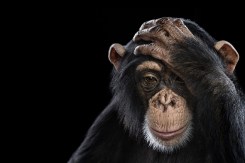 It is what it is. However, I wonder if our opinion on this matters more than the real answer. It’s like believing in a god – it either exists or it doesn’t. Our believing or doubting anything changes nothing about reality (placeboes or magic notwithstanding). Our opinion on this affects how we see the world, other people – and most importantly, how we see ourselves. Me, is the one thing in the universe that I have some control over—maybe.
 The premise of Straw Dogs is that humans are animals like any other animal. Both Christianity and Humanism see humans as capable of controlling things much more than Gray and others seem to think we do. This is a philosophical book that challenges many basic assumptions about what it means to be human. While I don’t agree with some of what Gray presents, I admit that he makes astonishing points that lead me to question which of us is correct. Regarding several of his positions, I think he’s nuts. But I find many of his other arguments compelling. Reading John Gray made me think, wonder, and contemplate – not the meaning of life, but its nature.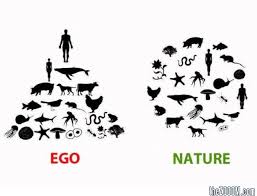



 As often happens following severe droughts in South Texas, the many weather gods provided too much rain. Severe damaging floods came after the months of virtually no rain. As Father Conor McGrath was reading announcements from the Parish Bulletin in his wonderful Irish brogue, he adlibbed a joke by saying, “And would the gentleman who is still praying for rain please stop.”
 Promotes a habit of self-deception. If God is right, why bother? Wouldn’t he do that same thing even if we didn’t explain it?
 However, I am willing to work with my feelings of hopelessness. I’m not referring to the charming but hopeless romantic, or being merely incompetent (Bill’s hopeless). And I’m not talking about sadness, fear, or denial. I’m talking about the feeling that can cause despair (being without hope). Back in the day, ‘twas that conclusion I expressed when I’d say OMGIF! (Oh my God, I’m fucked).
 I read this good article about hopelessness in the

 Then I hear, “You haven’t said anything, Dad. What do you think?”
 I’m a here and now kind of guy. While I firmly believe in living in the present, I acknowledge that each life has a future and that’s the direction we live it. Today’s crisis is tomorrow’s funny dinner chat or neighborhood gossip.
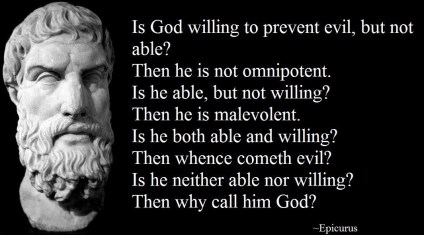
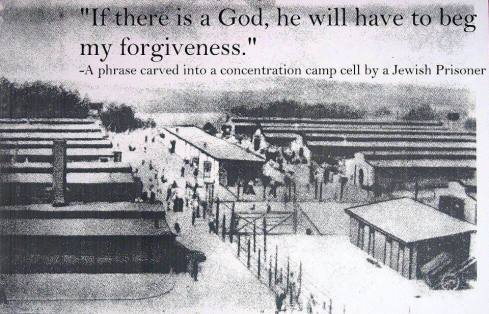
 Or, you might end up where I did, facilitating a classroom discussion of the topic in the Adult Education program at my Catholic church. Preparation for teaching, and then leading the group discussion, led me to an enlightenment. I was not, at the time, spiritually or religiously challenged by the problem of evil, but I learned a lot.



 In the United States, more than two-million people die each year. The CDC reports the top four causes as heart disease, cancer, respiratory disease, and accidents. I say, smoking, smoking, smoking, and driving plus illicit drugs because they are the major producers or triggers of those four “causes.” The root cause of most preventable premature deaths in the USA is smoking (so quit).

 Life is the time made precious by our inevitable death. May we fully enjoy the many pleasures and loves discovered and experienced while living. And may we all “…lift Life’s red wine to drink deep of the mystic shining cup…” because death is next for each of us.
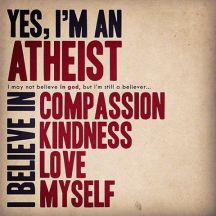 You might ask, “Ok, Bill, I understand what you do not believe. What do you believe?”
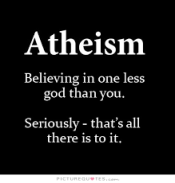 Atheists have no written creed, profession of faith, or official paradigm of beliefs. While some have written non-dogmatic manifestos (public declarations of policies and aims), there’s no agreement or authority to which anyone is bound. You could read dozens of books that provide hints about what some atheists may believe, but many are crap. When you see or hear words like atheists believe or atheists think, false generalizations often follow.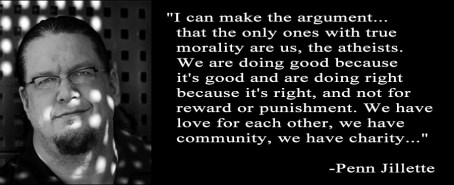
 Our Literary Journey