
During late October many cultures begin preparing for the first days of November. They remember the dead, acknowledge the end of harvest, and prepare for the dark days of winter. It begins with Halloween, then All Souls’ or All Saints’ Day, The Day of the Dead, and Samhain. Many believe it’s the time of year when we’re closest to the other world and death itself. The Fairy Tree story that ends this blog tells a wee bit more.
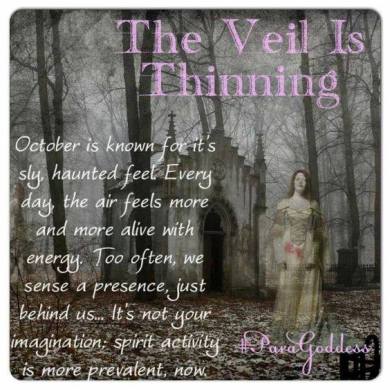
It’s our only certainty—we die. Beliefs about what follows the end of human life range from nothing to Paradise and 72 virgins or reincarnation. Let’s not forget the whole Dante’s Inferno thing. Our beliefs about an after life affect our choices while living.
While no one has told of their experience following permanent death (we have near death accounts), there are stories with bits of information. Little of it is dependable or useful. Theories abound, but the database of the deceased is void of demonstrable facts. Only the dead know, and they’re not talking.
Efforts to resist death seem logical, but are eventually fruitless. While many consider death a condition leading to afterlife, most people (not all) avoid dying as long as possible. An exception is when living prolongs a life of hopeless suffering. Others choose death through martyrdom. We disagree about our right to die (whole other blog) and we normally work hard to keep living.
 In the United States, more than two-million people die each year. The CDC reports the top four causes as heart disease, cancer, respiratory disease, and accidents. I say, smoking, smoking, smoking, and driving plus illicit drugs because they are the major producers or triggers of those four “causes.” The root cause of most preventable premature deaths in the USA is smoking (so quit).
It can be difficult to determine the difference between a still living or recently deceased person. Without more information, we can only define death as an absence of life. Our legal descriptions require a physician to certify the time and cause of death. While absence of all brain activity normally defines death, court cases fog the legal definition. When there are uncertainties, we gain information through autopsy.
While we’re fascinated with death, many of us avoid serious discussion of it and find it morbidly unpleasant. The death of friends, loved ones, and people we hold in high esteem represent the ultimate, painful loss. Our own death signals loss and aloneness, which is sometimes comforted by religious beliefs.

Yet, we sing of death, we write about death, and we (should) discuss it. We often honor death’s inevitability with both art and science.
Since first hearing it, I’ve liked Ralph Stanley’s (died, June 2016) rendition of the song, Oh, Death, which is a plea with the Grim Reaper for another year of life. It was made famous in the movie O Brother, Where Art Thou? Hear a short version by clicking here.
From a list of ten poems about death, I selected two by famous poets. All ten can be found here.
“Death” by Rainer Maria Rilke (died 1926)
Before us great Death stands
Our fate held close within his quiet hands.
When with proud joy we lift Life’s red wine
To drink deep of the mystic shining cup
And ecstasy through all our being leaps—
Death bows his head and weeps.From Queen Mab, by Percy Bysshe Shelley (became famous after his death in 1822)
How wonderful is Death,
Death, and his brother Sleep!
One, pale as yonder waning moon
With lips of lurid blue;
The other, rosy as the morn
When throned on ocean’s wave
It blushes o’er the world;
Yet both so passing wonderful!
 Life is the time made precious by our inevitable death. May we fully enjoy the many pleasures and loves discovered and experienced while living. And may we all “…lift Life’s red wine to drink deep of the mystic shining cup…” because death is next for each of us.
Life is uncertain, look both ways.
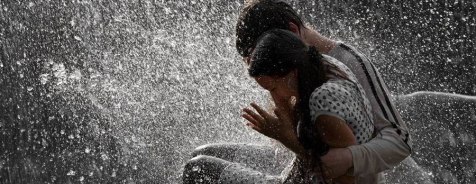


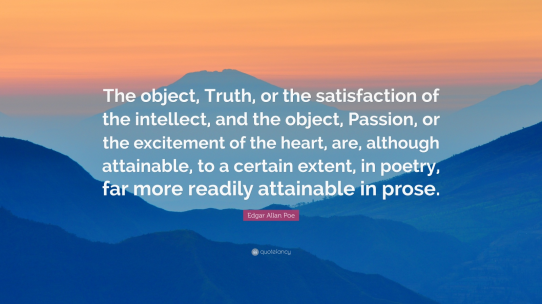
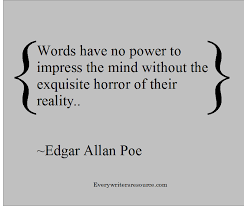 Three days of toil produced words born of emotion, but laying bare only thought and opinion. That challenge to produce expressive discourse full of feeling was riddled with notion and conviction of purpose, while lacking passion. Such analysis had merit and value, but I had so missed the deeper inside of myself that it might have been mere opinion drawn from a detached stranger. Those mindful barnacles of human grief remained anchored to my thoughts, thus hidden except from me.
 Knowing my feelings was not enabling my telling about them. Had I created a self, unable or unwilling to express feeling? I wondered deeper if I had co-opted with a force to create an emotional Dorian Gray. Were my feelings doomed to be confined in the shadowy attic of my mind? Had I become so adept at emotional deception that I habitually prevented expression of feelings? Had I become factually superficial and emotionally shallow, thus apparently less than a human lacking outward feelings?
 Twenty years hence, my awareness is of two worlds. An external world full of social interactions, judgements by and of others, and basic human needs. This is the world of people wearing masks, hiding feelings, and struggling silently with internal and external burdens. It is a world we need in order to sense the other world – a deep world that is hidden from others and often from our own self-awareness.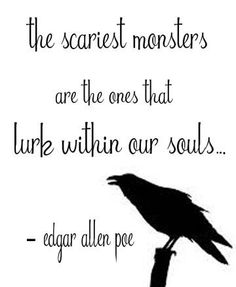
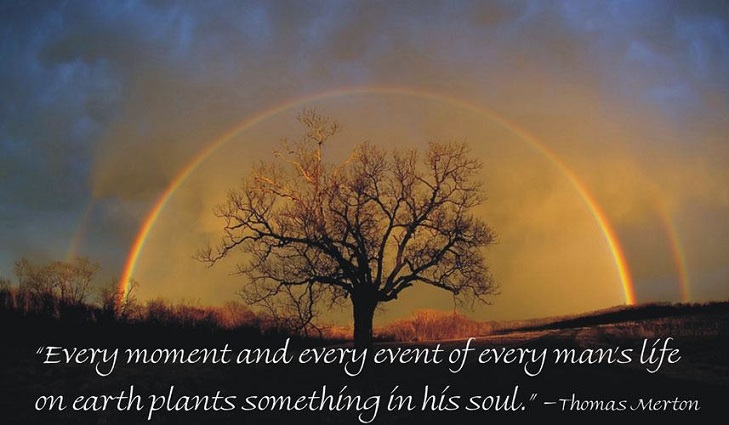

 What impressed me about this man was his complexity, his courage, and what I see as his wisdom. His life journey and the decisions he made will likely prevent him from ever being canonized a saint by the Catholic Church. Yet those foibles are exactly what attracted me to him twenty years ago, and continue to influence my thinking. The man was a real person – a human being who behaved like one. If they did make him a saint, I think he would be among the most human of that group.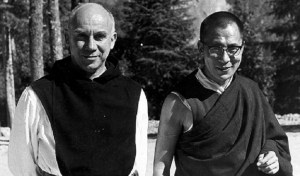
 Xanadu may refer to:
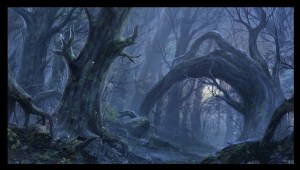 Across the sacred river before the sea
 Where all that move within the light become victims of the night
 Canopies open to view heavens gate as sparkles ignite
 This may be the most difficult topic for me, but it’s early in the A-to-Z Challenge. I may find subjects that are greater challenges. Regarding the dark side of human nature, I would simply prefer to accept it and move on. My research of our dark nature has revealed that we humans actually want to deal with it in reality, art, life, drama, poetry, fiction, behavior, and nature. Many of us admit to a duality of human nature, but even more of us reject the dark truths.
 My dark side calls to me. I ask, “What do you want?”
 In addition to Oscar Wilde (The Picture of Dorian Gray), which I’ve read, I shall add the following.
 Our Literary Journey