Morality Series: Pride

Who or what are you proud of? Do you feel proud of yourself? If so, do you consider it immoral or sin?
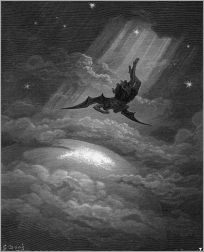
Lucifer to Satan
Lucifer to Satan

Pride is an insufficient word for the immoral feeling that is an exaggerated sense of self. Hubris works a little better. Pride is often normal and not bad. As with any of these so called sins, when taken to psychological extremes, pride can become a problem that others often are more aware of than we see in ourselves. Behaviors associated with pride can become annoying, but we expect a proud bow from anyone doing well.

So, here I go again; playing devil’s advocate in the defense of normal human feelings and behavior that many religious people accept as sinfulness of the highest order. What’s even harder to understand is that this one is considered the worst of the worst. This is Lucifer’s sin, if you believe that. This self-opinion allegedly paves the way for all badness (or sin, if you prefer) to follow. In the words of  C. S. Lewis and many other religious writers, its primacy is made clear.

pride-4

Are we to believe that humility, the alleged opposite, prevents us from immoral behavior? I can be most humble and immoral simultaneously. I can lust with humility oozing from my pores, or maybe it’s the other way around. Excuse me while I humbly eat the entire pizza and down a six-pack of beer.

Pride is mostly good, unless you’re Irish-Catholic, in which case you’ll hear, as I did in my youth, who the hell do you think you are? This put-down, shut-down, and buzz-kill phrase is more annoying than piles of pride.

Gay pride, black pride, being proud of self, kids and grands, other family and friends, school pride, pride in state or country, religious pride or pride in non-belief, the overcoming of adversity, pride in relationships, athletic team pride, corporate pride, and the list goes on. What’s wrong, bad, or sinful about any of this? Nothing!

pride-1

My entire life I’ve worked on my humility (minding that gap). One friend made a sarcastically funny plaque for me because I often discussed trying to be humbler. I thought that I’d be a better person if I was humble. Of course, I could be proud of my humility, right?


I like this
I like this

I think power often corrupts, and I’m sure that pride plays into that human fault. We should get this pride deal straightened out. Going overboard on my ego is indeed bad for me and for those around me. Fortunately, my family and friends have the chutzpa to point out my faults. I no longer have my dad to ask me, “Who the hell do you think you are?” I can still hear his voice when others remind me that I may be a bit full of myself. It happens, preferably seldom. Maybe pride is not exactly the correct word for me.

What about the other prideful words? Vanity? I pine for my hair and regret the loss of my locks. Conceit? Probably not me. I’ve known none who admit to this, but we easily see it others. Arrogance? I have the tee shirt for this one. I’m guilty. I can be arrogant as hell. Conversely, I admit when I’m wrong. I’ll apologize for any harm done. I don’t apologize for being wrong unless harm was done. I’ve been accused of arrogance for that. To me, I’m being sincere. Otherwise, I’d constantly be apologizing.

How about self-respect, self-esteem, or self-love? What of narcissism? I know that’s not pride, but we agree it’s an abnormal extreme, unless you’re a politician. Dictionary synonyms include pleasure, joy, delight, gratification, fulfillment, and satisfaction. I think I see a pattern here.

Is it possible that Christianity and some other religions are opposed to people finding pleasure in life?

Yours, mine, or theirs – what’s your take on the pride?

Hold your head up and walk tall. Be the person you are – true to yourself.
Be proud when you have reason.
Be happy in life, but look both ways and be mindful of any gaps.

Morality Series: LUST!

You’ve been waiting for this one, right?

lust-4As a noun or verb; it means a very strong sexual desire, or a passionate desire for something. The synonym list is downright erotic: sexual desire, sexual appetite, sexual longing, ardor, desire, passion, libido, sex drive, sexuality, biological urge, lechery, lasciviousness, concupiscence, horniness, the hots, randiness, greed, desire, craving, covetousness, eagerness, avidity, cupidity, longing, yearning, hunger, thirst, appetite, hankering desire, be consumed with desire for, find sexually attractive, crave, covet, ache for, burn for, have the hots for, fancy, have a thing about or for, and drool over. (Whew) The key word in all of that is desire. This is not an act, it is merely a basic human want, or as George Carlin put it, “You gotta wanna.”

lust-5“It’s what’s in your mind that counts. Your intentions. Wanna is a sin all by itself….it was a sin for you to wanna feel up Ellen, it was a sin for you to plan to feel up Ellen, it was a sin for you to figure out a place to feel up Ellen, it was a sin for you to take Ellen to the place for you to feel her up, it was a sin to try to feel her up, and it was a sin to feel her up. There was six sins in one!” George Carlin, Class Clown, 1972.

When I get to be Pope, this lust deal comes off the list. The desire we call lust may cause us innumerable problems, but by itself, it’s no sin. It is not even bad. Our behavior may be bad. The desire may burden us in some way. We may not even admit to its existence. We lust, and we do it well. Were it not for bit of lust taken to the physical level about nine months before our original birthday, none of us would be here.

lust-9I wanna. Before you tar and feather me for being a dirty old man (normal), know that I was raised Irish-Catholic, just like Carlin was. Human sexual desire for other humans is normal, good, healthy, and leads to some of the best moments in our lives, not to mention procreation of the species. A vigorous libido is a good thing to have. But, not everyone agrees with me. Most obviously, many Roman Catholics, and certainly not their leadership. I quote from a piece by Sam Guzman, republished in The Catholic Gentleman.
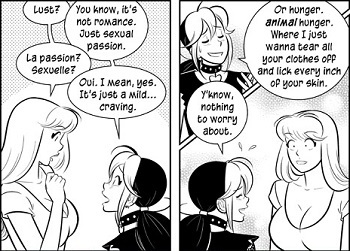
“In my own observation, lust seems the most obvious of the seven deadly sins, and also the one that can overcome the unwary Christian soul like a flash flood.”

I like the flash (flesh?) flood part. But lust isn’t bad – it’s not immoral. It’s normal. Sexual repression, on the other hand, is abnormal. Yet it is supposed be the hallmark of a good Christian life. Accepting the reality that lust is a feeling just like any other, and learning how to deal with it seems much healthier than trying to deny its existence, repressing it, and making millions of young people think they are going to burn for eternity because racing hormones are doing the talking. Think about it. We’ve all been there.

lust-2

One source I found said the opposite of lust is chastity. I disagree. You can do both: be chaste, but still lust. I looked up antonyms of lust, but the list is unsatisfactory. Only apathy (sloth?), and satisfaction (Rolling Stones song) got my attention. I don’t think there is a precise opposite for lust, unless it is not-lust, and that’s dumb. Maybe sloth is a good opposite, but how do we say having no desire, or not thinking? Dead? I wish not to be dead. Lust is a good sign that I’m not. Is un-wanna a real word?

lust-8

When I was challenged to do this series, the proposal was to juxtapose the sin with its opposite. In this case, I can’t point to anything, and it would be pointless anyway. Sorry, I just can’t get no satisfaction.

When we fight against nature, two outcomes are possible. Either nature wins, or our human nature becomes corrupt and disordered.

lust-1

Everything leads to something.
How we follow that path, and where it leads, is how we live.
Passion is good, desire is good, wanna is good! Lust to your heart’s content.
We get one life – live it well and enjoy the parts you can.
Mind any gaps and look both ways.

Series on Morality: Introduction

“…people have inside them something that could bring them to ruin…This basic truth of life has been denied by both believers and unbelievers in every age. Yet anyone who has tried to help others with their problems knows that we all share a common struggle against self-destructive tendencies. Hidden in the human heart are marvelous capacities for good and dreadful possibilities of evil.” ~ Stumbling Blocks or Stepping Stones, Benedict J. Groeschel

7-sins-intro-3Steven stirred the pot when he responded to my previous post on the basic nature of humans with, “One word: Greed.” Reader comments followed with discussions about greed in terms of human nature. Sue V. weighed-in by suggesting that I compose a series of posts on the seven deadly sins alongside their antitheses, the seven virtues. I like that idea. I plan to write a series within the human nature theme reflecting on the human condition, using Sue’s suggestion as a method to breakout specific topics into manageable sized chunks.

I want my posts to be thought-provoking (we think about it), simple (easy to read and understand), and brief (1,000 words or less). If we can read it in five-to-ten minutes, comprehend it, and have an opinion; I’ve achieved those goals. I’m pleased when readers enjoy my dribble. I’m not trying to persuade or educate anyone, but only to explain my take on the topics.

7-sins-intro-4After reading them, maybe you’ll ponder your opinion vis–à–vis either mine or someone’s comment, and share your views. I also want my posts to have a free-thinker flavor; secular, but with an inclusive bent, if that’s possible. I’m not opposed to religious comments. I think secular.
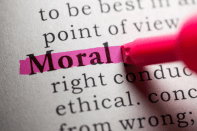
Morality (or immorality) is the series theme. It’s a better word than sin, vice, virtue, or others that I see as rooted in religious belief. Sin is a theist concept; morality seems more secular, at least to the degree that it’s subjective. I’ll borrow from the topics commonly known as sins. Words like vice and virtue are okay, but they add value judgment before discussion.

7-sins-introMoral and immoral may do the same thing, but I see them as opinions that are formed after discussion. Topics are natural, but often seen as immoral under certain conditions. For example, lust seems normal and humans could be extinct without it, but it’s on the list of sins. I’m not sure how or why chastity applies to anything other than medieval devices of questionable utility. How we see our basic nature and religion both affect how we’ll see the seven sins or vices.

I’ll follow Sue’s suggestion to include both sides of the moral coin. Like Pride and Humility (the yin and yang). I’ll begin with Greed on Friday. We can ride that pony until one of us falters. Then, I’ll choose another pair. I plan two posts per week.

I’m open to your suggestions for topics. After I get all boned up on each topic, I’ll post my remarks. Then, I’ll hang them out for your target practice.

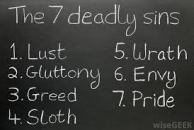
The seven sins I found (with their opposites) are: pride (humility), greed (liberality), lust (chastity), envy (kindness), gluttony (abstinence), wrath (patience), and sloth (diligence). The Catholic Catechism lists virtues as prudence, justice, temperance, courage, faith, hope, and charity. The Bushido Code has seven or eight virtues of a Samurai warrior, four of which are generosity, forgiveness, compassion, and altruism.

7-sins-intro-2

While we’re not all the same, we each have our bright and dark sides.
They are difficult to explain in our personal nature,
but they’re there. Mind those gaps and look both ways.

Atheist Perspective on Christmas


atheist-xmas-3Since this is my first December and holiday season as an admitted atheist, it seems fitting to discuss Christmas from my nonbeliever perspective.
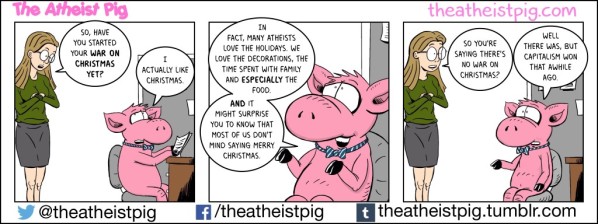
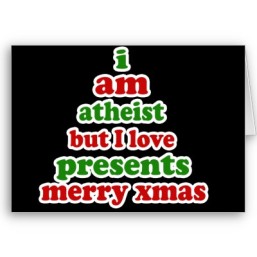
Much has been said and written about the secularism surrounding the holidays, and I’ve decided to provide my personal perspective. This is my 70th time partaking of the Christmas season celebration. So, much of what I say and do has precedence in that it’s what I’ve been doing for years.

As I write this I’m hearing the news from Germany of a large truck being driven into a crowd of people celebrating the holidays and the Russian Ambassador to Turkey being assassinated. The majority opinion seems to be that both events may be related to terrorism and religion, or at least god politics of some kind. And the list of such deeds goes on. None of this is in the holiday spirit. But as Christopher Hitchens subtitled and wrote in his book, “Religion poisons everything.”

Tantum religio potuit suadere malorum.” (To such heights of evil are men driven by religion) ~ Lucretius

For years, this was the season when we tried to spend quality time with family. Beginning with Thanksgiving, it’s a busy travel season in America as families reunite for celebrations. We’re surrounded by hype. But I enjoy the hype more than I like to admit.

I look forward to Halloween each year, partly because it marks the start of this season. Christmas is a happy time, a great time for most children. There are football playoffs, and bowl games. Winter begins, Yule is celebrated, and I like to look at snow. Dealing with it sucks.

In the home of my birth, the smell of the house changed, mostly due to the tree. But the house would also take on the aroma of whatever adult beverage had been opened. Aunt Lorry, who seldom drank alcohol, always brought port wine. Port is some powerful vino.

The thrill of gifts and happy people occupied our thoughts. We went to church. A little hut was built in the yard next to the church with a nativity scene inside it, behind thick glass and a locked door. There was a slot to deposit money for the poor, until someone started to rob it. Then they stopped using the box, and eventually the little hut went away. They must have assumed the thief was not one of the poor.

I don’t recall going to midnight Mass as a kid, but I probably did once or twice. Years later, I went several times. It was always crowded. All those Catholics who only went to Mass on Christmas and Easter would show up. By then, there was only one Mass on Christmas Day — all the others were vigil Masses on Christmas Eve. Going to church on Christmas day was inconvenient, at best.

Christmas was a “holy day of obligation” which meant that if you did not go to Mass that day, you would burn for eternity unless you made it to confession. I’m oversimplifying, but I was a child back then.

atheist-xmas-4

Some Christian denominations don’t celebrate Christmas at all. And for non-Christians, it’s not celebrated as anything more than a secular holiday. But Christian or not, no one in the USA escapes the hype of Christmas. I provide gifts and greetings appropriate to this time of year and the holiday. I helped to decorate a big tree and to put up other decorations this year. I went to our party and may have sung some Christmas songs.

I fully understand the religious aspect of the holiday season (be it Christian, Pagan, Jewish [Hanukkah], or others). While I don’t agree with any religion, I think the intended spirit of caring is good. For me, family, friends, caring, giving, and delighting in nature are all the good things. So, like many atheists and other non-Christians, I join the party as I have for almost ¾ of a century.

atheist-xmas-2I’ll continue to celebrate the season much as I always have: eating and drinking too much while overdosing on football. It’s a fun cultural and secular holiday with many features that benefit life, whether one believes in any god or not.

I don’t see my enjoying the holidays as a big deal any more than I do saying “bless you” when someone sneezes, or “God damn it” when things go wrong, or when I use the word “god” or “Jesus Christ” to express pain or anger. But cussing is another story for a different blog. Unfortunately, the holiday season is a stressful or bad time for some people.

atheist-xmas-5If it busts someone’s chops that atheists enjoy the holidays, that’s a bummer. We intend no harm by joining the festivities. I suggest those humbugs pass a law that says one must be Christian to enjoy the holidays. Until then, you’ll find me hangin’ ’round the mistletoe.


I suggest you try Joey’s take on this by clicking here.


Happy Holidays.
May there be peace, love, and a thousand sugar plumb fairies dancing in your heart.
Look both ways and mind the gap.

How Important is Trust?

“Relax, Stevie, this won’t hurt.”

Early in his memoir, On Writing, and in his life, Stephen King described an experience with a doctor and his mother. King had an ear infection, so Mom took him to the doctor, who said the cure won’t hurt. The lying taker of the Hippocratic Oath (do no harm) busted King’s ear drum with a needle. Then it happened again, and again the child believed the doctor that it wouldn’t hurt. It did. A lot. Both times.

trust-7The third-time little Stevie acted like I would have. From the get-go, he raised holy hell before ever leaving home. Alas, young Stephen was over-powered and for a third time, the Prince of The Inquisition drove the needle through the boy’s ear drum. Over 40 years later, King wrote of the incident, “In fact, I think that in some deep valley of my head that last scream is still echoing.”
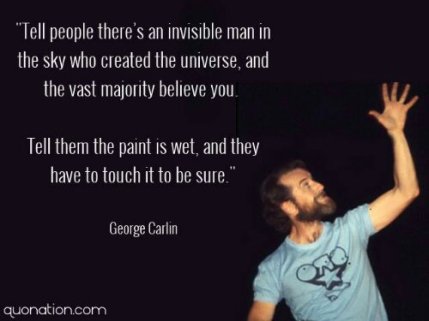
My daughter had a similar (one time) experience with a dentist. Unlike King’s mom, I let the dentist know how we felt about such lies. He apologized, so I let him live.

In God We Trust has been the official motto of the USA since 1956. The motto doesn’t identify any specific god and is singular; thus, it’s safe to assume that it refers to the God of Abraham. But, the phrase is still generic enough to apply to anyone who believes in a deity that:

  1. created the world,
  2. rules over the universe,
  3. and is omnipotent, omniscient, benevolent, and omnipresent.

trust-9

Yay, God! Congress said we trust you. Who wouldn’t trust all that? But the concept of trust does not begin and end with any god. Our trust is a belief in the reliability, truth, ability, or strength of someone or something in our real-life world. It begins to develop before we have any concept of a god.

We’re social animals. Our trusting nature begins forming at birth, along with a conflicting mistrust. We are taught to trust (or not) by others. I agree with Erik Erikson that our first few years of life are crucial to what follows. Erikson theorized that during those first years, we are uncertain about the world around us. We look to our primary caregivers for stability and consistency. If the care is good, we develop a trust that we may carry to other relationships. We feel secure. How this goes leads to either hope or fear (or both?).

trust-5

Of course, if you’re reading this, you have the experience to know the outcome. We learn that trust and love make us vulnerable. Those we trust and those we love can cause us the greatest pain. We keep learning about trust, discernment, and that nasty (not-so-politically-correct) word: judgment. I’ve walked the halls of the school of life for seven decades and I’m still learning. I want to trust. Even more, I want good discernment skills. I’m skeptical, but only as precaution to disappointment, pain, loss, and suffering. Learning that I was mistaken to trust someone sucks. Lesson learned, but better to learn it allegorically.

Much of what we learn about trust and mistrust, we learn through stories, such as the Aesop’s Fable, The Boy Who Cried Wolf. The intended moral lesson of which is, if we lie enough, we may not be believed; even when we tell the truth (hence, trust lost). My daughter (yep, the ‘dentist lied’ one) recently found herself explaining why she misled her eleven-year-old son about Santa Claus.

Julie wouldn’t lie to him. But she knew that someday she’d be busted on the Kris Kringle myth, right? Wolf! Like most parents, she seldom lies, if at all, but how’s that trust thing working here? I told her we all go through that because our social tradition overwhelms us, so we play the Santa deception game until it’s time to fess-up. Everyone seems to be saying that the fat man in the red suit is real, who are we to say that it’s a big lie, but a cute tradition?

trust-8Note to my grandchildren: There are things I’ll not tell you, but I may confirm or deny what you ask. There are things I will tell you only if you ask. There are things I will defer until I think you’re old/mature enough. But I will not intentionally deceive you without just cause. Sometimes, I’ll defer to your parents, other times, I will not. I’ve earned the privilege to be either cooperative or difficult. ~ Love, Opa
When someone teaches us, we usually trust that it’s what they believe, and that it’s correct. We assume that people who teach us (teachers, parents, family, ministers, others in authority) are experts and know the truth, or at least what they are talking about. Initially, we seldom anticipate deception, which would be intentional. But it happens. When it does, we learn from it.

“The truth is, everyone is going to hurt you. You just got to find the ones worth suffering for.” ~ Bob Marley

The US has passed laws and made rules regarding truth in advertising, news reporting, responding to law enforcement, and testifying in court or before congress. At least one president was impeached for lying. At least one admired celebrity was jailed for lying. If we need laws and government rules to protect us from the constant lies and deceptions, especially since we almost expect to be lied to in many cases, why even be concerned about trust?

The answer seems to be that from birth, we need to trust. We also need a balance of hope and fear, or of acceptance and skepticism. We are here to learn, but we should be both questioning and wondering. We should be curious and wanting to learn and to know. We should want the truth, like it or not. And that truth should be supported by ample evidence or proof. We must understand the good and bad (dark) sides of human nature. We should all be students of the human condition.

From Bob Marley’s song, Three Little Birds:

Singing’ don’t worry ’bout a thing
‘Cause every little thing gonna be alright
Singing’ don’t worry (don’t worry) ’bout a thing
‘Cause every little thing gonna be alright

Learn to trust. Demand evidence and proof.
Be skeptical when deception appears present.
Look both ways and mind the gaps.

It’s Hopeless – That’s Good

hopelessness2

One of my favorite movie lines is, “What if this is as good as it gets?” Watch the movie trailer here.

This scene takes place in a shrink’s office after Melvin Udall’s (Jack Nicholson) doctor tells him that he needs an appointment. The doctor is pleased that Udall maybe taking responsibility and he acknowledges Udall’s difficulty with that. Have you ever asked yourself, is this as good as it gets?

Let’s answer this empowering question with, “It is what it is.” But, it’s more than that, and it applies to life.

Sometimes, feelings of sadness or depression blow through me like gusts of wind through the branches of trees. These visiting emotions last just long enough, and are disturbing enough, to let me know they visited. Then, just as quickly, they’re gone. I feel normal again. I know the feelings aren’t far away and they will return. When they come back, I have no way to expel them. These feelings have their own will; one I don’t control. When they return, I hope they don’t stay long.

I fancy myself a happy person, although I find happiness in my own way. Life is about how we feel. I love life and living – being me. I accept reality, which gets a bad rap for being negative. Life is what it is, which is mostly good for me. I know it’s good from my experience with when it was bad. I don’t like feeling desperate, but I feel hopeless at times. It’s not the same as depressed.

I’m hopeful about many of the things over which I have no control. When I fly, I hope the airplane doesn’t crash. When I drive through the I-90 tunnels toward Seattle, I hope there’s not an earthquake. Fear could prevent me from doing either. Planes crash and earthquakes happen. In The Road Less Traveled, Scott Peck talks about denial keeping us from dying of freight. I’m not sure about that, but it might help me get to Austin. It’s not denial – shit happens.

hopelessness3However, I am willing to work with my feelings of hopelessness. I’m not referring to the charming but hopeless romantic, or being merely incompetent (Bill’s hopeless). And I’m not talking about sadness, fear, or denial. I’m talking about the feeling that can cause despair (being without hope). Back in the day, ‘twas that conclusion I expressed when I’d say OMGIF! (Oh my God, I’m fucked).

Some things are hopeless. While my online dictionary defines hopelessness as causing despair; being desperate, wretched, demoralized, or impossible; I prefer a simpler hopelessness: feeling the loss of hope. And hope is “a longing for a future condition over which you have no agency (control, influence, or power); it means you are essentially powerless.” (Derrick Jensen)

I recall an audio tape where the narrator asked, “What is the best hoped-for outcome of any relationship?” My answer is best expressed in the movie The Notebook. What I like most about that movie is Noah, who never gives up on his love for Allie despite their apparent hopeless situation. Spoiler alert: they don’t live happily ever after (which is my point). But they do have a great life.

Think of the Buddhist issue with desire as the cause of all of our problems. Is a desire not something hoped for? Two related Buddhist sayings are: “Hope and fear chase each other’s tails,” and “When you give up on hope, you turn away from fear.”

Time for some philosophical music….

Is it all dust in the wind? Are we? Metaphorically, perhaps so; in reality, we will be. The song talks about the impermanence of passing time, the endlessness of earth and water, and the certainty of death, whereby our only immortality is by returning to earth and water.

Embracing hopelessness is not the same as giving up. It’s a form of acceptance. It is time for us to do what we can. It is time for our action. It helps us to live more in the present moment. We rely less on tomorrow being a better day. I’ve been accused of being negative when I defended reality. Others may want to live in fantasy, to deny reality to the point of making things worse (i.e., not seeking medical assistance), but that feeds denial and makes things worse. Accepting things as they really are, even when hopeless, gives us a better life.

hopelessness1I read this good article about hopelessness in the Orion Magazine called “Beyond Hope,by Derrick Jensen. He talks about hopelessness as a general topic, but specifically applies environmentalism as an example. Hopelessness does not deprive us of that final act of defiance.

As we accept the reality of hopelessness,
we need to look both ways and mind the gaps.

DEATH

The inevitable & unavoidable conclusion to life.

During late October many cultures begin preparing for the first days of November. They remember the dead, acknowledge the end of harvest, and prepare for the dark days of winter. It begins with Halloween, then All Souls’ or All Saints’ Day, The Day of the Dead, and Samhain. Many believe it’s the time of year when we’re closest to the other world and death itself. The Fairy Tree story that ends this blog tells a wee bit more.

death6

It’s our only certainty—we die. Beliefs about what follows the end of human life range from nothing to Paradise and 72 virgins or reincarnation. Let’s not forget the whole Dante’s Inferno thing. Our beliefs about an after life affect our choices while living.

While no one has told of their experience following permanent death (we have near death accounts), there are stories with bits of information. Little of it is dependable or useful. Theories abound, but the database of the deceased is void of demonstrable facts. Only the dead know, and they’re not talking.

Efforts to resist death seem logical, but are eventually fruitless. While many consider death a condition leading to afterlife, most people (not all) avoid dying as long as possible. An exception is when living prolongs a life of hopeless suffering. Others choose death through martyrdom. We disagree about our right to die (whole other blog) and we normally work hard to keep living.

death4In the United States, more than two-million people die each year. The CDC reports the top four causes as heart disease, cancer, respiratory disease, and accidents. I say, smoking, smoking, smoking, and driving plus illicit drugs because they are the major producers or triggers of those four “causes.” The root cause of most preventable premature deaths in the USA is smoking (so quit).
It can be difficult to determine the difference between a still living or recently deceased person. Without more information, we can only define death as an absence of life. Our legal descriptions require a physician to certify the time and cause of death. While absence of all brain activity normally defines death, court cases fog the legal definition. When there are uncertainties, we gain information through autopsy.

death3

While we’re fascinated with death, many of us avoid serious discussion of it and find it morbidly unpleasant. The death of friends, loved ones, and people we hold in high esteem represent the ultimate, painful loss. Our own death signals loss and aloneness, which is sometimes comforted by religious beliefs.

death2

Yet, we sing of death, we write about death, and we (should) discuss it. We often honor death’s inevitability with both art and science.

Since first hearing it, I’ve liked Ralph Stanley’s (died, June 2016) rendition of the song, Oh, Death, which is a plea with the Grim Reaper for another year of life. It was made famous in the movie O Brother, Where Art Thou? Hear a short version by clicking here.

From a list of ten poems about death, I selected two by famous poets. All ten can be found here.

“Death” by Rainer Maria Rilke (died 1926)

Before us great Death stands
Our fate held close within his quiet hands.
When with proud joy we lift Life’s red wine
To drink deep of the mystic shining cup
And ecstasy through all our being leaps—
Death bows his head and weeps.

From Queen Mab, by Percy Bysshe Shelley (became famous after his death in 1822)

How wonderful is Death,
Death, and his brother Sleep!
One, pale as yonder waning moon
With lips of lurid blue;
The other, rosy as the morn
When throned on ocean’s wave
It blushes o’er the world;
Yet both so passing wonderful!

death1Life is the time made precious by our inevitable death. May we fully enjoy the many pleasures and loves discovered and experienced while living. And may we all “…lift Life’s red wine to drink deep of the mystic shining cup…” because death is next for each of us.
Life is uncertain, look both ways.

Spiritual Poetry

I love the spiritual nature of this poem.

rainyday1

      The Rainy Day

The day is cold, and dark, and dreary;
It rains, and the wind is never weary;
The vine still clings to the mouldering wall,
But at every gust the dead leaves fall,
And the day is dark and dreary.

My life is cold, and dark, and dreary;
It rains, and the wind is never weary;
My thoughts still cling to the mouldering Past,
But the hopes of youth fall thick in the blast,
And the days are dark and dreary.

Be still, sad heart! and cease repining;
Behind the clouds is the sun still shining;
Thy fate is the common fate of all,
Into each life some rain must fall,
Some days must be dark and dreary.

       ——-By Henry Wadsworth Longfellow

rainyday3

Longfellow invokes the value of our dark days and the transient nature of life for each of us.

What does his poem say to you?

rainyday2

What do you want?

The first of three questions I think everyone should be able to answer quickly is ‘What do you want?’ I’ve always felt that few of us think about that. We may have short term goals or we may want some things to come our way. But the ultimate answer, while not illusive, is something we seldom ponder. I say this with the opinion that for virtually all of us, the answer is simple, easy, and nearly the same for everyone.

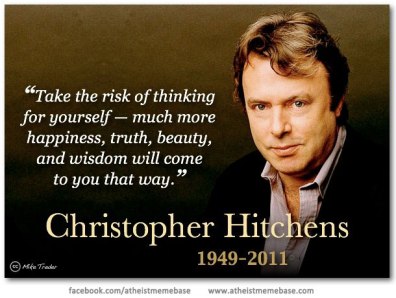
What Do You Want ?As I listened to an interview with Christopher Hitchens, I was surprised by something he said. I’ll get back to that in a minute. Frist, I want to talk about the genesis of the question and my answer.
Beginning about 25 years ago, my life began to take some very significant turns. Much significantly changed for me. My life was on track, then it was not. This life transformation continued for years. Much of it was unpleasant, disruptive, sad, and shocking. The unhappier and more miserable I became, the more I thought about what had happened and what all was going wrong. I’ll save the details for a memoir. Suffice to say, shit happened and stuff changed.

This led to a rather spiritually reflective time for me. I read a lot of spiritual books, studied religions (some more lightly than others), and pondered what I thought were important life questions.

I don’t recall when or how I came across the brochure. It was titled Oh Happy Fault! A Confession of Hidden Sin by Vinny Flynn. In the brochure, Flynn confesses that his sin was being unhappy. Silly as it seems, that resonated with me because I realized that I was unhappy, or depressed, or both. Either way, what had been going on inside me (where no one could see) was the same. This led directly to my reading three books and indirectly, discovering one other.

Fully Human, Fully Alive, by Fr. John Powell, SJ
Siddhartha, by Herman Hesse
Man’s Search for Meaning, by Victor Frankl

About the same time, I also read, The Seven Story Mountain, by Thomas Merton.

Question One7

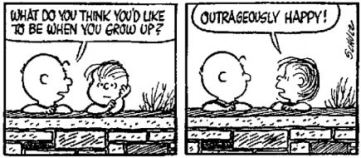
The result of all of this was that I made two decisions. Actually, I made many decisions and continue making them, but early-on I decided that I wanted, or perhaps needed, to be happy. I knew that I was unhappy. So I decided to be happy. More importantly, I decided that my happiness was up to me – that I could do something about it. It took a long time for my happiness to improve, but it did.

Jump ahead about six years. I found myself conducting classes for other very troubled people. They were not exactly unhappy (some were). They didn’t seem to have any focus about anything. In my opinion, they had no world view. One of the questions I would regularly as them was “What do you want?” Their answers sounded like a list of shallow, adolescent ideas about hot cars, money, and hot men or women. The blank stares and silence I got when I asked ‘why’ disguised their answers of ‘who the hell cares?’ With that experience, I have continued asking people the same question for years. “What do you want?”

Question One1

I’ve always thought everyone’s answer should be ‘happiness.’ During the Christopher Hitchens interview, he said that he did not think that he wanted ‘happiness,’ but wanted ‘satisfaction.’ I liked Hitch, but on this answer we would disagree. Maybe he felt that happiness was too much to ask for. Anyway, at least one dictionary indicates the words have synonymous meanings. There is a difference. Even though satisfaction implies having our needs met, happiness involves our state of mind regardless of needs.

Question One5

I’m skeptical of some folks wanting to be happy. Some people seem happy by not being happy, or not wanting anyone to know they’re happy. It’s like if anyone knows, they will set out to ruin my happiness; therefore, I mustn’t appear happy. Maybe they really are just waiting for something bad to happen, or maybe they seriously do not want to be happy. Maybe they think there is a happy tax.

Question One6A satisfaction tax would make a lot more sense. It seems like things may satisfy us, but we decide to be, or not to be happy. How would we measure and estimate a tax on feeling good?
Anyway, I hope you are happy now. I also hope that Hitch is satisfied and Mick Jagger (after all these years) can get some damn satisfaction. I mean, how long does a guy have to wait for that?


Snarkastic (Frat Friday)

“A gentleman is one who never hurts anyone’s feelings unintentionally.” ~ Oscar Wilde

Snarkastic and Proud

Snarkasm2

I like that quote by Oscar Wilde. Over the years, I’ve noticed that it gets more difficult not to cause hurt feelings with what I say. Today, if I say anything about sex (as in gender), someone’s religion or political opinions, nationality (though most of us really don’t know), hair (or lack thereof), you name it; somebody gets offended.


snarkasm3I do my best not to ‘unintentionally’ hurt somebody’s feelings. However, I’m unopposed to stepping on an emotional toe when I hear the call. As a senior citizen, I sometimes feel a sense of entitlement to do that, but I usually refrain. I once knew one guy who was so Cliff Clavin (from the TV show Cheers) that I started calling him Cliff. He never figured out why.


SnarkasmSeveral years ago, my daughter-in-law said that I was snarky. I appreciated her honesty and courage. I also liked it. She was right; I am snarky. I’m also sarcastic. In fact, being both makes me snarkastic. I enjoy humor, but sometimes I don’t get it. I really enjoy ironic, skin-ripping, hard cutting, sarcastic snarkiness. Here’s a few short lists to help understand what I’m talking about.
Movies and actors

Robert Duvall and Michael Caine in Secondhand Lions (loved it)

Duvall in Apocalypse Now (“I love the smell of napalm in the morning”)

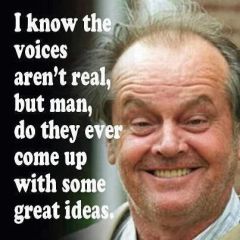
snarkasm7Jack Nicholson in As Good as it Gets (and other movies of his)

Many children’s animated flicks (i.e., Rafiki the baboon and Timon the meerkat in Lion King)

Male Comedians (Pick virtually any)

George Carlin, Bill Murray, Ron White, David Cross, Daniel Tosh


This is not a guy thing. Woman are wonderful at snarkasm. Some folks may say funnier. Watching a witty lady catch some Neanderthal off-guard is a treat. Snarkasm crosses all race, creed, gender, and economic status barriers. My current favorite snarkastic ladies include the following (and so many more).

snarkasm10Female Comedians (Yes they are)

Amy Schumer, Tina Fey, Ellen DeGeneres, Joan Rivers (good grief, the queen), Chelsea Handler, Melissa McCarthy (brought me to tears in St. Vincent, The Heat [w/Sandra Bullock], and Identity Thief).

Writers

Oscar Wilde and Mark Twain

Cartoons/Comics

Maxine or The Boondocks

Now you know

snarkasm9Not everyone has been introduced to my brand of snarkasm. After a while, when most people get to know me, they agree that I can pull it off. Many find it humorous. In fact, that’s the point – humor. I’m not on some kind of anti-PC* crusade here.

I recall watching Archie Bunker in the 70s and laughing so hard that I was sure I was going to wet my pants. Since then, I’ve often referred my father as a mix of George Burns and Archie – all three funny, snarkasticly-gifted guys.

So HELL YEAH! I’m a proud, snarkastic old fart. Deal with it, Junior.

snarkasm6

Because I like you so much, here’s some good advice if a cop pulls you over today. Try any of these.

snarkasm15Are you Andy or Barney?

I thought you had to be in good physical condition to be a police officer.

You’re not gunna check the trunk, are you?

And then when the officer says (cuz you been tippin’ a few), “Your eyes look red. Have you been drinking?” You should respond with, “Your eyes look glazed. Have you been eating doughnuts?”

So snark-up before it’s too late. Have fun!

*politically correct