This is the first in a series of blog posts about what I see as the paradox of love. This essay is my answer to the prompt, what has brought you to your knees? I’m not sure where I’ll go with this. Maybe you can help. Ask me questions, or prompt me in some direction. Please keep in mind, this is merely my take. Feel free to provide yours.

Nothing begins, nothing ends,
that is not paid for with moan;
for we are born in other’s pain,
and perish in our own.
~ Francis Thompson
Twenty years ago, I started using the phrase it’s all about how we feel. Normally, I’d caveat such a mantra by claiming it only applied to people without mental health issues. In this case, I think the words apply universally. How do you feel?
Love is the highest standard we have for caring about others. In literature, movies, music, religion, and in our daily lives; our obsession with love is obvious. It’s poorly defined, extensively written about, and grammatically misused; but love is everywhere in the English language. We want to love and to be loved. It’s our ultimate pleasure. How sweet love is.
I embrace love, but I fear pain. Pain can take over my body. Excruciating physical pain has brought me to my knees. It’s absurd that such pain may be helpful as it travels my nervous system from its source to my brain. Pain is abnormal. Even though we all experience pain, it’s not supposed to be there unless something is wrong. Pain is a symptom more useful to doctors than to me.
As bad as physical pain is, emotional pain is more devastating. In extreme cases, mental grief often leads to thoughts of suicide. In physical pain I might say, I want to die; but, I never intended that. I only wanted the pain to stop. On the other hand, people in emotional agony can be dangerous.
Our vulnerability to emotional pain is greatest when we love someone. When we love another person, we grant that person more power over us than any god or demon. Still, we choose to love. Not just willingly, but aggressively with passion and desire. Why? It’s like we can’t live without it. If anyone does live without love, we consider that sad and dysfunctional.
Love has brought me to my knees in two ways. First, the wondrous and joyful pleasure of experiencing love has led me to my knees with happiness. Be it romantic love, love of parents, love of children, grandchildren, or friends; the wonderful state of love takes away the dark and gives light.
Second, love has dropped me in pain, in fear, in a depressingly dark, hateful passion. Love betrayed leaves behind lifelong scars too deep to ever completely heal. The end of a romance, the betrayal of a friendship, the dismissal of a parent we love, the suffering or death of a child; each of these may, and perhaps should, put me on my knees. Such pain and agony from the dark side of love makes me question the value of life.
There may be recovery or even pleasure at the end of the tunnel. Time may mend love betrayed. Still, our human nature forces us to look back into that dark tunnel, into that abyss of pain and suffering. We remember. Do we dare to ever again risk pain by making ourselves vulnerable? Do we face the agony of finding ourselves desperately miserable because we loved?
Why do we do it? Would you, could you, live without love?
That’s a paradox of love. We know the risks, the vulnerability, and the potential to suffer. And yet, we still seek out love and take the risk. How do you feel now?
Even when we look both ways and mind each gap, we will experience pain in life.
“The truth is, everyone is going to hurt you.
You just got to find the ones worth suffering for.”
― Bob Marley (20 years after his death, which means he never said it. True, nonetheless.)
The youtube poem below is worth hearing/reading, and I think the Love Hurts song by Nazareth is worth a listen.
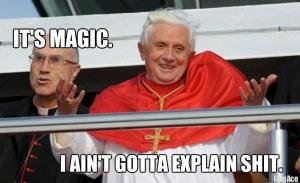 While I may not believe that supernatural beings exist (okay, maybe some duende), I still like to refer to unexplainable, cool happenings as magic. I try not to use the words miracle or miraculous in a serious sense. But magical works for me. If others want to use words like miracle to describe things, I have no issue with that. If the Pope wants to use it’s magic to explain anything, who am I to object?
 The origin of the word, or the concept of magic, seems to be rooted in the religions of ancient times.
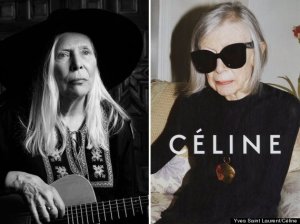
 There are too many blocks to mention each one. We all sometimes have blocks.
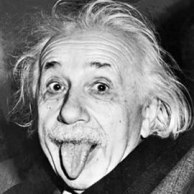 Einstein was interested in both creativity and music. He tied the two, even suggesting he would be a musician, were he not a physicist.
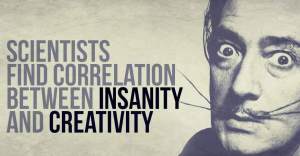
 er source your creative ideas flow, may they flow to you in abundance. May you be orgasmic, chilled and thrilled with ideas, concepts, and plans. May you make the best of all your days being creative and doing your thing (art, writing, music, etc.) and enjoying the universal gifts shared by others. May the spirit of duende haunt your heart and mind, thus bringing you to a spiritual bliss as only we humans can experience.
 Another twelve were seated in a spacious outdoor courtyard area while a few more played a game that involved the tossing small bean bags into a hole in a wooden target. Several other games were available outside.

 I am a beer drinker and a bit of a beer snob. I don’t pretend to be a beer aficionado. But based on what I could see, the beer is good—if you drink beer. If you do not, there is an issue. I asked what they serve for people who don’t drink beer (like my dear wife). They have a limited supply of wine, water, and nothing else.
 In my opinion,
 The other night, as we sat discussing writing projects and their duration, the subject of time came up. There were three of us, representing roughly three generations. The more we talked about time and how each of us currently sees it in terms of the future, the more I realized how differently each one of us viewed it. Time does not change. We do, and thus our view of time changes with age.
 I claim to be a right here, right now kinda guy. I live in the present moment. As I contemplate writing a memoir, this seems to cause me an ‘angst’ problem in that I wanna, and I don’t wanna. (I also struggle with writing about myself, but that’s not the issue.) I like History. It could’ve been considered my second minor at A&M. My manuscript is historical-fiction with too much history and not enough fiction. This morning I was asked if I would write a time-travel book (I’m noticing that Vickie has a knack for asking me thought-provoking questions). I didn’t have a ready answer, but after a lot of discussion and thought, my answer is ‘nope.’
 After doing a bit of reading, I’m no longer positive that I know what ‘this moment’ in time is, or if it exists. My metaphysical (woo-woo) friends get excited about this fascinating subject. When they do, I look at my watch and note, “It is one-forty, PM.” But they’re right. It’s really an interesting topic. Physicists and philosophers are all over it. Check out all the wiki and academic research (

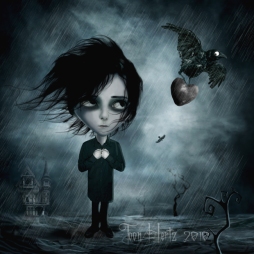 Stephen King has made a successful career out of scaring the hell out of many of us. We (not all) like to be frightened. Scary movies are fun. They are not for everyone, but a lot of people love them. Why? Is it the same with sad books, movies, songs, or plays? We keep going back for more.
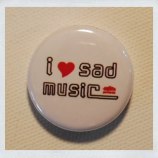 My focus here is music. A friend loved the song Dance Me to The End of Love by Leonard Cohen. That is until she learned that the inspiration of the song was in fact the Holocaust. It is a lovely and beautiful song, but that sadness changed the song for her. The song is not sad by itself, but because the inspiration was so tragic, her opinion of the song changes from love to sadness.
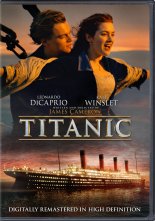
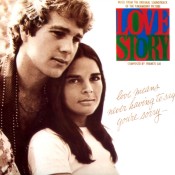 For sad movies, I have listed only five. It could be hundreds.
 Love Story (1970)
 Yolonda, my wife of 50 years (we married at age 2), is a native Texan and has her ‘druthers.’
 Billy on right, (w/Phish bassist Mike Gordon), our oldest child is in his mid-40s, a very nice, loving, big-man. He’s always been an avid reader, a talented writer, a movie aficionado, and a hard-core Phish-head. Add bicyclist, father, hubby, friend, musician, and deep-thinker.
 Steven is our middle-child, now in his early 40s. He’s another good guy. An avid sports fanatic (Spurs and Cowboys) and mountain biker. Add hubby, step-father extraordinaire, house music DJ (Steve Balance), friend, and all-around cool-dude (maybe pragmatic and analytical). He initially said that he had no fav quotes, but when he and his sista’ got to texting, there they were.
 Our beautiful ‘baby’ is Julie. She can recite every line from the movie Grease (oddly did not quote it), is an artist, a thirty-something, 21st Century hippie, a mom and step-mother. I think she is a wonderful writer and, like her mom, a Grammar-Nazi. She lives in the middle of nowhere with her hubby, son, occasionally a step-son, or two lovely elves, too many cats, horses, and sometimes (because he likes to chase the horses) a dog.
 My wife doesn’t like one (or more) of my favorite songs: Night Moves by Bob Seger and the Silver Bullet Band. I thought it was our differing tastes in music (she’s country, I’m rock and roll), but one day our son pointed out why. It’s a ‘guy’ song. I also realized that we each look back in time with different memories. Never mind that she really does not enjoy the raspy-voiced shouting of old Bob. The song, written and recorded by Seger in 1976, is a coming of age tale about adolescent love and an adult memory of it. It strikes memories of my times in the early sixties.
 During the 1970s I graduated from college (many thought impossible), I re-entered the Air Force as an officer, I completed flight training, all my children were born, and I turned thirty (I thought that impossible and I sadly became untrustworthy— relates to the famous “don’t trust anyone over 30” adage of Jack Weinberg, activist of the 1960s, now 76). I usually listen to the music of the 70s. While I enjoy those songs for their own value, the music also often brings with it memories and feelings that can only be called nostalgia. Sometimes, it makes me feel profoundly sad. I’m not sure why, but I suppose it has to do with something that will never be again.
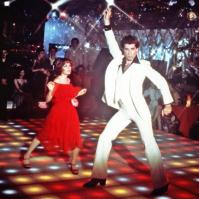 It was the decade of great music, great movies, and great TV. The politics were interesting. How often do we get to see a president resign? I am working on a historical-fiction novel, set in the 1970s. We had Star Wars, ABBA, and the Beatles break-up. Elvis died. Everything was either brown or orange including the shag pile carpeting (ok, add yucky gold). We had platform shoes, Charlies Angels, Mork and Mindy, metal drinking cups, portable hair dryers, Holly Hobbie, Lava Lamps, and the most outlandish fashions ever for America and England. Who could ask for more? We typed on typewriters, went to Tupperware parties, and air conditioning was a welcome luxury. And who did not have an 8-track?
 Our Literary Journey