Poetry: Cat Tight Transforms


With a stretch of transition,
I transform night into day
body and soul awaken so slow,
to the bitter sweetness of life
which is so heavenly sensed.

Time means nothing to me.
Cats care and have not, you see,
clocks or alarms or times to be
places like here or there,
or anywhere.

We lions have no closets to open,
no purpose but life, but to hunt and to live.
No worries outside my litter box,
which, by the way, clean it, slave!

To awaken tight sleepers
A king must be fed,
before he hunts and stalks
to eat a fresh breakfast
prepared by my slaves.
And maybe a spot of milk,
but not too cold, and my milk must never
be given too old.

Then off to my stalking, to warm up the day.
After a check on the birds I see in the yard,
a brief hiss aimed at the dog
so he knows his place, as least of my slaves,
then onto my perch, high above my kingdom.
You’re lucky to have me, that’s what they say.

On to the work of annoying the human
who is trying to write without
my permission, cajole her I will,
surely, she knows the importance of kill.
King cat is awake, all bow down so humbly
in homage to him. I’m sure that you will.

©Bill Reynolds 3/18/2019

Look both ways. The king wears fur. Mind the gaps and claws.

The Greatest Gift

It cannot speak
cannot see or hear
No feeling or form
It moves through the universe,
But it never leaves my soul

It has no name
but knows me well
it makes no sound,
But explodes in every human heart,
it is the beginning and the end
the lost and the found
the discovery and burn.

It is in every thought of every day,
It crosses and straightens,
It eats nothing but feeds everything
It curses not but many swear upon it
It sticks like glue and slips too easily away
Without cost it is the dearest of all
Giving strength to the weak, it
brings the powerful to their knees.

To give love,
To take love. The love of life,
The sights and the sounds and the smells
the feels and the tastes of love.
The least and the greatest of all gifts

Both taken and given.

© Bill Reynolds

Let your love look both ways, to what is and what might have been.
Fill the gaps with the time we have, as precious as it is.

Poetry: March

Since March was the first month of the new year in ancient Rome, some historians believe the Romans named March after Mars, their god of war.

Time for a poem – warning ADULT LANGUAGE. If you’re easily offended, don’t read it. (Now you’re really curious, right?)

Man of March

Kiss me goodbye said Winter,
his eyes a-twinkle and a
guilty smirk, we find the
month of a Roman god, of
the lion and lamb, the
time of dancing transition
from the hard cock of cold
mister Winter to a soft sweet-
smelling moist pussy of
Spring, when even the
fucking pear look lovely
dressed with flowers and
the promise of new life
born of Spring, before
the Dragon swoops down
with heat and fire after
April, the last of the Kind
before October’s dance
(at 73) of fest and feast.
Hello, March, Man of
Venus and Lover
of Spring’s Pleasures!

©Bill Reynolds 3/4/2019

The best time to look both ways is when we are between the times. Mind the gap.

Blog News for Poets and Skeptics

Hey out there,

Was the salutation Pat Conroy used when he finally blogged (he disliked that word) what he referred to as his letters. On March 26, 2014, he wrote, “I’ve come to that point in my life when my memories seem as important as the life I’m now leading.” I understand that. Conroy fought blogging, but eventually took to it, resulting in the book A Lowcountry Heart: Reflections on a Writing Life, which is an anthology of his postings.

Pat Conroy’s Outlook

Pat touted the fact that he gave up writing poetry at a relatively young age and thus did much for the world of prose, by writing it; and for poetry, by not writing it. Pat also made a wonderful life for himself and his family by writing several best sellers. Had he been exclusively a poet, the odds would have been against equal financial success.

My Writing Memoir

I have been writing poetry (or creative prose) for a short part of my long life. In a way, I gave poetry up at young age too, by not beginning writing until much later. That was a mistake I’ll always regret. All I can do now is write as much as possible.

I smile when other writers talk about how they began writing in grade or high school, some as late as college. Well, me too, but my goal was to complete assignments for grades and promotions, no more. Bukowski began his poetry career at 35, half the age at which I began my own personal tryst with verse.

Like many others, I began writing earnestly after I fully retired. My previous careers involved extensive writing, mostly of a technical, business, or academic nature. It was not what one studies in Creative Writing or Memoir classes. It paid well enough. During my years of employment, I learned much about the craft of writing, if less about the creative and artistic aspects. I am working my recovery.

On Memories and Life

So, getting back to Conway’s quote on memories and their importance. I now lead the life of a writer and blogger. When people ask me what I do: I write. My memories, like Pat’s, provide seasoning, if not substance, to everything I write. Sometimes I think that since I started so late, I need to catch up. Now, I write all I want and about whatever I desire. I feel like I am making up for lost or wasted time.

New Blog Site Announcement

This blog site will continue as a literary blog for my poetry, essays, and anything related to writing that I want to share, but I have created another blog site. It is called Dispassionate Doubt: Broodings and Ponderings of a Pensive Skeptic.

I don’t like to post things unrelated to literature on Our Literary Journey, even though I wrote them. Furthermore, during the month of April I will post a poem each day on this site, related to the challenge of National Poetry Writing Month (NaPoWriMo). Additionally, I will post every weekday for the A to Z blog challenge on the Dispassionate Doubt site. In subject and substance, one will have nothing to do with the other. So, I will have two blogs. I think many of you do also.

Poems of February 2019

This completes my second month writing a poem each day of 2019, as a self-challenge. The topics, subjects, or titles of the 28 poems were:

  1. Placid Place (finding peace after fighting)
  2. Morning
  3. Why? (do we do things we do?)
  4. The Stone (also working an essay on this)
  5. How to Die
  6. Paths
  7. Tranquility Shit
  8. E-Day (Emily Day)
  9. The Call (a life-changing phone call)
  10. Changes (in life)
  11. Basic Good (me, maybe)
  12. Master (becoming one)
  13. Miracles
  14. Weeds (literally)
  15. What It’s Like – Old (on aging)
  16. An ekphrastic poem: An Old Boat (also one about painting my portrait)
  17. Dancing Trees (In the wind)
  18. Death by War
  19. Play (literally about playing)
  20. Midnight Writer
  21. Streets
  22. The Florence Diner (the place and people)
  23. Perception (differences in how we see)
  24. I’m Alive (celebrating life)
  25. Coal Miner’s Son
  26. There Be Dragons
  27. That Old Time Rock and Role
  28. FUBAR

To view the new WordPress blog site, click on the title in the announcement paragraph or here.

Look both ways, but remember it rises in the east and sets in the west.
Learn how to find Polaris, the north star.
Mind the gaps, the wonder, and the mystery of life;
of being, and of the universe.

Poetry: Poetry

Some say it is trickery that poets secretly do,
to pretend to understand the incomprehensible
words of each other. Some poets say poetry
should not be easily comprehended, that even
other poets should not see, or the art is not
of the true deep, hidden source of secrecy.

I read poems that lift my spirits, and some
darkens my soul, even with true life and death,
but I feel my eyes squint and my brow push
down to a wrinkled quandary as I try to see,
to find meaning and purpose and message, to
apply the plated words to my taste and be
aware of comprehending and understanding.

Do those of us who love poems love all?
Is every poem ever penned done with message
and purpose that all others, or just some,
might perceive and claim joy found
in the artfulness and clever voice
of the poet who sat and wrote words to read?

© Bill Reynolds 2/14/2019

Look both ways and Happy Valentine’s Day.
Mind the gap, but don’t gape.
O Captain! My Captain!

Poetry: Peace Be With You


Dark Night Warrior

I love the common, the warm blanket of peace,
the soft whispers of a perfect and quiet day,
the calm of nature, birds, and other people
smiling and loving and happy.

But the Dark Night of thunder and storm,
of lightning and wind and rain excites me.
I feel more alive in a storm than safe
in the banal aspects of a sheltered existence.

My every dream is a warlike challenge
of attacks and kills and fights to a death.
Even mine.
What warrior is content to watch the battle?
Half of me belongs to the night, the dark.

I believe in war, combat, risk, and battle.
Bore me not with stories of contentment.
Challenge me with fear and excitement
before I die from fucking fattened monotony.


Look both ways and ask what kind of existence you want.
The gaps?
Oh yes, there are always the gaps to mind.

Poetry: Unbelief

The greatest sin of unbelief

They tried my soul –
and found it guilty
of the greatest sin,
its unbelief.

There it is
for all to see, the bad is there
all about me, can’t you see?
not rape nor torture or the harm
of murder
none of that is my sin.

I killed no gods or goats
all souls still running free
to come and go,
but my only sin – no god
shall I ever know.

How do I dare
to declare
my mind be free,
and so bare. is it not right there?
show me any god,
then might shall I to care.

Condemn my soul,
if you must. but look at me
and you will I trust
see all I can be,
is humanly free.

The day I die and somewhere lie,
you’ll accuse me as others cry,
not of being bad nor good,
but unlike you,
I just did not believe to be true,
my unbelief in god now flows
through as all my being goes.

©Bill Reynolds   1/28/2019

Look both ways. Mind the gaps.

Essay: Romantic or Realist?

Disclosure on me:

I’ve been told that I’m a sensitive man. Given the smiles and nods around the room, it was intended as a compliment. The unstated enigma was that men normally are not.

I was recently told that I am a romantic (noun) because I’ve written romantic (adjective) poetry. The person who said that was laughing at the time because in her view, that is ironic. She claimed the higher ground of a realist (noun) partly because she was on her third (two bad experiences) marriage. This time to a man who was quite ill, adding to the reality of life.

The poem was about the dreamy desire of a (real) woman who was not in a happy, romantic relationship. It was my interpretation of her romantic dream – how she wanted things to be.

I responded that I accept who and what I am, that one can be both romantic and realist (definitions-dependent), and that a romantic realist is a thing in art, if not in people. Realistic art does not necessarily point to a realist artist. A writer of romance literature or romantic poetry need not hold personal romantic views. But, she was partly correct about me (does not know me well).

Most of this is because people attach my writing to my persona (or vice versa), which is okay, but what I write is not always me and certainly not about me. Often, I write about the world and people or things I see. In this case, my poem was about someone I knew who is struggling with life and her circumstance – her dreams and desires, perhaps pushed beyond the limits of practical reality.

Once bitten, twice shy

I believe that we learn best from the most painful lessons of life. We recall shocking or painful times well, if not always accurately. For my age group, it might be when JFK, RFK, or MLK were shot, among others. I suspect that the lady judging me formed her view because of her personal life experiences. That’s fair enough. But given the number of times I have found myself speaking in defense of reality and things as they truly are, a true romantic I am not.

The paradox

I haven’t posted about the paradox of love in a long time. I’m uncertain and struggle with what to say and how to say it. What will people say or think? I worry less about my writing and more about the subject or content. I sometimes wonder if I wrote about crime (I haven’t) if the FBI would show up at my door with a search warrant. But let’s give this a go even if I admit to the romantic leanings of a realist with both feet planted in the real world.

How long is long enough to love someone? In both quantity and time, “I love you now and I will forever (time), to the moon and back (quantity).” Is one day or night all there is? Is 20, 30, or 50 years enough? My mother died about 30 years ago, but I still love her. I’ve been married over 50 years, and my wife and I love each other.

I write about the Paradox of Love, loosely basing some of what I say on a book of the same title by Pascal Bruckner. I add my observations and limited experiences (in the worldly sense mostly, but I love many people, most seem to love me back). There is no shortage of material on this topic, many experts, and hundreds of ways to look at it.

The paradox to me is when love is added to the learning mix of life, painful lessons do not seem to stick. For some, the devastation from damage where love is involved is virtually unrecoverable. Yet, I have seen many times when the paradox of love allows us to move on with life and with love. Once again, “I love you forever…we love each other….” For me, that is the paradox. The human relationship quandary. However, as with the lady who labelled me a romantic, we may move on with less romantic naivety.

The human condition

Yet, love is forever until one of us blinks, looks away, wants more, samples greener pastures, or simply decides it’s over. Then all bets are off. Forever isn’t quite so long as we thought, right? None of that for better or worse shit, it must always be better and continually improving. Bore me and you’re gone. Then there is the ubiquitous found someone else. I admit to being dramatic here, but I’ve seen ugly romantic breakups and divorces. I could add friendships, but I am focusing on romantic love. What makes it work so well for many, yet repeatedly fails for others? Why?

I get it. The human condition is imperfect, and these things happen. People in love can, and do, fall in love with others. How many times do we love before we spend a lifetime with someone? Some people are polyamorous (one is not enough – a blog for next time).

Rarely is it okay with the other person to act on this. And if we do act on it, often all the shit in hell piles into the manure spreader and is sent flying (shit storm). On the bright side, without all the misery involved with love, over half of country music’s best crying in yer beer tunes would have never been sung. That’s also true for much R&R, R&B, and opera. I enjoy romantic comedy, but there’s room for tragedy in my mind. And is pain not the best teacher?

Free love – by the book

In his book, Bruckner describes the 1960s liberation movement (mostly civil rights, anti-war, and feminism) as a time of “free love” (especially within hippy groups but certainly not for all). No commitments, openness and a willingness to share even the most intimate and sexual experiences with others. That still goes on, I suppose, but without all the publicity of post-1950s drama.

Many good things came from the movements of the 60s: improved equality (woman, people of color, others), better human rights, music, long hair, care for the environment, and others. But the oxymoron idea of free love was not one of them – fortunately, according to Bruckner and me.

Free and open sex is just that. And love is also just that, meaning it is neither open nor free (e.g., she/he is mine). While I can’t speak for anyone else, and certain groups (religious, LGBTQ, cultural) may see or experience this differently, the romantic love two people may share could be about the most powerful emotional human force we possess. But, (and my idea of the paradox is) it is also among the most destructive.

All my exes live in Texas

A friend of mine who had been married several times, looked at me one day and informed me that her latest husband told her that he no longer wished to be married. Obviously shaken, she further confided that she had never loved him. I didn’t ask her (or him) if he felt the same way.

After the divorce ball was rolling along, he asked to reconcile (meaning he’d been dumped). She declined, which pissed him off, and it was not a nice, amicable divorce after that. The third thing she told me was that she was sure that she was not good at marriage. A difficult time followed for her, but that was mostly recovering from financial and ego damage. In time, she survived both and eventually remarried a guy after a long partnership (News update. I recently learned they divorced, and she is engaged to a new man).

Which are you?

To love and to be loved are wonderful things. Romantic me. To love often may also be wonderful. To be the couple in my poem is indeed romantic, but is also realistically feasible. Yet, to love comes with great risk and personal vulnerability. Remember, even the realist was on her third marriage. What is this human condition I call the paradox of love?

My original post on the paradox of love was over a year ago. It is more about the book than my thoughts. Read it by clicking here. You can read the poem that started this by clicking here.

Look both ways in romance and reality.
Be especially mindful of gaps in romance and real world relationships.
Live and learn, love and learn. Risk love, always.
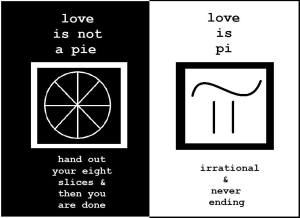
 

Note: paradox synonyms; contradiction, contradiction in terms, self-contradiction, inconsistency, incongruity; oxymoron; conflict, anomaly; enigma, puzzle, mystery, conundrum, dichotomy, and incongruity.

Essay: Shit Happens

  1. My mother said, “What did I ever do to deserve this?”
  2. My wife looked at my adult son and said, “Everything happens for a reason.”
  3. The minister looked into the eyes of the congregation and said, “There is no such thing as a coincidence.”

I forget the exact contexts and situations.

To my mom I would say, “You did nothing to deserve cancer; no one does.” While there may be reasons someone gets cancer, it is not punishment for being not good enough or for being bad. However, it is no joke that a lot of people think like this because of religion.

To my wife I say that most things have a cause and effect. Many things happen due to natural causes, environments, and special situations. Some things are random and have disastrous outcomes. Shit happens.

When someone is fired from (or not selected for) a job, and they later get a much better job, that is good fortune probably assisted by the fact that the person is well qualified for both jobs and it is fortunate that they snagged the better one. The opposite also happens. While such a comforting phrase may bring minor, temporary solace; it is not true that everything happens for a (supernatural) reason. A spiritual being causing a temporary problem to bring about a happier or sadder outcome fails any common-sense test.

To the minister I say that coincidence may not mean exactly what you think it means. According to one (MW) dictionary it relates to coinciding of events that happen at the same time by accident but seem to have a connection. Better words might be random, arbitrary, pointless, haphazard, or desultory.

Whether one believes in a god or not, and regardless of the influence of any god, those words exist because things and happenings can be random, pointless, and desultory.

I recall reading a poem in Stumbling Blocks or Stepping Stones: Spiritual Answers to Psychological Questions by the late Father Benedict Groeschel. The poem of unknown authorship is titled “The Weaving.” The last of three, eight-line stanzas goes,

At last, when life is ended,
With Him I shall abide,
Then I may view the pattern
Upon the upper side;
Then I shall know the reason
Why pain with joy entwined,
Was woven in the fabric
Of life that God designed.

While the poem is beautiful and weaving as a metaphor for a life designed by a god is useful, it also points to the unknown reason for the suffering in life. It implies that we will find no reason until after death, and then only if we are in heaven with the deity who will, presumably, make it all clear. In other words, it makes no sense.

I prefer this outlook from the song “The Sad Café” by the Eagles.

***
Now I look at the years gone by,
And wonder at the powers that be.
I don’t know why fortune smiles on some
And lets the rest go free
***

Shit happens. It’s not our fault. Blame it on whatever imaginary entity you choose. That may be the only reason you ever find.

© Bill Reynolds 1/10/2019

Look both ways for the reasons in life, but don’t accept not knowing—wonder.
Mind the gaps, they are real, but may be overcome with knowledge.

Po’ Poetry – Blatant Babble

This is the first of two unpolished, stream of consciousness poems without form or structure. It’s a mental rant I experienced. I can’t explain it, other than to say I was in the kitchen when the thoughts hit me like three pissed off Muses. I went to my computer and wrote them. I think it is a poor man’s poem, thus the Po’.

***

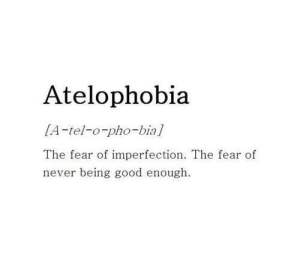
Good enough is not more shit of a leader’s pass, or the lesser of a prompt leading to a dump. Enough. Is it done? Submittable? Ready to rock primetime or roll in a sty? A thought, a dot, to words and to arms, concludes with brains on pages to be sniffed up into minds with more thoughts and dots. Or, not to be. More snot than thought. Did sniff think shit don’t stink? Good enough is a lie that will have to do because this the tragic end-point that leads to death by less than. What then? Bless the sweet little pickled brain of poisonous brine leaking worthy words of wisdom. Applause. I came, I saw, I failed; I came again, I dumped, they cried. It stinks. It’s good enough. Let it go. Unforgiven consciousness of the unconscionable!

 ©Bill Reynolds 12/13/2018

***

Look both ways with random thoughts.
Be mindful of blatant babbling gaps.
Good enough?