Morality, Sin, and I over E (I/E)

Disclosure: I’m of the there are no gods variety of atheist. Consequently, there’s no sin. Since we can’t have one without the other, sin is a word I use only because the majority use the word, even if they’re agnostic. But, there is some general agreement about what is or isn’t moral behavior.

 

morality-1

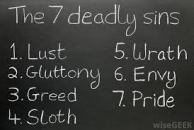
The past few weeks, I’ve posted about the seven deadly, and predominantly Christian, sins of greed, pride, lust, anger, gluttony, envy, and sloth. I also provided a brief contrast with an opposite word. My approach was based on the source of our behavior, our human mind and emotions. Each of the seven begins with an emotion that may later be manifest in behavior – we act based on how we feel.

Writers have a phrase: show me, don’t tell me. In movies, the words and actions of the actors are used to portray thoughts and feelings. In my opinion, we cannot choose each emotion. Happiness is a little different. We can be happy people and still experience dark-side emotions. Furthermore, we can usually choose our behavior. Some comments have implied that we’re in total control over emotions, and then control our actions, as well. While I don’t share that opinion, my behavior is based upon my emotional state has led to more apologies from me than I care to admit – slow learner.

As a society, a nation, or arguably, within a religion, we subjectively decide what’s moral. It changes over time, and we routinely disagree about what’s unacceptable (political-type disagreements). While we don’t always agree, often we do.

In the title equation, I = intellect, and E = emotion. When we experience emotions, we follow that feeling with behavior. To the degree that we can, ideally, we choose the behavior we morally and intellectually we want to display. For example, if someone elicits our anger, jealousy, or some other feeling from our complex emotional spectrum, we then pick our next move. I over E implies that we select our words or actions based on our intellect (good judgment, wisdom), rather than the emotion we feel. It’s not easy to behave contrary to how we feel. Nor is it always necessary. Going with our emotions (following our heart) is very often our best and most sincere option. We love with not only our personal emotions, but often those of others. How others tug at our emotions makes life magical. Life is wondrous, but not simple.

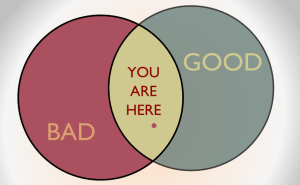
The common thread that I’ve stitched through each of the seven is that emotions are not sins. Feelings are legitimate. Be they good or bad feelings, it’s our behavior that determines anything about moral standards. And it doesn’t make a tinker’s-dam if one believes in a god, gods, or none. Each of the seven have opposite virtues. Every good person has a dark side. Every saint has a past; every sinner a future.

Humans are very much part of nature. We are where we belong. Our greatest need is for each other. Our greatest challenge is in dealing with each other.

Our lives are full of stepping stones to make life better and with stumbling blocks that bring us incredible amounts of pain and suffering – and valuable lessons.
morality-2

Let’s be accepting and understanding of ourselves and others to the degree that we’re able. We are not static beings. We’re who and what we are, but we have opportunities and futures. We come into this world as we are – a combination of physical and mental paradoxes and mysteries. A lot happens between the average birth and death. This includes running the bases of virtuous and bad behavior, and the personal experience of staring into the abyss that is us.

Look both ways, and mind the gap.

Morality Series: Wrath (Anger)

wrath-1

This one’s mine. Other than talking about the illogical wrath of a deity, or when humorously speaking of enduring the anger of someone else, we don’t use this word. We prefer rage, resentment, fierce anger, vengeance, or a few other synonym-like words (pissed off). I will use the word anger because wrath is archaic. We get angry, not wrathful. I also dislike typing the silent “w,” and a rath is something else.

I could easily write a book about my own anger. If I included the whole enchilada of human nature, it would probably expand to three fat volumes, and be boring. Anger is an emotion. One foolishly considered bad or sinful. While it’s neither, it is dangerous. Anger is a legitimate and real emotion that we may each experience differently. Some people seem to be incredibly patient and tolerant, seemingly never experiencing anger. Others seem explosive, and are sent to (drum roll) Anger Management classes to learn how to behave. I like to call it Charm School.

art-memoir-analogy2An old friend of mine had to do that with his work later in life. We grew up together, and as I recall, my friend was exceptionally demonstrative when angry. It didn’t take much before he felt slighted, irritated, or offended. When we were teenagers, I either ignored him or put distance between us until he calmed down. Even later in life, I was still surprised that he could come unglued about things that I considered little more than a trivial nuisance. However, I also had my share of temper tantrums throughout life.
For most of my life, I had a sexist view of anger. I thought men experienced anger more frequently than women, and that acting out our anger was not only what men did, but it was semi-acceptable. I’ve since learned that my view was wrong (read this).

The point of view I had learned was that all other male emotions were unacceptable, and any emotional display was a sign of weakness. What this wrong opinion did for me was to allow me to exhibit angry behaviors regardless of what emotion I may have been feeling. I later learned that I not only had to get in touch with my emotions, I had to start identifying them: fear, shame, sadness, disgust, anxiety, guilt, and many more. I don’t blame society or culture. I take responsibility for my behavior, as should we all.

Another problem with anger is the difficulty of properly identifying it in either ourselves or others. Depression, anxiety, fear, and other emotions may manifest themselves, both inside and out, through behavior that could be considered anger. It’s confusing and figuring this out may take the help of a friend or counselor.

People lash out for a variety of reasons, and it may have little or nothing to do with being angry. I’ll leave it to the experts to follow this rabbit trail, but I suggest we try to pick out the different emotions we feel and deal with them for what they are. I posted about jealousy on Tuesday. Certainly, we feel some anger when we’re jealous. We need to recognize when more than one emotional thing is happening to us at a time. When I was beginning to work on this for myself, I would try to reflect on my feeling and not be pinging off the walls so much.

wrath-3

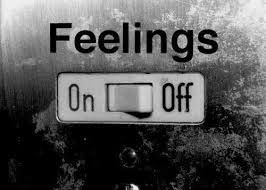
Then, a close family member accused me of being an “emotionless automoton” who had no feelings and didn’t care about others. I love the memes of a light switch for turning emotions on and off. She was confusing my trying to remain calm with lack of emotion. No such luck.

Politics, religion, sports, and money are four topics that can lead to anger during many seemingly innocuous discussions. If we have not experienced the feelings ourselves, we have certainly seen them acted out by others.

wrath-4We are social (sociable or not) beings walking around in bodies transporting minds packed with emotional potential. We’re not Vulcans, like Mr. Spock (played by Leonard Nimoy) in the Star Trek series. Spock was of a mixed human-Vulcan heritage race that had mostly conquered his emotions and made them subject to his control. We are simply humans.

Ironically, the death of Spock occurs in the movie The Wrath of Khan, and some think that it’s the best scene in the movie. Forgive my digression; I’m a long time Star Trek, Spock, and Leonard Nimoy fan.

This concludes my series on The Seven Deadly Sins, or Morality. I plan a summation for next Tuesday’s post that may explain my take on this from a broader perspective.

Have a wonderful weekend.
Look both ways and mind the gaps – every day.

Morality Series: Envy

envy-3

“Do not overrate what you have received, nor envy others. He who envies others does not achieve peace.” ~ Buddha

Let’s say that you and your close friend try out or compete for the same thing. It could be making the team, getting either a promotion or an award, or winning the lottery. You learn that your friend makes the team, got the promotion, or won the prize. You did not. How do you feel?

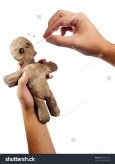
First, if you are an adult, you’re happy for your friend. If you’re a teenager (or you need to read The Untethered Soul), you may get out the voodoo doll and some pins, or begin some plot against your former friend.

envy-4We may begin to feel something else. It’s an emotion that we don’t want to feel, but it’s there. It’s a twinge we feel on the inside that is directly related to our disappointment and that other person. We feel envy. We do! It’s normal, and it’s okay as long as we don’t act-out on that negative emotion. I’ve never received recognition or a promotion (that others also wanted) without someone letting me know of their displeasure.

One time, I asked this guy, “Did you want me to turn it down so you can have it? I know you think you deserved or wanted it more than I did. Don’t you feel just a little petty right now?” I have been on the losing end enough times to recognize his emotion. Myself and I have had talks about that. I don’t like feeling envious. It makes me feel worse. Envy is not unusual. I often admit to the feeling.

So, if this is normal, why is it considered another breach of all that is good and holy within us? The reason is simple: this is not a good thing about our human nature. We know that envy is normal, and that it will pass, but it’s also dangerous. Loving friendships have ended. Businesses have suffered. Shame and embarrassment have been coopted by envy because the accompanying behavior make us feel worse. Envy is part of us, a dark corner of who and what we are. We must acknowledge that part of our dark side.

There is a shallow envy that is part of daily life. When I see men of my age with huge locks of thick, beautiful hair (usually gray), I feel mild envy. I admit it. I want what they have. That guy did nothing to deserve to have more than his share of hair follicles so late in life. I did nothing to promote my loss of the same. I’m almost proud of my envy. It’s true. I own up to it. I get it: envy is the desire for others’ traits, status, abilities, or situation.

In Summa Theologiae, Thomas Aquinas said, “Envy, according to the aspect of its object is contrary to charity, whence the soul derives its spiritual life… Charity rejoices in our neighbor’s good, while envy grieves over it.” Why do we do this? Because other people are so much luckier, smarter, more attractive, and better than we are. Lucky bastards.

envy-2But there’s good news. If you go to Hell, your punishment awaits: you’ll be put in freezing water. I looked it up. Think about that. Hell, fire and all that; and you and I are hanging out at the ice bar. Now, it’s their turn to be envious, right?

I don’t know why, but envy is associated with the dog and the color green. Oh, right, the green-eyed monster. Not so fast. I use envy and jealousy as two different words that apply to different kinds of situations.

Envy and jealousy are not the same emotions. Envy, as unpleasant as it can be, usually doesn’t contain a sense of betrayal and outrage. Jealousy needn’t contain a sense of inferiority. The difference is in the numbers.

Envy is a two-person situation, jealousy is a three-person situation. Envy is a reaction to lacking something. Jealousy is a reaction to the threat of losing something or someone. Of course, when we feel jealous, we often feel envious as well.

envy-1

The opposite of envy is supposed to be charity. I think the more accurate word is love. Some experts say kindness. I say love, not because love will prevent envy, but because our love will help us overcome that part of our dark, selfish selves and we’ll find peace and happiness sooner. Love is the primary emotion. Envy and jealousy are both subordinate to fear, which is also primary. Both fall under the heading of wasted time and emotions since neither accomplish anything.

But, as long we are normal humans, we must deal with our feelings and emotions. It’s all about how we feel. The actions we choose to follow our emotions are up to us. Can we at least balance some light with our dark side?

Envy is real and normal. So is jealousy.
We generally see them as bad, weakness of the spirit, and damaging to life and our relationships. Consider both to be among life’s gaps.
Mind those gaps and look both ways. We need to see our own human darkness and weaknesses and deal with them.

Morality Series: Glutony

I seldom eat the whole pizza any more, at least not in the same evening. My wife may have one slice, but not always. Still, why do some religious folks insist that if, per chance, the wife wants none, I’ll go to Hell?

glutony-3

Am I gluttonous? I eat more than that guy, but less than that one, and maybe about the same as the other dude. When does eating and drinking become one of the deadly or capital offenses? Where do we cross the line that assures our trip to the inferno?

I’m not going to argue that overeating is good for us. We all know it’s not. But the reason is biological, not spiritual. Besides, I do it more than I care to admit. I don’t think I am alone in my gastronomic fault. In fact, for an American, I’m probably about average.

glutony-1In the Summa Theologiae, Thomas Aquinas said, “Gluttony denotes, not any desire of eating and drinking, but an inordinate desire… leaving the order of reason, wherein the good of moral virtue consists.” Inordinate? I only know this limit after I am well past it.

Devils, Demons, and Witchcraft says those who commit the sin of gluttony are punished in Hell by being forced to eat rats, toads, and snakes. Are they cooked or raw? Do we get hot sauce? Since these are eaten by people around the world every day, I feel so not threatened.

I posted about Epicurus back in the Spring, so I want to invoke him here. His name and philosophy has been incorrectly associated with glutinous behavior for centuries. I had it a bit wrong. Further, we’ve also bogarted his name to be associated with fine dining.

The word epicure is linked to indulging the appetite, but that is not the teaching of the man to whom we owe the word. That ancient Greek philosopher taught of simple pleasures, friendship, and a secluded life. He believed in the pursuit of pleasure (as do I), but pleasure for him equated with tranquility and freedom from pain (Dude! Try this plant.) – happiness.

Cannabis
Cannabis

Detractors of Epicurus misrepresented his notions of pleasure to material and sensual gratification. When epicure entered the lingo about 500 years ago, his philosophy had been trivialized. Epicure or epicurean became synonymous with “hedonist.” Way back, he showed a lot of wisdom.

“Let no one be slow to seek wisdom when he is young nor weary in the search of it when he has grown old. For no age is too early or too late for the health of the soul. And to say that the season for studying philosophy has not yet come, or that it is past and gone, is like saying that the season for happiness is not yet or that it is now no more. Therefore, both old and young alike ought to seek wisdom, the former in order that, as age comes over him, he may be young in good things because of the grace of what has been, and the latter in order that, while he is young, he may at the same time be old, because he has no fear of the things which are to come. So we must exercise ourselves in the things which bring happiness, since, if that be present, we have everything, and, if that be absent, all our actions are directed towards attaining it.” —Epicurus, Letter to Menoeceus

His philosophy combines a form of materialism with ethics that emphasizes moderation of desires and cultivation of friendships. His world view was optimistic, stressing a philosophy of not fearing death or the supernatural. It can teach us how to find happiness in almost any situation – without moaning after we’ve eaten the whole thing.

glutony-4The opposite of gluttony is abstinence. Once again, from one extreme to the other. Abstaining from food can be a diagnosable eating disorder. We know how much, and of what things we should eat and drink. We must eat, but not too much; we must sleep, but not too much; we must drink. But there’s no such thing as too much fun.
“Moderation in all things, especially moderation.” ~ Ralph Waldo Emerson

Eating is an essential part of life.
Eat well, be happy, and enjoy all that life offers.
If we mind the gaps and look both ways, we’ll be fine.

Morality Series: Pride

Who or what are you proud of? Do you feel proud of yourself? If so, do you consider it immoral or sin?

Lucifer to Satan
Lucifer to Satan

Pride is an insufficient word for the immoral feeling that is an exaggerated sense of self. Hubris works a little better. Pride is often normal and not bad. As with any of these so called sins, when taken to psychological extremes, pride can become a problem that others often are more aware of than we see in ourselves. Behaviors associated with pride can become annoying, but we expect a proud bow from anyone doing well.

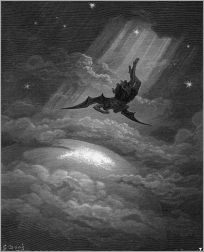
So, here I go again; playing devil’s advocate in the defense of normal human feelings and behavior that many religious people accept as sinfulness of the highest order. What’s even harder to understand is that this one is considered the worst of the worst. This is Lucifer’s sin, if you believe that. This self-opinion allegedly paves the way for all badness (or sin, if you prefer) to follow. In the words of  C. S. Lewis and many other religious writers, its primacy is made clear.

pride-4

Are we to believe that humility, the alleged opposite, prevents us from immoral behavior? I can be most humble and immoral simultaneously. I can lust with humility oozing from my pores, or maybe it’s the other way around. Excuse me while I humbly eat the entire pizza and down a six-pack of beer.

Pride is mostly good, unless you’re Irish-Catholic, in which case you’ll hear, as I did in my youth, who the hell do you think you are? This put-down, shut-down, and buzz-kill phrase is more annoying than piles of pride.

Gay pride, black pride, being proud of self, kids and grands, other family and friends, school pride, pride in state or country, religious pride or pride in non-belief, the overcoming of adversity, pride in relationships, athletic team pride, corporate pride, and the list goes on. What’s wrong, bad, or sinful about any of this? Nothing!

pride-1

My entire life I’ve worked on my humility (minding that gap). One friend made a sarcastically funny plaque for me because I often discussed trying to be humbler. I thought that I’d be a better person if I was humble. Of course, I could be proud of my humility, right?


I like this
I like this

I think power often corrupts, and I’m sure that pride plays into that human fault. We should get this pride deal straightened out. Going overboard on my ego is indeed bad for me and for those around me. Fortunately, my family and friends have the chutzpa to point out my faults. I no longer have my dad to ask me, “Who the hell do you think you are?” I can still hear his voice when others remind me that I may be a bit full of myself. It happens, preferably seldom. Maybe pride is not exactly the correct word for me.

What about the other prideful words? Vanity? I pine for my hair and regret the loss of my locks. Conceit? Probably not me. I’ve known none who admit to this, but we easily see it others. Arrogance? I have the tee shirt for this one. I’m guilty. I can be arrogant as hell. Conversely, I admit when I’m wrong. I’ll apologize for any harm done. I don’t apologize for being wrong unless harm was done. I’ve been accused of arrogance for that. To me, I’m being sincere. Otherwise, I’d constantly be apologizing.

How about self-respect, self-esteem, or self-love? What of narcissism? I know that’s not pride, but we agree it’s an abnormal extreme, unless you’re a politician. Dictionary synonyms include pleasure, joy, delight, gratification, fulfillment, and satisfaction. I think I see a pattern here.

Is it possible that Christianity and some other religions are opposed to people finding pleasure in life?

Yours, mine, or theirs – what’s your take on the pride?

Hold your head up and walk tall. Be the person you are – true to yourself.
Be proud when you have reason.
Be happy in life, but look both ways and be mindful of any gaps.

Morality Series: LUST!

You’ve been waiting for this one, right?

lust-4As a noun or verb; it means a very strong sexual desire, or a passionate desire for something. The synonym list is downright erotic: sexual desire, sexual appetite, sexual longing, ardor, desire, passion, libido, sex drive, sexuality, biological urge, lechery, lasciviousness, concupiscence, horniness, the hots, randiness, greed, desire, craving, covetousness, eagerness, avidity, cupidity, longing, yearning, hunger, thirst, appetite, hankering desire, be consumed with desire for, find sexually attractive, crave, covet, ache for, burn for, have the hots for, fancy, have a thing about or for, and drool over. (Whew) The key word in all of that is desire. This is not an act, it is merely a basic human want, or as George Carlin put it, “You gotta wanna.”

lust-5“It’s what’s in your mind that counts. Your intentions. Wanna is a sin all by itself….it was a sin for you to wanna feel up Ellen, it was a sin for you to plan to feel up Ellen, it was a sin for you to figure out a place to feel up Ellen, it was a sin for you to take Ellen to the place for you to feel her up, it was a sin to try to feel her up, and it was a sin to feel her up. There was six sins in one!” George Carlin, Class Clown, 1972.

When I get to be Pope, this lust deal comes off the list. The desire we call lust may cause us innumerable problems, but by itself, it’s no sin. It is not even bad. Our behavior may be bad. The desire may burden us in some way. We may not even admit to its existence. We lust, and we do it well. Were it not for bit of lust taken to the physical level about nine months before our original birthday, none of us would be here.

lust-9I wanna. Before you tar and feather me for being a dirty old man (normal), know that I was raised Irish-Catholic, just like Carlin was. Human sexual desire for other humans is normal, good, healthy, and leads to some of the best moments in our lives, not to mention procreation of the species. A vigorous libido is a good thing to have. But, not everyone agrees with me. Most obviously, many Roman Catholics, and certainly not their leadership. I quote from a piece by Sam Guzman, republished in The Catholic Gentleman.
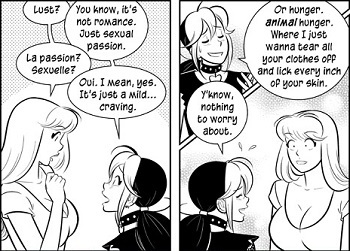
“In my own observation, lust seems the most obvious of the seven deadly sins, and also the one that can overcome the unwary Christian soul like a flash flood.”

I like the flash (flesh?) flood part. But lust isn’t bad – it’s not immoral. It’s normal. Sexual repression, on the other hand, is abnormal. Yet it is supposed be the hallmark of a good Christian life. Accepting the reality that lust is a feeling just like any other, and learning how to deal with it seems much healthier than trying to deny its existence, repressing it, and making millions of young people think they are going to burn for eternity because racing hormones are doing the talking. Think about it. We’ve all been there.

lust-2

One source I found said the opposite of lust is chastity. I disagree. You can do both: be chaste, but still lust. I looked up antonyms of lust, but the list is unsatisfactory. Only apathy (sloth?), and satisfaction (Rolling Stones song) got my attention. I don’t think there is a precise opposite for lust, unless it is not-lust, and that’s dumb. Maybe sloth is a good opposite, but how do we say having no desire, or not thinking? Dead? I wish not to be dead. Lust is a good sign that I’m not. Is un-wanna a real word?

lust-8

When I was challenged to do this series, the proposal was to juxtapose the sin with its opposite. In this case, I can’t point to anything, and it would be pointless anyway. Sorry, I just can’t get no satisfaction.

When we fight against nature, two outcomes are possible. Either nature wins, or our human nature becomes corrupt and disordered.

lust-1

Everything leads to something.
How we follow that path, and where it leads, is how we live.
Passion is good, desire is good, wanna is good! Lust to your heart’s content.
We get one life – live it well and enjoy the parts you can.
Mind any gaps and look both ways.

Morality Series: Sloth

Intentions Count
Intentions Count

Other than writing about it, does anyone ever use this word except for the animal or when referring to the sin? Do we know what sloth means? Is it laziness?

Sloth is the most difficult of the seven biggies to define precisely. An old-fashioned definition might sound like defiant sorrow turning away from God’s good intentions.

Is it really a bad thing? Is the problem its tendency to lead to other problems? I knew it fit with laziness, but it also goes with apathy and a list of other goof-off words.

Thomas Pynchon wrote a great piece about how sloth is tied to writers. Read it all here. I like this paragraph:

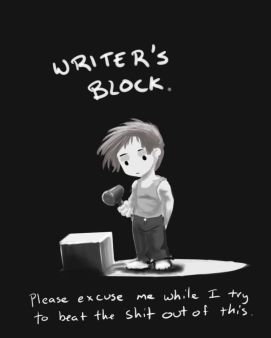
“Writers of course are considered the mavens of Sloth. They are approached all the time on the subject, not only for free advice, but also to speak at Sloth Symposia, head up Sloth Task Forces, testify as expert witnesses at Sloth Hearings. The stereotype arises in part from our conspicuous presence in jobs where pay is by the word, and deadlines are tight and final — we are presumed to know from piecework and the convertibility of time and money. In addition, there is all the glamorous folklore surrounding writer’s block, an affliction known sometimes to resolve itself dramatically and without warning, much like constipation, and (hence?) finding wide sympathy among readers.” ~ New York Times, June 6, 1993, “The Deadly Sins/Sloth; Nearer, My Couch, to Thee”, by Thomas Pynchon

sloth-4

If this is a sin, it’s not one we commit. In fact, it seems we commit nothing, we do nothing, and we don’t much give a shit about anything. As I understand it, sloth refers to our mental, physical, spiritual, and pathological states, usually with a strong religious twist. Even the Buddhists have their five hindrances, of which Sloth-torpor is one defined as a heaviness of the body and dullness of the mind which drag one down into disabling inertia and thick depression. That sounds like it needs a DSM IV diagnosis.

With greed, I wrote that we know it when we see it. I’m not sure sloth is as easy to identify. I don’t take the word sin seriously, but sloth is one item that may not get enough attention. Like the others, it is not healthy if it’s a person’s choice for a way of life. I can accept go with the flow, but like many of the big seven, it can be unhealthy when taken to a wrong extreme. And, it can lead to other behavior that is even more damaging. I think that much of what we might perceive as sloth, in others or ourselves, is either a medical problem like depression, or an existential crisis. Here is another example from Mr. Pynchon:

“Any discussion of Sloth in the present day is of course incomplete without considering television, with its gifts of paralysis, along with its creature and symbiont, the notorious Couch Potato. Tales spun in idleness find us Tubeside, supine, chiropractic fodder, sucking it all in, re-enacting in reverse the transaction between dream and revenue that brought these colored shadows here to begin with so that we might feed, uncritically, committing the six other deadly sins in parallel, eating too much, envying the celebrated, coveting merchandise, lusting after images, angry at the news, perversely proud of whatever distance we may enjoy between our couches and what appears on the screen.” ~ New York Times, June 6, 1993, The Deadly Sins/Sloth; Nearer, My Couch, to Thee, by Thomas Pynchon

I like saying that I’m lazy, or that it’s a lazy day. I should say relaxed or comfortable, but lazy adds a pinch of ironic guilt. That troubles some folks, but I think it natural. On my calling card, the leading skill is Leisure Aficionado; a reference to many of my goals in retirement. It got less attention than Pleasure Seeker did.

Sure. Sometimes.
Sure. Sometimes.

The opposite of sloth is said to be diligence: careful and persistent work or effort. I have always liked persistence, and for a long time, I liked some work. Maybe it was the doing that I liked – my ability to make something happen; or maybe it was the fruit of my labor that was my reward. My writing is kind of both, but mostly my reward is the result. That is also my motivation to do it again. For about five years, I ran – anything from five kilometers to marathons. For marathons, diligent training and persistence are keys to success without much injury. I’ve met no slothy runners. To endurance runners, any day with less than five miles is slacking off.

Is it sloth or depression?

One more issue regarding sloth: this whole concept that people who choose to be lazy or sloth are deliberately committing sins is nonsense. People want to feel good, to contribute, to have purpose and success. That is what is normal for humans. We’re unaware of other’s mental, physical, or spiritual health. So, we should focus on ourselves and what’s best for us. If anything is a sin, it’s judgment.


The song Alphie by Lily Allen is a hoot, and refers to the pot induced lethargy of her younger brother. Yes, the Game of Thrones actor – same guy. But it could be sloth. This Youtube version is a bit edited, but worth a look, nonetheless.

We should look upon our own sloth with a critical eye.
Too little or too much may be unhealthy.
Live life to the fullest as long as possible; always look both ways and mind the gaps.

Series on Morality: Introduction

“…people have inside them something that could bring them to ruin…This basic truth of life has been denied by both believers and unbelievers in every age. Yet anyone who has tried to help others with their problems knows that we all share a common struggle against self-destructive tendencies. Hidden in the human heart are marvelous capacities for good and dreadful possibilities of evil.” ~ Stumbling Blocks or Stepping Stones, Benedict J. Groeschel

7-sins-intro-3Steven stirred the pot when he responded to my previous post on the basic nature of humans with, “One word: Greed.” Reader comments followed with discussions about greed in terms of human nature. Sue V. weighed-in by suggesting that I compose a series of posts on the seven deadly sins alongside their antitheses, the seven virtues. I like that idea. I plan to write a series within the human nature theme reflecting on the human condition, using Sue’s suggestion as a method to breakout specific topics into manageable sized chunks.

I want my posts to be thought-provoking (we think about it), simple (easy to read and understand), and brief (1,000 words or less). If we can read it in five-to-ten minutes, comprehend it, and have an opinion; I’ve achieved those goals. I’m pleased when readers enjoy my dribble. I’m not trying to persuade or educate anyone, but only to explain my take on the topics.

7-sins-intro-4After reading them, maybe you’ll ponder your opinion vis–à–vis either mine or someone’s comment, and share your views. I also want my posts to have a free-thinker flavor; secular, but with an inclusive bent, if that’s possible. I’m not opposed to religious comments. I think secular.
Morality (or immorality) is the series theme. It’s a better word than sin, vice, virtue, or others that I see as rooted in religious belief. Sin is a theist concept; morality seems more secular, at least to the degree that it’s subjective. I’ll borrow from the topics commonly known as sins. Words like vice and virtue are okay, but they add value judgment before discussion.

7-sins-introMoral and immoral may do the same thing, but I see them as opinions that are formed after discussion. Topics are natural, but often seen as immoral under certain conditions. For example, lust seems normal and humans could be extinct without it, but it’s on the list of sins. I’m not sure how or why chastity applies to anything other than medieval devices of questionable utility. How we see our basic nature and religion both affect how we’ll see the seven sins or vices.

I’ll follow Sue’s suggestion to include both sides of the moral coin. Like Pride and Humility (the yin and yang). I’ll begin with Greed on Friday. We can ride that pony until one of us falters. Then, I’ll choose another pair. I plan two posts per week.

I’m open to your suggestions for topics. After I get all boned up on each topic, I’ll post my remarks. Then, I’ll hang them out for your target practice.

The seven sins I found (with their opposites) are: pride (humility), greed (liberality), lust (chastity), envy (kindness), gluttony (abstinence), wrath (patience), and sloth (diligence). The Catholic Catechism lists virtues as prudence, justice, temperance, courage, faith, hope, and charity. The Bushido Code has seven or eight virtues of a Samurai warrior, four of which are generosity, forgiveness, compassion, and altruism.

7-sins-intro-2

While we’re not all the same, we each have our bright and dark sides.
They are difficult to explain in our personal nature,
but they’re there. Mind those gaps and look both ways.

What Don’t We Know?

Twin fairies: Fenix and Furie

Since the early 1970s, I’ve held to the opinion that basic human nature is good. I’m not sure why I think so. My conclusion is partly evidence-based for the good, but since so much in human history is to the contrary, many people disagree with me. We seem quite set on damaging ourselves and the world around us in ways that are evil.

I’m also unclear about why it should matter. No one knows the answer to our basic nature. It’s too complicated. But when I consider my personal basic nature, the one I was born with; is it good or evil? Or should I ask, was it? When did it start to change – before or after birth? What do you think your nature is? How do we see the basic nature of others? Good or bad? Are there bad seeds among us?

what-we-dont-know-3It is what it is. However, I wonder if our opinion on this matters more than the real answer. It’s like believing in a god – it either exists or it doesn’t. Our believing or doubting anything changes nothing about reality (placeboes or magic notwithstanding). Our opinion on this affects how we see the world, other people – and most importantly, how we see ourselves. Me, is the one thing in the universe that I have some control over—maybe.

To the point, I just finished reading Straw Dogs by John Gray. It’s unrelated to the 1971 Sam Peckinpah movie of the same name, or to the 2011 remake; both of which are, ironically, based on a novel with a different name (The Siege of Trencher’s Farm).

Note to self: book titles and author’s names matter.

what-we-dont-know-4The premise of Straw Dogs is that humans are animals like any other animal. Both Christianity and Humanism see humans as capable of controlling things much more than Gray and others seem to think we do. This is a philosophical book that challenges many basic assumptions about what it means to be human. While I don’t agree with some of what Gray presents, I admit that he makes astonishing points that lead me to question which of us is correct. Regarding several of his positions, I think he’s nuts. But I find many of his other arguments compelling. Reading John Gray made me think, wonder, and contemplate – not the meaning of life, but its nature.
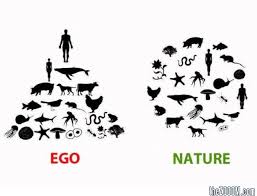
Are we animals? For an excellent article on this, click here.

Is our nature much different than it has been for centuries? Have we changed significantly in the thousands of years since our first existence as homo sapiens? Are we any different from other animals in terms of what happens to us?

Humans have been in existence much as we are now for about 200,000 years. For about the last 6,000 years, we have been the social creatures we know ourselves to be. How do we fit into our environment? Do we belong here? How long will we survive as a species? Are we masters of our own destiny any more than any other animal? Are we doomed to destruction by our own actions?

I’ve seldom thought about it, but Professor Gray makes this point right off. His position seems to be that the last time we had it right, we were hunter-gatherers. I tend to agree. Gray begins with this basic assumption regarding evolution and religious culture.

“If Darwin’s discovery had been made in a Taoist or Shinto, Hindu or animist, culture it would very likely have become just one more strand in its intertwining mythologies. In these faiths humans and other animals are kin. By contrast, arising among Christians who set humans beyond all other living things, it triggered a bitter controversy that rages on to this day.” ~ John Gray, Straw Dogs

Accordingly, Gray says that Humanist’s believe that through progress, humans can be free of the limits that burden other animals. That by using our knowledge, we can control our environment and flourish as we never have before. Gray also has an interesting take on history; he seems to say it has little or no meaning.

what-we-dont-know-5

I like this book because it deals with some aspects of the dark side of human nature. Interestingly, most of us know about the Holocaust, the WWII effort by Nazis to commit genocide and eradicate Jews. How many other genocides (or politicides) in human history can you name? Gray proposes, with evidence, that genocide is “as human as art or prayer.” Apparently, we are not very nice to each other, to other living creatures, or to nature in general. Along with others of similar philosophies, John Gray is talking about humans in a general sense.

The question for me is: how does all this square with my position that our basic nature is good? Maybe the answer doesn’t matter because he undermines so many of my humanist leanings, thus shattering my position that humans are special. I’ll retreat to my favorite elusion from Hamlet: “there is nothing either good or bad, but thinking makes it so.”

There is much we don’t know. But this Zen Proverb meme says it for me.

what-we-dont-know-2

Whatever our nature is, we share that truth with each other.
Let’s live our lives in awe of nature by embracing both sun and rain,
all flora and fauna,
and our fairies — Fenix and Furie.

Life is good and so are we, but mind the gaps and look both ways.

How Important is Trust?

“Relax, Stevie, this won’t hurt.”

Early in his memoir, On Writing, and in his life, Stephen King described an experience with a doctor and his mother. King had an ear infection, so Mom took him to the doctor, who said the cure won’t hurt. The lying taker of the Hippocratic Oath (do no harm) busted King’s ear drum with a needle. Then it happened again, and again the child believed the doctor that it wouldn’t hurt. It did. A lot. Both times.

trust-7The third-time little Stevie acted like I would have. From the get-go, he raised holy hell before ever leaving home. Alas, young Stephen was over-powered and for a third time, the Prince of The Inquisition drove the needle through the boy’s ear drum. Over 40 years later, King wrote of the incident, “In fact, I think that in some deep valley of my head that last scream is still echoing.”
My daughter had a similar (one time) experience with a dentist. Unlike King’s mom, I let the dentist know how we felt about such lies. He apologized, so I let him live.

In God We Trust has been the official motto of the USA since 1956. The motto doesn’t identify any specific god and is singular; thus, it’s safe to assume that it refers to the God of Abraham. But, the phrase is still generic enough to apply to anyone who believes in a deity that:

  1. created the world,
  2. rules over the universe,
  3. and is omnipotent, omniscient, benevolent, and omnipresent.

trust-9

Yay, God! Congress said we trust you. Who wouldn’t trust all that? But the concept of trust does not begin and end with any god. Our trust is a belief in the reliability, truth, ability, or strength of someone or something in our real-life world. It begins to develop before we have any concept of a god.

We’re social animals. Our trusting nature begins forming at birth, along with a conflicting mistrust. We are taught to trust (or not) by others. I agree with Erik Erikson that our first few years of life are crucial to what follows. Erikson theorized that during those first years, we are uncertain about the world around us. We look to our primary caregivers for stability and consistency. If the care is good, we develop a trust that we may carry to other relationships. We feel secure. How this goes leads to either hope or fear (or both?).

trust-5

Of course, if you’re reading this, you have the experience to know the outcome. We learn that trust and love make us vulnerable. Those we trust and those we love can cause us the greatest pain. We keep learning about trust, discernment, and that nasty (not-so-politically-correct) word: judgment. I’ve walked the halls of the school of life for seven decades and I’m still learning. I want to trust. Even more, I want good discernment skills. I’m skeptical, but only as precaution to disappointment, pain, loss, and suffering. Learning that I was mistaken to trust someone sucks. Lesson learned, but better to learn it allegorically.

Much of what we learn about trust and mistrust, we learn through stories, such as the Aesop’s Fable, The Boy Who Cried Wolf. The intended moral lesson of which is, if we lie enough, we may not be believed; even when we tell the truth (hence, trust lost). My daughter (yep, the ‘dentist lied’ one) recently found herself explaining why she misled her eleven-year-old son about Santa Claus.

Julie wouldn’t lie to him. But she knew that someday she’d be busted on the Kris Kringle myth, right? Wolf! Like most parents, she seldom lies, if at all, but how’s that trust thing working here? I told her we all go through that because our social tradition overwhelms us, so we play the Santa deception game until it’s time to fess-up. Everyone seems to be saying that the fat man in the red suit is real, who are we to say that it’s a big lie, but a cute tradition?

trust-8Note to my grandchildren: There are things I’ll not tell you, but I may confirm or deny what you ask. There are things I will tell you only if you ask. There are things I will defer until I think you’re old/mature enough. But I will not intentionally deceive you without just cause. Sometimes, I’ll defer to your parents, other times, I will not. I’ve earned the privilege to be either cooperative or difficult. ~ Love, Opa

When someone teaches us, we usually trust that it’s what they believe, and that it’s correct. We assume that people who teach us (teachers, parents, family, ministers, others in authority) are experts and know the truth, or at least what they are talking about. Initially, we seldom anticipate deception, which would be intentional. But it happens. When it does, we learn from it.

“The truth is, everyone is going to hurt you. You just got to find the ones worth suffering for.” ~ Bob Marley

The US has passed laws and made rules regarding truth in advertising, news reporting, responding to law enforcement, and testifying in court or before congress. At least one president was impeached for lying. At least one admired celebrity was jailed for lying. If we need laws and government rules to protect us from the constant lies and deceptions, especially since we almost expect to be lied to in many cases, why even be concerned about trust?

The answer seems to be that from birth, we need to trust. We also need a balance of hope and fear, or of acceptance and skepticism. We are here to learn, but we should be both questioning and wondering. We should be curious and wanting to learn and to know. We should want the truth, like it or not. And that truth should be supported by ample evidence or proof. We must understand the good and bad (dark) sides of human nature. We should all be students of the human condition.

From Bob Marley’s song, Three Little Birds:

Singing’ don’t worry ’bout a thing
‘Cause every little thing gonna be alright
Singing’ don’t worry (don’t worry) ’bout a thing
‘Cause every little thing gonna be alright

Learn to trust. Demand evidence and proof.
Be skeptical when deception appears present.
Look both ways and mind the gaps.