So I titled this Morphology. Click for her blog page, rules, etc.
Morphology
We are corrupted sons and daughters,
DNA mutated zygotes of morphological mystery,
victims of copy and editing errors
peppered by pinpoint mutation mistakes
riddled with repeated chromosome
rearrangement. We are human GMOs
hopelessly mutating and morphing,
naturally.
Look both ways, inside and out, for wonders and miseries of life.
Mind the evolutionary gaps in dividing cells.
Who said, “We’ll leave the light on for you?” Most adult Americans probably know who (Tom Bodett) and why (Motel 6 ad). It’s a famous advertising end tag.
I don’t advertise, sell, or profit from either of my blog sites. But I do use the static intro taglines feature of WordPress themes for both blogs. You can’t see the intro tagline on Our Literary Journey because this page is a clean and sanitized theme. While the menu icon brings up more info, it does not display the tag line (Driveling twaddle by an old flapdoodle). Maybe I should create something less self-effacing.
However, the intro tagline is front and center on the Dispassionate Doubttheme. I do not use an end tag there; usually it’s just a relevant meme or quotation.
On September 4, 2016, a few months after I started Our Literary Journey, I began using the Look both ways end tagline. I change it slightly each time to relate to the post. Seven weeks later, on October 21st, I added a second end tag, Mind the Gap (or gaps), also changeable.
Both end tags are philosophically metaphorical phrases for living life—staying alive and healthy. They suggest considering all sides (pro and con), hearing people out, looking for answers (or for questions), discerning danger, being careful and taking risk, learning and remembering lessons, and trying new and different things. Although, consistency and longevity are credible virtues.
Over the years, I’ve become more aware of the word gap (retail clothing notwithstanding) and how we use it. For a three-letter, one-syllable word, it can mean so many different things. To the degree that gap is synonymous with crack, I find much meaning in Cohen’s song verse.
Ring the bells that still can ring
Forget your perfect offering There is a crack, a crack in everything That’s how the light gets in. —Leonard Cohen, lyrics from his song, Anthem
Gap has several definitions. It could be a break in a barrier (such as a wall, hedge, or line of military defense), an assailable position, a mountain pass or ravine, a separation in space or an incomplete or deficient area. A gap can be a break in continuity, a hiatus, lack of balance, or a disparity such as the gap between imports and exports. It could mean a wide difference in character or attitude, such as the generation gap, or a problem caused by some disparity such as a communication or credibility gap.
Mind the gap comes from the warning on the British Underground/subway. So, when I say mind the gap or gaps, it is a cautionary plea to protect oneself. It is also a suggestion to be careful and pay attention to your environment, particularly what you might not see. Yet, it is more than that. There are gaps in our knowledge, gaps in scientific explanations, gaps or figurative holes in our lives, or maybe gaps growing in our relationships. There is even a god of the gaps.
In my opinion, the biggest gap is between human imagination and reality.
This TEDx talk is about minding the gap. It’s what sparked me to write this post.
And yes, look both ways, into your imagination and toward reality.
And mind the gaps, those eternal infernal spaces
where the light gets in and shines upon mystery.
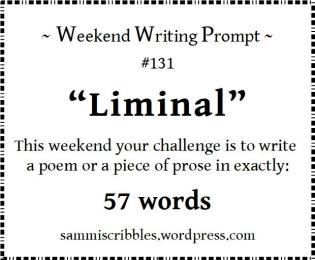
Sometimes, when I lie down and relax
I feel senseless liminal fear stir inside me
until it gathers and settles
at my core. I become desperate to
deny the tension, or I will die.
Depressive mental illness is taking
control of my mind, filling my body
with this awful sadness.
What is left for me to do?
If you don’t look both ways, someone may die. Mind the liminal gaps.
I recall, eons ago, when I was neither adult nor child,
during a phase of life known as adolescence
or numerically, being a teenager.
I also recall later being
a male adult parent to three, at one point—
all three almost simultaneously fitting
the technical teenager definition.
We all age up, but teeny boppers, as was once
a more affectionate term, stay the same.
Someone is always oddly 13, 15, 17, or some
age of that hormonally unbalanced
and the musically misguided post-pubescence.
I recall that back then, I was often bored unless
in the midst of violent volcanic eruptions,
and even then, given time, I found them dreary.
Almost everything of interest
involved getting into trouble, things which
I confess to doing with reckless abandon.
Now I look around and see grandchildren,
mostly in some phase of teenage-ism,
some exhibiting familiar behavior, some not.
I see parents, once teens themselves, distraught
over viewing in their progeny reflections of
their former life, a past they seldom
confess or want to remember.
I have no solutions and few suggestions for
those raising difficult teen personalities, like me,
like them, maybe like my parents in the
years of the Great Depression or
WWI or II. But I smile slightly
and I sympathize greatly.
Two things in life are not for sissies:
raising teenagers and getting old. That,
having done both, I can swear to. But,
in the long run, they are worth it.
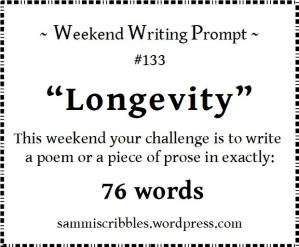
May we all live long, prosper,
and remember. “Tomorrow, and
Tomorrow, and So Forth.”
Look both ways as life transitions. Be mindful of the gaps in denial.
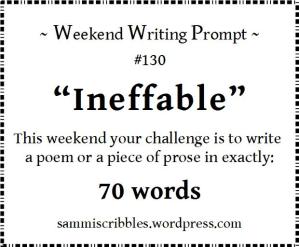
The poet sits and stares,
then doodles and sketches,
wondering where this will lead.
A sip from the cup of wisdom,
a wandering stare looks
through a window, searching
for worldly ineffable words
of brilliant order, expressing
the unspeakable, describing
all indescribable forbidden things.
A pen finds the artist’s hand,
familiar fingers hold its frame
and place the nib upon paper.
It begins: a poet’s search
for perfection and beauty.
***
Look both ways through the window of inspiration.
Mind the gaps for perfect words.
October is my favorite month
after September, until
it is November, which then
becomes my favorite month
before December. Then,
January changes everything and
I begin to dread July—
Which is when I start to yearn
for October again and
I look at the calendar and
I’m fixin’ to bitch about
the miserable Texas heat,
When my wife asks me where
I would like to go and
I answer, anywhere with
air conditioning, or where
it is October and she says,
it’s October now and
91 degrees outside.
I decide to go look
at the thermostat and to
think about Thanksgiving,
a good economy, and global
warming. She refuses to
live where it is cold.
Look both ways, but time is unidirectional
and never stops, until it does.
Gaps in time are cosmic to the mind.
Note: This is my second (Sunday’s) installment for Sammi’s weekend writing prompt: 44 words with twilight as the one-word prompt.
Click to hyperlink to Sammi’s page
***
The Sunday Marathon
Gathered in a crisp morning twilight to sip hot coffee, to gaze upon others ready to contest human limits against nature by running like crazed Greeks: a marathon; some hoping to win, most to finish; others, in their terminal twilight, proving they still can.
***
Look at twilight both ways, one nearing a dawning, the other after dusk,
but before a darkness crosses the veil between life and death.
Mind the gaps, but don’t lose sight of the end-goal.
2. Is it possible for humans to create something completely novel and new that is based on nothing that previously existed?
3. Or is human creativity just rearranging and building on previous ideas?
His inspiration appears to have been biblical from Ecclesiastes, there is nothing new under the sun.
In his first question, I want to change creativity to achievement. But that’s just me. I have three answers to that question. They are yes, no, and I don’t know. Yes, because there must be limits, but I can’t tell you what they are. No because in my lifetime, I have seen so much done by humans, achievement seems limitless. I don’t know because the question is theoretical and fenced by definitions and terminology.
For the second question I have to say it is not possible for humans to create something from nothing (I deal with this all the time regarding the origin of the universe). In fact, I’m not sure nothing is even possible. We may discover something we did not know existed, but that is not creating it. I love reading about creative hacks for common household items (or figuring out some myself). Is a new way of using something common not creative? Vaccines are a creative way to use the human body’s natural immune system to combat disease. But we did not create it. Discovery, yes.
In the third question I again object to the word creativity. Rearranging and building are creative endeavors. Discovering new ways of using anything is what has been done. In fact, I find the way the question is posed to be creatively demeaning of the human spirit.
As far as the claim nothing new under the sun goes, for Solomon there may not have been. But Earth is not all that is under the sun, right? Who knows what else may be discovered away from our planet and how that may be achieved by humans?
Look both ways for answers but mind the eternal gaps.





 Our Literary Journey