When It Happened
Middle age is in my past. My t-shirt says, “Beware, second childhood in progress.” When people ask, I tell them it’s an old shirt. I’m long past that.
At 27, I knew everything (we all do). I would live forever. By age 40, I thought I might not live that long. Around then, I was sure that other’s opinion of me was paramount. I included everyone, especially any man who could possibly effect my life personally or financially.
Unfortunately, I often said what I thought – more than I would now. Today, I’m unlikely to answer personal questions. I may. But usually I want time to be calm and ponder consequences.
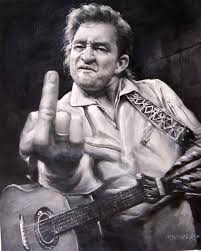
Back in the day, if my boss told me to do something that I felt was against my personal opinion, I would say, “No, sir.” Often, this happened in front of people. I enjoyed two things about it: watching him try to hide his anger (if he did) and some other middle-managers joining my mini-revolt. I wasn’t intentionally a trouble-maker. It just turned out that way.
 What It Was Like
Looking back to my forties and fifties, a lot happened – both good and bad. But, I recall the difficult times well. In the 90s, I lived away from my family as a weekend commuter for two years. I drank way too much and began to ponder things that I’d never thought about. I was confused about life. I was not happy, and may have been clinically depressed. I was surrounded by others in worse shape than I, thus my problems went unnoticed. I was fine with that. Men do not have such issues, right? No longer did I feel safe. I didn’t understand the rules or what to do. I had morphed into a people pleaser, but I wouldn’t have admitted it.
Add to this, my wife had gone to work and was living as a single parent on weekdays (and nights). She had her issues too. And we had teenagers who’d aged up to their early twenties. Life was not easy for us or them – certainly not emotionally. Denial was my strength and maybe hers. Our dysfunctional family was extended and there were problems in that area over the horizon.
Possible Consequences
 I’ll spare you details. But during the 1990s all hell broke loose in my life and I thought it had gone into the proverbial toilet.
I recall giving consideration to suicide. I also seriously considered homicide. To be clear, while I never seriously intended either, I considered both as solutions as I never had. But then, I made an important decision. I decided that I would try everything possible to get over it. If my life was not working, it would not be my fault.
If you type middle age American male in Google, you’ll find articles relating to suicide, alcoholism and drug addiction, and the almost inevitable consequence of death. Middle age male suicide is a bigger problem today than 20 years ago. But I can relate to middle aged men today who secretly struggle with something they don’t understand. Looking back over the years, I think I figured out a few things.
What I Did
 I like to joke that I’m recovering from middle age. But, I am simply living my life. My life is good now, but recovery is an ongoing process. While many of my decisions may have been random, they seemed logical at the time. I was desperate, but knowing that I was not alone mattered.
I read books on self-help, mental health, and recovery – all were about mental and physical well-being. I attended counseling sessions for family members. I became active in a 12-step program. I started to learn about eastern religious thought and philosophy. I took a deep and detailed (analytical) look at myself. I did that twice, six months apart. This was much less about who I am and more about me being me, or me not being me, but being what others thought I should be. This may seem minor; it wasn’t.
My discovery was two-fold: I didn’t know myself, and I wasn’t being true to myself. I couldn’t be. This was important for me to figure out because the solution that followed was not complicated.
My change was from the inside-out, and from the outside-in. I simply was myself. While I could continue to be a good employee, a good friend, a reasonably nice person, and a willing family member; I no longer identified myself by what others thought I should be – what I should think or what I should feel. I was not only ‘okay’ with this. I was delighted. It was not a new me, but just me being me. That is the way I saw it. My motivation was inside and based on how I felt. But as I changed my behavior, that effected more emotional adjustments, which led to being more able to do more with my behavior.
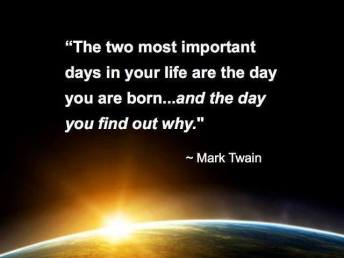
A short while after all this my son told my wife that he didn’t recognize me because of the changes. That was 20 years ago. I’ve hung onto that way of thinking ever since. Being comfortable as me (‘in my own skin’ is the cliché) did not change my life so much as it revealed my life to myself. Now, as a senior American male, I am still as wrong and as programmed as anyone. But when I realize my error, I’ve learned to admit it quickly.
How It Turns Out
As much as I like the phrase, it is what it is; I have my own motto: It is all about how we feel.
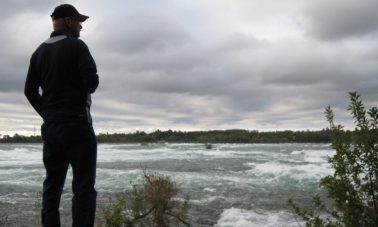
Probably my most positive boost has been retirement. No longer subject to the corporate nonsense and politics, I feel “free at last” to keep moving forward with my life on my terms. Virtually all that drama is in the past, and there it shall remain (at least for me).
May you find a path through life that is long and revealing. While giving up is an option, may you never choose it as long as you have any others yet to try. May your days of light be long and may your dark days pass quickly. May you be constantly aware; you are not alone. We are one.


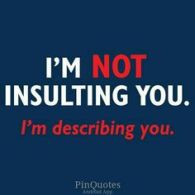 I do my best not to ‘unintentionally’ hurt somebody’s feelings. However, I’m unopposed to stepping on an emotional toe when I hear the call. As a senior citizen, I sometimes feel a sense of entitlement to do that, but I usually refrain. I once knew one guy who was so Cliff Clavin (from the TV show
  Several years ago, my daughter-in-law said that I was snarky. I appreciated her honesty and courage. I also liked it. She was right; I am snarky. I’m also sarcastic. In fact, being both makes me
 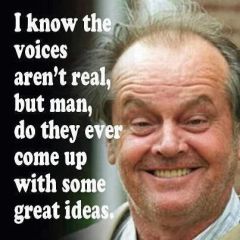 Jack Nicholson in As Good as it Gets (and other movies of his)
 Female Comedians (Yes they are)
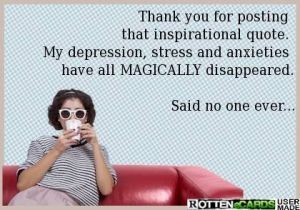 Not everyone has been introduced to my brand of snarkasm. After a while, when most people get to know me, they agree that I can pull it off. Many find it humorous. In fact, that’s the point – humor. I’m not on some kind of anti-PC* crusade here.
 Are you Andy or Barney?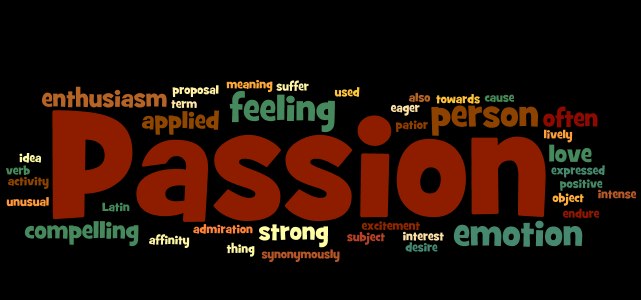
 Three days of toil produced words born of emotion, but laying bare only thought and opinion. That challenge to produce expressive discourse full of feeling was riddled with notion and conviction of purpose, while lacking passion. Such analysis had merit and value, but I had so missed the deeper inside of myself that it might have been mere opinion drawn from a detached stranger. Those mindful barnacles of human grief remained anchored to my thoughts, thus hidden except from me.
 Knowing my feelings was not enabling my telling about them. Had I created a self, unable or unwilling to express feeling? I wondered deeper if I had co-opted with a force to create an emotional Dorian Gray. Were my feelings doomed to be confined in the shadowy attic of my mind? Had I become so adept at emotional deception that I habitually prevented expression of feelings? Had I become factually superficial and emotionally shallow, thus apparently less than a human lacking outward feelings?
 Twenty years hence, my awareness is of two worlds. An external world full of social interactions, judgements by and of others, and basic human needs. This is the world of people wearing masks, hiding feelings, and struggling silently with internal and external burdens. It is a world we need in order to sense the other world – a deep world that is hidden from others and often from our own self-awareness.
 Xanadu may refer to:

 Across the sacred river before the sea
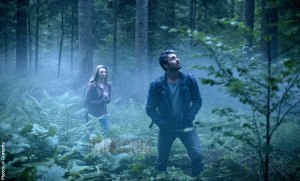 Where all that move within the light become victims of the night
 Canopies open to view heavens gate as sparkles ignite
 How each of us views utopia is probably similar in the broader sense, but we may differ as we each conceive of the details.
  In the world of politics, the dark side of human nature emerges. Of course, it is always the others or the other side. Real world peace would be required long before we could begin to approach anything like utopia. It requires an egalitarian (equal) society and that is contrary to most politics I’ve ever seen. When I think politics, I see far more potential for dystopia and war.
 Religion? While a great deal of good is done in the name of a deity and the respective religions, that good fades to virtually nothing when balanced against the historical inequality and current turmoil that seems to move more toward dystopia — more war.
 I asked alcoholic and drug-addicted Texas prison parolees the following three questions while teaching secular recovery classes. I came up with these to help them find a world view that went farther than the tips of their fingers. My personal answers are utopian.
 The confusion and struggle so many of us face in answering these questions is an interesting testimony to our nature. But we each have our personal utopia within our answers.

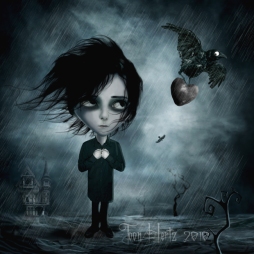 Stephen King has made a successful career out of scaring the hell out of many of us. We (not all) like to be frightened. Scary movies are fun. They are not for everyone, but a lot of people love them. Why? Is it the same with sad books, movies, songs, or plays? We keep going back for more.
 My focus here is music. A friend loved the song Dance Me to The End of Love by Leonard Cohen. That is until she learned that the inspiration of the song was in fact the Holocaust. It is a lovely and beautiful song, but that sadness changed the song for her. The song is not sad by itself, but because the inspiration was so tragic, her opinion of the song changes from love to sadness.
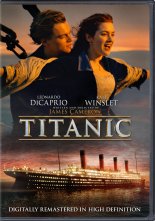
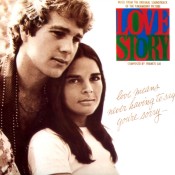 For sad movies, I have listed only five. It could be hundreds.
 Love Story (1970)
 This may be the most difficult topic for me, but it’s early in the A-to-Z Challenge. I may find subjects that are greater challenges. Regarding the dark side of human nature, I would simply prefer to accept it and move on. My research of our dark nature has revealed that we humans actually want to deal with it in reality, art, life, drama, poetry, fiction, behavior, and nature. Many of us admit to a duality of human nature, but even more of us reject the dark truths.
 My dark side calls to me. I ask, “What do you want?”
 In addition to Oscar Wilde (The Picture of Dorian Gray), which I’ve read, I shall add the following.
 Blind Man’s Bluff: The Untold Story of American Submarine Espionage (ISBN 0-06-103004-X), published in 1998 by Sherry Sontag, Christopher Drew, and Annette Lawrence Drew, is a non-fiction book about U.S. Navy submarine operations during the Cold War.
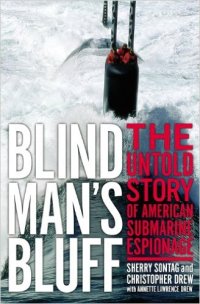 The museum was worth the stop and the tour of the Nautilus was wonderful. If you like that kind of stuff, I recommend it. I usually take time to visit gift shops at such touristy places. That was where I purchased Blind Man’s Bluff: The Untold Story of American Submarine Espionage. I was motivated to read it by what I had seen in the museum and how I felt walking around on the submarine. I’ve had but one friend who was a bubblehead. He was stationed on a boomer (slang for a nuclear-powered ballistic missile submarine; the British say bomber) out of the Navy base at Groton. Those subs are different from the vessels in Blind Man’s Bluff, although boomers represented one leg of the US triad of nuclear defense during the same Cold War (still does).
 More than a year later, I learned a new word that explains my reaction to the painting. It had never happened to me before, and has not since. The word is duende. It is a noun meaning the mysterious power of art to deeply move a person. There is a lot more to and behind this word. You can check it out for yourself by reading the wiki, if you’re curious. Apparently, artists sometimes experience this with their own work. However, if you’re familiar with this, or had a similar event happen, I would love to hear from you.
 Our Literary Journey