
Seriously? Would you? I spent a career in the military. Flying B-52s would have removed me from the carnage by five miles, but I never dropped bombs on people. Fly all day, spend a few minutes dropping whatever (normal or ‘conventional’ bombs, various kinds of nuclear bombs or missiles, or mines into water like harbors or ports), then home and to the club for a night of brews and pizza before going out again in a day or so. I just missed out on that fun (not) routine in Viet Nam.
I was trained to shoot three guns: two rifles and one pistol. But I never shot anyone either. I spent a career as a trained killer, but I’ve never killed. I don’t even hunt. And, at least for now, I don’t own a firearm. However, I have no doubt that I would kill. War is different. Self-defense is different. I am not a pacifist.
Per the United Nations Office on Drugs and Crime, the most dangerous regions in the world for murder and other violent crimes are Africa, Caribbean (toss in Brazil), and Central America. Canada comes in at 89th with about 516 murders, and the US at 92nd with 12,253 (both based on rate by population). Australia seems to have virtual love fest going on and is way down the list. But I want to look at this from a personal, more individualized perspective.
 A few days ago, I wrote a tongue-in-cheek note on Facebook about how I did not whack some guy because my wife would kill me, had I dispatched the fool to his happy hunting ground. The fact remains, people kill people. I cannot imagine doing that except in self-defense or war. Neither of those would be considered murder, even in the biblical sense. Why do humans kill each other? Mental illness aside, why do we do it?
Here’s a little clip from J. D. Robb’s book, Glory in Death, p 138.
“Biblically speaking,” Nadine put in, “murder is the oldest crime.”
“You could say it has a long tradition. We may be able to filter out certain undesirable tendencies through genetics, chemical treatments, beta scans, we deter with penal colonies and the absence of freedom. But human nature remains human nature.”
Those basic motives for violence that science is unable to filter: love, hate, greed, envy, anger.”
“They separate us from the droids, don’t they?”
“And make us susceptible to joy, sorrow, and passion. That’s a debate for the scientists and the intellectuals. But which of those motives killed Cicely Towers and Yvonne Metcalf?”
Later they add thrill as basic human motive for violence.
Can this be for real? Do people kill because it’s fun? Sorry, that can’t be considered normal. But those other emotions can account for a lot of murders. Love, hate, greed, envy, and anger are common human emotions. And yet, people kill strangers for cutting them off in traffic. We call it road rage, but it’s anger. Statistically, murders of women are often done by male mates, partners, or lovers. What’s up with that?
The countries in the high murder-rate areas that I mentioned have significant drug trafficking problems, and many (but not all) have high rates of poverty. Figuring out motives and getting them into the right categories would be a challenge internationally. So, tell us. Who ya gunna kill?
It can be a dangerous world out there.
Carefully mind any gaps. Look both ways before crossing borders, fences, or red lines. And, watch for droids.

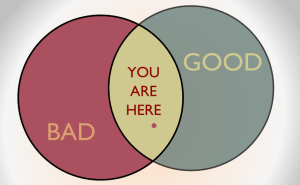

 We may begin to feel something else. It’s an emotion that we don’t want to feel, but it’s there. It’s a twinge we feel on the inside that is directly related to our disappointment and that other person. We feel envy. We do! It’s normal, and it’s okay as long as we don’t act-out on that negative emotion. I’ve never received recognition or a promotion (that others also wanted) without someone letting me know of their displeasure.
 But there’s good news. If you go to Hell, your punishment awaits: you’ll be put in freezing water. I looked it up. Think about that. Hell, fire and all that; and you and I are hanging out at the ice bar. Now, it’s their turn to be envious, right?
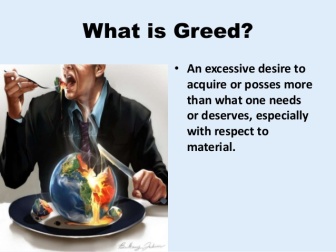

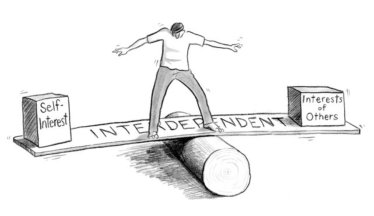
 Steven stirred the pot when he responded to my previous post on the basic nature of humans with, “One word: Greed.” Reader comments followed with discussions about greed in terms of human nature. Sue V. weighed-in by suggesting that I compose a series of posts on the seven deadly sins alongside their antitheses, the seven virtues. I like that idea. I plan to write a series within the human nature theme reflecting on the human condition, using Sue’s suggestion as a method to breakout specific topics into manageable sized chunks.
 After reading them, maybe you’ll ponder your opinion vis–à–vis either mine or someone’s comment, and share your views. I also want my posts to have a free-thinker flavor; secular, but with an inclusive bent, if that’s possible. I’m not opposed to religious comments. I think secular.
 Moral and immoral may do the same thing, but I see them as opinions that are formed after discussion. Topics are natural, but often seen as immoral under certain conditions. For example, lust seems normal and humans could be extinct without it, but it’s on the list of sins. I’m not sure how or why chastity applies to anything other than medieval devices of questionable utility. How we see our basic nature and religion both affect how we’ll see the seven sins or vices.

 It is what it is. However, I wonder if our opinion on this matters more than the real answer. It’s like believing in a god – it either exists or it doesn’t. Our believing or doubting anything changes nothing about reality (placeboes or magic notwithstanding). Our opinion on this affects how we see the world, other people – and most importantly, how we see ourselves. Me, is the one thing in the universe that I have some control over—maybe.
 The premise of Straw Dogs is that humans are animals like any other animal. Both Christianity and Humanism see humans as capable of controlling things much more than Gray and others seem to think we do. This is a philosophical book that challenges many basic assumptions about what it means to be human. While I don’t agree with some of what Gray presents, I admit that he makes astonishing points that lead me to question which of us is correct. Regarding several of his positions, I think he’s nuts. But I find many of his other arguments compelling. Reading John Gray made me think, wonder, and contemplate – not the meaning of life, but its nature.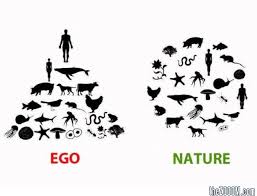

 The third-time little Stevie acted like I would have. From the get-go, he raised holy hell before ever leaving home. Alas, young Stephen was over-powered and for a third time, the Prince of The Inquisition drove the needle through the boy’s ear drum. Over 40 years later, King wrote of the incident, “In fact, I think that in some deep valley of my head that last scream is still echoing.”
 Note to my grandchildren: There are things I’ll not tell you, but I may confirm or deny what you ask. There are things I will tell you only if you ask. There are things I will defer until I think you’re old/mature enough. But I will not intentionally deceive you without just cause. Sometimes, I’ll defer to your parents, other times, I will not. I’ve earned the privilege to be either cooperative or difficult. ~ Love, Opa
 However, I am willing to work with my feelings of hopelessness. I’m not referring to the charming but hopeless romantic, or being merely incompetent (Bill’s hopeless). And I’m not talking about sadness, fear, or denial. I’m talking about the feeling that can cause despair (being without hope). Back in the day, ‘twas that conclusion I expressed when I’d say OMGIF! (Oh my God, I’m fucked).
 I read this good article about hopelessness in the
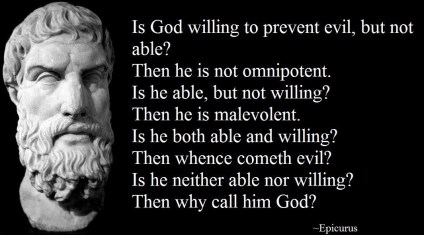
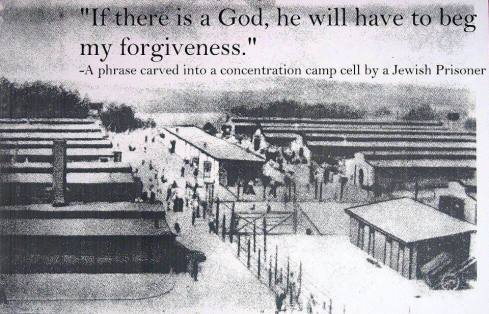
  Or, you might end up where I did, facilitating a classroom discussion of the topic in the Adult Education program at my Catholic church. Preparation for teaching, and then leading the group discussion, led me to an enlightenment. I was not, at the time, spiritually or religiously challenged by the problem of evil, but I learned a lot.

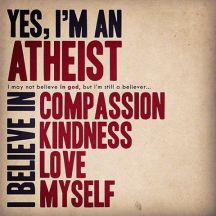 You might ask, “Ok, Bill, I understand what you do not believe. What do you believe?”
 Atheists have no written creed, profession of faith, or official paradigm of beliefs. While some have written non-dogmatic manifestos (public declarations of policies and aims), there’s no agreement or authority to which anyone is bound. You could read dozens of books that provide hints about what some atheists may believe, but many are crap. When you see or hear words like atheists believe or atheists think, false generalizations often follow.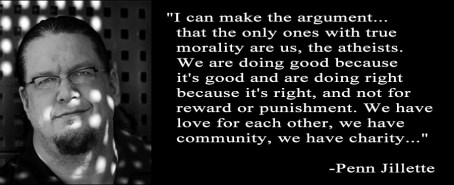
 Our Literary Journey