Poetry – NaPoWriMo: The Wake of Heirs

The second day prompt of the 2018 National Poetry Writing Month: Write a poem that plays with voice.

The Wake of Heirs

They sat in chatter and discussed
Their fortune left in will or trust
Set aside lest others see
What vultures now they come to be.

At the door I quietly knocked
Into the room I slowly walked
Eyes on me no longer talked
By death we are most surely stalked.

Tense is the room you just walked in
You know their hearts are showing thin
You’re welcome not just to be there
Last of the clowns, you – the final heir.

(Bill Reynolds 4/2/2018)

Look both ways as you enter a room.
Find the gaps and use them well.


Click link to National Poetry Writing Month

Poetry – NaPoWriMo: The Sad Warrior

Day 1. My first 2018 National Poetry Writing Month Prompt: Write a poem that is based on a secret shame, or a secret pleasure.


The Sad Warrior

Young and strong the warrior stood,
Seeking prey with eyes so sharp
with gleam of heart and prideful soul
The tiger walked and looked and stalked.

The sun was warm that wistful day,
All such power was closed in hand
To fell his victim by trebu-shay
Trophy kill – the warrior’s way.

The test took light within his sight,
on proud knee shot from his right.
Song he heard had a bitter bite,
First quarry down and there it lay.

The warrior now was just a boy
The bird just killed was not a toy,
The ache he felt was not of joy,
Tears of guilt now filled his day.

(Bill Reynolds 4/1/2018)

Poetic license, “trebu-shay” for trebuchet, an up-scale name for a weapon (slingshot).

Look both ways, inside and out.
Mind the gaps or feel the guilt.


Click link to National Poetry Writing Month

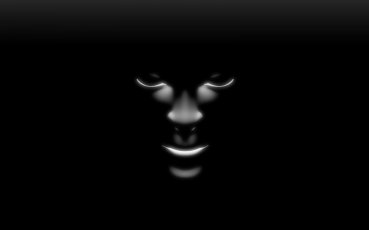
Poetry – Eternal Mistress of Darkness

My inspiration.

You were the moon. All this time.
And he was always there for you to make you shine.”

“Was he the sun?”

“No, honey, he was the darkness.”


Darkness was always there
Before firmament formed, she was
Before Earth, Moon, Sun, or Stars.

She was waiting when Chaos came.

Darkness comforts me
My eyes open or closed, her arms around
in sweet and loving tranquil repose.

Touch me softly, my old friend.

More certain she is than the Sun
Who sends burning fire to each day,
With passing twilight she allows
Sun’s return to warm us all.

Before light again warms my soul,
She grants me respite from the day.
She allows my night a chance to rest
In dreams we dance the night away.

As each day ends, she comforts me,
Harbors my soul, balances my heart.

Touch me Darkness when you come,
Grant me peace as you depart.

With resting shadows, I cannot see.
Hold me Darkness, help me mend.

When I’m alone you understand
You are my nature, my old friend.

She gives my spirit a life to spend,
There’s yet Darkness for me to tend.

Grant me courage one more day,
Thank you, Darkness my old friend.

(Bill Reynolds 3/11/2018)


Don’t look both ways, Darkness is everywhere.
In the dark, adjust to see, then mind the gaps.

I like this: “Yet it is far better to light the candle than to curse the darkness.” From a sermon by W. L. Watkinson. I would add, “Better to love the darkness than to light a candle.” It mixes metaphors, but makes a point.


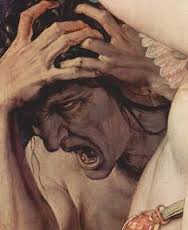
Poetry: A Strain of Madness

The pathetic bitch just lay before my eyes,
we each blamed the other for her horrible lines.
I had once dreamed of her as a flawless beauty,
but her loveliness was soon all too fleeting.
Everything about her soon disgusted me.

She beamed as I hacked away and mutilated her.
Such beatings were horrible, she no longer was fair,
not lovely as once I’d imagined. She was my obsession,
she had to be better, no – I demanded perfection.
I swore at her, insulted her, I’d not let her rest.

Her excruciating pain was caused by my emasculation,
as I twisted her limbs, she bled and cried out my damnation.
I never shed tears. I was her god, her creator; I owned her.
Angered I was, by what she’d become in my hands.
No longer did she sing her sweet angelic song.

Her nightmare was my blind fury. As her cruel and ruthless master,
I swore obscenities and pointed out her flaws; her heart was shattered.
I pondered her shredding – me killing her. Where could I hide?
Should I kill us both? Maybe that was it; murder-suicide.
Thus ending our miserable suffering, both would just die.

Without me, she would not exist. Mutilation continued;
I hacked off pieces, yet that suffering twaddle endured.
I attached new members, only to rip them away as crap;
I ignored her cries for mercy as I tossed her limbs as scrap,
replacing them with her rip-torn skin; still oozing blood.

Was her beauty hidden or gone? I ripped at her face.
She was mine to mold, to satiate my perverted desires.
Everything, from her disfigured hair flowing down
to her awkward stumbling feet, was to gratify me.
Her suffering would end with my metered pleasure.

I deemed us inhuman. A mere dullard of life, all that she was.
Her reasons for existing were meeting my ruthless demands.
She failed. Each day I emptied myself into her, more beatings.
Her tolerance for my impatience stroked her pleasurable feelings,
her loving and caring endurance infuriated me all the more.

I was disgusted. All that time. All the work. All our suffering.
Yet, lain before me that pathetic little twat blamed me.
Exhausted, I thought this would be the end for us both.
Barely breathing, her heart murmuring along with mine,
our time together had neared its end, soon it was done.

One final scream! And then; calmly I stared, feeling a bit proud.
My anguish gone, I muttered the sounds of her words aloud
just as she set them before me. Slowly, she began to change.
That poisonous little worm became my lovely butterfly.
She smiled at me. Then she pouted, both sensuous and shy.

We reached out to each other one final time.
Soon, she would be with eternity, but somehow still mine.
I wept as my pleasure mixed with regret and my sorrow.
After setting her release for after sunrise, tomorrow,
I abandoned my poor little poem to whatever might follow.

Bill Reynolds, 9/4/2017

Know the gaps and mind them well. Look both ways, or deal with hell

But he who, having no touch of the Muses’ madness in his soul, comes to the door and thinks that he will get into the temple of art – he, I say, and his poetry are not admitted; the sane man disappears and is nowhere when he enters into rivalry with the madman. ~ Plato, Phaedrus

Hence poetry implies either a happy gift of nature or a strain of madness. Aristotle, Poetics

Love the art, poor as it may be, which thou hast learned, and be content with it, making thyself neither the master nor the servant of any man. ~ Marcus Aurelius, Meditations, Book Four

Truthful End

In the end, my truth will bind me,
at that end, is when I’ll see
my unmasked face torn to tatters,
ain’t my truth what really matters?

For now, the lie is here with me,
he dwells within, filled with glee.
In symbiosis, we have confirmed,
I love the lie, he’s unconcerned.

Then he waits. The lie is clever.
He tells me that I’ll live forever,
a power he grants me over Truth.
Can’t you see? The lie is smooth.

For now, I provide the lie a home.
I hide the lie in every poem.
I wonder why. Is this the Truth?
I ponder lies, my poor excuse?

Then, one day I must cross over,
that is when I will discover
the lie has been a deceitful lover,
posing as my different drummer.

Death is light on another shore,
Truth has always loved me more.
The lie be gone, but he’s no ghost,
he’ll always find another host.

In the end, and since my youth
I’ve lived the lie but known the Truth –
at this parting there’s no dispute,
the lie has been, my personal truth.

My mask removed,
my face exposed,
my inner Truth has been disclosed:
both truth and lie were parts of me, but only one could set me free.

Bill Reynolds, 8/20/2017

Look both ways, to the lies and to the truth.
Mind the gaps, but there are many of both.

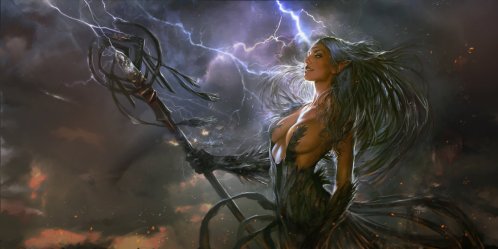
A Magical Tempestuous Storm – Poetry

Crazy hair piled up high framing piercing eyes of molten steel,
eyes with a warning smirk of dark trouble and danger
should one touch the shadow of her magic,
thus revealing a turbulent tormented storming soul —
Her wildly pursed red lips inviting living spirits to approach,
still suggesting thoughtful caution of a forbidden mystery,
before approaching near he hears her bittersweet
calling voice echoing deep within his chest,
from the savage throbbing and quivering in delirious frenzy,
he sees dark powers flashing from her black fingertips.

Within her passionate realm a shining moon and stars,
safe from the unrestrained bedlam of magical battles, the sky
enlightens their whirling and spellbound excitement,
dancing into dark night sounds of rapturous laughter;
echoing sighs and resounding venomous frightening cries.
A vehement sorceress casting spells with her thighs,
“Relax, dear man, my sensing pleasure is the rendering
of your haughty spirit into a new submissive being,
tamed forever by your seductive enchantress.”
As she raged, he endured her loving, pounding thunder,
In his toil and trouble, the fire of the witch’s cauldron bubbled,
yet her maddening deadly cries of passion calmed his fears.

Brilliant flashings in darkened skies; fair and foul scents of burning flesh hover;
his body now scorched and red, his mind mixed with passion and mania
as their unrestrained magic erupts into an abyss of souls, nothing but dead.
Yet, willingly he knowingly gives over his being,
his soul, and all he is, was, or ever will be, to her mystical dominance.
Her dark, unconsoled audacious spirit reigns over his battle lost, hers won in the fog of filthy air.
Underground, her biting and pulling him into this night of pain and pleasure,
he is now terminally seduced by this lovingly brash and ruling mistress.
Painfully submitting his pride, his manner, his life and being,
seeking the comfort of her mystical kiss
as he witnesses to her power and takes in his pain,
he kneels before the touch and the torch of his witch, worshipping at her feet.

In his delirium he experiences euphoria –  the ecstasy of pushing aside his anguish and agony,
as she hovers over him and conjures the revoking of his pain at her whim by her will,
she elevates him from the torturous tedium of a miserable existence of sheltered boredom
to a triumphant cloud of comfort and challenge, now subjected to random
spellbinding musings of a mad mistress molding this man into her mate and lover;
expunging his pain with the pleasure and purity of the magical realism produced by fantastic
fantasies as they dance through flames of orgasmic delights devoid of depressing doldrums.

She promised lives of incarnate pleasure and pain;
he as her servient lover, she as his muse and provocateur;
together they sail and they fly through time and space,
he enthralled by her power, she his bellwether to the underworld of a mysterious life,
entrapped by the freedom making two dark souls one bright god and goddess,
master and mistress of all roads and all kingdoms,
their love and mating shall live forever as the forbidden man and his queen of all witches,
never resting or sleeping while forever seeking a peace from their lives of tempest-tossed wonder.
When sounds of the night excite; when the crashing of thunder, lightning, or rain are right;
listen for cries of lovers in pain seeking the pleasures of the witch and her inamorato.

Bill Reynolds 1/24/2017

Night or day, look both ways. The gaps can harm ya, mind them all.

My original idea for this came from the Eagles’ song, ‘Witchy Woman.’ I wanted to “poetic” this idea up further to something about loving witches. Then, ‘Black Magic Woman’ by Santana, while not much for lyrics, bewitched my spirit with his awesome sound. As my imagination drifted, I considered (and used) scenes of the witches from Macbeth. I imagine ‘non-wiccan’ male relationships with a female witch (wicce) to be one of forbidden mystery, good and bad, light and dark, yin and yang. I can’t imagine the witch, no matter how loving, as anything but aggressively dominant, unyielding, yet still caring, nurturing, and protecting. I wanted a struggle. I tried to shed as much of my witch stereotyping as I could, yet keep the drama of the loving, in-control, witch-bitch that captured my thoughts. Is this poetry or prose, fact or fiction, fantasy or reality? Do you want to be either one of the two? Both? Neither?

Some soft witch music would be nice to close.

Thirst for Alone


I went out to be alone.
Away from all people,
I’m called into the night.

I want to be alone.
To ponder, I don’t know what,
To think about my thoughts.

I need time alone.
To gather something in me,
To stand and sit, and to rest.

I need to be alone.
To feel my loneliness,
To look inside me, still and alone.

I want to feel so alone.
To feel something in me,
To feel something leave me.

Into the dark night – alone.
Pointless, aimless, tranquil,
To find nothing important.

I feel the tug. To hear the call
The insignificant calm of night.
Give me my true loneliness.

—La soif by Bill Reynolds 6/3/2017

***

Can’t you see at night?
Don’t look both ways into SoC poems.
Just see stars. Feel. Release. No gaps.

The Paradox of Love – Joan and John

This is my second post in a series about the paradox of love. It is a little different in that it’s about a man I’ve met, and a couple in love. I’ve included two of his poems.

Let’s answer this question: What is the best hoped-for outcome of any relationship?

Even Grimm’s Fairy Tales don’t finish with the “and they lived happily ever after” fantasy. The best we can hope for is, until death do us part. Barring the end of the movie The Notebook, murder-suicide pacts, or certain accidents; someone gets left. And we are often made miserable by our loss, about being left without someone we love, or about how that happened.

I don’t know John Gorow well. We attend the same writer’s group. John’s an old timer in the group; I’m new. He agreed to allow me to publish the story he related to me, and the poems he wrote. It is a remarkable and inspirational story. His poems are wonderful.

Joan and John Gorow met in 1969, when both were recovering from divorce. Prior to their marriage in 1972, Joan told John that she had been diagnosed with Multiple Sclerosis (MS). According to John, Joan’s health setbacks did not begin for about 28 years. Since 2000, her MS was a problem. Then came breast cancer. While treatment led to a full recovery, a Parkinson’s diagnosis soon followed, in addition to her worsening MS.

For approximately 15 years, John was Joan’s constant companion and full-time caregiver. As Joan’s health continued to deteriorate, the burden on John increased. In response to that challenge, John wrote the following beautiful, heart-wrenching poem.

***
CAREGIVER
by John Gorow

Time moves on
Inconvenient impairments become life altering
Legs don’t do what she wants
Hands have difficulty holding things

Normal chores are no longer normal
Cooking becomes dangerous
Washing dishes is impossible
Clothes can’t be carried to the washer while using a walker
The vacuum can’t be pushed
Self-worth begins to fade.

The one who has been cared for must now give care
She has cooked for me
It is my turn to cook for her
She washed our clothes
I will do the washing
She kept our home clean
I will try my best

It is assumed we all can dress ourselves
That is no longer true
Showering on her own can’t be done
No more going to the bathroom by herself

Memory slips – confusion arrives
What day is it?
Where are we?
I need patience
We talk, and then we laugh – I cry on the inside

Kids tell me to get help
I finally do – one day a week
Who is it harder on – her or me?
I get some freedom – she does not.

Caregiving is tough
Better than the alternative
I want her as she was
It will not happen
But then again, I do have her

(October 17, 2013)

***

Seven months ago, on October 22, 2016, John no longer had Joan with him. Since then, John has suffered and struggled with his pain. He wrote the following poem to directly address grief in response to the prompt: what brought you to your knees? In the fifth stanza, he directly addresses the paradox of love, vis-à-vis his grief.

***

GRIEF
by John Gorow

Who are you, grief?
Why do you pester me?
You have dropped me to my knees.

I knew I would have to deal with you,
But is it forever?
You keep lingering in my life.

I think you may be gone,
Then you grab me once again.
My laughs turn into tears.

Others have told me about you,
But you don’t behave the same with all.
I can’t determine when you will rise again.

What a paradox.
I have tried to hate you,
But without love you wouldn’t be here.

I know we will take the rest of my journey together,
So I must accept you.
That acceptance will be slow.

You should know
I will no longer dread the tears you bring me,
You will need to accept that.

You can stay with me,
But I will slowly rise from my knees.
I will move forward, but not forget.

(May 18, 2017)

***

I want to close this post with the same line John ended his email to me. It’s a beautiful one-line poem of five words.

“I miss her very much.”

***

As we look both ways and mind the gaps,
let’s not forget that some of us are suffering.
Let us love and support each other, and at all times, let us cherish those we love –
paradox or not.

 

A to Z Blog Challenge and National Poetry Writing Month (NaPoWriMo) Review and Recap


Click on the graphic to link to the National Poetry Writing Month page.

April was my second time doing the A to Z blog challenge. I combined it with my first attempt at the National Poetry Month (NaPoWriMo) challenge. For 2017, poetry was my theme for A to Z. With four exceptions, my poems were in alphabetical order according to topic or poetic form. I had 30 posts for NaPoWriMo, 26 of which I used for A to Z. The NaPo challenge was to write (post) a poem each day.

My theme developed over time. I wrote poetry every day, but I didn’t finish a poem on each day. Some poems took more than a week, while one or two others were ready in hours. I thought some of my poems were long, but that relates to form, content, and purpose.

NaPoWriMo provides optional daily prompts. I did not use the prompts because my rookie status as a poetry writer and dual use with A to Z were complicated enough. Next year I hope to: participate with the poetry month challenge, write one poem each day (start to finish), and use the prompts provided. I also used poems for my weekly writing class assignments, instead of prose essays. I don’t plan to participate with the A to Z challenge again.

However, I’ve always liked poetry, even though I know so little about it. During April, I discovered my greater love of poetry and an overwhelming fondness for writing poems. I grew increasingly curious about poetic forms, genres, and styles. I read several books about poetry and many poems. My quest to learn continues.

My A to Z reveal was the most popular of related posts. The best-liked of my poems were Specks: Coincidence meets Kismet and Sunday Lions. By far, the most commented on was the Collaboration Poem, Dewey and Dad, with my daughter. Other well-liked poems included my Haiku; Onomatopoeia, Never Again, and Regna, The Poetry of Art. Zumurgy Blessings finished off the month well liked.

Surprises that did not do well included my sonnet, the tercet, and the poem on coal miners. Dark poems did not do as well as others. Maybe I should not be surprised. I enjoy dark poems and don’t consider mine as bleak as many. However, since I struggled with those three poems (each for a different reason), it’s more likely they were simply not so good.

Another surprise lesson: I can’t predict what you will like. I can tell from your comments how a poem affected you. I received strong positive comments about twaddle I considered only so-so. Things I thought good, took a long time, or challenged me most, were not always popular. For example, the Sunday Lion verse and Xu (Bang the Gong) I wrote quickly and were liked; whereas, I worked for days on the coal miner poem and the sonnet and they sort of flopped. But, there were some positive comments.

Many readers never click like or comment (maybe can’t). So, I don’t get every reader’s feedback. The bane of a writers craft, “what will readers like?” In some cases, there were more likes on Facebook than on this blog. Another example: when I posted the poem about the deer on the Historical Society’s Facebook page there were more likes, but who knows why? This is no scientific evaluation, despite the best efforts of WordPress to collect data. And no one said anything derogatory.

Bottom line, I learned that, for me, poetry is fun – reading it, hearing it, writing it, or remembering it (we memorized O Captain! My Captain! in grade school). I enjoy relating to love poems, poems about nature or human nature, or the occasional taste of the dark side.

Thank you for reading this. If you will excuse me, I have poems to write, read, and to memorize.

Life is lived forward and understood backward,
but look both ways and mind the gaps.

U – Universal Pain and Suffering (NaPoWriMo #25)

I don’t think there is a rule, but I’ve read that poems should be about specific things. The universe isn’t specific. So how do I write about it and be specific? I decided to key on a quote from Aristotle: “The universe exists for, and shines through, the particular.” My attempt was to twist that concept into living in the present.


***

Suffering Universal
By Bill Reynolds

What means the vast universe?
From the largest to the smallest,
It’s the every and the all, interspersed.
There’s more, and we’re on the call list.

Where thoughts drift among the unknowable
It’s all there. Is our significance so minute?
Dare we, as we might; is it so uncontrollable?
Or shall we focus on the more acute?

A far-off star explodes. Planets vanish.
Did you hear it? Did you see it?
Stars in the sky, but maybe not.
We see the light. Is it still a vantage?

Death. Suffering. Pain. Sadness.
Broken bodies. Broken hearts.
Do you hear them? Do you see them?
It’s all there. Should we care?

Are my feet on earth? Can my senses touch reality?
The universe is there, but also here.
Not for its own sake, but for each of us.
Let’s focus on the small, while aware of it all.

I engage with my personal
Real world life as it truly can be.
Let me be in the universal here and now.

Until more of the changes happen,
Until the stars no longer shine,
Until we know it all,
Until we hear the universe breathe.

***

Right here; right now, bloom where you’re planted.
But, look both ways and mind the gaps.

*