Poetry: A Good Pain (NaPoWriMo) Day Twelve

My poetry challenge on this Friday is to write a poem about two things of mine. One was to be a dull thing that I own, why and how I love it. The other was a significant thing I own and what it would mean for me to give away, or to destroy the object?


*** A Prose Poem

Technology is significant. Toenails are dull. We upgrade computers, cell phones, and tablets. We cut toenails and toss them. Sometimes we wonder why we have nails (sometimes I wonder about computers too). Computers get viruses, toenails get fungi. One seems to make my life easier, the other we may paint and glitz up for fashion. One costs hard-earned cash, while the other may be pedi-’d when we mani-, but they were originally free. Toenails are expendable. They can turn black, fall off, and then grow back – sometimes.

While tech stuff may be frustrating, annoying, and expensive, we keep it close. Attached nails I never forget. But I would not go back home to retrieve a nail. Computers never caused me physical pain. I caused my feet anguish which they returned in misery.

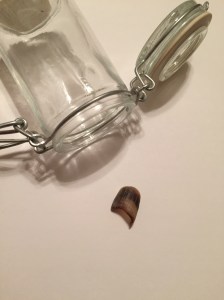
Drop my phone in a toilet – get a new one. Drop this toenail in a toilet, I’d get it out, rinse and dry it off and I’d keep it. People joke about me and my toenail in a bottle. But while a painful memory, it’s a life treasure.

No longer a runner, my marathon streak ended at number 15, the Steamtown Marathon. This one was in the New Mexico portion of the Chihuahuan Desert for nine painful, grueling hours. Blisters as big as my feet, pain from self-abuse, all my toenails turned black. Some fell off.

I made stops at medical tents for foot care and to dump all that sand and desert scree from inside my shoes. During the short refreshing rests and pee breaks, I observed more serious casualties. Some turned back and limped or rode a golf cart home, others took the more serious ambulance rides. It was freezing at the start of the race one mile up and a hot high-desert afternoon when I finished. The blessed mountain top view from another thousand feet up brought a slight smile that said now we’re going down there.

I did the same event over the next three years as a wiser, more experienced participant. Finished all four New Mexico marathons (and the other 11) walking catawampus supported by ego and a feeling of achievement that defies words. It was more than a high. It hurt so good! That toenail is my reminder. I’m keeping it. You can have this other stuff.

© Bill Reynolds, 4/12/2019

Look both ways. Our greatest achievements will always be
the most difficult and painful.
Mind the gaps, wear good shoes, and take care of your feet.
Your nails look great!

All turned black, three fell off.

Poetry: Someday (NaPoWriMo) Day Three

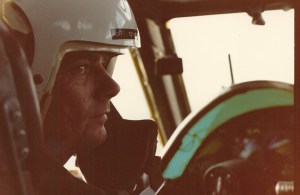
Today’s challenge is to write something (a poem) that involves a story or action that unfolds over an appreciable length of time. Furthermore, the poem might focus on imagery, sound, emotional content, or all three!

Someday

Single, more than a little confused,
too young to drink legally,
yet old enough to wear a uniform
and to carry a loaded gun and
to kill the right people.

Black and white memories flash
with Kodachrome images of the
the dismal rolling landscape of west Texas,
under cloudless skies loved
by jack rabbits, rattlesnakes, and other natives.

We stood side-by-side watching big silver
eight-engine birds pushing black smoke,
shaking concrete runways and buildings,
and digging into a young man’s bones and his soul,
calling me. “Come son. The sky will be ours.”

Dreamily I said, “I will fly those birds someday.”
His white teeth showed through a friendly grin
of disbelief. I didn’t know how or when,
or maybe I doubted it too. A dream too big?
Marriage and then college, and real life happened.

I let that dream die. My family was my life.
Mom was proud. My aunt bought me my ring.
Then waiting, sitting alone. Again, the sound.
“Come back to us. The skies are ours.”
My call to go where men find glory.

Again, wearing a uniform. Soon, months pass.
Then an officer and a gentleman.
My ups and downs, but then silver wings adorn.
My choices, Phantoms of glory, movers and shakers,
spinners and winners, or an old memory

of my friend’s doubtful smile. My dream.
The twenty-year-old lumbering big jet
called me “son” years back when I stood there
in younger man’s clothes. The sights and the smells,
sounds not so sweet as the memory of that day,

When I told the world and I saw the black smoke,
“Someday I’ll come back and together we’ll fly.”
One day we landed on that west Texas base,
I stood on the same spot as he and I had.
I smiled and said, “Today is my someday.”

©Bill Reynolds, 4/03/2019

‘Check six’ is flyboy for look both ways. The discipline is minding the gaps.

Essay: Rocks Can Speak

When I was a very young lad, one day as I was walking along a well-worn path, I noticed a stone of interesting size and shape. The stone briefly entered my short span of attention, as did many things lying about my undiscovered world at that age. I don’t recall many other details about my surroundings that day, but they no longer matter.

That was the first time a stone was not just another rock lying among other random bits of littered scree. Certainly, similar discoveries have occurred thousands of times throughout my life while walking, running, hiking, exploring, or just hanging out (thinking or not). This was a simple event that works as my metaphor for many other life events involving discovery, reason, and doing.

The rock was just lying there among others, perhaps for a thousand years or more. I wasn’t yet thinking in geological or historical terms. Stones have served many purposes after they were formed millions, perhaps billions, of years ago. There it was on the ground with others just where my eye located it. It had probably been moved around in one fashion or another over the centuries. I had no way of knowing, nor did I care. Even before approaching it, I was mentally making my I saw it first claim.

Living organic things come and go. Almost all life forms have appeared for a time and then were gone. Over 99 percent of life is extinct. Some rocks may contain fossilized records of past lives, but most are just inorganic minerals. I was not the only child who saw rocks, sticks, or other items as things naturally intended to be thrown about. Getting the right rock and throwing it brings a feeling of success. Skipping rocks on water is a universal rite of passage.

Looking around at the organic things today, I realize that most are less than 100 years old, and less than 50 in current forms. The complexities of the laws of thermodynamics (physics) change things, but we only see the now.

Neither I nor the stone said anything, Rocks don’t talk or hear in the animal sense. But nature can speak to us through both organic living things and through inanimate objects, such as rocks and fossils.

As I moved, the rock played its role as a lifeless stone like billions of similar objects covering the surface of the Earth. Rocks are infinitely expert at going with the flow. River rocks spend so much time tumbling in the roll of water they lose their edge and become rounded. The rock I saw did not sparkle, twinkle, or do anything spectacular. But I saw it. I squatted and half bent over so I could pick it up with my hand. That was many years ago.

More recently, I picked up another rock – my first in years. I carefully examined it, top, bottom, and all sides. One learns that by picking things up, especially rocks, one must carefully examine the item to ensure it is a lone stone, and not one littered with objectionable attachments. It must be just the boy, or now the man, an old man, and the rock with no another surprises.

While I didn’t bother to analyze it, the rock was local Austin limestone, or chalk rock, which is said to have formed in the window of 100 to 200-million years ago. It didn’t matter, and at the time, what I was looking at was just an old rock. Or was it?

Ideas are like stones. Once you pick one up, you must examine it, and only then decide what to do with it. As with stones, I have dropped ideas, put them in my pocket for later pondering, or threw them. When throwing ideas or stones, one must distinguish between discarding, sharing, or targeting. The first is simply throwing it away or back to where it came from. The second is communing by tossing it to someone else. But the third is capturing the idea or stone for our own creative purposes. Like rocks, ideas can speak to us. We just need to listen.

Look both ways for material and ideas. That’s what creativity is all about.
Toss some back to the gods, share some with others, or use them within your own art.
Mind the gaps. Look there for those hidden gems.

Like rocks, ideas may be too big.

Mo’ Po’ Poetry – Quit whining! Write.

This is the second poem like this. To see the first, ‘Blatant Babble,’ click here.

Am I dead when I cannot write? Did I stroke out? Are my feelings hurt? I can write. Shit! I can write drunk. I can always write! The haunting of the living, the thoughts, opinions, and feelings of others who may read my screed; so they bar me from my work, my art, my love. My inner say of séance. The ghosts of failure, the confusion of thought, the confessor imposter! The loss of muse; the stark naked strawness of boned-out creative nothingness. But, to fear bland boring blight? I can write. I’m physically mentally capable of stringing words with a good or bad mix into a pot or onto a page. I can write! I can always write; always, always, but not always write a win: my first Pulitzer. Needs work. Write words. I can write. Write?

 ©Bill Reynolds 12/20/2018

I agree. Do you?

Look both ways, but life can only be written backwards.
Mind the gaps, they are spaces on your resume.
Is this all write right?

When It’s a Mere Story (fake, fake, true)

It is a story, a fib, a lie (if you like). I prefer reading and writing nonfiction (reality), but like any writer, I sometimes make things up and present them as literature. They also surface as fiction or reflections of imagination in my poems.

In my writer’s tool box are words, ideas, experience, knowledge, limited imagination, and scant creativity (I know where to get it), technology (a long list of software and hardware goes here), language, and some ability to read and write. Admitting my shortcomings as a journeyman of letters, I consider every editor I know to be a (god or goddess) helpful resource along with a multitude of other writers, authors, and critics.

I like to work with parable, symbolism, simile, metaphor, allegory and allusion, analogy, and soliloquy in poems and essays. I am talking about verisimilitude (all 14 letters and six syllables), or the appearance of reality or truth. I found that word on a list as I researched this piece.

When it’s not biographical and is just a story, it gets tricky. It’s not the writing. It’s what (WTF) am I talking about? Fiction resides in reality and truth. Fact can likewise be disguised in fiction. Names, dates, situations, and persons are often fictionalized in truth.

I know twins (grandparents) who, as children, were both present at a memorable and emotional family event. They both remember it well. However, when they discuss it, each has a different version of the same event, even though they stood side-by-side as eyewitnesses. Each is telling the truth, but how each one saw it and remembers it is different.

One of my favorite authors is Pat Conroy. Pat wrote autobiographical fiction. His stories were based on his real life: his family, people he knew and loved, his schools, his job as a teacher, and other real events. Indeed, his fiction was based (often heavily) on real life.

Conroy paid a high price in several ways. A lot of people got mad at him. Some fellow writers looked down on his creativity (or lack of) in using real world events and people to write fiction. I like the ties to the real. But that does not mean there was always such an entwinement. Other autobiographical fiction writers include Tim O’Brien, Sylvia Plath, Sandra Cisneros, and many others.

Sometimes I make up a story from a thought or memory, but the reality is only a setting or a trigger. It is not necessarily autobiographical or about current real-life circumstances. It is not a message to someone, not a plot applicable to my personal life, not real at all. Many people assume it is. However, sometimes (often?) it is all of that.

I like the ‘how-to’ memoir book by Tristine Rainer, “Your Life as Story: Discovering the ‘New Autobiography’ and Writing Memoir as Literature.” While one should never intentionally lie (fib?), it may be necessary to fill gaps in events with things that may not be exactly precise, true, and factual.

I have been told that every writer (artist or person) puts part of him- or herself into everything he or she writes. I agree. Still, not everything I write is real, or happened, or is about any real person. It may be about how I feel or what I experience emotionally.

Indeed, it was or is true or partly true, or the true facts as I recall them. Often, for me, my writing is a search for myself – for my truth, my honesty, my story, my interpretation of actual events. Maybe it’s just psycho-babble, but writing seems to be part of me trying to say something about me. I’ve written a memoir. It is unfinished, but I will get back to it.

I wrote a poem about a door. A suggested title was ‘An Ode to Agoraphobia.’ While the poem was not intended to be about any mental condition, after I wrote it, I realized it was clearly about fear of going out into the world. I’ve never had such a fear. When I researched possible submissions, I discovered that some publications only wanted it if I suffered from the malady. I ain’t sayin’ I do when I don’t.

The mag’s policy made sense technically, but it was a true poem about a real emotional or mental state that I can only imagine. I’ve written stories about men committing suicide and people doing all sorts of things I never have or will do. Human behavior, bizarre or normal, is interesting. Fiction and nonfiction rely on interest.

The catch is that when people assume what I write is directly associated with my life, they’re usually correct. People who know me personally would certainly assume autobiographical or nonfictional writing, especially other writers. They know how I work. However, sometimes it is just my overactive Irish blarney oozing onto the page with a bit of imagination peppered with fib to improve the taste.

And that, my dear friends, is the absolute truth.

Look both ways in fact and fiction.
Let reality peek into the gaps of light in everything.

Essay: God do what?

While I say I don’t pray, I kind of do – accidentally. A believer might consider my praying to be blasphemy, but so is embracing atheism or agnosticism. As with so many words, blasphemy is only a thing if god exists (like sin), and it is only bad if you happen to believe in god (Satanists not withstanding).
No god = no blasphemy, no sin, no hell – make sense?

I have a few old habits and knee jerk reactions I’ve tried to shed without success. Two phrases I use too often are God damnit! and God bless you. In both cases, I am apparently invoking the supernatural to my wishes. But since intent matters, in the case of god damning, few of us mean it. In the blessing case, it is an old version of universal well-wishing when people coughed or sneezed. It goes back to the bubonic plague days in Europe. How well did that work?

Since I speak fluent profanity, I don’t blurt out the damning one very often. I’ve always been more of an f- or s-word guy. Yet, if someone near me sneezes, I usually have god blessed them before their next breath or sneeze. I’ve been doing that most of my life. When I don’t say something, I feel like an ass. I need to use gesundheit or one of the other secular phrases from around the world, of which there are many. This sounds like fun.

‘Thank you for covering your mouth and I wish you good health. Live long and prosper.’ (Vulcan Salute)

I used to pray often and for many people, but I didn’t pray for everything. I didn’t pray for rain to start or stop, or for any other change to the weather. I never prayed for bad events, personal wealth, or my own health. I don’t know why, but all that seems in bad taste. Likewise, I would never have prayed for anything bad to happen to any other person, unless you count the god-damning of nouns.

I carried a notebook where I kept notes of who to pray for and why. Seriously. People would ask me to pray for them or for some other person. If I didn’t write it down, I’d forget. Weekly, I would go late at night to a chapel room at our church for what is called perpetual adoration, and there I’d pray in the actual presence of the body and blood of JC (Holy Eucharist). That’s why it was there.

God was literally several feet away in a gold sunburst thingy called a monstrance, behind a tiny piece of glass, in the ‘actual’ form of the body and blood of Christ. He and I were alone most of the time. If what the Church proffered was true, I prayed a lot of folks straight to heaven – big IF. That was then. I still carry a notebook, but not for the same reason.

I’ve often prayed for dead people. That is customary for Catholics. Most Catholic parishes have a Book of the Dead which contains the names of the deceased loved ones we prayed for on All Souls Day (November 1st). It’s called praying for the ‘repose of the soul of’ the people we assumed might be in Purgatory; not in heaven yet. That’s how they say it. The repose part was to get them to heaven. A good thing, right? Just an odd way to say it.

Yep. Praying for other people, especially dead ones, was my favorite. Most of my other praying was reading (often aloud) from prayer books; prayers of adoration, love, or general holy stuff. I had my favorites and I still like what some prayers say. Like this poem by Mary Oliver:

I don’t know exactly what a prayer is.
I do know how to pay attention, how to fall down
into the grass, how to kneel down in the grass,
how to be idle and blessed, how to stroll through the fields,
which is what I have been doing all day.
Tell me, what else should I have done?
Doesn’t everything die at last, and too soon?
Tell me, what is it you plan to do
With your one wild and precious life?

— From “The summer day”;
New and Selected Poems 1992

I am sure that many protestants thought the real presence deal was bull shit. Maybe they were envious. The last time I prayed and was serious about it was about nine years ago.

When people say they will pray for me, I am unsure how to gratefully and gracefully decline the offer. I was diagnosed with cancer. People unaware of my atheism would offer to pray for me. If I requested a pass, they ignored me. So, I just said thank you and moved on.

Some who know of my unbelief would offer to pray, but then would backtrack. I would thank them and explain I understood the intent. I used to pray. I know why people do it.

 Lori Arnold’s (McFarlane) memoir, The Last Petal Falling, talks of her experience regarding prayer. That helped me realize I should be more diligent to replace prayer with action, honest love, or the offer, how can I help?

I usually don’t care what others do. Read a book, contemplate their navel, drink scotch, listen to disco music, meditate, or pray. I think one of those is wasted time, but that’s for others to decide. It’s not my business. Even if others pray for me. It’s okay. If that’s their thing, have at it. However, there is one well-intended prayer I would adamantly decline, if asked.

I hope no one wastes their time praying that god forces me, or any atheist, back to religion. It’s hard to explain, but that’s insulting. It is asking their god to take away my free will. If someone believes in god, I accept that as their belief and I’m ok with that opinion. May they cheerfully return the acceptance.

This kind of ‘praying’ usually involves more famous atheists. For whatever reason and given all the dumb-shit stuff there is wrong in the world to pray for, or all the people who are in need, especially the children; why so many people find it necessary to pray that an atheist will come to the opposite conclusion is mind boggling. I understand why some may wish and hope for change for loved ones. But it is still wrong.

One of the most prayer-group-prayed-for persons in US history was the late Christopher Hitchens. He was a famous writer and atheist of celebrity status who often debated with religious people. These people needed to find something better to do with their time than to pray for atheists (agnostics, free thinkers, skeptics) to stop believing as we do. It is insulting and demeaning. I will personally never recant my atheism. Never. Ok, if god physically shows up, I will. But not due to prayers.

How would a believer feel if atheists prayed for them to apostatize? What if we asked their god to turn them into atheists? How would that sit? Admittedly, a believer would see it as a damning petition. In a way, when people pray for us to recant, it’s the same thing; that we’re damned to hell simply for what we think.

I have a right to believe what I think truth to be. It’s unnecessary for anyone to respect what I believe (or don’t), but at least in quid pro quo fashion, one should give the nod to my right to believe it. Praying to take away that right, or doing so in the practice of one’s religion, is an attempt to take away an inalienable freedom: my right to think.

Some religious folks have the piety to keep their religion to themselves, but too many don’t. In many cases, that would be against their religion. If they must do something, they should follow the many religious who do something useful. If one knocks on my door, I may ask them to read my tract and come over to my way of thinking. Many do.

Look both ways and allow others the dignity to do the same.
Think. It’s free and helpful if you don’t over do.
Mind the gaps.


Poetry – Am I This Beast?


Am I This Beast?

Am I not my own beast? May I set him free?
This beast lives and he lives within me.
In some manner or way, I am he, and it is I
who fears the beast. And I know why.

This is no charming fucking poet.
He is no eloquent reader of verse;
he’s no lover of beauty for all to see.
‘tis me, this beast, but is he also not me?

Summon your magic, bring on a shaman,
twist my beast with the best that you can.
Bring on the robots. Cast the day’s best witchery
into the face of this monster, who really is me.

Cut him and burn him and poison the beast.
More lives than a cat, he’ll find his way back.
From annihilation, he’ll rise-up, again to be me.
A beast: one with me. Here to kill me, you’ll see.

Look deep. Dig deeper still. Search for his mark.
In this battle for life, made from my nature,
his shadow will be there for as long as I lurk.
This beast that we seek – has control of my future.

© Bill Reynolds 8/8/18


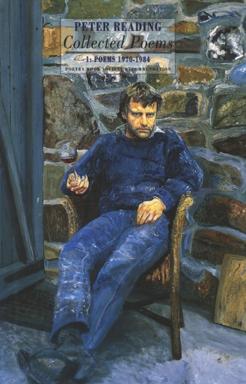
Recently, I read about a British poet named Peter Reading. He and I were born on the same day. His poetry is said to be ugly and morbid in its honesty. Yet, I do hope to read more of Peter’s work soon. While Peter was not the inspiration for this specific poem, his attitude was.

I am also trying to write my words as they come, regardless of what others may think. That is not easy, but it’s not like I’m trying to make a living writing poetry. Sometimes, it is just bleak.

This outburst is just another poem. While it shouldn’t be taken lightly, I reject any perceived notion that I need counseling or psychiatric care. I’m fine, but this is how it came to me.

Peter Reading, ‘Collected Poems’ cover


Look both ways, inward and out.
Mind the gaps as well as the beast within.

Essay: My FWB Neighbors (4 of 4)

This is the last of my four-part neighbor-knocking recall from our time on the Redneck Riviera (Florida Panhandle).


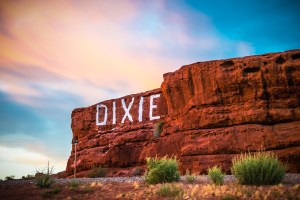
Part 4 of 4: Meet Dangerous Dixie

Directly across the street lived an inspirational hero named Dixie. I met her when she was 97 or 98 years of age. I went to the 99th Birthday bash at Dixie’s home, the same house she and her late hubby moved into 50 years prior, in 1964, when the houses and the neighborhood were all new.

A wee bit bent over, Dixie walked unassisted and talked bitingly sharper than many folk decades younger. If I had a favorite people list, Dixie would be in the top five. I don’t know what it was about the little bull dog that we found so compelling, but Dixie was a treat to behold. A pill, but one you must love.

Meeting and making new friends when they are in their late 90s (Dixie was 30 years my senior) is like no other relationship. There were many things special or unique about her (not all of them sweetness and love), but at that point in life, attitude is more important than ever. One of Dixie’s last great adventures had been an excursion to the Galapagos Islands ten years earlier. She told me all about the trip, remembering many specific details and saying that she got around much better back then, at age 88.

Dixie was convinced that a local lawn guy had dumped a pile of yard-waste at her curb. He hadn’t, but that was not the point. She refused to permit me to dispose of the waste. My wife talked to the guy and offered to pay him to clean it up. He said, “I know she thinks I did that, but I did not. However, I will clean it up without charge.” He did. In Dixie’s mind, he was guilty, and she had won because she had waited him out. We let her go with that.

I have attended exactly one 99th Birthday Party in my life: Dixie’s. She wore two-inch heels and personally greeted each of the many guests. As she would introduce them around the room, naming each guest, she accurately told a little story about each person or couple.

That went on for more than an hour before Dixie finally sat down and took her shoes off. Dixie looked at my wife and asked if she still drove. Dixie’s Mercedes was parked in her driveway, but she had only recently stopped driving. When Yolonda said that she did drive, Dixie said, “Good. Because we need to get out and do some running around and have some fun.”

I don’t know what doctor thought a cardiac pacemaker would be good for Dixie at 99, but a few months following the party she had that surgery. Some weeks later, Dixie was found dead in her split-level home, ostensibly from some form of cardiac failure. Dixie’s 100th Birthday Party was combined with a memorial of her passing as well as celebrating her life. I knew Dixie for less than two years of her long life, but I will not forget her.

In many ways, I would like to be like Dixie. However, I could never measure up to her spark, enthusiasm for life, or love of nature.

Look both ways in life, even when there is a lot more was than will be. Mind your gaps.


Essay: My FWB Neighbors (1 of 4)

We moved from San Antonio, Texas to the Florida Panhandle (aka southern Alabama or the Redneck Riviera) in 2012. It was to be my last assignment before retiring three years later and subsequently relocating to live near Seattle for a few years.

I got the idea to blog about my neighbors from reading one of Joey’s posts. To be brief, I’ll post it in four parts, each with a featured glimpse of one of the real-life characters/neighbors I met whilst living in the Sunshine State.

Part 1 of 4: Wheeler-Dealer Danny Boy

Not the real guy, but almost.

The neighborhood was built in 1964 and was mid-century semi-modern (i.e., small and old). A man who was a native of either the Empire or Garden State named Danny was my neighbor and lived in the house to the left of ours. Several feet separated our long, sloped driveways.

Danny was an interesting character. If I were to write a book titled, Wheeler-Dealer Meets Reality, Danny would be the main character. His first name was the same as my estranged half-brother and I noticed similarities. Danny’s house was in an uncertain stage of foreclosure. For whatever reason (I neither knew or cared) Danny-borrowed using his home as collateral when the housing market value was increasing. He told me that several times he went to the bank for more as the assumed value increased.

After the collapse of the housing market, Danny owed far more than the property was worth. So, he stopped making all payments. He moved out for a while, opening the door for repo, but then (with legal advice) he moved back in so that they could not repo so fast and easy.

Danny went to different doctors for medical care and used two services. VA for free and some other docs covered by his mail carrier’s insurance. The way he explained it to me was, “I kind of play them against each other.” I cannot recall responding to that comment, but I know what I was thinking. Irony is coming.

I am not sure exactly what marriage Danny was on, but it was number three or four. I never asked him if trading in wives for newer models was precipitous to his financial problems. For as long as I knew him, Danny was deep in debt, in default, and living in a house that was going to be taken away “any day now.” But living there virtually for free. He kept the lights on, but was no longer buying his house. Danny was interesting and while I liked him, I was not gunna follow any of his get rich quick plans.

One day a pre-teen boy knocked on my door. He was a pleasant lad between the ages of 10 and 13. He asked me if he and his friends could use my driveway, which was probably the largest hill in Fort Walton Beach, to ride their bikes (and skate boards and whatever else with wheels) down. I was impressed that he asked, so I said yes provided that their parents knew about the deal. I agreed to this in a town where all children’s swings in the parks had been removed for fear of litigation. While there were some minor crashes, no serious injuries resulted, and I have not been sued. The kids had fun almost every day and I liked the idea that I contributed. It was my driveway on my rented property, or so I thought.

I forget how I learned that Danny had told the kids to go away and that they were not allowed to use my driveway for recreation. But, he did exactly that, and I was pissed. Before I could calm down enough to confront him, Danny had a severe heart attack and was hospitalized for bypass surgery. He recovered, and I decided to let it go. The kids would not return, even if I explained the problem. Danny and his wife eventually moved (evicted), and his home was finally repossessed by the lenders or banks, flipped, and then sold. I don’t recall the new neighbor’s name, but they were not as interesting as Danny. Normal neighbors can be boring.

Look both ways to see your neighbors. Mind the gaps and the children.

The Paradox of Love – Joan and John

This is my second post in a series about the paradox of love. It is a little different in that it’s about a man I’ve met, and a couple in love. I’ve included two of his poems.

Let’s answer this question: What is the best hoped-for outcome of any relationship?

Even Grimm’s Fairy Tales don’t finish with the “and they lived happily ever after” fantasy. The best we can hope for is, until death do us part. Barring the end of the movie The Notebook, murder-suicide pacts, or certain accidents; someone gets left. And we are often made miserable by our loss, about being left without someone we love, or about how that happened.

I don’t know John Gorow well. We attend the same writer’s group. John’s an old timer in the group; I’m new. He agreed to allow me to publish the story he related to me, and the poems he wrote. It is a remarkable and inspirational story. His poems are wonderful.

Joan and John Gorow met in 1969, when both were recovering from divorce. Prior to their marriage in 1972, Joan told John that she had been diagnosed with Multiple Sclerosis (MS). According to John, Joan’s health setbacks did not begin for about 28 years. Since 2000, her MS was a problem. Then came breast cancer. While treatment led to a full recovery, a Parkinson’s diagnosis soon followed, in addition to her worsening MS.

For approximately 15 years, John was Joan’s constant companion and full-time caregiver. As Joan’s health continued to deteriorate, the burden on John increased. In response to that challenge, John wrote the following beautiful, heart-wrenching poem.

***
CAREGIVER
by John Gorow

Time moves on
Inconvenient impairments become life altering
Legs don’t do what she wants
Hands have difficulty holding things

Normal chores are no longer normal
Cooking becomes dangerous
Washing dishes is impossible
Clothes can’t be carried to the washer while using a walker
The vacuum can’t be pushed
Self-worth begins to fade.

The one who has been cared for must now give care
She has cooked for me
It is my turn to cook for her
She washed our clothes
I will do the washing
She kept our home clean
I will try my best

It is assumed we all can dress ourselves
That is no longer true
Showering on her own can’t be done
No more going to the bathroom by herself

Memory slips – confusion arrives
What day is it?
Where are we?
I need patience
We talk, and then we laugh – I cry on the inside

Kids tell me to get help
I finally do – one day a week
Who is it harder on – her or me?
I get some freedom – she does not.

Caregiving is tough
Better than the alternative
I want her as she was
It will not happen
But then again, I do have her

(October 17, 2013)

***

Seven months ago, on October 22, 2016, John no longer had Joan with him. Since then, John has suffered and struggled with his pain. He wrote the following poem to directly address grief in response to the prompt: what brought you to your knees? In the fifth stanza, he directly addresses the paradox of love, vis-à-vis his grief.

***

GRIEF
by John Gorow

Who are you, grief?
Why do you pester me?
You have dropped me to my knees.

I knew I would have to deal with you,
But is it forever?
You keep lingering in my life.

I think you may be gone,
Then you grab me once again.
My laughs turn into tears.

Others have told me about you,
But you don’t behave the same with all.
I can’t determine when you will rise again.

What a paradox.
I have tried to hate you,
But without love you wouldn’t be here.

I know we will take the rest of my journey together,
So I must accept you.
That acceptance will be slow.

You should know
I will no longer dread the tears you bring me,
You will need to accept that.

You can stay with me,
But I will slowly rise from my knees.
I will move forward, but not forget.

(May 18, 2017)

***

I want to close this post with the same line John ended his email to me. It’s a beautiful one-line poem of five words.

“I miss her very much.”

***

As we look both ways and mind the gaps,
let’s not forget that some of us are suffering.
Let us love and support each other, and at all times, let us cherish those we love –
paradox or not.