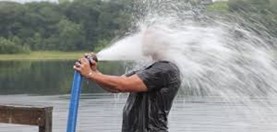
On March 20, 2016, I published my first blog. The person who taught me the basics has a few names, but she blogs here. She encouraged us to take the A-to-Z blog challenge which kicked off about 12 days later. For 26 of the 30 days of April, I wrote and posted blogs six of every seven days. Every day I was trying to learn to use WordPress, pick a theme, and so much more. It was a ‘drinking from the fire hose’ experience, but I learned quickly.
I was also supposed to be dealing with beta reads of my 2015 novel, Crew Dogs. That book has been stored on a cool dry bookshelf since I got my last beta feedback from Tara in August.
Many thanks for the advice and encouragement, especially from fellow Crew Dog, Maddox, who read the book through the eyes of a participant and witness to the time, place, events, and people – thanks to everyone. During the year, if I get to where I can allow the memoir time to steep, I want to rewrite Crew Dogs as an autobiographical novel in first person. The story’s there, but I want to work with the plot to make it more visible and clean up some parts. I’ve picked up so many great hints from Cathy Yardley and I hope to apply her advice.
 Thanks to Tara for teaching me to blog. I am also grateful to my classmate, friend, fellow writer, and blogger, Sue, for suggesting topics and improvements. Sue’s uplifting and spiritually positive blog, An Artist’s Path, is here.
Thanks also to the many other wonderful people who gave me feedback, comments, and encouragement regarding my blog. It was nice for this rookie to hear, “You’re good at that.”
My problem right now is that I’m still suffering whiplash from writing my memoir. I’ll need many months to get that project out of the ass-wipe stage of an early draft.
I wanna give special thanks to my editor and wife, Yolonda. For over 50 years she has read my dribble, typed more than few papers, and simultaneously corrected my atrocious spelling and borderline grammar. She sees these posts before anyone else and patiently cleans up my mess. The only errors you see are the ones I add after she proof reads.
My limitation last April was that I wouldn’t blog about politics or religion. But by June, I was beginning to talk about atheism. As it turned out, the best liked four of my 89 blog posts addressed that subject. The fifth was about aging. I published the most popular post on September 6th, “Respect, Tolerance, and Silence” (read it here).
Ironically, my first post, “Bloom Later,” (read here) was about memoir. After long consideration, I finally started writing one seven months later. Recently, I’ve published several more posts about that work in semi-progress.
My rooky year was enlightening. I’ve discovered what kind of writing I like to do. In 2017, I want to return to posting twice a week. Finding topic ideas is difficult, so if you have suggestions, let me know.
In January, I’ll return to my Creative Writing group/class. That group may help a bit with topics because Doris, our teacher/facilitator, will provide an essay topic each week. What is interesting about that bunch is our ‘maturity.’ As one of the younger participants, I’m amazed by how skillfully these folks can craft a story and write it well, far into their senior years.
 When I meet with the SnoValley Writes writer’s group each Friday, I’m alert for ideas. I have a few stashed somewhere. While they’re not exactly in my lane, they’re not off limits either.
I don’t make New Year’s resolutions, but I have a few goals for 2017. I want to keep learning how to be a better writer.
In addition to my writing groups, I’ll keep blogging. I want to return to writing my memoir, working on it most days. In April, I’d like to do the A-to-Z blog challenge again. In July, I am considering attending the Pacific Northwest Writers Conference in Seattle.
I don’t even wanna think about the fact that I volunteered to be president of my homeowners association for the next two years, but there’s that. Arg!
My wish is for 2017 to bring us each more happiness than we need, gratitude for all the good stuff, and the good health to enjoy life. May we have the strength to deal with the challenges of 2017.
Happy New Year!
Keep your hands on the grips and your eyes on the road, but keep lookin’ both ways and mind the gaps.

 There are four brothers. They struggle to get along with each other, due to more than a little sibling rivalry. Three of them like to cause trouble. These three are selfish and annoying to humans and gods alike. They like to hide things from the sun, whose name is Sol. The three are very jealous of Sol. They think that they exist purely to keep Sol from comforting the earth and its inhabitants with his warming rays of light. Sol despises the three troublemakers, and openly favors the fourth brother. Sol knows how the earth, plants, animals, insects, and most people respond to his warm presence when the three annoying brothers are resting.
 Boreas is the north wind. While he can be out causing problems at any time of the year, his favorite season is winter. He is cold, icy, and wild. Boreas has a reputation for causing trouble and making a mess. He is a bully known for pushing the other three brothers around, especially Notus.
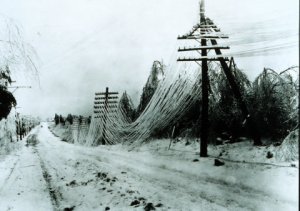 He is sometimes careless. Boreas sneaks under him and freezes his rain, sometimes just as it falls, causing havoc on the earth. At other times the north wind pushes back, causing violent destructive storms. This embarrasses Notus, but Boreas thinks it is funny. To confuse his brothers, especially the irritating Boreas, Notus sometimes spreads fog over the land and sea.
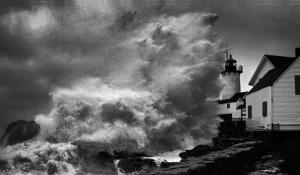 Eurus, the east wind, is foolish and lazy. He seldom does anything, preferring the amusement of watching the conflicts arise between his brothers. When he is bored, he teams up with Boreas to create problems and confusion. Together they make a north and east wind, known as a Nor’easter. Eurus watches from the comfort of his room and laughs at the chaos he creates with his brother. He is the most evil of the three problem winds.
 Zephyr enjoys seeing humans smile as he touches them, blowing into their faces, caressing their bodies, and messing up their hair. Often, after his brothers make a mess, Zephyr works to clean things up. He sweeps the sky clean of clouds so that Sol can warm the people, melt the frozen ice and snow, and dry the soil. Plants can grow, people can honor the sun, and animals can forage among the plants. Life goes on.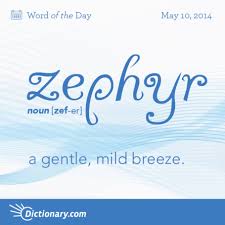

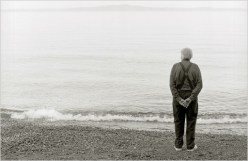 Ten years ago, I lost one of my best friends from my childhood. Today, I received a phone call telling me that I have now lost the other. A few weeks ago I was tasked with a writing assignment to provide an essay on what I long for. You can see it blogged under “Nostalgia and Longing.” Reading my blog, you can glimpse my view of humanity and the world.
  But today, I want to think about the past. Not in a regretful way, but in an “I remember” way that might allow my brain to be the tool of a child’s mind again.
 I know that I cannot go back to that time, and I’m not sure that I would want to. But I want to have those memories until I have no memories. I would like to again feel the freedom, the special bond, and the unquestioned certainty that we would all live forever. I want to think about my future and talk about how much better it will all be. I want free and unlimited amounts of candy and ice cream. We didn’t have that, but when we took over, well, you know, right? I want to know that next year, I will be allowed to stay out after it gets dark, to drive a car (legally), to date girls (with everyone knowing).
 Xanadu may refer to:

 Across the sacred river before the sea
 Where all that move within the light become victims of the night
 Canopies open to view heavens gate as sparkles ignite
 In my lifetime I’ve been called a wise-guy, wise-ass, and a wise-you-name-it. I don’t recall denying any of it. But until I lost a significant amount of hair, gained a lot of scars (and weight), and dealt with a good bit of life’s experiences, no one has used the words wise or wisdom (without suffix) regarding me. So, as I was running through the w’s (women, walking, wine, wild, Wilde, and why) in search of an ‘a-to-z challenge’ blog topic, my wife says, “How about wisdom? You should know about that.” (Her birthday is tomorrow.)
 To me, the word wisdom has much in common with the word quality. Both are generally positive; we recognize them (or their absence) when we see or encounter either. But, precise definition for both eludes us. We are willing to take on as much quality and wisdom as possible, but with one condition. We want to know the cost. What price must we pay for quality? Can we afford it? What price must we pay for wisdom? Are we willing to pay the price?
 As a college student, I would walk into the Seven-Eleven store and eyeball the beer coolers. I looked only at price per six-pack. Texas Pride was 86-cents for six cans. I still can’t believe I managed to drink that horse piss, but price mattered more on my tight budget. I ignored quality. Little did I know then that years later I would gladly pay eight-to-twelve times as much for top-quality, locally brewed, craft beer. My taste and budget have both matured in quality.
 I had a conversation with a friend who was a wonderful, doting, and loving mother to her children. As I listened to her rant-on one day concerning some problem that her son was having, I asked her this question. “You love your son. Why do insist on preventing him from learning life’s lessons simply because they are painful? Be there for him. Protect him from serious harm. But allow him the dignity of learning his own lessons.” Before she got over her hurt feelings about what I had said, she backed off (he owes me). Hard for her, good for him.
 We are wiser when older because we have been schooled in life longer.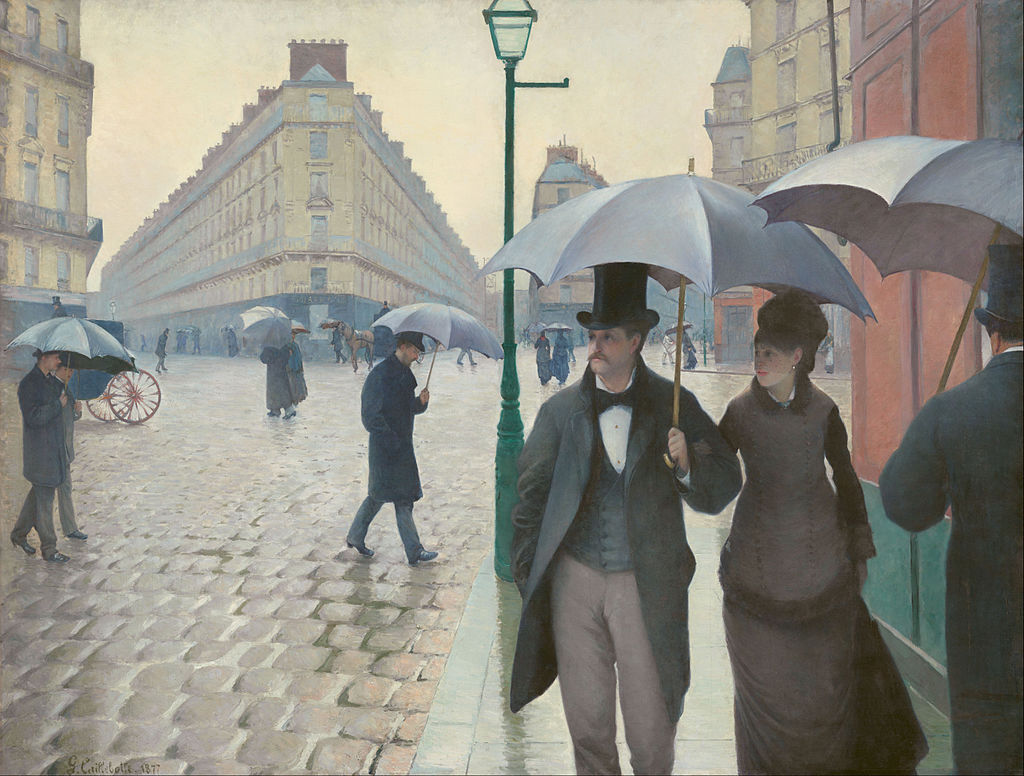
 For the novelist, POV is essential for writing the story. Fiction writers have the god-like ability to know exactly what is in the head of their characters. They create each character. This is true whether or not they share that information with a reader. Non-fiction writers are like the rest of us with human limitations knowing only what our senses (especially seeing and hearing) tell us. So, how do fiction authors tell us about characters? The questions for them, or us (depending on your point of view—sorry), are: how much do they tell us and how do they do it? The answer to one question limits the other. The same may apply to memoir.
 This is important and beyond this blog’s scope. Here are two good blogs on distance.
 How each of us views utopia is probably similar in the broader sense, but we may differ as we each conceive of the details.
  In the world of politics, the dark side of human nature emerges. Of course, it is always the others or the other side. Real world peace would be required long before we could begin to approach anything like utopia. It requires an egalitarian (equal) society and that is contrary to most politics I’ve ever seen. When I think politics, I see far more potential for dystopia and war.
 Religion? While a great deal of good is done in the name of a deity and the respective religions, that good fades to virtually nothing when balanced against the historical inequality and current turmoil that seems to move more toward dystopia — more war.
 I asked alcoholic and drug-addicted Texas prison parolees the following three questions while teaching secular recovery classes. I came up with these to help them find a world view that went farther than the tips of their fingers. My personal answers are utopian.
 The confusion and struggle so many of us face in answering these questions is an interesting testimony to our nature. But we each have our personal utopia within our answers.
 The other night, as we sat discussing writing projects and their duration, the subject of time came up. There were three of us, representing roughly three generations. The more we talked about time and how each of us currently sees it in terms of the future, the more I realized how differently each one of us viewed it. Time does not change. We do, and thus our view of time changes with age.
 I claim to be a right here, right now kinda guy. I live in the present moment. As I contemplate writing a memoir, this seems to cause me an ‘angst’ problem in that I wanna, and I don’t wanna. (I also struggle with writing about myself, but that’s not the issue.) I like History. It could’ve been considered my second minor at A&M. My manuscript is historical-fiction with too much history and not enough fiction. This morning I was asked if I would write a time-travel book (I’m noticing that Vickie has a knack for asking me thought-provoking questions). I didn’t have a ready answer, but after a lot of discussion and thought, my answer is ‘nope.’
 After doing a bit of reading, I’m no longer positive that I know what ‘this moment’ in time is, or if it exists. My metaphysical (woo-woo) friends get excited about this fascinating subject. When they do, I look at my watch and note, “It is one-forty, PM.” But they’re right. It’s really an interesting topic. Physicists and philosophers are all over it. Check out all the wiki and academic research (

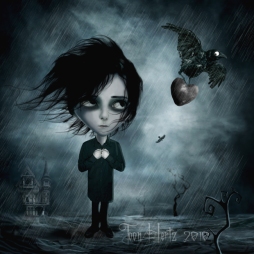 Stephen King has made a successful career out of scaring the hell out of many of us. We (not all) like to be frightened. Scary movies are fun. They are not for everyone, but a lot of people love them. Why? Is it the same with sad books, movies, songs, or plays? We keep going back for more.
 My focus here is music. A friend loved the song Dance Me to The End of Love by Leonard Cohen. That is until she learned that the inspiration of the song was in fact the Holocaust. It is a lovely and beautiful song, but that sadness changed the song for her. The song is not sad by itself, but because the inspiration was so tragic, her opinion of the song changes from love to sadness.
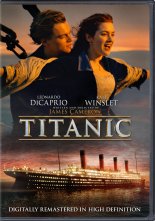
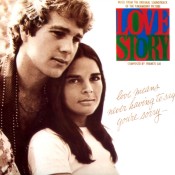 For sad movies, I have listed only five. It could be hundreds.
 Love Story (1970)
 In a scene from my childhood, I watched through our living room window as kids my age played in a rainstorm. They were laughing and having a wonderful time getting soaked. The streets and gutters were awash. One boy sat down in a flooded gutter as the water pushed against him and splashed hard around his body. I felt envy. Not because they were having fun without me, but because they were playing in the rain. I was home with my mother, and she told me that I couldn’t go out because I would get soaked and catch my “death-of-cold.” I have since learned and admit more about myself, and about colds.
 The word ‘pluvial’ refers to rain or something characterized by abundant rain. The suffix ‘phile’ denotes fondness. Consequently, a pluviophile is one who finds joy and peace of mind on rainy days. I was taught that rainy days were sad, as in the Carpenters song lyric; “Rainy days and Mondays always get me down.” I was to believe nice days were sunny, cloudless, and warm. I’ve never felt that way. Sunny and pleasant days have their place, but few are enough. Later in life, I admitted to liking cloudy, rainy days. I now identify as a pluviophile. These days, I’m often asked why, after more than twenty years in California, Texas, and Florida; I recently moved to the Pacific Northwest. I ask, “Do you know what a pluviophile is?” Like it should be news to me, I’ve repeatedly been told “it rains a lot there.” I reply with a smile, “Yes, it does.”
 My involvement with rain changes with its many forms. Scientific names apply based on how it comes about. But, I am talking about how the rain itself varies from torrential downpour to a gentle drizzle. Duration, wind, thunder, lightning, air temperature, and other factors contribute to our experiencing rain. There are times of rain just falling, and times with thunder and lightning. There is morning rain, afternoon rain, and rain at night. Each is emotionally and physically encountered differently. It can be seen and heard while keeping dry, thus precluding feeling the rain. Only outdoors can we dance in the rain. If I don’t perceive rain with senses—I just get wet. Our world changes when it rains. We need it, just as we do sunshine. To me life smells, feels, looks, and sounds more alive in the rain. In the city, rural areas, and in the forest, everything improves. When I am with the rain, I heal and recover. It’s a spiritual exposure difficult to explain. I’m not especially spiritual, but in rain I sense life — nature.
 I recently delayed my daily walk when rain was forecast. After waiting for the rain to start, I donned shorts and tee. I was off in good spirits, expecting to be, and was, soaked. After an hour, I was back home. I sat on a dry and covered bench, removed my soaked shoes and socks, slapped water from my dripping baseball cap, and chuckled. I was thinking how others might consider me deranged. But, this is why I’m here.
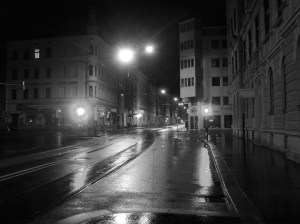
 tilted forward and cocked right. The front brim bent slightly downward with water flowing off. The sound of falling rain is all around. I hear it splash into puddles and onto sidewalks. With water moving everywhere, I forget the day’s problems and the annoying people. But mystery is afoot. Like it or not, Mike Hammer is involved. And of course, there is a woman. As Hammer, in the writing of Spillane, I mumble, “In the flora and fauna of the Bowery, she was a lot of flora and quite a bit of fauna. She looked like she belonged in a field of Wyoming wildflowers instead of wandering through the human backwash of the avenue.” In the night rain, I can do this. Rain brings magic and drama.
 Let’s take life, rain or shine, one day at a time. It’s about how we feel. We’re not alone in our emotional response to rain. In the Pacific Northwest, we love the outdoors, rain or shine. Too much shine and we miss the rain. After some rain, we’re ready to let a little sunshine in. “In every life a little rain must fall….” Of course, and why not?
 Our Literary Journey