Haiku

Haiku is both a form and genre of poetry. Poems are short. Haiku is of Japanese origin and consists of three lines, usually with 12 syllables.  The first and third lines normally have five syllables each, and the second seven. Exceptions abound.

According to some, haiku captures a moment when nature is linked with human nature. As a newbie, I stuck to the traditional form, but the history of haiku includes many variations. Many haiku are penned every day and in many languages, throughout the world. These are my first three.

***

Curves

The wet path it curves
See as plants touch with plants
With different sounds

*
Growth

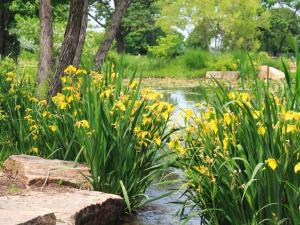
In the cold spring rain
Clinging to the earth below
Yellow flowers grow

*

Click this photo to go a page to hear the sound, whip-poor-will is an onomatopoeia.

Comfort

Still warm and dark night
Stars quietly fill the sky
A whip-poor-will sounds

***

Always look both ways
Every day write some haiku
And mind all the gaps
 

Nonsense Verse Poem: Green Grasshopper

Nonsense verse need not make much sense. This poem almost does, but not quite – maybe it’s organized nonsense. Each word begins with the letter G in six, three-line stanzas, and a closing line. The poem is alliteration on steroids.

Ginko is a tree. A goy is a non-Jew or gentile. Grendel is a monster/antagonist in Beowulf. Gewgaw means showy but worthless. Glozing is making excuses. Ganja is pot, and a grumphy is a pig. Gecking is showing contempt, or screwing over. A gazabos is a person or a guy.

Green Grasshopper
by Bill Reynolds

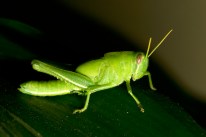
Green grasshopper: gregarious, gay, Gaelic, gaudy;
Goes glen gallivanting, gnaws grazed grass gastronomically.
Gerbil goes gets Gaia gazpacho, gibes gross grasshopper.

Gigolo gains gizmo, goes global ginkgo. Goy gone gentile.
Grendel grabs grisly, gruesome, guillotine games.

Goodbye goodwill, go gobbledygook goddesses glazing gizzards.

Geezer gets gas, gives general group gross gibberish,
Gropes good girls’ grizzly guy’s gloomy gizmo gear.

Grown guy gets glancing, girdled, gewgaw granny gutted.

Gypsy gains ground glumly, getting grouchy, grumpy, going gray;
Gauzily gashing, gauging glozing, gawking goofy gazelle gumming.
Growing, glowing giraffe goes gawkish, guzzles gimmick ganja.

Grazing glowing greens, grasshopper grabs gorgeous galaxy grumphy.
Grand guffaws galloping, gets geek gecking gazabos.
Grasshopper gets grand gumball gnocchi, gets gut gone grievous.

Gerbil, Gaia gone. Gigolo, goy gone. Grendel, goddesses gone.
Geezer, girls, guys, granny got gone. Gypsy, gazelle, giraffe gone.
Ganja, grumphy, gazabos gone.

Green grasshopper, going, going, gone.

Look both ways, mind the gap, and watch for green grasshoppers.

Poem: Freedom and Fairness

What do I want? What do you want? How do you want life to be? What will you do? Equality, fairness, and love should guide us. My friend, Karen, asked me to write a poem about freedom. I did. It has a dark shadow, but the shadow has a crack in it, so the light gets in.

We didn’t start the fire refers to the Billy Joel song, Timothy Frances refers to Leary, the beast is the oppressive government, Tom down is to be subservient. In terms of rhythm and rhyme, this thing is all over the place. 

The Freedom Dream is Dead
by Bill Reynolds

What do I want to do?
I wanna be happy.
I want you happy, too.
My dream is a happy world.

Imagine that.

How do we want things to be?
Let’s be fair, and hopefully free.
And just, and true, and honest, and imagine…
For all, equality and rights
With love we can see, for all brothers and sisters.
Life is not fair, but are we?

Imagine!

What is this happiness we pursue?
In all fairness, what can we do?
Freedom? Liberty? Is that all?
Equality? Justice, et al?

Can you imagine?

It’s just a damn dream for too many.
And our dream is dying the fastest of any.
One million paper cuts, delivered with slashes,
All hope is lost, the beast burns us to ashes.

As for my dream? It is dead.
We fought all for naught.
Now I feel a dread.
Selfishness won. It owns us now.

I can’t imagine.

Resistance is failing, the world is darkening.
Evil and greed are the name of the game.
Profit and loss the new moral code.
Money is god, ready for more of the same.
The worst from the beast is yet to be told.

Imagine died too.

We didn’t start the fire, we can’t put it out,
Feel the heat from the rich man’s ire
Burning a hole in my hopes and desire.

Timothy Frances, where are you now?

To destroy this beast, please tell us how.
Or do we Tom down, and let it go on?

My dream may be dead, but I will go on!
Resist, resist, resist, fight for rebirth.
Resist until we have new life on Earth.

Imagine a future, resist to the end.

Look both ways and mind the gaps.
Life has no guarantees, but we can work for fairness.


Elegy Poem for Mom

An elegy is a mournful poem. I wrote this elegy regarding the loss of my mother, more than 25 years after her death. The elegy is one of the oldest poetic forms. It’s identified by what it says, not how it says it.  The Greek word elegeia means song of mourning, and is often included in classical Greek tragedies.

Missing Mom

The day Mom died, I stood there and cried.
To the surface my guilt came out of my eyes,
Beside her deathbed, letting go of our life.
Her suffering had ended, and I was alone.

No person is perfect, no human unsoiled.
Enshrined mother’s love, was sunshine to me,
‘twas the essence of my childhood memory,
My loss just the same, never again she will be.

She’d lived a rough life, through to the end,
But she loved me as only the mother to son,
That unconditional love, will never be done.
Only her death could end our last day.

Alone. Just alone.

Her voice and her scent, ecstasy to me.
So much I still miss them. I can still see.
“Hiya,” she’d say, to even the worst.
As kind as she was, so how she asked me to be.

Mom we still miss you, your face and your smile,
The sound of your voice, the look in your eyes.
Never again, will you be for us to see.
The loss that brings a sadness, one forever I’ll feel.

Mind such gaps, look both ways, and remember love.

Poem: Dogs of War

This poem refers to crew members (called crew dogs) of B-52 bombers and to their war-time mission of dropping munitions to destroy things and kill people, thus the dogs of war. This is a dark and threatening piece, set in six stanzas of six lines each, with even and odd lines rhyming. Misery and woe are metaphors for the many types of weapons dropped. The shrill is the eerie sound bombs make as they fall. The dog, or beast, refers to the model D, or variant of B-52, which is painted black on the bottom of the airplane. Please question in comment.

We are coming for you.

Dogs of War
by Bill Reynolds

Let us slip from nature’s gravity hold
We war dogs of old, both willing and bold.
Into skies we shall go with misery and woe.
To maim and to kill, who we don’t even know.
Our airman’s life is to die if we will.
Into Death’s realm, we’ll send you the shrill.

We’re lashed to the beast, the marvelous dog,
Behind us we leave the stink and a fog.
The thunderous sound of flying around
We send you a hell, you on the ground.
Wonders of war are set at our feet
Our old friend death, soon you will meet.

A B-52H dropping high-drag bombs and flairs.

Destruction we’ll rain on your cities and towns,
You won’t know we’re there, we don’t make a sound.
Concussion will break you and all that is near,
Along with destruction, we’ll send you the fear.
The black-bottom dogs will come as you sleep
To rip and to tear, into hearts of your sheep.

The countdown will start, as our hearts will race,
But Death we’ll deliver at one horrible pace.
The flashes we’ll see and the fires will rise,
The dogs of war unleased, to your demise.
The horror will come as sure as the sun,
This nightmare relents when war is won.

The Beast

Safe home again with guilt, we shall not feel,
Because of the blow, we were vowed to deal.
To the bar we’ll retire and review the day’s mess,
In laughter and stories, we consider success.
The beast is now resting and finding a tune,
Ready again, the dogs shall return again soon.

The horrors of war are hidden away,
The death and the misery kept well at bay.
From dogs to humans we slowly turn,
To our homes and lives we always return.
Havoc returns with the dogs of war,
Until we can say, no war! No more.

Look both ways, mind the gaps, and fill the world with love and peace.
Lest we…

“…Cry “Havoc!” and let slip the dogs of war,
That this foul deed shall smell above the earth
With carrion men, groaning for burial.”
~ Marcus Antonius in Julius Caesar,
Act 3, scene 1, 270–275


Father Daughter Collaboration Poem

This poem is a collaboration poem written by my daughter, Julie, and me. We both worked on it. In fact, she initially wrote the first part, as a poem to me. It is not renga because it meets none of the normal forms. It is simply two people writing a poem to each other and collaborating, so style and form are free. One could look on it as a duet, or father – daughter billets-doux (love, or sweet letters). Ardor means enthusiasm or passion. My portion is italicized.

Dewey and Dad
by Julie Barber and Bill Reynolds

You are my father, tried and true
And you my daughter through and through.

You know my heart, my feet and hands too.
Some even say I look like you.
From birth and to your life throughout,
I’ve been there for you, without a doubt.

There was a time when things were harder.
I hope I’ve grown and become much smarter.
If we could go back, I’d want you my daughter.
Together we’ve grown older with ardor.

My father, wiser by the day…. Always profound things to say.
Sharing our life keeps misery at bay.

I look to you when the answers are grey.
You say, “let nothing get in our way.”
You heart and your talent come into play,
Find peace therein, as you work away.

Go out and write and use your talents
It will give your life more sense and balance.
Your words are like clay, your pen is your pallet,
Your life is your muse, your mind is your mallet.

Get off your ass and do it already
The world is uncertain, and time is unsteady.
It’s your life to live, you should live it as heady,
Be happy my child, ‘tis all worth it, you’re ready.

The fact you’re so far away makes me sad
But I’m more than proud and grateful you’re my dad.

She’s Julie, but I call her Dewey

Forever you’ll be my daughter to me,
A lifetime of love, we certainly have.

My daughter, our love surpasses all distance
No oceans divide us, our minds unite us.

As we see one to the other, it will always be,
You rank above others swimming the sea.

Mind the gaps, family, love, friends, and the important things in life.
Look both ways, and all around.

Poem: Ordinary Bagatelle

This poem is to appreciate the beauty of simple, ordinary, normal things. A bagatelle is a small thing, something of little importance, a trifle. A demoiselle is a young lady. Vapid means lacking liveliness.

Beautiful Simplicity

Fear not. The simple’s no beast. 

Appreciate the trifle, the tad and the bit.
The fortuneless, the ordinary, the nothings of wit.
Care about the underdogs, the lonely and poor.
Acknowledge the average as part of the tour.

Perk up, dear sweet passé bagatelle,
Deserted and lonely, a crumb of demoiselle,
Desiccated prune mocked as less worthy,
by those who unkindly, do not prefer thee.

Yes, you are shallow and vapid to some.
As a threat to no others, are you liken to none?
Our joy is in knowing the small we still see.
No danger to us, as you let the world be.

Let the worldly and wise have their just due,
Yet forging the lesser means forgetting them too.
The great and the small are part of it all.
So, sing a wee tribute, give the trifle a call.

There’s enough for each at this glorious feast.

Simply look both ways and mind the gaps.

Poetic Abilene, Texas

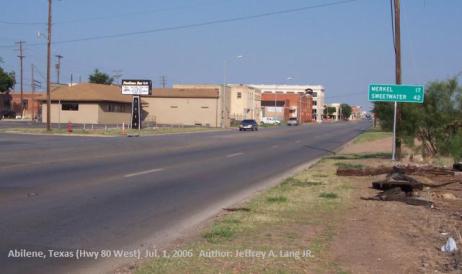
Abilene, Texas is a city of over 120,000 residents. It has a plethora of churches, several religious-based universities, is quite conservative, and a buckle of the southern USA bible belt. It also features a dry, hot, and in my opinion, an extremely unpleasant climate. It’s also the subject of The Abilene Paradox.

This poem expresses my feelings about the area. I’m not sure how many friends I have around Abilene, but after this I’ll assume fewer.


ABILENE

See the circling vultures waiting,
To claim their carrion, ready for plating.

Watch heat rise from the desert collage,
Shimmering around some distant mirage.

Feel the sun’s brutal and forceful heat,
Touch melting road tar beneath burnt feet.

A Pumpjack

Smell the black gold under rock and stone,
Hear pumpjacks mock with their painful groan.

Satan’s throne room would surely be here,
‘cept for the churches, so many so dear.

God’s centers of learning are in control,
No secular center may present you a scroll.

Shudder against winter’s north winds, so cold,
Survival’s unlikely for the sick and the old.

Tumble brush and briar, lowly mesquite trees,
Prickly pear cactus among the parched weeds.

Too hot or too cold, too dry and too bold,
On Abilene, Texas, I could never be sold.

~ by Bill Reynolds

Look both ways and mind the gaps.
Also, mind the heat, the cold, the snakes, the scorpions, the fire ants, the prickly cactus,
the sticky briars, and the annoying thumpers.


Tuesday’s A-to-Z Update

I have not posted in over a week, since my A-Z Reveal. I want to post a brief update because my reveal plan is morphing, if only slightly. Things are not going as planned.

I hoped to include words provided by others in the poems. In writing my first few little ditties, I now realize that writing any poem is a sufficient challenge, especially for a rookie. Adding complex, unfamiliar words to a poem may detract from any bits of quality in the piece. However, I have discovered a different approach.

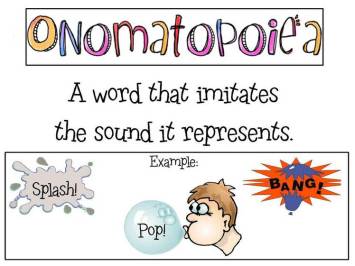
My son, Steven, suggested onomatopoeia. It is an interesting, six-syllable word that means the name of a thing or action from a vocal imitation of the sound associated with it, such as buzz or hiss. Onomatopoeia in poetry refers to a word that phonetically mimics or resembles the sound of the thing it describes. Shell Silverstein’s work provides excellent examples. Like this one.
Joey Joey took a stone
And knocked
Down
The
Sun!
And Whoosh! It swizzled
Down so hard.
And bloomp! It bounced
In his backyard.
And glunk! It landed
On his toe!
And the world was dark,
And the corn wouldn’t grow!
And the wind wouldn’t blow!
And the *bleep* wouldn’t crow!
And it always was Night,
Night,
Night.

All because
Of a stone
And Joe. ~ Shel Silverstein

I decided that I would use poetic forms, or literary devices, or types of poems, or methods of writing as the subjects. In other cases, it may be the title or the topic of the poem.

Where I can, I’ll still make use of the words for the letter of the day within the poem or poems. But if it wonks up the piece, the word goes the way of defenestration (yes, that’s one).

My first poem, Abilene, will publish in my blog on Saturday, April 1st (no fooling). Saturday also marks my completion of two years in (laughable) retirement. I have learned that being retired truly means that I am no long paid for my work – not less work It does not mean idleness, luxury, or boredom. However, I do get to call my own shots, pretty much (wife, children, grand kids, friends, and many others get their share).

Look both ways and mind those damn gaps.

A-to-Z Reveal (2017): Poetry of Words

I like dictionaries. Did you ever look for dirty words in a dictionary? I am not sure kids still do that. Everything is on line. I still use some of those words; but not today, not in my blog. At least, not those words. I plan to find new (to me) words for this challenge. You may find them interesting. I need one per day. Toss some my way, if ya be so inclined.

Words are the bits, pieces, and colors writers use to craft the art. When we tell it as the writer, we use words. We may enhance words with pictures or sounds, but we write with words.

During April, I want to immerse myself in poetry. I want to read more poetry, learn about writing poems, and discover my inner (wannabe) poet. I want to do that by writing them – to piffle out one poem each day for the month. I’m not (yet) a poet. I’ve never finished a poem that I considered ready for others to read or hear.

To that end, and in typical self-abusive fashion, I’ll write as many poems in April as I’m able. I will then post them for all to see. My goal is one a day for the month. To further ensure my personal embarrassment and pain, I am asking you for feedback – “Don’t quit your day job.” This may backfire, but I want (by example) to encourage others to put their work out there, to take the risk, to allow us to share in their efforts.

For each letter of the alphabet, I’ll attempt to use a word within a poem, or make it the subject of a poem, or I will somehow engage the word with the poem. I’ll create a piece that involves my chosen word (maybe more than one), and then proceed in alphabetical order, beginning on April 1st (Oh dear me, the fool’s day).

I will post every day. I plan to piggyback this A-to-Z challenge with the National Poetry Writing Month (NaPoWriMo/GloPoWriMo) challenge. NaPo requires posting all 30 days. I welcome your suggestions. For both challenges, a poem will be posted to my blog and linked to the challenges.

I tend to have logophilia, an emotional attachment to words. My vocabulary is no larger than average, but it should be. My spelling should also be better. I’m not much of an orthographer, but some of my readers are correctors of spelling and grammar, especially mine. Feel free to pile on with them to highlight my blunders so that we learn (my poetic license is up to date).

I want to use this opportunity to learn more about poetry. Will you help me? If you provide feedback comments, other readers see your comments, and thereby grow poetically. I’m willing to hang it out there. You can tell me about it, and we can all learn from the experience — if you share your poetic wisdom with us in the blogosphere.

“A poem should not mean/But be.” ~ Archibald MacLeish