Jim was watering his experiment
for his ag doctorate, Grasses of the Brazos.
The good ol’ country boy let his smile show
when I observed and laughed at him
for making a big deal out of a bunch of weeds.
They were not flowers or cash crop plants.
Jim said, without looking at me,
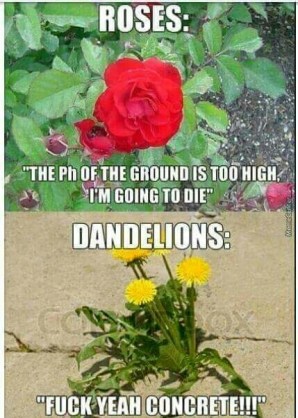
“a weed is just a plant out of place.”
Over fifty years now. Where did they go?
I remember Jim
and his greenhouse full of weeds at A&M,
we’d go spray water on them weeds daily.
Later Jim would defend his dissertation about
Brazos Valley dirt and river bank weeds.
Doctor Jim was a dirt man, agronomist.
Just a plant out of place.
Jim got his Ph and D in dirt.
Then, he moved away to California;
who with his high-pitched, out yonder,
Texas drawl, old Jim
was decreed Doc Jim, the good-old-boy
from Meridian, Texas.
In his own way, he became
a plant out of place.
Many times, I have been a weed,
a person out of place,
or so I felt.
I needed to be in a different place,
to feel unweedly,
wanted by anyone,
or not. Was I where I belonged?
Or, was I just another plant
out of place?
Was I
in the place I was supposed to be?
Bloom where you’re planted,
that’s what they say.
Weeds need to grow everywhere,
but it is nice to find your space.
Today, the NaPo lady challenged me to write an elegy of my own. One in which the abstraction of sadness is communicated not through abstract words, but physical detail.
As far back into childhood I recall,
they say my day, my time, will come.
One day, perhaps quietly
or in some fitful mental agony
it will be my time to die.
But the bell has not
yet tolled for me—
soon enough—
it will.
Every pet, dog or cat,
lightning bug in a jar, turtle
or Easter chick; every snake, worm, or
ant; butterfly or bird, fish
or tarantula , things that flew,
crawled, walked or ran,
or just a sighting in the wild—
they’re all dead now—
I don’t know
what that is—
but they’re gone.
Every childhood friend is dead,
my mother died long after dad,
sisters both gone,
(estranged brother
I don’t know about,
he may outlive me,
if so, let it be).
I won’t know.
Uncles and aunts, one cousin (sort of) all
gone and others I don’t know about,
but they (ones I knew) are dead.
There may be some still doing,
but people of my memories
are past life. And this,
my friend,
is normal.
Some things don’t die, all people do.
Poets die (some never replaced)
but poems don’t.
The two most important
breaths we take,
the first and the last—
all the others
we call living.
That’s life,
Frank.
My sister would telephone,
“Billy” she’d say, “guess who died?”
she said, and then
she’d tell me.
When everyone and everything
I know of has died,
how do I know
who is next in line?
Is it I?
Or is it you?
Not if,
but when!
Today, I’m challenged to write a poem that presents a scene from an unusual point of view.
***
He will not leave me alone. All that touching and feeling me, he tweaks me mercilessly,
and (too often) makes me look like barfed up SpaghettiOs.
It’s embarrassing.
He thinks I am his and that he knows all about me.
He doesn’t.
I know teenagers who know more about me than that old fart.
Others simply see my words or hear my meter while he sees me as his personal art (bitch).
He puts his name on me – how rude is that? He doesn’t get it.
He talks about me (us—there are others) endlessly, influencing his friends
to fool around with me.
Sometimes he gets violent with paper and pen and pushes me around
because he thinks his mental malady will be short-lived. How rude!
He knows so little. He has been writing poetry for fifty-three (long) years.
BFD, right?
When he was young with a hard cock, he ignored me. Thoughts?!
That’s all I got from him. He liked us, but he was ashamed
because I didn’t do much to make him look strong and tough and mean.
I think he is an imposter and so does he.
I am all he does—all he thinks about. He explores me in every embarrassing way,
he sniffs me, touches me, he reads bawdy stories. He acts like I am some sort of trophy bride. And oh, my fucking god!
The limericks! The men who write them must be burning in hell.
I know for a fact that he’d rather a crusty, edgy limerick over a sweet love song poem.
Sometimes he writes me and then loses me.
Rather than be upset, he writes another me.
It’s as though I matter, but I also don’t. Which is it?
What the fuck?
He will never win a damn thing.
He wants to put us in a book and claim us as his own.
Such possessiveness! It’s unacceptable.
We are our own persons, who just happen to be poems.
If we belong to anyone, it is the poetic universe,
but he’ll never understand that.
There are reasons he was as he was,
and more reasons why he is as he is,
but none of that has anything to do with us,
the poems, the words, the lines and rhymes of Our verse.
When he looks at me it is like he is seeing a ghost, a shapeless cloud figure,
wavering without beginning or end,
just flowing shapes in many forms of endless words,
of unknown visions and interpretations.
Oh crap, he is picking up that god damn pointed, sharp pencil.
Soon he will be poking and scratching, adding and removing, or changing—endless changes.
In my next life, I want to be prose. Just a little time on his laptop, maybe one printing and we’re done. At least he knows prose and has been doing it since way back.
This rookie old fart poet will be the end of it all.
Look at all things both ways, male and female, creator and created, toucher and touched, kisser and kissed, poet and poem. Mind the gaps which harbor resentment of the art.
Today, I’m challenged to write a dramatic monologue poem. I tried to create specific voices of character that act as both narrators of the poem and participants, which could be acted out by someone reciting it.
****
He is just there, out of reach for now.
Or is it us? So waiting and watching his stare.
Dare we touch such darkness, or look upon him,
in a time to sample solutions?
To this time we have come, as you and I will have done,
to seek his work in our lives.
The darkness that follows, at times closer or farther,
but always, always there.
We look not to see into his darkness
as he looks upon us with calm eyes
for seeking an inevitable time, when we
feel his welcome breath as a wind of the wise.
With a song he beckons us to release
this pain of our suffering into his care.
This love has been our personal world,
but now we may touch an eternal threshold of peace.
Release me not, but allow you go with me
in search of our final love of his prize.
With pain and regret I feel deep in my bones,
to him, I send you in my despair.
Such shaking a coward deep within me,
I step into our eternal new home.
As we lie here in the dark, and together we sleep,
for a time never again to rise.
wandering the halls, pacing, here,
then there, this way and that – in
corridors between over-decorated
rooms of the hopeless romantic lover
and the stark stripped-bare
reality of a stinking nihilist’s
hopeless shit-house of oblivion,
with its dullness and pointless obscurity
looking for answers in pain
where
too many unreal illusions
are at one end,
and silent nothingness
at the other,
just the bitter taste
of death
following me – chasing me
divining into these closets of insanity,
the brutality of life pounding
and raping each victim as one
reaches for love to taste
no eternal bliss or to miss –
eternal silence, quiet, peace.
When I was a very young lad, one day as I was walking along a well-worn path, I noticed a stone of interesting size and shape. The stone briefly entered my short span of attention, as did many things lying about my undiscovered world at that age. I don’t recall many other details about my surroundings that day, but they no longer matter.
That was the first time a stone was not just another rock lying among other random bits of littered scree. Certainly, similar discoveries have occurred thousands of times throughout my life while walking, running, hiking, exploring, or just hanging out (thinking or not). This was a simple event that works as my metaphor for many other life events involving discovery, reason, and doing.
The rock was just lying there among others, perhaps for a thousand years or more. I wasn’t yet thinking in geological or historical terms. Stones have served many purposes after they were formed millions, perhaps billions, of years ago. There it was on the ground with others just where my eye located it. It had probably been moved around in one fashion or another over the centuries. I had no way of knowing, nor did I care. Even before approaching it, I was mentally making my I saw it first claim.
Living organic things come and go. Almost all life forms have appeared for a time and then were gone. Over 99 percent of life is extinct. Some rocks may contain fossilized records of past lives, but most are just inorganic minerals. I was not the only child who saw rocks, sticks, or other items as things naturally intended to be thrown about. Getting the right rock and throwing it brings a feeling of success. Skipping rocks on water is a universal rite of passage.
Looking around at the organic things today, I realize that most are less than 100 years old, and less than 50 in current forms. The complexities of the laws of thermodynamics (physics) change things, but we only see the now.
Neither I nor the stone said anything, Rocks don’t talk or hear in the animal sense. But nature can speak to us through both organic living things and through inanimate objects, such as rocks and fossils.
As I moved, the rock played its role as a lifeless stone like billions of similar objects covering the surface of the Earth. Rocks are infinitely expert at going with the flow. River rocks spend so much time tumbling in the roll of water they lose their edge and become rounded. The rock I saw did not sparkle, twinkle, or do anything spectacular. But I saw it. I squatted and half bent over so I could pick it up with my hand. That was many years ago.
More recently, I picked up another rock – my first in years. I carefully examined it, top, bottom, and all sides. One learns that by picking things up, especially rocks, one must carefully examine the item to ensure it is a lone stone, and not one littered with objectionable attachments. It must be just the boy, or now the man, an old man, and the rock with no another surprises.
While I didn’t bother to analyze it, the rock was local Austin limestone, or chalk rock, which is said to have formed in the window of 100 to 200-million years ago. It didn’t matter, and at the time, what I was looking at was just an old rock. Or was it?
Ideas are like stones. Once you pick one up, you must examine it, and only then decide what to do with it. As with stones, I have dropped ideas, put them in my pocket for later pondering, or threw them. When throwing ideas or stones, one must distinguish between discarding, sharing, or targeting. The first is simply throwing it away or back to where it came from. The second is communing by tossing it to someone else. But the third is capturing the idea or stone for our own creative purposes. Like rocks, ideas can speak to us. We just need to listen.
Look both ways for material and ideas. That’s what creativity is all about. Toss some back to the gods, share some with others, or use them within your own art.
Mind the gaps. Look there for those hidden gems.
Since March was the first month of the new year in ancient Rome, some historians believe the Romans named March after Mars, their god of war.
Time for a poem – warning ADULT LANGUAGE. If you’re easily offended, don’t read it. (Now you’re really curious, right?)
Man of March
Kiss me goodbye said Winter,
his eyes a-twinkle and a
guilty smirk, we find the
month of a Roman god, of
the lion and lamb, the
time of dancing transition
from the hard cock of cold
mister Winter to a soft sweet-
smelling moist pussy of
Spring, when even the
fucking pear look lovely
dressed with flowers and
the promise of new life
born of Spring, before
the Dragon swoops down
with heat and fire after
April, the last of the Kind
before October’s dance
(at 73) of fest and feast.
Hello, March, Man of
Venus and Lover
of Spring’s Pleasures!
Some say it’s the least felt of human emotions. That may be. It seems to be the feeling least written about from a mental health professional perspective. And yet, I’ve read that grateful people are happy people. Are they happy because they’re grateful, or vice versa? I should know because I consider myself one of them.
I am uneasy when people thank me for my military service. While there were days I would not want to repeat; some of those memories are among my best. It was my career – my profession. If people were silently grateful, I’d manage. I used to humbly balk at such comments, but I soon learned to say thank you and move on.
I was walking down a street in Crystal City, VA (just outside of Washington, D.C) with a US Marine Corps colonel. We were headed for a meeting. He was in his uniform, but I wore civilian clothes. As we were waiting to cross the street, an attractive young lady walked up and shook his hand as she thanked him for his service.
After she left, he said, “Since being married, I no longer know how to handle situations like that.”
I replied, “Next time, introduce your Air Force friend and I will take it from there.”
The value of gratitude to our overall mental health is well known. I know of no self-help book that suggests being thankless. Everything from gratitude lists to National Holidays inspire us to be reflective of those things and people we feel have improved our lives.
A Memory
My favorite gratitude story involves the son of my wife’s sister. She had six boys, of which Scott was the youngest. Whenever we visited his family, I would find time to play with Scott. Be it baseball, football, basketball, or some other similar endeavor, Scott and I interacted and played – just the two of us. It never occurred to me, as the youngest boy, Scott’s five older brothers had better things to do. And his father, a borderline workaholic, had been worn down by the first five boys.
Eventually, Scott grew up, got married, and graduated from Texas University. He and Sarah had two lovely daughters. I enjoyed my time with him and never gave it another thought after we had both moved on with life.
Scott matured into a handsome, well-liked, and friendly man. Everyone liked him, despite his reputation as a clever prankster.
On a visit with Scott and his family, he asked to speak with me alone. After we retreated to a private area, he said, “I want to thank you for all those times you played ball with me when I was a kid. No one else did that and I have never forgotten. It meant a lot to me. Thank you.”
By being me and playing with some kid, I created memories for him. Now, my memory is of his expression of gratitude. Within a year, Scott had died of a congenital heart problem. When I learned of that, my first thought was of our chat.
‘Thankless’ Employment
I’ve had some experiences with work-type situations some people call “thankless jobs.” While I understand what they mean, I can never get my brain around what a ‘thankless’ job is.
As an additional part of my real job, I once volunteered to be a Facility Manager for a large building where several hundred people worked. I was paid nothing extra.
A few months into the building job (which my wife titled Permanent Latrine Orderly [PLO], from the movie No Time for Sergeants), I realized that all my voice mail messages were either new problems, or comments about on-going issues related to the building, not my real job. I liked the challenges and the idea that my efforts made a better place for people to work for nine hours or more each day.
I also enjoyed the times people expressed their gratitude to me for doing such a ‘thankless’ job. Even with that irony, I also liked when people sent emails to my boss telling him how much they appreciated what I did. He let me know. One day he introduced me to some visiting VIP as his Facility Manager rather than my real job title. Was that a slip-up, or was it because he most appreciated my building caretaker duties? Thankless? I think not!
Thankfully Happy Few
I admit, as Harvey McKay titled a chapter in How to Swim with the Sharks Without Being Eaten Alive, gratitude is (or may be) ‘the least felt of all human emotions.’ But I also know when we think about it, we are usually grateful.
It’s not a perfect world. We have a fair share of ingrates and thankless souls wandering around. But thankless is the other side of what we ought to be, and most of us seem to know it.
I further admit knowing some who fear happiness. They are normal when complaining or worrying. In those cases, we either simply wait for it, or we speed things up by asking, “How are you doing?”
Their answer is, “Well, let me tell you about it….”
There’s nothing wrong with having an attitude of gratitude and it may even lead to a healthier and happier life. Yet, I’ve known some very happy, but cantankerous old farts who relish the chip on their shoulder. Good for them.
The only thankless jobs are the ones we don’t want. People have been treated for long term depression, only to find relief with a job change. It happens.
And the only thankless people are the poor souls who may be struggling with their own sorrows, problems, or demons.
And isn’t happiness what we ultimately want? I think so.
Note: Dear beloved English teachers, current and past, I realize every sentence is not a complete sentence. It is intentional. Sorry.
For those of you not of my generation, may you be so lucky as to become old someday, to grow wiser than ever, and to be an able matriarch or patriarch of your tribe. May you be honored for your past, cherished for wisdom today, and be a loss lamented when your time happens.
My wife Facebook shared/posted a (much too) long epistle that numerically listed 21 items of advice for old people (like we effing need it). I don’t agree with most of it. My oldest (adult) son made the sarcastic comment (it’s in his genes), “Dad’s always been on top of the latest fashions.”
I never wear socks with sandals (matured in 60-70-80s), checks or plads with stripes, or color combos that make my wife wince. I wore a uniform for years, then (after a period of high-casual) went as laid back as I could pull off.
I was once asked by a fellow manager how I ran a department where employees (include me) dressed casual Friday, Monday thru Thursday. He told me he asked upper management and got an emphatic ‘NO!” My response was, “I didn’t ask.”
But, Billy has a point.
My below the waist wardrobe: shorts, sweat pants, or jeans (clean underwear). Feet: usually short socks, slide-on shoes of some kind with rubber soles (no crocks), maybe laces, rarely sandals, very temperature dependent. I rotate sneakers but have some for rain and some for mud.
Upper bod gets things with no buttons like an old (maybe new) tee, or pullover long sleeve thingy, or sweatshirt. Formal shirts have collars like golf/polo type. Have some mock turtlenecks for when I feel all cool Pat Conroy, John Updike, or Patterson-ish like.
Dark color, pull-over sweaters for my shady moods and gloomy times of Peter Reading, Poe, Blake, e. e., T.S., A.E., Ezra, or G.G. Lord Byron-ish days. I have them.
I wear baseball (sometimes newsboy/Irish eight-piece/flat) caps.
I have clothes I no longer wear (since retired): Docker-like slacks, dress pants (not sure what still fits), sport coats covered to keep dust off, ‘nice’ long-sleeved button-down shirts (dusty), leather shoes (no wingtips or suede).
One pair of hiking boots I also use for motor scooter rides. I do have variations of workout garb that changes with the weather. A mix of sweat or beach hoodie thingies (how cold is it?) including a red rain jacket. Casual jackets, several of which I cannot recall ever having worn. I have my USAF leather flight jacket that screams ‘you put on a few’ when I wear it.
At home, it’s about how I feel. Out, it depends. I may be professor R.J. at the library, but more Chinasky at the pub. Writing at coffee shops is mood-determined. On my worst low-casual day, I look better than half the peeps in Wally World (maybe more than half), but who cares?
The last time I wore a tie either somebody died, got hitched, or I was being paid to dress like that. I have tossed a ton of ties, but a dusty dozen remain in my closet with all those belts. I wear one belt and only with jeans, but have beaucoup backups.
I try to keep my hair cut short (no old man pony tails for me, thanks), I brush and floss daily, walk about 2mi a day (when motivated), swim a bit more than that in week (shower daily after swim), sit way too much at this computer, go to one or two ‘social’ events a week, read not enough, watch some (too much) TV (The Voice, NCIS [needs me to write for them], Chicago PD, Fire, Med-maybe, an occasional Netflix movie or documentary, Bull a bit, some football [maybe]). If I go to the movie (or other) theater, I will dress medium casual, but at home…eff-it.
I really do care.
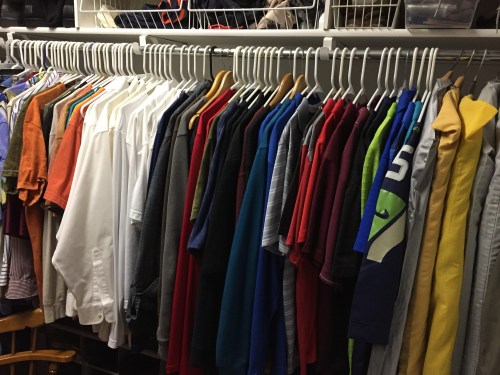
So, what’s up with (in) my closet? An old flight suit that no way would ever fit again, covered sports jacks and an old Class-A, USAF uniform (‘when I wore a younger man’s clothes’), too many shirts of which I wear less than half, pants that if not jeans I never wear, and two baskets for shorts, sweat pants, and miscellaneous whatever.
In drawers I have socks (mostly over-ankle types worn less than one day a week, if it is a socks day), underwear of which some %-age always needs tossed out, more tees, and too many pull over sweaters (all of which I like and do intend to wear, [see mood comments above] but I live in Texas). ‘tis the season, though – twenty-five degrees here this morning, which is why I sit writing this instead of out humpin’ for my 2 miles. Do not hang pullover sweaters on hangers. It gives them (you) shoulder bumps.
Okay. The truth is that I am an old man who basically does WTF he wants and has a dress and grooming code/standard bar set at ‘somewhat’ acceptable, if anyone cares. I do not wear stink (fragrances like cologne or after shave). Me? A fool? I think not; but passionate? Hell, YES! (Just not about my rags.) So, let’s end this with a poem by Yeats.
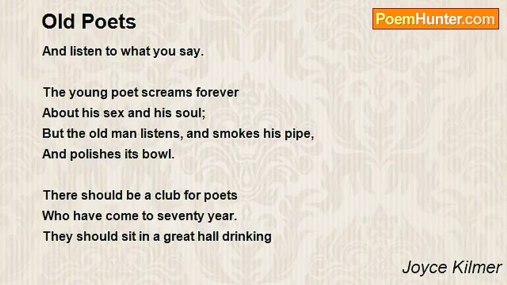
A prayer for old age by WB Yeats
God guard me from those thoughts men think
In the mind alone;
He that sings a lasting song
Thinks in a marrow-bone;
From all that makes a wise old man
That can be praised of all;
O what am I that I should not seem
For the song’s sake a fool?
I pray—for word is out
And prayer comes round again—
That I may seem, though I die old,
A foolish, passionate man.
Intense?
Look both ways on the closet rack and ask, “why do I have?”
Mind the gaps in the closet, for a tie’s a poor gift to an old man who’d be tickled with a kiss.
Goodbye my old friends. You’ll be missed.
But we have no ways to keep you all
held together. Your time has passed.
We all get old. If we’re lucky, we live
purpose driven lives of building memories. Yet,
wear and tear take an unrecoverable toll.
For so many years, you’ve held it together for me.
All nights and all days, when I called, you provided
me with comfort, support, and security.
You took beatings on hot days, the soakings
of untold rain and freezing weather in three states,
absorbing blows and poundings meant for me.
You guided my way on many paths of life,
through dust or mud, up ragged hills, through raging
flood waters of life, you gave your self for me.
Now your hollow dismembered carcass must go.
Leaving only podophilic memories for soles
to recall in gratitude for your long support.
We have harvested your organs, internal and external,
hoping to preserve your memory and to provide
transplants for younger, stronger soles soon to follow.
Were we a military unit, we would give you a medal
for valor and service. Governments would give you
citations for long dedicated self-sacrifice.
Thank you for your service. Old sneakers never die.
They just wear away in a soft squeaky whimper.
My feet, toes, and ankles salute you both: Comrades!
(21 foot-stomp salute!)
Bill Reynolds 10/18/18
Run through the jungle looking both ways and minding foot gaps, slips, and trips.


 ***
***




 Our Literary Journey