Recovery from Middle Age

When It Happened

Middle age is in my past. My t-shirt says, “Beware, second childhood in progress.” When people ask, I tell them it’s an old shirt. I’m long past that.

At 27, I knew everything (we all do). I would live forever. By age 40, I thought I might not live that long. Around then, I was sure that other’s opinion of me was paramount. I included everyone, especially any man who could possibly effect my life personally or financially.

Unfortunately, I often said what I thought – more than I would now. Today, I’m unlikely to answer personal questions. I may. But usually I want time to be calm and ponder consequences.

Back in the day, if my boss told me to do something that I felt was against my personal opinion, I would say, “No, sir.” Often, this happened in front of people. I enjoyed two things about it: watching him try to hide his anger (if he did) and some other middle-managers joining my mini-revolt. I wasn’t intentionally a trouble-maker. It just turned out that way.
recovery from middle age3What It Was Like

Looking back to my forties and fifties, a lot happened – both good and bad. But, I recall the difficult times well. In the 90s, I lived away from my family as a weekend commuter for two years. I drank way too much and began to ponder things that I’d never thought about. I was confused about life. I was not happy, and may have been clinically depressed. I was surrounded by others in worse shape than I, thus my problems went unnoticed. I was fine with that. Men do not have such issues, right? No longer did I feel safe. I didn’t understand the rules or what to do. I had morphed into a people pleaser, but I wouldn’t have admitted it.

Add to this, my wife had gone to work and was living as a single parent on weekdays (and nights). She had her issues too. And we had teenagers who’d aged up to their early twenties. Life was not easy for us or them – certainly not emotionally. Denial was my strength and maybe hers. Our dysfunctional family was extended and there were problems in that area over the horizon.

Possible Consequences

recovery from middle age1I’ll spare you details. But during the 1990s all hell broke loose in my life and I thought it had gone into the proverbial toilet.

I recall giving consideration to suicide. I also seriously considered homicide. To be clear, while I never seriously intended either, I considered both as solutions as I never had. But then, I made an important decision. I decided that I would try everything possible to get over it. If my life was not working, it would not be my fault.

If you type middle age American male in Google, you’ll find articles relating to suicide, alcoholism and drug addiction, and the almost inevitable consequence of death. Middle age male suicide is a bigger problem today than 20 years ago. But I can relate to middle aged men today who secretly struggle with something they don’t understand. Looking back over the years, I think I figured out a few things.

What I Did

recovery from middle age2I like to joke that I’m recovering from middle age. But, I am simply living my life. My life is good now, but recovery is an ongoing process. While many of my decisions may have been random, they seemed logical at the time. I was desperate, but knowing that I was not alone mattered.

I read books on self-help, mental health, and recovery – all were about mental and physical well-being. I attended counseling sessions for family members. I became active in a 12-step program. I started to learn about eastern religious thought and philosophy. I took a deep and detailed (analytical) look at myself. I did that twice, six months apart. This was much less about who I am and more about me being me, or me not being me, but being what others thought I should be. This may seem minor; it wasn’t.

My discovery was two-fold: I didn’t know myself, and I wasn’t being true to myself. I couldn’t be. This was important for me to figure out because the solution that followed was not complicated.

My change was from the inside-out, and from the outside-in. I simply was myself. While I could continue to be a good employee, a good friend, a reasonably nice person, and a willing family member; I no longer identified myself by what others thought I should be – what I should think or what I should feel. I was not only ‘okay’ with this. I was delighted. It was not a new me, but just me being me. That is the way I saw it. My motivation was inside and based on how I felt. But as I changed my behavior, that effected more emotional adjustments, which led to being more able to do more with my behavior.
recovery from middle age4

A short while after all this my son told my wife that he didn’t recognize me because of the changes. That was 20 years ago. I’ve hung onto that way of thinking ever since. Being comfortable as me (‘in my own skin’ is the cliché) did not change my life so much as it revealed my life to myself. Now, as a senior American male, I am still as wrong and as programmed as anyone. But when I realize my error, I’ve learned to admit it quickly.

How It Turns Out

As much as I like the phrase, it is what it is; I have my own motto: It is all about how we feel.
cropped-img_0551-e1469756636276.jpg

Probably my most positive boost has been retirement. No longer subject to the corporate nonsense and politics, I feel “free at last” to keep moving forward with my life on my terms. Virtually all that drama is in the past, and there it shall remain (at least for me).

May you find a path through life that is long and revealing. While giving up is an option, may you never choose it as long as you have any others yet to try. May your days of light be long and may your dark days pass quickly. May you be constantly aware; you are not alone. We are one.

 

Final Topics on Creativity

Creativity and aging

There’s too much information available to cover this area adequately. My research indicates that we become less creative as we age. Perhaps we do. But I would not say ‘less.’

creative old2

We change with age: physically, mentally, and emotionally. I think we also change creatively. I don’t think we become less creative so much as our creativity becomes altered as we adjust to all changes in our lives. Certainly, significant aging and mental problems (dementia) and physical illness have their effect.

Blocks to creativity

Creativity is an attitude. Our curiosity sleeps with our creativity. The more curious we are, the more creative we seem to be.

creative old3There are too many blocks to mention each one. We all sometimes have blocks.
When I tell people that I am not as creative as they are, they often want to fix me – to give me advice on how to be more like them (do as they do, believe as they do, be as ‘open’ as they are). They would also advise me to be myself, blinking not an eye at the irony.

I don’t say that I’m not creative. Of course I am. Everybody is creative. But we are not all the same. My creative nature is more sensitive to that of other people, thus they are my preferred source of inspiration. I confess: I struggle with creativity. Many of us do. So what?

I think the blocks to our creativity begin at birth. We are born creative. As far as we know, it is a uniquely human trait. Children are wild with the creative process (in most cases) based upon the behavior we can see. We don’t know what we can’t see. We do not know the thoughts of others. We only hear what they tell us. Over time, our creativity struggles with life, society, judgement, our own human condition and nature, as well as that of others.

We don’t know what creativity is (no, we really don’t). We only know when we have it or when we do not. We can see it in the work or behavior of other people, but we cannot see into their minds and hearts. Like quality, we know it when we see it.

Value of music in creativity

I can read while listening to classical music (no lyrics), but no other genre. I must write in virtual silence. But I also find music as stimulating to my own creative process as anything. I have no idea how it would go if I did what a so many other artists do with music. But I know this: it helps in two areas.

One is in the magic of creativity itself. The other is in the execution of the work. Think of these two aspects as you watch Jonas Gerard (age 75) in the video below, creating with live music at his studio in Ashville, North Carolina.

“The rhythmic influence of music is an important part of his (Jonas Gerard’s) artistic process…. The music allows him to work unpredictably and intuitively, kicking it into another mode and bringing it home to a subconscious space where he can respond to the rhythm, and the direction the paintings suggest to him.” (from http://www.xanadugallery.com/2013/Artists/ArtistPage.php?ArtistID=7399)

The following is good regarding music.

“In addition to stimulating creativity, music can help contribute to the development of a more creative mind.”

“Creativity is within each of us and the very reason the world exists.” ~ Frank Fitzpatrick, Why Music, Part 6: Music and Creativity

creative old1Einstein was interested in both creativity and music. He tied the two, even suggesting he would be a musician, were he not a physicist.
“If I were not a physicist,” he once said, “I would probably be a musician. I often think in music. I live my daydreams in music. I see my life in terms of music … I get most joy in life out of music.” ~ Albert Einstein from Alice Calaprice, The Expanded Quotable Einstein (as quoted by Fitzpatrick)

Afflatus [əˈflātəs/] (n)

Afflatus is a divine creative impulse or inspiration. The word literally means inspiration. It does not refer to the usual sudden originality, but to the staggering and stunning blow of a new idea, an idea that the recipient may be unable to explain.

Add music to this and creativity becomes limitless, in my opinion.

Duende [do͞oˈendā/] (n)

Your Duende?
Your Duende?

Duende is the mysterious power of art to deeply move us. It’s a quality-level of passion and inspiration that may be felt by anyone. It can be the artist as they work. It can be the observer of the piece, the reader of the text, the listener of the music, the watcher of the act or dance.

When you are next moved like this, speak to the spirit within you, “Ah, my Duende, you feel it too?”


Mental health and Creativity

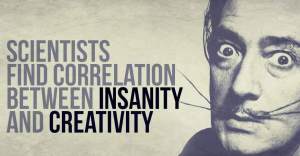
This is confusing, and for some of us, maybe a bit dangerous. No one is more artistic, creative, or on a higher creative plane because they suffer a mental malady. We can be both mentally ill and creative. How one effects the other is unknown.

There is sufficient research to indicate some correlation between the two. But nothing indicates that being drunk, high, depressed, or any other mental condition causes people to be more creative. Normal healthy people can be, and are creative. Throughout history, the same can be said for troubled artists and creative souls. It’s the difference between ‘because of’ and ‘in spite of.’creativity1

Letting Go

I can now move all books on creativity from my writing table to the bookshelf from whence they came. I want to thank Elizabeth Gilbert for Big Magic and I am grateful to my friends and fellow artists/writers who suggested it. While I still have a lot of issues with what Gilbert proposed, I wouldn’t have taken the time to do the work had I been in total agreement with her.

From whatevCreativity2er source your creative ideas flow, may they flow to you in abundance. May you be orgasmic, chilled and thrilled with ideas, concepts, and plans. May you make the best of all your days being creative and doing your thing (art, writing, music, etc.) and enjoying the universal gifts shared by others. May the spirit of duende haunt your heart and mind, thus bringing you to a spiritual bliss as only we humans can experience.
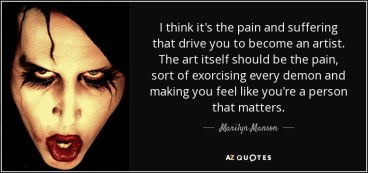
Suffering, Love, and Creativity

suffering5

I don’t think I suffer more than average. When I find the enthusiasm to write about myself, I’ll include those painful and dark times from my past, along with the many good ones. I will be unable to link any of it to my creativity because I see no connection.

WebI do believe that to a degree, suffering is optional. I’ve seen people suffer unnecessarily, and I’ve seen those same people get over it.
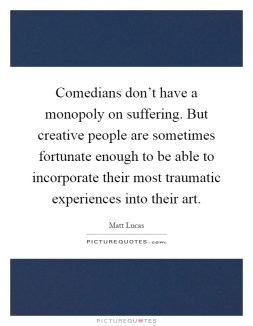
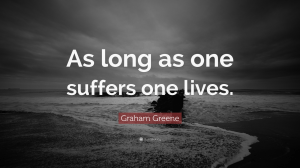
In my blog tagline, I intend rain as a metaphor for my dark side, but it could also be for pain, suffering, or difficulty in life. The reaching for the sky is either embracing our human dark side or recovering from painful times. Such painful times often come with lessons making them valuable.

Until I read Big Magic, I gave little thought to suffering’s association with creativity, talent, and giftedness. I thought Elizabeth Gilbert’s treatment of the topic was a bit condescending (maybe it’s not). Perhaps it’s me, but telling alcoholics (or drug addicts) to get over it has limited success. On the other hand, many alcoholics told me that the painful consequences handed them by life at the bottom was motivation to recover.

suffering6I think that what Liz bemoans is using suffering as justification to be creative, talented, or gifted, thus making an excuse for hanging on to the bottom. We shouldn’t suffer just because we think it improves our work. I’m concerned because I know people die on the bottom. I’ve experienced great things from living artists, suffering or not – nothing from the dead ones.
I don’t take the relationship between our creativity and suffering too seriously, but I am less apt to dismiss it as some others may do. Conversely, I believe talented people do not need to suffer to be talented or creative. I am a happy guy who loves dark poetry, stories, and the dark side of human nature. Following my review of a memoir recently, I told the author “This is a sad story. Your job is to make me cry.” I’m advocating emotional writing, not suffering, hers or mine.

I avoid pain and consider that normal. Just ask my nurses when I’m having surgery — higher is better. And don’t even talk to me about my dental appointments.

suffering11

While researching this topic, I discovered that I’m not the only person who finds this subject interesting. The available resources on the topic are sufficient for a doctoral dissertation, followed by two books.

I found this link to a blog (here) and a video of a talk (here), both involving Sharon Salzberg. Both are pretty good and not too long (the video excerpt relates to happiness and creativity).

And who does not love this song by Don McLean? It certainly relates to suffering and art.


I also found a site (here) with a collection of information on this and associated topics. It links with other sites and pages for developing creativity and personal growth. Be sure to check it out if you’re interested in any challenges to a creative life.

“Creative artists are fifth in the top 10 professions with high rates of depressive illness. But does depression attract them to the job? Or does the job make them depressed?” “…the reality for the sufferer is that depression is so debilitating it’s impossible to create anything at all.” ~ Helienne Lindvall

suffer6To love what you do, and the love of doing it, even when it is gruelingly difficult (and maybe more so when it is) may be the answer. What I’ve read seems to recommend this. Love your art! Do it for the love of the work, the art, the creativity, the experience. As Stephen King says, do it for the “buzz.”

The concept of a reciprocal relationship with our art was also introduced to me in Big Magic. Doing the art because we love it and love the act of doing it, despite the challenges is one thing. The idea that our art can love us back took me some pondering. Liz Gilbert says “why not?” I’m on board with her. Why not? Maybe not always and forever (although our art will likely outlive us), but at least sometimes.

Gilbert balks at calling our work of art our ‘baby,’ but this seems totally normal to me and many others. We don’t equate art to human babies. But it does vocalize the love we may have for our hard work, often more than nine months worth.

From "Steal Like an Artist" by Austin Kleon
From “Steal Like an Artist” by Austin Kleon

In Steal Like an Artist, Austin Kleon provides two excellent graphic depictions. One describes the challenges and difficult process of creating from an idea. The other depicts that love relationship we have with our creations.

From "Steal Like an Artist" by Austin Kleon
From “Steal Like an Artist” by Austin Kleon

May you be lucky in your love with people and with your work. As Austin says, “Do good work and share it with people.”

Have a wonderful weekend and be happily creative to your heart’s content.

Whatever works for you

The Art of Aging

birthday 70 2

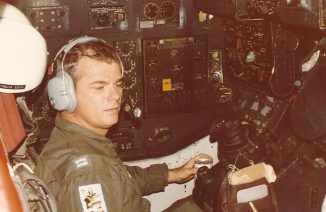
Forty years ago tomorrow, I was the father of two boys: one age five, the other was two (two years later we added a daughter to the pride). Tomorrow would be my 30th birthday.

I was the navigator on a B-52 bomber crew. I recall that as I was taking a shower about fifty yards (roughly 45 meters) from a nuclear armed airplane cocked and ready to go blow the crap of somebody, I was quietly lamenting my age.

B-52D Navigator's Position
B-52D Navigator’s Position

I would no longer be in my twenties. I thought that I was not young and never would be again. I was knocking on the door of middle age, or so I thought. I was feeling down because I was turning the dreaded big three-zero. “Don’t trust anyone over thirty” was the phrase. I still don’t really know what that means. I just knew it was bad.

A Young B-52 Crew Dog

Our society convinced me that I was getting old and that I should be sad about it. In four days, that five-year-old I mentioned turns 45. He and his 42-years young brother really are middle aged, and their baby sister is knocking on that door. I was not old, but I was depressed thinking that I was. Thanks to our shallow, f***ed-up, foolish American culture that values all the wrong stuff in people, my thinking was foolish (and not only about age).

birthday 70 1Is it all that important to be a thin, white, dark-haired, strong, male member of this country? We seem to think so. I hope that continues to change.

We have to pass laws to keep people from discriminating against older people, and the age in the law is 40. WTF? Forty is not old. Again, forty is not old! At most, it’s lower-middle aged.

And if you plan to call this foul-mouthed, hard-drinking, Fightin’ Texas Aggie, Irish-Welshman elderly; you best be certain that you can kick his ass. Because this one is standing straight-up and walking your way (in silence) to demonstrate that old is not elderly!

But, I will indeed become a septuagenarian at midnight tonight. In the game of life, I will be at ‘Level 8.’ I’ve literally been there, done that, and have the scars to prove it (which I wear proudly). I am on a first-name basis with my cardiologists, and if my peripheral vascular surgeon would do a better job, I would be running three miles a day, instead of walking. I ride a Honda Forza motor scooter because my 800-pound, 2007 Yamaha Royal Star Tour Deluxe touring motorcycle got too heavy to pick up (last year). But I still ride on two wheels. I’ve retired from the jobs that pay, but I work every day. I’m a writer and do volunteer work. My only boss is the one I’ve been married to for 50 years.

I like people and I want them to like me. But I also don’t give a flying f**k what anyone else thinks of me or my opinions, politics, religion (or lack thereof), foul language, or beer breath. I do not, and never will, wear socks with sandals. I remain a teenager of the 60s.

birthsday 70 6I am retired. All the shit/crap that I put up with for all those years of school (nuns-groan), yes, sir and no, sir; kissing up to very few idiot bosses (most were great), scrimping and saving and working – it was all worth it. As my wife would say, “Rave on, dog shit!” And so I do. Every day is a weekend and I can do what I want (with her permission—I’m old, not stupid) whenever.
I want to be happy and I am. My last meal will truly be a good pizza (my wife makes the best) and a fine stout brew. When the time comes, I want to walk into Dr. G’s office and say, “Time to shut it down, Doc. It’s been a great ride and I’ve loved it all. Let’s talk about the final git-er-done.” But that day is some ways off. Getting old is not dangerous, driving on our roads is.

Get ready big eight-zero ‘cuz here I come. ~ Me

birthday 70 3

I toast the good health of my birth year (1946) peers: Cher, Barry Gibb, George and Laura Bush, Bill Clinton, Donald Trump, Linda Ronstadt, Sally Field, Ed O’Neill, Reggie Jackson, Daryl Hall, Jimmy Buffett, Dolly Parton, Tommy Lee Jones, Al Green, Loni Anderson, Cheech Marin, and others. We’re still kickin’ the can down the road.

birthday 70 8

May you have love that never ends, much money, and many friends.

Health be yours, whatever you do and may the universe bless you and yours. Rock on, my friends.

I’ll publish my promised blog on creativity this next Friday. I am also tinkering with one on recovering from middle age (men only, I am unqualified for the experiences of the softer, better looking, and smarter sex) because I have been there and done that too.

Fear and Creativity

Elizabeth Gilbert’s book, Big Magic, is about fear. I thought it was supposed to be about creativity, but it is really about fear.

fear and gilbert book 3Fear is normal. We all experience it and depending on the circumstance, it is a prudent thing. Mostly, we seem to fear the unknown. I like many lines in the movie As Good as it Gets, staring Jack Nicholson as Melvin Udall. One of them is Udall to patients in a psychiatrist’s waiting room, “What if this is as good as it gets?” While things may get worse, what if they will not get better. Strange as that may seem, if true, the shrink will soon be out of business. Each patient’s fear may remain in that their problem may get worse, but now they could focus on dealing with life from a different (albeit less hopeful) situation.

In my opinion, what I, and I assume many others, fear most is the unknown lurking in the future. In her book, Gilbert approves of people using entitlement to help overcome fear and any hesitation to create. I would prefer confidence. Maybe I am being a wordsmith about this, but if a person has confidence (faked or not), the likelihood of success increases. I like this baseball analogy.

fear and gilbert bookA child playing shortstop has a line-drive hit directly at them, they will likely duck and the ball may go into the outfield, thus the batter gets on base. This is true due to a justified fear of being hit with rock-hard baseball suddenly streaking like a rocket toward their head. An experienced shortstop may adjust body position slightly, but will watch the ball and attempt to catch it. The latter is the safest choice in most cases. Experience and confidence payoff successfully in this case. The batter is out!
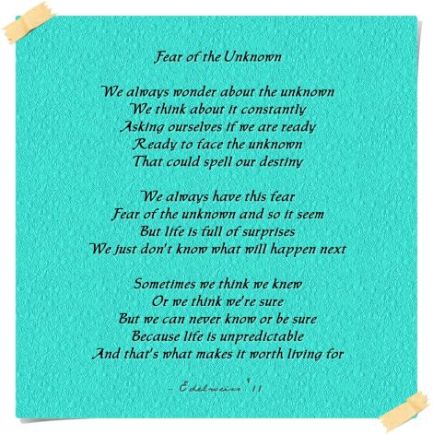
As I understand it, what Elizabeth Gilbert is trying to say is that we should not allow fear to prevent us from creating something. She also suggests not letting drinking alcohol, feeling depressed, or other illness interfere with our creative adventures. She is right in that folks suffering those issues should seek professional treatment and not assume that such issues are creative muses.

In several places she treats alcoholism as a choice. I have serious doubts that many of us awaken one day, look in the mirror and say, “I need to drink more so that I can be more creative.” Take your pick: drug addiction, depression, suicidal thoughts, or just plain meanness are not choices real people make to enhance their creative juices. They are problems people have and Gilbert tries to explain this, but the whole discussion is too long, convoluted, and contrived.

Fear and worry about what others think of our work are justified, but as Liz says, that fear need not prevent us from doing things with our ideas. We will want feedback, especially if we ask for it (Beta or Arc readers). We want it both ways. An honest opinion and good critique. But what we also want to hear is, “That is so wonderful.” Or the response from the big publishing house that says, “Please send remainder of book immediately. We must publish this book of yours as quickly as possible. Fat advance check enclosed herewith.”

fear and gilbert book4

Where I agree most with Liz is that we need to do that work. We need to make the stuff that we want to make. We need to try. I need to write: my novel, my essays, my memoir, short stories, and (in spite of Gilbert says in her self-help book about not writing a self-help) my own self-help book. I want to write a few poems. I want to do the stuff writers do. As far as her suggestion to put my created ‘baby’ out there; that is my decision.

fear gilbert book0It is indeed true. Fear is there. It can be helpful or harmful. It depends on how we manage and deal with it.

My next blog coming on Friday will focus on another book that actually is about creativity and aligns much better with my point of view.

How do you deal with this topic of fear and creativity?

Does fear prevent you from doing things?

Creativity: Human Trait or Magic

Big Magic1I’ve been trying to figure out how to review Elizabeth Gilbert’s book. Developing a plan for a contrary opinion of Big Magic is like trying to figure out how to swim upstream against hordes of powerful whales and others going against me. The book has an 89% four/five-star approval on Amazon. The high praise of editorial reviews includes: #1 Globe best seller, the Washington Post, Cosmopolitan, Huffington Post, Daily Beast, Harper’s Bazaar, Christian Science Monitor, New York Times, Associated Press, Yahoo, Seattle Times, USA Today, Vanity Fair, O Magazine, San Antonio Express News, and a few of my friends.
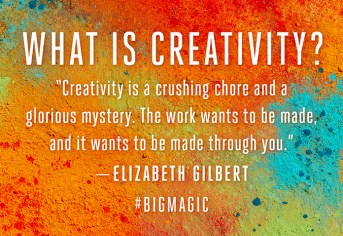
Ms. Gilbert is a ‘rock star’ author who has had big success (Eat, Pray, Love). I have no right, nor the credentials, to discredit her or her writing in any way. Nor do I want to. In fact, if you are a person whose creativity suffers due to your personal fear, this may be a good book for you. It is an easy read with no back matter such as extensive endnotes or research to distract you. The language is very simple and you’ll not need to look-up anything. She makes it all very clear and elementary, which I like.

If you are interested in marketing, check this out. This book is, in my opinion (and that of several others), a marvel of marketing – this baby was sold! Before I expose my dark side, I want to say a few more positive things about this book. For whatever reason, I’m glad that I read Big Magic and I may even read it again.

Big Magic2

For a while, I thought that I would like to forget it and move on with my life. I tried, but Big Magic won’t let me. I finished it weeks ago. Now, it refuses to go away. Why? Well, Big Magic was recommended by fellow writers, friends, and (like Elizabeth) creative people. I’m certain that my friends and Elizabeth each have hundreds of ideas, inspirations, and creative moments to my one. I think that is fine. Big Magic notwithstanding, I can only do one thing at a time.

Originally, my only purpose in writing a review was to get Ms. Gilbert and her damn book out of my thoughts so that I can do whatever I want without thinking more about it. But this is personal. Like many others, I am interested in creativity and often wonder why I have an issue with mine. Books like this usually apply to the author’s life experiences and Gilbert’s is no exception.

Like many (or most) people, I’ve struggled with creativity in that ideas don’t seem to just come to me. But they do come. Sometimes I seem to have them. At other times, they are handed to me by other human beings. When I was still working at my 8-to-5 day-job, I liked what I call ‘idea men’ (women too, but in my world there were few females). These folks were very good at concocting thoughts of better ways or solutions to problems. Often, it was good stuff. It was their strength. I enjoyed setting things in motion to accomplish the good ideas of others.

76876-duendeIn trying to figure out how to handle reviewing her book, I’ve decided not to. Instead, I plan to write several blogs on creativity and associated aspects of that human phenomenon, paying special attention to writing, my own issues, and my point of view. I also plan to add other books and input from others to the mix. If you have suggestions or input, please add your comment.

Butt Man Bill

But man2Two memories from my youth relate to this post. I recall my mother frequently telling me that I was contrary. She would say, “Now Billy, stop being so contrary.” She could have chosen from many words: obstinate, difficult, stubborn, negative, or silly. Actually, that’s not true. She used silly a lot, as in, “Silly-Billy.” I actually liked being called silly and still do. Today, such a fun-loving attitude coupled with silly behavior would prevent a diagnosis of Oppositional Defiance Disorder (ODD).

But man6As a youngster, I did have more than my share of confrontations with adults, especially those in positions of authority. I admit it. Mom was right (aren’t they all?). I was often contrary and many synonymous terms applied equally well. I confess that I enjoyed being difficult, most of the time. Sometimes, I paid for it. Some say I never outgrew my contrarian attitude.

But man5The other memory comes from the time of my early to mid-teens. I don’t know where if came from, but we adapted a phrase for a while that was intentionally meaningless, but we said it – a lot. It was kind of an early version of whatever! We would say it to each other and often to adults. We always knew exactly what the adult retort would be. The locution was Yeah, but, or yeahbut. Today, the Urban Dictionary says yeahbut should be followed by f**k, but we seldom used those words in combination.
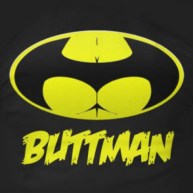
Most often, but is used as a conjunction to introduce something contrasting with what has already been mentioned. Adults insisted on asking, “But what?” We knew we were pushing buttons when we looked them straight in the eye and answered, “Yeahbut.” Silly kids, right? I confess to deliberately irritating adults given any opportunity.


But man1However; yet, nevertheless, nonetheless, even so, still, notwithstanding, in spite of that, for all that, and all the same; I do like butts. Some more than others.
But this is about me being a but man. As I said, but is usually used as a conjunction. It is also used as a preposition (anyone but him), an adverb (to name but a few), or a noun (no buts, you’re buying). Add a t and it becomes slang for a body part. But is a useful word.

It is also a word that I overuse. In my writing and speaking, I am rightfully criticized for saying but too often. Twenty-one times out of 350 words so far in this post. But, it is the subject, after all (22). When I edit, I look for the buts and remove or change as many as I can. But not in this post. At the beginning of a sentence, that is most often when it is there, it changes nothing in terms of meaning. My use is not always as a contrasting conjunction. But there’s more.

But man4

I am a quiet, introverted man by nature. I’m not very shy. The larger and less familiar the group, the quieter I will be. I am happy to let anyone banter endlessly about virtually any topic with no sound from me. I listen closely and analytically (Usually – some might say I don’t listen at all). At some point I might say it. In one-on-one conversations; especially the heated, no attributions kind we have with trusted friends, I will eventually say something. My comments in such environs are often preceded with facial expressions and perhaps a raised eye-brow or two. Then out it comes.

“Yeah, but….” (or just but). Sometimes I fancy it up with things like however, on the other hand, consider this, did you know, or maybe so, but…. I can also be passive aggressive with things I learnt from the younger folk like whatever, ya think?, really?, or my personal favorite: No shit? I like to add Sherlock to that last one, but only when it wouldn’t be offensive (accidentally).

A couple of weeks past, I got to listen to my middle child (now 42) recite a verbal rampage on his view of politics and life, with all the arm waving and facial expressions to have gone viral, had I recorded and posted it.

I really enjoyed listening, even though I couldn’t get a word in until he finished. It was an enjoyable banter, indeed. To be fair, I could see myself. When he finished, I smiled at him and said, “Wow!” and tried not to roll my eyes. I decided that if I said ‘yeahbut’ I would have turned the page to the next chapter of his ranting objections to life in this real world. Sometimes, we just need to sit on our butts and keep our buts to ourselves. Yeahbut moments should be carefully chosen.

Yeah, but.
Yeah, but.

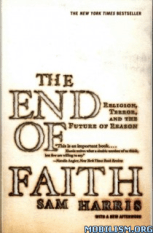
Book review: The End of Faith by Sam Harris

The End of Faith: Religion, Terror, and the Future of Reason by Sam Harris

Disclosure: I like Sam Harris and agree with much of what he says.

End of Faith2The End of Faith has been reviewed extensively since its first publication, but I need to pipe my opinion. With my gradual understanding and knowledge of Sam Harris, this book came to my attention as an eventuality. I’ve read only one other of his books (Islam and The Future of Tolerance), but I intend to read them all. I like his approach and what is, in my opinion, his open mind regarding universal principles which not everyone (atheist or not) shares. Anyone who thinks that all atheists share the same thoughts, opinions, or principles with each other does not understand them. The thesis of this book is no exception.

Many people see the book as his attempt to dissuade people away from their faith, and maybe Sam would agree. Knowing what I have experienced with people of strong religious faith, it will take more than this or any other book. But, for those with serious doubts and deep questions, this is a valuable resource. This is a book written by an atheist who is critical of all religion, especially Islam; at least in terms of the radical elements of that faith. So for anyone emotionally sensitive about the criticism of religion, this may not be the book to read.

Sam begins The End of Faith with a bit of historical fiction based upon fact. He describes a scenario in which a young man boards a bus and explodes a bomb killing many people, including himself. This act of terrorism sets the stage for the remainder of the book.

In several chapters, Sam makes a number of claims which I first thought were outlandish. But after reading his explanations, I came into agreement with him. Two such examples are the problems enabled by western religious moderates and the evil of pacifism.

End of Faith1

The textual material in the paperback version that I read was only 238 pages. That includes an Epilogue and an Afterword. It is not enough. However, these are followed by 64 pages of extensive end notes that provide more details. The bibliography is comprehensive and furnishes the more curious reader ample resources on the topic for more than a year of study. A useful index ends the book.

The copyright page indicates the years 2004 and 2005, so he probably wrote this in the 2002 to 2003 timeframe – a year or two after September 11, 2001. The world has not been static since then. In other places I have heard Sam admit that he has learned much in the dozen or so years that followed publication of this bestseller.

In at least a couple of his podcasts, Sam talks about this book and defends a lot of what he says. But he also explains what he might say differently today, or what different words he might now use to say things and why he would. The two podcasts can be found here and here and are worth the time of the serious reader. In the second, he spends a lot of time talking about presidential candidates and what he thinks of them. He is not a supporter of Donald Trump, but he also sees Clinton as a ‘lesser evil’ vote. Eventually, he gets around to the book.

I enjoyed reading The End of Faith. I’ve never found anyone who writes on such topics with whom I agree 100%. Sam Harris is no exception, but close. For me, this book is informative and educational. As he says, “I know of no society in human history that ever suffered because its people became too reasonable.” A comment right up my ‘snarkastic’ alley. I selected a couple of quotes from the book that I liked.

“There is no denying that a person’s conception of the afterlife has direct consequences for his view of the world.”

“Religious moderates are, in large part, responsible for the religious conflict in our world, because their beliefs provide the context in which scriptural literalism and religious violence can never be adequately opposed.”

I need to get busy reading because I think Sam Harris is working on a new book. I don’t like it when these guys get ahead of me like this. God knows, I may actually learn something.

End of Faith3

Spiritual Poetry

I love the spiritual nature of this poem.

rainyday1

      The Rainy Day

The day is cold, and dark, and dreary;
It rains, and the wind is never weary;
The vine still clings to the mouldering wall,
But at every gust the dead leaves fall,
And the day is dark and dreary.

My life is cold, and dark, and dreary;
It rains, and the wind is never weary;
My thoughts still cling to the mouldering Past,
But the hopes of youth fall thick in the blast,
And the days are dark and dreary.

Be still, sad heart! and cease repining;
Behind the clouds is the sun still shining;
Thy fate is the common fate of all,
Into each life some rain must fall,
Some days must be dark and dreary.

       ——-By Henry Wadsworth Longfellow

rainyday3

Longfellow invokes the value of our dark days and the transient nature of life for each of us.

What does his poem say to you?

rainyday2