

Life is simple. We are born, we live, then we die. Nature isn’t simple. Human nature is neither simple nor consistent. We are emotional creatures. Have you ever heard “I over E,” meaning intellect over emotion? I’ve also been told, “lead with your heart,” “go with your gut,” “trust your intuition.” Has anyone ever told you “get over it (Eagle’s song notwithstanding)” or to “cheer up?”
This is about our relationship with sadness. I am not talking about clinical depression or that which is caused by chronic physical pain. This is about things that make us sad. To pull the fence in a little tighter, I’m also not talking about those things in our lives that cause us to feel sad. Such events as the loss of a pet or loved one, denial for promotion, or failing at something important do us make us sad. I’m talking about self-inflicted sad things that we choose to bring on ourselves consciously and deliberately–for pleasure. It’s a paradox, but it’s one of those things about human nature that I love.
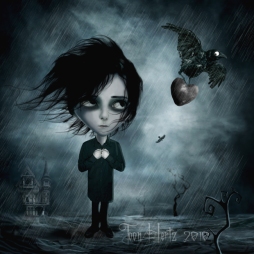 Stephen King has made a successful career out of scaring the hell out of many of us. We (not all) like to be frightened. Scary movies are fun. They are not for everyone, but a lot of people love them. Why? Is it the same with sad books, movies, songs, or plays? We keep going back for more.
I don’t think I am going out on a limb by saying that we like sad songs. They make us feel good. It’s true and you know it. I love dark, sad poetry, sad movies, books, and songs. But few who know me would say I am sad. This has been going on with people as long as we have had any form of entertainment. For evidence of my claim, I offer one research report and one report on an Ohio State University professor.
- “The pleasures of sad music: a systematic review” is quite long, but the abstract gets the point across.
- “Smiling Through the Tears: Study shows how tearjerkers make people happier” is a down to earth report of research projects focused on movies.
 My focus here is music. A friend loved the song Dance Me to The End of Love by Leonard Cohen. That is until she learned that the inspiration of the song was in fact the Holocaust. It is a lovely and beautiful song, but that sadness changed the song for her. The song is not sad by itself, but because the inspiration was so tragic, her opinion of the song changes from love to sadness.
When we listen to sad songs, we like them. Country & Western music is replete with sad songs. In the opinion of many, including Elvis, the saddest song ever was I’m So Lonesome I Could Cry by Hank Williams (1949). I want to warn you, when I hear this song it plays in my head for hours afterward (this is BJ Thomas).
Another I like is Unchained Melody by the Righteous Brothers (1965). Actually, the song is much older than that. It is one of the most recorded songs of the 20th century. The song’s publishing manager reports over 1,500 recordings have been made by more than 670 artists in multiple languages. In 1936, Bing Crosby turned it down.
My third choice, I Will Remember You by Sarah McLachlan (1996), is in close running with about a hundred others.
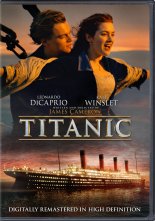
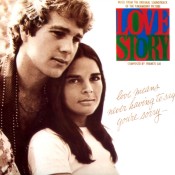 For sad movies, I have listed only five. It could be hundreds.
 Love Story (1970)
- Ghost (1990)
- The Green Mile (1999)
- Titanic (1997)
- P.S. I love you (2007)
We all have our favorites. That is my final bit of evidence. We wouldn’t enjoy sad songs, movies, books, plays, and art if they made us feel bad. What are your favorites in sad music, movies, plays, books, or art?
 In a scene from my childhood, I watched through our living room window as kids my age played in a rainstorm. They were laughing and having a wonderful time getting soaked. The streets and gutters were awash. One boy sat down in a flooded gutter as the water pushed against him and splashed hard around his body. I felt envy. Not because they were having fun without me, but because they were playing in the rain. I was home with my mother, and she told me that I couldn’t go out because I would get soaked and catch my “death-of-cold.” I have since learned and admit more about myself, and about colds.
 The word ‘pluvial’ refers to rain or something characterized by abundant rain. The suffix ‘phile’ denotes fondness. Consequently, a pluviophile is one who finds joy and peace of mind on rainy days. I was taught that rainy days were sad, as in the Carpenters song lyric; “Rainy days and Mondays always get me down.” I was to believe nice days were sunny, cloudless, and warm. I’ve never felt that way. Sunny and pleasant days have their place, but few are enough. Later in life, I admitted to liking cloudy, rainy days. I now identify as a pluviophile. These days, I’m often asked why, after more than twenty years in California, Texas, and Florida; I recently moved to the Pacific Northwest. I ask, “Do you know what a pluviophile is?” Like it should be news to me, I’ve repeatedly been told “it rains a lot there.” I reply with a smile, “Yes, it does.”
 My involvement with rain changes with its many forms. Scientific names apply based on how it comes about. But, I am talking about how the rain itself varies from torrential downpour to a gentle drizzle. Duration, wind, thunder, lightning, air temperature, and other factors contribute to our experiencing rain. There are times of rain just falling, and times with thunder and lightning. There is morning rain, afternoon rain, and rain at night. Each is emotionally and physically encountered differently. It can be seen and heard while keeping dry, thus precluding feeling the rain. Only outdoors can we dance in the rain. If I don’t perceive rain with senses—I just get wet. Our world changes when it rains. We need it, just as we do sunshine. To me life smells, feels, looks, and sounds more alive in the rain. In the city, rural areas, and in the forest, everything improves. When I am with the rain, I heal and recover. It’s a spiritual exposure difficult to explain. I’m not especially spiritual, but in rain I sense life — nature.
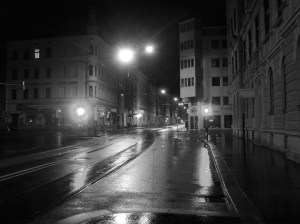 I recently delayed my daily walk when rain was forecast. After waiting for the rain to start, I donned shorts and tee. I was off in good spirits, expecting to be, and was, soaked. After an hour, I was back home. I sat on a dry and covered bench, removed my soaked shoes and socks, slapped water from my dripping baseball cap, and chuckled. I was thinking how others might consider me deranged. But, this is why I’m here.
 tilted forward and cocked right. The front brim bent slightly downward with water flowing off. The sound of falling rain is all around. I hear it splash into puddles and onto sidewalks. With water moving everywhere, I forget the day’s problems and the annoying people. But mystery is afoot. Like it or not, Mike Hammer is involved. And of course, there is a woman. As Hammer, in the writing of Spillane, I mumble, “In the flora and fauna of the Bowery, she was a lot of flora and quite a bit of fauna. She looked like she belonged in a field of Wyoming wildflowers instead of wandering through the human backwash of the avenue.” In the night rain, I can do this. Rain brings magic and drama.
 Let’s take life, rain or shine, one day at a time. It’s about how we feel. We’re not alone in our emotional response to rain. In the Pacific Northwest, we love the outdoors, rain or shine. Too much shine and we miss the rain. After some rain, we’re ready to let a little sunshine in. “In every life a little rain must fall….” Of course, and why not?
 Yolonda, my wife of 50 years (we married at age 2), is a native Texan and has her ‘druthers.’
 Billy on right, (w/Phish bassist Mike Gordon), our oldest child is in his mid-40s, a very nice, loving, big-man. He’s always been an avid reader, a talented writer, a movie aficionado, and a hard-core Phish-head. Add bicyclist, father, hubby, friend, musician, and deep-thinker.
 Steven is our middle-child, now in his early 40s. He’s another good guy. An avid sports fanatic (Spurs and Cowboys) and mountain biker. Add hubby, step-father extraordinaire, house music DJ (Steve Balance), friend, and all-around cool-dude (maybe pragmatic and analytical). He initially said that he had no fav quotes, but when he and his sista’ got to texting, there they were.
 Our beautiful ‘baby’ is Julie. She can recite every line from the movie Grease (oddly did not quote it), is an artist, a thirty-something, 21st Century hippie, a mom and step-mother. I think she is a wonderful writer and, like her mom, a Grammar-Nazi. She lives in the middle of nowhere with her hubby, son, occasionally a step-son, or two lovely elves, too many cats, horses, and sometimes (because he likes to chase the horses) a dog.
 Soon, he’d wake up, but he would not remember. He’d not recall where he’d been, what he’d done, how he got home, or anything that happened. He felt fear—the familiar fear of the blackout. He should know. He’d been there only a few hours earlier. Everyone else would know. Hell yes! They’d remember. When he blacked out like this, he couldn’t recall events from the night before. Even when people would tell him and show him proof, he could recall none of it. He woke up sick – partly due to the effects of the alcohol, but mostly because of the fear, the inevitable embarrassment, and the disgust he felt toward himself. It happened many times before. Slowly, as his eyes opened, he turned his head to see if she was there in the bed. She was not. He would face that guilt soon enough.
 No one wants to look that bad. Sam was disheveled, pale, red-eyed, much older than his 43 years, and generally unhealthy. He also smelled awful. He reeked of stale alcohol, smoke, urine, and vomit—the scene was sad and disgusting. This was a miserable couple. After years of marriage, the only things these two people now-shared were an old love, a constant desperation, and the children. Their mutual love was hidden deep, possibly buried, maybe dead. They both wondered how this was going to end. For Mary, it wouldn’t be soon enough. She forced herself to look at him. He saw that she’d been crying a long time. Tears were still on her face; new ones arising. He poured coffee and tried to look straight at her, like everything was fine.
 “I am so sorry, Mary. I promise it’ll not happen again. All I have to do is not drink. I can do it. I will start back with AA again. It’ll be ok.” She looked at him for a few seconds and then put her face into her folded arms on the table. After a few minutes, she looked up again and said, “Look, you obviously can’t stop. If you could, you would’ve. You can’t or you won’t. Either way, the outcome’s the same. You’re gunna die, or go to prison, or to some institution. You’ve been to rehab. Sam, you’re an embarrassment to your family, to me, to your kids…shit! How you keep getting jobs after being fired so often—I have no idea, but this can’t go on. Sam, you need to move out of the house and stay out.”
 After about an hour he picked up the phone and called his mother. He knew by her tone that it was she who Mary had been talking with when he woke up. He asked to talk with his father, but that relationship had become so strained that his father would no longer speak to him.
 I consider myself a realist. Don’t we all? I recall a comment someone made to me a number of years ago. She considered herself to be a spiritually positive person. She read and followed all the right spiritual gurus, in her option. As we were talking, I used the word reality. She told me that was negative. Really? I haven’t quite figured out why I saw conflict between her negative view of reality; and her positive, optimistic thinking, but she didn’t see an inconsistency at all. I didn’t understand then and don’t now. In fact, if she considers herself to be a positive person, but sees reality as negative, I must conclude that she’s not only a pessimist, but she is in denial about it. She may have been Pollyannaish. Believing in a positive outcome and things will work out for the best in the end is fine. But even being absurdly optimistic is not the same as seeing reality as negative.
 I like to think of myself as a realistic-optimist. (If a presidential candidate can be a democratic-socialist, then there is precedent for my claim.) But I have interesting discussions with people who would say that I am negative or pessimistic because I foresee less than desirable outcomes if reality is not respected. Most of us seem to have good days and bad. Assuming that they will all be good henceforth is denial of reality. We will continue to have natural and man-made disasters. That is reality. Making preparations for emergencies so that we can have the best possible outcome is optimism. Doing nothing is denial that often leads to further disaster.
 I believe that a balanced outlook is the key to a healthy life and a healthy world. We need not assume the worst, but blocking out, or ignoring, the inevitable is not being optimistic. It is being foolish.
 My wife doesn’t like one (or more) of my favorite songs: Night Moves by Bob Seger and the Silver Bullet Band. I thought it was our differing tastes in music (she’s country, I’m rock and roll), but one day our son pointed out why. It’s a ‘guy’ song. I also realized that we each look back in time with different memories. Never mind that she really does not enjoy the raspy-voiced shouting of old Bob. The song, written and recorded by Seger in 1976, is a coming of age tale about adolescent love and an adult memory of it. It strikes memories of my times in the early sixties.
 During the 1970s I graduated from college (many thought impossible), I re-entered the Air Force as an officer, I completed flight training, all my children were born, and I turned thirty (I thought that impossible and I sadly became untrustworthy— relates to the famous “don’t trust anyone over 30” adage of Jack Weinberg, activist of the 1960s, now 76). I usually listen to the music of the 70s. While I enjoy those songs for their own value, the music also often brings with it memories and feelings that can only be called nostalgia. Sometimes, it makes me feel profoundly sad. I’m not sure why, but I suppose it has to do with something that will never be again.
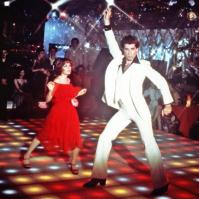 It was the decade of great music, great movies, and great TV. The politics were interesting. How often do we get to see a president resign? I am working on a historical-fiction novel, set in the 1970s. We had Star Wars, ABBA, and the Beatles break-up. Elvis died. Everything was either brown or orange including the shag pile carpeting (ok, add yucky gold). We had platform shoes, Charlies Angels, Mork and Mindy, metal drinking cups, portable hair dryers, Holly Hobbie, Lava Lamps, and the most outlandish fashions ever for America and England. Who could ask for more? We typed on typewriters, went to Tupperware parties, and air conditioning was a welcome luxury. And who did not have an 8-track?
 She had been in the kitchen helping her slightly-older, barely-teenage sister prepare dinner, but she knew it was nearly that time. She moved to the living room where she could take her usual position. Soon enough, she heard his familiar cough and the sound of his voice as he acknowledged neighbors. As he grew near and she could tell it was him, her excitement would grow as it had for years. She felt delight and love for this stoic Welshman. After work, he was usually more outgoing, partly due to the social and medicinal nature of his homeward-trek diversions. The front door was never locked, so when he opened it, his familiar frame was encased by the doorway. Each time this happened it was the same—she would jump up and run toward him and he would immediately stop her. “Now Bernie, you mustn’t get your dress dirty. Where is Dee?” The sight of her father set in the doorway after returning home would be fixed in her mind for the rest of her life.
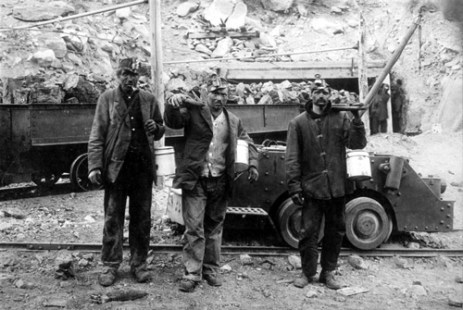 When this man returned home from work, he wore the same drab trappings of men who worked long days underground in a dark, dirty, and dangerous world. He would arrive home from the alley at the back and enter directly into the kitchen. When she looked up, his black silhouette was framed by the kitchen doorway. Her 1920s childhood had been replaced by post-WWII drudgery and insecurity. Their son was born seven months into the marriage. She named him after her father, who died a year earlier. Each day, she was relieved to see her husband return safely home. Funerals and memorial services for coal miners killed in mine disasters were common. Eventually, in the 1950s, the anthracite coal industry would be undermined and replaced by oil.
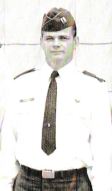 She heard footsteps, a familiar cough, and his voice speaking to nurses. She had turned and was looking up just as he stepped on the threshold into her room. She loved the way he looked in his uniform and was delighted to see this man standing there, framed by the hospital-room doorway. She jumped up and ran to him as only a woman in her seventies could. Unlike the days with her stoic father and distant husbands, this man embraced her. They hugged and kissed for a while. She looked up at him and said, “I am so happy to see you.” He smiled and looking down at her asked, “Mom, didn’t you just have surgery?” “I don’t care,” she said. “You are here now.”
 I claim a few basic beliefs. I believe in love, perseverance, and personal strength through relationships. I believe in memories and in karma. I believe in music, compassion, and empathy. But mostly I believe in the power and value of laughter; the more painful and debilitating the laugh, the better. Striking sadness, awe, loss, illness, and awareness of world misery affect me too. Sign me up for the clichés of humor: to die laughing, having the last laugh, laughter is the best medicine, and a side-splitting belly laugh. If you are infected with the acute illness of laughing for no apparent reason, I want to be infected too. I love to laugh. When I hear a good joke, it’s hard for me to retell it because I laugh so hard in the process. I want to be embarrassed and need to leave because I’m overcome by laughter. I want to laugh at everything. When seeing and hearing the laughter of others, especially children, I want to laugh without knowing why.
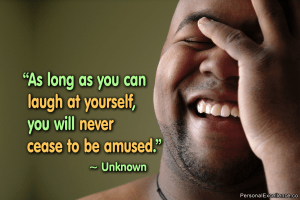 A question I like to ask is, “What do you want?” Answers vary, but mine is, “I want happiness.” Looking back on life, it is difficult to recall happy times with no laughter. It makes me feel good. Laughter is a natural high like no other. It’s free. We can’t over-dose. I thank all kinds of humor for making me laugh. Many things are funny, some are not. But I laugh anyway.
 Long before I ever entertained the idea that I might want to write
  things that people don’t pay me for (as in my old day job), I read a biography about J.R.R. Tolkien. It impressed me that he and his writer group (the Inklings), which included C.S. Lewis, would gather at a pub (The Eagle and Child) to discuss writing and literature. They would read what they had written to each other and critique each other’s work. I want to be there to watch, to listen, to learn, and to discover. Can you imagine? This happened in the 1930s, 40s and 50s. Lewis and Tolkien were alive and writing during my lifetime.
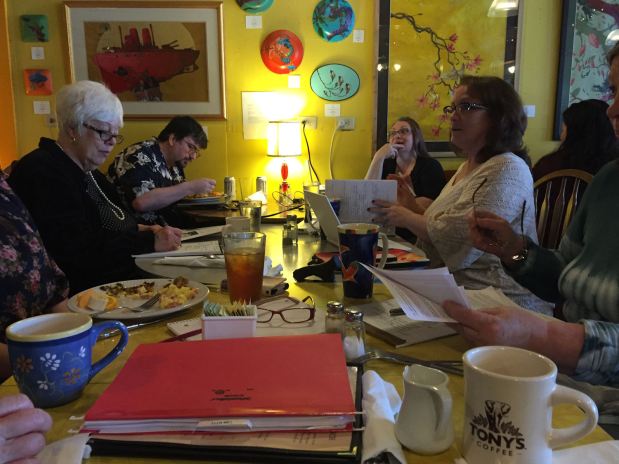 Ironically, unlike the Inklings who were exclusively male, most ‘members’ of the kaffeeklatch group are women. The group was started by one of them (Hi Caz). We drink coffee (or your choice of morning beverage), eat, and talk. Some in attendance have even confessed to getting some writing done. I wouldn’t miss it. If you’re looking for me between nine and noon on Friday mornings, check the Black Dog in Snoqualmie. I am the one with short gray hair, wearing a cap, mostly listening, frequently laughing, and totally confused. Who is to say that the next Tolkien or Lewis is not sitting there, telling me how I need to work on my plot?
 Jekyll and Hyde (The Strange Case of Dr. Jekyll and Mr. Hyde [1886] by Robert Louis Stevenson)
 This classic was written 130 years ago. It is available free on Amazon and you can add an audio version for about a dollar. Even in the book, the age old struggle of people to understand and to deal with the dual nature of mankind is acknowledged.
 Third, when Dr. Hastie Lanyon is faced with the reality of the dark side, he is so overcome with the news (provided as proof when he witnesses Hyde’s transformation to Jekyll) that evil lurks in the embodiment of all men that he dies. He even says he will die, and why. This is in spite of the fact that Jekyll explains it all to him. Why did Lanyon die? Because he too had a dark side, but he never believed that he did. He never accepted his true and complete nature. Essentially, his own sin of pride killed him.
 I do strongly favor the concept of living in the moment, my own version of Carpe Diem works for me. I did notice that in his final confession, when Jekyll is referring to the nature of Hyde (which is supposed to be Jekyll’s own dark nature), he says “…his circumscription to the moment…” in such a way as to condemn it. Embrace it, Harry. It really is all that we have: right here, right now.
