 Do you think you are an impostor? Are you what you claim to be? Or do you think that you just have the rest of us fooled? There have been many real impostors throughout history, and many are still running around today. The whole identity theft problem has people pretending to be who they are not at its core. But my topic isn’t about them. Those people forge credentials and know exactly what they are doing. The impostor syndrome, ironically, uses their hoax to identify a problem many successful people deal with. It is also something I think I see in a lot people who do things such as art and writing. I may suffer a bit from it.
Imposter syndrome is a term used by clinical psychologists Dr. Pauline R. Clance and Suzanne A. Imes for high-achieving people. It is marked by an inability to internalize self-accomplishments and fear of being exposed as a “fraud”. Many of these folks are quite good at what they do, and it often comes easy to them. For whatever reason, they feel like phonies and worry about it. This is not a diagnosable mental illness. It is a syndrome – a complex condition with characteristic combinations of opinions, emotions, or behaviors. I want to apply this at another level. If you do ‘x,’ are you an ‘x-er?’ If ‘x’ is art, are you an artist?
 I have been certified to teach high school social studies since I graduated from college back in the dark ages. I have never taught as faculty for even one day. Am I a teacher? I am certified, but to me, unless I actually teach, I am not a teacher. So why is it that the people who do the art, take the classes, make things that are art, will not want to say, “I am an artist.”? I also know people who have not produced a piece of art in years, but will not hesitate to call themselves artists. I have no issue with that. If I can, but chose not to, should I call myself? I think the answer is yes, but it’s up to you.
I’ve taken dance lessons, practiced and practiced, then more lessons. I danced often. People would come to me and complement me on my dancing. They would say, “I wish I could dance like that.” I would look at them and ask, “What makes you think that you can’t dance?” Some people come by it naturally and learn quickly. Not me. But I did it.
If you want to be a dancer, then dance. If you want to be a writer, you only need to write. If you want to be a runner, then go run. Poof! You’re a runner. I’m not immune to this syndrome. I have no problem calling myself a writer, but I balk at identifying myself as an author or novelist; even though I have written (but not published) a novel. To me, the nuance is in published, even though I have been published in a short story and a journal or two.
 Unless there is an identifiable standard or required credential, we should feel free to identify ourselves by what we do, if we so desire. If we are novices or students, we are not disqualified. We’re learning. I understand being humble. But there is a difference in doing art and saying you are not an artist, and doing art and saying it the best art there ever was (but why not?). And certainly, if you are naturally good at something, and you do it, then we do not consider you an imposter.
 I know that we are all fallible. We all make mistakes if we make or do anything. Usually, it’s our parents who provide the first clue. Somehow, we are often gifted as teenagers with the wisdom and insight to identify each and every flaw of our parents and anyone else who we consider an authority. Somehow, we overlook the foibles of our friends. And of course we have none, or too many, or we must hide, or we are perfect, and will never make that mistake, depending upon the day of the week, if anything. Confusing? You bet. Human? Absolutely.
 And that is the point. Do we judge the content of books by the mistakes in it? Do we judge others based on their circumstances, be it through their own fault or not? What do we expect from our fellow human beings? What do we want from them? Why are we this way?
 Many people have found that journaling and being grateful are useful methods to feel better and to enjoy life more. Grateful people seem to be happier. I prefer to be happy, so it follows that I want to be grateful. I will not discuss journaling since I don’t, but I admit that I should. Maybe this blog is kind of like that. I don’t make gratitude lists, but I could easily. I know many happy souls that do.
 In less than two minutes I had filled the plastic jug to the brim without moving an inch. I handed to the nurse with a smile and asked her to keep that catheter thingy away from me. She smiled, let out a mildly sinister chuckle. Then she said, “See what positive thoughts can do.”
 We all have them, to one degree or another. We are born with them and they change over time. They seem to always be there. Admittedly, health issues have a profound effect on our feelings, but that does not diminish the importance of feelings. And feeling can have an equally profound effect on our behavior, and can conversely effect our overall health. I like to say, “It is all about how you feel.” I mean that in life how we feel is critical. People may advise us to cheer up, but how?
 I am not talking about clinical depression, chronic sadness for no reason, or any form of diagnosable mental health problem. I am talking about the normal things in life that may affect us because the emotional weight is so great. Things that make us sad are part of life, but they can, and often do, emotionally stop us right in our tracks. We feel bad. And depending on the degree and how it is handled, it has everything to do with eventually feeling good enough again to get on with it. I will not say get over it, or that we even have to.
 We have heard, “How do you feel about it?” and “How does that make you feel?” We may ask ourselves that question every day. While this is normal, living with a daily problem that makes us feel bad can often be improved. But we have to want to improve and we need to be willing and motivated to do what it takes to feel better.
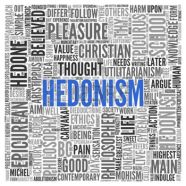 I am an Epicurean. I see nothing wrong with that and even see it as positive. In my house I have food and drink, some of which has minimal or no nutritional value. But I like them and they bring me a certain amount of pleasure. I also have substances that have value in the reduction of pain. Chances are that you do too.
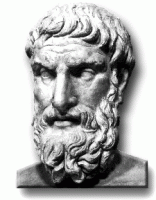 derived from fine food and drink both in a person’s taste and, as it often relates to delight-providing establishments, restaurants. Synonyms for epicureans could include hedonist, sensualist, pleasure-seeker, sybarite, voluptuary, bon vivant, and bon viveur. More related words are epicure, gourmet, gastronome, connoisseur, and gourmand; a generous, life-loving epicurean. Much of how we use the term invites thoughts of fine food and drink. I personally favor the adjective Epicurean to mean leaning more toward an understanding of Epicurus and his ideas.
 This may be the most difficult topic for me, but it’s early in the A-to-Z Challenge. I may find subjects that are greater challenges. Regarding the dark side of human nature, I would simply prefer to accept it and move on. My research of our dark nature has revealed that we humans actually want to deal with it in reality, art, life, drama, poetry, fiction, behavior, and nature. Many of us admit to a duality of human nature, but even more of us reject the dark truths.
 My dark side calls to me. I ask, “What do you want?”
 In addition to Oscar Wilde (The Picture of Dorian Gray), which I’ve read, I shall add the following.

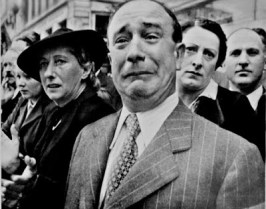 When I ponder c’est la guerre, my thinking goes more toward the conditions or philosophy of war, or the way of life during times of war. As an American, the concept is a little foreign to me (like our wars), since the only ground war we experienced was our war with ourselves: The Civil War. Ironically, it may have been the most destructive of our history in terms of loss of life and property. For at least the past 100 years, we have considered war as something that happens over there. Lucky us.
 While there are many good books regarding the philosophy of war, the classic gold standard is On War by Carl Von Clausewitz – required reading for virtually every military officer. War and Peace by Leo Tolstoy may be the preeminent novel on the subject. And the classic for weaponry and strategy is The Art of War by Sun Tzu; more required reading, if not necessarily the best reading entertainment.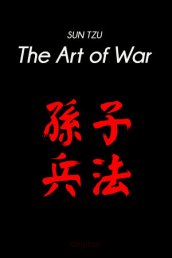
 Blind Man’s Bluff: The Untold Story of American Submarine Espionage (ISBN 0-06-103004-X), published in 1998 by Sherry Sontag, Christopher Drew, and Annette Lawrence Drew, is a non-fiction book about U.S. Navy submarine operations during the Cold War.
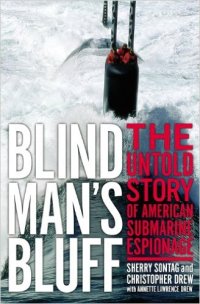 The museum was worth the stop and the tour of the Nautilus was wonderful. If you like that kind of stuff, I recommend it. I usually take time to visit gift shops at such touristy places. That was where I purchased Blind Man’s Bluff: The Untold Story of American Submarine Espionage. I was motivated to read it by what I had seen in the museum and how I felt walking around on the submarine. I’ve had but one friend who was a bubblehead. He was stationed on a boomer (slang for a nuclear-powered ballistic missile submarine; the British say bomber) out of the Navy base at Groton. Those subs are different from the vessels in Blind Man’s Bluff, although boomers represented one leg of the US triad of nuclear defense during the same Cold War (still does).
 More than a year later, I learned a new word that explains my reaction to the painting. It had never happened to me before, and has not since. The word is duende. It is a noun meaning the mysterious power of art to deeply move a person. There is a lot more to and behind this word. You can check it out for yourself by reading the wiki, if you’re curious. Apparently, artists sometimes experience this with their own work. However, if you’re familiar with this, or had a similar event happen, I would love to hear from you.
