Atheist Reality

I’ve read some good essays on this subject. In this one, I attempted to present from a viewpoint of addressing someone who may be considering open declaration of no belief in gods, nor support of any religion, especially if they currently practice, or belong to, a religion. This is my first of several. I wrote one similar blog in June. You can see it here.

So you want tell people that you’re an atheist?
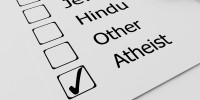
Select all applicable answers

If you think you might want to be known as an atheist, you should know this. Perhaps your idea is that all it takes is to not believe in any god. That’s true on the inside and in your mind, not so on the outside where you’ll have to deal with other people. You may think that your beliefs are private, and not anyone else’s business. You may think that no one cares. Maybe you have the incredibly naïve opinion that no one will judge you. Maybe you foresee other atheists waiting in the shadows to welcome you with open arms. Some are. They’re not in the shadows. There are groups which you may join, but first this.

In your naiveté, you may believe that your only life change will be that you’ll stop pretending and covering up. Thus, finally being truthful about what you do, or do not, believe. Maybe you think that you’ll continue to be the same moral, loyal, loving friend, family member, and citizen that you have always been. Of course you will, but not in everyone’s eyes. And, I’ll bet you did not know this: there is a test and there’s a penalty. A test for all, and a penalty for most.

The Never Ending test.

Atheism1You have to pass a test to be an Atheist. Did you know that? And the damn test never ends – you take it repeatedly. The questions may be the same, or they may keep changing. Every answer you give will be wrong. You’ll be forced to keep explaining and justifying your wrong answers. You may be criticized by your family and friends for not choosing the correct answers. Knowledge will not help. If you try to use science, you will be told that you know nothing of science. You’ll be given a grade of F for trying to use it to explain your position. If you dare to use logic or philosophy: F. History? F! God forbid that you use religion/scripture/dogma: F-minus.

Are you willing to pay the price?

If you come out as an Atheist, you will be penalized (test results notwithstanding)– up to and including the death penalty (unlikely, but possible). At some level, you may be ostracized. It may be by people close to you, some group that you belong to, or perhaps at your job.

You can forget about being POTUS. Almost anyone can be president regardless of race, sex, number of marriages/affairs, baldness (or silly hair), borderline mental health condition, or creed. But, no creed at all? No cred! If you don’t believe in a god, you will not be elected. Religions with much lower percentage of population numbers, such as Muslim, Hindu or Buddhist have a better chance. But they are not atheists. (Okay, maybe some Buddhist sects are.)
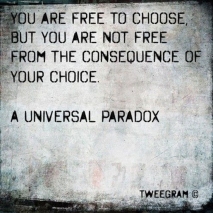
Atheist4

If you live in the Americas, most of Europe or Asia, and are of Christian or Jewish background, you’ll probably not be killed. But, if you live in many countries, some fundamentalist religious groups, or the government, may decide to enforce the laws of god according scripture (yes, they do say that) and your ass will be dispatched into the fires of Hell. It happens. Even in Hebrew/Old Testament scripture, apostates must be gone. Few people continue to follow that old law of god, thank god.

An alternative for some.

Atheism6

For some people who don’t believe in any gods, they admit atheism, but they stop there. They refuse to take any test. They either don’t care about consequences or aren’t affected by them. They realize that no answer will ever be sufficient for most concerned believers.

The quiet, timid, in the shadows non-believer is a personal choice for many. But so is not ever fighting for or defending your rights and the rights of others. Many believers may wish you’d be quiet. Some may enjoy the fray and attempt to stump-the-chump. While a few others may be legitimately curious or some combination of all three.
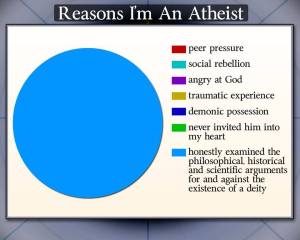
Atheism7

Be honest and wise.

May you make wise, informed, and well-considered decisions. May you find the patience and grace to face the challenges of life with aplomb. May each day bring you joy, and may you spread that joy with love around the earth.

Note: A blog post on the test is under construction.
Recovery from Middle Age

When It Happened

Middle age is in my past. My t-shirt says, “Beware, second childhood in progress.” When people ask, I tell them it’s an old shirt. I’m long past that.

At 27, I knew everything (we all do). I would live forever. By age 40, I thought I might not live that long. Around then, I was sure that other’s opinion of me was paramount. I included everyone, especially any man who could possibly effect my life personally or financially.

Unfortunately, I often said what I thought – more than I would now. Today, I’m unlikely to answer personal questions. I may. But usually I want time to be calm and ponder consequences.

Back in the day, if my boss told me to do something that I felt was against my personal opinion, I would say, “No, sir.” Often, this happened in front of people. I enjoyed two things about it: watching him try to hide his anger (if he did) and some other middle-managers joining my mini-revolt. I wasn’t intentionally a trouble-maker. It just turned out that way.

recovery from middle age3What It Was Like

Looking back to my forties and fifties, a lot happened – both good and bad. But, I recall the difficult times well. In the 90s, I lived away from my family as a weekend commuter for two years. I drank way too much and began to ponder things that I’d never thought about. I was confused about life. I was not happy, and may have been clinically depressed. I was surrounded by others in worse shape than I, thus my problems went unnoticed. I was fine with that. Men do not have such issues, right? No longer did I feel safe. I didn’t understand the rules or what to do. I had morphed into a people pleaser, but I wouldn’t have admitted it.

Add to this, my wife had gone to work and was living as a single parent on weekdays (and nights). She had her issues too. And we had teenagers who’d aged up to their early twenties. Life was not easy for us or them – certainly not emotionally. Denial was my strength and maybe hers. Our dysfunctional family was extended and there were problems in that area over the horizon.

Possible Consequences

recovery from middle age1I’ll spare you details. But during the 1990s all hell broke loose in my life and I thought it had gone into the proverbial toilet.

I recall giving consideration to suicide. I also seriously considered homicide. To be clear, while I never seriously intended either, I considered both as solutions as I never had. But then, I made an important decision. I decided that I would try everything possible to get over it. If my life was not working, it would not be my fault.

If you type middle age American male in Google, you’ll find articles relating to suicide, alcoholism and drug addiction, and the almost inevitable consequence of death. Middle age male suicide is a bigger problem today than 20 years ago. But I can relate to middle aged men today who secretly struggle with something they don’t understand. Looking back over the years, I think I figured out a few things.

What I Did

recovery from middle age2I like to joke that I’m recovering from middle age. But, I am simply living my life. My life is good now, but recovery is an ongoing process. While many of my decisions may have been random, they seemed logical at the time. I was desperate, but knowing that I was not alone mattered.
I read books on self-help, mental health, and recovery – all were about mental and physical well-being. I attended counseling sessions for family members. I became active in a 12-step program. I started to learn about eastern religious thought and philosophy. I took a deep and detailed (analytical) look at myself. I did that twice, six months apart. This was much less about who I am and more about me being me, or me not being me, but being what others thought I should be. This may seem minor; it wasn’t.

My discovery was two-fold: I didn’t know myself, and I wasn’t being true to myself. I couldn’t be. This was important for me to figure out because the solution that followed was not complicated.

My change was from the inside-out, and from the outside-in. I simply was myself. While I could continue to be a good employee, a good friend, a reasonably nice person, and a willing family member; I no longer identified myself by what others thought I should be – what I should think or what I should feel. I was not only ‘okay’ with this. I was delighted. It was not a new me, but just me being me. That is the way I saw it. My motivation was inside and based on how I felt. But as I changed my behavior, that effected more emotional adjustments, which led to being more able to do more with my behavior.

recovery from middle age4

A short while after all this my son told my wife that he didn’t recognize me because of the changes. That was 20 years ago. I’ve hung onto that way of thinking ever since. Being comfortable as me (‘in my own skin’ is the cliché) did not change my life so much as it revealed my life to myself. Now, as a senior American male, I am still as wrong and as programmed as anyone. But when I realize my error, I’ve learned to admit it quickly.

How It Turns Out

As much as I like the phrase, it is what it is; I have my own motto: It is all about how we feel.

cropped-img_0551-e1469756636276.jpg

Probably my most positive boost has been retirement. No longer subject to the corporate nonsense and politics, I feel “free at last” to keep moving forward with my life on my terms. Virtually all that drama is in the past, and there it shall remain (at least for me).

May you find a path through life that is long and revealing. While giving up is an option, may you never choose it as long as you have any others yet to try. May your days of light be long and may your dark days pass quickly. May you be constantly aware; you are not alone. We are one.


Final Topics on Creativity

Creativity and aging

There’s too much information available to cover this area adequately. My research indicates that we become less creative as we age. Perhaps we do. But I would not say ‘less.’

creative old2

We change with age: physically, mentally, and emotionally. I think we also change creatively. I don’t think we become less creative so much as our creativity becomes altered as we adjust to all changes in our lives. Certainly, significant aging and mental problems (dementia) and physical illness have their effect.

Blocks to creativity

Creativity is an attitude. Our curiosity sleeps with our creativity. The more curious we are, the more creative we seem to be.

creative old3There are too many blocks to mention each one. We all sometimes have blocks.
When I tell people that I am not as creative as they are, they often want to fix me – to give me advice on how to be more like them (do as they do, believe as they do, be as ‘open’ as they are). They would also advise me to be myself, blinking not an eye at the irony.

I don’t say that I’m not creative. Of course I am. Everybody is creative. But we are not all the same. My creative nature is more sensitive to that of other people, thus they are my preferred source of inspiration. I confess: I struggle with creativity. Many of us do. So what?

I think the blocks to our creativity begin at birth. We are born creative. As far as we know, it is a uniquely human trait. Children are wild with the creative process (in most cases) based upon the behavior we can see. We don’t know what we can’t see. We do not know the thoughts of others. We only hear what they tell us. Over time, our creativity struggles with life, society, judgement, our own human condition and nature, as well as that of others.

We don’t know what creativity is (no, we really don’t). We only know when we have it or when we do not. We can see it in the work or behavior of other people, but we cannot see into their minds and hearts. Like quality, we know it when we see it.

Value of music in creativity

I can read while listening to classical music (no lyrics), but no other genre. I must write in virtual silence. But I also find music as stimulating to my own creative process as anything. I have no idea how it would go if I did what a so many other artists do with music. But I know this: it helps in two areas.

One is in the magic of creativity itself. The other is in the execution of the work. Think of these two aspects as you watch Jonas Gerard (age 75) in the video below, creating with live music at his studio in Ashville, North Carolina.

“The rhythmic influence of music is an important part of his (Jonas Gerard’s) artistic process…. The music allows him to work unpredictably and intuitively, kicking it into another mode and bringing it home to a subconscious space where he can respond to the rhythm, and the direction the paintings suggest to him.” (from http://www.xanadugallery.com/2013/Artists/ArtistPage.php?ArtistID=7399)

The following is good regarding music.

“In addition to stimulating creativity, music can help contribute to the development of a more creative mind.”

“Creativity is within each of us and the very reason the world exists.” ~ Frank Fitzpatrick, Why Music, Part 6: Music and Creativity

creative old1Einstein was interested in both creativity and music. He tied the two, even suggesting he would be a musician, were he not a physicist.
“If I were not a physicist,” he once said, “I would probably be a musician. I often think in music. I live my daydreams in music. I see my life in terms of music … I get most joy in life out of music.” ~ Albert Einstein from Alice Calaprice, The Expanded Quotable Einstein (as quoted by Fitzpatrick)

Afflatus [əˈflātəs/] (n)

Afflatus is a divine creative impulse or inspiration. The word literally means inspiration. It does not refer to the usual sudden originality, but to the staggering and stunning blow of a new idea, an idea that the recipient may be unable to explain.

Add music to this and creativity becomes limitless, in my opinion.

Duende [do͞oˈendā/] (n)

Your Duende?
Your Duende?

Duende is the mysterious power of art to deeply move us. It’s a quality-level of passion and inspiration that may be felt by anyone. It can be the artist as they work. It can be the observer of the piece, the reader of the text, the listener of the music, the watcher of the act or dance.

When you are next moved like this, speak to the spirit within you, “Ah, my Duende, you feel it too?”


Mental health and Creativity

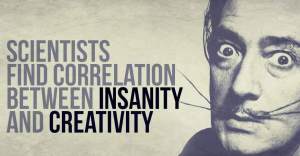
This is confusing, and for some of us, maybe a bit dangerous. No one is more artistic, creative, or on a higher creative plane because they suffer a mental malady. We can be both mentally ill and creative. How one effects the other is unknown.

There is sufficient research to indicate some correlation between the two. But nothing indicates that being drunk, high, depressed, or any other mental condition causes people to be more creative. Normal healthy people can be, and are creative. Throughout history, the same can be said for troubled artists and creative souls. It’s the difference between ‘because of’ and ‘in spite of.’creativity1

Letting Go

I can now move all books on creativity from my writing table to the bookshelf from whence they came. I want to thank Elizabeth Gilbert for Big Magic and I am grateful to my friends and fellow artists/writers who suggested it. While I still have a lot of issues with what Gilbert proposed, I wouldn’t have taken the time to do the work had I been in total agreement with her.

From whatevCreativity2er source your creative ideas flow, may they flow to you in abundance. May you be orgasmic, chilled and thrilled with ideas, concepts, and plans. May you make the best of all your days being creative and doing your thing (art, writing, music, etc.) and enjoying the universal gifts shared by others. May the spirit of duende haunt your heart and mind, thus bringing you to a spiritual bliss as only we humans can experience.
Suffering, Love, and Creativity

suffering5

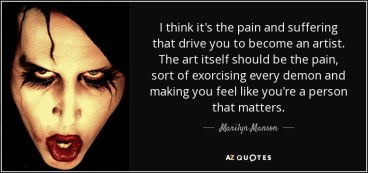
I don’t think I suffer more than average. When I find the enthusiasm to write about myself, I’ll include those painful and dark times from my past, along with the many good ones. I will be unable to link any of it to my creativity because I see no connection.

WebI do believe that to a degree, suffering is optional. I’ve seen people suffer unnecessarily, and I’ve seen those same people get over it.
In my blog tagline, I intend rain as a metaphor for my dark side, but it could also be for pain, suffering, or difficulty in life. The reaching for the sky is either embracing our human dark side or recovering from painful times. Such painful times often come with lessons making them valuable.

Until I read Big Magic, I gave little thought to suffering’s association with creativity, talent, and giftedness. I thought Elizabeth Gilbert’s treatment of the topic was a bit condescending (maybe it’s not). Perhaps it’s me, but telling alcoholics (or drug addicts) to get over it has limited success. On the other hand, many alcoholics told me that the painful consequences handed them by life at the bottom was motivation to recover.

suffering6I think that what Liz bemoans is using suffering as justification to be creative, talented, or gifted, thus making an excuse for hanging on to the bottom. We shouldn’t suffer just because we think it improves our work. I’m concerned because I know people die on the bottom. I’ve experienced great things from living artists, suffering or not – nothing from the dead ones.
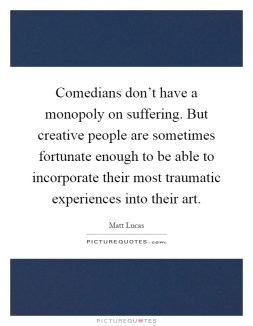
I don’t take the relationship between our creativity and suffering too seriously, but I am less apt to dismiss it as some others may do. Conversely, I believe talented people do not need to suffer to be talented or creative. I am a happy guy who loves dark poetry, stories, and the dark side of human nature. Following my review of a memoir recently, I told the author “This is a sad story. Your job is to make me cry.” I’m advocating emotional writing, not suffering, hers or mine.

I avoid pain and consider that normal. Just ask my nurses when I’m having surgery — higher is better. And don’t even talk to me about my dental appointments.

suffering11

While researching this topic, I discovered that I’m not the only person who finds this subject interesting. The available resources on the topic are sufficient for a doctoral dissertation, followed by two books.

I found this link to a blog (here) and a video of a talk (here), both involving Sharon Salzberg. Both are pretty good and not too long (the video excerpt relates to happiness and creativity).

And who does not love this song by Don McLean? It certainly relates to suffering and art.


I also found a site (here) with a collection of information on this and associated topics. It links with other sites and pages for developing creativity and personal growth. Be sure to check it out if you’re interested in any challenges to a creative life.

“Creative artists are fifth in the top 10 professions with high rates of depressive illness. But does depression attract them to the job? Or does the job make them depressed?” “…the reality for the sufferer is that depression is so debilitating it’s impossible to create anything at all.” ~ Helienne Lindvall

suffer6To love what you do, and the love of doing it, even when it is gruelingly difficult (and maybe more so when it is) may be the answer. What I’ve read seems to recommend this. Love your art! Do it for the love of the work, the art, the creativity, the experience. As Stephen King says, do it for the “buzz.”

The concept of a reciprocal relationship with our art was also introduced to me in Big Magic. Doing the art because we love it and love the act of doing it, despite the challenges is one thing. The idea that our art can love us back took me some pondering. Liz Gilbert says “why not?” I’m on board with her. Why not? Maybe not always and forever (although our art will likely outlive us), but at least sometimes.

Gilbert balks at calling our work of art our ‘baby,’ but this seems totally normal to me and many others. We don’t equate art to human babies. But it does vocalize the love we may have for our hard work, often more than nine months worth.

From "Steal Like an Artist" by Austin Kleon
From “Steal Like an Artist” by Austin Kleon

In Steal Like an Artist, Austin Kleon provides two excellent graphic depictions. One describes the challenges and difficult process of creating from an idea. The other depicts that love relationship we have with our creations.

From "Steal Like an Artist" by Austin Kleon
From “Steal Like an Artist” by Austin Kleon

May you be lucky in your love with people and with your work. As Austin says, “Do good work and share it with people.”

Have a wonderful weekend and be happily creative to your heart’s content.

Whatever works for you

Butt Man Bill

But man2Two memories from my youth relate to this post. I recall my mother frequently telling me that I was contrary. She would say, “Now Billy, stop being so contrary.” She could have chosen from many words: obstinate, difficult, stubborn, negative, or silly. Actually, that’s not true. She used silly a lot, as in, “Silly-Billy.” I actually liked being called silly and still do. Today, such a fun-loving attitude coupled with silly behavior would prevent a diagnosis of Oppositional Defiance Disorder (ODD).

But man6As a youngster, I did have more than my share of confrontations with adults, especially those in positions of authority. I admit it. Mom was right (aren’t they all?). I was often contrary and many synonymous terms applied equally well. I confess that I enjoyed being difficult, most of the time. Sometimes, I paid for it. Some say I never outgrew my contrarian attitude.

But man5The other memory comes from the time of my early to mid-teens. I don’t know where if came from, but we adapted a phrase for a while that was intentionally meaningless, but we said it – a lot. It was kind of an early version of whatever! We would say it to each other and often to adults. We always knew exactly what the adult retort would be. The locution was Yeah, but, or yeahbut. Today, the Urban Dictionary says yeahbut should be followed by f**k, but we seldom used those words in combination.
Most often, but is used as a conjunction to introduce something contrasting with what has already been mentioned. Adults insisted on asking, “But what?” We knew we were pushing buttons when we looked them straight in the eye and answered, “Yeahbut.” Silly kids, right? I confess to deliberately irritating adults given any opportunity.


But man1However; yet, nevertheless, nonetheless, even so, still, notwithstanding, in spite of that, for all that, and all the same; I do like butts. Some more than others.
But this is about me being a but man. As I said, but is usually used as a conjunction. It is also used as a preposition (anyone but him), an adverb (to name but a few), or a noun (no buts, you’re buying). Add a t and it becomes slang for a body part. But is a useful word.

It is also a word that I overuse. In my writing and speaking, I am rightfully criticized for saying but too often. Twenty-one times out of 350 words so far in this post. But, it is the subject, after all (22). When I edit, I look for the buts and remove or change as many as I can. But not in this post. At the beginning of a sentence, that is most often when it is there, it changes nothing in terms of meaning. My use is not always as a contrasting conjunction. But there’s more.

But man4

I am a quiet, introverted man by nature. I’m not very shy. The larger and less familiar the group, the quieter I will be. I am happy to let anyone banter endlessly about virtually any topic with no sound from me. I listen closely and analytically (Usually – some might say I don’t listen at all). At some point I might say it. In one-on-one conversations; especially the heated, no attributions kind we have with trusted friends, I will eventually say something. My comments in such environs are often preceded with facial expressions and perhaps a raised eye-brow or two. Then out it comes.

“Yeah, but….” (or just but). Sometimes I fancy it up with things like however, on the other hand, consider this, did you know, or maybe so, but…. I can also be passive aggressive with things I learnt from the younger folk like whatever, ya think?, really?, or my personal favorite: No shit? I like to add Sherlock to that last one, but only when it wouldn’t be offensive (accidentally).

A couple of weeks past, I got to listen to my middle child (now 42) recite a verbal rampage on his view of politics and life, with all the arm waving and facial expressions to have gone viral, had I recorded and posted it.

I really enjoyed listening, even though I couldn’t get a word in until he finished. It was an enjoyable banter, indeed. To be fair, I could see myself. When he finished, I smiled at him and said, “Wow!” and tried not to roll my eyes. I decided that if I said ‘yeahbut’ I would have turned the page to the next chapter of his ranting objections to life in this real world. Sometimes, we just need to sit on our butts and keep our buts to ourselves. Yeahbut moments should be carefully chosen.

Yeah, but.
Yeah, but.

Dark Side

DThis may be the most difficult topic for me, but it’s early in the A-to-Z Challenge. I may find subjects that are greater challenges. Regarding the dark side of human nature, I would simply prefer to accept it and move on. My research of our dark nature has revealed that we humans actually want to deal with it in reality, art, life, drama, poetry, fiction, behavior, and nature. Many of us admit to a duality of human nature, but even more of us reject the dark truths.

Dark PoetryMy dark side calls to me. I ask, “What do you want?”

It calls again. “Stop!” I say, “You’re bad. Nobody likes you. If I accept you, nobody will like me.”

Through art, literature, and life I feel the tug and I hear the voice. “To be fully human, you must accept and understand me. Fear me not, judge me not. Your rejection of me is ironically exactly what your fear is about—ego.”

Am I imprisoned by my own thinking? Aren’t we all? The Bard speaks to me through Hamlet, “Why then ’tis none to you; for there is nothing either good or bad, but thinking makes it so. To me it is a prison.” Do I judge the dark side unfairly? Is it my thinking that makes the dark side so – bad? If I pursue the dark side of human nature through art, literature, or science; is that bad? Would I be bad or become less good and more evil? What do I fear?

Embrace Dark SideIn addition to Oscar Wilde (The Picture of Dorian Gray), which I’ve read, I shall add the following.

Edgar Allen Poe
William Shakespeare (Hamlet)
Nathaniel Hawthorne (Young Goodman Brown)
John Keats (Ode to a Nightingale)
William Faulkner (As I Lay Dying)
Fyodor Dostoyevsky (Crime and Punishment)
D. H. Lawrence (Sons and Lovers)

Next week I plan to blog on Jekyll and Hyde from the classic book by  R. L. Stevenson for more on this topic.

Maybe then I can begin to learn and to eventually know. The maxim on the Temple of Apollo attributed to Socrates is “Know thyself.” It isn’t know thy good-self or thy light-self.

THE REBEL
Shaking his clenched fist at nobody
and shouting out in anger at nothing,
the proud, haughty rebel grits his teeth
and stands firm, straight and tall against
an enemy never seen nor ever heard;
crossing his arms in defensive defiance
against an adversary whose dwelling place
is in the dark, shadowy chambers of his
tumultuous and solitary, lofty and lonely mind.
[Dedicated to Albert Camus] ~ Kenneth Norman Cook

We may never know if the basic nature of mankind is good or evil, if we are fallen or risen. But we know something is there. We can hear it calling  to us. To know it. Embrace the darkness as well as the light.

I read this yesterday: “If you took a picture of your soul, what would it look like?”good-and-evil-2


Bloom Later

This little ditty I found made me think.

“I regret nothing in my life; even if the past was full of hurt…I still look back and smile. Because it made me who I am today.”

I support and encourage others to write their memoir. Other people encourage me to write mine. I should, but I haven’t. I’m thinking about it. I’m not sure how I will do that. I have to wonder, though. Would that experience get me to “look back and smile?” Would I discover what is was that “made me who I am today?”

Another meme I saw was,

“When a man dies, that particular vision of life that is his, and his alone, dies with him. Therefore, it behooves every man to tell his story, his unique vision.”

The value of such writing is ironically unselfish. Any story about me is not for me, except that in the discovery process only I would experience the memory for it what it is, and the story for what it was. It is, as perhaps all art and writing should be, for the reader and the looker. Would anyone ever ask, “What was it about him? What was he like? What did he do?”

Being born shortly after the end of the Second World War has placed me at the front of the Baby Boomer generation. For years I have lead my generation into a crowd. There were, and still are, many of us. We were there in the 1960s, enjoying the music and revolutionary attitude of the time. In the 70s we had our young adult experiences. Our children were born in the 70s and 80s and are called Generation X. In the 80s and 90s, we did our thing made the world what it was for us. Those were our career and adult growth years.

As we crossed the Y2K panic, some of us started to mellow and to wind things down. The millennial century found us touching career capstones and looking ahead to watching grandchildren grow and experiencing our own retirement. Now, tossing about age numbers from the fifties up to being septuagenarians, we remember that we have ‘been there and done that.’

Anyone of any age, but especially those of us over the age of fifty, should be thinking about writing memoir. There is bountiful assistance available through books, on line resources, ghost writers, or from friends and family. We should be writing and telling them our stories so that our unique vision lives on, long after we do.