
Since the early 1970s, I’ve held to the opinion that basic human nature is good. I’m not sure why I think so. My conclusion is partly evidence-based for the good, but since so much in human history is to the contrary, many people disagree with me. We seem quite set on damaging ourselves and the world around us in ways that are evil.
I’m also unclear about why it should matter. No one knows the answer to our basic nature. It’s too complicated. But when I consider my personal basic nature, the one I was born with; is it good or evil? Or should I ask, was it? When did it start to change – before or after birth? What do you think your nature is? How do we see the basic nature of others? Good or bad? Are there bad seeds among us?
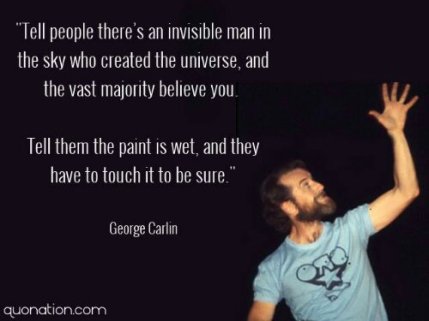
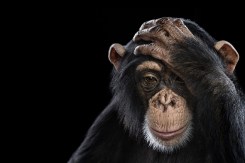 It is what it is. However, I wonder if our opinion on this matters more than the real answer. It’s like believing in a god – it either exists or it doesn’t. Our believing or doubting anything changes nothing about reality (placeboes or magic notwithstanding). Our opinion on this affects how we see the world, other people – and most importantly, how we see ourselves. Me, is the one thing in the universe that I have some control over—maybe.
To the point, I just finished reading Straw Dogs by John Gray. It’s unrelated to the 1971 Sam Peckinpah movie of the same name, or to the 2011 remake; both of which are, ironically, based on a novel with a different name (The Siege of Trencher’s Farm).
Note to self: book titles and author’s names matter.
 The premise of Straw Dogs is that humans are animals like any other animal. Both Christianity and Humanism see humans as capable of controlling things much more than Gray and others seem to think we do. This is a philosophical book that challenges many basic assumptions about what it means to be human. While I don’t agree with some of what Gray presents, I admit that he makes astonishing points that lead me to question which of us is correct. Regarding several of his positions, I think he’s nuts. But I find many of his other arguments compelling. Reading John Gray made me think, wonder, and contemplate – not the meaning of life, but its nature.
Are we animals? For an excellent article on this, click here.
Is our nature much different than it has been for centuries? Have we changed significantly in the thousands of years since our first existence as homo sapiens? Are we any different from other animals in terms of what happens to us?
Humans have been in existence much as we are now for about 200,000 years. For about the last 6,000 years, we have been the social creatures we know ourselves to be. How do we fit into our environment? Do we belong here? How long will we survive as a species? Are we masters of our own destiny any more than any other animal? Are we doomed to destruction by our own actions?
I’ve seldom thought about it, but Professor Gray makes this point right off. His position seems to be that the last time we had it right, we were hunter-gatherers. I tend to agree. Gray begins with this basic assumption regarding evolution and religious culture.
“If Darwin’s discovery had been made in a Taoist or Shinto, Hindu or animist, culture it would very likely have become just one more strand in its intertwining mythologies. In these faiths humans and other animals are kin. By contrast, arising among Christians who set humans beyond all other living things, it triggered a bitter controversy that rages on to this day.” ~ John Gray, Straw Dogs
Accordingly, Gray says that Humanist’s believe that through progress, humans can be free of the limits that burden other animals. That by using our knowledge, we can control our environment and flourish as we never have before. Gray also has an interesting take on history; he seems to say it has little or no meaning.
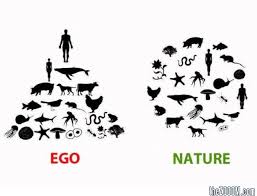
I like this book because it deals with some aspects of the dark side of human nature. Interestingly, most of us know about the Holocaust, the WWII effort by Nazis to commit genocide and eradicate Jews. How many other genocides (or politicides) in human history can you name? Gray proposes, with evidence, that genocide is “as human as art or prayer.” Apparently, we are not very nice to each other, to other living creatures, or to nature in general. Along with others of similar philosophies, John Gray is talking about humans in a general sense.
The question for me is: how does all this square with my position that our basic nature is good? Maybe the answer doesn’t matter because he undermines so many of my humanist leanings, thus shattering my position that humans are special. I’ll retreat to my favorite elusion from Hamlet: “there is nothing either good or bad, but thinking makes it so.”
There is much we don’t know. But this Zen Proverb meme says it for me.

Whatever our nature is, we share that truth with each other.
Let’s live our lives in awe of nature by embracing both sun and rain,
all flora and fauna,
and our fairies — Fenix and Furie.
Life is good and so are we, but mind the gaps and look both ways.


 As often happens following severe droughts in South Texas, the many weather gods provided too much rain. Severe damaging floods came after the months of virtually no rain. As Father Conor McGrath was reading announcements from the Parish Bulletin in his wonderful Irish brogue, he adlibbed a joke by saying, “And would the gentleman who is still praying for rain please stop.”
 Promotes a habit of self-deception. If God is right, why bother? Wouldn’t he do that same thing even if we didn’t explain it?
 Thanks to Tara for teaching me to blog. I am also grateful to my classmate, friend, fellow writer, and blogger, Sue, for suggesting topics and improvements. Sue’s uplifting and spiritually positive blog, An Artist’s Path, is
 When I meet with the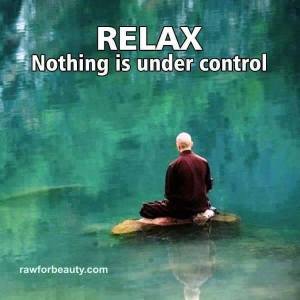
 Since this is my first December and holiday season as an admitted atheist, it seems fitting to discuss Christmas from my nonbeliever perspective.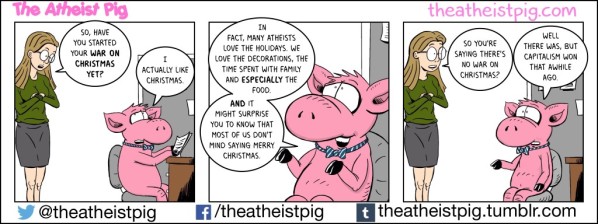
 I’ll continue to celebrate the season much as I always have: eating and drinking too much while overdosing on football. It’s a fun cultural and secular holiday with many features that benefit life, whether one believes in any god or not.
 If it busts someone’s chops that atheists enjoy the holidays, that’s a bummer. We intend no harm by joining the festivities. I suggest those humbugs pass a law that says one must be Christian to enjoy the holidays. Until then, you’ll find me hangin’ ’round the mistletoe.


 The third-time little Stevie acted like I would have. From the get-go, he raised holy hell before ever leaving home. Alas, young Stephen was over-powered and for a third time, the Prince of The Inquisition drove the needle through the boy’s ear drum. Over 40 years later, King wrote of the incident, “In fact, I think that in some deep valley of my head that last scream is still echoing.”
 Note to my grandchildren: There are things I’ll not tell you, but I may confirm or deny what you ask. There are things I will tell you only if you ask. There are things I will defer until I think you’re old/mature enough. But I will not intentionally deceive you without just cause. Sometimes, I’ll defer to your parents, other times, I will not. I’ve earned the privilege to be either cooperative or difficult. ~ Love, Opa
 However, I am willing to work with my feelings of hopelessness. I’m not referring to the charming but hopeless romantic, or being merely incompetent (Bill’s hopeless). And I’m not talking about sadness, fear, or denial. I’m talking about the feeling that can cause despair (being without hope). Back in the day, ‘twas that conclusion I expressed when I’d say OMGIF! (Oh my God, I’m fucked).
 I read this good article about hopelessness in the
 But this memoir – the thinking, remembering, musing, pulling out old photos, doing ancestry research, looking for old friends and finding some, but reading obits of others — it’s so different because it is about me and people who’ve affected my life. Learning and writing about myself every day is interesting for a guy who disliked writing about himself.
 “Sing with me, sing for the years, sing for the tears.”
 Let’s make a pencil drawing.
 As we draw, we feel things: love, anger, spiritual things, and the passions of life. As we experience our feelings, our work of art changes. Those emotions travel to our hands to control the pencil that is drawing our life.
 With 10 days of Nano remaining, I’m rolling along with my memoir. Finding memories and searching for lost feelings. It has helped me to keep writing in a searchable chronological order, so that as I recall things I want to add; I can find the right place to write (draw?) those memories.
 “One should either be a work of art, or wear a work of art.” ~ Oscar Wilde
 I love this memoir or autobiography thingy. Like so much of writing, it’s a pain in the ass and a fantastic experience. This has been a busy week for me, as in doing other things besides writing. Of course, bless their hearts, nothing is harder than dealing with the idiots and morons. But dang! We had an election that shook me to my core – more than politics or other elections have in my lifetime.
 On Wednesday, I went to a meeting that took too long and annoyed me – don’t they all?
 Wonder why? Carefully look both ways and mind the gap.
 Our Literary Journey