NaNo Rebel – One Week Done

Telling my story
Telling my story

In the first five days of NaNoWriMo, I’ve written 11,000 words toward the goal of 50,000 before midnight of November 30th. Since my personal goal was 2K words a day, I’m ahead. I have picked up on several things about my writing.

  • I am not isolated. My wife comes and talks to me routinely, and I go talk to her. I have vacuumed the house, gone to meetings, and done shopping. I answer phone calls (not doing surveys or talking to telemarketers, and I voted early), and I go for walks.
  • I have time available to write. Being retired, I could write all day and night. But I can take time for a football game, and maybe some NCIS or Blue Bloods. I read about what I am supposed to be doing: writing memoir. I talk to people, often about things having nothing to do with writing.
  • I think my weakest writing skill is the art, the creative parts, the telling of the story. I blame my experience with technical writing for part of that. But for this memoir, I continue to work on my skills to show and tell from my POV at the time. Can I be both protagonist and antagonist?
  • If I read a sentence that I wrote last week, I will change it. It will be better, but the challenge is to write, not to re-write and edit. This slows me down, but it looks like I can semi-comfortably write a maximum of about 3-thousand words a day. I did 2,800 twice last week.
  • I made an outline, a spreadsheet, and a memory list. The list has turned out to be the most valuable. I never look at the outline or spreadsheet. My only problem with the memory list is that I write in chronological order and the list random.

img_0833-1

  • Here are examples from my list:
    1. Working to pull out coal stove and put in gas hot water heater and gas stove for cooking.
    2. Looking up at Dad realizing I was looking at a drunk man who didn’t care. I had eerie feeling that he resented me. I was not seeing my father.
    3. Helen Hxxxxn (Whitey) BB gun. Tomatoes.
    4. Peggy Rxxb and the Rxxb family.
    5. Carol Mxxar and Joe Mxxxxen
    6. Dog named Rusty and my treatment of the dog
    7. Age 5 birthday party
    8. Danny
    9. Raised by both bio parents…first in fam….Linda was second, but hers divorced (he left) right after Linda graduated high school
    10. Mom’s relationship with my half-bro, Danny, and my view of it.
Write. Just write you must.

I will be writing this memoir for a long time to come. I’ll win the Nano challenge and complete this memoir, but not anywhere near at the same time.

I miss writing this blog, but I choose not to do both.

If you ever consider writing memoir, I suggest it. For me, it’s not about the book, it’s about me. I still have a lot to write and things to decide. Do I want to write about something or make it available for others to read? Those dark “things” about me? I work at keeping the words and stories on my intended spiritual track, but in my mind, everything relates – particularly during my formative years.

The following excerpts from my memoir are from two more dramatic events, both relate to a nun who taught me. Context is that I had just learned that the same nun who taught 7th grade will be teaching 8th next year, then we jump to what I was worried about.

Blues Brothers movie, my fav part

….“Mom, Coughlin is 7 to 12th. Can I go to 8th grade there? I’ll go next year anyway.”

“Now, Billy-boy. Why wud ya? Jist graduate St. John’s. After I see ya graduate, God can take me. It’ll never happen again.”

“I’ll graduate Coughlin, Mom.”

8th grade was worse than 7th. Even Father Burns was afraid of Sister Mary Siena, and for good reason. She was the tyrant of the school.

Gerry Dxxxxe sat behind me. As I was turned around explaining something of extreme importance to Gerry I heard, “Mister Rxxxxs, what is the answer?”

“The answer to what, Sister?”

“Young man, you better know the answer to the question I just asked the class.”

After I suggested that she asked one of them, the anger-crazed dark shadow in black habit grabbed her instrument of torture and death. As she stormed down the aisle heading at me, in her hand was the yard long wooden pointer. It was round, about the circumference of my thumb. She yelled for me to standup and turn around.

As it turns out, blows to the flesh behind the knees with such a pointer are not soon forgotten….

At times, how I saw it.

Life is interesting,
look both ways and mind the gaps.
Who Am I?

who am i2

Why should anyone want to answer this question? I was asked, then immediately told no answer was expected. It’s not a rhetorical question.

When others ask my name, that’s easy enough. What do I do? Also simple. What are you? begins to get more personal. Who are you? Who am I? In terms of what? Our relationship? Am I your friend, enemy, son, father, or husband? I’m the son of, the father of, the grandfather of; but is that who I am?

I’ve always been willing to allow my pastimes to wrap with my identity. For example: I am a runner, artist, writer, dreamer, reader, etc. I’ve been less willing to do that with my profession. I know people who took their livelihood as an identity, only to feel lost when they could no longer perform at their vocation. I no longer run. When I was forced to stop, I was mildly depressed for two weeks. After that, I was fine.

Do I need all the answers?

Apparently, some folks think going public as an atheist raised my IQ, my awareness, and my general knowledge—all by some large measure. Other atheists and believers alike seem convinced that I now must provide answers and solutions, understand deep metaphysical mysteries, and know myself better than ever. It changed nothing about me—certainly not who I am.

Admitting atheist does not inflict anyone with knowing the source of the universe–certainly not me. Of this I am certain: if there is a god, I am not him, her, or it. On that, we must all agree. There is scientific evidence to show that my intelligence is now less than it was in the past. Admittedly, I know more trivia and I should have greater wisdom than when I was younger. My answer to life, the universe, and everything is: 42. (You get bonus points if you know why.)

I am two things. I’m the biological result of generations of genetic selection. The other thing I am is what I’ve become (maybe you’re becoming) as a result of the past 70 years of life, social and physical interactions, and learning. I have no idea why I’m male, bald, mildly pudgy (okay, the beer), or have blue or green eyes (depends who you ask). I’m also one of y’all. We’re exactly the same, yet completely different. And we both know it. But that’s not who I am.

Who do I think I am?

As a writer of stories with human characters, I know more about my characters (everything) than I do about any other person. I understand them better than I get myself. I’m their god. I give them life, and sometimes death. I give them pain and pleasure. I know what they’ll do tomorrow. I know what happens when they enter those secret places where they don’t tell others what happened–I know their secret thoughts.

Last night, before going to sleep, my wife asked, “Are you going to walk in the morning?” I said, “I don’t know.” I walk virtually every morning. Today, I did not. My characters are much more dependable.

Some answers are simple

I am who I always was, and who I will be. I’m the sum of the past. I am part of you, as you are of me. I know who I am at this moment. Right here and now, I am who and what I am. If any deeper, more esoteric, philosophical, theological, sociological, or scientific answer is required, then my answer shall remain forever insufficient.

I don’t know everything about me, but I know enough. We’re gunna have to live with that.

To you, you are who you say you are, what you believe, and what you do. To me, you are who I say you are—it’s my opinion–subject to error and change.

But, is “who am I?” the critical question? I think the most important question is: who are we? How do we define us? We may add layer upon layer of humanity, and layer upon layer of nature, then layer upon layer of the universe. We are still in this together and we need each other.

As me dear departed Irish fadder often ass’d meh, “Whoda hell d’yeh tink ye’re?” Since that usually precipitated me being in a jam…Exit stage left!”

Who am I? Look both ways.

Bonus Post – Look Both Ways

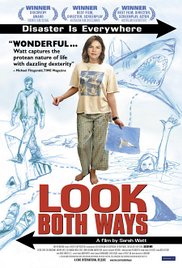
I just finished watching Look Both Ways, a 2005 Australian independent movie. I watched it because I had one of those idea moments today.

As I was walking on a sidewalk next to a busy street, I approached a minor street to cross. I glanced left, but was not yet crossing when a car came from behind me and turned right, quickly passing directly in front of me. She was driving a little too fast, did not signal, and may not have seen me. I checked to my left again for traffic and safely crossed the street.

Before I reached the opposite side, I realized that I had not looked to my right to ensure no cars were coming from that side. I recalled being told repeatedly, as a child of five or six, to look both ways before crossing the street. While the threatening traffic was on my left, I should have looked right.

I’m also in the process of reading How to Write Short, a book by Roy Peter Clark. Dr. Clark’s book has me thinking about how effective we can be with few words. Thus, I had one of those rare moments when an idea comes to me.

Look both ways1Look both ways can serve as my metaphorical phrase for living life—staying alive and healthy. I can see it as considering all sides of an issue (pro and con), hearing people out who may think different than I, discerning dangers of life, being careful, remembering lessons from our childhood, trying different things and new places. Can you add to my list?
Here is my advice: look both ways.

There are about a half-dozen books with the title Look Both Ways. I only found the one movie and I’m glad that I watched it. I enjoy that kind of flick. If you like artsy, emotional, love-story-ish movies with lots of music and relevant singing in the background, give it a go, mate. I had to get my ear tuned to the Aussie English, but I managed. I found it for two bucks on Amazon, but you might find it for free on YouTube. Warning: tear jerker. See the official trailer here.

Look both ways3

There is no vegemite in the movie, but she does say, “Are you giving me the flick?” That must be Australian for Are we breaking up or Are you dumping me?

Furthermore, starting this Tuesday, each blog I post on Our Rainy Journey will end with some comment about “look both ways,” at least until I tire of it. And, yes, there is rain in the movie—they get wet.

Look both ways4

Imposter Syndrome

IDo you think you are an impostor? Are you what you claim to be? Or do you think that you just have the rest of us fooled? There have been many real impostors throughout history, and many are still running around today. The whole identity theft problem has people pretending to be who they are not at its core. But my topic isn’t about them. Those people forge credentials and know exactly what they are doing. The impostor syndrome, ironically, uses their hoax to identify a problem many successful people deal with. It is also something I think I see in a lot people who do things such as art and writing. I may suffer a bit from it.
Imposter syndrome is a term used by clinical psychologists Dr. Pauline R. Clance and Suzanne A. Imes for high-achieving people. It is marked by an inability to internalize self-accomplishments and fear of being exposed as a “fraud”. Many of these folks are quite good at what they do, and it often comes easy to them. For whatever reason, they feel like phonies and worry about it. This is not a diagnosable mental illness. It is a syndrome – a complex condition with characteristic combinations of opinions, emotions, or behaviors. I want to apply this at another level. If you do ‘x,’ are you an ‘x-er?’ If ‘x’ is art, are you an artist?

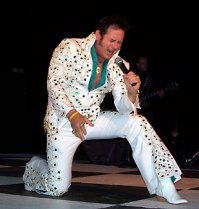
PO-Sterling_Riggs_Elvis_Impersonator_(7725109804)I have been certified to teach high school social studies since I graduated from college back in the dark ages. I have never taught as faculty for even one day. Am I a teacher? I am certified, but to me, unless I actually teach, I am not a teacher. So why is it that the people who do the art, take the classes, make things that are art, will not want to say, “I am an artist.”? I also know people who have not produced a piece of art in years, but will not hesitate to call themselves artists. I have no issue with that. If I can, but chose not to, should I call myself? I think the answer is yes, but it’s up to you.

I’ve taken dance lessons, practiced and practiced, then more lessons. I danced often. People would come to me and complement me on my dancing. They would say, “I wish I could dance like that.” I would look at them and ask, “What makes you think that you can’t dance?” Some people come by it naturally and learn quickly. Not me. But I did it.

If you want to be a dancer, then dance. If you want to be a writer, you only need to write. If you want to be a runner, then go run. Poof! You’re a runner. I’m not immune to this syndrome. I have no problem calling myself a writer, but I balk at identifying myself as an author or novelist; even though I have written (but not published) a novel. To me, the nuance is in published, even though I have been published in a short story and a journal or two.

Impostor pay not 2Unless there is an identifiable standard or required credential, we should feel free to identify ourselves by what we do, if we so desire. If we are novices or students, we are not disqualified. We’re learning. I understand being humble. But there is a difference in doing art and saying you are not an artist, and doing art and saying it the best art there ever was (but why not?). And certainly, if you are naturally good at something, and you do it, then we do not consider you an imposter.


Dark Side

DThis may be the most difficult topic for me, but it’s early in the A-to-Z Challenge. I may find subjects that are greater challenges. Regarding the dark side of human nature, I would simply prefer to accept it and move on. My research of our dark nature has revealed that we humans actually want to deal with it in reality, art, life, drama, poetry, fiction, behavior, and nature. Many of us admit to a duality of human nature, but even more of us reject the dark truths.

Dark PoetryMy dark side calls to me. I ask, “What do you want?”

It calls again. “Stop!” I say, “You’re bad. Nobody likes you. If I accept you, nobody will like me.”

Through art, literature, and life I feel the tug and I hear the voice. “To be fully human, you must accept and understand me. Fear me not, judge me not. Your rejection of me is ironically exactly what your fear is about—ego.”

Am I imprisoned by my own thinking? Aren’t we all? The Bard speaks to me through Hamlet, “Why then ’tis none to you; for there is nothing either good or bad, but thinking makes it so. To me it is a prison.” Do I judge the dark side unfairly? Is it my thinking that makes the dark side so – bad? If I pursue the dark side of human nature through art, literature, or science; is that bad? Would I be bad or become less good and more evil? What do I fear?

Embrace Dark SideIn addition to Oscar Wilde (The Picture of Dorian Gray), which I’ve read, I shall add the following.

Edgar Allen Poe
William Shakespeare (Hamlet)
Nathaniel Hawthorne (Young Goodman Brown)
John Keats (Ode to a Nightingale)
William Faulkner (As I Lay Dying)
Fyodor Dostoyevsky (Crime and Punishment)
D. H. Lawrence (Sons and Lovers)

Next week I plan to blog on Jekyll and Hyde from the classic book by  R. L. Stevenson for more on this topic.

Maybe then I can begin to learn and to eventually know. The maxim on the Temple of Apollo attributed to Socrates is “Know thyself.” It isn’t know thy good-self or thy light-self.

THE REBEL
Shaking his clenched fist at nobody
and shouting out in anger at nothing,
the proud, haughty rebel grits his teeth
and stands firm, straight and tall against
an enemy never seen nor ever heard;
crossing his arms in defensive defiance
against an adversary whose dwelling place
is in the dark, shadowy chambers of his
tumultuous and solitary, lofty and lonely mind.
[Dedicated to Albert Camus] ~ Kenneth Norman Cook

We may never know if the basic nature of mankind is good or evil, if we are fallen or risen. But we know something is there. We can hear it calling  to us. To know it. Embrace the darkness as well as the light.

I read this yesterday: “If you took a picture of your soul, what would it look like?”good-and-evil-2


c’est la guerre

C

When you ask most Americans if they know any French expressions they will say, “C’est la vie.” It may mean such is life, but it also implies a certain amount of fatalistic acceptance like “sh*t happens.” My favorite acceptance phrase in English is It is what it is. The title French phrase for this blog is different in that it points to cause – the reason things are wrong or out of whack. C’est la guerre, or it is the war, is an acknowledgement that while there is a problem, it is that way because of the war. As with many foreign phrases used in English, especially by Americans, the meaning is morphed slightly into aspects of life that don’t involve war or combat; such as work or sports competitions. The phrase was common and true in occupied France during World War II.

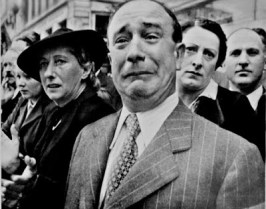
French cry at fall of FranceWhen I ponder c’est la guerre, my thinking goes more toward the conditions or philosophy of war, or the way of life during times of war. As an American, the concept is a little foreign to me (like our wars), since the only ground war we experienced was our war with ourselves: The Civil War. Ironically, it may have been the most destructive of our history in terms of loss of life and property. For at least the past 100 years, we have considered war as something that happens over there. Lucky us.
“It is only one who is thoroughly acquainted with the evils of war that can thoroughly understand the profitable way of carrying it on.” ~ Sun Tzu


In the 21st century, what are the things that happen and are explained with c’est la guerre? The first casualty of war is always truth. This is usually followed by destruction, death and maiming, rape, humiliation, and man’s inhumanity to man (torture). We have travel restrictions, airport body scanners, and a plethora of personal armament. And those are purely defensive precautions for dealing with domestic terrorism.

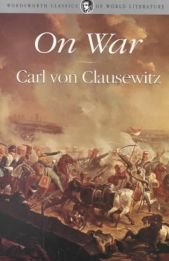
On War ClausewitzWhile there are many good books regarding the philosophy of war, the classic gold standard is On War by Carl Von Clausewitz – required reading for virtually every military officer. War and Peace by Leo Tolstoy may be the preeminent novel on the subject. And the classic for weaponry and strategy is The Art of War by Sun Tzu; more required reading, if not necessarily the best reading entertainment.
The Art of War Sun Tzu

“There is no instance of a country having benefited from prolonged warfare.” ~ Sun Tzu


So the rhyming tongue-in-cheek variation of the French fatalistic terms (which are not so fatalistic in French) used in English go like this: c’est la vie, c’est guerre, c’est la pomme de terre (such is life, such is war, that’s a potato). Get it? It is what it is. Accept it.

Welcome

Welcome to my blog. Please join me on Our Rainy Journey. I hope you enjoy it. I plan to write about things on the journey of life that interest me. When I wonder if you may be interested as well, I shall blog about it.

I want to explain my choice of a name: I wanted pluviophile, but it was taken. Pluviolover was not—close enough. I am a pluviophile, which is a lover of rain; someone who finds joy and peace of mind during rainy days. I will indeed be writing about rain and my reaction to it. I will not do that often, but if you’re curious, do look in.

Additionally, I want to write about the importance of how we feel; about happiness and laughter, the human condition, and the dark side. I want to write about love, art, pain and suffering. And I want to write about rain, walking, and doing.

I also want to write about my more current, albeit brief, experience as a writer. I believe that we are all writers, we are all in this together, and we learn from each other. Writing has been, and is, a discovery for me, inside and out.

While I consider myself to be happy, I am enigmatically intrigued by our human nature and enjoy dark poetry and exploration of the human condition, especially as it applies to the dark side of our nature.

Recently, I had the opportunity to decide where I wanted to live. I chose the Pacific Northwest, in western Washington State. I have been here about a year and I love it, so far.

I like music, rain, romance, comedy, adventure, mystery, and fantasy. Oh, and food. Second oh, and beer. I like food and beer. If there is ever a longevity study on survival rates for people who live on stout and Italian food, I plan to volunteer. Third oh, I should not forget coffee.

While politically active and opinionated, I’ll avoid talking about religion and politics. I’ve had numerous discussions and debates over the years on both topics. I can’t recall changing anyone’s mind or having my thinking altered a smidgen. I was given the gift of the opinion of others and I’ve learned from that. I appreciate the people who do write on those two topics, but I shall not contribute.

I am new to the blogosphere. I have read that posting on my blog only a time or two a week is a good start. I will do what I can. However, there is a challenge that some of my friends are tempting (daring?) me with: the A to Z Blog Challenge during the month of April. I believe I will do that. It will mean posting on my blog every day, topically assigned to a specific letter of the alphabet, in order. My theme will be all of the above. Let me see now, A is for….

Bloom Later

This little ditty I found made me think.

“I regret nothing in my life; even if the past was full of hurt…I still look back and smile. Because it made me who I am today.”

I support and encourage others to write their memoir. Other people encourage me to write mine. I should, but I haven’t. I’m thinking about it. I’m not sure how I will do that. I have to wonder, though. Would that experience get me to “look back and smile?” Would I discover what is was that “made me who I am today?”

Another meme I saw was,

“When a man dies, that particular vision of life that is his, and his alone, dies with him. Therefore, it behooves every man to tell his story, his unique vision.”

The value of such writing is ironically unselfish. Any story about me is not for me, except that in the discovery process only I would experience the memory for it what it is, and the story for what it was. It is, as perhaps all art and writing should be, for the reader and the looker. Would anyone ever ask, “What was it about him? What was he like? What did he do?”

Being born shortly after the end of the Second World War has placed me at the front of the Baby Boomer generation. For years I have lead my generation into a crowd. There were, and still are, many of us. We were there in the 1960s, enjoying the music and revolutionary attitude of the time. In the 70s we had our young adult experiences. Our children were born in the 70s and 80s and are called Generation X. In the 80s and 90s, we did our thing made the world what it was for us. Those were our career and adult growth years.

As we crossed the Y2K panic, some of us started to mellow and to wind things down. The millennial century found us touching career capstones and looking ahead to watching grandchildren grow and experiencing our own retirement. Now, tossing about age numbers from the fifties up to being septuagenarians, we remember that we have ‘been there and done that.’

Anyone of any age, but especially those of us over the age of fifty, should be thinking about writing memoir. There is bountiful assistance available through books, on line resources, ghost writers, or from friends and family. We should be writing and telling them our stories so that our unique vision lives on, long after we do.