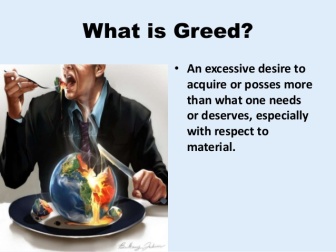
How much is enough? When do our simple desires or wants rise to the level of immoral greed?
Steal to feed your hungry family, and you may go to jail. An investment banker, who makes millions, steals from the public, nearly destroys the economy, and causes financial crises to millions of people; we talk about the banker’s greed and move on – no consequences.

Here’s how I see my own greed: my wants become immoral greed when my having too much causes others to go without or suffer. That view is mostly due to culture and my beliefs about human nature. If I lived the aesthetic life of a Trappist, I’d restrict myself so there would be more for others. I want to have enough without taking away from anyone, especially those in need. But not everyone feels that way.
If there are 10 things we both want, and we each take five, that might seem fair. But what if we need only two each, and will never need more? Do we hoard the other six? Collectors spend fortunes adding items to their collections. Is that greed? If so, is it immoral? If they also donate fortunes to philanthropic causes, does that change anything? Am I discussing greed, or is this an issue of caring about others.
Is greediness a normal part of our nature? Is it instinctive to be greedy to survive, but also part of a darker human condition to be immorally greedy? If the answer to both questions is yes, why? From whence does our greedy nature come? Why are some of us incredibly selfish, while others are altruistic to the point of self-denial? If we feel greedy, but don’t act on that feeling, is it ok? If it’s normal, as I contend it is, then we should feel no guilt. If our actions cause unnecessary harm to others, that’s different.
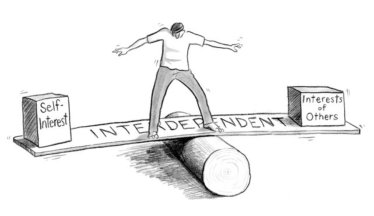
Why do some people think greed is immoral, yet they blindly practice it routinely? Is it really the opposite of liberality, which is defined as the behavior of someone who gives things or money in a generous way? I think these are both normal. We are greedy and generous.
Bill Gates is very wealthy and continues to make a lot of money. He lives a good life that doubtless has some excesses. But, Gates is also very generous and kind. He is both an American capitalist and a kind and generous person. Many wealthy people seem to be. Some are not.
Is greed a form of self-preservation that has gone too far? When humans find themselves in extremely stressful situations, they become not only selfish and greedy, but dangerously so. Starvation changes us. When basic needs are not met, we don’t consider it greed when people take extreme actions to meet those needs.
Behavior in WWII concentration camps and American prisoners in Bataan and other places provide ample evidence to support this. Oddly, there are remarkable altruistic exceptions. Victor Frankl, in his book Man’s Search for Meaning, discusses why one camp prisoner will give away his last morsel of food to another who is dying. Yet, another prisoner will harm others, steal from them, or commit murder or suicide. While this was an observational basis for Frankl’s therapies and personal outlook, these very real human experiences testify to major differences in people.
If it has always been that way with people, will it continue? Is greed normal in other animals? Is survival of the fittest a basic instinct of our animal inheritance that now masquerades as greed?
Greed, like quality, is difficult to precisely define. Yet, also like quality, most of us know it when we see it; particularly when we see it in other people. However, we must admit that greed is something we seem to share, want it or not. We need to feel safe and that may mean not trusting that we will manage with enough. More is safer and better.
Our human nature has many facets and sides. Our morality is a big part of our nature, good or bad.
Keep in mind that if we take only what we need, we care for more than ourselves.
May we live our lives in concert with humanity and all of nature.
Let us look both ways and mind the gaps.
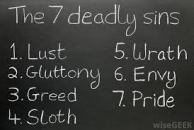 Steven stirred the pot when he responded to my previous post on the basic nature of humans with, “One word: Greed.” Reader comments followed with discussions about greed in terms of human nature. Sue V. weighed-in by suggesting that I compose a series of posts on the seven deadly sins alongside their antitheses, the seven virtues. I like that idea. I plan to write a series within the human nature theme reflecting on the human condition, using Sue’s suggestion as a method to breakout specific topics into manageable sized chunks.
 After reading them, maybe you’ll ponder your opinion vis–à–vis either mine or someone’s comment, and share your views. I also want my posts to have a free-thinker flavor; secular, but with an inclusive bent, if that’s possible. I’m not opposed to religious comments. I think secular.
 Moral and immoral may do the same thing, but I see them as opinions that are formed after discussion. Topics are natural, but often seen as immoral under certain conditions. For example, lust seems normal and humans could be extinct without it, but it’s on the list of sins. I’m not sure how or why chastity applies to anything other than medieval devices of questionable utility. How we see our basic nature and religion both affect how we’ll see the seven sins or vices.

 It is what it is. However, I wonder if our opinion on this matters more than the real answer. It’s like believing in a god – it either exists or it doesn’t. Our believing or doubting anything changes nothing about reality (placeboes or magic notwithstanding). Our opinion on this affects how we see the world, other people – and most importantly, how we see ourselves. Me, is the one thing in the universe that I have some control over—maybe.
 The premise of Straw Dogs is that humans are animals like any other animal. Both Christianity and Humanism see humans as capable of controlling things much more than Gray and others seem to think we do. This is a philosophical book that challenges many basic assumptions about what it means to be human. While I don’t agree with some of what Gray presents, I admit that he makes astonishing points that lead me to question which of us is correct. Regarding several of his positions, I think he’s nuts. But I find many of his other arguments compelling. Reading John Gray made me think, wonder, and contemplate – not the meaning of life, but its nature.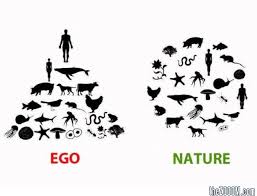

 The third-time little Stevie acted like I would have. From the get-go, he raised holy hell before ever leaving home. Alas, young Stephen was over-powered and for a third time, the Prince of The Inquisition drove the needle through the boy’s ear drum. Over 40 years later, King wrote of the incident, “In fact, I think that in some deep valley of my head that last scream is still echoing.”
 Note to my grandchildren: There are things I’ll not tell you, but I may confirm or deny what you ask. There are things I will tell you only if you ask. There are things I will defer until I think you’re old/mature enough. But I will not intentionally deceive you without just cause. Sometimes, I’ll defer to your parents, other times, I will not. I’ve earned the privilege to be either cooperative or difficult. ~ Love, Opa
 I love this memoir or autobiography thingy. Like so much of writing, it’s a pain in the ass and a fantastic experience. This has been a busy week for me, as in doing other things besides writing. Of course, bless their hearts, nothing is harder than dealing with the idiots and morons. But dang! We had an election that shook me to my core – more than politics or other elections have in my lifetime.
 On Wednesday, I went to a meeting that took too long and annoyed me – don’t they all?
 Wonder why? Carefully look both ways and mind the gap.



 I recently read about research conducted by two prominent universities, one in Canada and the other in Oregon. Their general finding was that people trust atheists slightly less than rapists.

 Whether someone dislikes the fact that nonbelievers exist, that we work with believers to keep church and state separate, or that their family members may embrace atheism; we will continue to come out. We will continue to speak up. We will continue to deny the existence of any god. And, we will continue to share the moral high ground with most believers and to counter all claims to the contrary.
 For many of us, the importance of religion is stressed from a young age–religion must be taught. Logically, we are usually taught that our religion is the correct one and all others are wrong. While atheists have a similar conviction of accuracy, it’s not the same since the basis is no god exists, and consequently no religion is right.
 I haven’t had to deal with negative family or friend issues regarding my public atheist disclosure, which was fairly recent. Other than a hint or two about someone praying for me, it’s been quiet.
 While my disclosure has been inconsequential, I’m concerned for anyone struggling with it. While the decision is personal, I think atheists should disclose (come out) as soon as they’re ready. But, preparation and timing are important, if not critical.
 A second book that I’ve not read, but looks promising, is Coming Out Atheist by Greta Christina.
 Retiring and moving to the Seattle area provided time for me to consider my beliefs in greater detail. I read more about atheism, and I started to write about it.

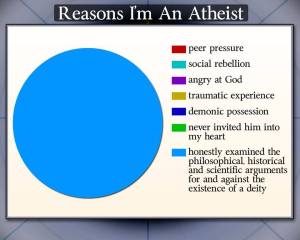
 You have to pass a test to be an Atheist. Did you know that? And the damn test never ends – you take it repeatedly. The questions may be the same, or they may keep changing. Every answer you give will be wrong. You’ll be forced to keep explaining and justifying your wrong answers. You may be criticized by your family and friends for not choosing the correct answers. Knowledge will not help. If you try to use science, you will be told that you know nothing of science. You’ll be given a grade of F for trying to use it to explain your position. If you dare to use logic or philosophy: F. History? F! God forbid that you use religion/scripture/dogma: F-minus.

 Our Literary Journey