Poetic Recovery

I am atheist. I groan when I read, “as an atheist” before people make a statement. Well, guess what? I owe lots of apologies because….

As an atheist, I have been asked how we handle life when it sucks: sick kids (or grands), lost jobs, death of friends and loved ones, financial trouble, or any disaster. They rightfully ask, “How do you get through those tough times when even heavy-duty doubters pray for relief?” We do manage without god. Not only are there atheists in fox holes, some of us have died there.

I’m dealing with a cancer diagnoses and some of my doctors ask me how I feel about it. “Well, Doc, this is one time I wish you were wrong. Now, let’s do this.” I want action, science, and medicine; not prayers.

Here’s what I got for ya. Franky, baby! I love the song; both the music and lyrics of That’s Life, by Frank Sinatra. Some say, this too shall pass, but the song puts that theory on another emotional level, and I love it. I hope you do too.

Here are the lyrics. Below them, I also posted a youtube video with music, singing, and the words. Now, let’s get back up, brush ourselves off, and have a wonderful July.

That’s Life

That’s life (that’s life) that’s what people say
You’re riding high in April
Shot down in May
But I know I’m gonna change that tune
When I’m back on top, back on top in June

I said, that’s life (that’s life) and as funny as it may seem
Some people get their kicks
Stompin’ on a dream
But I don’t let it, let it get me down
‘Cause this fine old world it keeps spinnin’ around

I’ve been a puppet, a pauper, a pirate
A poet, a pawn and a king
I’ve been up and down and over and out
And I know one thing
Each time I find myself flat on my face
I pick myself up and get back in the race

That’s life (that’s life) I tell ya, I can’t deny it
I thought of quitting, baby
But my heart just ain’t gonna buy it
And if I didn’t think it was worth one single try
I’d jump right on a big bird and then I’d fly

I’ve been a puppet, a pauper, a pirate
A poet, a pawn and a king
I’ve been up and down and over and out
And I know one thing
Each time I find myself layin’ flat on my face
I just pick myself up and get back in the race

That’s life (that’s life) that’s life
And I can’t deny it
Many times I thought of cuttin’ out but my heart won’t buy it
But if there’s nothing shakin’ come here this July
I’m gonna roll myself up in a big ball and die

My, my

Songwriters: Vernon Duke / E. Y. Harburg

That’s Life lyrics © Universal Music Publishing Group, Music Sales Corporation, Shapiro Bernstein & Co. Inc., BMG Rights Management

Look both ways for life’s ups and downs. Mind the gaps, as silly as it sounds.
Poetry – Cold-war Crew-dogs

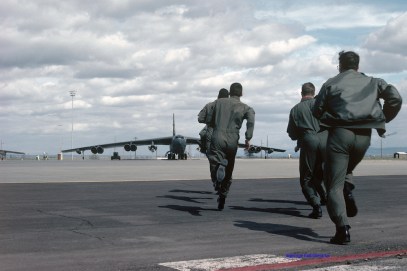
Crew sprints to B-52 on nuclear alert

thursday morning – day one

of alert. go underground.

called it changeover day.

drive to base. park. unload for the week.

stand in line – at the shack

process through a sally port.

see guns, security,

tension cut with humor,

line badges and id cards,

secret signals and voice passwords,

briefings, weather, announcements,

need to know games.

meet with leaving crew at jet.

open top-secret boxes,

review more secrets.

never be alone,

be two-man in

no-lone-zone,

always.

nukes not nonsense.

check the jet.

check the nukes.

squeeze tight

between

aerodynamic

plutonium

cylinders of death,

check dial settings

for proper

megatonnage yields.

be positive. no room for error.

more jokes. more pokes.

sign for everything.

responsibility now ours.

for each a new identity

part of crew, a sortie number.

become the job; pilot, navigator,

gunner, bombardier.

trained killers without names.

captains, lieutenants some majors.

then to a study vault. more t.s. bs.

tankers, targets, terrain.

threats.

not to think of war. insane.

crew dog. be the bomb.

refueling

recovery

repatriation

geneva rules bring

more sarcasm.

back at the shack, more

jokes, games, pool or pool,

gym, phone calls, write, study.

tv, coffee, cokes, bs,

testing, reacting, napping.

bored before noon.

no booze, no drugs, no sex.

seven days to go.

relax. no war this week,

bored is good.

always,

just

twelve

minutes

to gear-up.

hasn’t happened.

yet.

© Bill Reynolds, 7/16/2018

Look both ways to see all sides. Mind the boring gaps. Dystopia awaits.

Minimum interval takeoff as would be for nuclear war. Black smoke is result of water injection to engines for more thrust.

To watch a humorous little Youtube video about this, click here.


Poetry: Everybody Has a Mother

52 years ago.

Everybody Has a Mother

I had a mom. And I loved her too.
Then she died, as all mothers do.

Now I have this woman here,
Texas gal and hell-of-a-dear.
Not my mother, no siree,
Nor sister or brother, but oh is she
Mother to the progeny,
who are something
that’s part of me.

She is my lady,
you can see,
love ‘er to bits like a
long-time lover
should.
She’s their mother.
They all love ‘er –
she loves ’em too,
as mothers do.

I love her so,
And likewise them.

Mom o’ my children,
all Texas born.
Now all growed-up
with kin a their own
Tex-bred kids
of one kind or other.

We love ‘em all,
short, fat, skinny and tall.

We love ’em up,
but she Loves them
more than I,
‘cuz that’s what Moms
can do. Love them all
a lot, you see,
more than you and more ‘n me.

Daughter, sis, and cuzin to some,
Wife to me, a very special one
Good sport of a kind and sort,
Mom to three,
Oma to more.

Yolonda,
this poem, my dear lady,
is just for you.

(Bill Reynolds © 12 May 2018)

Y’all be lookin’ both ways cuz Momma be comin’ with a spoon.
Mind the gaps.

Poetry (sort of, again) — NaPoWriMo: Fix’n ta Pit Stop

The 28th day of NaPoWriMo prompted me to draft a prose poem in the form/style of a postcard. Ain’t it funny, how time drifts away? I got local with vernacular and dialog and supported it with a short video clip.


Fix’n ta Pit Stop

Ah war-out ‘tween Austin an Waco, west-a the shinry an’ east a’the hill country. Mah butt was plum give-out. Feelin’ a smidgen puny, ah dismounted. Lucky as all-git-out, seen a big’o swait-tay saloon o’er yonder. It’ud be jist the thang, cuz ah was fixin’ to be flat as a cow-patty, ‘n dry as Odessa. Ah jerked up mah britches, an moseyed o’r to Harly’s Truck Stop. Dark as a big thicket, them ‘boys gimme a look’n over. Ah tipped mah sombrero, “Howdy. How y’all doin’?” “Ah’ite, ah’rite,” and “better’n all git out,” an one oh’boy yelled, “How ‘bout them ka‘boys?” Barkeep smiled, “Wha’cha drinkin’?” “I’ll have Shirly Temple.” Bar goes silent. Bar back says, “She jist left.” Ah near got-down with all the hootin’ and a-hall-erin’. “Well then, how ‘bout cold Lone Star? An gimme some’a-dem chips ‘n sausa.” Ah drank-up ‘n warshed-up, “Been good. Nite-cha-all,” and ah headed out fer Willie’s Place up ‘a road prit’-near Carl’s Corner.

(Bill Reynolds, 4/28/2018)

This is where I live folks. Lest you think I make this shit up:

Ride sober, look both ways, take breaks,
drink un-swait-tay, mind the gaps,
and love Willie.

Click link to National Poetry Writing Month

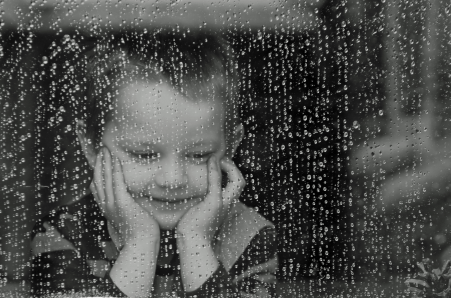
Poetry — NaPoWriMo: Envy ‘Neath a Window

The day 19 poem prompt of the 2018 National Poetry Writing Month challenges me to write a paragraph that briefly recounts a story, describes the scene outside a window, or even gives directions. I was to erase words from that paragraph to create a poem, or to use the words of the paragraph to build a new poem. Here is my result of that effort, without the paragraph.

Envy ‘Neath a Window 

With Mom I sat
As she was reading
Not to me – getting bored
On a raining summer day.
I’d catch some death of cold
She would say
From being wet with rain,
On that cool summer day.

Something ‘neath the window?
I walked to see a mouse.
I said no words, nor did he,
As I looked out the window.
My first envy feeling was seeing
Friends playing in the rain.

Making themselves damn fools.
I learned, in the adult version
Is as they call it, having a good time.
Damn fool for just sitting here.
“Mom, may I…?”
Envy. I felt it.

(Bill Reynolds, 4/19/2018)

Look both ways and love those rainy days.
Mind the gaps or hydroplane.

Click link to National Poetry Writing Month

A Memory: The Silence of Darkness

It was a cold northeastern Pennsylvania night. I don’t recall the day of the week, or even the year, but the season was tucked into that idiom wrongly called, the dead of winter. There’s nothing dead about it.

I was in my teens and still living with my parents. It was late night and snow had covered the ground one day in the early nineteen-sixties. While night, the reflections from the snow allowed me to see everything, although it looked like a blue-tinted black and white photograph.

While all years of my life were important, those teen years are prominent memories. I still recall how I felt then, but now it’s hard to describe. I’ll never feel like that again. The wonderful adjectives of youth applied to me: vital, vigorous, and energetic; yet so did lazy, horny, rebellious, and impulsive. I would not say pensive or thoughtful. Yet, there was that one night.


As I walked through deep snow above my ankles, a powdery white mattress was laid out around me in all directions. The white snow was tinted cobalt blue by the moon-lit night sky. None of the snow was marked by footsteps or car tires. The blanket was pristine. The cemetery across the street was a charming and peaceful sight. I loved the sight of the snow, the reflection of street lights with a wintery halo, the contrast of red brick buildings with lines of white where snow landed. Even boarded-up windows seemed fitting to this natural artistic sight. What I saw made me feel good. I was happy, but thoughtful about what I saw.

If anyone saw me, they might assume I was lonely. I was not. Never. While my teen years presented me with daily challenges, feeling lonely wasn’t one of them. Even back then, I treasured my alone time. I have searched for more nights like that one, but I will never discover such a night again. Nature’s art is often so fleeting.

I may have been troubled by any one of the issues I thought life changing. Today, I recall few of those traumatic teeny-bopper problems. But, I can still visualize the night. While I have long since been free of my adolescent burdens, I remember. I didn’t feel cold. I felt both my pending freedom and a connectedness to my surrounding, to the night, and to the silence. And to the darkness, the light, the snow, and a sweet silence only night offers.

I was wearing plain old brown leather oxford shoes and white socks. My pants were a bit too short and much too snug: a style of the times. Adults thought my hair too long. It was a little greasy, and it hung down to cover part of my face. I didn’t wear a hat. My outer layer was a hand-me-down, black, Navy-surplus pea coat – unbuttoned and hanging open. The collar was up.

As I picture that night, I feel my experience. That not-to-be-forgotten night was like a photograph taken with my eyes and ears, sensed with my tongue’s taste buds. I could smell the clean crisp aroma of the night air. It is imprinted in my memory: a serene moment, fifty-some years ago. A semi-normal teenager, I realized that something remarkable was happening around me. I liked it and I wanted to share it with you.

The day’s white powder parted like a soft curtain as my feet gently led me forward. Sidewalks, streets, and any surfaces open to the sky were topped with the blueish flakes. No cars passed. The plows would not be out until early next morning.

Months before this night, trees had lost their leaves. Now, white fluff-covered bare branches stretched skyward like arms reaching to catch descending flakes. Evergreens bore much thicker and fuller sparkling white coats over their needles, a weight they endured with their strong, flexible, down-sloping boughs. I sensed a soft chill as a gentle breeze brushed the powder from trees onto me.

As snow clouds passed, I saw the clear night sky of spiritual proportions. A nearly-full moon illuminated the earth with light reflected upward by snow. Even with the light in the sky, billions of stars floated above me, while below them the sheen of fresh powder glistened. I was so young, yet I intuited the unimaginable enormity of what was around me. I could sense the sheer winter-night beauty of it all. I felt comfort in that notable moment. The night and the silence were etching a memory no artist or photographer could duplicate.

The silence was purposeful and reasoned. A quiet so intense the night air was a sharp penetrating stillness that muted other sounds. All was perfectly still. No movement, not even a hush. It was an absolute quiet: a silence so powerful I imagined intense peacefulness within me.

I stopped. Didn’t move for a long time. I listened for sounds of anything, silent sounds. I heard nothing but silence itself. Very still, breathing shallow, listening intently to what was the most peaceful moment of my life as my personal Sounds of Silence came from nature. I was with my friend Darkness, where I felt destined to be. I experienced sensual pleasure in the absolute beauty of that cold winter night.

I saw silence in the stillness as nothing moved. The world had stopped. I tasted tranquility as the clear, dry night-air slid over my tongue. As the still coolness flowed into my nose with its chilled crisp fragrance, I smelled a fresh aroma only nature could provide to a young mind open to such images. I have aged. But, this memory remains set in the mind of a teenage boy.

Slowly, I started to walk a bit farther. Then stopped again. I knew this was exceptional. Then I walked more, and I stopped again. I do not recall walking away or going home. The memory leaves me standing there, taking it in.

I didn’t know that this memory would be discovered and retrieved by my muse over half a century later. Said she, “Up now, Lad. And write in yer book, before ‘tis lost again in the disorganized gaps of your mind.”

If you have no time for the video now, please come back to watch it. It’s worth it.

Live in the present, but look both ways,
to the past for who you were, and to the future for who you’ll be.
Mind the gaps, but fill in where you can.

Am I Too Old?

I see my reality very differently

Am I too old?

How old is old enough?
am I too old to feel young?
am I too old to run and hide?
am I too old to care?

How old is old enough?
am I too old to want to know?
am I too old to love someone?
am I too old to care?

How old is old enough?
am I too old to feel you near?
am I too old to call you babe?
am I too old to care?

How old is old enough?
am I too old to dance with you?
am I too old to share your passion?
am I too old to care?

I am not yet old enough,
so dance me to end of time.
Still I see the fairies dance,
for your love is always mine.

by bill reynolds 7/5/2017

To live long and prosper, look both ways and mind the gaps.

Forever Young!

Z – Zymurgy Blessings (NaPoWriMo #30)

Zymurgy (zy-mur-gy; zī mәr jē) is chemistry that deals with the fermentation processes (as in wine making or brewing), There are zymurgy clubs around America, a brew pub called Zymurgy in Torrance, CA, and even a magazine called Zymurgy. It’s a fancy word for something we didn’t know we had a fancy word for. In words like this, experts, specialists, and aficionados find each other.


 ***

A toast to the Grog
By Bill Reynolds

Hold your drink high as we all salute,
Stand proud and tall as you toast our success.
Long we have toiled to blog the last dribble,
To the craft of zymurgy, my final tribute.

To the blessings of grog from the art of the craft,
I brought you my twaddle, the sweet and the daft,
With creative support of that spirited guest,
I sent you my poems, the poor and the best.

From the wine to the beer,
The ferment and brew,
The stout and the red
Went straight to my head.

My thanks to my readers,
Both critics and lovers,
And for the crafters of zymurgy to brew,
Grateful to all, I am thanking you too.

***

Wine to the left, beer on the right,
Look both ways and have a great night.
Of the gaps be mindful, it’s been so delightful.

L – Limerick (NaPoWriMo #14)

A limerick consists of five lines. Lines one, two, and five have 3 beats each and rhyme. Lines three and four have 2 beats and rhyme. Referred to as light verse (or vers de société) by Lewis Turco, limericks tend to be light, humorous, and often bawdy or dirty.

 ***

The first “poem” I recall hearing was a bawdy limerick my father told me. I don’t recall my age. I heard it once and never forgot. It was a shocker, although Dad often used such language around me.

There was a young lady from Freeling
Who had a funny feeling
She laid on her back
And tickled her crack
And pissed all over the ceiling

***

I wrote this one in class about a Creative Writing teacher.

There once was a lady from North Bend
In teaching us to write, she had no end
She had a great thought
We fit and we fought
Until our writing was well penned

Well, the class thought it was funny.

 ***

Some wee dribble of self-pique from the old flapdoodle.

There was an old-fart named Bill
Who was also a bit of a pill
Until he met her
The rest is a blur
And now he conforms to her will

It’s all about me, ya know.

***

Many of us follow this lass. So, a bit of a gentile and friendly jab. Click on her name to link to her blog.

There once was a blogger named joey
And she loved to tell us her story
She speaks of the mister
Like he is her sister
Instead of her very first quarry

Do ya think I’ll hear about that one?

***

I had to take shot at someone, or male pride, in general.

There once was a man from south Brooklyn
Who thought his self too good lookin’
It happened one day
His thing wouldn’t play
Now he’s no master Al Pushkin

Dirty is funny, right?

***

Mind the gaps on top of it all
Look both ways: eye on the ball
   But watch for the fart
   That is really a shart
And you’ll have no reason to bawl

(Sorry. I couldn’t help myself. I wrote them all, except the first one, and I assume full responsibility for the content of my limericks.)

***

Faces in the Mirror

What would it be like today, if I could see all the faces that you have reflected? You only reflect me the way I look today, older and very different than when we first saw each other. I don’t recall that day, because it was almost 70 years in the past. Before that, you had reflected many other faces for as many reasons.

Since before I was born, you always had your place in our home, on the west wall of our dining room. There, you were centered on the wall, above the old sideboard buffet, which was also a permanent fixture. As anyone walked past you going to, or returning from, the kitchen; you reflected their profile. Before leaving home, we all stopped and faced you for your final review and blessing as we took one last look. Mom and Dad used you to check the look of their hats reflected in your glass.

Since your total viewing area is only one foot by a yard wide, you never revealed much about us below the neck and shoulders. Yet, you remained our primary, go-to mirror even after several full-length mirrors were installed. I recall the day my brother stood staring at you when he pontificated, “You know, Billy, you’re only as good as you look.” I never agreed with him. Did you? I suspect that how people look is important to you. It’s your purpose.

Every year, on Palm Sunday, someone would change out the palm frond strip hung prominently across the top of your frame, where it would remain for the year. That was sort of the family way of dressing you up for Easter Sunday. It was always the same.

The only time you, or any of those items around you, were moved, it was for painting walls or changes to the floor coverings. But you, the mirror, and below you, the side board, were always restored to your rightful, prominent places. Mom and Dad did not change furniture often, but they never booted you from your space.

How many photographs, cards, messages, and notes were stuffed between the edges of your glass and your frame? What did they say? Were they important?

You are in old pictures from my grandfather’s house (the one my mother grew up in), taken long before my birth, showing you along with two side sconces, both long gone. I never met any of my grandparents, but you did. I’m sure my Mom’s father looked at his reflection in your glass. Maybe her mother, too. I can envision him holding his young daughter up for you to see. Who else saw themselves, and the reflection of others, in your glass?

Beginning in the 1920s or 30s, every member of my family must have looked at you. When did you come into being? Every friend who ever visited our house saw their reflection, and probably that of others, when they looked at you.

You have survived the Great Depression, the FDR, Truman, Eisenhower, and Kennedy years, World War II (and possibly WWI), several rough moves, and whatever untold disasters that occurred during your 44 years in my parents’ home. For the past twenty-five years, you’ve been undamaged by my hauling you from one end of the country to the other.

Your ornate frame has a few nicks and scratches revealing hints that the wood beneath your gilded frame’s lamination is red. The corners of your frame are secured with two wooden dowels each, all attesting to the creativity and craftsmanship of an earlier time, when some master mirror maker worked magic.

While you’re a handsome and distinguished antique, it’s not you the mirror that provides the mystery and intrigue. It is the many thousands of faces that underwent self-examination as you watched, the hundreds of times a tie or hat was straightened with your approval, or when an Easter Bonnet was set to one side, and then given an approving nod.

Oh, mirror on my wall, holding the history of thousands of changing faces within your glass panes, do you remember their smiles and their tears. What do you remember? What secrets do you hold? Will you show me those reflections so that I may see whose lives you’ve shared? I recall with fondness and sometimes sadness, the pictures in my memory of the many times I stood nearby, and watched, as others used you to reflect a special moment in time. Show me their faces today, so that we might name the names.

When you look in a mirror, wonder.
Who else has looked this way? Who will?
Look! But, look both ways, and mind your gap.