A to Z Blog Challenge and National Poetry Writing Month (NaPoWriMo) Review and Recap


Click on the graphic to link to the National Poetry Writing Month page.

April was my second time doing the A to Z blog challenge. I combined it with my first attempt at the National Poetry Month (NaPoWriMo) challenge. For 2017, poetry was my theme for A to Z. With four exceptions, my poems were in alphabetical order according to topic or poetic form. I had 30 posts for NaPoWriMo, 26 of which I used for A to Z. The NaPo challenge was to write (post) a poem each day.

My theme developed over time. I wrote poetry every day, but I didn’t finish a poem on each day. Some poems took more than a week, while one or two others were ready in hours. I thought some of my poems were long, but that relates to form, content, and purpose.

NaPoWriMo provides optional daily prompts. I did not use the prompts because my rookie status as a poetry writer and dual use with A to Z were complicated enough. Next year I hope to: participate with the poetry month challenge, write one poem each day (start to finish), and use the prompts provided. I also used poems for my weekly writing class assignments, instead of prose essays. I don’t plan to participate with the A to Z challenge again.

However, I’ve always liked poetry, even though I know so little about it. During April, I discovered my greater love of poetry and an overwhelming fondness for writing poems. I grew increasingly curious about poetic forms, genres, and styles. I read several books about poetry and many poems. My quest to learn continues.

My A to Z reveal was the most popular of related posts. The best-liked of my poems were Specks: Coincidence meets Kismet and Sunday Lions. By far, the most commented on was the Collaboration Poem, Dewey and Dad, with my daughter. Other well-liked poems included my Haiku; Onomatopoeia, Never Again, and Regna, The Poetry of Art. Zumurgy Blessings finished off the month well liked.

Surprises that did not do well included my sonnet, the tercet, and the poem on coal miners. Dark poems did not do as well as others. Maybe I should not be surprised. I enjoy dark poems and don’t consider mine as bleak as many. However, since I struggled with those three poems (each for a different reason), it’s more likely they were simply not so good.

Another surprise lesson: I can’t predict what you will like. I can tell from your comments how a poem affected you. I received strong positive comments about twaddle I considered only so-so. Things I thought good, took a long time, or challenged me most, were not always popular. For example, the Sunday Lion verse and Xu (Bang the Gong) I wrote quickly and were liked; whereas, I worked for days on the coal miner poem and the sonnet and they sort of flopped. But, there were some positive comments.
Many readers never click like or comment (maybe can’t). So, I don’t get every reader’s feedback. The bane of a writers craft, “what will readers like?” In some cases, there were more likes on Facebook than on this blog. Another example: when I posted the poem about the deer on the Historical Society’s Facebook page there were more likes, but who knows why? This is no scientific evaluation, despite the best efforts of WordPress to collect data. And no one said anything derogatory.

Bottom line, I learned that, for me, poetry is fun – reading it, hearing it, writing it, or remembering it (we memorized O Captain! My Captain! in grade school). I enjoy relating to love poems, poems about nature or human nature, or the occasional taste of the dark side.

Thank you for reading this. If you will excuse me, I have poems to write, read, and to memorize.

Life is lived forward and understood backward,
but look both ways and mind the gaps.

V – Vexfest: Different Stereotype (NaPoWriMo #26)

I sort of got the idea for this from another A to Z blogger, Sandra of What Sandra Thinks, specifically her Bitchfest 2017, where she adds “special touches of sarcasm, darkness and foul language.” Since I find her humor refreshing, I decided to take a similar, but more serious, path.

Vexations create a state of being annoyed or frustrated. I confess that during my life I’ve been guilty of many of the things I find vexing. My greatest frustration may be my own human condition. We have many words devoted to being pissed off. I am not the only one.

***

Vexatious Me
by Bill Reynolds

With all the natural evil that be,
I am most troubled by
The moral evils that I see
Placed peeps on peeps. I’m vexed and…

Affronted by unfair stereotyping,
Aggravated by sense of entitlement,
Angered by any amount of animal abuse.
Annoyed by the foolishness of youth,
Bugged by too much welfare abuse,
Bent out of shape by all the bullies,
Disgruntled by job discriminations.
Displeased with wasting time, including mine.
Embittered by lost love.

Enraged by abuse toward women.
Exasperated by flawed governance.

Frustrated by incompetence, especially mine,
Furious over child abuse, anywhere, any time.

Indignant over unjust justice.
Infuriated by big black lies, also
Irked by little white ones.

Irritated by misunderstandings and
Miffed by gossip for fun and pleasure.
Offended by those too sensitive,
Outraged by starving children.
Peeved by human weaknesses, yet
Piqued by those better than I.
Pissed off when treated unfairly, and

Riled by my own pride.

Worried that nothing will change.

***

I failed to mention other drivers (texters, Beemer drivers, and Mercedes too), the wealthy, other people’s kids and dogs, and the folks who work at the driving license places in virtually every state. Also, virtually anyone who disagrees with me about nearly anything at all. And then there are people who are more vexatious than I.

Relax and go with the flow. We’re only human,
but let’s look both ways to enjoy the view.
Mind the gaps my friends, lest you get too twisted.


U – Universal Pain and Suffering (NaPoWriMo #25)

I don’t think there is a rule, but I’ve read that poems should be about specific things. The universe isn’t specific. So how do I write about it and be specific? I decided to key on a quote from Aristotle: “The universe exists for, and shines through, the particular.” My attempt was to twist that concept into living in the present.


***

Suffering Universal
By Bill Reynolds

What means the vast universe?
From the largest to the smallest,
It’s the every and the all, interspersed.
There’s more, and we’re on the call list.

Where thoughts drift among the unknowable
It’s all there. Is our significance so minute?
Dare we, as we might; is it so uncontrollable?
Or shall we focus on the more acute?

A far-off star explodes. Planets vanish.
Did you hear it? Did you see it?
Stars in the sky, but maybe not.
We see the light. Is it still a vantage?

Death. Suffering. Pain. Sadness.
Broken bodies. Broken hearts.
Do you hear them? Do you see them?
It’s all there. Should we care?

Are my feet on earth? Can my senses touch reality?
The universe is there, but also here.
Not for its own sake, but for each of us.
Let’s focus on the small, while aware of it all.

I engage with my personal
Real world life as it truly can be.
Let me be in the universal here and now.

Until more of the changes happen,
Until the stars no longer shine,
Until we know it all,
Until we hear the universe breathe.

***

Right here; right now, bloom where you’re planted.
But, look both ways and mind the gaps.

*

O – Onomatopoeia (NaPoWriMo #18) Never Again

Years ago, I packed in over several nights, with a backpacking group near Truckee, CA, north of Donner Pass. We were at approximately 7,000 feet elevation in the Sierra Mountains between Sacramento, CA and Reno, NV. It was a very exciting trip.

A year afterward, I planned to repeat as a day-hike in with a friend. After he backed out, I decided to go it alone. I ended up going later than I should, and was unprepared for what I encountered. For my foolishness, I paid the price with months of back damage and pain. I can almost laugh about it now – almost. It was also exciting, but in a very different way.

Onomatopoeia is the formation of a word from a sound associated with what is named, such as cuckoo or sizzle. It is also used for rhetorical effect, as in this poem.


Never Again
by Bill Reynolds

High Sierra beauty.
No food. No drink. No sense!
What plan? Quick in, then back out.
Whoosh. Like the wind. Time passed

Boink. Suddenly, it’s late.
Dusk. ARGH! Gotta get out.
Before dark. Oh no: It’s feckin’ dark!
No moon, no map. Had a lighter. Zip.

Oh, shit. Muddled.
Not one essential, much less ten.
No flashlight! Groan. Why?
Thinking? Stoopid. Grrrr to self.
Clatter climb rocks. Get out. Fast. It’s Dark.

Thump. Crunch. I fell, no moon. Ark!
Did I say, “It’s dark?”
Crunch. Footsteps. Are they mine?
Can’t see. Bonk. Oof! Pain.
F-word, again. No better.
I keep swearing, like it’s gunna help.
Bam. Step in hole. Crunch. Knocked out breath.

Shocked. Confused. Must see but cannot.
Crackle, smack. Branch to my face. Blood. Ooze.
Buzz. Bugs? Crunch. Twisted ankle.
Scrape, bang, boom, bash. ACK! More pain.

Bonk. Fall on face. Dark. Hurt. Walk.
Pain. Bam. Oof! Again. What’d I step in?
Another hole. Whack, crunch.
Damn holes. Hiss. Oh god. A snake?

Hear something? More crackle.
What’s that? A clatter?
Get out. Fast. Don’t run. Too dark.
Bear? Mountain Lion?
Kill me? Eat me? Yikes. I’m so screwed.

Hoot. Owl. Danger.
Skunk. Whew. It stinks.
Careful. Out fast. Whiz? Crap!

I’m Cold. And wet. In pain.
Must pee. Yikes. Unzip.
Done. Relief. Don’t fall in it. Re-zip.
Ouch more. Get out. Don’t fall.
Boink. Thud. Head pain.

Scrunch, twist, whack.
Repeat. Fear. Repeat. Dumb me.
How far? How long? Lost?
Alone. Clatter. Alone?
What was I Thinking?

Break free. Find car! Keys?
Oh no. No keys. Groan. Swear.
Hidden key. Found it.
Brrrrr. Shaking. I am very cold.

Tall grass. Kerplunk. Dropped key.
Damnit, can’t see. Cold. Pain.
Sore knees, search the ground.
Feel in dirt, no gloves. I found it. Clatter to feet.
Hold tight. Screech. I scratched car, then swear.

Bang. Slam door. Varoom.
Start engine. Get out. Cuckoo.
Oof over bumps. Drive. Find my brain.
Good trip. Nice day. Never again!

Bring a flashlight.
You can’t look either way, nor mind the gaps, if you can’t see.

N – Night (NaPoWriMo #17)

Night Comes
By Bill Reynolds

The silk soft, black cloak of night rolls
To end our days as it marks time passing on earth.
Night slips over us like a gentle silk shawl,
With the sparkle of stars and the silence of all.

Be comforted when midnight comes,
As it’s the darkest of times.
The death of this day marks a spell.
The birth of tomorrow’s new hope.

Soon the witching hour begins as so
Little good happens, post the final hour.

To some, midnight’s a time of painful suffering,
As with the line between life and death.
Find peace and warmth in the face
Of the change – the end of one day.
But for another we live, and then
Feeling recharged we’ll be free to see.

After our true self is off,
Without lie or pretense,
To bargain away the universe,
To have a brand-new day.
We must pass through the portal
Of darkness, and woe.
Thus, awakening of the new.

Look both ways each new day, and mind the gaps at night.

Haiku

Haiku is both a form and genre of poetry. Poems are short. Haiku is of Japanese origin and consists of three lines, usually with 12 syllables.  The first and third lines normally have five syllables each, and the second seven. Exceptions abound.

According to some, haiku captures a moment when nature is linked with human nature. As a newbie, I stuck to the traditional form, but the history of haiku includes many variations. Many haiku are penned every day and in many languages, throughout the world. These are my first three.

***

Curves

The wet path it curves
See as plants touch with plants
With different sounds

*

Growth

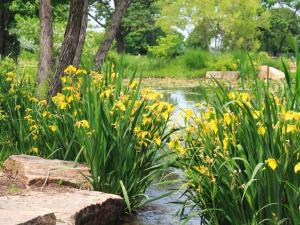
In the cold spring rain
Clinging to the earth below
Yellow flowers grow

*

Click this photo to go a page to hear the sound, whip-poor-will is an onomatopoeia.

Comfort

Still warm and dark night
Stars quietly fill the sky
A whip-poor-will sounds

***

Always look both ways
Every day write some haiku
And mind all the gaps


Interdependence, Knowledge, and Belonging

Knowledge and Science

From the tiniest thing to the vast secrets of the universe, what will humans ever know? Will anyone ever correctly proclaim that all knowledge has been discovered and may be known or available to everyone? I doubt it.

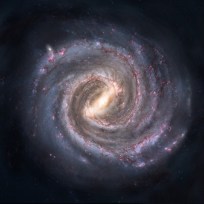
Our galaxy – one of many

Science helps us understand our natural world better. But, science provides information only through descriptions from observations. With science, we may understand better what an earth quake is, or how to grow more soy beans, but ultimately the answers we receive from research are observations.

Microscopes, telescopes, laboratories, and other equipment for tests and measurements are among the tools used to make these observations. Yesterday’s scientific conclusions lead us to today’s information, and then to the changes we will read about tomorrow. It was scientific observation that convinced us the sun, stars, and planets revolved around the earth. It was also science that convinced us that was not the case.

The discoveries of science change. Does truth ever change? When I look around at our natural world, I see is what humans have done. Everything I see, while either part of nature or taken from it, was placed, caused, or permitted by humans—to a point. Other life forms may make their mark, but that will last only if humans permit it. When we don’t allow nature to progress or we interfere, it can be disastrous due to our limited knowledge. It may be science, but we don’t know everything and we can only explain so much.

Sensing and Nature


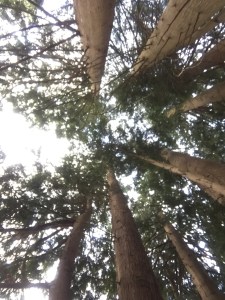
The spectacular trees

While nature is everywhere, my senses respond more strongly outdoors, in unfamiliar surroundings. I notice things less in my usual, everyday world. Change awakens my senses, whereas routine numbs them. Walking along a forest trail during a gentle, but persistent, rain provides stimulation that rejoins my surroundings with my own basic nature. It feels so right.

Seeing the trail, the roots of the magnificent trees, the green vegetation bouncing and dancing with falling raindrops, I feel aware and connected with the essence of life. It’s all here with me: sky, water, rich aromatic soil, and scree giving softness to my footsteps. Nature paints portraits of life and movement. I see how moisture mingles with the soil to send nutrients of life to plants and to quench thirsty animals, of which I am one.

Hearing the rain mesmerizes me as it falls where it will, on the leaves of trees and brush, onto the boulders and earth, and into the growing puddles and flowing streams. This is the sound of natural life – earth as it should be. The rustling sounds of birds and animals is alerting, as life deals in with nature’s wet gifts. And the rain. The glorious rain.

Feeling the soft, spongy earth beneath each step, I look down to see how the lovely wet soil now clings to my touch. I feel the rain pecking at me as it does upon the flowers. Animals respond to the natural bathing as a refreshing cleansing.

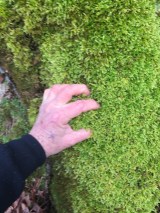
Touching the soft moss on a tree

My touch to the soft moss hugging tightly to the trees is a pleasant reminder of life on life, the natural interdependence within nature’s home. Against my face, and over my entire body, the rain penetrates cloths to caress my skin. I become one with the flora. I am refreshed, another being, pleased with our universe.

I can taste the freshness of the day. While rain on my head and face washes into my eyes, other drops find their way to my mouth, adding salt to the taste – the salt of the earth. I belong here.

A forest petrichor is the most pleasant of scents following rain. As the sounds and sights change with the gradually ceasing rain, and the forest begins to release the magical and glorious aroma of nature at work; life flourishes. If there is a heaven, it’s right here, right now, with me. I feel completely connected to nature. I yearn for this life, as it should be. I know this is life.

Awareness of Belonging

I become aware of the cosmic interconnectedness of everything. I know I have my place, fitting in with everything in the universe. The vastness of the cosmos finds the path and weaves its pattern through space, through time, and through me to the tiniest speck of galactic dust.

While science can provide words, descriptions, and explanations for everything that I sensed during my inspired walk in the forest rain, nothing can explain the deep, soulful feelings I experience when the vastness of nature communes with me. Conscious awareness.

Our senses perceive the environment as we discover nature and life.
Our sixth sense is that of belonging to the Universe.
Look both ways, discover the gaps, feel where we fit in.

A Test for Atheists


Test9

The Pew Research Center, in the 2014 Religious Landscape Study, asked self-identified atheists how often they shared their views on gods and religion with religious people.

Nine percent said they did so at least weekly. Two-thirds said they seldom or never discuss their religious views with religious people. That may be changing as secularism becomes more acceptable. On line, these discussions often take the form of Q&A sessions.

Here are eleven sample questions that I promised to blog about. I Bogarted the questions from a variety of internet sources, but the responses are mine.

Why don’t you believe in a god? This is a difficult one to answer without appearing rude or offensive. The bottom-line, and most simple answer is that there’s no proof.

Are you really an atheist? Kind of insulting, but easy to answer. Atheists should not be drawn in by the temptation to be sarcastic. Leave out really from the question, or be young enough to excuse, and the answer is there.Test4

Are you absolutely sure there is not (are no) a god (gods)? The problem here is that the subject has now changed from belief to certainty. Absolute certainty of anything normally requires abundant proof of some sort – often, repeatable and testable evidence. My honest answer is no. I wonder what percentage of believers are absolutely sure of what they say they believe.

What happens when we die? Why would anyone ask this of an atheist? But again, easy for me to answer. I don’t know.

However, I still love this song. It’s fun and uplifting. Hear it Here (The Spirit In the Sky). Norm is something of a one-hit-wonder, but he wrote and sang a good one way back then. Interesting side note: while this is clearly a Christian song, Norman Greenbaum, to this day (age 73), is an observant Jew.

What if you’re wrong? That depends. Wrong about there being supernatural beings? Is that any different than being wrong about which religion, or which god is real or true? Again, I have no idea.

Without a god, where do you get your morality? First, I have some morality. Second, the same place you get yours. Morality comes from learning and being human. How often are immoral atrocities committed in the name of a god? Where do those offenders get their morality?

How does life have any meaning without a god? My life has meaning just as yours does. Mine may have more meaning to me than someone who believes they will be in Heaven or Paradise. I believe that this world is all there is for us (right here and now). As for the universe, it is the same but we only have access this part of it: Earth.

What about the love and appreciation of nature and art? We love nature as much as any believers, maybe more than some. I love art, read and write about it, and consider myself an artist. While atheists may not see nature as the work of a creator or supreme being, they have the same, if not more, appreciation of nature than believers do.

Where did the universe come from? This is where I might begin to lose it. Seriously? Do I have to explain the origin of the universe simply because I don’t believe there is a god to have created it? I don’t need to know and neither do you. Read Carl Sagan or something, then pick one of the theories. I was not there when it happened, no matter what my grandchildren think.

test1


What about miracles? Have you ever noticed how the number of miracles has reduced as methods to record them has increased? I don’t think there are supernatural beings out there to bring about miracles. Unexplained things have always happened and perhaps science never will explain everything. At times in the past, believers decided that unexplainable events were witchcraft, or from the devil, and not miracles from a good deity or spirit.

Four Gods to believe in

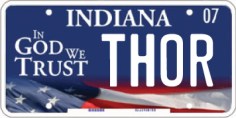
Why do you hate God? Do you hate Santa Claus? Or Krishna? Or Thor? Zeus, Jupiter, and Saturn are all gods. If you don’t believe in them, is it because you hate them? I’ve known believers who were angry with their god. I always thought that was awesome. Being angry with an omnipotent being has to be special. I guess their god wasn’t doing a good job.

Test6

I admit that face-to-face, such questioning events are rare, especially following someone’s commitment to atheism. But they happen and I think they are fair enough.

Test8Personally, I don’t see why people shouldn’t discuss religion and atheism (or agnosticism or humanism, or any such subject), if they want. I realize two problems come into play. Human emotion and the need to defend turf, opinions, friends, or in some cases, a god.

Criticizing religion in general, or any religion specifically, is taboo. Oddly, that taboo is not applied equally to lack of religion or atheism. While insults and criticism may fly, I’ll wager that no atheist has marked someone for death because they criticized, or drew a picture of, anyone.

I hope that we can find ways to exchange ideas, discuss beliefs, and venture into better understanding of our diverse and complex world. I once had a man tell me this, “I don’t even know anyone who is not Christian.” How sad.