Creativity and aging
There’s too much information available to cover this area adequately. My research indicates that we become less creative as we age. Perhaps we do. But I would not say ‘less.’
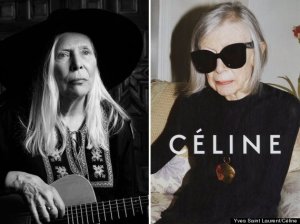
We change with age: physically, mentally, and emotionally. I think we also change creatively. I don’t think we become less creative so much as our creativity becomes altered as we adjust to all changes in our lives. Certainly, significant aging and mental problems (dementia) and physical illness have their effect.
Blocks to creativity
Creativity is an attitude. Our curiosity sleeps with our creativity. The more curious we are, the more creative we seem to be.
 There are too many blocks to mention each one. We all sometimes have blocks.
When I tell people that I am not as creative as they are, they often want to fix me – to give me advice on how to be more like them (do as they do, believe as they do, be as ‘open’ as they are). They would also advise me to be myself, blinking not an eye at the irony.
I don’t say that I’m not creative. Of course I am. Everybody is creative. But we are not all the same. My creative nature is more sensitive to that of other people, thus they are my preferred source of inspiration. I confess: I struggle with creativity. Many of us do. So what?
I think the blocks to our creativity begin at birth. We are born creative. As far as we know, it is a uniquely human trait. Children are wild with the creative process (in most cases) based upon the behavior we can see. We don’t know what we can’t see. We do not know the thoughts of others. We only hear what they tell us. Over time, our creativity struggles with life, society, judgement, our own human condition and nature, as well as that of others.
We don’t know what creativity is (no, we really don’t). We only know when we have it or when we do not. We can see it in the work or behavior of other people, but we cannot see into their minds and hearts. Like quality, we know it when we see it.
Value of music in creativity
I can read while listening to classical music (no lyrics), but no other genre. I must write in virtual silence. But I also find music as stimulating to my own creative process as anything. I have no idea how it would go if I did what a so many other artists do with music. But I know this: it helps in two areas.
One is in the magic of creativity itself. The other is in the execution of the work. Think of these two aspects as you watch Jonas Gerard (age 75) in the video below, creating with live music at his studio in Ashville, North Carolina.
“The rhythmic influence of music is an important part of his (Jonas Gerard’s) artistic process…. The music allows him to work unpredictably and intuitively, kicking it into another mode and bringing it home to a subconscious space where he can respond to the rhythm, and the direction the paintings suggest to him.” (from http://www.xanadugallery.com/2013/Artists/ArtistPage.php?ArtistID=7399)
The following is good regarding music.
“In addition to stimulating creativity, music can help contribute to the development of a more creative mind.”
“Creativity is within each of us and the very reason the world exists.” ~ Frank Fitzpatrick, Why Music, Part 6: Music and Creativity
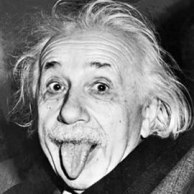 Einstein was interested in both creativity and music. He tied the two, even suggesting he would be a musician, were he not a physicist.
“If I were not a physicist,” he once said, “I would probably be a musician. I often think in music. I live my daydreams in music. I see my life in terms of music … I get most joy in life out of music.” ~ Albert Einstein from Alice Calaprice, The Expanded Quotable Einstein (as quoted by Fitzpatrick)
Afflatus [əˈflātəs/] (n)
Afflatus is a divine creative impulse or inspiration. The word literally means inspiration. It does not refer to the usual sudden originality, but to the staggering and stunning blow of a new idea, an idea that the recipient may be unable to explain.
Add music to this and creativity becomes limitless, in my opinion.
Duende [do͞oˈendā/] (n)

Duende is the mysterious power of art to deeply move us. It’s a quality-level of passion and inspiration that may be felt by anyone. It can be the artist as they work. It can be the observer of the piece, the reader of the text, the listener of the music, the watcher of the act or dance.
When you are next moved like this, speak to the spirit within you, “Ah, my Duende, you feel it too?”
Mental health and Creativity
This is confusing, and for some of us, maybe a bit dangerous. No one is more artistic, creative, or on a higher creative plane because they suffer a mental malady. We can be both mentally ill and creative. How one effects the other is unknown.
There is sufficient research to indicate some correlation between the two. But nothing indicates that being drunk, high, depressed, or any other mental condition causes people to be more creative. Normal healthy people can be, and are creative. Throughout history, the same can be said for troubled artists and creative souls. It’s the difference between ‘because of’ and ‘in spite of.’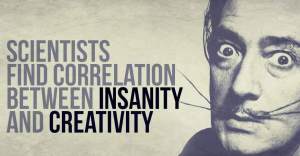
Letting Go
I can now move all books on creativity from my writing table to the bookshelf from whence they came. I want to thank Elizabeth Gilbert for Big Magic and I am grateful to my friends and fellow artists/writers who suggested it. While I still have a lot of issues with what Gilbert proposed, I wouldn’t have taken the time to do the work had I been in total agreement with her.
From whatev er source your creative ideas flow, may they flow to you in abundance. May you be orgasmic, chilled and thrilled with ideas, concepts, and plans. May you make the best of all your days being creative and doing your thing (art, writing, music, etc.) and enjoying the universal gifts shared by others. May the spirit of duende haunt your heart and mind, thus bringing you to a spiritual bliss as only we humans can experience.
 Two memories from my youth relate to this post. I recall my mother frequently telling me that I was contrary. She would say, “Now Billy, stop being so contrary.” She could have chosen from many words: obstinate, difficult, stubborn, negative, or silly. Actually, that’s not true. She used silly a lot, as in, “Silly-Billy.” I actually liked being called silly and still do. Today, such a fun-loving attitude coupled with silly behavior would prevent a diagnosis of Oppositional Defiance Disorder (ODD).
 As a youngster, I did have more than my share of confrontations with adults, especially those in positions of authority. I admit it. Mom was right (aren’t they all?). I was often contrary and many synonymous terms applied equally well. I confess that I enjoyed being difficult, most of the time. Sometimes, I paid for it. Some say I never outgrew my contrarian attitude.
 The other memory comes from the time of my early to mid-teens. I don’t know where if came from, but we adapted a phrase for a while that was intentionally meaningless, but we said it – a lot. It was kind of an early version of whatever! We would say it to each other and often to adults. We always knew exactly what the adult retort would be. The locution was Yeah, but, or yeahbut. Today, the Urban Dictionary says yeahbut should be followed by f**k, but we seldom used those words in combination.
 However; yet, nevertheless, nonetheless, even so, still, notwithstanding, in spite of that, for all that, and all the same; I do like butts. Some more than others.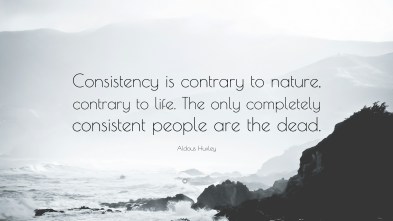



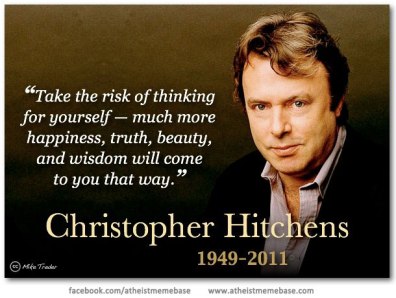
 As I listened to an interview with Christopher Hitchens, I was surprised by something he said. I’ll get back to that in a minute. Frist, I want to talk about the genesis of the question and my answer.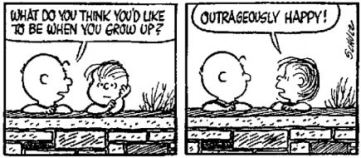
 A satisfaction tax would make a lot more sense. It seems like things may satisfy us, but we decide to be, or not to be happy. How would we measure and estimate a tax on feeling good?
 I do my best not to ‘unintentionally’ hurt somebody’s feelings. However, I’m unopposed to stepping on an emotional toe when I hear the call. As a senior citizen, I sometimes feel a sense of entitlement to do that, but I usually refrain. I once knew one guy who was so Cliff Clavin (from the TV show
  Several years ago, my daughter-in-law said that I was snarky. I appreciated her honesty and courage. I also liked it. She was right; I am snarky. I’m also sarcastic. In fact, being both makes me
 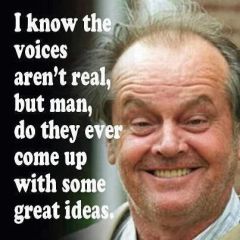 Jack Nicholson in As Good as it Gets (and other movies of his)
 Female Comedians (Yes they are)
 Not everyone has been introduced to my brand of snarkasm. After a while, when most people get to know me, they agree that I can pull it off. Many find it humorous. In fact, that’s the point – humor. I’m not on some kind of anti-PC* crusade here.
 Are you Andy or Barney?


 Some people think that ego is a bad thing. In a way, they are right. In a way, they are wrong. A wooden plaque (given to me by a friend) hangs in my room so that if I (ironically) hold my nose up, just slightly, I can see it. It says, “Humility is not one of my faults, but if I had one, that would be it.” Before you attack my lack of profundity, my friend made and gave the plaque to me as a bit of an ironic joke (I hope).
 I’m making the claim that ego is mostly good for writers. I presume that it is good for artists who work in other forms of artistic expression. I also think that being humble is good and being courageous is good. I also think that each of us should do what works for us. We’re unique individuals who share a passion (if you want to call it that). I admit that an out of control ego is a problem for more than just the narcissist, and egotistical people have their issues. But over-blown personalities write and sell books too.
 We need our ego to launch the work to readers. We need to believe that we can and want to do it. We also need to deal with whatever criticism and rejection we encounter.
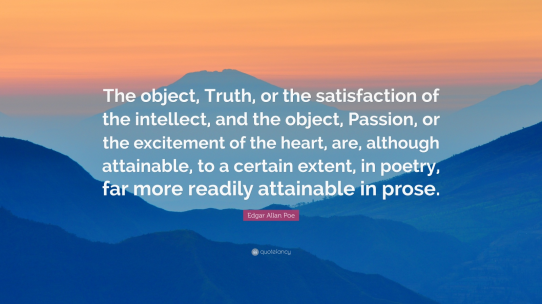
 To quote from Poe’s Preface to a republishing of his poems: “These trifles are collected and republished chiefly with a view to their redemption from the many improvements (made by publishers)…I am naturally anxious that what I have written should circulate as I wrote it….” He goes on to say that it is not that his work is that important, but the people who read it are. Ego?
 Three days of toil produced words born of emotion, but laying bare only thought and opinion. That challenge to produce expressive discourse full of feeling was riddled with notion and conviction of purpose, while lacking passion. Such analysis had merit and value, but I had so missed the deeper inside of myself that it might have been mere opinion drawn from a detached stranger. Those mindful barnacles of human grief remained anchored to my thoughts, thus hidden except from me.
 Knowing my feelings was not enabling my telling about them. Had I created a self, unable or unwilling to express feeling? I wondered deeper if I had co-opted with a force to create an emotional Dorian Gray. Were my feelings doomed to be confined in the shadowy attic of my mind? Had I become so adept at emotional deception that I habitually prevented expression of feelings? Had I become factually superficial and emotionally shallow, thus apparently less than a human lacking outward feelings?
 Twenty years hence, my awareness is of two worlds. An external world full of social interactions, judgements by and of others, and basic human needs. This is the world of people wearing masks, hiding feelings, and struggling silently with internal and external burdens. It is a world we need in order to sense the other world – a deep world that is hidden from others and often from our own self-awareness.
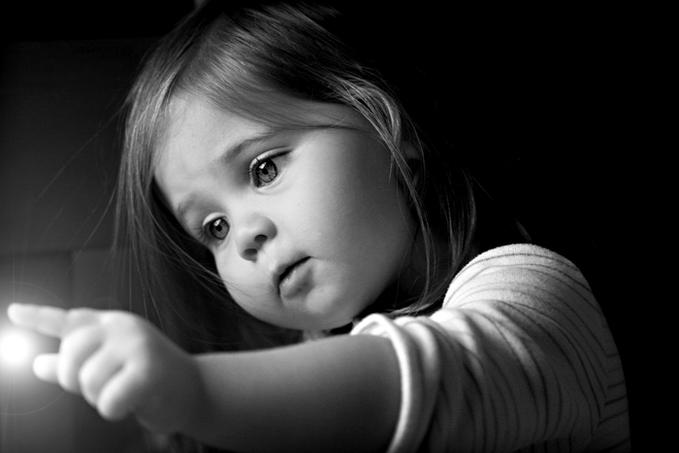
 So, I know when I made the change from young to old. It was about 40 years ago.
 Have you resigned yourself to the “it’s just a number that’s too friggin’ big” mentality? I’m not complaining about being old. Old people do not intend to complain about age. It is, after all, a successful result. On the other hand, the various consequences of age can’t be overlooked.
 If we live long enough, we share one important thing with many teenagers – we become bored easily. Old people can be annoying to some young people (15 years, remember). The thought that the feeling may be mutual seems to escape many. Most older folks that I know are working away at life. I know writers in their 80s and 90s who write every day, are working on writing books, and are making plans to publish.
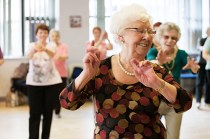 I live in an over-55, “active” community. Some folks here are more active than others, but most are kind of amazing. I took a blogging class where I met a lady of 92. She’s smart, funny, and still learning. She taught art classes and one of her subjects was art by carving vegetables. She made a scrap-book of pictures and writings on veggie art. She is an expert. Based on her experience, maybe the only nonagenarian expert. She wants to publish this in a blog. I can look past the outer physical things that show up when one is 90+. This lady is a master at her craft and learning another so she can share the first. I think that’s cool. In heart and mind, she is young, enthusiastic, and capable.
 I just returned from a “Personal Creative Writing” class. There are 15-to-20 of us taking the class. Most are interested in writing life stories or memoirs. These folks are talented writers; some are published authors; all are able to tell it like it was. They have the ability to make every life story funny, and even sadder memories are delivered with humor. They are good at their craft, but no one can accuse them of taking life too seriously.
 There are four brothers. They struggle to get along with each other, due to more than a little sibling rivalry. Three of them like to cause trouble. These three are selfish and annoying to humans and gods alike. They like to hide things from the sun, whose name is Sol. The three are very jealous of Sol. They think that they exist purely to keep Sol from comforting the earth and its inhabitants with his warming rays of light. Sol despises the three troublemakers, and openly favors the fourth brother. Sol knows how the earth, plants, animals, insects, and most people respond to his warm presence when the three annoying brothers are resting.
 Boreas is the north wind. While he can be out causing problems at any time of the year, his favorite season is winter. He is cold, icy, and wild. Boreas has a reputation for causing trouble and making a mess. He is a bully known for pushing the other three brothers around, especially Notus.
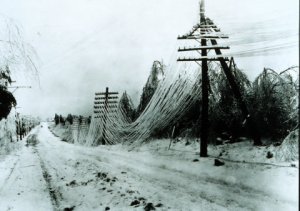 He is sometimes careless. Boreas sneaks under him and freezes his rain, sometimes just as it falls, causing havoc on the earth. At other times the north wind pushes back, causing violent destructive storms. This embarrasses Notus, but Boreas thinks it is funny. To confuse his brothers, especially the irritating Boreas, Notus sometimes spreads fog over the land and sea.
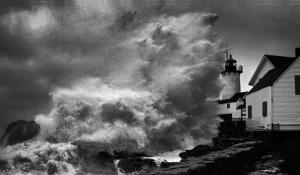 Eurus, the east wind, is foolish and lazy. He seldom does anything, preferring the amusement of watching the conflicts arise between his brothers. When he is bored, he teams up with Boreas to create problems and confusion. Together they make a north and east wind, known as a Nor’easter. Eurus watches from the comfort of his room and laughs at the chaos he creates with his brother. He is the most evil of the three problem winds.
 Zephyr enjoys seeing humans smile as he touches them, blowing into their faces, caressing their bodies, and messing up their hair. Often, after his brothers make a mess, Zephyr works to clean things up. He sweeps the sky clean of clouds so that Sol can warm the people, melt the frozen ice and snow, and dry the soil. Plants can grow, people can honor the sun, and animals can forage among the plants. Life goes on.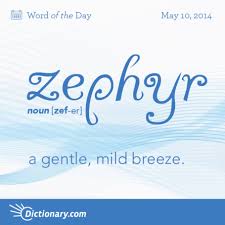
 Our Literary Journey